

A survey on food choices with a randomized sample population of individuals using various social media in Nigeria was conducted during the COVID1-19 pandemic. The data generated was subjected to basic standard statistical analysis. The parameters indicated that 94% of the population is young adults, 58.9 % percent are city dwellers, 63.6% are students, 23.4 % are into business, 86.9% are graduates; 73.8% consume various diets, 23.4% are vegetarians and only 2.8% fed only on proteins, 30.8% of them go on two meals per day. The most choices on influence on food purchases decision are hunger (26.2%), mood (26.2%), past experience (45.8%), quality of the food products (66.7%), cost of the food products (50.5%) and government approval (28%). Also,other most preferred choices are for self-prepared food (40.21%), enhanced local diets (36 %), and a blend of foreign and local diets purchases (24%). Other highest choices include: easy preparation (37.4%), shelf life (29%); cute packaging (23.4%), swelling property preference (20.6%), minimal cooking time and energy preference (37.4%). The weighted sum, index and rank on factors influencing food choices showed that the influence of quality of food product ranked highest, followed by influence on cost. Also preference for enhanced local healthy diets to foreign ranked highest, minimal cooking time and energy costs ranked highest. These nutritional adaptations have implications to individuals, food scientists, manufacturers in the food industry, food regulatory agencies, government and other decision bodies.
Preliminary Survey Analysis on Food Choices among Randomly Selected Social Media Users amidst COVID-19 Pandemic in Nigeria
March 09, 2022
April 08, 2022
April 16, 2022
April 18, 2022
This is an Open Access article, distributed under the terms of the Creative Commons Attribution 4.0 International License (http://creativecommons.org/licenses/by/4.0/), which permits unrestricted use, distribution and reproduction in any medium or format, provided the original work is properly cited.
Abstract
1. Introduction
The COVID-19 global pandemic is still active and difficult to treat [6]. This is made more concerning by the emergence of new strains with distinct properties from the previous ones. This presents a number of challenges in terms of prevention and treatment. The prevalence and persistence of COVID-19 in the midst of the ongoing economic meltdown has resulted in significant changes in people's daily lives and attitudes [1].
Food preferences are complex functions of several factors that may change over time. When studying food selection decisions, keep in mind that people usually consider several motives to be personally relevant. As a result, in specific food selection situations, conflicts between motives (for example, price, convenience, or taste vs. health) are common, necessitating individuals to prioritize them [9]. It has been suggested that, in addition to examining the absolute relevance of single motives, the relative importance (as determined by dividing individuals' scores on a single motive by their mean rating across all motives) be investigated ([]).This work is aimed at investigating food choices of individuals as the COVID-19 pandemic ravages on.
2. Materials and methods
2.1. Design and Data Collection
A randomized population sample of 107 individuals using various social media platform especially whatsapp and facebook in Nigeria were reached using well structured online questionnaire developed using Google forms (the link can be found at https://forms.gle/KXQARZDve6XpEJZJ8). Items in the questionnaire include: Socio-Demographic Factors such as- Age Distribution, Gender, Residence, Occupation, Highest Education, Diet types of Responders. Another is- factors influencing food choices such as: influence of hunger, mood, previous experience, quality of product, cost on, the trend in town, tradition, culture and religion, environmental impact, government approval on food choices. A third component looked at include: food source and preparation preferences, physiochemical properties that influence food choices, preference for easy preparation, preference for better shell-life of food product, high bulk density, dryer food product, cute packaging, low water absorbing capacity, high swelling property of flours, etc and preference for minimal cooking time and energy costs.
2.2. Statistical Analysis
The data generated was subjected to basic statistical analysis using Microsoft excel package 2007 such as percentages, graphs and tables; and the resultant information was evaluated using weighted sum, index and rank.
3. Socio-Demographic Factors
3.1. Age Distribution of Responders
Figure 1 shows the age distribution of responders which indicates that 94% of the population are young adults(18-35 years), while 1.9% are below 18 years and no responses came from the aged(60 and above).
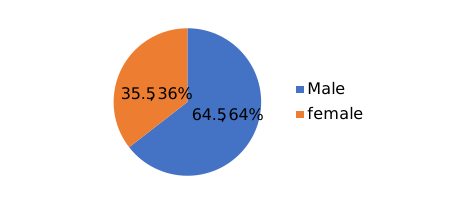
The gender of the respondents (Figure 2) showed that only 35.5 % are female while the rest are male.
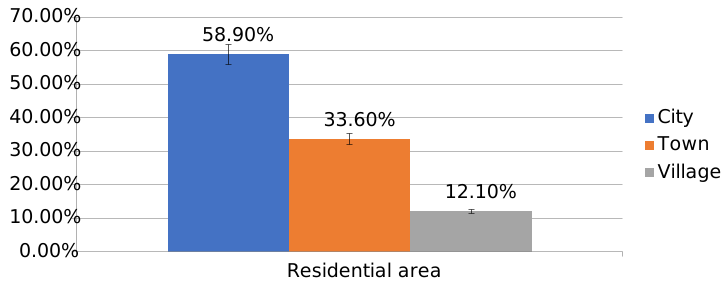
The residence of the responders indicates that 58.9 % percent are city dwellers where as 33.6% and 12.1 % reside in the town and villages respectively. Thus majority of the responses are from urban areas.
3.2. Occupation
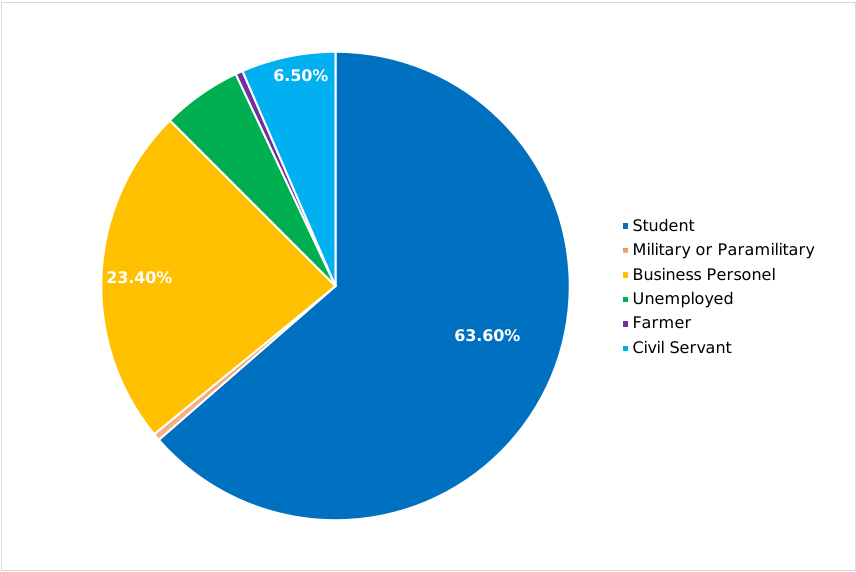
The occupation of the responders (Figure 3) indicates that 63.6% are students, 23.4 % are into business, 6.5% are civil servants and the remaining 6.5% are occupied by farmers, unemployed and students collectively.
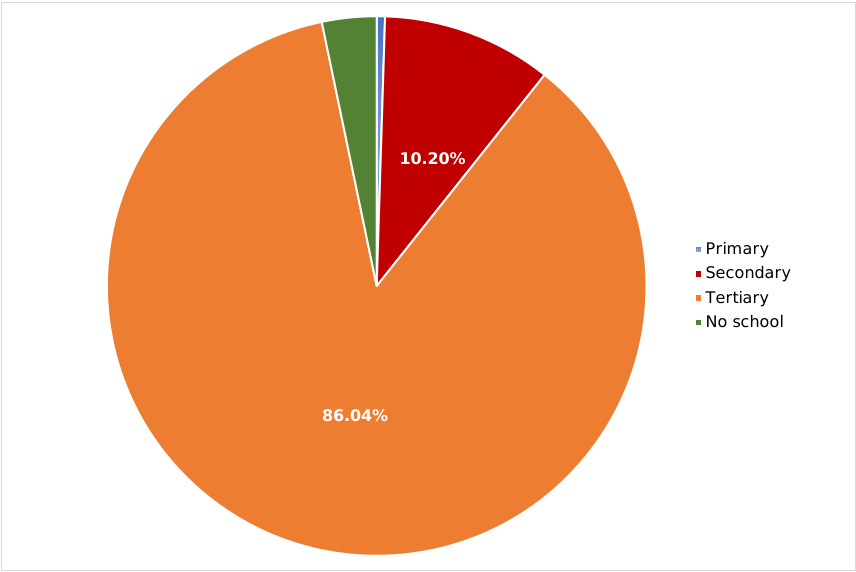
The Figure 4 shows highest education attained by the responders. Majority of them (86.9%) are graduates from tertiary institutions while 10.3% are from secondary school. The population with primary and secondary occupies only 2.8%.This suggest a large percentage of educated participants. The nutritional quality of diets varies significantly across sociodemographic groups, which is likely to contribute to health disparities. Women and people with higher socioeconomic status (SEP) consume more vegetables and less red meat than men and people with lower SEP in high-income countries.
According to research, the level of schooling can influence food behavior in maturity. Nutrition knowledge, on the other hand, is not highly associated to excellent dietary habits. This is due to the fact that when people are confused how to apply their knowledge, it does not result in immediate action. Furthermore, dietary information is spread from a number of sources and is perceived as inconsistent or untrustworthy, which reduces motivation to change. As a result, it is critical to communicate accurate and consistent signals through various media, food packaging, and, of course, health professionals [10]
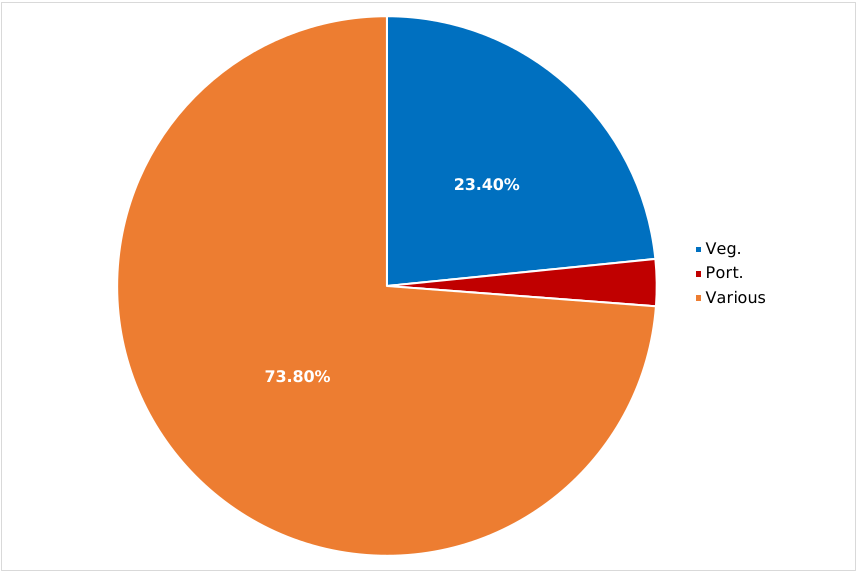
The diet types of the responders (figure 5) showed that the highest dieters are people that consume various diets (73.8%) which include both flesh and vegetables while 23.4% are vegetarians and only 2.8% fed only on proteins.
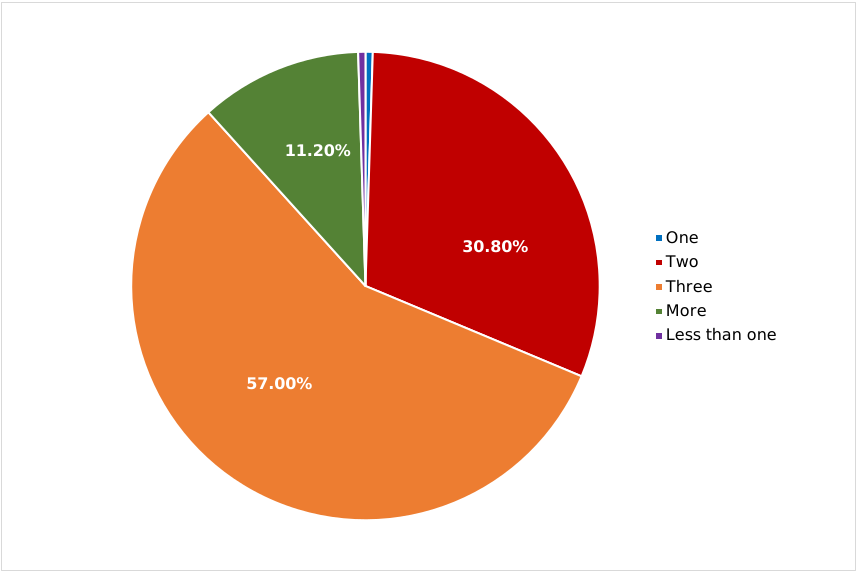
The number of meals consumed per day (Figure 6) for individuals was highest (57%) with individuals that eat 3 meals per day, followed by 30.8% of others who go on two meals per day and 11.2% that feed on more than 3 meals per day. Only 1% feed less than one meal per day.
3.3. Factors influencing food choices
This uses a 5 scale likert scale with 5 being the most liked option.
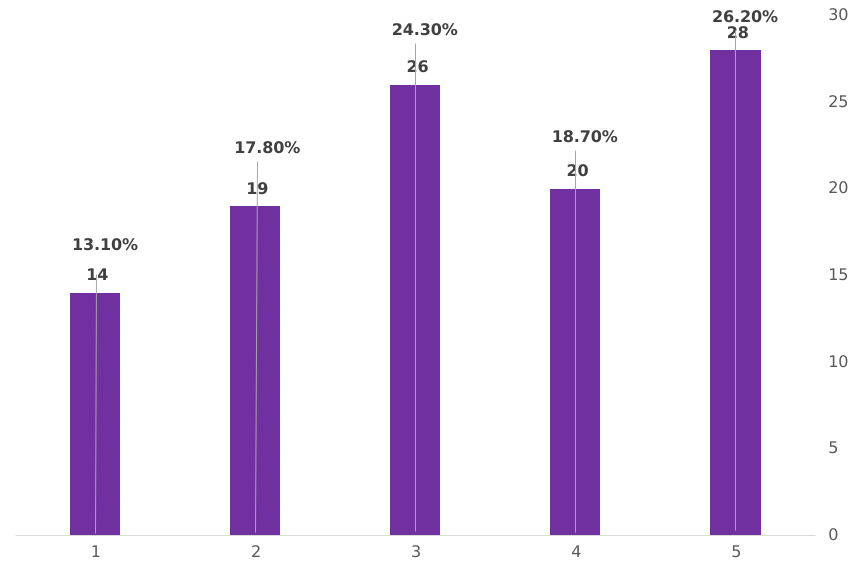
The opinions on the influence of hunger on food purchasing (Figure 7) shows that the highest 26.2% are mostly influenced by hunger and only 13.1 % don’t agree to influence by hunger at all. The rest has various degrees of agreement on hunger influences. This suggest that hunger is strong factor when reflecting to food choices
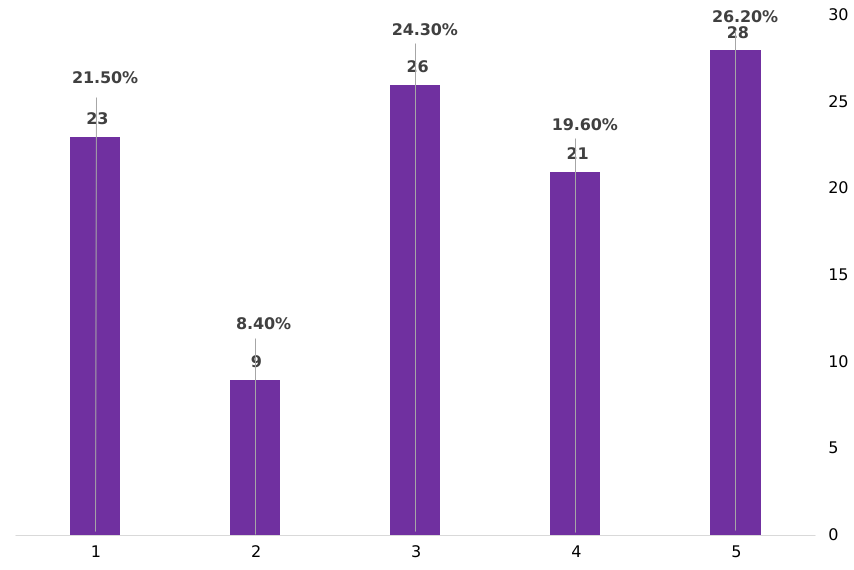
On the influence of mood (Figure 8), 26.2 % strongly agreed on the influence of when purchasing food while 21.5% did not agree while the remaining 51.7% showed various forms agreement. This indicates that factors that can influence mood can affect choices when buying food.
The likert graph (Figure 9) showed that the most agreed opinion on the influence of past experience in the purchase of food is the highest (45.8%) and the least(7.5%) goes for those with the not agreed option. This shows that past experience has strong effect in the decision to purchase food.
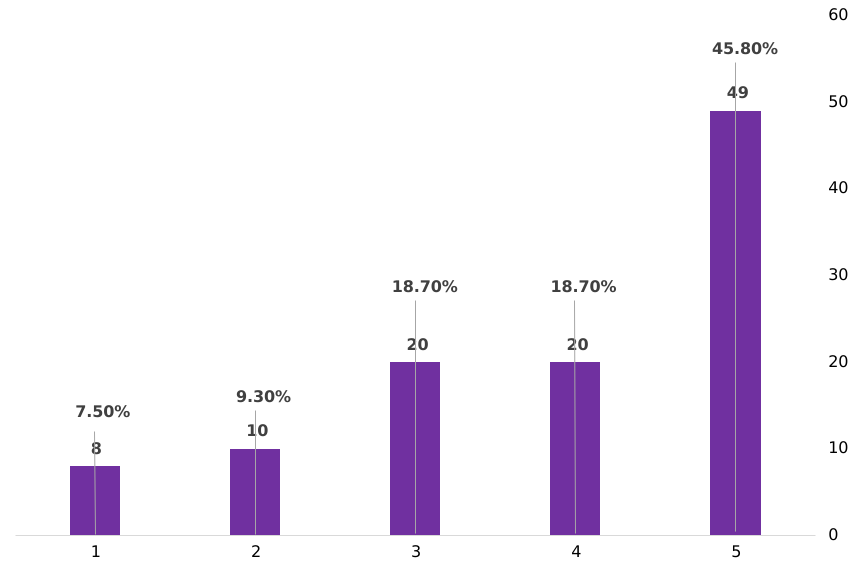
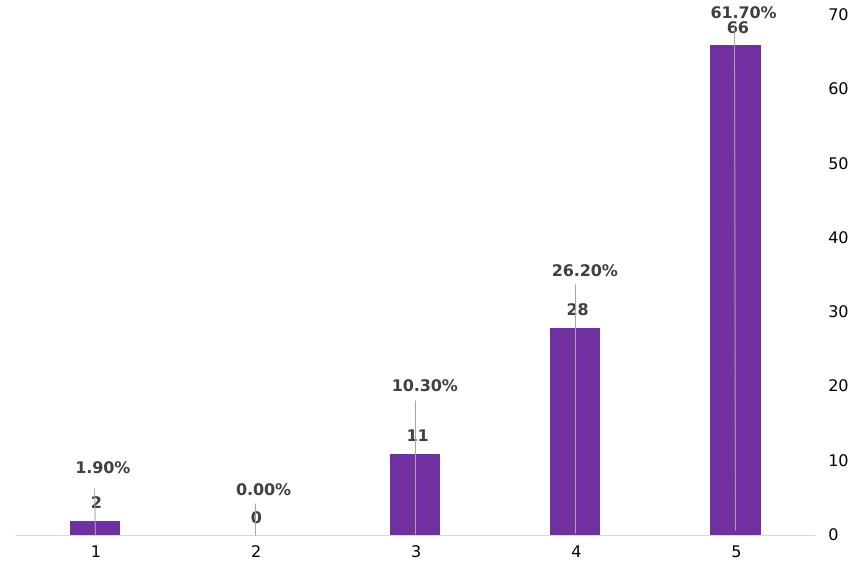
The Figure 10 showed that 66.7% mostly agreed on the influence of quality of the food product with respect to its influence on the purchasing while only 1.9 % did not agree. The quality of food or the perceived quality of food still remains a significant factor in determining food choices.
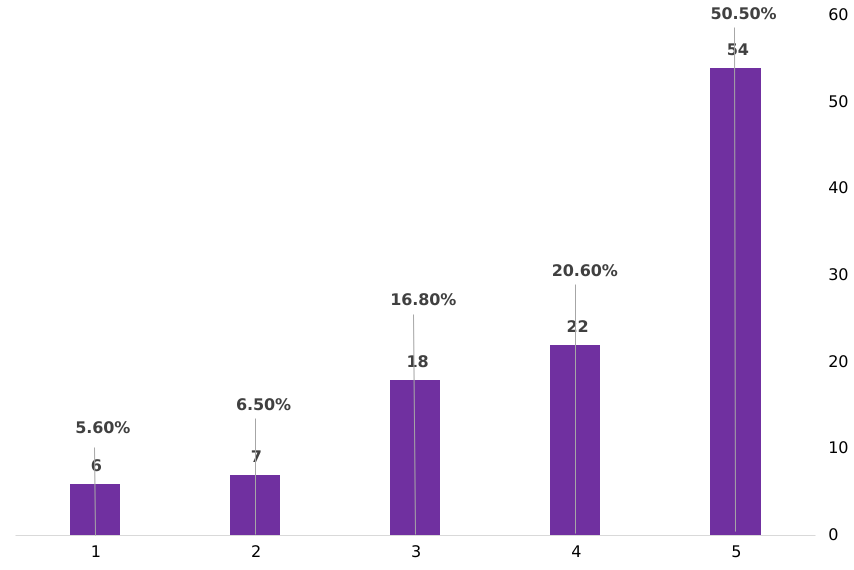
The Figure 11 shows the influence of cost as agreed by the respondents. The highest number of respondent mostly agreed (50.5%) that they are influenced by cost of the food products in making choices, leaving behind only 5.6% which did not agree. This is in reflection of the inflation trends and continues to increase in the value of food commodities with respect to the pandemic.
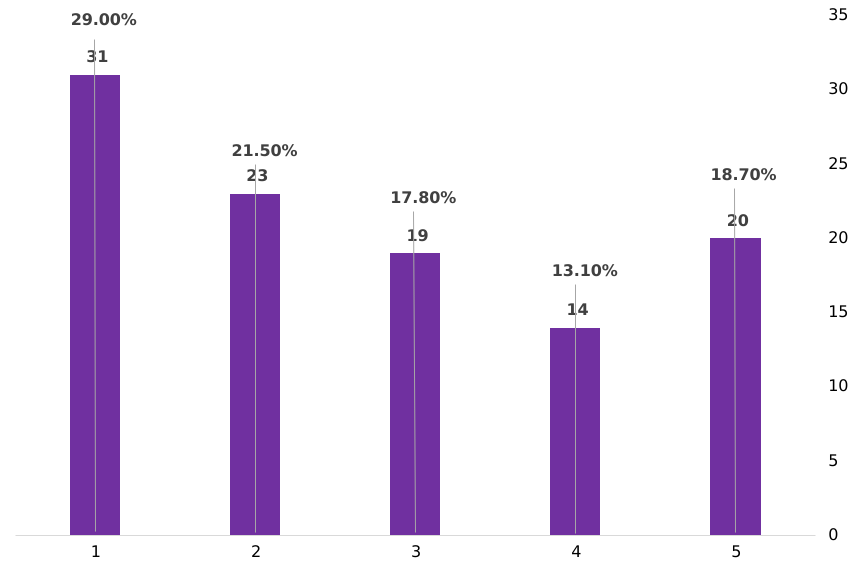
The Figure 12 shows the influence of the trend in town on food purchasing, surprisingly 29% of the population opined that they were not influenced while the remaining 69% percent had various degrees of agreement with only 18.7% mostly agreed. This may be related to the cost, with increase cost of items, the primary focus may be more centered on cost and quality rather than trend.
The Figure 13 shows the agreement on the influence of tradition, culture and religion on food purchasing choices. Of these, 19.6% did not agree on the influence of tradition, culture and religion while the rest had various forms of agreement with 29% mostly agreed. This implies that with respect to this research, culture, religion and tradition plays major roles in determining food choices.
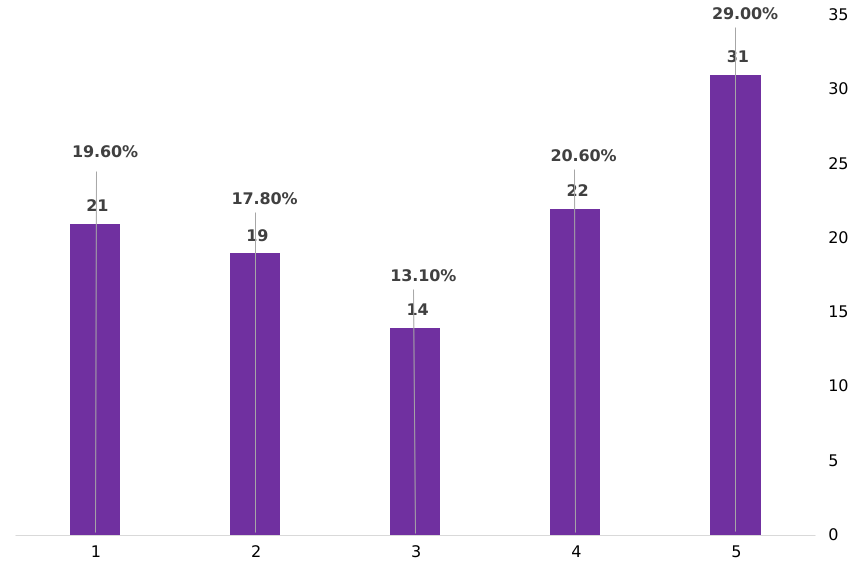
The influence of environmental impact such as global warming, etc showed (Figure 14) that 29% of the responders are mostly concerned with the effect the food has on the environment whereas 17.8% showed no interest, leaving behind 46.8% that showed various levels of agreement. This is encouraging with respect to the region where the survey is taken from. It can be considered as a reflection to the diverse campaigns against environmental hazardous practices by various agencies.
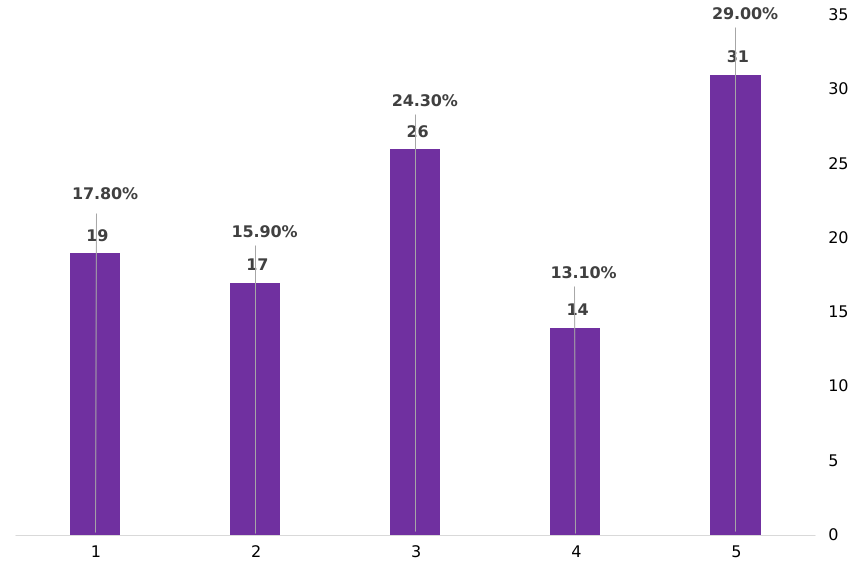
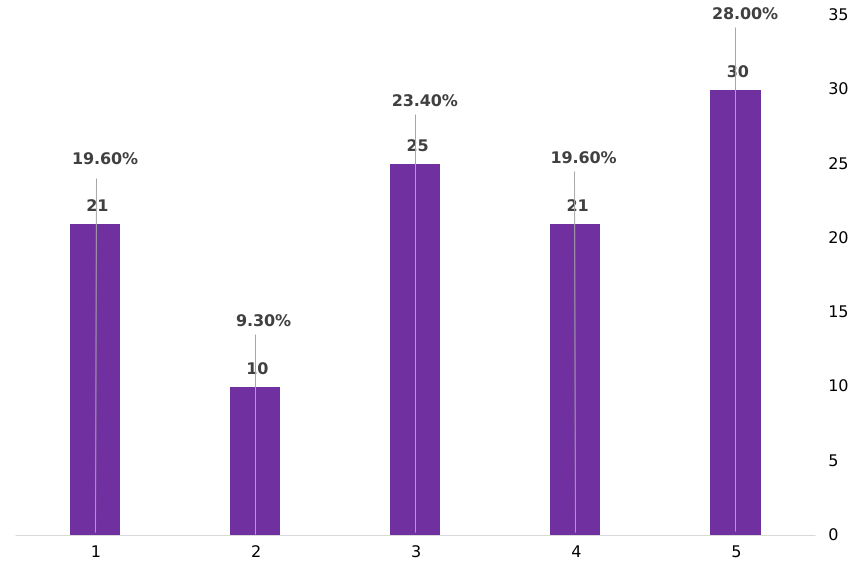
The opinion on the influence of government approval on food purchases (Figure 15) indicates that 28% mostly agreed whilst 19.6% did not agree. Other forms of agreement covered the remaining 52.4%. This suggests a reflection on the roles played by food safety regulatory agencies.
The Weighted sum, Index and Rank on Factors influencing food choices (table 1) showed that the influence of quality of food product ranked highest, followed by influence on cost. Influence of previous experience ranks third, however, others like hunger, mood, government approval, general trend, tradition (culture and religion) and global warming tailed behind accordingly. This suggests the priorities of factors that influences demand for food showing a shift from religious and government perspectives to more healthy and economic reasons. The impact that one or more people have on the eating behavior of others, whether direct (purchasing food) or indirect (learning from peer behavior), conscious (transfer of beliefs) or subconscious, is referred to as social impacts on food intake that social factors influence food choice because attitudes and habits are formed via interaction with others. According to research, food choices are shaped at home. Adopting dietary practices that are acceptable to family and friends may help the individual while also having an effect on the eating habits of others []. However, this deviation from the regular social trend could be a reflection of the economic melt own and current increased cost of living economy trend.
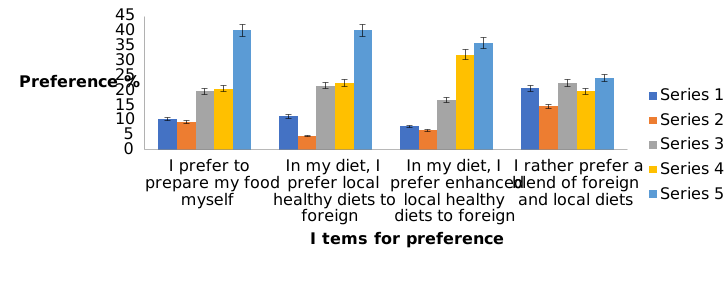
In the choice of preferences (Figure 16), 40.21% of the respondents most preferred to prepare food for themselves, however only 9.35% least preferred; similarly, 40.21% of the sample population mostly agreed the preference for local diet compared to 4.675% that did not prefer the same. Moreover, 36 % of the respondents preferred enhanced local diets where as 6.5% do not.24% of the respondents mostly preferred a blend of foreign and local diets whilst only 14.6% do not.
In 2019, a similar research conducted in Italy by [5] and others, indicated that 23.74% of respondents based their preferences on food with personal interests such as ease of preparation and other relevant categorization of food as well as. This is also in tandem with several reports on food behavior by other literature ([] and [14].
From the Table 2 above, the item with the statement “In my diet, I prefer enhanced local healthy diets to foreign” ranked highest while “I rather prefer a blend of foreign and local diets” ranked lowest. This suggest a trend of choice for a blend of traditional and foreign diets rather than a lone of either of the two (that is traditional and foreign diets); or the other statements presented in the table. Notably, Guzeketal, 2021 observed the largest variation with respect to preferences for dairy (14.6%; R2 = 0.146, p = 0.008) and vegetable (22%) which involves a blend for both traditional and foreign diets.
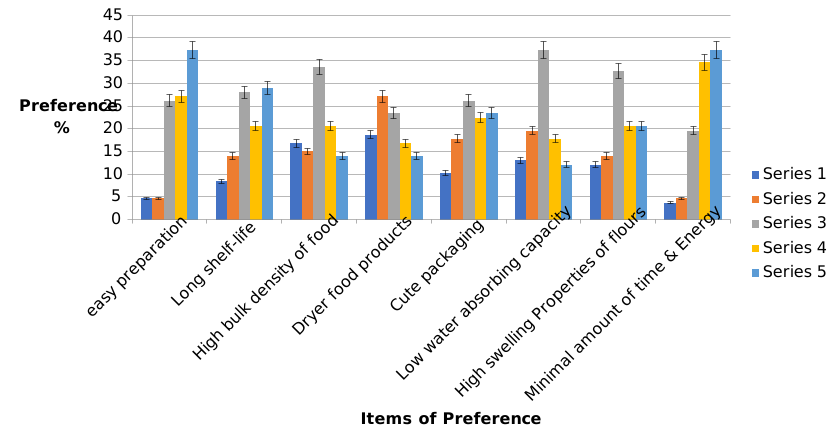
The Figure17 shows the opinions on the physiochemical properties preferred by the respondents per cent. While 37.4% mostly agreed to easy preparation, 4.47% did not. Also 29% mostly agreed on better shelf life as 8.5% did not agree. Moreover, 16% of the respondent did not agree on the high bulk density (weight property)and only 15% mostly agreed but above 50% somewhat agreed. More so, 18% did not agree on dryer food products with just only 14% mostly agreeing as the remaining percentage goes for various degrees of agreement. The cute packaging preference indicates that 23.4% mostly agreed with 10% not agreeing. The low water absorbing capacity had 13.1% of the opinions not agreeing and 12.1 % mostly agreeing, 37.4% somewhat agreed. The swelling property preference shows that a large number of the population (20.6%) mostly agreed leaving only 12.1 % not agreeing. However, 3.7 % did not agree to minimal cooking time and energy preference to food choices whilst 37.4% mostly agreed. These properties reflect the physical, chemical and cooking properties of the food substances and it affects the nutrient, cost and other values of the food. These preferences reflect their opinions on those values[14]
From the Table 3, preference for minimal cooking time and energy costs ranked highest, followed by preference for easy preparation then a better shelf-life. Cute packaging, high swelling flour properties, bulk capacity, low water absorbing capacity lines up sequentially with the preference for dryer food product coming last in the rank of preferences. This also reflects to cost saving tendencies of food consumers with respect to the season. This agrees with findings of [3] that showed that there is little doubt that food cost is a major influence of diet choice.
4. Conclusion
The choices and food preferences of individuals had been surveyed. Majority of the individuals are represented educated young people which are mostly students and unemployed. Their choice for preference for economic, nutritional and fast food viability more than the pleasures of government approval or environmental effects suggests the increasing costs of living as well as other forms of nutritional adaptations to the COVID-19 pandemic.
Acknowledgement
This is to heartily appreciate the following dear colleagues for helping to share the links to their social media platforms Messrs Adejor Jonson, Levi Chukwu, ParthPartel, Ochube Godwin and ChijiokeMadu. Much gratitude also goes to the Google, whatsapp and facebook for providing themuch needed medium for a timesuch as this.
Conflict of Interest
The authors declare there are no conflicts of interests.
Reference
- Aleksandra Sidor and Piotr Rzymski (2020). Dietary Choices and Habits during COVID 19 Lockdown: Experience from PolandNutrients, 12, 1657; doi:10.3390/nu12061657[CrossRef] [PubMed]
- Ares, G.; Gámbaro, A.( 2008). Food choice and food consumption frequency for Uruguayan consumers. Int. J. Food Sci. Nutr., 59, 211–223. www.elsevier.com/locate/appet[CrossRef] [PubMed]
- Brunner TA, van der Horst K, Siegrist M. (2010) Convenience food products. Drivers for consumption. Appetite.;55:498–506.[CrossRef] [PubMed]
- Chun Wang W, Worsley A. (2014). Who uses herbs and spices? Nutr Food Sci.;44(4):363–74.[CrossRef]
- CoralloAngelo , Maria Elena Latino, Marta Menegoli and Alessandra Spennato(2019). A Survey to Discover Current Food Choice Behaviors .Sustainability, 11, 5041[CrossRef]
- Cucinotta, D.; Vanelli, M. (2020) WHO Declares COVID-19 a Pandemic. Acta Bio-Med. Atenei Parm. , 91,157–160
- Guzek, D.; Skolmowska,D.; Gła˛bska, D.(2021) Associations between Food Preferences, Food Approach, and Food Avoidance in a Polish Adolescents’ COVID-19 Experience Study Population.Nutrients, 13, 2427. https://doi.org/10.3390/nu13072427[CrossRef] [PubMed]
- Hargreaves MK, Schlundt DG, Buchowski MS. (2002) Contextual Factors Influencing the Eating Behaviours of African American Women: A Focus Group Investigation. Ethn Health.;7(3):133–47.[CrossRef] [PubMed]
- Köster, E.P. (2009). Diversity in the determinants of food choice: A psychological perspective. Food Qual. Prefer., 20, 70–82.[CrossRef]
- Morin P, Demers K, Turcotte S, Mongeau L. (2013). Association between perceived self efficacy related to meal management and food coping strategies among working parents with preschool children. Appetite;65 :43–50. www.elsevier.com/locate/appet[CrossRef] [PubMed]
- Northern Ireland Census of Population (2011). Population and Household Results for Northern Ireland. Northern Ireland Statistics and Research Agency, Accessed at http://www.nisra.gov.uk/Census/pop_stats_bulletin_2011.pdf Accessed 12th Feb 2016.
- Roininen K, Lähteenmäki L, Tuorila H. Quantification of Consumer Attitudes to Health and Hedonic Characteristics of Foods.Appetite. 1999;33:71–88.www.elsevier.com/locate/appet[CrossRef] [PubMed]
- Sobal, J.; Bisogni, C.A. (2009) Constructing food choice decisions. Ann. Behav. Med., 38, s37 s46.[CrossRef] [PubMed]
- Food System Globalization, Eating Transformations, and Nutrition Transitions; Westview Press: Boulder,CO, USA, pp. 171–193.