

Wernicke’s encephalopathy (WE) is a neurological emergency related to a severe thiamine (vitamin B1) deficiency, an essential cofactor in cerebral energy metabolism. Although historically associated with chronic alcoholism, this condition can occur in any context of malnutrition, prolonged vomiting, or hypercatabolism. We conducted a retrospective descriptive study on seven patients admitted to our neurology department between 2015 and 2020, in order to de-scribe the clinical, radiological, and outcome characteristics of this pathology. The diagnosis was made in the presence of suggestive signs (at least two among confusion, ataxia, oculomotor disorders), a risk context of deficiency or malnutrition, typical MRI abnormalities and/or rapid improvement after thiamine ad-ministration. Our series included two male patients with chronic alcohol consumption, and five pregnant women with severe hyperemesis gravidarum, with an average age of 32.4 years. Mental confusion was the most frequent sign, followed by gait disturbances and oculomotor abnormalities. The most characteristic MRI lesions involved the thalamus, the periaqueductal region, and the mammillary bodies. All patients received high-dose intravenous thiamine supplementation (500 mg every eight hours for three days), followed by oral maintenance therapy. The outcome was favorable in five cases, while two patients had persistent memory disorders. These observations confirm that WE is not limited to alcoholic forms and must be considered in any situation with nutritional risk. Early diagnosis and rapid administration of intravenous thiamine remain essential to prevent irreversible neurological sequelae and improve functional prognosis.
Wernicke’s Encephalopathy: A Series of 7 Cases and Literature Review
November 02, 2025
December 07, 2025
December 12, 2025
December 15, 2025
This is an Open Access article, distributed under the terms of the Creative Commons Attribution 4.0 International License (http://creativecommons.org/licenses/by/4.0/), which permits unrestricted use, distribution and reproduction in any medium or format, provided the original work is properly cited.
Abstract
1. Introduction
Wernicke’s encephalopathy (WE) is a rare but serious neurological emergency secondary to a severe thiamine deficiency [1]. This vitamin is an essential cofactor in neuronal energy metabolism, particularly at the level of pyruvate dehydrogenase and transketolase [1, 2]. Its deficiency leads to an impairment ofglucose metabolism, lactate accumulation, and selective brain lesions mainly affecting the medial thalamus, the mammillary bodies, the cerebellum, and the periaqueductal gray matter [3, 7]. Clinically, the classic triad combining oculomotor disorders, ataxia, and confusion is found in less than 20% of cases [1, 3]. The diagnosis is mainly based on clinical assessment, supported by magnetic resonance imaging (MRI) which shows bilateral and symmetrical T2/FLAIR hyperintensities, characteristic but not specific [3, 7]. Although the most frequent etiology remains chronic alcoholism [1, 4], non-alcoholic forms are increasingly reported, notably in contexts of malnutrition, bariatric surgery, anorexia nervosa, or hyperemesis gravidarum. Early treatment is based on the urgent administration of intravenous thiamine, before any glucose infusion, to prevent irreversible neurological sequelae such as Korsakoff syndrome [4, 5, 6, 9]. We report here a series of seven cases of WE, illustrating the diversity of clinical contexts and highlighting the importance of early diagnosis and management.
2. Patients and Methods
We conducted a retrospective descriptive study of 7 patients admitted to our neurology department between 2015 and 2020. The diagnosis of WE was establishedbased on:
- The presence of suggestive clinical signs (at least two among confusion, oculomotor disorders, ataxia);
- Biological arguments based on thiamine dosage, or nutritional arguments linked to a proven deficiency or a context favoring its deficit;
- Typical radiological abnormalities on brain MRI;
- and/or rapid improvement after thiamine supplementation.
The collected data included: age, sex, etiological context, clinical manifestations, MRI findings, treatment modalities, and clinical outcome.
3. Results
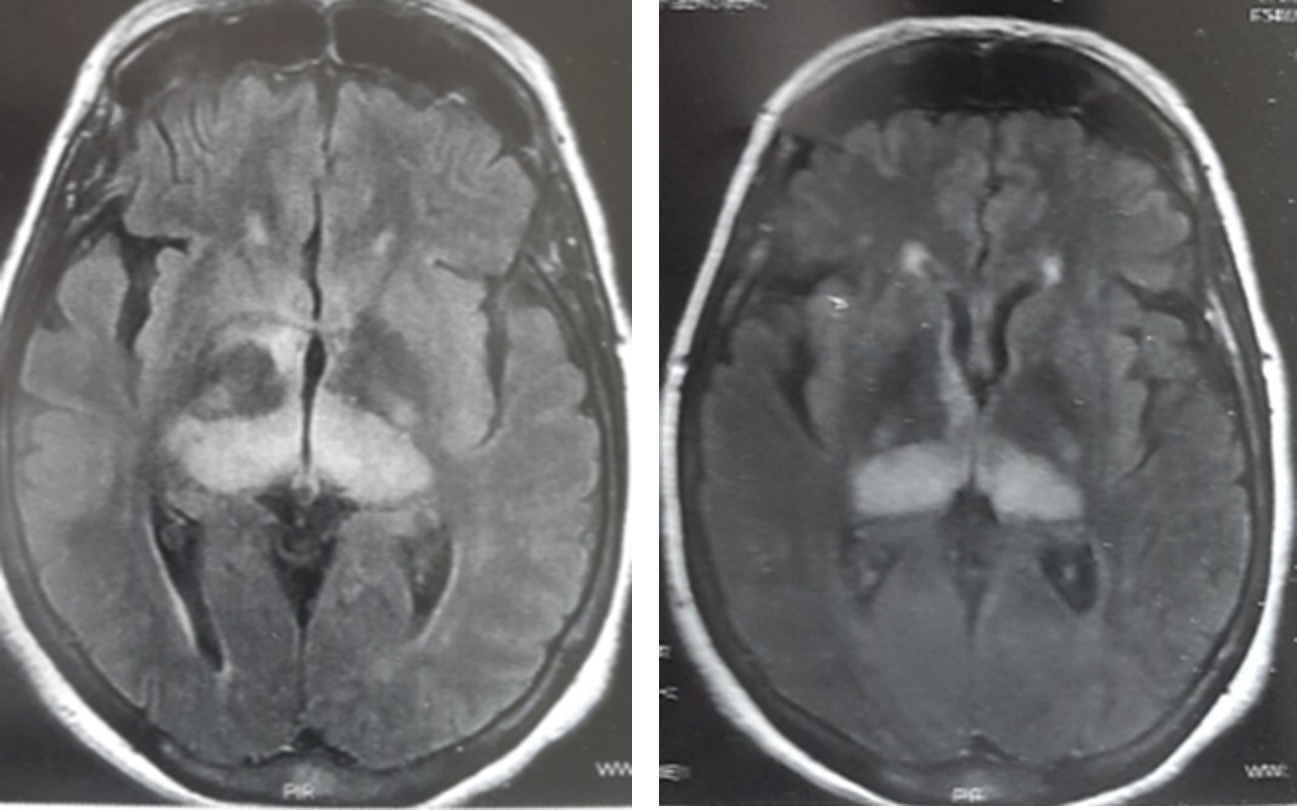
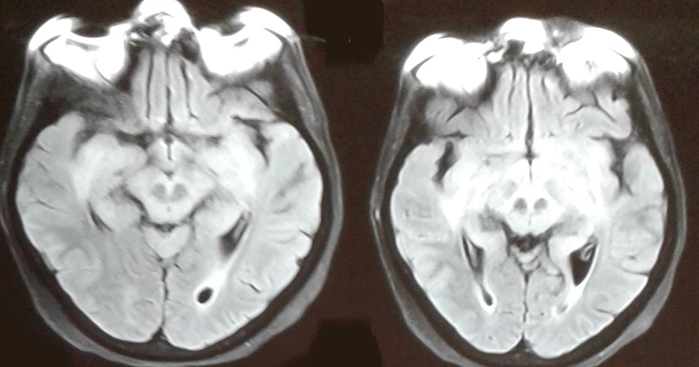
A total of seven patients were included in our series, two male patients with chronic alcohol consumption, and five pregnant women with hyperemesis gravidarum. The mean age was 32.4 years (range: 24 to 62 years), with alcoholic patients being the oldest (48 and 62 years). The initial clinical presentation was dominated by mental confusion (6/7 cases), gait and balancedisturbances (5/7 cases), as well as oculomotor abnormalities (nystagmus or diplopia) in four cases. In pregnant patients, persistent vomiting with significant weight loss was a consisten finding. The classic Wernicke triad (ophthalmoplegia, ataxia, confusion) was found in only two patients (one man with chronic alcohol consumption and one pregnant woman), highlighting its rarity in non-alcoholic forms. Overall, confusion and cognitive disorders were present in six cases, ataxia in five cases, and oculomotor abnormalities in four cases. Brain MRI showed bilateral thalamic and periaqueductal hyperintensities in five cases, involvement of the mammillary bodies in three cases, and cerebellar hyperintensities in two cases (Figure 1 and 2). One patient showed no radiological abnormalities. The treatment was based on intravenous thiamine administration (500 mg every eight hours for three days), followed by oral continuation. Rapid neurological improvement was observed in five patients, while two retained persistent memory disorders. No deaths were reported.
4. Discussion
WE remains a largely underdiagnosed neurological emergency, particularly in its non-alcoholic forms. In our series of 7 cases, two main clinical contexts were identified: chronic alcoholism (2 cases) and hyperemesis gravidarum (5 cases). This distribution illustrates the current epidemiological trends of WE, marked by a better recognition of non-alcoholic causes. This distribution is consistent with data from the literature, which report a clear predominance of alcohol-related forms, while highlighting a progressive increase in non-alcoholic forms, particularly in the obstetrical context [10, 11]. Although the most frequent etiology remains chronic alcoholism, non-alcoholic forms are increasingly reported, notably in contexts of malnutrition, bariatric surgery, anorexia nervosa, and hyperemesis gravidarum. Early treatment is based on the urgent administration of intravenous thiamine, before any glucose infusion, to prevent irreversible sequelae such as Korsakoff syndrome. WE is characterized by great clinical heterogeneity. In our series, the classic triad (confusion, ataxia, oculomotor disorders) was observed in only two patients, confirming its low diagnostic value. Several studies estimate that fewer than 20% of patients present this complete triad, which contributes to delayed diagnosis [12]. In pregnant patients, the initial symptomatology was often subtle (asthenia, irritability, headaches, gait disturbances). The absence of alcohol consumption in this group probably contributed to the delayed diagnosis, as WE is still too often perceived as exclusively linked to alcoholism [10]. In our pregnant patients, the clinical presentation was dominated by persistent vomiting, rapid weight loss, and balance disorders, whereas alcoholic patients showed marked confusion and clear oculomotor abnormalities. These differences reinforce the idea that WE should not be considered a monolithic pathology, but rather a clinical spectrum whose semiology depends on the context and etiology. The analysis of our series, compared with data from the literature, highlights several differences between alcoholic forms and those associated with hyperemesis gravidarum, presented in Table 1.
In our seven patients, the plasma thiamine level was normal in three cases and slightly decreased in the others. This observation highlights that the thiamine level in the blood is not a reliable reflection of the actual cerebral reserves, which are directly involved in the pathophysiology of WE.
Thus, the normality of the plasma level should not delay way delay the administration of thiamine, as the diagnosis remains above all clinical and radiological [15, 16]. Imaging provides undeniable support: brain MRI is a valuable tool to support the diagnosis, even though the therapeutic decision should never rely exclusively on it. In our series, the most common abnormalities were bilateral thalamic and periaqueductal T2/FLAIR hypersignals, with involvement of the mammillary bodies in 3 cases. These findings are consistent with the literature, which considers these locations as typical [13, 14].However there are also atypical forms with involvement of the cerebral cortex, notably the frontal and parietal cortex, the caudate nucleus and putamen, the cerebellum (vermis and dentate nuclei), and the splenium of the corpus callosum. These atypical lesions appear to be more frequent in young and non-alcoholic patients [17]. In our series, one patient showed no radiological abnormalities. MRI had limited sensitivity, but the diagnosis of WE was confirmed by the favorable outcome under thiamine. The sensitivity of MRI remains limited, estimated at 10-15%, particularly in the early stages where the disease may remain radiologically silent. This underlines the necessity of initiating treatment as soon as the first clinical suspicion arises [12]. Imaging should therefore remain a tool of confirmation and not a therapeutic prerequisite. In this context, thiamine plays a well-established central role in the brain’s energy metabolism. An essential cofactor of several key enzymes, thiamine is involved notably in pyruvate dehydrogenase, which ensures the conversion of pyruvate into acetyl-CoA and allows its entry into the Krebs cycle, in α-ketoglutarate dehydrogenase, an essential step in this cycle, as well as in transketolase, an enzyme of the pentose phosphate pathway involved both in NADPH production and nucleotide synthesis [12, 18].
In deficiency states, the accumulation of pyruvate and lactate induces local lactic acidosis, the decrease in ATP production alters neuronal and glial functions, and the decrease in NADPH increases vulnerability to oxidative stress. These metabolic disturbances are accompanied by deleterious consequences such as excessive free radicals causing mitochondrial damage, glutamate accumulation promoting excitotoxicity and neuronal hyperexcitability, while energy deficit and oxidative stress contribute to focal demyelination [12, 18].
This biochemical cascade explains the particular vulnerability of certain brain structures with high metabolism and low vitamin reserves, such as the mammillary bodies, medial thalamus, periaqueductal gray matter, brainstem tegmentum, and cerebellar vermis. These specific lesions reflect the classical semiology such as memory disorders related to thalamic and mammillary lesions, cerebellar-origin ataxia, and oculomotor disturbances related to the brainstem [13]. Finally, several factors aggravate this deficiency. Glucose administration before vitamin correction accentuates lactic acidosis and precipitates WE, while hypercatabolic situations such as pregnancy, infection, or surgery increase thiamine requirements. Alcohol, on the other hand, alters intestinal absorption, hepatic storage, and cellular utilization of thiamine [12]. Clinically and paraclinically, the symptomatology generally associates confusion, gait disturbances, and oculomotor abnormalities, while brain MRI reveals bilateral and symmetric T2/FLAIR hyperintensities in vulnerable areas [13]. The determination of erythrocyte transketolase, although specific, remains rarely available in routine practice. All our patients received high-dose intravenous thiamine administration (500 mg every 8 hours), as recommended by Thomson et al. (2002) [19]. However, several international protocols for IV thiamine administration in WE are described in the literature, with some variations according to reference organizations. Among these are the British recommendations (Royal College of Physicians, UK) [19], the European recommendations (EFNS – European Federation of Neurological Societies) [20], and the American recommendations (UpToDate, NIH, NIH) [21].
These different approaches are summarized in Table 2, comparing international intravenous thiamine protocols used in WE. The reference treatment is based on rapid and intensive thiamine supplementation, in order to prevent neurological sequelae. The current consensus recommends prioritizing a high initial dose of thiamine (500 mg intravenously, three times a day, for 2 to 3 days), which optimizes recovery and limits the risk of irreversible complications. This phase is followed by a maintenance dose of 250 mg/day intravenously for 3 to 5 days, then an oral switch at 100 to 200 mg/day for several weeks or even months depending on the nutritional context and the persistence of risk factors. Associated measures are essential and consist of administering thiamine before any glucose intake to avoid worsening the metabolic deficiency, ensuring adequate magnesium intake, indispensable as a cofactor for thiamine, and correcting hydration status as well as concomitant electrolyte disturbances. This protocol currently constitutes the consensual reference for the therapeutic management of WE. The outcome was generally favorable, with five patients fully recovering, while two still presented persistent memory alterations. This observation is consistent with the literature data, which report a risk of cognitive sequelae of 20-25% in case of delayed therapy [10]. Transition to Korsakoff syndrome remains one of the most feared complications, associated with major neurological disability. Hyperemesis gravidarum represents a rare but severe cause of WE. A systematic review of 177 cases [10] reported a maternal mortality rate of 5% and a fetal mortality rate approaching 50%. In our series, no deaths were observed, but one patient retained persistent memory disturbances. The pathophysiology is based on a rapid thiamine deficiency induced by intractable vomiting, worsened by the hypercatabolism of pregnancy. This situation justifies the implementation of prophylactic thiamine protocols in all patients with severe hyperemesis gravidarum, especially if hospitalization or parenteral nutrition is planned. Early treatment with thiamine is of paramount importance, as its rapid administration significantly improves prognosis. Conversely, delayed management exposes patients to irreversible sequelae, notably Korsakoff syndrome, characterized by anterograde amnesia, and lasting disorientation. In our series, the two patients who consulted late presented persistent memory disturbances. This finding is consistent with the observations of Sechi G, and Serra A [16], who emphasize the therapeutic urgency. Our series illustrates the diversity of etiological contexts of WE and the necessity of a broad diagnostic approach. While chronic alcoholism remains the dominant etiology, non-alcoholic forms, notably those related to hyperemesis gravidarum, must be systematically mentioned. Prognosis is based on the speed of diagnosis and the immediate administration of thiamine. For the neurologist, WE remains a model of metabolic emergency, where clinical vigilance takes precedence over waiting for additional tests. The practical implications of our observations, underline the importance of increased vigilance and appropriate preventive measures. WE is not limited to alcoholic contexts; any situation of prolonged vomiting, malnutrition, or hypercatabolism should attract particular attention. Prophylaxis plays an essential role, particularly in pregnant women at risk of severe hyperemesis or weight loss greater than 5%, where systematic thiamine supplementation is recommended [22]. Prognosis is closely dependent on the rapidity of diagnosis through early intravenous thiamine administration, which significantly reduces the risk of neurological sequelae [23, 24]. Finally, close collaboration between neurologists, obstetricians, and nutritionists is essential to ensure optimal management and prevent complications. [25].
5. Conclusion
Wernicke’s encephalopathy is a potentially fatal but predictable neurological pathology. Our series shows the diversity of clinical contexts and reminds us that hyperemesis gravidarum is an emerging non-alcoholic cause. Early recognition of clinical signs, the use of MRI as a diagnostic tool, and above all the simplicity of treatment through urgent thiamine administration are essential elements of effective management, thereby reducing the risk of neurological sequelae.
Conflicts of interest: The authors state that they have no conflict of interest.
Financial disclosure
The authors have not received any financial support for the research and/or publication of this article.
References
- Sechi G, Serra A. Wernicke’s encephalopathy: new clinical settings and recent advances in diagnosis and management. Lancet Neurol. 2023; 22(4) :345-356. doi: 10.1016/S1474-4422(23)00042-1.
- Oudman E, Wijnia JW, van Dam M, Biter LU, Postma A. Preventing Wernicke’s encephalopathy after bariatric surgery. Obes Surg. 2021; 31(1) :169-177. doi: 10.1007/s11695-020-05001-8.
- Manzo G, De Gennaro A, Cozzolino A, Serino M, Fenza G, Manto A. MR imaging findings in alcoholic and non-alcoholic acute Wernicke’s encephalopathy: a review. Biomedicines. 2024; 12 (3) :567. doi: 10.3390/biomedicines12030567.[CrossRef] [PubMed]
- Thompson PM, Marshall EJ, Bell D, Cook CC, Thomson AD. The Royal College of Physicians report on alcohol: guidelines for the management of Wernicke’s encephalopathy. Alcohol Alcohol. 2020; 55 (4) :403-410. doi:10.1093/alcalc/agaa028.[CrossRef] [PubMed]
- Galvin R, Bråthen G, Ivashynka A, Hillbom M, Tanasescu R, Leone MA. EFNS guidelines for diagnosis, therapy and prevention of Wernicke encephalopathy. Eur J Neurol. 2021; 28(12) :3960-3973. doi:10.1111/ene.14746.[CrossRef] [PubMed]
- UpToDate. Wernicke encephalopathy: clinical features and diagnosis. In: Martin PR, editor. UpToDate. Waltham, MA: UpToDate Inc.; updated 2024. [Disponible sur: https://www.uptodate.com]
- DiNuzzo M, Miele M, Mancini A, et al. Neuroimaging spectrum and diagnostic approach of Wernicke’s encephalopathy: lessons from 15 recent cases. Front Neurol. 2025; 16 :1566366. doi:10.3389/fneur.2025.1566366.[CrossRef] [PubMed]
- Oudman E, Wijnia JW, van Dam M. Wernicke’s encephalopathy in hyperemesis gravidarum: a review of recent cases and management strategies. Nutrients. 2023; 15 (5) :1182. doi: 10.3390/nu15051182.[CrossRef] [PubMed]
- Scalzo SJ, Bowden SC, Ambrose ML, Whelan G, Cook MJ. Wernicke–Korsakoff syndrome: aetiology, neuropsychological sequelae and rehabilitation. J Neurol Sci. 2022; 439:120328. doi:10.1016/j.jns.2022.120328.[CrossRef] [PubMed]
- Abouelbaqua K, Rebahi H, Louhab N, Kissani N, El Adib AR. Wernicke encephalopathy related to hyperemesis gravidarum: a retrospective study of 12 cases. Case Reports in Critical Care. 2025; 2025:7607058. doi:10.1155/crcc/7607058.[CrossRef] [PubMed]
- Moukit M, Belaabas S, Rahmoune M, Allilou I, Babahabib A. Wernicke’s encephalopathy complicating hyperemesis gravidarum: a case series. Int J Reprod Contracept Obstet Gynecol. 2024; 13(3) :695-698. doi:10.18203/2320-1770.ijrcog20240479.[CrossRef]
- Sechi, G., & Serra, A. (2022). Wernicke’s encephalopathy: Clinical features and pathophysiological mechanisms. Lancet Neurol, 21(8), 760-770.
- Zuccoli G, Gallucci M. Neuroimaging findings in Wernicke encephalopathy: a pictorial review. Clin Imaging. 2020; 62:93-101.
- Marra, A., Vargas, M., Striano, P., et al. (2018). Wernicke’s encephalopathy: clinical features, MR findings, and clinical pearls. Neurol Sci, 39(6), 923-931.
- Thomson AD, Marshall EJ. The natural history and pathophysiology of Wernicke’s Encephalopathy and Korsakoff’s Psychosis. Alcohol Alcohol. 2006; 41(2):151-158.[CrossRef] [PubMed]
- Sechi G, Serra A. Wernicke’s encephalopathy: new clinical settings and recent advances in diagnosis and management. Lancet Neurol. 2007; 6 (5) :442-455.[CrossRef] [PubMed]
- Zuccoli, G., & Pipitone, N. (2009). Neuroimaging findings in acute Wernicke’s encephalopathy: review of 56 cases. AJR Am J Roentgenol, 192(2), 501-508.[CrossRef] [PubMed]
- Hazell AS, Butterworth RF. Update of cell damage mechanisms in thiamine deficiency: focus on oxidative stress, excitotoxicity and inflammation. Alcohol Alcohol. 2019; 54(5): 495-503.
- Thomson AD, Cook CC, Touquet R, Henry JA. The Royal College of Physicians report on alcohol: guidelines for managing Wernicke’s encephalopathy in the accident and emergency department. Alcohol Alcohol. 2002; 37(6) :513-21. doi:10.1093/alcalc/37.6.513.[CrossRef] [PubMed]
- Galvin R, Bråthen G, Ivashynka A, Hillbom M, Tanasescu R, Leone MA. EFNS guidelines for diagnosis, therapy and prevention of Wernicke encephalopathy. Eur J Neurol. 2010 Dec; 17(12) :1408-18. doi:10.1111/j.1468-1331.2010.03153.x.[CrossRef] [PubMed]
- So YT. Wernicke encephalopathy. In: Post TW, editor. UpToDate. Waltham (MA): UpToDate; updated 2024. Available from: https://www.uptodate.com
- Angela Feagan Clark.Use of Thiamine Supplementation in Pregnant Women Diagnosed With Hyperemesis Gravidarum and Wernicke Encephalopathy. Nurs Womens Healt. 2024 Jun; 28(3) :222-226. Doi: 10.1016/j.nwh.2024.02.003. Epub 2024 Mar 22.[CrossRef] [PubMed]
- Khadija Saghir et al. Wernicke encephalopathy secondary to hyperemesis gravidarum: Third level hospital experience Journal of neurological sciences. Volume 429, Supplement 118613 October 2021.[CrossRef]
- Palmirotta C, Turi G, Tagliente S, Pansini M, De Trane S, Lagravinese G. The effects of intensive rehabilitation combined with thiamine treatment on cognitive recovery in a case of non-alcoholic Wernicke-Korsakoff syndrome. Neurol Int. 2024; 16(1) :263-73. doi: 10.3390/neurolint16010018.[CrossRef] [PubMed]
- Habas E, Farfar K, Errayes N, Rayani A, Elzouki AN. Wernicke encephalopathy: an updated narrative review. Saudi J Med Med Sci. 2023; 11(3) :193-200. doi:10.4103/sjmms.sjmms-416-22.[CrossRef] [PubMed]