

Healthcare is increasingly recognized as a data-intensive industry. Multi-hospital networks, among other organizations, face mounting operational and governance challenges because of rigid data-integration pipelines that support all data sources and destinations in the network. These pipelines have become difficult to modify, causing them to lag behind the changing needs of the clinical operation. Scalable data-pipeline architectures better support clinical decision making, optimize hospital operations, ease data quality and compliance concerns, and contribute to improved patient outcomes. Meeting scalability goals requires breaking up monolithic data-integration pipelines into smaller decoupled components and aligning service-level agreements of pipeline components and source systems. Parallelization and adoption of distributed data-warehouse technology mitigate the burden of ingesting data into a multi-hospital network. However, latency requirements still warrant the construction of separate pipelines for data ingress from clinical devices, electronic health records, and external laboratory-information systems. Healthcare associations recommend near real-time data availability for a growing list of clinical and operational applications. Mishandling the real-time ingestion of data from clinical devices, in particular, compromises availability and performance. Scalable architectural patterns for real-time streaming Ingestion from heterogeneous data sources, transport processes, and back-end processing structures are detailed.
Designing Scalable Healthcare Data Pipelines for Multi-Hospital Networks
October 02, 2021
November 09, 2021
December 22, 2021
December 26, 2021
This is an Open Access article, distributed under the terms of the Creative Commons Attribution 4.0 International License (http://creativecommons.org/licenses/by/4.0/), which permits unrestricted use, distribution and reproduction in any medium or format, provided the original work is properly cited.
Abstract
1. Introduction
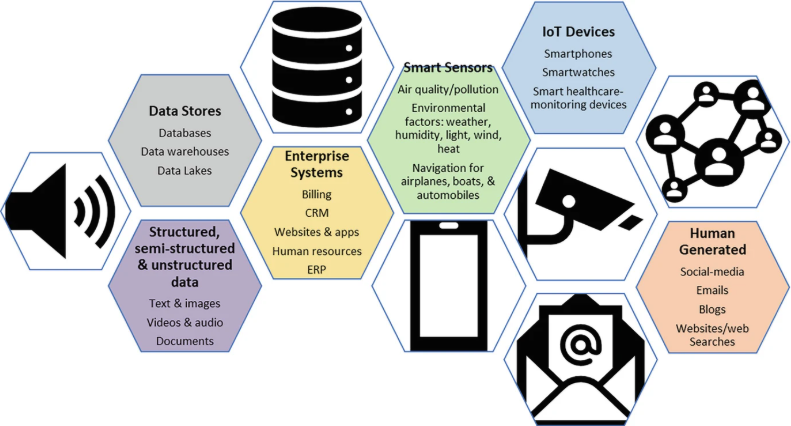
Instead of merely accumulating large data lakes in a distributed manner, a healthcare data pipeline must provide core administrative, governance, and integration capabilities across hospitals. To meet the needs of healthcare networks at scale, design goals for a data pipeline include modularity, elasticity, observability, security-by-design, and standards-driven observability [4].
Healthcare organizations in the United States and around the world are striving to overcome clinical decision-support silos that inhibit coordinated care across multiple hospitals [5]. Health outcomes worsen with patient transfers among hospitals as caregivers lose situational awareness. Latency requirements demand a new approach that allows near real-time monitoring and analytics for data science, operational management, and clinical decision support [6]. In practice, hospitals continuously ingest and process information generated by the electronic health record (EHR) system, devices, imaging, social determinants, and external laboratories [7]. Although wide-area communication is relatively slow, data volumes and velocity have reached the point where bundling and managing these workloads through a central pipeline is no longer feasible [3]. Consequently, patient monitoring is often limited to the hospital exhibiting clinical responsibility, and early warning systems that could alert external caregivers remain unrealized [8].
Healthcare data pipelines must evolve beyond passive, centralized data lake architectures toward intelligent, federated platforms that embed governance, security, and interoperability as foundational capabilities rather than afterthoughts [9]. As healthcare networks grow more interconnected, pipelines must be modular and elastic to support heterogeneous workloads, while providing consistent administrative control, policy enforcement, and standards-based observability across institutions [10]. The persistent fragmentation of clinical data silos directly undermines coordinated care, particularly during patient transfers, where incomplete situational awareness contributes to adverse outcomes [11]. Meeting stringent latency requirements for near real-time analytics and clinical decision support necessitates a distributed processing model that brings computation closer to data sources, enabling continuous ingestion from EHR systems, medical devices, imaging platforms, social determinants sources, and external laboratories without reliance on slow wide-area aggregation [2]. By adopting a security-by-design, interoperable, and observability-rich architecture, healthcare organizations can unlock cross-hospital early warning systems, shared patient monitoring, and collaborative analytics transforming raw data streams into actionable intelligence that supports timely, high-quality, and coordinated patient care [12].
1.1. Background and Significance
Isolated data silos in healthcare networks impede timely access to consolidated datasets for business and data science applications [13]. Suppliers and vendors focused on real-time monitoring and digital transformation mandate low-latency data movement between hospital systems, capitalizing on operational uptime [14]. In some instances, data-fusion and decision-support tasks are becoming more complex, as seen in multi-hospital networks where patient queries can span multiple places of care [1]. These inefficiencies are often linked to a lack of integration [15]. Traditional approaches that bolt-on an enterprise platform add yet another data silos for sensitive healthcare information unless a rigorous data stewardship program is followed [16]. They also require a specialized team for implementation that is expensive to hire and hard to retain. And even the smaller scale implementation may include hiring cloud resources with deep cloud-specific expertise [17].
A scalable architecture provides a different approach. Rather than bolt a “one-size-fits-all” solution onto a data ecosystem, it visually draws architectural principles based on the quality of service expectations of various data use cases [18]. By decoupling the various data pipeline components, it become possible to align execution with the needs, performance profile and depth or breadth of analysis [19]. Using different hosting strengths to provide transaction-based services and batch-based analysis improves the time and cost of delivery and support where the assets are deployed [20]. Such an architecture is also easier to adapt and maintain over time since specialized teams can support the individual components without having to understand the nitty-gritty of the entire data ecosystem [21].
Equation 1: SLA fundamentals: latency, availability, completeness
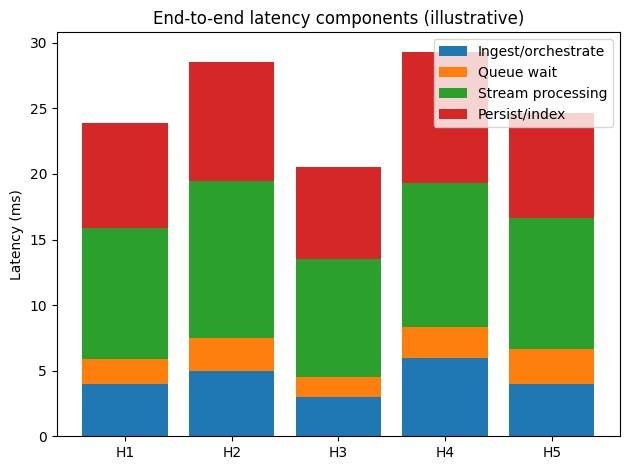
Define per-event latency components:
- : time to capture/normalize at source (or edge)
- : waiting time in message broker / buffer
- : compute time in stream processor
- : time to write to storage/warehouse/index
Equation (sum of stage latencies):
2. Background and Rationale
Evidence-based analysis highlights scalability in designing data pipelines that support multi-hospital networks. Scalability is critical as service quality, patient safety, and costs depend on timely access to sensitive clinical information [22]. Scalability considerations help maintain tight service level agreements for latency, completeness, and availability. A scalable pipeline supports data governance, provenance, and compliance with regulations such as HIPAA [23]. Scalability is also important for AI-based predictions and data quality monitoring [24]. Shifting architectural principles from monolithic systems to scalable distributed designs enables greater modularity and elasticity, promotes observability, enforces security-by-design, and enables interoperability using established standards [25].
Healthcare delivery in the United States has experienced a paradigm shift in recent years, leading patient care to be centralized in multi-hospital networks [26]. A scalable data engineering pipeline is essential to meet health systems’ growing information needs; evidence demonstrates that timely access to sensitive clinical information improves patient outcomes and reduces costs, while data compliance with regulations such as HIPAA minimizes risks to patients and health systems [27]. However, panic-induced inaction has largely converted the data and analytics landscape into a series of disparate, localized data silos supporting specific projects with limited returns and repeated costs [28]. A considerable gap exists between the original growth ambitions and the actual state of the infrastructure, which is neither scalable nor fault-tolerant. Indeed, especially during the COVID-19 pandemic, data-informed prediction of healthcare system utilization has proven timely availability of relevant information to decision-makers a paramount factor in ensuring security, quality, and safety in service delivery [29]. Therefore, providing healthcare operators with near-real-time advanced notifications of service latency, quality, and completeness failures could greatly improve both the quality of service delivery and clinical decision-making [30].
2.1. Research design
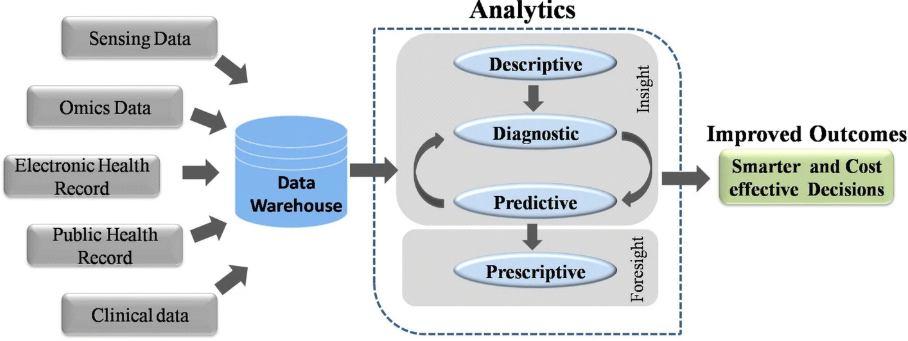
The research design constitutes a comparative analysis evaluating architectural patterns in the expansion, adaptation, and integration of data-processing pipelines within multi-hospital networks [31]. It defines the desired characteristics of a scalable pipeline, formulates four hypotheses concerning the choice of components and design principles, identifies critical factors for governance and clinical decision support, specifies criteria for comparing traditional and newly proposed solutions, and describes the simulated data scenarios employed to validate the evaluation framework [32]. Data partitions serve as the experimental setting, while the availability of the Data Pipeline Patterns for Healthcare scale and the ongoing Google Data Analytics Capstone project for Coursera provide the empirical foundation [33].
A multi-hospital network management team has requested recommendations on the pipeline design option to pursue for new data sources with different latency requirements [34]. Scalability has been defined as the system’s ability to accommodate concurrent users and data volume growth with manageable cost; quality is often an implicit requirement [35]. However, criteria such as responsiveness, tolerance of unanticipated changes, intrusion into standard operations, and compliance with data-governance policies are also of strategic significance [36]. In the context of a multi-hospital network, quality has been explicitly linked to the capacity to consolidate, cleanse, and harmonize data in close to real time [37].
Equation 2: Availability (simple definition used in ops)
Let:
- MTBF = mean time between failures
- MTTR = mean time to repair
Then:
If a pipeline has multiple required components in series (all must be up), a simple approximation is:
3. Architectural Principles for Scalability
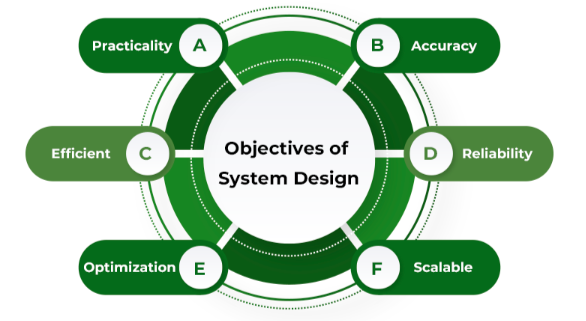
Defining core architectural principles serves two purposes. First, identifying common qualities in scalable healthcare pipelines normalizes future comparisons and charts potential deviations. The focus is on modularity, elasticity, observability, security-by-design, and standards-driven interoperability [38]. The second aim is guidance for concrete architectures. A clear articulation of the desired properties informs the design of specific pipeline components and their interconnections. Individual pipelines can then adopt differentiated architectural choices, provided that the resulting components satisfy the principles [39].
At a high level, the key requirement is that each pipeline can respond independently to increments in data volume and velocity [40]. Synchronous requests from clinical applications must remain responsive even when data is being ingested from multiple sources or the volume of back-end processing grows [41]. Modular component design is essential to achieving this decoupling, together with observability tooling that monitors the load on different stages and supports dynamic scaling decisions [42]. Hospitals are often required to follow strict security and governance processes on data usage [43]. Therefore, it makes sense to manage the ingestion workload independently and schedule these tasks according to local policies, without incurring excessive delays. For this purpose, an event-driven architecture decouples the source data from its destination through a messaging system [44]. Such an architecture further facilitates the integration of healthcare devices and third-party data sources [45].
Defining core architectural principles establishes a foundation for building scalable, resilient healthcare data pipelines while enabling consistent evaluation across diverse implementations [46]. By emphasizing modularity, elasticity, observability, security-by-design, and standards-driven interoperability, organizations can normalize how future architectures are compared and identify meaningful deviations from best practice [47]. At the same time, these principles provide actionable guidance for concrete system design: individual components and their interconnections can vary in technology or topology, as long as they collectively uphold the desired properties [48]. Central to this approach is the requirement that each pipeline scale independently in response to changes in data volume and velocity, ensuring that synchronous clinical workloads remain responsive even as ingestion rates or downstream processing demands increase [49]. Modular, loosely coupled components supported by comprehensive observability and dynamic scaling mechanisms enable this decoupling, while strict security and governance considerations motivate independent management of ingestion workflows in accordance with local policies [50]. An event-driven architecture, built around messaging systems, further reinforces these goals by separating data producers from consumers, enabling asynchronous processing, and simplifying the integration of heterogeneous healthcare devices and third-party data sources without introducing excessive latency [51].
3.1. Data Partitioning and Sharding
Architectural scalability is a multidimensional property, and there are many ways to approach it. Regardless of the strategy chosen, it is often desirable to reduce cross-location traffic, since different hospitals within a healthcare network will usually be in different geographical regions, with the associated latency, internet egress costs, and data exfiltration risk [52]. Data partitioning at the pipeline level can help achieve this goal [53]. By orchestrating the routing of data flows according to logical partitioning strategies, data ingress points in individual hospitals are able to ingest data only for the local environment [54]. In the case of a clinical notification pipeline that sends real-time alerts by integrating the events emitted from streaming data models per hospital, partition keys could be designed to choose the correct endpoint based on the patient context [55].
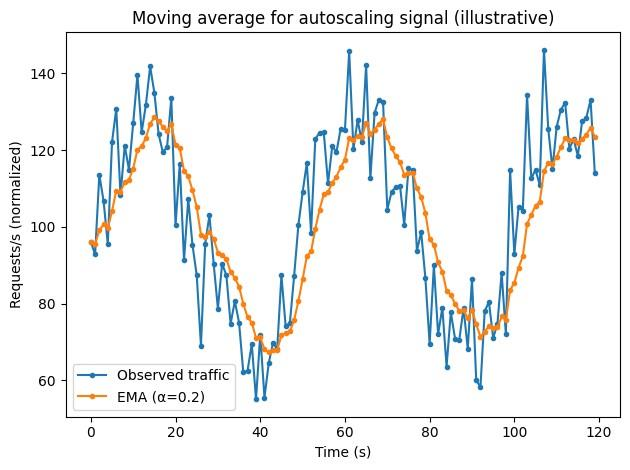
Modifying the traffic direction and the way message queues are used in a data pipeline is a classic method for ensuring elasticity. For example, when patient entities are assigned to hospital groups that serve as clusters, a pool of application server clusters can be deployed for each group. A load balancer manages incoming traffic from users and dispatches onto the cluster [56]. As hospitals migrate to more important parts of the architecture, be it ingestion or consumption, a moving average can be applied to key monitoring parameters such as resource consumption or traffic rate. A smooth increase or decrease will be controlled by the pools of containers running inside Kubernetes or App Engine [57].
Equation 3: Completeness (data quality / missingness rate)
Let:
- = events expected in a time window
- = events actually ingested (after dedupe rules)
Then:
and missingness:
4. Data Models and Schema Management
Flexible data models accommodate the inevitable evolution of upstream business systems while supporting data quality, traceability, and regulatory compliance [58]. Everything should change so that everything can stay the same. Or so argues the character Tancredi in Tomasi di Lampedusa’s novel The Leopard, a tale of the decline of the Sicilian aristocracy in the 19th century. This notion is frequently whimsically rendered as If you want things to stay the way they are, things will have to change [59].
Changing things is certainly the case when it comes to the Healthcare industry, with new regulations, consolidation pressures, heightened patient experience demands, and emerging technology reshaping virtually every aspect of service delivery. These changes reverberate both upstream and downstream of an organization. For example, to support a heightened focus on patient outcome, Electronic Health Records (EHRs) now often require far more associated metadata to be meaningful and useful than was the case just a few years ago [60]. Driving these changes is the growing realisation that a robust machine learning based data-driven approach can provide solutions to many of the challenges faced by Healthcare organisations today. Common examples include predictive staffing, preventive medicine, and risk determination to name just a few [61]. However, the foundation of any data-driven approach is high quality data. To be useful, such data must also be timely, and yet these changes are introducing delays and silos in the creation of new data [62].
4.1. Domain-Driven Modeling in Healthcare
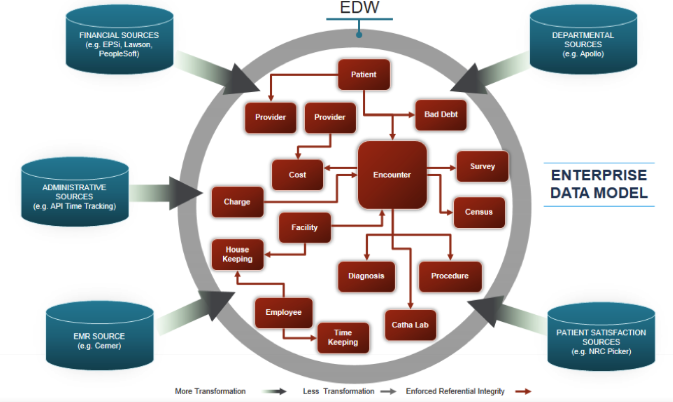
Healthcare data can be divided into five major domains, each with specific concerns and regulations [63]. Compliance with the respective regulations is important to guarantee data quality before the information is reflected on data models and used for further analysis [64]. The most critical domains include clinical, administrative, billing, and operating. Furthermore, the U.S. Government and international relations created and still support two main standards for data and information interchange and transmission among and between healthcare providers, agencies, and organizations [65]. The last important component of the domain dashboard is the glossary, which presents the terms used and their meanings, constituting a ubiquitous language for the healthcare domain model [66].
A bounded context describes an explicit agreement between all partners concerning the meaning of a term; in the healthcare environment, it refers to the definitions presented by the main standards that rule the respective domain [68]. Clinical information corresponds to the established standard for clinical information interchange and transmission exchange format. Information for an operation is the standard dedicated to information interchange, which also concerns major clinical equipment in the healthcare system [69]. Billing information corresponds to the billing systems and processes in a healthcare organization, while administration refers to the administration of patients’ data in a healthcare system. The glossary uses terms from those domains to connect and explain the data. In addition to the definitions of external standards, it also contains explanations for other terms [70].
Equation 4: Queueing + back-pressure for real-time ingestion
Let:
- = arrival rate (events/second)
- = service rate (events/second)
Utilization:
Stability condition (no unbounded backlog):
5. Data Ingestion and Integration Strategies
Designing Healthcare Data Pipelines for Multi-Hospital Networks: Data Ingestion and Integration Strategies across Heterogeneous Sources and Formats. The proposed designs for a network of healthcare data pipelines address not only the volume and velocity of data arrival but much more, including the variety of data formats and structures from different software applications, the quality demands of the data, auditability and lineage tracking, and so forth. Such elements are expected to be crucial for scalable data pipelines [70]. An analysis of the gap between the desired properties of the data and those imposed by the sources leads to the choice of using data pipelines rather than simply data lakes for data storage [71].
Data pipelines are an attractive option for responding to the assimilation of heterogeneous and complex data generated within a hospital context thanks to their properties of accessibility, auditability, reliability, and governance; these properties arise from the layered architecture that pipelines follow, allowing the construction of dedicated components responsible for these aspects [72]. Above all, the concept of data governance is capital for organizations that work with data about patients and it includes aspects of importance for the ownership of the data, de-duplication, consistency, relationships with several other components, and much more. A complete data governance, taking care of all the elements above, is usually tackled by projects of dedicated MDF [73]. Nevertheless, when the data is processed in a pipeline, the governance aspects can already be introduced with the corresponding data quality checks, because the modern trend is that the raw data should be kept as long as possible and usually in the level 0 of the data lake [74]. Therefore, it is enough that the data quality framework only takes care of the data generated by the pipeline since they should be already governance compliant. Indeed, the additional challenge consists of taking care of the missing data in an external provenance system [75].
The design should ensure that a proper level of quality is given to the data when inserted in the data lake; the clear definition of markers in the data can play a big part in the data quality, allowing the detection of duplicate records for example [76].
Equation 5: Little’s Law (very common in pipeline sizing)
Let:
- = average number of events “in the system”
- = average time an event spends in the system
Little’s Law:
5.1. Real-Time Streaming Ingestion
Real-time streaming architectures address the need to minimize event latency by capturing high-update-rate events immediately at source [77]. A sequential data-flow composed of ingest orchestration, persist-and-forget messaging, and stream processing steps allows decoupling of the components, enabling independent scaling with respect to back-pressure handling, horizontal elasticity, and capability alignment with the service level agreements for event read access defined by the consumers [78]. Depending on the source of the stream, additional quality and consistency mechanisms may need to be integrated into the design [79].
In healthcare environments, devices are the most straightforward source of real-time streams, typically emitting well-formed events heralding not only the physical measures but also the context of the measurements (e.g., patient ID, creation timestamp). Stream ingestion from Electronic Healthcare Records continues to be a challenge, as clinical workflows do not permit interruption upon individual event generation [80]. The event sources are typically append-derived tables, where a record (orm) has been inserted or modified in the last transaction. Messages emitted from other system components (external laboratories, billing) are customarily unaffected by these limitations [81].
6. Conclusion
Scalability is crucial to data pipelines enabling healthcare data governance, governance that directly influences patient outcomes, compliance with regulations such as HIPAA, and financial costs [82]. Demand for real-time data access and for supporting advanced clinical analytics exacerbates the pain points caused by data silos within a healthcare organization: prolonged response times, inaccuracy, inconsistency, and poor trust, among others. Such growing demands call for new approaches, and adopting a scalable architecture provides one such avenue [83]. Pipelines built on simplicity, modularity, observability, security-by-design, and EMT-based construction simplify the implementation and meet Service Level Agreements (SLAs). These qualities become even more crucial for pipelines deployed across multiple hospitals forming a healthcare network, where each hospital is serving a different patient population and typically governed by different management [84]. Constructing a pipeline that scales beyond the constraints of a single hospital, such as ingesting hundreds of millions of events per day and harmonizing data across hospitals to deliver low-latency services, introduces complexity into the architecture and required ingestion strategy [85].
Comparing the architecture applied for the baseline pipeline and a scalable pipeline reveals how moving from a monolithic to a scalable architecture increases the glue code required to manage interactions between different components of the system yet enables other aspects of the design to be simplified [86]. In addition, the data volume and variety typical for a multi-hospital setup enjoy the presence of a dedicated governance layer accessible to hospital administrators, enabling these authorities to respond to data quality issues before they affect clinical decision support systems [87].
6.1. Future Trends
Scalable data-pipeline middleware could evolve in several ways. Advances in clinical-data discovery platforms should improve support for scalable deployments, enabling hospitals to better catalogue and manage data datasets that support disparate requirements. AI-assisted data harmonization-as-a-service may facilitate faster consumer access to quality data without succumbing to the pitfalls of the sloppy-data phenomenon [88]. Privacy-preserving analytics techniques that guarantee compliance with data-minimization principles could lessen privacy-related concerns and enable wider use of sensitive data without compromising confidentiality [89]. Lastly, future regulatory guidance from the United States, European Union, United Kingdom, and other jurisdictions should clarify concepts around data collation, sharing for societal benefit, and use of identifiable and quasi-identifiable information [90].
Design-science research could practically contribute to these future trends. Exploratory work could investigate the promise of generic middleware systems and components, such as those for data access and quality, support for Latin American and European health standards and data collation in the clinical domain [91]. Design work could provide a real-time stream-based reader component that supports advanced back-pressure management and low-latency usage, together with support for EHR digitization and the scrubbing and tagging of free-text clinical documents. A simple validation procedure could also strengthen it by measuring latency and data volume for a defined period, job performance, resource footprint, and operational issues [92].
References
- Abadi, M., Barham, P., Chen, J., Chen, Z., Davis, A., Dean, J., … Zheng, X. (2016). TensorFlow: A system for large-scale machine learning. Proceedings of the 12th USENIX Symposium on Operating Systems Design and Implementation, 265–283.
- Yandamuri, U. S. (2021). A Comparative Study of Traditional Reporting Systems versus Real-Time Analytics Dashboards in Enterprise Operations. Universal Journal of Business and Management.[CrossRef]
- Allen, M. R., & Stott, P. A. (2003). Estimating signal amplitudes in optimal fingerprinting, Part I: Theory. Climate Dynamics, 21(5–6), 477–491.[CrossRef]
- Dwaraka Nath Kummari, Srinivasa Rao Challa, "Big Data and Machine Learning in Fraud Detection for Public Sector Financial Systems," International Journal of Advanced Research in Computer and Communication Engineering (IJARCCE), DOI: 10.17148/IJARCCE.2020.91221.[CrossRef]
- Babcock, J., Bekkerman, R., & Bilenko, M. (2018). Machine learning and data mining for climate science. ACM Computing Surveys, 50(3), 1–36.[CrossRef]
- Goutham Kumar Sheelam, Botlagunta Preethish Nandan, "Machine Learning Integration in Semiconductor Research and Manufacturing Pipelines," International Journal of Advanced Research in Computer and Communication Engineering (IJARCCE), DOI: 10.17148/IJARCCE.2021.101274.[CrossRef]
- Kolla, S. H. (2021). Rule-Based Automation for IT Service Management Workflows. Online Journal of Engineering Sciences, 1(1), 1–14. Retrieved from https://www.scipublications.com/journal/index.php/ojes/article/view/1360[CrossRef]
- Nandan, B. P., Sheelam, G. K., & Engineer Sr, I. D. Data-Driven Design and Validation Techniques in Advanced Chip Engineering.
- Easterbrook, S. M. (2014). Climate science: A grand challenge for scientific software. IEEE Software, 31(3), 14–16.
- Meda, R. End-to-End Data Engineering for Demand Forecasting in Retail Manufacturing Ecosystems.y. Proceedings of the National Academy of Sciences, 110(30), 12219–12224.
- Gebbie, G., & Huybers, P. (2019). The mean age of ocean waters inferred from radiocarbon observations: Sensitivity to surface sources and data sparsity. Journal of Physical Oceanography, 49(4), 997–1016.
- Meda, R. (2019). Machine Learning Models for Quality Prediction and Compliance in Paint Manufacturing Operations. International Journal of Engineering and Computer Science, 8(12), 24993–24911. https://doi.org/10.18535/ijecs.v8i12.4445.[CrossRef]
- Giorgi, F., & Gutowski, W. J. (2015). Regional dynamical downscaling and the CORDEX initiative. Annual Review of Environment and Resources, 40, 467–490.[CrossRef]
- Inala, R. Designing Scalable Technology Architectures for Customer Data in Group Insurance and Investment Platforms.
- Grolinger, K., L’Heureux, A., Capretz, M. A. M., & Seewald, L. (2016). Energy forecasting for event venues: Big data and prediction accuracy. IEEE Access, 4, 7419–7430.[CrossRef]
- Aitha, A. R. (2021). Optimizing Data Warehousing for Large Scale Policy Management Using Advanced ETL Frameworks.[CrossRef]
- Hegerl, G. C., Zwiers, F. W., Braconnot, P., Gillett, N. P., Luo, Y., Marengo Orsini, J. A., … Zhang, X. (2007). Understanding and attributing climate change. In S. Solomon et al. (Eds.), Climate change 2007: The physical science basis (pp. 663–745). Cambridge University Press.
- Segireddy, A. R. (2021). Containerization and Microservices in Payment Systems: A Study of Kubernetes and Docker in Financial Applications. Universal Journal of Business and Management, 1(1), 1–17. Retrieved from https://www.scipublications.com/journal/index.php/ujbm/article/view/1352.[CrossRef]
- Horel, J. D., Skokan, C., Xu, Q., & Snyder, C. (2002). Mesoscale data assimilation for prediction. Bulletin of the American Meteorological Society, 83(2), 195–212.
- Segireddy, A. R. (2020). Cloud Migration Strategies for High-Volume Financial Messaging Systems.[CrossRef]
- IPCC. (2013). Climate change 2013: The physical science basis. Cambridge University Press.
- Gottimukkala, V. R. R. (2021). Digital Signal Processing Challenges in Financial Messaging Systems: Case Studies in High-Volume SWIFT Flows.[CrossRef]
- Kalnay, E. (2003). Atmospheric modeling, data assimilation and predictability. Cambridge University Press.[CrossRef]
- Pamisetty, A. (2021). A comparative study of cloud platforms for scalable infrastructure in food distribution supply chains.
- LeCun, Y., Bengio, Y., & Hinton, G. (2015). Deep learning. Nature, 521(7553), 436–444.[CrossRef] [PubMed]
- Keerthi Amistapuram , "Energy-Efficient System Design for High-Volume Insurance Applications in Cloud-Native Environments," International Journal of Innovative Research in Electrical, Electronics, Instrumentation and Control Engineering (IJIREEICE), DOI 10.17148/IJIREEICE.2020.81209.
- Overpeck, J. T., Meehl, G. A., Bony, S., & Easterling, D. R. (2011). Climate data challenges in the 21st century. Science, 331(6018), 700–702.[CrossRef] [PubMed]
- Rongali, S. K. (2021). Cloud-Native API-Led Integration Using MuleSoft and .NET for Scalable Healthcare Interoperability. Available at SSRN 5814563.
- Ribes, A., & Terray, L. (2013). Application of regularized optimal fingerprinting to attribution. Climate Dynamics, 41(9–10), 2747–2765.
- Burugulla, J. K. R. (2020). The Role of Cloud Computing in Scaling Secure Payment Infrastructures for Digital Finance. Global Research Development (GRD) ISSN: 2455-5703, 5(12).
- Shortridge, A., & Messina, J. (2011). Spatial structure and landscape associations of climate extremes. International Journal of Climatology, 31(2), 171–186.
- Kummari, D. N. (2021). A Framework for Risk-Based Auditing in Intelligent Manufacturing Infrastructures. International Journal on Recent and Innovation Trends in Computing and Communication, 9(12), 245-262.
- Taylor, K. E., Stouffer, R. J., & Meehl, G. A. (2012). An overview of CMIP5 and the experiment design. Bulletin of the AGoutham Kumar Sheelam, Botlagunta Preethish Nandan, "Machine Learning Integration in Semiconductor Research and Manufacturing Pipelines," International Journal of Advanced Research in Computer and Communication Engineering (IJARCCE), DOI: 10.17148/IJARCCE.2021.101274merican Meteorological Society, 93(4), 485–498.[CrossRef] [PubMed]
- Botlagunta, P. N., & Sheelam, G. K. (2020). Data-Driven Design and Validation Techniques in Advanced Chip Engineering. Global Research Development (GRD) ISSN: 2455-5703, 5(12), 243-260.
- Zscheischler, J., Westra, S., van den Hurk, B. J. J. M., Seneviratne, S. I., Ward, P. J., Pitman, A., … Leonard, M. (2018). Future climate risk from compound events. Nature Climate Change, 8(6), 469–477.[CrossRef] [PubMed]
- Meda, R. (2020). Data Engineering Architectures for Real-Time Quality Monitoring in Paint Production Lines. International Journal Of Engineering And Computer Science, 9(12).[CrossRef]
- Inala, R. (2021). A New Paradigm in Retirement Solution Platforms: Leveraging Data Governance to Build AI-Ready Data Products. Journal of International Crisis and Risk Communication Research, 286-310.
- Alexander, L. V., Zhang, X., Peterson, T. C., Caesar, J., Gleason, B., Klein Tank, A. M. G., … Vazquez-Aguirre, J. L. (2006). Global observed changes in daily climate extremes of temperature and precipitation. Journal of Geophysical Research: Atmospheres, 111(D5), D05109.[CrossRef] [PubMed]
- Inala, R. (2020). Building Foundational Data Products for Financial Services: A MDM-Based Approach to Customer, and Product Data Integration. Universal Journal of Finance and Economics, 1(1), 1-18.[CrossRef]
- Awange, J. L., Ferreira, V. G., Forootan, E., Khandu, Zhang, K., & Andam-Akorful, S. A. (2016). Understanding climate change signals from satellite gravimetry: A review of the GRACE mission. Earth-Science Reviews, 135, 129–150.
- Aitha, A. R. (2021). Dev Ops Driven Digital Transformation: Accelerating Innovation In The Insurance Industry. Available at SSRN 5622190.
- Bell, G., Hey, T., & Szalay, A. (2009). Beyond the data deluge. Science, 323(5919), 1297–1298.[CrossRef] [PubMed]
- Annapareddy, V. N. (2021). Transforming Renewable Energy and Educational Technologies Through AI, Machine Learning, Big Data Analytics, and Cloud-Based IT Integrations. Machine Learning, Big Data Analytics, and Cloud-Based IT Integrations (December 30, 2021).
- Chen, T., & Guestrin, C. (2016). XGBoost: A scalable tree boosting system. Proceedings of the 22nd ACM SIGKDD International Conference on Knowledge Discovery and Data Mining, 785–794.[CrossRef]
- Amistapuram, K. (2021). Digital Transformation in Insurance: Migrating Enterprise Policy Systems to .NET Core. Universal Journal of Computer Sciences and Communications, 1(1), 1–17. Retrieved from https://www.scipublications.com/journal/index.php/ujcsc/article/view/1348[CrossRef]
- Emanuel, K. (2013). Downscaling CMIP5 climate models shows increased tropical cyclone activity over the 21st century. Proceedings of the National Academy of Sciences, 110(30), 12219–12224.[CrossRef] [PubMed]
- Vadisetty, R., Polamarasetti, A., Guntupalli, R., Raghunath, V., Jyothi, V. K., & Kudithipudi, K. (2021). Privacy-Preserving Gen AI in Multi-Tenant Cloud Environments. Sateesh kumar and Raghunath, Vedaprada and Jyothi, Vinaya Kumar and Kudithipudi, Karthik, Privacy-Preserving Gen AI in Multi-Tenant Cloud Environments (January 20, 2021).[CrossRef]
- Davuluri, P. S. L. N. (2021). Event-Driven Compliance Systems: Modernizing Financial Crime Detection Without Machine Intelligence. Journal of International Crisis and Risk Communication Research , 339–354. https://doi.org/10.63278/jicrcr.vi.3636
- Gelaro, R., McCarty, W., Suárez, M. J., Todling, R., Molod, A., Takacs, L., … Wargan, K. (2017). The Modern-Era Retrospective Analysis for Research and Applications, Version 2 (MERRA-2). Journal of Climate, 30(14), 5419–5454[CrossRef] [PubMed]
- Varri, D. B. S. (2020). Automated Vulnerability Detection and Remediation Framework for Enterprise Databases. Available at SSRN 5774865.[CrossRef]
- Goodfellow, I., Bengio, Y., & Courville, A (2016). Deep learning. MIT Press.
- Yandamuri, U. S. (2021). A Comparative Study of Traditional Reporting Systems versus Real-Time Analytics Dashboards in Enterprise Operations. Universal Journal of Business and Management, 1(1), 1–13. Retrieved from https://www.scipublications.com/journal/index.php/ujbm/article/view/1357[CrossRef]
- Vadisetty, R., Polamarasetti, A., Guntupalli, R., Rongali, S. K., Raghunath, V., Jyothi, V. K., & Kudithipudi, K. (2021). Legal and Ethical Considerations for Hosting GenAI on the Cloud. International Journal of AI, BigData, Computational and Management Studies, 2(2), 28-34.[CrossRef]
- Davuluri, P. N. (2020). Improving Data Quality and Lineage in Regulated Financial Data Platforms. Finance and Economics, 1(1), 1-14.[CrossRef]
- Reichstein, M., Camps-Valls, G., Stevens, B., Jung, M., Denzler, J., Carvalhais, N., & Prabhat. (2019). Deep learning and process understanding for data-driven Earth system science. Nature, 566(7743), 195–204.[CrossRef] [PubMed]
- Hersbach, H., Bell, B., Berrisford, P., Hirahara, S., Horányi, A., Muñoz-Sabater, J., … Thépaut, J. N. (2020). The ERA5 global reanalysis. Quarterly Journal of the Royal Meteorological Society, 146(730), 1999–2049.[CrossRef]
- Koppolu, H. K. R. (2021). Data-Driven Strategies for Optimizing Customer Journeys Across Telecom and Healthcare Industries. International Journal Of Engineering And Computer Science, 10(12).
- Huang, H., Chen, F., & Zhang, X. (2015). Spatiotemporal data mining for climate change studies: A review. International Journal of Geographical Information Science, 29(9), 1543–1562.
- Gadi, A. L. The Role of Digital Twins in Automotive R&D for Rapid Prototyping and System Integration.
- James, G., Witten, D., Hastie, T., & Tibshirani, R. (2013). An introduction to statistical learning. Springer.[CrossRef]
- Meinshausen, N., McCandless, S., & Bühlmann, P. (2009). Stability selection. Journal of the Royal Statistical Society: Series B, 72(4), 417–473.[CrossRef]
- Pandiri, L. Data-Driven Insights into Consumer Behavior for Bundled Insurance Offerings Using Big Data Analytics.
- Rolnick, D., Donti, P. L., Kaack, L. H., Kochanski, K., Lacoste, A., Sankaran, K., … Bengio, Y. (2019). Tackling climate change with machine learning. arXiv, 1–96.[CrossRef]
- Vadisetty, R., Polamarasetti, A., Guntupalli, R., Rongali, S. K., Raghunath, V., Jyothi, V. K., & Kudithipudi, K. (2020). Generative AI for Cloud Infrastructure Automation. International Journal of Artificial Intelligence, Data Science, and Machine Learning, 1(3), 15-20[CrossRef]
- Stonebraker, M., Brown, P., Poliakov, A., & Raman, S. (2013). The architecture of SciDB. Proceedings of the 19th International Conference on Scientific and Statistical Database Management, 1–12.[CrossRef]
- Chava, K., Chakilam, C., & Recharla, M. (2021). Machine Learning Models for Early Disease Detection: A Big Data Approach to Personalized Healthcare. International Journal of Engineering and Computer Science, 10(12), 25709–25730. https://doi.org/10.18535/ijecs.v10i12.4678[CrossRef]
- Trenberth, K. E., Dai, A., van der Schrier, G., Jones, P. D., Barichivich, J., Briffa, K. R., & Sheffield, J. (2014). Global warming and changes in drought. Nature Climate Change, 4(1), 17–22.[CrossRef]
- Sriram, H. K., ADUSUPALLI, B., & Malempati, M. (2021). Revolutionizing Risk Assessment and Financial Ecosystems with Smart Automation, Secure Digital Solutions, and Advanced Analytical Frameworks.[CrossRef]
- Zscheischler, J., Westra, S., van den Hurk, B. J. J. M., Seneviratne, S. I., Ward, P. J., Pitman, A., … Leonard, M. (2018). Future climate risk from compound events. Nature Climate Change, 8(6), 469–477.[CrossRef] [PubMed]
- Paleti, S. (2021). Cognitive Core Banking: A Data-Engineered, AI-Infused Architecture for Proactive Risk Compliance Management. AI-Infused Architecture for Proactive Risk Compliance Management (December 21, 2021).[CrossRef]
- Abadi, M., Barham, P., Chen, J., Chen, Z., Davis, A., Dean, J., Devin, M., Ghemawat, S., Irving, G., Isard, M., Kudlur, M., Levenberg, J., Monga, R., Moore, S., Murray, D., Steiner, B., Tucker, P., Vasudevan, V., Warden, P., Wicke, M., Yu, Y., & Zheng, X. (2016). TensorFlow: A system for large-scale machine learning. Proceedings of the 12th USENIX Symposium on Operating Systems Design and Implementation, 265–283.
- Kaulwar, P. K. (2021). From Code to Counsel: Deep Learning and Data Engineering Synergy for Intelligent Tax Strategy Generation. Journal of International Crisis and Risk Communication Research, 1-20.
- Alessandrini, S., Delle Monache, L., Sperati, S., & Nissen, J. N. (2018). A novel application of deep learning for short-term wind forecasting. Renewable Energy, 133, 496–504.
- Singireddy, S., & Adusupalli, B. (2019). Cloud Security Challenges in Modernizing Insurance Operations with Multi-Tenant Architectures. International Journal of Engineering and Computer Science, 8(12). https://doi.org/10.18535/ijecs.v8i12.4433.[CrossRef]
- Barnes, E. A., Hurrell, J. W., Ebert-Uphoff, I., Anderson, C., & Anderson, D. (2019). Viewing forced climate patterns through an AI lens. Geophysical Research Letters, 46(22), 13389–13398.[CrossRef]
- Sathya Kannan, "Integrating Machine Learning and Data Engineering for Predictive Maintenance in Smart Agricultural Machinery," International Journal of Innovative Research in Electrical, Electronics, Instrumentation and Control Engineering (IJIREEICE), DOI 10.17148/IJIREEICE.2021.91215.
- Bauer, P., Stevens, B., & Hazeleger, W. (2021). A digital twin of Earth for the green transition. Nature Climate Change, 11(2), 80–83.[CrossRef]
- Challa, K. (2021). Cloud Native Architecture for Scalable Fintech Applications with Real Time Payments. International Journal Of Engineering And Computer Science, 10(12).[CrossRef]
- Bean, A., Williams, J. N., & Barnes, E. A. (2020). A comparison of machine learning approaches for detecting climate variability. Journal of Climate, 33(12), 5121–5140.
- Rongali, S. K. (2020). Predictive Modeling and Machine Learning Frameworks for Early Disease Detection in Healthcare Data Systems. Current Research in Public Health, 1(1), 1-15.[CrossRef]
- Benesty, J., Chen, J., Huang, Y., & Cohen, I. (2018). Pearson correlation coefficient. In Noise reduction in speech processing (pp. 1–4). Springer.[CrossRef]
- Gottimukkala, V. R. R. (2020). Energy-Efficient Design Patterns for Large-Scale Banking Applications Deployed on AWS Cloud. power, 9(12)
- Chen, X., Wang, J., & Huang, G. (2021). Big data analytics for climate change research: Challenges and opportunities. Environmental Modelling and Software, 142, 105071.
- Pamisetty, V. (2021). A Cloud-Integrated Framework for Efficient Government Financial Management and Unclaimed Asset Recovery. Available at SSRN 5272351.
- Chen, Y., Lv, Y., Wang, F. Y., & Wang, S. (2019). Long short-term memory networks for traffic flow prediction. IEEE Transactions on Intelligent Transportation Systems, 20(2), 755–764.
- Pandugula, C., & Yasmeen, Z. (2019). A Comprehensive Study of Proactive Cybersecurity Models in Cloud-Driven Retail Technology Architectures. Universal Journal of Computer Sciences and Communications, 1(1), 1253.[CrossRef]
- Dong, S., Xu, Z., & Liu, Y. (2021). Distributed big data processing for climate modeling using Apache Spark. Journal of Big Data, 8(1), 1–19.
- Kalisetty, S. Leveraging Cloud Computing and Big Data Analytics for Resilient Supply Chain Optimization in Retail and Manufacturing: A Framework for Disruption Management.
- Ebert-Uphoff, I., & Hilburn, K. (2020). Evaluation, tuning, and interpretation of neural networks for environmental science applications. Bulletin of the American Meteorological Society, 101(12), E2149–E2163.[CrossRef]
- Polineni, T. N. S., & Ganti, V. K. A. T. (2019). Revolutionizing Patient Care and Digital Infrastructure: Integrating Cloud Computing and Advanced Data Engineering for Industry Innovation. World, 1(1252), 2326-9865.[CrossRef]
- Gagne, D. J., Haupt, S. E., Nychka, D. W., & Thompson, G. (2019). Interpretable deep learning for spatial analysis of severe hail storms. Monthly Weather Review, 147(8), 2827–2845.[CrossRef]
- Varri, D. B. S. (2021). Cloud-Native Security Architecture for Hybrid Healthcare Infrastructure. Available at SSRN 5785982.[CrossRef]