

In this study, we have investigated the status of faults in terms of precession and subsequence, and their relationship with vein mineralization in Kaybarkuh intrusive body in East of Iran. At least, three generations of faults are evidenced in Dasht-e-Bayaz (DB) fault terminal. During formation of faults, the stress orientation in the region has changed at least once probably due to DB fault evolution. Mineralization, especially gold and copper, is formed along the third-generation faults and sometimes on the fault surfaces. It can be predicted that mineralization also happened in the tensioned area of Kal-Shur covered by salt playa and Quaternary sediments, which requires subsurface and geophysics studies.
Article
Open Access
August 05, 2023
Structural controls mineralization in strike-slip fault terminals, case study: Kaybarkuh region in East of Iran
1
Department of Geology, University of Birjand, Iran
2
Geological Survey of Iran, Northeast Territory, Mashhad, Iran
Page(s):
13-21
Received
May 07, 2023
May 07, 2023
Revised
July 07, 2023
July 07, 2023
Accepted
August 04, 2023
August 04, 2023
Published
August 05, 2023
August 05, 2023
Creative Commons
This is an Open Access article, distributed under the terms of the Creative Commons Attribution 4.0 International License (http://creativecommons.org/licenses/by/4.0/), which permits unrestricted use, distribution and reproduction in any medium or format, provided the original work is properly cited.
Copyright: Copyright © The Author(s), 2023. Published by Scientific Publications
Abstract
1. Introduction
Study of relationship between deformation and ore forming mineral shape is a key for mineral exploration. Some structural processes, such as tension caused by shear, which can be found at the terminal of strike-slip faults, can be directly related to mineralization in the region. Hence, the structural study of strike-slip faults is important to know the factors influencing the creation of mineral veins. Recognizing whether the structural controls on ore deposits are “passive”, and therefore attributable to tectonic structures developed before mineralization, or, conversely, “active,” i.e., related to tectonic structures progressively evolving with mineralization, can provide valuable indications in this sense [1].
A fundamental aim of structural analysis applied to mineralization is to identify how deformation influenced the enhancement or decrease of permeability in rocks [2]. Lineaments are closely connected to the formation of hydrothermal ore deposits, lineament characteristics can potentially be used to identify new exploration areas [3]. The direction and number of lineaments reflect rock mass fracture patterns and can provide valuable information related to geological structures, tectonics, hazard assessment, and natural resource availability [4, 5].
Extension fractures (i.e. joints or veins) occur across a range of scales. Linkage between fault segments is mainly controlled by extension fractures approximately parallel to the local orientation, and the extension fractures are dominantly developed in the extensional quadrants of fault segments [6]. Areas of extension that lack shear at the corners and along the edges of the fault duplexes are structural traps for the granitoid stocks associated with porphyry copper deposits. By contrast, polymetallic vein deposits are emplaced where shear and extension are prevalent in the interior of the duplexes [7]. Corresponding mineralization, mainly Au-Ag, is structurally related to indentation and lateral extrusion, and occurs at accommodation zones at the termination of a shear zone and confining strike-slip and normal faults of the core complex [8].
The tectonics of eastern Iran is mostly concentrated within the Makran subduction since the oceanic crust is subducting at 19.5 ± 2 mm yr−1 roughly northward under the Makran Wedge [9].
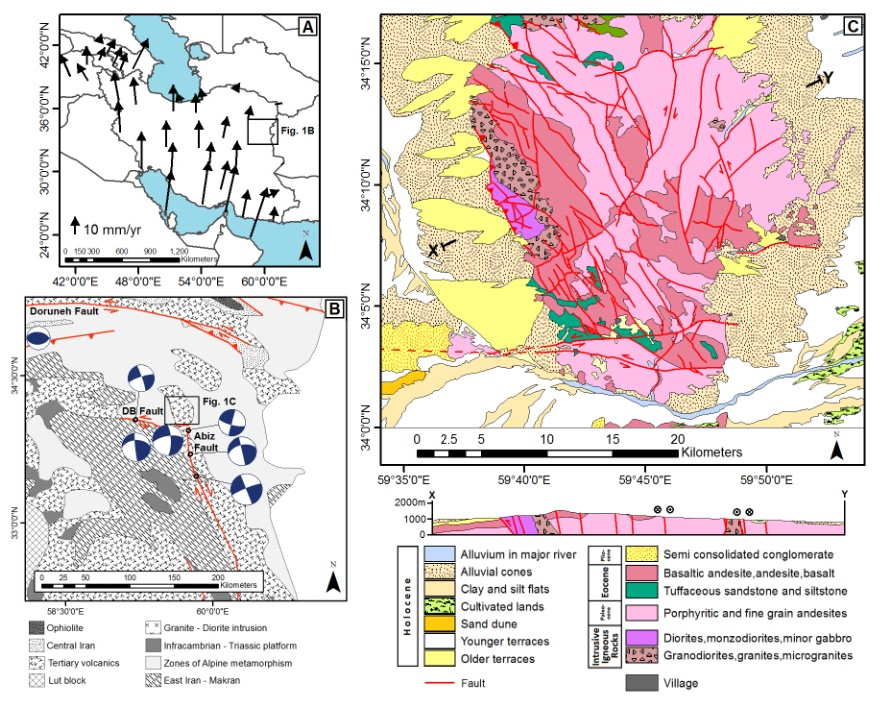
The study area is located in North of Lut block and in the Eastern terminal of sinistral DB fault with an approximate area of 570 km2 in East of Iran (Figure 1-B). Geographical range of the area is 34° 0’ 0’’ – 34° 17’ 24’’ N and 59° 34’ 0’’ – 59° 54’ 32’’ E. Kaybarkuh (Also known as Zouzan) consists of two intrusive igneous bodies including Paleocene granitic, granodioritic and dioritic mass in North, and an Eocene basalt – andesitic body in South, that southern part is the goal of this study (Figure 1-C). Geochemical data indicates that Kaybarkuh diorites originated from partial melting of metabasalts during the subduction of ocean plate under Lut block in Tertiary [13]. It confirms the theory of Afghan block subduction mentioned above.
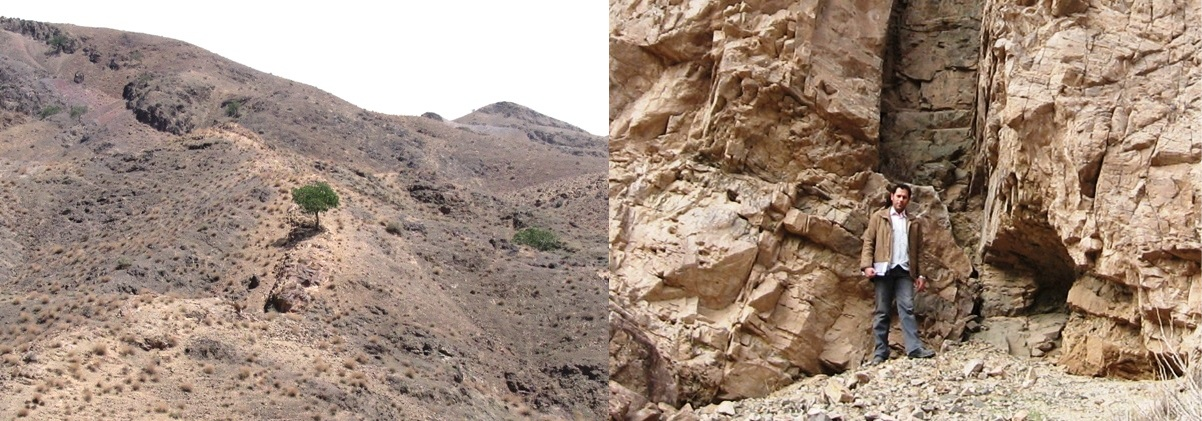
Numerous sinistral strike-slip faults and nearly vertical North-South and West-East direction dioritic dykes in Southern part of Kaybarkuh can be distinguished (Figure 2). Also ductile and semi-ductile structures such as folding and silicified ellipsoids are abundant in the area. Dominant trend of lineaments obtained by three methods of Remote-Sensing is about N330° [14]. There are different Au, Ag, Cu, Pb and Zn mineralization zones in the area. The high concentrations of these elements are clustered in central, south east and south west parts of study area [15]. In southern parts, vein mineralization is more abundant than stock type.
2. Materials and Methods
2.1. Remote sensing
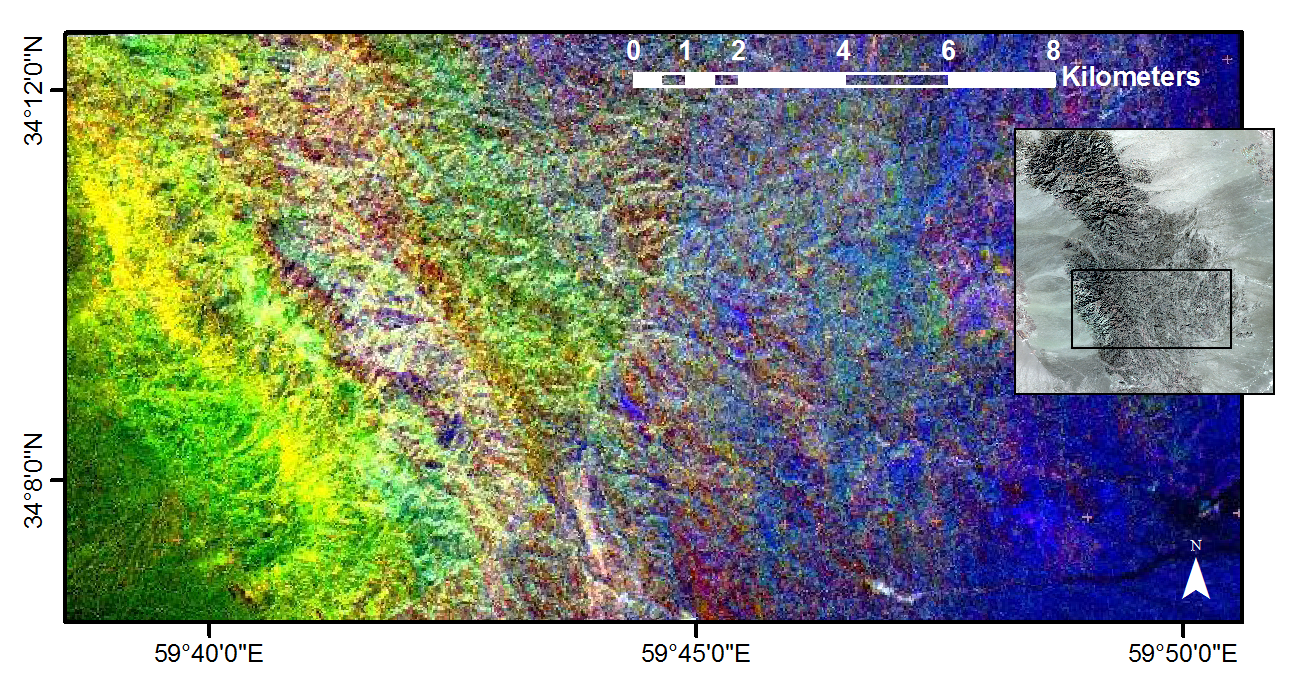
The higher resolution of the Aster, especially in the region of short infrared spectrum of electromagnetic waves, is the best data for identifying minerals and groups of minerals such as clays, carbonates, silica, iron oxides and other silicates. However, it should be noted that the power of spatial separation of the data should be considered in the level of our expectation from the separation of altered units and areas. In Figure 3, which is the result of combining bands 1/3, 4/7, and 6/4 from the Aster satellite image, altered units are obvious in yellow and brown colors, especially in the western areas where the third generation faults are more abundant [16].
2.2. study of faults
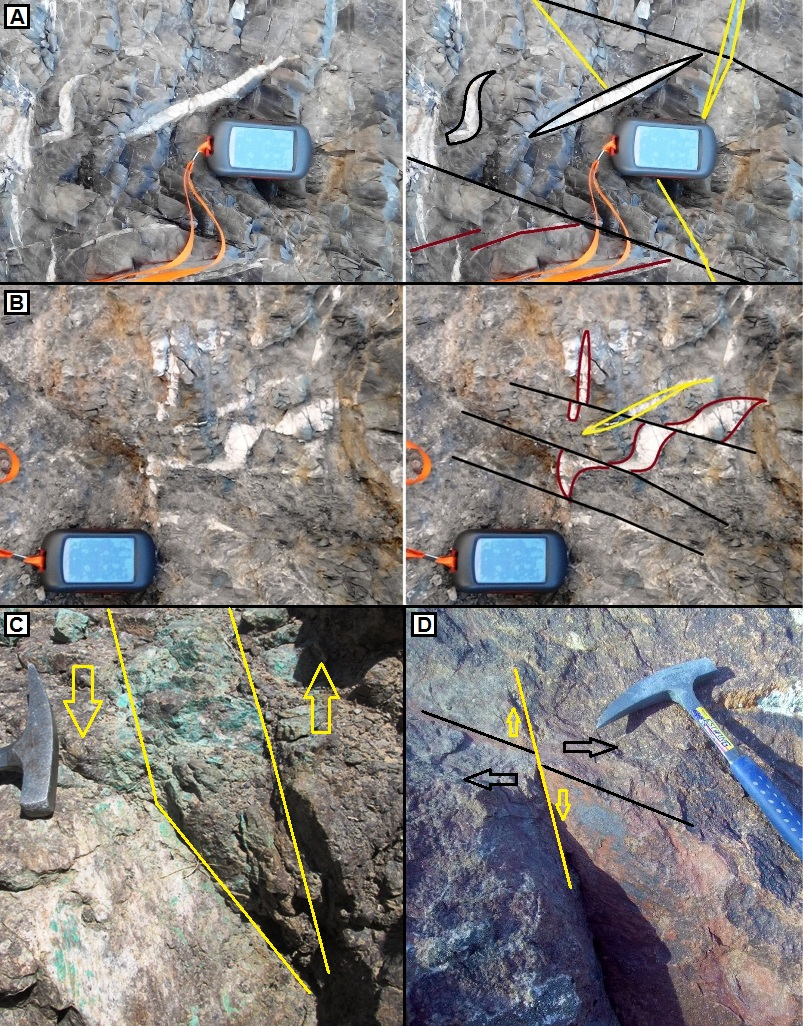
Based on to the expansion of mineralized veins that were conducted in the studies of the Geological Survey of Iran: The mineralization process and the faults were compared with each other and it was determined that this process has a orientation around N330°. By examining the faults using remote sensing methods and then field studies, the precession and subsequence of fault activity was obtained. According to geological map of the area (figure 1) the age of the southern rocks of Kaybarkuh is upper Eocene, so the first generation of faults probably belongs to the same time with the activity of DB fault. After examining the field features at the intersection of the faults, we found structures such as sigmoidal veins and perpendicular strike-slip faults (figure 4), which show a change in the direction of stress in the next generation of the faults. Structural properties of sigmoidal veins were similar, consequently, each sigmoidal vein is considered to have the same formation history.
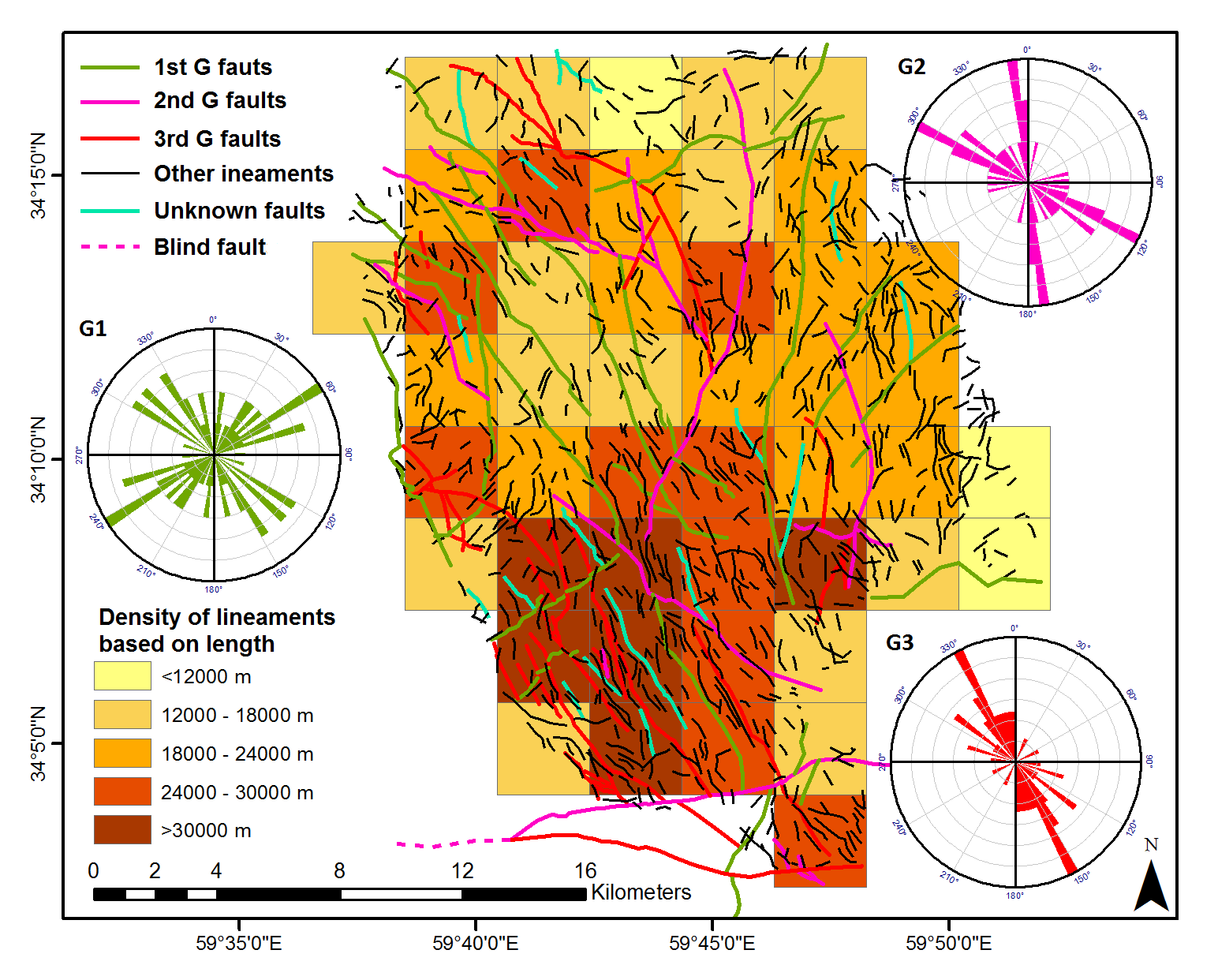
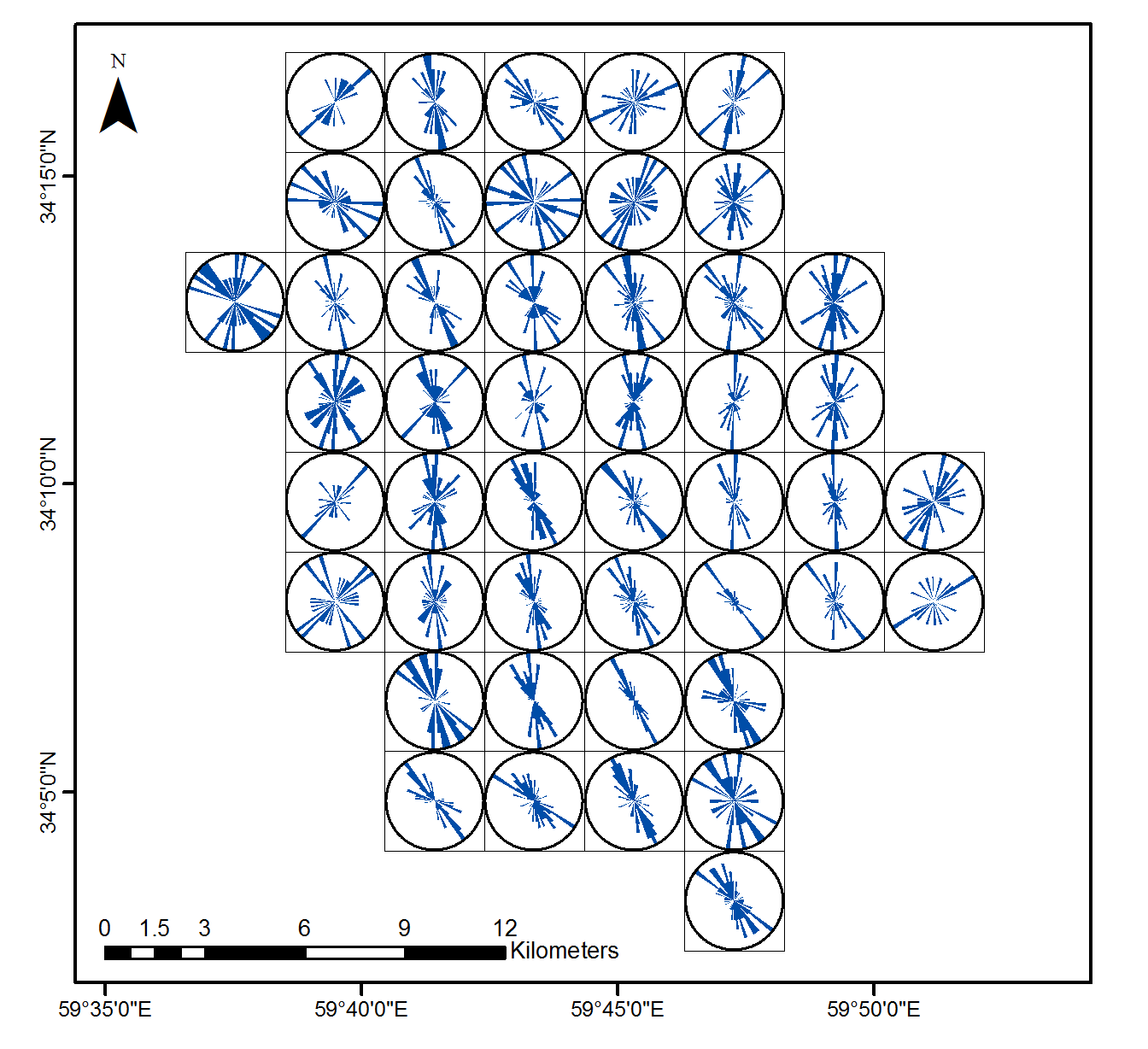
The second generation of faults have an approximate trend of N40 and, as same as the first generation, are accompanied by extensional and strike-slip structures. The third generation of faults, which again have the same trend as the first generation, are seen with copper and gold vein mineralization. In the regional scale, the photo-lineament factor map shows a special pattern in distribution of lineament factor values. This map shows a close relationship between the concentration mineralization and values of lineament factors [17] .In order to survey the density of faults and other lineaments, we divided the area into squares with a dimention of 3x3 km. As shown in the figure 5, the abundance of lineaments is more in the southern parts and is more consistent with the trend of the third generation of faults (figure 6).
3. Results and Analysis
The density of lineaments is higher in the south of the region and near the DB fault. These lineaments have a trend consistent with the third generation faults and the trend of mineralization. This indicates that the mineralization occurred at the same time or after southern faults and is probably related to the recent activities of the DB fault.
By moving away from the fault to the north, tensile structures such as open filling siliceous fractures and dikes get more abundant than strike-slip structures. This shows that the type of shear from the fault to its surroundings changes from simple to pure and justifies the abundance of vein mineralization in the southern parts.
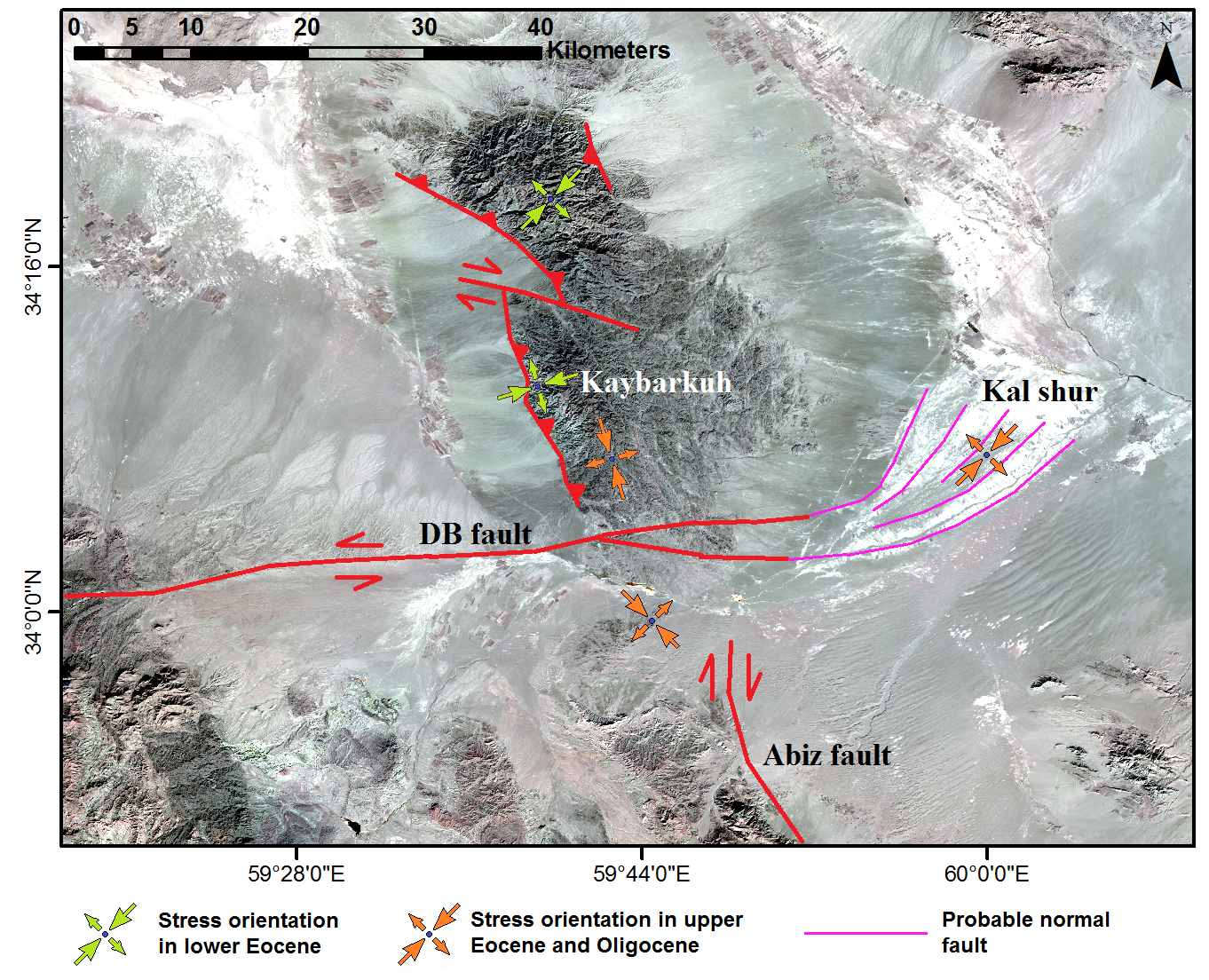
As Mouslopoulou et al. [18] studied North Island Fault System in New Zealand, interaction of two active fault systems, with strike-slip displacement transferred into the rift without displacing normal faults along the rift margin. It may have occurred in the interaction between sinistral Dasht-e-Bayaz and dextral Abiz faults (Figure 7) resulting Kal-shur tensioned area.
4. Conclusions
By examining the structural evidences in the Kaybarkuh region, we can conclude that mineralization, especially vein type gold and copper oxide minerals, took shape as a result of hydrothermal processes at the same time or after the creation and activity of the third generation faults with nearly N330° trend. These faults of the sinistral strike-slip type with evidence of stretching in the perpendicular direction to the fault plane are more abundant in the southern and southwestern parts of the region. From the frequency and direction of the third generation faults and the alignment of these faults with the extension of mineralization, it can be concluded that mineralization in Kaybarkuh occurred due to the activity of DB fault at its terminal probably in the upper Eocene and Oligocene interacting with Abiz fault. Ductile structures such as silicified ellipsoids in andesites reflect the tensile shear mechanism of the DB fault has been active since the formation of Kaybarkuh body and may have played a role in creating suitable conditions for its formation. As shown in figure 7, It can be predicted that mineralization also happened in the rifted area of Kal-Shur covered by salt playa and Quaternary sediments, which needs subsurface and geophysics studies.
References
- Funedda, A., Naitza, S., Buttau, C., Cocco, F., Dini, A. (2018). Structural Controls of Ore Mineralization in a Polydeformed Basement: Field Examples from the Variscan Baccu Locci Shear Zone (SE Sardinia, Italy). Minerals., 8, 456.[CrossRef]
- Micklethwaite, S., Sheldon, H. A., Baker, T. (2010). Active fault and shear processes and their implications for mineral deposit formation and discovery, Journal of Structural Geology., 32, 151–165.[CrossRef]
- Ni, Ch., Zhang, Sh., Liu, Ch., Yan, Y., Li, Y. (2016). Lineament Length and Density Analyses Based on the Segment Tracing Algorithm: A Case Study of the Gaosong Field in Gejiu Tin Mine, China. Hindawi Publishing Corporation Mathematical Problems in Engineering., Article ID 5392453, 7 pages.[CrossRef]
- Ekneligoda, T. C., Henkel, H. (2010). Interactive spatial analysis of lineaments. Journal of Computers and Geosciences., vol. 36, no.8, pp. 1081–1090.[CrossRef]
- Koike, K., Ichikawa, Y. (2006).Spatial correlation structures of fracture systems for deriving a scaling law and modeling fracture distributions. Computers and Geosciences., vol. 32, no. 8, pp. 1079–1095.[CrossRef]
- Kim, Y.S., Peacock, D.C.P., Sanderson, D. J. (2004). Fault damage zones. Journal of Structural Geology., 26, 503–517.[CrossRef]
- Drew, J.L. (2005). A tectonic model for spatial occurrence of porphyry copper and polymetallic vein deposits applications to central Europe. Scientific investigation report 5272. U.S. Geological survey., P.24.[CrossRef]
- Neubauer, F. (2005). Structural control of mineralization in metamorphic core complexes. Mineral Deposit Research: Meeting the Global Challenge., 561–564.[CrossRef]
- Vernant, P., Nilforoushan, F., Hatzfeld, D., Abbassi, M. R., Vigny, C., Masson, F., Nankali, H., Martinod, J., Ashtiani, A., Bayer, R., Tavakoli, F., Chéry, J. (2004). Present-day crustal deformation and plate kinematics in the Middle East constrained by GPS measurements in Iran and northern Oman, Geophys. J. Int., 157, 381–398.[CrossRef]
- Stocklin, J. (1968). Structural history and Tectonics of Iran: A Review. AAPG Bulletin, vol.52 (7), pp. 1229–1258. https://doi.org/10.1306/5D25C4A5-16C1-11D7-8645000102C1865D[CrossRef]
- Hessami, K., Jamali, F., Tabassi, H. (2003). Major active faults of Iran (map). International Institute of Earthquake Engineering and Seismology of Iran (IIEES).
- Bolourian, Gh., Safari, M. (2005). Geological map of Zouzan in 1:100,000 scale. Geological survey of Iran.
- Mazhari, S.A., Safari, M. (2013). High-K calc-alkaline plutonism in Zouzan, NE of Lut block, Eastern Iran: An evidence for arc related magmatism in Cenozoic. J Geol Soc India 81, 698–708.[CrossRef]
- Khademi, V., Heyhat, M. R., Forghani, A., Khatib, M. M., Zarrinkoub, M. H., Hadizadeh, Kh. H. (2021). An application of remote sensing imagery for Geological lineaments extraction over Kaybarkuh region in East of Iran. World Journal of Geomatics and Geosciences., vol.1, pp. 50–59.[CrossRef]
- Sereshgi, H. A., Ganji, A., Ashja, A. A., Torshizian, H., Taheri, J. (2019). Detection of metallic prospects using staged factor and fractal analysis in Zouzan region, NE Iran. Iranian Journal of Earth Sciences.Vol. 11, No. 4, 256-266.
- Parvaresh, M. (2013). Satellite image processing of Zouzan area. Geological survey of Iran - Northeast territory. [in Persian]
- Amirihanza, H., Shafieibafti, Sh., Derakhshani, R., Khojastehfar, S. (2018). Controls on Cu mineralization in central part of the Kerman porphyry copper belt, SE Iran: constraints from structural and spatial pattern analysis. Journal of Structural Geology., 116, 159–177.[CrossRef]
- Mouslopoulou, V., Nicol, A., Little, T. A., Walsh, J. J. (2007). Terminations of large strike-slip faults: an alternative model from New Zealand. Geological Society, London, Special Publications., 290, 387–415[CrossRef]