

Mathematical modeling plays a central role in infectious disease epidemiology, shaping outbreak response strategies and informing public health policy. The COVID-19 pandemic demonstrated the value of these models but also exposed persistent limitations related to data fragility, lack of transparency, limited stakeholder engagement, and insufficient consideration of social and political contexts. Rather than critiquing modeling as a discipline, this perspective argues for a reorientation of infectious disease modeling toward a more responsive, equity-centered, and participatory paradigm. We propose a conceptual framework built on three interrelated principles: adaptability through real-time data integration, transparency via open-source and reproducible practices, and relevance through interdisciplinary and co-produced model design. Drawing on illustrative examples from COVID-19 and dengue control efforts, we highlight how integrating behavioral dynamics, local knowledge, and policy feedback can improve model usefulness and public trust. Reconceptualizing models as dynamic systems of inquiry rather than static forecasting tools can enhance decision-making and promote more equitable and effective responses to future public health emergencies.
Reimagining Mathematical Modeling for a Responsive and Integrated Future in Infectious Disease Epidemiology
October 31, 2025
December 01, 2025
December 19, 2025
December 22, 2025
This is an Open Access article, distributed under the terms of the Creative Commons Attribution 4.0 International License (http://creativecommons.org/licenses/by/4.0/), which permits unrestricted use, distribution and reproduction in any medium or format, provided the original work is properly cited.
Abstract
1. Introduction
Mathematical modeling has long been central to infectious disease epidemiology, informing outbreak preparedness, guiding vaccination strategies, and supporting public health decision-making [1]. From early compartmental frameworks such as the susceptible–infectious–recovered (SIR) model to contemporary agent-based and data-driven simulations, models have evolved in complexity alongside advances in computation and surveillance systems. During public health emergencies, these tools are often elevated from academic instruments to policy-facing technologies, shaping real-time responses under conditions of uncertainty [2].
This evolution from traditional compartmental models to data-integrated, high-resolution, computational approaches is depicted in Figure 1, which reflects the growing complexity and reactivity of modeling techniques [3, 4].
The COVID-19 pandemic marked an unprecedented moment for infectious disease modeling. Never before had models been so visible, so frequently updated, or so directly embedded in national and global policy decisions. While this prominence demonstrated the practical value of modeling, it also exposed persistent structural and epistemic limitations. Divergent projections, opaque assumptions, fragile data streams, and limited incorporation of human behavior and social context contributed to public confusion and, in some cases, erosion of trust. Importantly, many of these shortcomings did not arise from flaws in mathematical theory itself, but from how models were designed, governed, communicated, and applied within complex social and political environments.
These challenges signal that infectious disease modeling is at a crossroads. As outbreaks increasingly unfold within interconnected systems shaped by inequality, mobility, misinformation, and political constraint, traditional modeling paradigms that are often static, siloed, and expert-driven are insufficient. Models that prioritize technical sophistication without equivalent attention to transparency, adaptability, and contextual relevance risk producing outputs that are difficult to interpret, inequitable in impact, or misaligned with decision-makers’ needs.
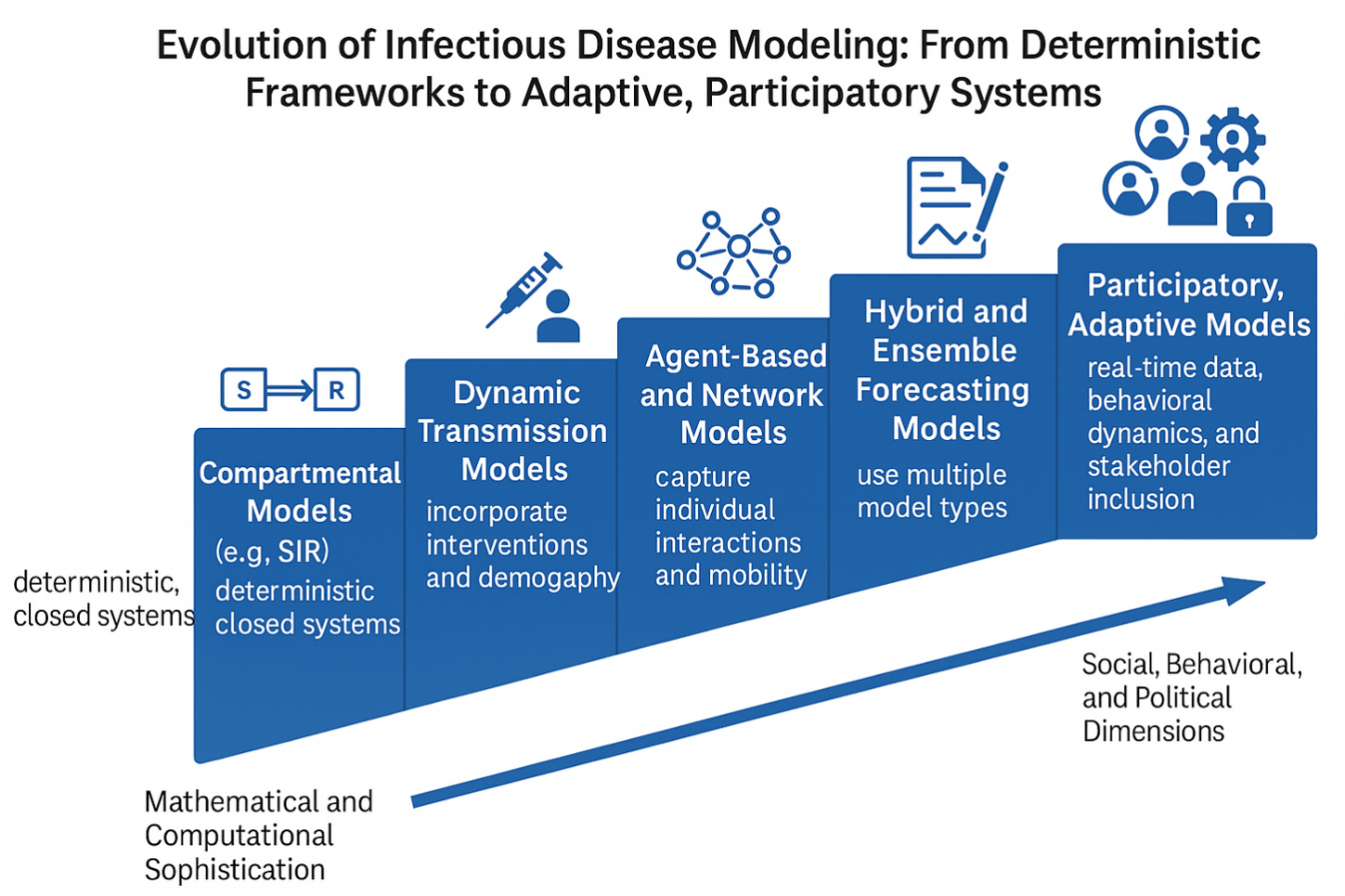
Figure 1 depicts the historical progression of infectious disease modeling approaches. It begins with deterministic compartmental models such as SIR, advances through dynamic transmission and agent-based models, and culminates in adaptive, equity-focused frameworks. Each stage reflects increasing mathematical sophistication and responsiveness to real-world complexities, including behavioral feedback, policy dynamics, and stakeholder participation. The upward trajectory underscores the need to integrate not just data, but social, political, and ethical dimensions into modern modeling paradigms.
Note: This conceptual progression simplifies a broad and diverse modeling landscape. For comprehensive overviews, see Bertozzi et al. (2020) and Vespignani et al. (2020), who catalog the rich ecosystem of models developed during the COVID-19 pandemic and their varying assumptions and use cases [3, 4].
This article is presented as a perspective that argues for a reorientation of infectious disease modeling toward a more responsive and integrated paradigm. Rather than proposing new mathematical techniques, we focus on the cultural and structural dimensions of modeling practice. We advance a conceptual framework grounded in three interrelated principles: (1) adaptability through real-time data integration and iterative updating; (2) transparency through open-source, reproducible, and communicable modeling practices; and (3) relevance through interdisciplinary collaboration, equity-oriented design, and co-production with stakeholders. Drawing on illustrative examples from COVID-19 and dengue control efforts, we demonstrate how reframing models as dynamic systems of inquiry—rather than static forecasting tools can improve decision-making, strengthen public trust, and support more equitable responses to future public health emergencies.
2. Structural Limitations of Contemporary Infectious Disease Models
Infectious disease models are indispensable to public health decision-making, yet their practical application during recent outbreaks has revealed recurring structural limitations. Importantly, these challenges often reflect the environments in which models are developed and deployed rather than inherent weaknesses in mathematical modeling itself. Distinguishing between technical limitations and systemic constraints is essential for improving model usefulness and credibility [5]
A central limitation is data fragility. Real-time surveillance data are frequently incomplete, delayed, or unevenly distributed across settings. During the COVID-19 pandemic, testing bottlenecks, reporting lags, and under-ascertainment compromised model calibration in both high- and low-income contexts. As a result, projections were often sensitive to short-term data artifacts rather than underlying transmission dynamics, undermining their reliability for policy planning [6].
A related challenge lies in the static assumptions embedded in many models. Transmission parameters, intervention effects, and population behaviors are often treated as fixed inputs, despite rapidly changing policies, risk perceptions, and social norms during outbreaks. While such simplifications facilitate rapid analysis, they limit models’ capacity to adapt as epidemics evolve. Without mechanisms for iterative updating, models risk becoming outdated precisely when decision-makers rely on them most [7].
The early COVID-19 modeling experience illustrates these tensions. Curve-fitting approaches that prioritized short-term trend extrapolation struggled to account for behavioral and policy feedback, while more complex agent-based models were criticized for limited transparency and delayed peer scrutiny. The coexistence of divergent projections, each grounded in different assumptions, highlighted not only technical uncertainty but also the absence of shared standards for communication, openness, and contextual interpretation [8, 9].
Disciplinary narrowness further constrains model relevance. Many epidemiological models are developed largely within mathematical and statistical frameworks, with limited integration of insights from behavioral science, economics, or political science. This separation restricts models’ ability to account for intervention uptake, misinformation, trust, and structural inequalities—factors that strongly influence outbreak trajectories but are difficult to capture using biological parameters alone [1].
Finally, challenges in communication and governance have amplified these limitations. Model outputs are often presented as singular forecasts rather than as conditional scenarios, with insufficient explanation of uncertainty, assumptions, or appropriate use. When models are perceived as predictive authorities rather than decision-support tools, their inevitable revisions can be interpreted as failure, eroding public and political trust.
Taken together, these limitations underscore the need for a shift in modeling practice. Improving infectious disease modeling requires not only technical refinement but also changes in how models are governed, communicated, and embedded within broader decision-making systems. The following sections outline principles for a more responsive, transparent, and equitable modeling paradigm suited to contemporary public health challenges.
3. Core Principles for a Responsive Infectious Disease Modeling Paradigm
Addressing the limitations of contemporary infectious disease models requires a shift from static, one-off projections toward approaches that are designed to operate under uncertainty and change. A more responsive modeling paradigm emphasizes adaptability, transparency, and contextual relevance not as optional enhancements, but as foundational principles that shape how models are built, interpreted, and used.
3.1. Adaptability Through Real-Time and Iterative Modeling
Outbreak dynamics evolve over days and weeks, shaped by shifting behaviors, interventions, and pathogen characteristics. Responsive models must therefore be capable of continuous updating as new data becomes available. Adaptive modeling incorporates mechanisms for iterative parameter revision, structural adjustment, and scenario reassessment in near real time. Ensemble forecasting, nowcasting, and Bayesian updating approaches demonstrated their value during COVID-19 by allowing projections to adjust in response to emerging trends rather than relying on fixed assumptions [10].
However, adaptability depends not only on algorithms but also on data infrastructure and governance. Access to timely, standardized surveillance, mobility, and environmental data is essential for models to remain relevant. Without institutional support for data sharing and quality control, even technically sophisticated models will struggle to reflect evolving outbreak conditions [11].
3.2. Transparency and Reproducibility as Public Health Imperatives
Transparency is critical for both scientific credibility and public trust. During recent pandemics, some influential models relied on proprietary code or undocumented assumptions, limiting opportunities for peer review, replication, and local adaptation. In contrast, open-source modeling initiatives where code, data sources, and assumptions are publicly accessible facilitate scrutiny, collaboration, and methodological improvement [12].
Open modeling practices also enhance accountability. When assumptions and uncertainties are made explicit, model outputs can be interpreted as conditional guidance rather than definitive predictions. This framing aligns more closely with the role models should play in decision-making: supporting deliberation under uncertainty rather than asserting false certainty [13].
3.3. Relevance Through Contextualization and Co-production
Models are most useful when they reflect the social, behavioral, and institutional contexts in which interventions are implemented. Co-produced modeling approaches developed collaboratively by modelers, public health practitioners, policymakers, and affected communities help ensure that model questions, assumptions, and outputs align with real-world needs. Such collaboration can surface locally relevant knowledge, improve interpretation of results, and increase the likelihood that model insights inform action.
Contextual relevance also requires attention to equity. Disease burden and intervention impacts are unevenly distributed across populations, yet many models implicitly assume homogeneity. Incorporating socioeconomic conditions, differential exposure, and access to care allows models to highlight disparities and support more targeted, just public health responses [14].
Figure 2 illustrates the building blocks necessary for creating more agile, transparent, and adaptable infectious disease models in an uncertain world. These principles involve a cultural transformation of modeling from black-box tools of prediction to a live system of inquiry that acts, informs, and empowers. In a world of compounding challenges and information overload, the credibility of models will rest not only on how sophisticated they are, technically, but also on how transparent, adaptable, and humble they can be [15].
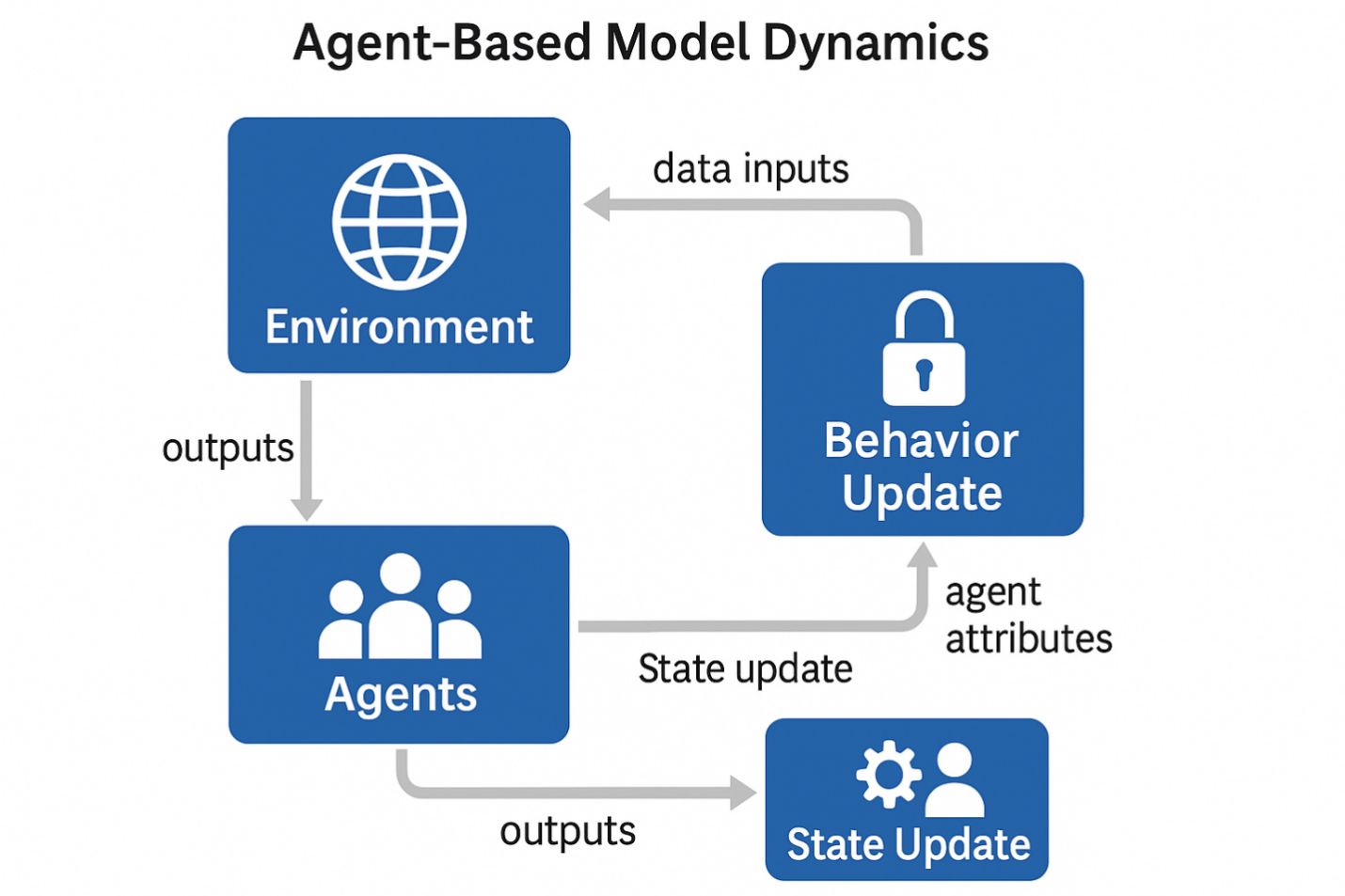
Figure 2 illustrates the core structure of agent-based modeling systems in infectious disease epidemiology. It highlights the dynamic feedback loop between the environment, agents, behavior updates, and state changes. Data inputs and outputs circulate throughout the system, enabling real-time responsiveness and adaptability. The structure embodies key modeling principles — adaptability, transparency, and contextual sensitivity — essential for effective public health decision-making in complex and evolving scenarios.
3.4. From Forecasting Tools to Systems of Inquiry
Taken together, these principles reframe infectious disease models from isolated forecasting instruments into dynamic systems of inquiry. Rather than asking “What will happen?”, responsive models help decision-makers explore “What could happen under different conditions, and for whom?” This shift supports scenario-based reasoning, acknowledges uncertainty, and encourages adaptive policymaking [16].
4. Integrating Broader Systems and Disciplines
Infectious disease outbreaks are shaped not only by biological transmission but also by social behavior, political decision-making, and structural conditions. For models to remain responsive and relevant, they must move beyond narrowly epidemiological formulations and engage with disciplines that capture these broader dynamics. Integrating insights from behavioral science, economics, political science, and data science allows models to better reflect the systems in which public health interventions are enacted.
Behavioral and social factors play a critical role in shaping transmission dynamics. Vaccine uptake, adherence to non-pharmaceutical interventions, mobility patterns, and risk perception are influenced by trust, cultural norms, and access to resources. Models that incorporate behavioral feedback rather than treating human responses as static inputs are better equipped to anticipate changes in transmission following policy interventions. Empirical studies during COVID-19 demonstrated that incorporating mobility and socioeconomic variables improved short-term forecasting accuracy and helped explain observed inequities in disease burden [17].
Digital data streams and computational advances further expand the scope of responsive modeling. Mobility data, wastewater surveillance, and digital epidemiology tools offer early signals of transmission and behavioral change. When integrated systematically into modeling pipelines, these data sources can support earlier detection and more adaptive response strategies. However, their utility depends on governance frameworks that address data quality, privacy, and representativeness, particularly in settings where digital access is uneven [18].
Equally important is the explicit modeling of policy feedback loops. Many models treat interventions such as lockdowns, school closures, or vaccination campaigns as exogenous inputs, despite their recursive effects on behavior, trust, and compliance. Incorporating feedback between policy decisions and population response allows models to explore not only the direct effects of interventions but also their indirect and longer-term consequences. This systems-oriented approach aligns modeling outputs more closely with the realities faced by policymakers operating under uncertainty [19].
4.1. Illustrative Case: Interdisciplinary Dengue Modeling in Southeast Asia
Interdisciplinary approaches to dengue modeling in parts of Southeast Asia demonstrate the practical benefits of systems integration. In settings such as Singapore and Thailand, combining epidemiological surveillance with meteorological data, human mobility patterns, and urban infrastructure indicators improved outbreak prediction and spatial targeting of interventions. Collaboration with behavioral scientists and local public health practitioners supported the interpretation of community engagement data, enabling adaptive vector control strategies and more context-sensitive risk communication. While context-specific, these efforts illustrate how interdisciplinary integration can enhance model responsiveness and policy relevance [20].
By embedding epidemiological models within broader social and political systems, interdisciplinary approaches strengthen the alignment between model outputs and public health decision-making. Such integration is not a replacement for epidemiological rigor but a complement that enhances models’ ability to inform adaptive, equitable responses in complex real-world settings.
5. Equity and Co-production as Foundational Modeling Practices
Interdisciplinary integration alone is insufficient if infectious disease models do not explicitly address questions of equity, inclusion, and power. Disease risks and intervention effects are unevenly distributed across populations, shaped by social position, structural inequality, and historical marginalization. A responsive modeling paradigm must therefore embed equity and co-production as foundational practices rather than treating them as downstream considerations.
5.1. Participatory and Co-produced Modeling
Co-produced modeling involves the active collaboration of modelers with public health practitioners, policymakers, and affected communities throughout the modeling process. This approach extends beyond consultation to include shared decision-making around model objectives, assumptions, data interpretation, and communication of results. Engaging stakeholders with lived experience can reveal contextual factors such as informal mobility patterns, barriers to intervention uptake, or local trust dynamics that are often absent from top-down modeling efforts [21].
Evidence from participatory modeling initiatives suggests that co-production enhances both model relevance and uptake. When stakeholders are involved in defining scenarios and interpreting outputs, models are more likely to inform policy decisions and to be perceived as legitimate tools rather than external prescriptions. Importantly, co-production does not diminish scientific rigor; instead, it improves the alignment between technical outputs and practical needs [22].
5.2. Equity-Oriented Model Design
Equity-oriented modeling seeks to identify and address differential vulnerability and impact across population groups. Many traditional models implicitly assume homogeneous populations, masking disparities related to socioeconomic status, race, geography, or access to healthcare. Incorporating stratified data, differential exposure risks, and uneven intervention effects allows models to surface inequities that are central to ethical public health decision-making [23].
Such approaches also enable more targeted interventions. By explicitly modeling how policies affect marginalized populations, decision-makers can evaluate trade-offs and design responses that reduce harm and promote fairness. Equity-oriented modeling, therefore, contributes not only to descriptive accuracy but also to normative clarity in public health planning [24].
5.3. Decolonizing Modeling Practices
Equity in modeling also requires confronting historical imbalances in knowledge production. Many infectious disease models are developed by institutions in high-income countries and applied to settings in the Global South with limited incorporation of local expertise or epistemologies. This dynamic can reproduce epistemic injustice and reduce model validity in contexts where social, cultural, and institutional conditions differ substantially.
Decolonizing modeling practices involves shifting from extractive to collaborative research relationships. This includes valuing local knowledge, supporting capacity-building, and ensuring that researchers and institutions in affected regions play central roles in model development and interpretation. By recognizing multiple ways of knowing and grounding models in lived realities, decolonized approaches enhance both ethical integrity and practical relevance [25].
Figure 3 conceptually illustrates how embedding equity and co-production throughout the modeling process can improve the justice and effectiveness of public health interventions. By centering marginalized perspectives and explicitly modeling differential impacts, infectious disease models can move beyond average outcomes to support decisions that are both scientifically informed and socially responsive. Taken together, these approaches can work to create new practices of modeling that emphasize collaboration, inclusivity, and social justice [26].
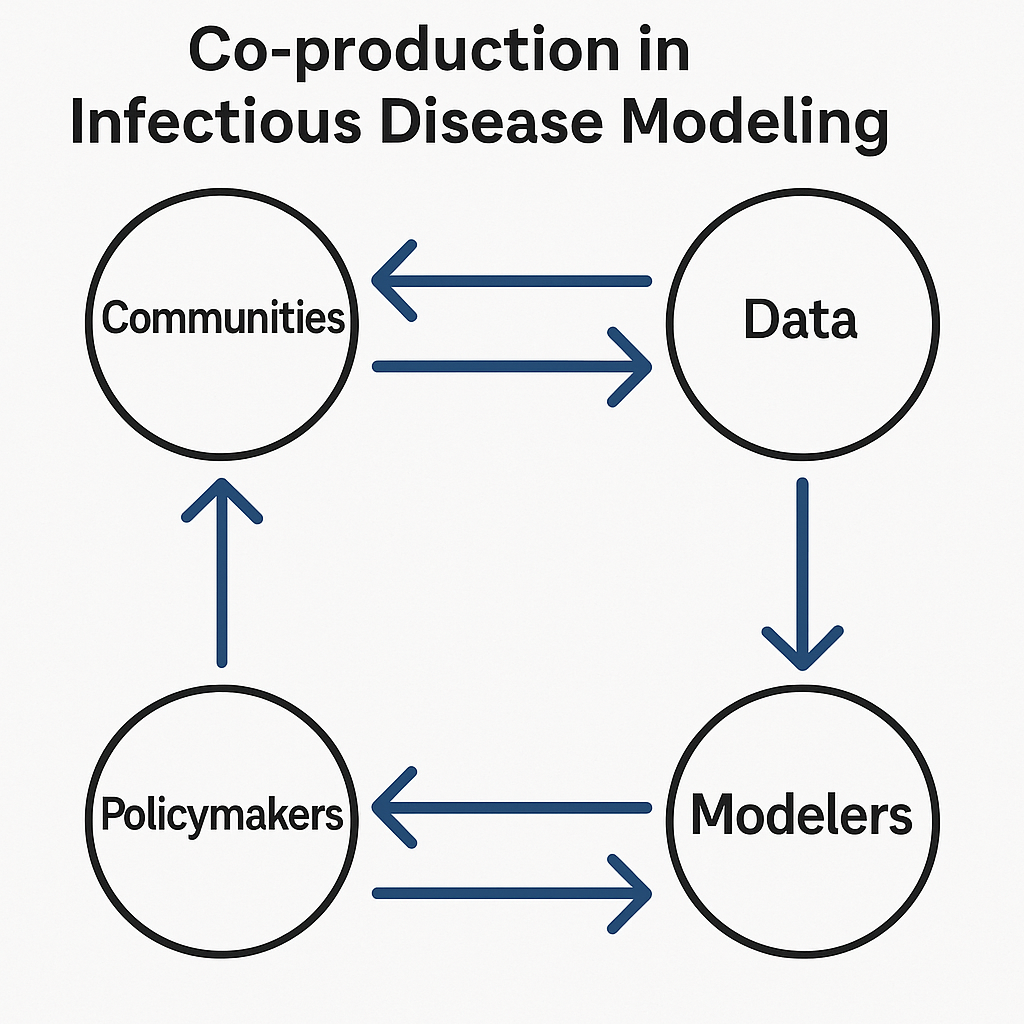
Figure 3 illustrates the value of equity in modeling by demonstrating how infectious disease models may be constructed to uncover differential impacts within marginalized populations. Recommends participatory, decolonised, and socially situated modelling practices that attend to multiple lived realities and vulnerabilities.
6. Conclusion
The future of infectious disease modeling depends not on incremental technical refinement alone, but on a broader transformation in how models are conceptualized, developed, and applied. The COVID-19 pandemic underscored both the indispensability of mathematical models and the limitations that arise when they are deployed within fragmented data systems, opaque governance structures, and socially complex environments. These challenges revealed that many perceived modeling failures stemmed less from mathematical shortcomings than from misalignment between modeling practices and real-world decision-making contexts.
This perspective argues for a reorientation of infectious disease modeling toward a responsive, transparent, and equity-centered paradigm. By emphasizing adaptability through real-time and iterative updating, transparency through open and reproducible practices, and relevance through interdisciplinary integration and co-production, models can evolve from static forecasting tools into dynamic systems of inquiry. Such systems are better suited to navigating uncertainty, supporting scenario-based reasoning, and informing policy choices that account for social and ethical considerations.
Embedding equity and co-production throughout the modeling process further strengthens the legitimacy and usefulness of model outputs. Equity-oriented models can illuminate differential risks and impacts across populations, while participatory approaches help ensure that modeling assumptions and scenarios reflect lived realities. Together, these practices enhance trust, improve policy uptake, and support public health responses that are both effective and just.
6.1. Key Takeaways
- Technical sophistication alone is insufficient for effective infectious disease modeling.
- Adaptive, transparent, and participatory approaches improve model relevance and credibility.
- Integrating behavioral, social, and policy dynamics strengthens decision support under uncertainty.
- Equity-centered modeling enables more targeted and ethically informed public health interventions.
6.2. Future Directions
Future research should prioritize the development of governance frameworks that support co-produced modeling, establish standardized methods for integrating and validating real-time data streams, and advance ethical guidelines that embed equity across all stages of the modeling lifecycle. Strengthening modeling capacity in low- and middle-income settings through regional hubs, training initiatives, and equitable data partnerships will be essential to ensuring that global modeling efforts are both inclusive and contextually appropriate.
6.3. Policy Implications
Policymakers and funders play a critical role in enabling responsive modeling practices. Investments in open data infrastructure, interdisciplinary modeling teams, and institutional mechanisms for stakeholder engagement can significantly enhance outbreak preparedness and response. Embedding modeling advisory units within health ministries and fostering South–South collaboration can further align modeling outputs with local priorities and decision-making needs. By supporting models as tools for learning and deliberation rather than prediction alone, public health systems can better navigate future epidemics in an increasingly complex and interconnected world.
Ethical Approval
Not applicable. This manuscript does not report on or involve the use of any clinical trials, human participants, or animals.
Consent to Participate
Not applicable. No human participants were involved in the development of this manuscript.
Consent to Publish
Not applicable. This manuscript does not include any person’s data in any form (including individual details, images, or videos).
Acknowledgements
The authors acknowledge all others who played a beneficial role in completing this manuscript.
Author contributions
OPL conceptualized the idea. OPL, DUO, EPC, and AKO reviewed the literature. OPL, IM, CVU, and ABA wrote the manuscript. All authors reviewed and approved the final manuscript for submission.
Funding
The research received no specific grant from funding agencies in the public, commercial, or not-for-profit sectors.
Data availability
No datasets were generated or analyzed during the current study. Declarations
Competing interests
The authors declare no competing interests.
Clinical trial number:
Not applicable.
References
- Khumbudzo M, Duah E, Grobler E, Maluleke K. The Role of Mathematical Modelling in Predicting and Controlling Infectious Disease Outbreaks in Underserved Settings: A Systematic Review and Meta‐Analysis. Public Health Chall. 2025 Sep 13;4(3):e70116.[CrossRef] [PubMed]
- Mirsaeedi F, Sheikhalishahi M, Mohammadi M, Pirayesh A, Ivanov D. Compartmental models in epidemiology: bridging the gap with operations research for enhanced epidemic control. Ann Oper Res [Internet]. 2025 Oct 20 [cited 2025 Dec 19]; Available from: https://doi.org/10.1007/s10479-025-06893-1[CrossRef]
- Bertozzi AL, Franco E, Mohler G, Short MB, Sledge D. The challenges of modeling and forecasting the spread of COVID-19. Proc Natl Acad Sci U S A. 2020 Jul 21;117(29):16732–8.[CrossRef] [PubMed]
- Vespignani A, Tian H, Dye C, Lloyd-Smith JO, Eggo RM, Shrestha M, et al. Modelling COVID-19. Nat Rev Phys. 2020;2(6):279–81.[CrossRef] [PubMed]
- Zhang X, Wang J, Yu C, Fei J, Luo T, Cao Z, et al. Agent-Based Modeling of Epidemics: Approaches, Applications, and Future Directions. Technologies [Internet]. 2025 Jun 25 [cited 2025 Dec 19];13(7). Available from: https://www.mdpi.com/2227-7080/13/7/272[CrossRef]
- Alvarez E, Bielska IA, Hopkins S, Belal AA, Goldstein DM, Slick J, et al. Limitations of COVID-19 testing and case data for evidence-informed health policy and practice. Health Res Policy Syst. 2023 Jan 25;21:11.[CrossRef] [PubMed]
- Ryan M, Brindal E, Roberts M, Hickson RI. A behaviour and disease transmission model: incorporating the Health Belief Model for human behaviour into a simple transmission model. J R Soc Interface. 21(215):20240038.[CrossRef] [PubMed]
- Nwokedi VU, Orenolu IO, Ajobiewe MA, Kidane SZ, Alo TE, Foster-Pagaebi E, et al. Strengthening Preparedness for Infectious Disease Outbreaks in Sub-Saharan Africa: Lessons from Recent Outbreaks. Epidemiology and Health Data Insights. 2025 Sep 2;1(3):ehdi010.[CrossRef]
- Kumaresan V, Balachandar N, Poole SF, Myers LJ, Varghese P, Washington V, et al. Fitting and validation of an agent-based model for COVID-19 case forecasting in workplaces and universities. PLoS One. 2023 Mar 23;18(3):e0283517.[CrossRef] [PubMed]
- Ward C, Deardon R, Schmidt AM. Bayesian modeling of dynamic behavioral change during an epidemic. Infect Dis Model. 2023 Aug 6;8(4):947–63.[CrossRef] [PubMed]
- Olawade DB, Wada OJ, David-Olawade AC, Kunonga E, Abaire O, Ling J. Using artificial intelligence to improve public health: a narrative review. Front Public Health. 2023 Oct 26;11:1196397.[CrossRef] [PubMed]
- Wirtz BW, Weyerer JC, Becker M, Müller WM. Open government data: A systematic literature review of empirical research. Electron Markets. 2022 Dec 1;32(4):2381–404.[CrossRef] [PubMed]
- Kiral IA. Contextual Evaluation of Risk Identification Techniques for Construction Projects: Comparative Insights and a Decision-Support Model. Buildings [Internet]. 2025 Oct 20 [cited 2025 Dec 19];15(20). Available from: https://www.mdpi.com/2075-5309/15/20/3806[CrossRef]
- Cruden G, Powell BJ, Frerichs L, Lanier P, Brown CH, Saldana L, et al. Leveraging group model building to operationalize implementation strategies across implementation phases: an exemplar related to child maltreatment intervention selection. Implement Sci Commun. 2024 Dec 2;5:134.[CrossRef] [PubMed]
- Rhodes T, Lancaster K. Mathematical models as public troubles in COVID-19 infection control: following the numbers. Health Sociol Rev. 2020 Jul;29(2):177–94.[CrossRef] [PubMed]
- Petropoulos F, Laporte G, Aktas E, Alumur SA, Archetti C, Ayhan H, et al. Operational Research: methods and applications. Journal of the Operational Research Society. 2024 Mar 3;75(3):423–617.
- Cheng Z, Ruktanonchai NW, Wesolowski A, Pei S, Wang J, Cockings S, et al. Social, mobility and contact networks in shaping health behaviours and infectious disease dynamics: a scoping review. Infect Dis Poverty. 2025 Dec 3;14:123.[CrossRef] [PubMed]
- Lawal OP, Njoba CF, Olorunkosebi MT, Jacob H, Igweonu C, Dilioha JO, et al. Microplastics as emerging reservoirs of antimicrobial resistance: Clinical relevance and environmental mechanisms. J CLIN EXP INVEST. 2025 Nov 9;16(4):em00852.[CrossRef]
- van Heusden K, Stewart GE, Otto SP, Dumont GA. Effective pandemic policy design through feedback does not need accurate predictions. PLOS Glob Public Health. 2023 Feb 3;3(2):e0000955.[CrossRef] [PubMed]
- Ren Q, Li R, Liu X, Hao W, Zhou X, Liu M, et al. Epidemiological Trends and Predictive Modeling of Dengue Fever in the Association of Southeast Asian Nations (ASEAN) Countries. Tropical Medicine and Infectious Disease [Internet]. 2025 Nov 23 [cited 2025 Dec 19];10(12). Available from: https://www.mdpi.com/2414-6366/10/12/329[CrossRef]
- Adams S, Rhodes T, Lancaster K. New directions for participatory modelling in health: Redistributing expertise in relation to localised matters of concern. Glob Public Health. 2022;17(9):1827–41.[CrossRef] [PubMed]
- Grindell C, Coates E, Croot L, O’Cathain A. The use of co-production, co-design and co-creation to mobilise knowledge in the management of health conditions: a systematic review. BMC Health Serv Res. 2022 Jul 7;22:877.[CrossRef] [PubMed]
- Lauretta Ekanem Omale, Victor Akachukwu Ibiam, Lasisi Wuraola Sidikat, Oladimeji Taiwo. Transformative applications of Artificial Intelligence in infectious disease forecasting and public health decision support systems. World J Adv Res Rev. 2025 Mar 30;25(3):2250–8.[CrossRef]
- Victor Akachukwu Ibiam, Lauretta Ekanem Omale, Oladimeji Taiwo. The role of Artificial Intelligence models in clinical decision support for infectious disease diagnosis and personalized treatment planning. Int J Sci Res Arch. 2025 Mar 30;14(3):1337–47.[CrossRef]
- Aborode AT, Adesola RO, Onifade IA, Adesiyan R, Ibiam VA, Jinadu NA, et al. Outbreak of cholera in Nigeria: the role of One Health. Discov Public Health. 2025 Mar 31;22(1):125.[CrossRef]
- Salathé M, Bengtsson L, Bodnar TJ, Brewer DD, Brownstein JS, Buckee C, et al. Digital epidemiology. PLoS Comput Biol. 2012;8(7):e1002616.[CrossRef] [PubMed]