

Background: Electrical injuries are underreported in literature, but they can affect the peripheral and central nervous system causing permanent disability. Aims and objectives: This case report aims to highlight cervical spinal cord injury secondary to electrocution, a rare cause of spinal cord injury. Case report: We report the case of a 54-year-old housewife who presented with transient loss of consciousness and right sided hemiparesis following electrocution, while at home. Results: The patient met clinical critera for partial Brown- Sequard syndrome, which to our knowledge, has not been previously reported. She showed significant improvement over a month and is currently under monitoring. Conclusions: Electrical injury is a rare cause of normal MRI myelopathy and the potential for immediate, delayed, and long- term neurological disability.
Electrocution Cervical Myelopathy Presenting with Partial Brown Sequard Syndrome: A Case Report and Review of Literature
August 26, 2024
October 21, 2024
November 10, 2024
November 16, 2024
This is an Open Access article, distributed under the terms of the Creative Commons Attribution 4.0 International License (http://creativecommons.org/licenses/by/4.0/), which permits unrestricted use, distribution and reproduction in any medium or format, provided the original work is properly cited.
Abstract
1. Introduction
Electrical trauma is a term used to describe injuries resulting from the direct contact with an electrical conductor, tissue damage caused by the generation of an electric arch and discharge of atmosphere electricity [1].
The incidence of spinal cord injury due to electrical trauma is 2% to 5% [1, 2]. Electrical trauma can cause acute or delayed myelopathy [3]. Acute injuries can cause loss of consciousness and focal neurologic signs [2]. Immediate spinal injuries have been reported to have a better prognosis with significant recovery and often no residual neurological deficit [4].
Electrical injuries primarily affect young men and are most common in the workplace [5]. High-voltage (≥ 1,000 V) injuries occur more frequently (57.71%) than low-voltage burns (< 1,000 V) (42.29%) (5). Low-voltage injuries occur after an accidental contact with electrical appliances. The consequences of electric injuries can occur days or years later. [6] Approximately 50% of patients with low-voltage injuries develop neurological symptoms [7]
1.1. Pathogenesis and pathophysiology of electrical injuries
Electrical shock requires 50-60 Hz [8]. Tissues have varying levels of resistance, and current passes through the tissue with the least resistance. Nerves and blood vessels have low resistance, so if the resistance of the skin is overcome, current will pass through them. This may be one reason why nerve damage from electrical injuries is so common. The electricit produced is available in the form of direct current (DC) and alternating current (AC). In direct current, electrons flow continously in one direction, while in alternating current, electrons flow back and forth repeatedly. Electricity enters at an entry point, travels along a specific path, and exits at an exit point. The electrical current meets the resistance of the skin. The head and hands, which are common entry points, may or may not cause burns. The arms and legs are almost always the exit points of the body and often cause serious damage. Alternating current has a worse prognosis because it can cause tetanic convulsions and cardiopulmonary signs. The severity of the outcome depends on several factors, including: voltage, type and duration of current, environmental humidity, body route (hand to head, hand to hand, head to limb, etc.), and thermal damage [8].
1.2. Pathogenesis and pathophysiology of neurological electrical injuries
Despite numerous studies published in the literature, the mechanisms of neurological damage are still unknown. Proposed mechanisms include direct trauma (mechanical or thermal) or indirect trauma. After electrical trauma, several histopathological changes have been observed in the central and peripheral nervous system, including: microglial activation, chromatine degeneration, neuronal loss, and infiltration of inflammatory mediators into the blood-brain barrier [9].
According to” Konstantina G. Yiannopoulou et al., Neurological and neurourological complications of electrical injuries”, published in 2021- citet in references [10] the mechanisms of delayed neurological damage are as follows:
- Vascular damage, leading to vasospasm, ischaemia, and oxidative stress.
- Electroporation of cells results in formation of additional poles in the membrane, which leads to neuronal loss.
- Protein modification and demyelination due to oxidative stress.
- Neurohumoral hypothesis involving complex interactions between cortisol, glutamate, free radicals, and the vascular wall.
1.3. Clinical course of neurological complications of electrical trauma
Clinical neurological symptoms can be devided in four categories:
- Immediate and transient (acute onset, lasting hours or days)- retrograde amnesia, loss of consciousness
- Immediate and persistent or prolonged- brain hemorrhage or ischaemia
- Delayed onset and progressive clinical course- demyelination, dystonia, amyotrophic lateral sclerosis.
- Indirect secondary injuries (head or neck trauma)
1.4. Clinical presentation on electrical injuries
The most characteristic features of electrical injuries are multisystem damage and a variety of disorders. Electrical injury affects both the systemic and peripheral nervous systems, and symptoms range from temporary benign to permanent disability or death. The categories of neurological disorders associated with electrical injury are listed in Table 1.
Here, we report a case of immediate indoor low-voltage electrical exposure and a literature review demonstrating partial Brown- Sequard Syndrome.
2. Case report
We report the case of a 54-year-old housewife who suffered a transient loss of consciousness and right sided hemiparesis after falling from a height of approximately five meters while at home. On presentation to the emergency department, the patient was conscious and hemodynamically stable. Examination revealed no skin burns or external head injuries. She was immobilized in the cervical spine. Upon admission to our institution a head CT scan was performed immediately to rule out traumatic brain injury and/or stroke. Results showed normal blood tests and serum electrolytes, serum myoglobin, and CK levels.
The trauma could have caused cervical spinal cord injury, but plain spinal radiographs showed no evidence of fractures, dislocations or ligament injuries. Further neurological examination revealed intact cranial nerves and grade 1 muscle strength on the right side of the body combined with complete loss of fine touch on the right side and limited proprioception and two-point discrimination. Neurological consultation also revealed loss of pain perception in the left arm>legs.
Despite the lack of radiological confirmation, suspicion of nerve damage was high, and several other tests were performed.
3. Results
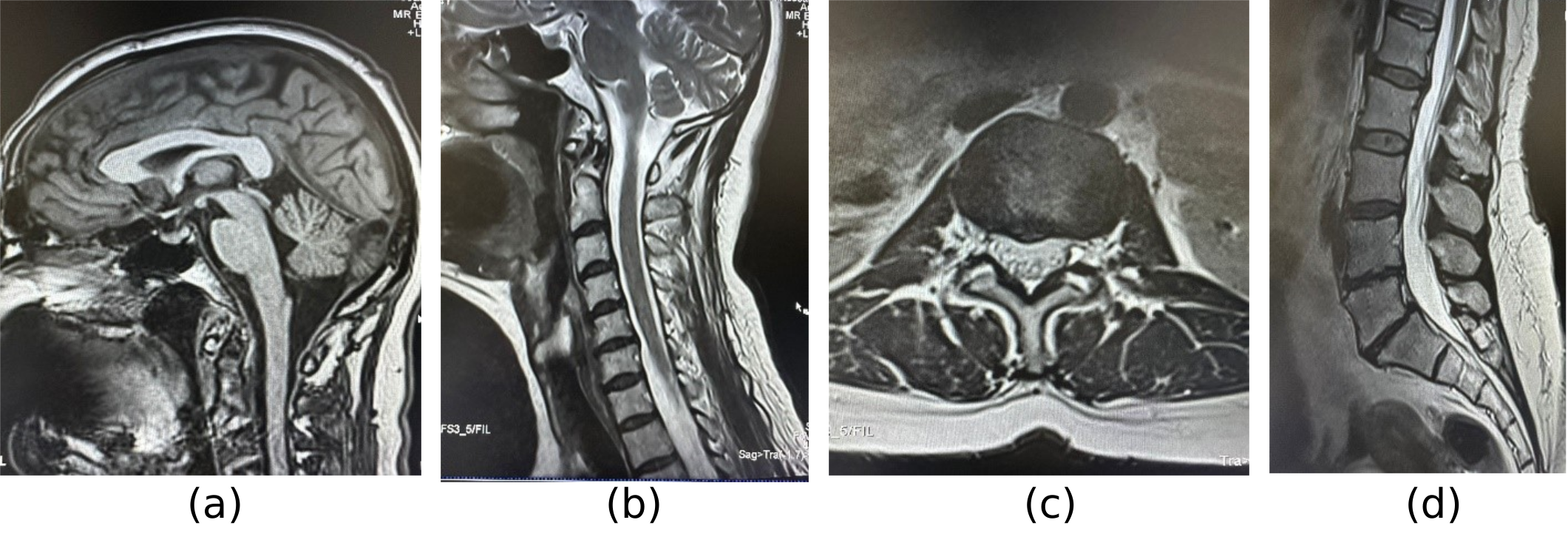
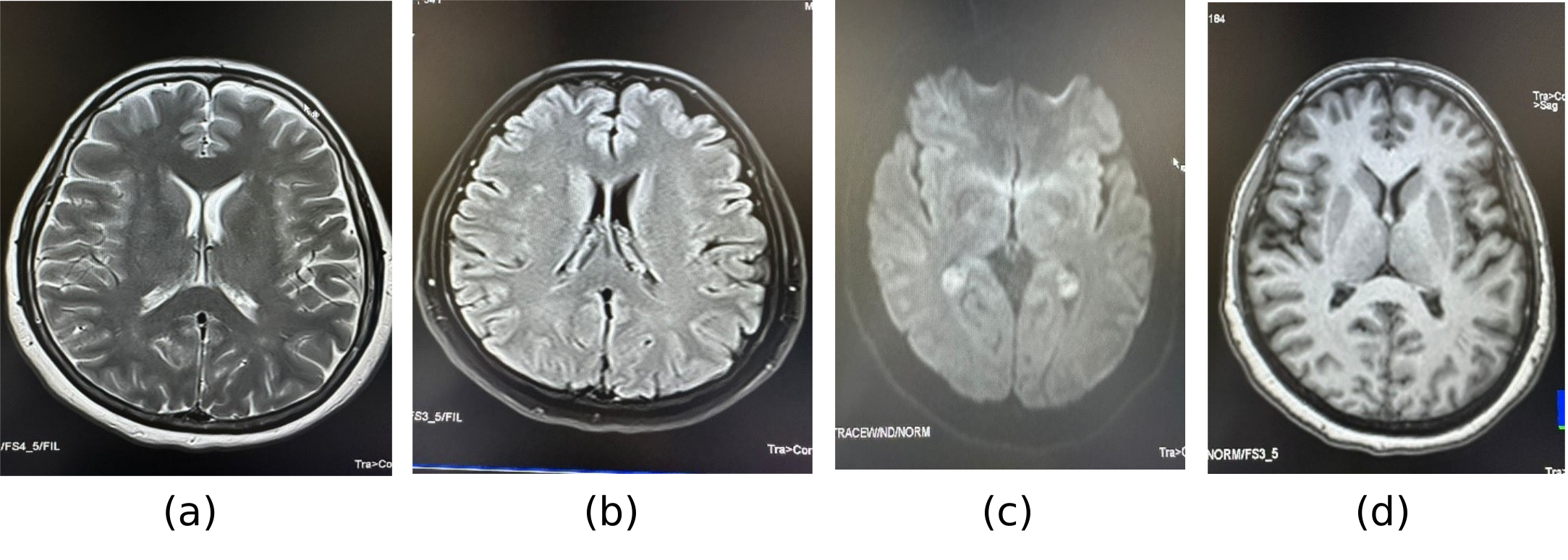
Magnetic resonance imaging (MRI) of the cervical spine and brain performed 8 days after injury (Figure 1) showed no signs of injury. (Figure 2)
Nerve conduction studies were normal. In particular, complex sensory nerve action potential amplitudes were normal, and there was no evidence of slowing of motor or sensory conduction.
The patient was started on infusion therapy, nutritional support, and physical therapy.
Despite the lack of imaging confirmation, diagnosis of partial Brown-Sequard syndrome was made based on neurologic examination. Follow-up MRI and neurophysiologic studies are scheduled in 2 months.
Three weeks after the injury the patient's upper extremity began to improve. Strength was restored to 3/5 in proximal and distal parts of the arm and to 1/5 in the proximal and distal parts of the lower extremity. The right plantar reflex was extensor, and all deep tendon reflexes were brisk.
4. Discussion
Low voltage indoor electrocution is a rare cause of spinal cord injury, causing long-term neurological disability. Brown Sequard Syndrome (BSS) is a rare spinal syndrome that causes ipsilateral hemiplegia due to compression of the corticospinal tract and contralateral loss of pain and temperature sensation due to dysfunction of the spinothalamic tract.
In the presented case, the clinical findings suggested predominant involvement of the posterior and lateral fasciculi, and were associated with demyelination rather than axonal degeneration. Numerous cases of acute or delayed myelopathy following electrical trauma have been reported. Myelopathy is most common initial injury after high-voltage and lightening injures, and our case is the first case of indoor low-voltage myelopathy reported in the literature.
In most patients with clinical symptoms of spinal cord syndrome, MRI scans are important for making the diagnosis. However, myelopathy with normal spinal imaging has been reported several times in the literature.
Arevalo et al. reported two cases of neurological symptoms immediately following electrical trauma, with normal CT and MRI. Arevalo et al [11] suggested that negative MR in early spinal cord injury may be due to the focal abnormalities that are too small to be detected on MRI or to myelomalacia that is not fully established in the acute phase. MRI results may become apparent after 6 to 12 weeks. A negative MRI finding should not rule out a clinical diagnosis.
In direct myelopathy, spinal MRI shows demyelinatIon, infarction, and edema. Electrical injuriy can lead to traumatic brain and spinal cord injury due to falls. To rule out traumatic brain and spinal cord haemorrhage, a head CT scan and spine X-rays were performed. A recent study of 832 patients estimated that 7% of the spinal fractures (mainly thoracic fractures) were caused by falls resulting from electrical trauma [12]. Sui H Wong, Mike Boggild, T Peter Enevoldson, Nicholas A Fletcher Myelopathy, normal MRI-Where next? An article in Practical Neurology published in may 2008 a research on the differential diagnosis of MRI-negative myelopathy. Toxic myelopathies including: radiation induced myelopathy, electrical injury, nitrous oxide, intrathecal methotrexate are listed as one of the causes of normal spine MRI in the setting of clinical signs compatible with myelopathy.
5. Conclusions
Electrical injuries can cause a wide range of immediate and long- term neurological damage that is life-threatening and disabling. Early diagnosis and treatment of these disorders by a multidisiplinary team, as well as long-term follow-up, are essential to prevent disease. Workplace safety practices should be emphasized to electric power workers, industrial workers, and appliance workers.
When presenting to the emergency room after an electrical injury, a neurological consultation must be a priority. Second, the patient should undergo radiological evaluation immediately after cardiopulmonary stabilization. For all patients, exluding cerebral hemorrhage is a priority.
Declaration of patient consent
The authors certify that they have obtained all appropriate patient consent forms.
Conflict of interest
There are no conflicts of interest.
References
- Varghese G, Mani MM, Redford JB. Spinal cord injuries following electrical accidents. Paraplejia 1986;24:159–166[CrossRef] [PubMed]
- Levine NS, Atkins A, McKeel DW, et al. Spinal cord injury following electrical accidents: case reports. J Trauma 1975;15:459– 463[CrossRef] [PubMed]
- Petty PG, Parkin G. Electrical injury to the central nervous system. Neurosurgery 1986;19:282–284[CrossRef] [PubMed]
- John AD. Principles and Practice of Burns Management. New York: Churchill Livingstone; 1996
- Ding H, Huang M, Li D, et al. Epidemiology of electrical burns: a 10- year retrospective analysis of 376 cases at a burn centre in South China. J Int Med Res. 2019 [Epub ahead of print][CrossRef] [PubMed]
- Wesner ML, Hickie J. Long-term sequelae of electrical injury. Can Fam Physician. 2013; 59(9): 935–939, indexed in Pubmed: 24029506.
- Hahn-Ketter AE, Whiteside DM, Pliskin N, et al. Long-term consequences of electrical injury: neuropsychological predictors of adjustment. Clin Neuropsychol. 2016; 30(2): 216–227, doi: 10.1080/13854046.2016.1155647, indexed in Pubmed: 26930500.[CrossRef] [PubMed]
- Schaefer NR, Yaxley JP, O’Donohue P, et al. Electrical burn causing a unique pattern of neurological injury. Plast Reconstr Surg Glob Open. 2015; 3(4): e378[CrossRef] [PubMed]
- Srivastava S, Kumari H, Singh A, et al. Electrical burn injury: a comparison of outcomes of high voltage versus low voltage injury in an Indian scenario. Ann Burns Fire Disasters 2018;30. ; 31(3): 174–177.
- Konstantina G. Yiannopoulou et al., Neurological and neurourological complications of electrical injuries”, an article published in 2021[CrossRef] [PubMed]
- Arevalo JM, Lorente JA, Balseiro‒Gomez J. Spinal cord injury after electrical trauma treated in a burn unit. Burns. 1999;25(5):449‒452.[CrossRef] [PubMed]
- Sui H Wong, Mike Boggild, T Peter Enevoldson, Nicholas A Fletcher Myelopathy, normal MRI-Where next? Article in Practical Neurology · May 2008 DOI: 10.1136/jnnp.2008.144121.[CrossRef] [PubMed]