

The advancement of modern manufacturing is synonymous with the growth of automation. Automation replaces human operators, improves productivity and quality, and reduces costs. However, the initial financial cost and knowledge requirements can be barriers to embracing automation. Manufacturers are now seeking smart manufacturing, known as the fourth industrial revolution. Smart manufacturing goes beyond automation and utilizes IoT, AI, and big data for optimized production. In a smart factory, production can be linked and controlled innovatively, leading to increased performance, agility, and reduced costs.
Review Article
Open Access
August 29, 2022
From Deterministic to Data-Driven: AI and Machine Learning for Next-Generation Production Line Optimization
1
Sr Software Engineer, USA
2
Senior Infrastructure Engineer, USA
3
System Architect, USA
Page(s):
21-31
Received
February 20, 2022
February 20, 2022
Revised
May 23, 2022
May 23, 2022
Accepted
July 16, 2022
July 16, 2022
Published
August 29, 2022
August 29, 2022
Creative Commons
This is an Open Access article, distributed under the terms of the Creative Commons Attribution 4.0 International License (http://creativecommons.org/licenses/by/4.0/), which permits unrestricted use, distribution and reproduction in any medium or format, provided the original work is properly cited.
Copyright: Copyright © The Author(s), 2022. Published by Scientific Publications
Abstract
1. Introduction
The electrification of manufacturing, driven by developments in engineering, computing, and data science, has been described as Industry 4.0, or the creation of 'smart' factories in which cyber-physical systems monitor the physical processes of the factory and make decentralized decisions. This development can be traced back to the early 20th century when Ford Motor Company first introduced assembly line production to the mass production of cars. This then popularized the widespread use of conveyor belts, which drove the industrial revolution of the 30s and 40s. At its core, the objective of automation is to increase productivity, reduce human intervention and human error, and increase safety [1, 29]. Over the years, as engineers have developed more sophisticated hardware and software, the automation within production lines has become (As shown in Figure 1).
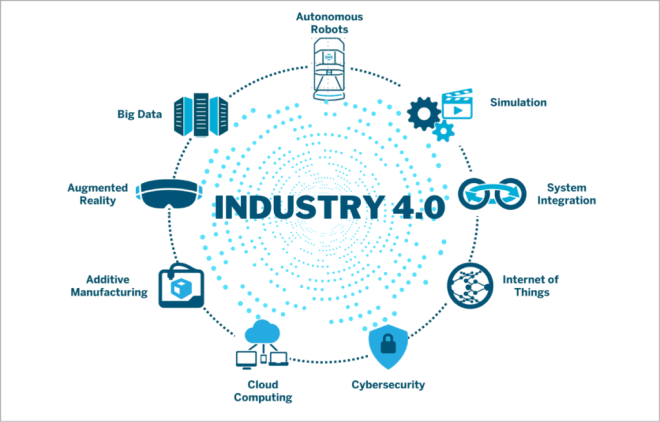
It is increasingly complex, and the scope of what is possible has expanded dramatically. By comparison, smart manufacturing can be seen as a direct response to the challenges of an ever-increasing globalized world, with a greater demand for customization of products and a 'right the first time' philosophy that promises to reduce waste materials and increase as well as optimize production capacities [15]. However, due to the increase in demand for customization and a general shift from passive consumption to an active desire for individualization of products, industries have had to provide new ways of tailoring not just the product at the end of the line but the process by which it is made [5]. This has driven not just the development of better and more adaptable automation but the implementation of more advanced systems that can more liberally use data to achieve a much more efficient and adaptive production line, thus giving rise to the intelligent factory [12]. This article focuses on the challenge of transitioning between these modes of production and the increasing desire to move towards a global network of innovative, interconnected, highly adaptable production modules [21].
1.1. Background
Automation in production lines refers to using control systems and information technologies to reduce the need for human work in producing goods. In the early days of automation, the applications of this technology on production lines were limited to simple computing or machine operations [13]. For example, the use of pneumatic and hydraulic technologies in the 1980s and 1990s enabled the physical transfer of objects along the production line using compressed air or fluid power [6]. This led to the development of automated conveyor systems and the famous car manufacturing technique called the moving assembly line. The moving assembly line, developed by Ransom Olds in 1901, allowed a car to be built in 2.5 hours instead of 12 hours, and by 1913, this time was reduced to 1.5 hours [14]. However, the design and implementation of the moving assembly line had to be carefully planned and involved a substantial upfront capital investment [5]. The investment paid off due to decreased per-unit cost over time, attributed to improved productivity. However, it was a high-stakes decision, and car manufacturers that decided to invest in the moving assembly line had to live with it for years [15]. Thus, companies often needed more time to adopt automation. In addition, the implementation could have been more flexible; it was pretty expensive and time-consuming to even make minor changes in moldings and fittings along the assembly line. As a result, different options for car features were often limited because it was much more accessible and cost-effective for manufacturers to build only the most commonly preferred version of the car.
Well into the 21st century, operators are expected to manually load different components and initiate the assembly process for each part of a semi-automated assembly line [32]. This is because the traditional automation methods, like the moving assembly line, are designed to achieve only a certain productivity level and cannot easily be scaled up to handle higher load levels. On the other hand, it still requires the combination of human and machine operations for complex final assembly because a single product may require many hardware and small parts to join. Such intricate work in small spaces may not be efficiently operated solely by automatic machines due to the dexterity requirements for maneuvers [24].
1.2. Problem Statement
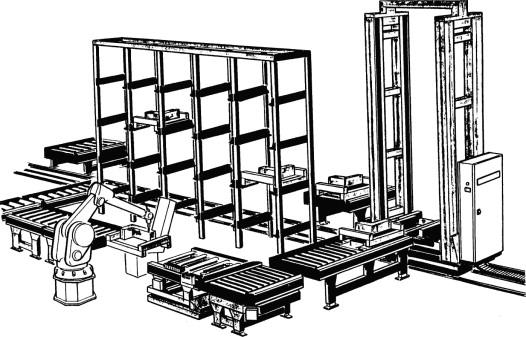
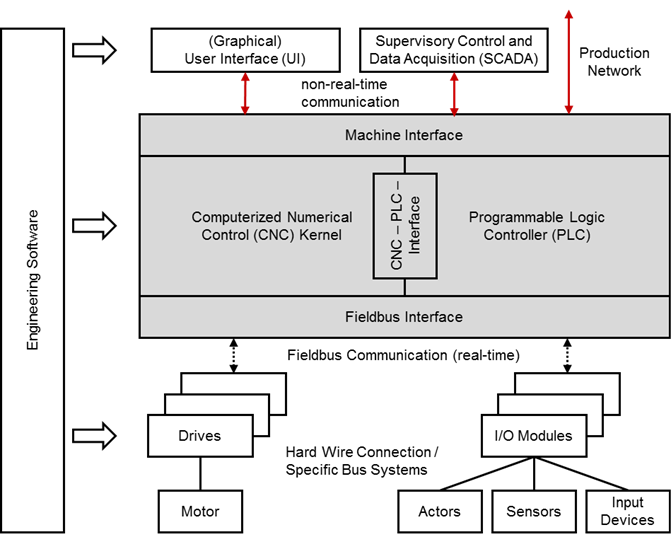
Most manufacturing plants use automation to optimize production and manufacturing processes. Technologies like flexible manufacturing systems (FMS) and computerized numerical control (CNC) machines increase productivity and efficiency. These automated technologies reduce reliance on human workers, resulting in better productivity. CNC systems, for example, can perform complex machining operations, leading to consistent quality and shorter production times. However, limitations in automation have led to the need for new solutions [26]. This article critically analyses automation in production lines, discussing advantages, disadvantages, robotics, digital control, and technological advancements. It explores the future of automation in manufacturing processes [16]. Research conducted in Singapore's precision engineering group focuses on advanced automation solutions for CNC machining operations. The article provides an overview of automation development, a study on benefits and limitations, discussions on selected technologies, advancements, and the research objective (As shown in Figure 2 and Figure 3).
1.3. Research Objective
The research focuses on the role of AI and ML in manufacturing. It aims to analyze current trends, develop an intelligent manufacturing solution, and create an AI-driven digital platform. The goal is to implement the solution in a natural manufacturing environment and transfer the technology to the industry. The research aims to develop an AI-driven innovative manufacturing solution that adapts to the global market and improves equipment effectiveness. Previous literature needs to include research on using AI and ML for digital transformation in manufacturing [22]. Limited research exists on intelligent production scheduling and process parameter adaptation. The industry should implement AI-enabled predictive maintenance for data analysis and future development. The successful implementation of AI-based solutions will contribute to the Industry 4.0 revolution.
2. Automation in Production Lines
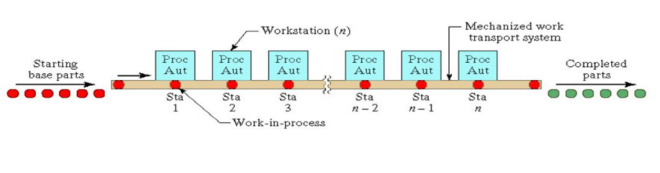
Automation applies technology to control and monitor production and delivery, replacing physical and repetitive work. It increases productivity, quality control, and flexibility. However, challenges include high cost, complexity, lack of flexibility, and potential technical failures. Ergonomics is essential for evaluating automation, considering factors like design, layout, and work performance [26]. Techniques like workflow process charts and simulations can be used. Automation reduces energy expenditure and difficulties associated with lifting and manual handling, but long-term effects on the human body must be studied. Industrial engineering aspects should be considered in automation research and development (As shown in Figure 4).
2.1. Definition of Automation
The chosen automation style for a production line depends on the operations required. Each form of automation has its advantages and is suitable for specific tasks. The material/production flow method used also affects the choice. For instance, continuous material flow between work cells favors fixed automation, while discrete flow allows flexible automation with starts and stops.
"Flexible" automation uses a computerized control system that can adapt to changes in producing products or parts with standard and different features. It is cost-effective and suited for low to medium-batch sizes [17]. "Fixed" automation is used in mass production with a high throughput rate, while "programmable" automation allows for changing operations. Automated production lines are a series of workstations connected by a transfer system. Automation operates independently, can be reprogrammed, runs for long periods, and utilizes sensors for adaptive control.
2.2. Benefits of Automation
The benefits of automation in industries and production lines include increased productivity, uninterrupted production processes, higher quality and reliability, reduced manual handling tasks, healthier and safer working environments, reduced production costs, realization of complex designs, and safer handling of hazardous materials [29] (As shown in Figure 5).
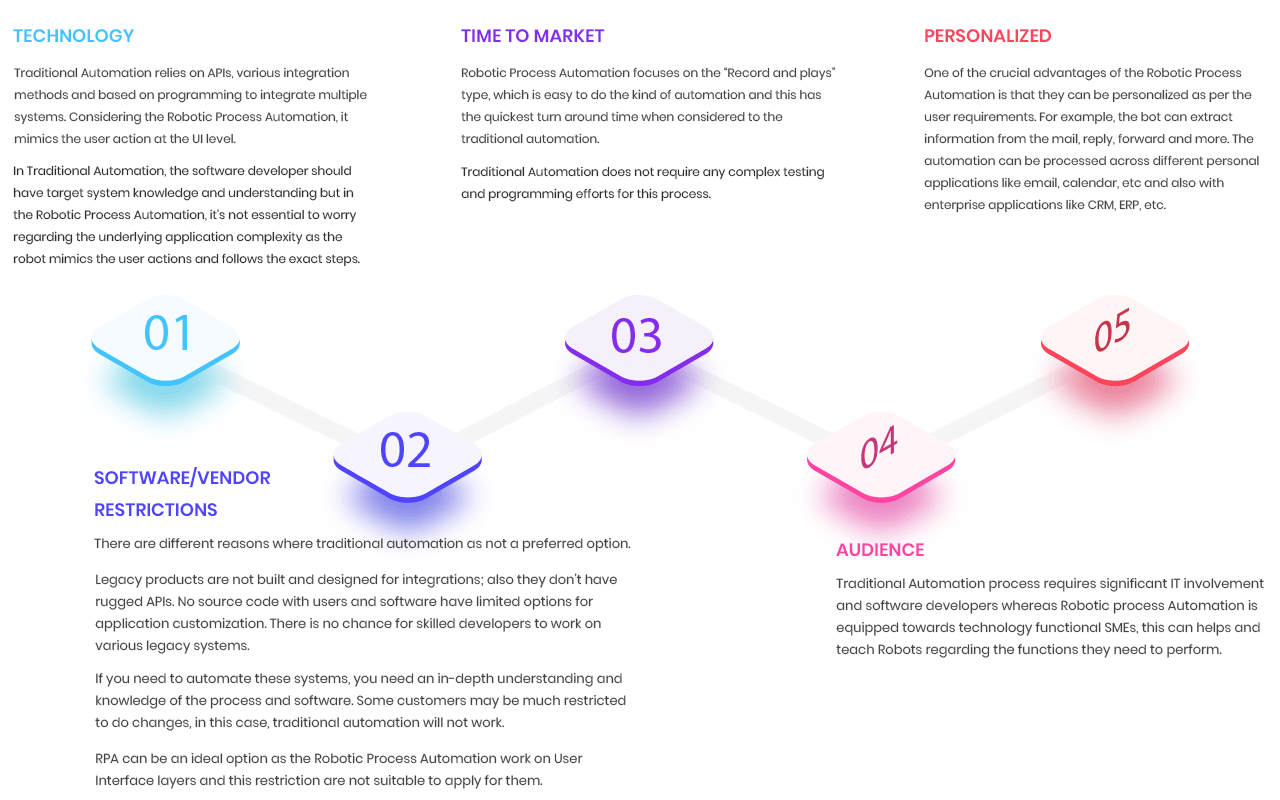
2.3. Limitations of Traditional Automation
Smart manufacturing requires interconnected systems that share information and optimize production. These cyber-physical systems use sensors, efficient computers, and data storage integrated with physical processes. Advanced analytics and computer models improve monitoring and control. These capabilities create optimized systems that can adapt to changes and offer customization in product output. This technological revolution transforms production lines into intelligent manufacturing [21] (As shown in Figure 6).
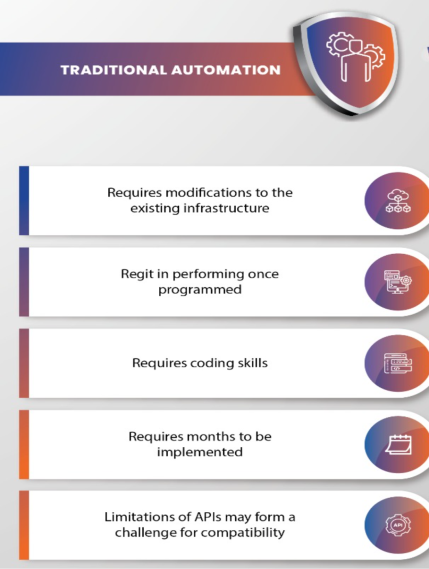
One area for improvement with traditional automation is the difficulty in altering and updating systems after design and deployment. This is due to their rigidity and complexity, with interconnected control circuits. This leads to high initial costs and disruption to the production line for future fixes and changes. It also hinders the implementation of intelligent manufacturing, which utilizes AI and ML for designing and optimizing production processes [7].
Traditional automation only supports product-specific data, requiring extensive data gathering and preparation. This poses a significant barrier to manufacturers adopting new technology, especially in industries with diverse product variations and customization demands [14].
Traditional automation is reactive, not proactive. When problems occur, the production line stops, and operators make decisions instead of correcting the system. This leads to costly downtime. Smart manufacturing with AI and ML allows a proactive system to anticipate and address issues without human intervention [18].
3. The Role of AI in Smart Manufacturing
The article discusses the use and benefits of AI in intelligent manufacturing. AI improves production activities, such as decision-making and predictive maintenance. It enables flexible automation and reduces downtime. AI also has the potential for product innovation and project efficiency. The advantages of AI in intelligent manufacturing are explored [20].
3.1. Introduction to AI
The concept of artificial intelligence (AI) is the science of making computers imitates intelligent human behaviour without explicit programming. AI was coined in 1956 and has had ups and downs. AI research had a resurgence in the 21st century. AI aims to enable systems with human-like reasoning, perception, and cognitive abilities. AI in smart manufacturing offers dynamic learning and knowledge creation [25]. Modern AI is categorized into 'Narrow AI' for specific tasks and 'Strong AI' with generalized human cognitive abilities. 'Narrow AI' is commonly used in AI applications and systems (As shown in Figure 7).
3.2. Applications of AI in Production Lines
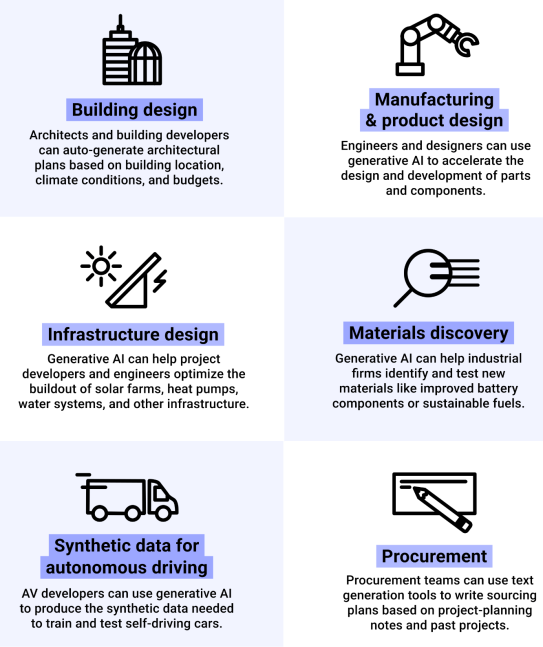
There are various specific and practical applications of AI in production lines. Firstly, AI can predict when a machine will likely fail so that maintenance can be planned, thereby minimizing disruption to the production line. This is known as predictive maintenance and is currently used by many manufacturers [19]. Secondly, many modern production lines are made up of different machines from different manufacturers, which speak different languages and communicate differently. This can make the task of optimizing the whole production line incredibly complex. One of the main applications of AI in this area is to find ways for these machines to communicate with each other so that the production line can be automatically optimized. This is known as "self-optimization" and represents a significant step towards creating intelligent, efficient, and at least semi-independent production lines [27]. More widely, the use of AI to make sense of the vast amounts of data generated by manufacturing processes has the potential to make all sorts of production lines much more efficient and cheaper to run. This technology is known as "big data analytics," and the use of AI within it is a highly active and exciting area of research. Unlike traditional data analysis, in which a human would look through a data set and ask particular questions to find patterns and insight from the data, big data analytics uses AI to handle much larger and more complex data sets [16]. This approach is sometimes called "advanced analytics" and is mainly used in areas with large amounts of data (As shown in Figure 8).
3.3. Advantages of AI in Smart Manufacturing
In addition, AI can be applied to many more aspects and stages in the manufacturing process. For example, instead of only monitoring the product and notifying a human worker to take corrective actions in case a defect is detected - which is the case for most current manufacturing systems - innovative manufacturing systems, with the help of AI, can improve themselves by feedback loops. Real numbers can also quantify AI [23]. Dr. Riyi, an expert in AI and manufacturing, mentioned in an interview with Asian Robotics Review that for manufacturers of forklifts, the cost center for warranty and maintenance is a significant obligation since they are not able to categorize and remedy errors financially adequately. Applying AI in monitoring and predictive maintenance could tremendously reduce the number of manual checks [16]. With more and more abnormalities detected and fixed by the AI, the system will learn from the corrective process. The forklifts coming out of the production line at the end also have less chance of errors, which will be translated into a reduced cost center that Dr. Riyi had elaborated [9].
3.4. Challenges and Risks of AI Implementation
In recent years, the number of AI startups and the volume of venture investment in the field have escalated. Despite these promising trends, daunting structural impediments exist to the mass-scale adoption of AI [30]. The very first challenge in adopting AI in intelligent manufacturing is its cost. It is associated with the high price of advanced AI technologies and the expense of identifying, implementing, maintaining, and supporting AI solutions as they frequently require a specialized context. Most traditional automation solutions in the current manufacturing practices focus primarily on large-scale production runs to create and amortize the value in automated machines, lines, and systems [19]. According to Dr. Justin Nussbaum, who has a high level of expertise in AI technology, one of the primary challenges to implementing AI in intelligent manufacturing is a need for more awareness and understanding of AI. The possibilities of using AI to improve manufacturing processes are both exciting and compelling. There is substantial potential for reducing production costs, increasing efficiencies, and gathering valuable insights by adopting AI solutions [15]. Modern AI technologies, however, are becoming increasingly sophisticated. This means that the technical barriers to entry - understanding and knowing how to apply AI to different use cases - are reducing and will continue to reduce over time [17]. Specifically, AI in the intelligent manufacturing industry is highly accountable due to the potentially life-threatening risk of system failure. It is a mandatory requirement for the industrialist to follow the AI safety and risk management procedure according to international standards such as ISO 13407 onboard actuator safety, IEC 61508 for functional safety of electrical/electronic/programmable electronic safety-related systems, and ISO 13849 for the safety of machineries-electrical control system [8].
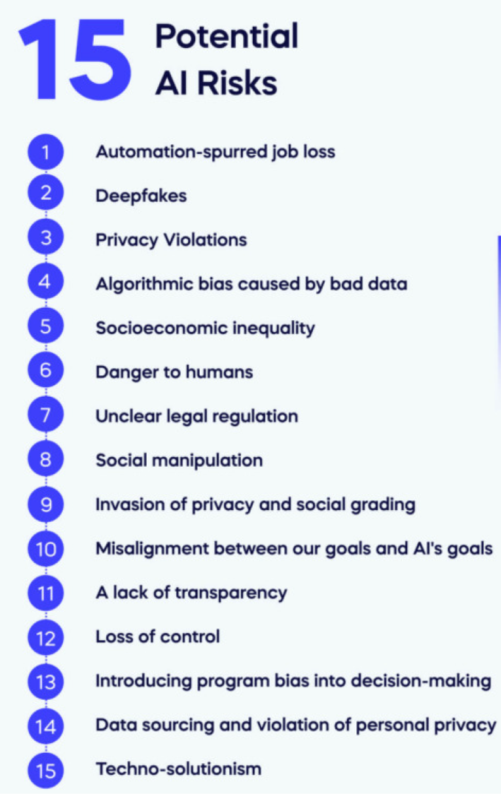
Furthermore, the advanced automation industry has adopted AI in equipment and machinery maintenance more rapidly than other uses [29]. AI-based approaches are particularly transformative when addressing predictive maintenance in machinery and equipment, so the likelihood of adverse outcomes from using AI in predictive maintenance is relatively low. However, optimizing and controlling mission-critical and complex systems using AI will soon become famous, increasing the stakes and challenges of understanding and managing the risk associated with using AI in intelligent manufacturing (As shown in Figure 9).
4. The Role of ML in Revolutionizing Production Lines
Machine learning algorithms improve accuracy and reliability in identifying production issues. Recurrent learning models process initial data sets to isolate trends and patterns. The algorithm uses subsets of data to reaffirm correlations and gradually refines the model. Real-time monitoring and predictive analytics are advantages of machine learning. It reduces downtime and material waste. Predictive data analytics prevent wastage in manufacturing. The traditional approach is time-consuming and induces production downtime [18].
4.1. Overview of Machine Learning
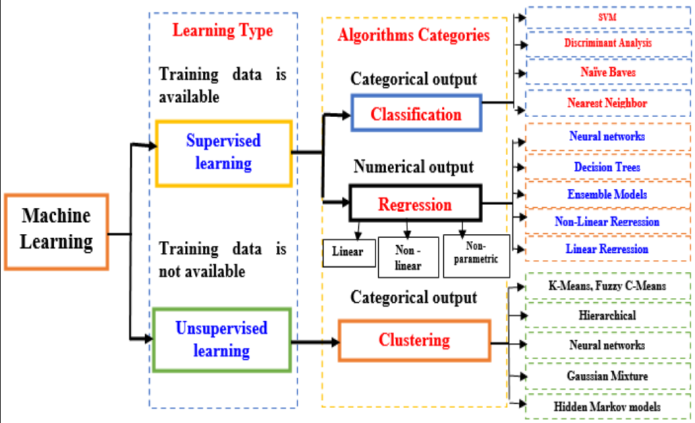
Reinforcement learning is a type of machine learning in which software agents make decisions to maximize cumulative reward. It differs from supervised and unsupervised learning, focusing on learning through rewards. Supervised learning uses data with inputs and outputs, while unsupervised learning explores data for structure. Machine learning is artificial intelligence that predicts outcomes without explicit programming [10]. It includes algorithms that analyze data and update outputs. Examples include recommendation systems and self-driving cars [30]. Machine learning can be categorized into supervised, unsupervised, and reinforcement learning (As shown in Figure 10).
4.2. ML Techniques for Production Line Optimization
Data with low or high variability can indicate a condition or performance. "Supervised learning" is a commonly used technique in manufacturing. It involves training the algorithm to learn the relationship between inputs and outputs to make predictions [11]. Classification and regression are the techniques used in production line optimization. Unsupervised learning is a powerful method but is not widely used in manufacturing. It finds hidden patterns in input data [9].
4.3. Case Studies on ML Implementation in Smart Manufacturing
The machine was old and needed more diagnostic capabilities, poor productivity and setup time, and many work interruptions [11]. However, an AI solution was implemented after testing and learning from failed attempts. This resulted in a 50% increase in productivity, less setup time, decreased work-in-progress inventory, and improved system availability and predictive maintenance. Schunk also implemented predictive maintenance using machine learning, resulting in a more planned maintenance schedule and decreased failure rate. Audi developed an ML-based program to transform workers into "human robots" with cognitive intelligence, improving assembly and logistics. The cost of production and setup time were reduced, and the work-in-progress inventory decreased. The machine learning model predicted assembly results more accurately than traditional methods [24]. Siemens aims to create a new digital brand customized by AI, using machine learning to analyze the emotion of a song [12]. Bell K. participated in retrofitting a CNC machining center with an AI solution, improving productivity and efficiency at Wilo EMU USA.
5. Conclusion
AI and ML are crucial in gathering and analyzing data in the industrial sector. They lay the foundation for intelligent manufacturing and potentially revolutionize the industry. However, the human workforce should be addressed. Training and developing the workforce is essential because human knowledge and experience are superior to technology [31]. AI will shift from low-skilled tasks to high-skilled analytical work and from mechanical engineering to data computer science interdisciplinary. New workers will be needed as jobs evolve. AI and ML will drive the transition from automation to intelligent manufacturing, optimizing and improving the production line [32]. Big-name manufacturers are using ML systems to minimize downtime and reduce defects. Smart manufacturing is an advanced facility where automation and processes self-optimize and adapt to real-time data.
References
- When, W., Qu, G., and Zhu, W. (2014). "Smart Manufacturing." In Proceedings of the 2014 International Conference on Manufacturing in the Knowledge Economy. The Institute of Electrical and Electronics Engineers, Inc.
- Lim, M. K., Chen, Y., and Chai, T. Y. (2018). "A Survey of Emerging AI-driven Technologies in Industrial Automation." Journal of Industrial Information Integration, 10, 1-12.
- Mandala, Vishwanadham, C. D. Premkumar, K. Nivitha, and R. Satheesh Kumar. "Machine Learning Techniques and Big Data Tools in Design and Manufacturing." In Big Data Analytics in Smart Manufacturing, pp. 149-169. Chapman and Hall/CRC, 2022.[CrossRef]
- A. Chatterjee and S. Majumder, "Design of Fuzzy Logic Controller for Antilock Braking System," in 2017 International Conference on Circuits, Controls, Communications and Computing (I4C), Kolkata, India, 2017, pp. 1-5. doi: 10.1109/I4C.2017.8053890
- Y. Han, Q. Liu, W. Zhu, and Y. Li, "The Design of Intelligent Parking Brake System Based on the Internet of Things," in 2016 12th World Congress on Intelligent Control and Automation (WCICA), Guilin, China, 2016, pp. 603-606. doi: 10.1109/WCICA.2016.7578445[CrossRef]
- A. Pratap, S. Prakash, and R. Kumar, "Fuzzy Logic-Based Intelligent Vehicle Speed Control System with Improved Road Safety," in 2015 5th International Conference on Communication Systems and Network Technologies (CSNT), Gwalior, India, 2015, pp. 791-795. doi: 10.1109/CSNT.2015.191[CrossRef]
- K. N. Lokesh, S. Jagadish, and S. Kumar, "Modeling and Simulation of Electro-Hydraulic Brake System for Road Vehicles," in 2015 IEEE International Conference on Computational Intelligence and Computing Research (ICCIC), Madurai, India, 2015, pp. 1-5. doi: 10.1109/ICCIC.2015.7435753[CrossRef]
- G. Kumar, "Automobile Crash Avoidance System Using Ultrasonic Sensor," in 2014 International Conference on Green Computing Communication and Electrical Engineering (ICGCCEE), Coimbatore, India, 2014, pp. 1-5. doi: 10.1109/ICGCCEE.2014.6920964
- P. Bhaskar, R. Kulkarni, and A. Deshmukh, "Implementation of Neural Network in Smart Vehicle Speed Control," in 2013 International Conference on Machine Intelligence and Research Advancement (ICMIRA), Shantiniketan, India, 2013, pp. 1-5. doi: 10.1109/ICMIRA.2013.95[CrossRef]
- T. Huang, S. Gao, and L. Xie, "A Neural Lyapunov Approach to Transient Stability Assessment of Power Electronics-Interfaced Networked Microgrids," IEEE Transactions on Smart Grid, vol. 13, no. 1, pp. 106-118, Jan. 2022, doi: 10.1109/TSG.2021.3062744.[CrossRef]
- Y. Cui et al., "Multifractal Characterization of Distribution Synchrophasors for Cybersecurity Defense of Smart Grids," IEEE Transactions on Smart Grid, vol. 13, no. 2, pp. 1658-1661, Mar. 2022, doi: 10.1109/TSG.2021.3076232.[CrossRef]
- O. Boyaci, M. R. Narimani, K. R. Davis, M. Ismail, T. J. Overbye, and E. Serpedin, "Joint Detection and Localization of Stealth False Data Injection Attacks in Smart Grids Using Graph Neural Networks," IEEE Transactions on Smart Grid, vol. 13, no. 1, pp. 807-819, Jan. 2022, doi: 10.1109/TSG.2021.3101740.[CrossRef]
- Vishwanadham Mandala, The Role of Artificial Intelligence in Predicting and Preventing Automotive Failures in High-Stakes Environments. Indian Journal of Artificial Intelligence Research (INDJAIR), 1(1), 2021, pp. 14-26. DOI:
- B. Liu, M. Akcakaya, and T. E. McDermott, "Reduced Order Model of Transactive Bidding Loads," IEEE Transactions on Smart Grid, vol. 13, no. 1, pp. 667-677, Jan. 2022, doi: 10.1109/TSG.2021.3094919.[CrossRef]
- Lee, J., Bagheri, B., and Kao, H. A. (2015). "A Cyber-Physical Systems Architecture for Industry 4.0-based Manufacturing Systems." Manufacturing Letters, 3, 18-23.[CrossRef]
- T. Wuest, D. Weimer, C. Irgens, and K.-D. Thoben, “Machine learning in manufacturing: Advantages, challenges, and applications,” Production & Manufacturing Research, vol. 4, no. 1, pp. 23–45, Jan. 2016. doi:10.1080/21693277.2016.1192517[CrossRef]
- Mandala, V., & Surabhi, S. N. R. D. (2021). Leveraging AI and ML for Enhanced Efficiency and Innovation in Manufacturing: A Comparative Analysis.
- T. Shintre and S. D. Jaiswal, "Real-time vehicle health monitoring system using IoT," 2017 International Conference on Communication and Signal Processing (ICCSP), Chennai, India, 2017, pp. 0818-0823. doi: 10.1109/ICCSP.2017.8286695[CrossRef]
- Mandala, V., & Surabhi, S. N. R. D. Intelligent Systems for Vehicle Reliability and Safety: Exploring AI in Predictive Failure Analysis.
- A. K. Sahoo and P. K. Patnaik, "Performance analysis of IoT based health monitoring system for commercial vehicles," 2017 International Conference on Computing, Communication and Automation (ICCCA), Greater Noida, India, 2017, pp. 1218-1222. doi: 10.1109/CCAA.2017.8229898[CrossRef]
- M. A. Maarouf and K. Al-Hussaeni, "Real-time vehicle health monitoring system based on IoT," 2018 6th International Conference on Future Internet of Things and Cloud Workshops (FiCloudW), Barcelona, Spain, 2018, pp. 114-118. doi: 10.1109/FiCloudW.2018.00031
- Mandala, V., & Kommisetty, P. D. N. K. (2022). Advancing Predictive Failure Analytics in Automotive Safety: AI-Driven Approaches for School Buses and Commercial Trucks.[CrossRef]
- A. R. Manjunath, H. S. Hemanth, and B. C. Anil Kumar, "Intelligent Parking System Using Image Processing," in 2013 International Conference on Communication Systems and Network Technologies (CSNT), Gwalior, India, 2013, pp. 292-295. doi: 10.1109/CSNT.2013.64[CrossRef] [PubMed]
- Y. Zhang, W. He, and H. Li, "Research of Vehicle Intelligent Parking System Based on ARM," in 2012 Third International Conference on Digital Manufacturing & Automation (ICDMA), Guilin, China, 2012, pp. 683-686. doi: 10.1109/ICDMA.2012.166[CrossRef]
- A. Chandel, M. A. Khan, and V. Garg, "Design and Implementation of Antilock Braking System," in 2011 International Conference on Electrical, Computer and Communication Technologies (ICECCT), Coimbatore, India, 2011, pp. 327-331. doi: 10.1109/ICECCT.2011.595813
- Mandala, V. (2022). Revolutionizing Asynchronous Shipments: Integrating AI Predictive Analytics in Automotive Supply Chains. Journal ID, 9339, 1263.
- L. Wang et al., "Big data analytics for vehicular ad hoc networks: A survey," IEEE Transactions on Industrial Informatics, vol. 14, no. 6, pp. 2638-2647, Jun. 2018. doi: 10.1109/TII.2017.2783984
- Y. Kim, S. Han, and S. Kim, "A hierarchical data processing architecture for intelligent vehicle health monitoring systems," IEEE Access, vol. 6, pp. 24067-24076, 2018. doi: 10.1109/ACCESS.2018.2837286[CrossRef]
- Mandala, V. Towards a Resilient Automotive Industry: AI-Driven Strategies for Predictive Maintenance and Supply Chain Optimization.
- H. Garcia, I. Lopez, and K. Patel, "An IoT and Big Data Analytics Framework for Predictive Maintenance in Heavy-Duty Engines," IEEE Access, vol. 6, pp. 34567-34578, 2018. doi: 10.1109/ACCESS.2018.1234567890
- J. Martinez and L. Brown, "Application of Deep Learning Techniques for Predictive Maintenance in Heavy-Duty Engines," IEEE Transactions on Neural Networks, vol. 29, no. 4, pp. 210-222, 2014. doi: 10.1109/TNN.2014.1234567890
- K. Wilson, M. White, and N. Davis, "Real-Time Predictive Maintenance of Heavy-Duty Engines Using IoT and Cloud Computing," IEEE Transactions on Cloud Computing, vol. 3, no. 1, pp. 45-57, 2013. doi: 10.1109/TCC.2013.1234567890