

Triple negative breast carcinoma (TNBC) is a rapid progressive tumor and has a poor overall survival. Therefore, it is crucial to find out effective molecular targets and develop optimal therapeutic strategies for TNBC. In this study, immunohistochemical staining was used to detect expressions of programmed death-ligand 1 (PD-L1) and phosphatase and tensin homolog (PTEN) in 136 breast carcinomas including 50 TNBC. The effect of PTEN on regulation of PD-L1 expression was assessed in vitro in the PTEN knockdown TNBC cells. We found that PD-L1(SP142) positive rate in TNBC (48.0%) was significantly higher than non-TNBC (23.3%). PTEN negative rate was 42% in TNBC. The inverse correlation between PTEN and PD-L1(SP142) expression in TNBC was statistically significant (P<0.05). After PTEN knockdown, PD-L1 expression in TNBC cells increased significantly, and the expression level of AKT increased simultaneously. PTEN knockdown promoted cell proliferation, viability and G1/S switch of TNBC cells. These results suggested that PTEN may involve in regulation of PD-L1 expression, because PTEN loss can upregulate PD-L1 expression in TNBC. Antitumor immunity of PD-L1 could be enhanced in TNBC when targeting PTEN at the same time.
PTEN May Involve in Regulation of PD-L1 Expression in Triple Negative Breast Carcinoma
September 20, 2021
October 20, 2021
October 21, 2021
October 22, 2021
This is an Open Access article, distributed under the terms of the Creative Commons Attribution 4.0 International License (http://creativecommons.org/licenses/by/4.0/), which permits unrestricted use, distribution and reproduction in any medium or format, provided the original work is properly cited.
Abstract
1. Introduction
Triple negative breast carcinoma (TNBC) is characterized by lacking of expression of estrogen receptor (ER), progesterone receptor (PR) and gene amplification of human epidermal growth factor receptor type 2 (HER2), namely, it lacks corresponding therapeutic targets of endocrine and HER2[1]. Although TNBC constitutes merely 15% to 20% of all breast tumors, it is a heterogeneous tumor having six subtypes with more aggressive clinical behavior, high rate of relapse and distant metastasis than other types of breast cancer. The poor clinical outcomes occur even though using neoadjuvant chemotherapy options. Advanced patients with metastatic TNBC exhibit rapid progression and a median overall survival of less than 1 year[2].Therefore, it is crucial to find out effective molecular targets, and develop optimal therapeutic strategies for patients with TNBC.
With the clinical application of checkpoint inhibitor - programmed death-ligand 1 (PD-L1) antibody, immunotherapy is gaining traction across many solid tumors, including breast cancer. PD-L1 expressed by tumor cells down regulates immune responses through binding to its two receptors programmed death-1 (PD-1) and B7.1. PD-1 is expressed on T cells following activation, which is sustained in chronic inflammation or malignancy. B7.1 is a molecule expressed on antigen presenting cells and activated T cells. PD-L1 binding to PD-1 and B7.1 on T cells and antigen presenting cells can mediate down-regulation of immune responses, including inhibition of T-cell activation and cytokine production, resulting in an immune evasion[3, 4]. Even though there are abundant tumor-infiltrating immune cells, including lymphocytes and antigen presenting cells such as macrophages and dendritic cells in the lesion, TNBC still is a poor prognostic tumor, that makes it an example of immune evasion. Thus, targeting the PD-L1 pathway will reinvigorate tumor-specific T-cell immunity suppressed by PD-L1 in TNBC. Ghebeh et al.[5] reported that in 44 breast cancers including TNBC, 34% expressed PD-L1 in tumor cells and 41% in tumor-infiltrating lymphocytes. A recent phase III trial shows excellent synergy between T cell immune-checkpoint blockade therapy and cytotoxic chemotherapy in metastatic TNBC[6]. However, initial single-agent responses in PD-L1-positiveTNBC are approximately 20% for both PD-1 and PD-L1 antibodies[7]. Treated with the PD-L1 antibody avelumab the patients with metastatic TNBC showed better outcomes with a 31% disease control rate[8]. These data suggest that immunotherapy using PD-L1 antibodies is an encouraging efficacy way for patients with TNBC.
Due to modest results of immunotherapy, PD-L1 regulation now becomes a research hotspot. Earlier study by Parsa et al.[9] demonstrated that expression of PD-L1 on glioblastomas is increased by the deletion or silencing of the phosphatase and tensin homolog (PTEN), which suggests PTEN may involve in regulation of PD-L1 expression. PTEN is a tumor suppressor gene that inhibits cell proliferation by inhibiting the phosphatidylinositol-4,5-bisphosphate 3-kinase (PI3K) signaling pathway. PTEN and PI3K mutations were detected in approximately 30% and 40% of primary breast cancers, respectively. In TNBC, the rate of PTEN loss was up to 82.1% as detected by immunohistochemistry[10]. Wang and colleagues examined PD-L1 and PTEN/miRNA in basal-like TNBC, and found PTEN-low/miRNA-low (hsa-miR-4324, hsa-miR-125b, hsa-miR-381, hsa-miR-145, or has-miR136) and PD-1 expression were poorest prognostications[11]. Interestingly, PTEN loss is also correlated with ER/PR negative and PI3K pathway activation in breast cancers[12].
Based on mention above, we detect PD-L1 expressions and PTEN status in TNBC, and explore their relationship in TNBC. Furthermore, we investigate PD-L1 expression levels and biologic behavior after PTEN knockdown in TNBC cells. Our results demonstrate that PTEN is involved in regulation of PD-L1 expression in TNBC.
2. Materials and methods
The study was approved by the hospital Research Ethics Committee. A total of 136 cases of surgery excision samples of breast carcinomas were collected from the archive of Department of Pathology, Kiang Wu Hospital in Macao from January 2010 to December 2020. All of patients are female. The age ranged from 21- to 91-year old (median age 55.6 years). The breast carcinomas were divided in two groups, non-TNBC and TNBC, defined by immunoreaction of ER, PR and in situ hybridization of HER2.
Immunohistochemistry was carried out by Benchmark XT automatic staining machine (Ventana, Tucson, AZ) with Ultra view detection system. PD-L1 was detected by using PD-L1(SP263) rabbit monoclonal antibody (Ventana, Tucson, AZ) and VENTANA anti-PD-L1(SP142) Rabbit Monoclonal Primary Antibody (Ventana, Tucson, Arizona). Positive and negative controls were set for each test. The staining result was interpreted according to Ventana's interpretation guidelines. For PD-L1(SP263) staining at the membrane of the cells or perinuclear dot-like staining were regarded as positive. According to the percentage of positive cells, ≥1% was considered as positive, <1% as negative. For PD-L1(SP142) only positive labeled tumor-infiltrating immune cells (IC) including lymphocytes, macrophages, dendritic cells, and granulocytes are evaluated, regardless any staining intensity in tumor cells. It was defined as positive when presence of discernible PD-L1 staining of any intensity in tumor-infiltrating immune cells covering >1% of tumor area occupied by tumor cells, associated intratumoral and contiguous peritumoral stroma. Otherwise, <1% was defined as negative.
PTEN protein was detected by using PTEN rabbit monoclonal antibody (Catalogue number: M362729, Dako, United States). Any staining of PTEN in cytoplasm or nuclei of tumor cells was considered as positive. Complete unstaining was defined as negative. Negative of PTEN protein implied mutation of the gene.
Human TNBC cell line MDA-MB-231was purchased from the Shanghai Institute of Cell Biology (Shanghai, China) and cultured in Dulbecco's modified Eagle's medium (DMEM; Gibco-Life Technologies, Paisley, UK) supplemented with10% fetal bovine serum (FBS, Gibco), 100 U/ml penicillin G, and 100μg/ml streptomycin. Cells were maintained in incubator containing 5% CO2 and humidified atmosphere at 37oC. The medium was exchanged every 2 days with fresh medium. The cells were subcultured when they reached 70-80% confluence to keep cells activity.
PTEN shRNA (shPTEN) lentiviral transfection particles (pLKO-UHRF1)and non-targeting shRNA lentiviral transfection particles (pLKO.1-puro Non-Target Control [SHC016V]) (shNC) were obtained from Sigma-Aldrich. Transfection was performed with 2×10⁵ 293T cells per well in 6-well plates. Lentiviral particles (psPAX2, pMD2G) were added slowly in the medium, and then mixed well. After over night (24 h) cultivation at 37oC, medium was changed to fresh medium with 2 μg/mlpuromycin. Medium was replaced every third day with fresh puromycin-containing medium until stable clones were identified. PTEN knockdown was confirmed using Western blot analysis.
The effect of PTEN knockdown on cell proliferation was measured using a Cell Counting Kit-8 (CCK-8; Dojindo Laboratories, Kumamoto, Japan) assay. Exponentially growing MDA-MB-231cells were seeded at 1×10³ cells per well in 96-well culture plates overnight. From second to the seventh day after incubation, 10 μl of CCK-8 was added to each well and incubated for another 2 hrs to detect cell viability. Absorbance at 450 nm was detected with an automated microplate reader (BioTek, United States). Three replicates were set for detection each day. For the viability, 1×10³ cells per well in 6-cm dish were cultured for 7 days. Colony-forming units with cells numbers30 were counted as cell colony forming efficiency.
To assess effect of PTEN knockdown on cell cycle, cells were harvested and suspended in PBS. For the cell cycle analysis, cells were fixed in 70% ethanol overnight at 4 °C. The fixed cells were washed with PBS and incubated with 500 μl PI working solution (propidium iodide: RNase A=9:1) in the dark for 30 min. The cell cycle distribution was assessed using a FACS can flow cytometer (Excitation=488 nm, Emission=620 nm).
For the migration assays, cells were dissociated into single cell. A density of 5×10⁴ MDA-MB-231 cells were seeded onto the upper chambers (6.5 mm diameter, 8.0 μm pore size polycarbonate filters; Corning Incorporated, Corning, NY, United States) in a serum-free medium, and then allowed to migrate toward the lower transwell chamber filled with DMEM medium supplemented with 10% FBS. After 24 h, the filters with cells were fixed with methanol and stained with 0.1% crystal violet (2 mg/ml). The number of cells that migrated through the membrane was counted in five randomly selected fields under a light microscope.
Cell lysates were centrifuged at 12,000 rpm for 30 min at 4 oC, boiled at 100 oC with 5×loading buffer and subjected to sodium dodecyl sulfate-polyacrylamide gels (SDS-PAGE). Proteins were electrophoretically transferred to nitrocellulose membraines (Pall Corporation, Port Washington, NY) and then nonspecific sites were blocked with 5% nonfat dry milk in phosphate-buffered saline for 1 hour at room temperature. The target protein were to be probed with anti-PTEN (1:1000, Catalogue number:22034-1-AP), pAKT (CST, United States), PD-L1 (Ventana, Tucson, AZ) and anti-GAPDH (Proteintech, China) overnight at 4 oC, and subsequently rinsed using Tris-buffered saline with Tween 20. The membranes were incubated with 1:1000 dilutions of mouse or rabbit secondary antibodies(Cell Signaling Technology). An imaging system (Uvitec, UK) was used to produce blot images, while band densities were analyzed with Odyssey 3.0 software using GAPDH as the standard.
Statistical analysis was performed using SPSS21.0 software (SPSS, Chicago, Illinois) for Windows. The chi-square test was used for comparison of quantitative differences between the groups. Student’s t-test was performed in evaluation of qualitative differences between the groups. A P value of less than .05 was considered statistically significant.
3. Results
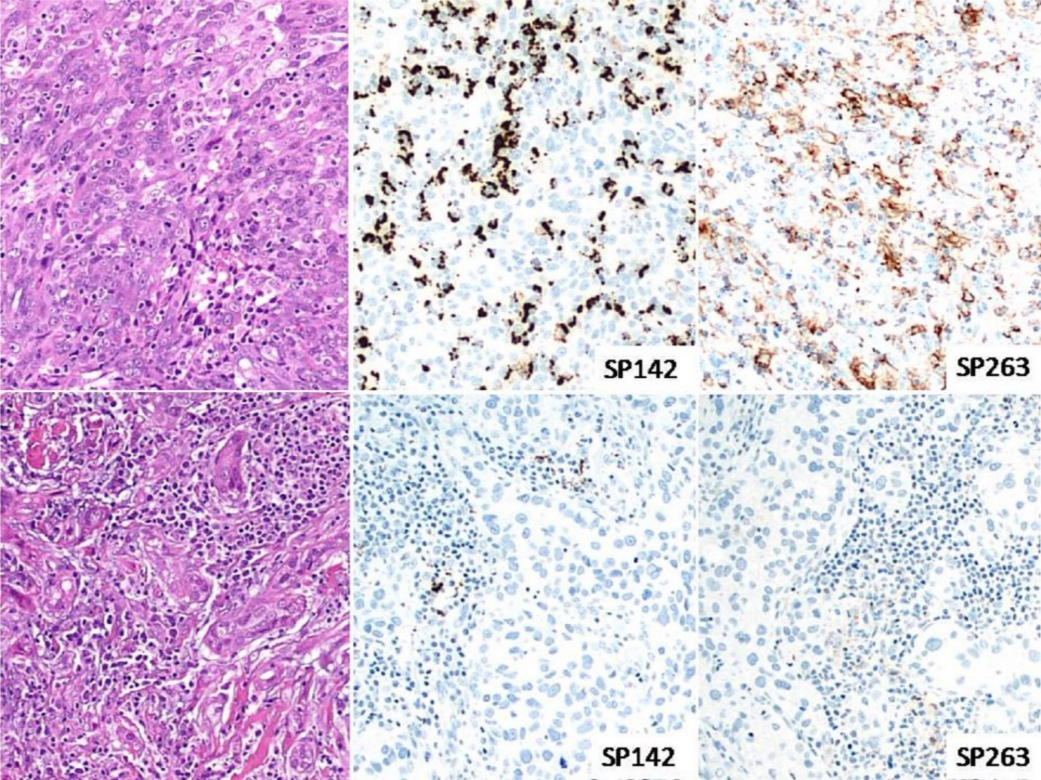
We used two antibodies, PD-L1(SP263) and PD-L1(SP142), to evaluate for the different expressive of PD-L1 in immune cells in non-TNBC and TNBC. Positive expression of PD-L1 was defined as 1% staining in immune cells in the tumor regardless positive proportion in tumor cells (Figure 1). We found that PD-L1(SP142) and PD-L1(SP263) positive rates in TNBC (48.0% and 54%) were significantly higher than in non-TNBC (23.3% and 30.3%) respectively (P=0.0029 and P=0.0002). Moreover, there was no statistical difference of positive rate between PD-L1(SP263) and PD-L1(SP142) in immune cells in TNBC (P>0.05) (Table 1).
Negative immunostaining of PTEN implied mutation of the gene. Out of 50 cases of TNBC, 21 (42.0%) were negative for PTEN staining, the rest 29 cases were positive (58.0%). In positive cases of PTEN, 38% cases were negative for PD-L1(SP142), while 20% PD-L1(SP142) positive cases expressed intact PTEN. On the other hand, in negative cases of PTEN, 28% cases were PD-L1(SP142) positive, 14% negative. Statistically, this inverse correlative difference between PTEN and PD-L1(SP142) was significant (P<0.05) (Table 2).
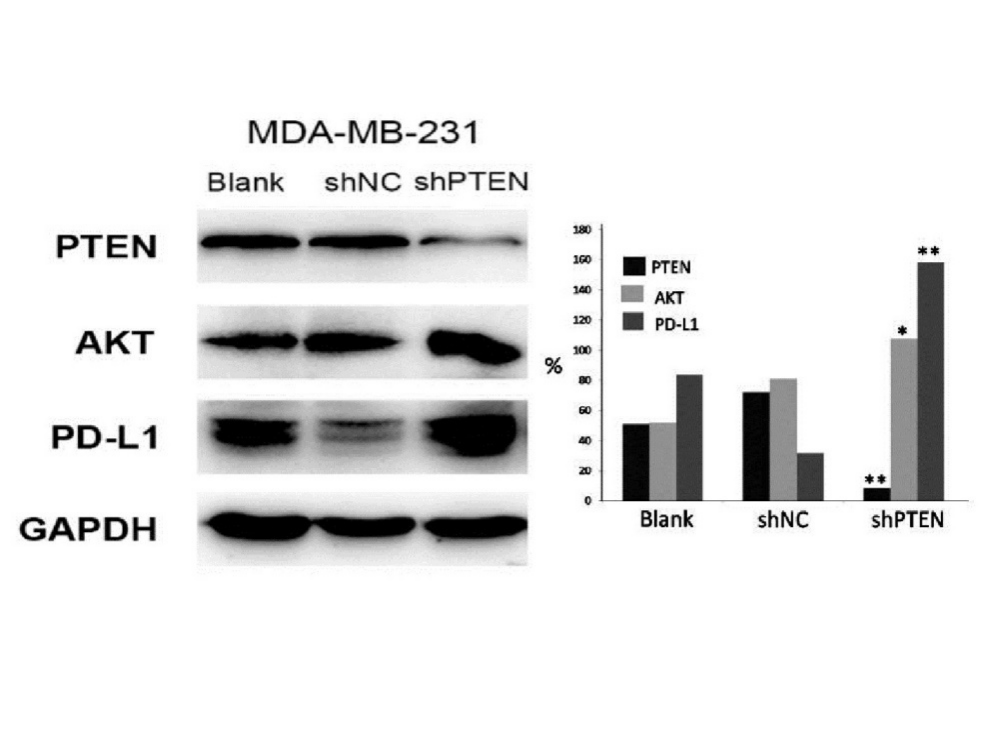
In the study, we explored the correlation of PTEN knockdown with PD-L1 expression. Firstly, we used a TNBC cell line MDA-MB-231with intact PTEN expression to investigate the effect of PTEN knockdown on PD-L1expression. After PTEN knockdown PD-L1 expression in MDA-MB-231 cells did significantly increase, the expression level of AKT, a key protein in PI3K/AKT/mTOR signal transduction, increased simultaneously (Figure 2).
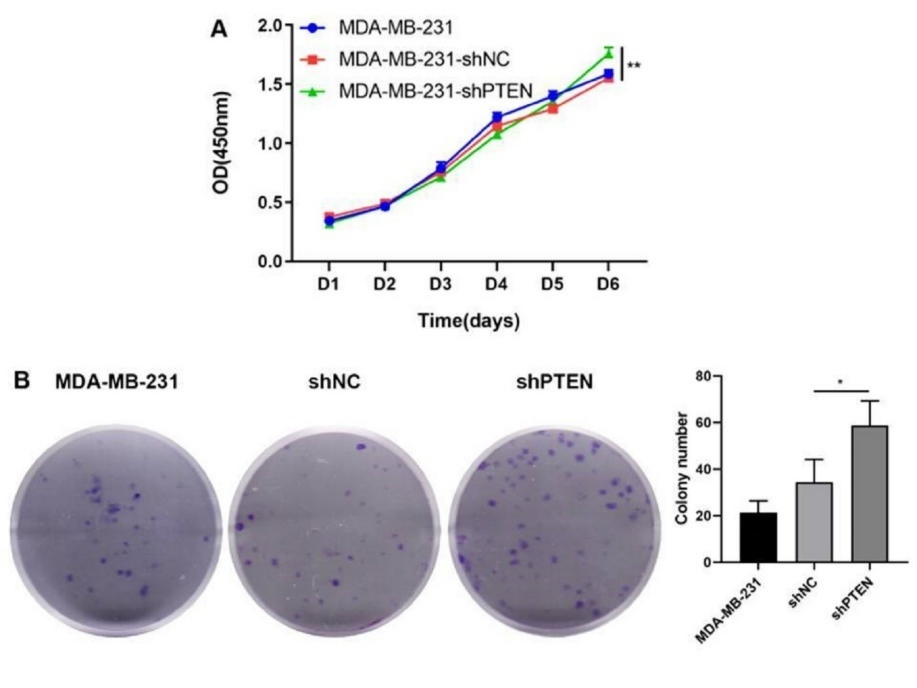
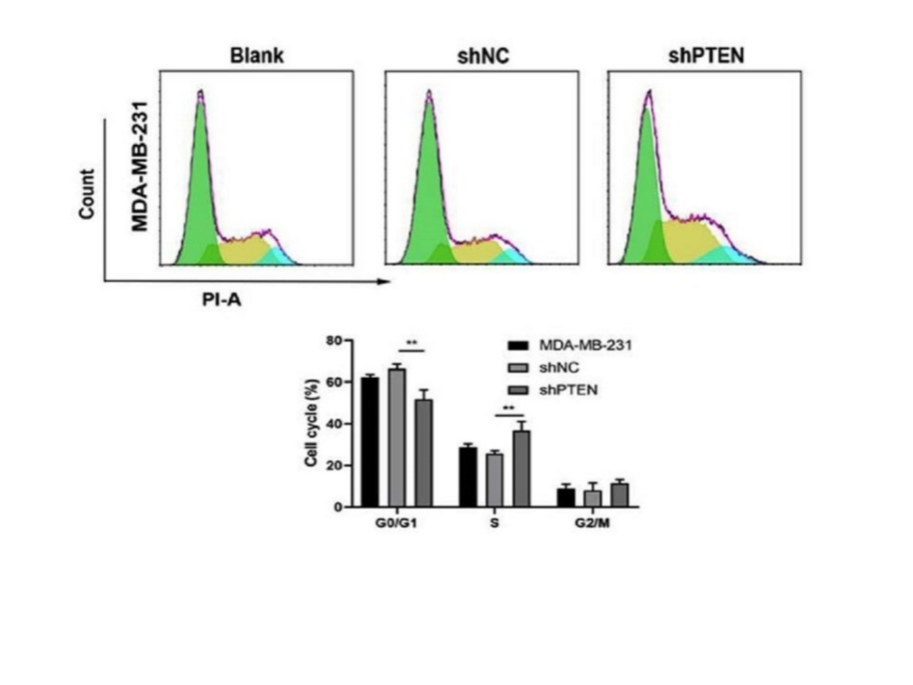
Subsequently, we detected the effect of PTEN knockdown on proliferation of TNBC cells. The growth curves revealed that MDA-MB-231 cells after PTEN knockdown sustained a more rapid proliferative trend than the controls. Cell colony formation assay of MDA-MB-231 cells indicated that colony forming efficiency was higher than the controls after PTEN knockdown (Figure 3). The result corroborates that PTEN is a tumor suppressor gene inhibiting cell proliferation. Similarly, proportion of MDA-MB-231 cells in S phase after PTEN knockdown (shPTEN) was significantly increased than the control (shNC) (Figure 4).
4. Discussion
Even though abundant immune cells such as T-lymphocytes and macrophages exist within the tumor, TNBC still is one of most aggressive and worst prognostic breast carcinomas. Immune evasion should be the cause of clinical behavior of this tumor, because activation of the PD-1/PD-L1pathway decreases proliferation and increases apoptosis of the intratumoral immune cells. Confirmed by Kim et al and our studies, PD-L1 was expressed in the intratumoral immune cells in almost half cases of TNBC[13]. By the way, there are two antibodies, PD-L1(SP142) and PD-L1(SP263), available for PD-L1 detection for tumor cells and intratumoral immune cells. Because PD-L1 expression in tumor cell was not associated with outcome of patients with TNBC[14], we evaluated expression of PD-L1 merely in intratumoral immune cells in this study. In addition, we found that positive rates of both antibodies had no statistically difference, suggesting both antibodies could be used in detection of PD-L1 expression in TNBC.
In further study, interestingly, we found that PD-L1(SP142) positive expression was mainly in PTEN mutated cases, while negative expression reversely mainly in PTEN intact cases, suggesting that PTEN may involve in regulation of PD-L1 expression in TNBC. If this hypothesis holds, PTEN knockdown should lead to significantly higher PD-L1 expression. Used PTEN shRNA to TNBC cell line (MDA-MB-157) carried wild-type PTEN and low levels of PD-L1 expression, Mittendorf et al.[15]found that PTEN knockdown could lead to significantly increase of cell-surface PD-L1 expression and PD-L1 mRNA. Even in theMDA-MB-231 cells expressed PTEN and PD-L1, PTEN knockdown could further increase cell surface PD-L1 expression of this cell line.
PTEN may involve in regulation of PD-L1 expression in TNBC by effect on PI3K/AKT/mTOR signaling, because the major genetic aberrations observed in TNBC occurred within the PI3K-Akt-mTOR (PAM) pathway[16]. Our results also showed that after PTEN knockdown the expression level of AKT and PD-L1increased significantly in TNBC cell line. These results imply that PD-L1 regulation by PTEN via PI3K signaling. Moreover, overexpression of AKT and PD-L1 by PTEN knockdown eventually increased cell proliferation and percentage of cells in S-phase.
In conclusion, the results of our study suggest a greater likelihood to enhanced antitumor immunity of PD-L1 when targeting PTEN in TNBC, because PTEN loss is commonly in this tumor.
Author contributors: K. C. W. and J. M. W. designed the study; K. C. W. collected the tumor specimens; K. I. C., H. T. V. and X. Y. Z. performed the immunostaining and in vitro experiments; K. C. W. and J. M. W. performed analysis and interpretation of data; J. M. W. wrote the manuscript.
Funding: This work was supported by grant of Science and Technology Development Fund (0086/2018/A3), Macao Special Administrative Region, China.
Ethics statement: This study was approved by the Research Ethics Committee of Kiang Wu Hospital, Macao
Informed Consent Statement: Not applicable.
Data Availability Statement: The data presented in this study are available on request from the corresponding author.
Conflicts of Interest: The authors declare no conflict of interest.
References
- Lehmann BD, Bauer JA, Chen X, et al. Identification of human triple-negative breast cancer subtypes and preclinical models for selection of targeted therapies. J. Clin. Invest. 2011, 121, 2750-2767. doi: 10.1172/JCI45014.[CrossRef] [PubMed]
- Liedtke C, Mazouni C, Hess KR, et al. Response to neoadjuvant therapy and long-term survival in patients with triple-negative breast cancer. J. Clin. Oncol. 2008, 26, 1275-1281. doi: 10.1200/JCO.2007.14.4147.[CrossRef] [PubMed]
- Butte MJ, Keir ME, Phamduy TB, et al. Programmed death-1 ligand 1 interacts specifically with the B7-1 costimulatory molecule to inhibit T cell responses. Immunity 2007, 27, 111-122. doi: 10.1016/j.immuni.2007.05.016.[CrossRef] [PubMed]
- Herbst RS, Soria J-C, Kowanetz M, et al. Predictive correlates of response to the anti-PD-L1 antibody MPDL3280A in cancer patients. Nature 2014, 515, 563-567.doi: 10.1038/nature14011.[CrossRef] [PubMed]
- Ghebeh H, Mohammed S, Al-Omair A, et al. The B7-H1 (PD-L1) T lymphocyte-inhibitory molecule is expressed in breast cancer patients with infiltrating ductal carcinoma: correlation with important high-risk prognostic factors. Neoplasia 2006, 8, 190-198. doi: 10.1593/neo.05733.[CrossRef] [PubMed]
- Schmid P, Adams S, Rugo HS, et al. Atezolizumab and nab-paclitaxel in advanced triple-negative breast cancer. N. Engl. J. Med. 2018, 379, 2108-2121. doi: 10.1056/NEJMoa1809615.[CrossRef] [PubMed]
- Adams S, Schmid P, Rugo HS, et al. Pembrolizumab monotherapy for previously treated metastatic triple-negative breast cancer: cohort A of the phase II KEYNOTE-086 study. Ann Oncol. 2019, 30, 397-404. doi: 10.1093/annonc/mdy517.[CrossRef] [PubMed]
- Dirix LY, Takacs I, Jerusalem G, et al. Avelumab, an anti-PD-L1antibody, in patients with locally advanced or metastatic breastcancer: a phase 1b JAVELIN Solid Tumor study. Breast Cancer Res.Treat.2018, 167, 671-686.doi: 10.1007/s10549-017-4537-5.[CrossRef] [PubMed]
- Parsa AT, Waldron JS, Panner A, et al. Loss of tumor suppressor PTEN function increases B7-H1 expression and immunoresistance in glioma. Nat. Med.2007, 13, 84-88.doi: 10.1038/nm1517.[CrossRef] [PubMed]
- Constantinou C, Papadopoulos S, Karyda E, et al. Expression and clinical significance of Claudin-7, PDL-1,PTEN, c-Kit, c-Met, c-Myc, ALK, CK5/6, CK17, p53,EGFR, Ki67, p63 in triple-negative breast cancer - a single centre prospective observational study. In Vivo 2018, 32, 303-311.doi: 10.21873/invivo.11238.[CrossRef]
- Wang D-Y, Gendoo DMA, Ben-David Y, et al. A subgroup of microRNAs defines PTEN deficient, triple-negative breast cancer patients with poorest prognosis and alterations in RB1, MYC, and Wnt signaling. Breast Cancer Res. 2019, 21, 18. doi: 10.1186/s13058-019-1098-z.[CrossRef] [PubMed]
- Saal LH, Holm K, Maurer M, et al. PIK3CA mutations correlate with hormone receptors, node metastasis, and ERBB2, and are mutually exclusive with PTEN loss inhuman breast carcinoma. Cancer Res. 2005, 65, 2554-2559. doi: 10.1158/0008-5472-CAN-04-3913.[CrossRef] [PubMed]
- Kim H.S, Do SI, Kim DH, et al. Clinicopathological and prognostic significance of programmed death ligand 1 expression in korean patients with triple-negative breast carcinoma. Anticancer Res. 2020, 40, 1487-1494.doi: 10.21873/anticanres.14093.[CrossRef] [PubMed]
- Wang XR, Liu YP. PD-L1 expression in tumor infiltrated lymphocytes predicts survival in triple-negative breast cancer. Pathol. Res. Pract. 2020, 216, 152802. doi: 10.1016/j.prp.2019.152802.[CrossRef] [PubMed]
- Mittendorf EA, Philips AV, Meric-Bernstam F, et al. PD-L1 Expression in triple negative breast cancer. Cancer Immunol. Res. 2014, 2, 361-370.doi: 10.1158/2326-6066.CIR-13-0127.[CrossRef] [PubMed]
- Cancer Genome Atlas Network. Comprehensive molecular portraits of human breast tumours. Nature 2012, 490, 61-70. doi: 10.1038/nature11412.[CrossRef] [PubMed]