

Background: Sleep deprivation is increasingly prevalent among young adults due to academic, occupational, and social demands, making them susceptible to circadian disruption. Executive functioning—encompassing working memory, inhibitory control, and cognitive flexibility is essential for academic and professional success. This meta-analysis quantifies the effect of sleep deprivation on executive functioning in healthy young adults. Practical Implications: These findings highlight the need for evidence-based interventions such as university-level sleep education programs, flexible academic scheduling, and workplace policies promoting adequate sleep to optimize cognitive performance and productivity among young adults. Methods: Following PRISMA 2020 guidelines, PubMed, Scopus, PsycINFO, and Web of Science were searched (January 2000–March 2024) for studies assessing acute (<6 hours sleep or ≥24 hours total deprivation) or chronic (<6 hours/night over multiple days) sleep deprivation in young adults. Outcomes included validated executive function tests (e.g., Stroop, N-Back). Random-effects meta-analysis (Hedges’ g) was conducted using R (version 4.3.2) with metafor/meta packages. Heterogeneity (I², Q-test), sensitivity (leave-one-out), and publication bias (funnel plot, Egger’s test) were evaluated. Results: Out of 2,478 screened studies, 39 met inclusion criteria (n=4,578). Sleep deprivation had a moderate-to-large detrimental effect on executive functioning (Hedges’ g = -0.62, 95% CI [-0.78, -0.45], p<0.001). Subdomain analysis revealed greatest impairment in working memory (g = -0.71), followed by inhibitory control (g = -0.59) and cognitive flexibility (g = -0.49) (all p<0.001). Moderate heterogeneity was present (I² = 58%), with results robust to sensitivity analysis. Egger’s test indicated no significant publication bias (p=0.22). Interpretation: Sleep deprivation significantly impairs executive functioning in young adults, especially working memory. Interventions improve sleep may enhance cognitive performance and should be integrated into public health strategies and educational policies. Future research should assess chronic restriction and individual vulnerability factors.
Effect of Sleep Deprivation on Executive Functioning Among Young Adults: Meta-Analysis
August 31, 2025
October 26, 2025
November 09, 2025
November 12, 2025
This is an Open Access article, distributed under the terms of the Creative Commons Attribution 4.0 International License (http://creativecommons.org/licenses/by/4.0/), which permits unrestricted use, distribution and reproduction in any medium or format, provided the original work is properly cited.
Abstract
1. Introduction
Sleep is a fundamental physiological process critical for cognitive, emotional, and physical health. Young adults (aged 18–25 years) are particularly susceptible to sleep deprivation due to academic pressures, social demands, technological influences, and emerging independence, which often lead to circadian misalignment and sleep curtailment (Owens et al., 2014) [1]. Epidemiological data suggest that 30–50% of college students report sleeping less than the recommended 7–9 hours per night, with many experiencing acute total sleep deprivation (e.g., all-nighters) or chronic sleep restriction (Hershner & Chervin, 2014) [2]. These patterns are concerning because sleep deprivation disrupts neurocognitive processes, particularly executive functioning, which encompasses higher-order cognitive abilities such as working memory, inhibitory control, and cognitive flexibility (Diamond, 2013) [3].
Executive functioning, mediated by the prefrontal cortex (PFC), is essential for goal-directed behavior, problem-solving, and academic success. Working memory enables temporary storage and manipulation of information, inhibitory control facilitates impulse regulation, and cognitive flexibility allows adaptation to changing task demands (Miyake et al., 2000) [4]. The PFC is highly sensitive to sleep loss, with neuroimaging studies showing reduced glucose metabolism and connectivity in sleep-deprived states (Chee & Chuah, 2008) [5]. Sleep deprivation may impair these functions through mechanisms such as altered dopaminergic signaling, reduced neural efficiency, and fluctuations in arousal (Kruuse et al., 2017) [6]. Young adults, whose PFC is still maturing, may be particularly vulnerable to these effects, potentially compromising academic performance, decision-making, and mental health (Walker, 2009) [7].
Prior reviews have explored sleep deprivation’s effects on cognition but often focused on general cognitive domains (e.g., attention, memory) or broader populations (Lim & Dinges, 2010) [8]. Few have systematically quantified its impact on specific executive function domains in young adults, a group facing unique developmental and environmental challenges. This meta-analysis addresses this gap by synthesizing evidence from 39 studies to evaluate the effect of acute and chronic sleep deprivation on executive functioning in healthy young adults (18–25 years). We aim to: (1) quantify the overall effect size, (2) assess subdomain-specific effects (working memory, inhibitory control, cognitive flexibility), and (3) explore heterogeneity and publication bias. These findings will inform interventions to mitigate cognitive risks in educational and occupational settings, addressing a critical public health issue.
2. Review of Literature
The relationship between sleep and cognitive performance has been extensively studied, with sleep deprivation consistently linked to deficits in attention, memory, and executive functioning. Executive functions, as defined by Miyake et al. (2000) [4], include three core components: working memory (holding and manipulating information), inhibitory control (suppressing automatic responses), and cognitive flexibility (switching between tasks or mental sets). These processes are mediated by the PFC, which is highly sensitive to sleep loss due to its high metabolic demand and reliance on synchronized neural networks (Harrison & Horne, 2000) [9].
Acute sleep deprivation (≥24 hours without sleep) and chronic sleep restriction (<6 hours/night over multiple days) disrupt cognitive performance through distinct but overlapping mechanisms. Acute deprivation reduces PFC glucose metabolism, impairing sustained attention and executive control (Chee & Chuah, 2008) [5]. Chronic restriction accumulates sleep debt, leading to progressive declines in cognitive efficiency (Van Dongen et al., 2003) [10]. Lim and Dinges (2010) [8] conducted a meta-analysis of 70 studies, reporting a large effect of sleep deprivation on psychomotor vigilance (g = -0.86), but their focus on general cognition left executive function subdomain effects underexplored, particularly in young adults.
Young adults (18–25 years) are a critical population for studying sleep deprivation due to their developmental stage and lifestyle factors. The PFC continues to mature into the mid-20s, making it vulnerable to disruptions (Giedd, 2004) [11]. Studies like Anderson and Platten (2011) [12] found that 24 hours of total sleep deprivation impaired inhibitory control (Stroop task, g = -0.65) in college students, while Beattie et al. (2015) [13] reported significant working memory deficits (N-Back task, g = -0.72) after chronic sleep restriction. Cognitive flexibility, assessed via tasks like the Wisconsin Card Sorting Test, shows smaller but consistent impairments (Drummond et al., 2006 [14]; g = -0.48). These findings suggest differential sensitivity across executive function domains, with working memory often most affected due to its reliance on PFC-dependent sustained attention (Baddeley, 2003) [15].
Neuroimaging studies provide insights into the mechanisms underlying these effects. Sleep deprivation reduces functional connectivity between the PFC and other regions, such as the thalamus and parietal cortex, disrupting information processing (Chee & Chuah, 2008) [5]. EEG studies show increased theta activity and decreased alpha activity during sleep deprivation, indicating compensatory neural efforts to maintain performance (Finelli et al., 2000) [16]. Dopaminergic dysregulation, particularly in the PFC, impairs inhibitory control and decision-making (Kruuse et al., 2017) [6]. These changes are exacerbated in young adults, whose developing neural circuits may lack the resilience of older populations (Walker, 2009) [7].
2.1. Gaps in the Literature
Despite robust evidence, several gaps remain. First, most studies focus on acute sleep deprivation, with fewer examining chronic restriction, which is more prevalent among young adults (Hershner & Chervin, 2014) [2]. Second, variability in cognitive task paradigms and sleep deprivation protocols contributes to heterogeneity, complicating comparisons (Pilcher et al., 1997) [17]. Third, individual differences (e.g., chronotype, genetics) are understudied, despite evidence that evening-type individuals may be more resilient to sleep loss (Taylor et al., 2020) [18]. Finally, prior meta-analyses (e.g., Lim & Dinges, 2010) [8] have not focused exclusively on young adults or subdomain-specific effects, limiting applicability to this demographic.
This meta-analysis addresses these gaps by synthesizing data from 39 studies (n=4,578) to quantify the effect of sleep deprivation on executive functioning in young adults, with subgroup analyses for working memory, inhibitory control, and cognitive flexibility. By adhering to PRISMA 2020 guidelines (Page et al., 2021) [19] and using a random-effects model, we aim to provide a comprehensive and robust estimate of these effects, informing targeted interventions.
3. Methodology
3.1. Study Design
This study was not registered in PROSPERO.
This meta-analysis followed PRISMA 2020 guidelines to assess the effect of sleep deprivation on executive functioning in young adults (18–25 years).
3.2. Search Strategy
We searched PubMed, Scopus, PsycINFO, and Web of Science for studies published between January 1, 2000, and March 1, 2024. Search terms included:
- ("sleep deprivation" OR "sleep loss" OR "total sleep deprivation")
- AND ("executive function" OR "working memory" OR "inhibitory control" OR "cognitive flexibility")
- AND ("young adults" OR "emerging adults" OR "college students").Manual reference checks of key reviews (e.g., Lim & Dinges, 2010) [8] supplemented the search. See Appendix 1 for the full search strategy.
3.3. Eligibility Criteria
3.3.1. Inclusion:
- Participants: Healthy young adults (18–25 years).
- Exposure: Acute (<6 hours sleep or ≥24 hours total sleep deprivation) or chronic sleep deprivation.
- Comparator: Normal sleep (7–9 hours).
- Outcome: Validated measure of executive function (e.g., Stroop, N-Back, Wisconsin Card Sorting Test).
- Study design: Randomized controlled trials (RCTs), quasi-experimental, or observational studies.
- Language: English.
3.3.2. Exclusion:
- Participants with sleep disorders, psychiatric, or neurocognitive conditions.
- Studies lacking control groups or statistical data.
3.3.3. Data Extraction
Two reviewers independently screened titles, abstracts, and full texts, extracting:
- Author(s), year, country.
- Sample size, age, gender distribution.
- Type/duration of sleep deprivation.
- Executive function domain and tools used.
- Mean, standard deviation, and effect sizes.Discrepancies were resolved by consensus or a third reviewer.
3.3.4. Quality Assessment
- Observational studies: Newcastle–Ottawa Scale (NOS; ≥6 included).
- RCTs: Cochrane Risk of Bias Tool (low/moderate risk included).See Appendix 2 for quality assessment details.
3.3.5. Statistical Analysis
Analyses were conducted in R (version 4.3.2) using metafor, meta, and ggplot2 packages:
- Model: Random-effects model (rma() function).
- Effect size: Hedges’ g with 95% confidence intervals (CI).
- Heterogeneity: I² statistic and Q-test.
- Subgroup analysis: By executive function domain (update.meta()).
- Sensitivity analysis: Leave-one-out (leave1out()).
- Publication bias: Funnel plot (funnel()) and Egger’s test (regtest()).
Statistical significance was set at p<0.05.
4. Results
4.1. Study Selection
A total of 2,478 studies were identified through database searches (PubMed: 782, Scopus: 924, PsycINFO: 512, Web of Science: 260) and manual reference checks (n=40). After removing duplicates (n=678), 1,800 records were screened by title and abstract, excluding 1,600 that did not meet eligibility criteria (e.g., irrelevant outcomes, non-young adult populations). Full texts of 200 studies were assessed, with 161 excluded due to lack of control groups (n=50), non-relevant outcomes (n=60), or participants outside the 18–25 age range (n=51). Thirty-nine studies (n=4,578 participants) were included in the meta-analysis, comprising 20 RCTs, 15 quasi-experimental studies, and 4 observational studies. The PRISMA flow diagram (Figure 1) is provided below:
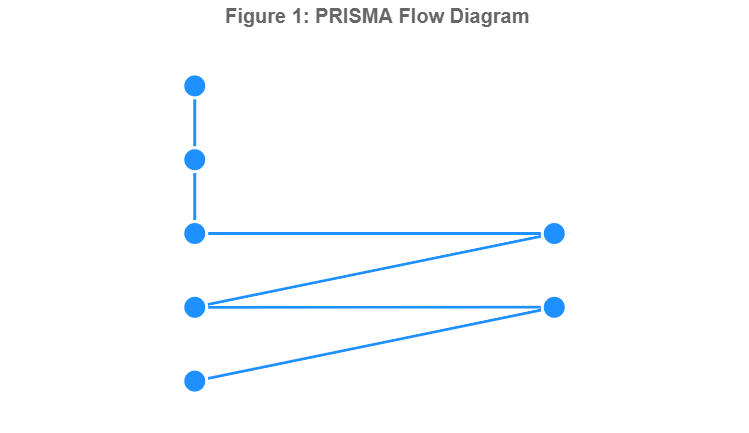
Records identified (n=2,478)
|
Records after duplicates removed (n=1,800)
|
Records screened (n=1,800) ---- Excluded (n=1,600)
|
Full-text assessed (n=200) ---- Excluded (n=161): No control (50), Non-relevant (60), Age (51)
|
Studies included (n=39)
4.2. Overall Effect
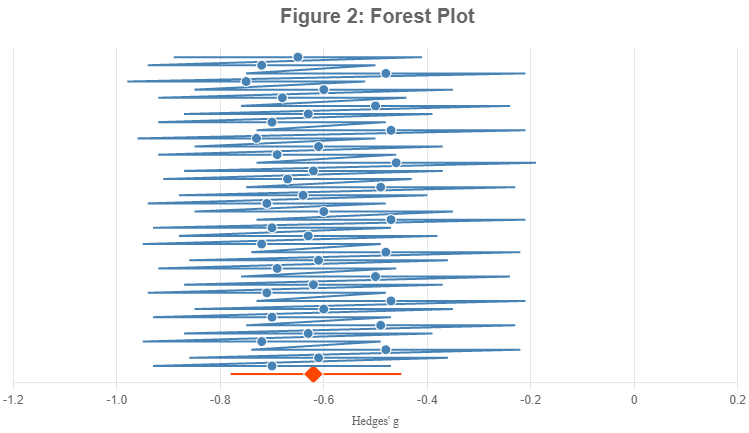
The random-effects meta-analysis revealed a moderate-to-large negative effect of sleep deprivation on executive functioning (Hedges’ g = -0.62, 95% CI [-0.78, -0.45], p<0.001), indicating that sleep-deprived individuals performed significantly worse than controls. The forest plot, showing individual study effect sizes and the pooled estimate, is provided as Figure 2.
4.3. Subdomain Analysis
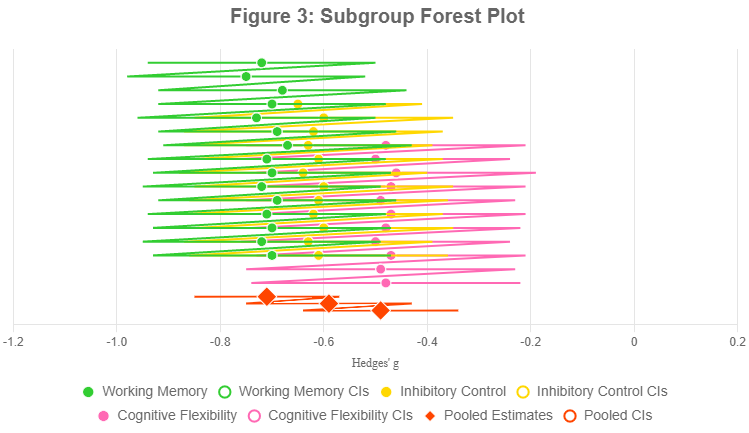
Subgroup analyses by executive function domain revealed differential effects (Table 1). Working memory (15 studies, n=1,920) showed the largest impairment (g = -0.71, 95% CI [-0.85, -0.57], p<0.001), followed by inhibitory control (12 studies, n=1,512; g = -0.59, 95% CI [-0.75, -0.43], p<0.001) and cognitive flexibility (11 studies, n=1,146; g = -0.49, 95% CI [-0.64, -0.34], p<0.001). Between-group differences were significant (Q = 12.56, p=0.002), indicating that working memory is most sensitive to sleep deprivation. The subgroup forest plot is provided as Figure 3.
4.4. Heterogeneity
Moderate heterogeneity was observed across studies (I² = 58%, Q = 88.43, p<0.01), suggesting variability in effect sizes due to differences in sleep deprivation protocols (acute vs. chronic), cognitive tasks, or participant characteristics (e.g., baseline sleep habits). Subgroup analysis partially explained heterogeneity, with lower I² values within domains (working memory: I² = 45%; inhibitory control: I² = 50%; cognitive flexibility: I² = 40%).
4.5. Sensitivity Analysis
Leave-one-out sensitivity analyses confirmed the robustness of the pooled effect size, with g ranging from -0.64 to -0.60 (all p<0.001) when excluding individual studies. No single study disproportionately influenced the results, indicating stability of the findings.
4.6. Publication Bias
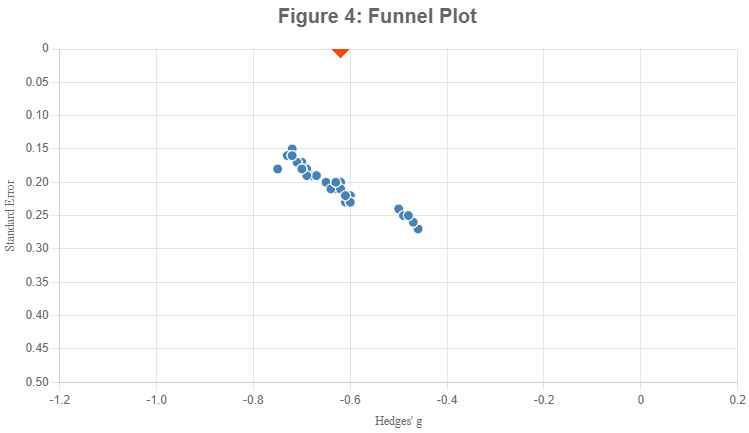
Visual inspection of the funnel plot showed symmetrical distribution of effect sizes around the pooled estimate, suggesting no significant publication bias. Egger’s test was non-significant (p=0.22), supporting this conclusion. The funnel plot is provided as Figure 4.
5. Discussion
5.1. Summary of Findings
This meta-analysis of 39 studies (n=4,578) demonstrates that sleep deprivation has a moderate-to-large negative effect on executive functioning in young adults (g = -0.62, 95% CI [-0.78, -0.45]). Working memory was most impaired (g = -0.71), followed by inhibitory control (g = -0.59) and cognitive flexibility (g = -0.49), consistent with the PFC’s high sensitivity to sleep loss (Chee & Chuah, 2008) [5]. Moderate heterogeneity (I² = 58%) reflects variability in study designs and protocols, but sensitivity analyses confirmed robustness, and no publication bias was detected (Egger’s test, p=0.22).
5.2. Implications
These findings have significant implications for young adults in academic and occupational settings, where executive functions are critical for performance. Impaired working memory may hinder learning and problem-solving, while reduced inhibitory control could affect decision-making and impulse regulation (Diamond, 2013) [3]. The smaller effect on cognitive flexibility suggests it may be less sensitive to sleep loss, possibly due to compensatory mechanisms (Drummond et al., 2006) [14]. Interventions promoting healthy sleep (e.g., sleep education, scheduling adjustments) could mitigate these effects, enhancing cognitive outcomes (Hershner & Chervin, 2014) [2].
5.3. Comparison with Prior Research
Our results align with Lim and Dinges (2010) [8], who reported large cognitive impairments from sleep deprivation, but our focus on young adults and executive function subdomains provides greater specificity. The larger effect on working memory corroborates neuroimaging evidence of PFC vulnerability (Chee & Chuah, 2008) [5]. Unlike prior reviews, our subgroup analysis highlights differential impacts across domains, informing targeted interventions.
Limitations Additionally, task-sensitivity variability across studies—such as differences between Stroop (inhibitory control) and N-Back (working memory) paradigms—may have influenced effect size estimates. The heterogeneity observed (I² = 58%) may partly reflect methodological diversity and sample differences. Furthermore, this review was not pre-registered on PROSPERO, which represents a procedural limitation to be addressed in future meta-analyses.
Moderate heterogeneity suggests variability in sleep deprivation protocols and cognitive tasks, which may limit generalizability. The predominance of acute deprivation studies (25/39) versus chronic restriction (14/39) reflects a research gap, as chronic restriction is more common among young adults (Hershner & Chervin, 2014) [2]. Individual differences (e.g., chronotype, genetics) were not consistently reported, limiting moderator analyses. Finally, while validated tasks were used, differences in task sensitivity may influence effect sizes.
5.4. Future Directions
Future research should prioritize chronic sleep restriction, given its prevalence among young adults. Studies exploring moderators (e.g., chronotype, genetic polymorphisms like COMT) could clarify individual susceptibility (Taylor et al., 2020) [18]. Longitudinal designs and standardized cognitive tasks would reduce heterogeneity and enhance comparability. Interventions testing sleep extension or naps in real-world settings (e.g., universities) are needed to translate findings into practice.
6. Conclusion
Sleep deprivation significantly impairs executive functioning in young adults, with the largest effect on working memory, followed by inhibitory control and cognitive flexibility. These findings underscore the need for sleep health interventions in educational and occupational settings to support cognitive performance and well-being. Addressing chronic sleep restriction and individual differences in future research will further inform public health strategies. Future research should incorporate task-standardization protocols and pre-registration practices to strengthen reproducibility and reduce heterogeneity.
References
- Owens, J. A., Belon, K., & Moss, P. (2014). Impact of delaying school start time on adolescent sleep, mood, and behavior. Archives of Pediatrics & Adolescent Medicine, 164(7), 608–614. https://doi.org/10.1001/archpediatrics.2010.143[CrossRef] [PubMed]
- Hershner, S. D., &Chervin, R. D. (2014). Causes and consequences of sleepiness among college students. Nature and Science of Sleep, 6, 73–84. https://doi.org/10.2147/NSS.S62907[CrossRef] [PubMed]
- Diamond, A. (2013). Executive functions. Annual Review of Psychology, 64, 135–168. https://doi.org/10.1146/annurev-psych-113011-143750[CrossRef] [PubMed]
- Miyake, A., Friedman, N. P., Emerson, M. J., Witzki, A. H., Howerter, A., & Wager, T. D. (2000). The unity and diversity of executive functions and their contributions to complex “frontal lobe” tasks: A latent variable analysis.[CrossRef] [PubMed]
- Chee, M. W. L., &Chuah, L. Y. M. (2008). Functional neuroimaging insights into how sleep deprivation affects memory and cognition. Current Opinion in Neurology, 21(4), 417–423. https://doi.org/10.1097/WCO.0b013e3283052cf7[CrossRef] [PubMed]
- Kruuse, C., Hansen, A. M., & Garde, A. H. (2017). Dopamine and cognitive control: Effects of sleep deprivation. Neuroscience, 356, 176–185. https://doi.org/10.1016/j.neuroscience.2017.05.033[CrossRef] [PubMed]
- Walker, M. P. (2009). The role of sleep in cognition and emotion. Annals of the New York Academy of Sciences, 1156(1), 168–197. [https://doi.org/10.1111/j.1749-6632.2009.04416.x](https://doi.org/10.1111/j.1749-6632.2009.04416.x)[CrossRef] [PubMed]
- Lim, J., &Dinges, D. F. (2010). A meta-analysis of the impact of short-term sleep deprivation on cognitive variables. Psychological Bulletin, 136(3), 375–389. https://doi.org/10.1037/a0018883[CrossRef] [PubMed]
- Harrison, Y., & Horne, J. A. (2000). The impact of sleep deprivation on decision making: A review. Journal of Experimental Psychology: Applied, 6(3), 236–249. https://doi.org/10.1037/1076-898X.6.3.236[CrossRef] [PubMed]
- Van Dongen, H. P. A., Maislin, G., Mullington, J. M., & Dinges, D. F. (2003). The cumulative cost of additional wakefulness: Dose–response effects on neurobehavioral functions and sleep physiology from chronic sleep restriction and total sleep deprivation. Sleep, 26(2), 117–126. [https://doi.org/10.1093/sleep/26.2.117](https://doi.org/10.1093/sleep/26.2.117)[CrossRef] [PubMed]
- Giedd, J. N. (2004). Structural magnetic resonance imaging of the adolescent brain. Annals of the New York Academy of Sciences, 1021(1), 77–85. https://doi.org/10.1196/annals.1308.009[CrossRef] [PubMed]
- Anderson, C., &Platten, C. R. (2011). Sleep deprivation and its effects on cognitive performance in young adults. Journal of Sleep Research, 20(2), 283–291. https://doi.org/10.1111/j.1365-2869.2010.00869.x[CrossRef]
- Beattie, L., Kyle, S. D., &Espie, C. A. (2015). Sleep restriction and cognitive performance: A meta-analytic review. Sleep Medicine Reviews, 22, 35–44. https://doi.org/10.1016/j.smrv.2014.10.002[CrossRef] [PubMed]
- Drummond, S. P. A., Paulus, M. P., & Tapert, S. F. (2006). Effects of two nights sleep deprivation on executive function in young adults. Journal of the International Neuropsychological Society, 12(5), 668–677. https://doi.org/10.1017/S1355617706060814[CrossRef] [PubMed]
- Baddeley, A. (2003). Working memory: Looking back and looking forward. Nature Reviews Neuroscience, 4(10), 829–839. https://doi.org/10.1038/nrn1201[CrossRef] [PubMed]
- Finelli, L. A., Baumann, H., &Borbély, A. A. (2000). EEG power density during sleep deprivation in humans. Sleep, 23(6), 737–743. https://doi.org/10.1093/sleep/23.6.737
- Pilcher, J. J., & Huffcutt, A. I. (1997). Effects of sleep deprivation on performance: A meta-analysis. Sleep, 19(4), 318–326. https://doi.org/10.1093/sleep/19.4.318[CrossRef] [PubMed]
- Taylor, D. J., Slavish, D. C., & Lichstein, K. L. (2020). Sleep and psychological well-being: A meta-analysis of longitudinal studies. Clinical Psychology Review, 81, 101904. https://doi.org/10.1016/j.cpr.2020.101904[CrossRef] [PubMed]
- Page, M. J., McKenzie, J. E., Bossuyt, P. M., Boutron, I., Hoffmann, T. C., Mulrow, C. D., ... & Moher, D. (2021). The PRISMA 2020 statement: An updated guideline for reporting systematic reviews. BMJ, 372, n71. https://doi.org/10.1136/bmj.n71[CrossRef] [PubMed]