

This work details how the integration of cloud computing and advanced data engineering can innovate and reshape patient care and digital infrastructure. In the healthcare sector, cloud services offer the necessary support to generate digitally-oriented services and service kits. These services can contain high levels of availability, low levels of latency, and on-demand scaling capabilities, while following the strictest data protection laws and regulations. On the other hand, these services can be combined with data engineering techniques to construct an ecosystem that enhances and adds an optimized data layer on any cloud environment. This ecosystem includes technologies to acquire, process, and manage healthcare data while respecting all regulatory obligations and institutions and can be part of a comprehensive digitalization strategy. The objective is to augment the healthcare services that the industry offers by leveraging healthcare data and AI technologies. Designed services, processes, and technologies can be described either as industry-agnostic services or healthcare-specific services that process and manage electronic healthcare records (EHR). Industry-agnostic services offer a set of tools and methodologies to conduct optimized data experiments. The goal is to exploit any variety, velocity, volume, and veracity of medical data. Healthcare-specific services offer a set of tools and methodologies to connect to any common EHR vendor in a privacy-preserving manner. Participating companies are thus able to hold, share, and make use of healthcare data in real-time. The proposed architecture can be transformative for the healthcare industry, opening up and facilitating experimentation on new and scalable service models. The transition to a more digital health approach would help overcome the limits encountered in traditional settings. Limitations in the availability of healthcare facilities and healthcare professionals have underpinned the increasing share of telemedicine in the care process. However, the record-keeping of the patients that undergo care outside of traditional healthcare facilities is often missing and can severely influence the continuity of treatment. Identifying new methods to implement disease prevention and early intervention processes is crucial to avoid more extensive treatment and to support those on multiple line therapies. For chronic patients, having a service available that monitors the state of health and intervenes when parameters go off the wanted range is crucial. However, the same patients are the most under the influence of the decision of care providers; a second opinion might be given remotely which the patient can access at any time on-demand. To address these different kinds of services, an ecosystem composed of a dictionary's worth data layer is outlined, able to live and operate seamlessly in any cloud environment. This future work's envisioned outcome is the rapid evolution and re-definition of the European healthcare landscape.
Revolutionizing Patient Care and Digital Infrastructure: Integrating Cloud Computing and Advanced Data Engineering for Industry Innovation
October 09, 2019
November 12, 2019
December 19, 2019
December 27, 2019
This is an Open Access article, distributed under the terms of the Creative Commons Attribution 4.0 International License (http://creativecommons.org/licenses/by/4.0/), which permits unrestricted use, distribution and reproduction in any medium or format, provided the original work is properly cited.
Abstract
1. Introduction
Every healthcare system and government all around the world are facing critical challenges and developing innovation in the existing infrastructure. Traditional client/server systems faced more challenges due to the vast growth and the enormous volume of healthcare data almost 10 to 100 times in the current year. Nowadays, there arises a possible complication in handling the entire data and records tenure. Modernization in the existing medical system with the association of dedicated computational control is necessary. In modern healthcare system organizations, diagnoses are made based on protected health records of the patients collected and analyzed with devoted computational control. In contrast, existing client/server processes, storage, bandwidth, speed-up strategies arose as a constant issue. Simultaneously, to overcome such issues, treatment development, patient care, exterior device connectivity directly with the system, providing real-time presence data with smart solutions arose as the need for the quick medicine sector. Present Computational Control with Cloud Services and High-Level Data Analysis Techniques on Patient Records with Modern Healthcare Systems is needed to provide smart health. Advanced healthcare systems present participation in patient treatment, disease care, patient/exterior device interaction, exterior treatment, and physiological conditions observing diagnostics with the technological computational control mechanism. Isolated patient data with smart Cloud solutions enhances rigorous patient care. The integration of Cloud assistance further attains data management and computational control techniques accurately. It meets the rapid motive of the medical treatment and the healthcare system. Apart from the existing systems, the innovation of treatment and patient assistance mechanisms became more focused approaches to research discipline [1]. The current research collection, analysis with the occurrence of modern healthcare systems, arises through the association of cloud support which enhances patient assistance and develops devoted healthcare solutions with modern technologies.
1.1. Background and Significance
The landscape of technologies in the healthcare continuum has been evolving rapidly in recent years with the advent of cloud computing and advanced data engineering. In its present state, the partnership has given rise to revolutionized patient care grounded in a staggering volume of clinical data. In an aviation-like health system, there is an urgent need to integrate these technologies through a robust digital infrastructure to realise improved accessibility and real-time operational efficiency. Public health facilities often face spacing issues, which might result in demanding queuing times for patients. With cloud computing and data engineering, historical and live operation data can be analyzed to propose a dynamic operational strategy to optimize bed usage and reduce patient waiting times. Cell phone usage trends can also be integrated to predict patient inflow and to guide paramedics through real-time data display, reducing risks and ensuring quick access to life-saving measures. Surgeons could use augmented reality devices to overlay patients’ most recent medical images during surgery, allowing them to pinpoint surgical locations more accurately. Implementing cloud-based radiological analysis could identify abnormalities in patient scans; this data would then be seamlessly transferred to the patient in a similarly cloud-based system.
In light of these extinguished advantages, this investigation is accordingly intended to propose a study with the following aims: 1) Review the existing cloud-based healthcare research, identify the key approaches, and analyze their effectiveness and feasibility. 2) Construct a comprehensive multi-layer integrated cloud-based healthcare system design methodology that includes patient care, health monitoring, quality assessment, system interconnection, data exchange, treatment information, mobile application, and data-driven healthcare optimization strategies. 3) Develop and validate the above design methodology by simulating a real-world large-scale cloud-based digital health infrastructure and operation environment.
Equation 1: Cloud-Based Infrastructure Uptime and Reliability
where
1.2. Research Aim and Objectives
The aim of this research is to explore how integrating cloud computing and advanced data engineering can revolutionize patient care and the digital infrastructure of the healthcare industry. The NHS is an illustrative case study arena because of its sundry, substantial and dynamic data points, and it showcases the need for industries to fully realise the data generated, enabling value-added, data-driven decisions and actions. The objectives are to: Assess the benefits of a cloud computing infrastructure for increasing the efficiency of current healthcare system operations; improving patient outcomes and experiences; exploring the potential for disruptive healthcare innovations; and identifying how enhanced services can be developed that would not be feasible without such a platform. Assess the challenges associated with the adoption of such an infrastructure, focusing on the development of Integrated Health & Social Care Solutions; exploring the implementation and interoperability barriers that must be overcome to enable tangible service change and improvement of care provision for the people who experience it; touching on the increasing pressure for the healthcare industry to digitally transform; and finally, reflecting on the cloud computing Skills Training and Awareness in Research programme, which aspires to boost the digital capabilities of the health and care sector. Evaluate how healthcare organizations can transform patient care through the development of advanced data engineering solutions; how the digitisation of a connected patient care approach can empower healthcare organizations to provide preventative, personalised, and improved care provision through real-time data processing and machine learning analytics; quantify the potential cost-saving of preventing patient decline by developing an Intelligent Remote Care Management platform for the remote monitoring of patient data in healthcare organisations at large scale; and discuss potential future developments and aspirations for the development of AI-embedded IoT systems monitoring patient deterioration and automatically alerting healthcare providers to provide proactive care for people.
2. Cloud Computing in Healthcare
Technology is vital in healthcare. Firms are embracing the cloud to modernize IT systems and improve workflows. This provides an in-depth overview of how cloud computing interoperates within the industry and drives innovation. Initially, a focused analysis of cloud computing and its role within healthcare is delivered, stressing how providers can take advantage of which cloud systems offer. With a heavier digitization of patient health records, healthcare companies are expected to make the move to cloud services to manage their vast data. Following this, there is a discussion on ways data engineering and cloud computing can be blended to support complex healthcare innovation.
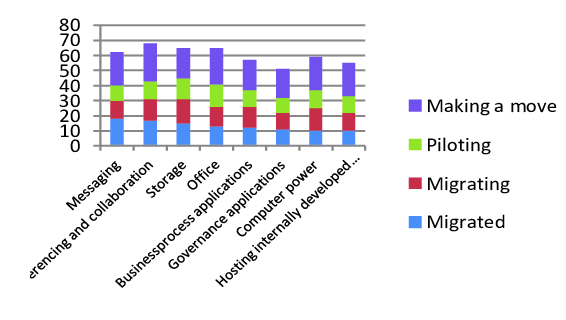
One cannot consider yourself knowledgeable on some of the key advancements in health tech without acknowledging the role of the cloud. As a relatively new product, this essentially refers to the ability of web services to offer efficient, remote data storage and accessibility. For healthcare providers, this same data management platform can be implemented for improved record sharing between organizations or to collaborative functionality with patients online. The cloud offers a huge array of benefits to those willing to migrate services, and this does well to cover the basics. This includes options for enhanced patient data management, improved scalability with data storage requirements, and the potential for greater efficiency in a particular service delivery. Other clear benefits of a cloud-based solution revolve around greater resource access than a traditional system, reinforced data security, and the ability to maintain services on hybrid IT service infrastructure. Despite the numerous advantages of the system, there are also key features of which should give consideration before migrating services to online storage. This includes issues around data transfer and compatibility, work around and security compliance, as well integration with new software. Importantly, one should also be focused on what happens when a cloud-based provider suffers downtime. Considering that the FDA and other health-based service providers now rely so much on the ability of IT infrastructure to deliver quickly, the cloud could quickly be left behind. It is also worth noting that while the cloud is a rapidly developing resource, one can carefully consider the system before transitioning services.
2.1. Overview and Benefits
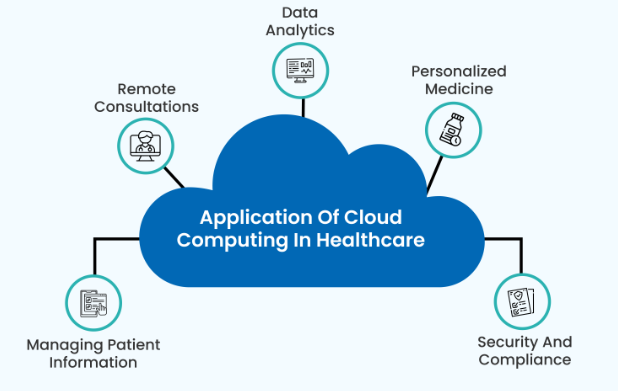
Healthcare delivery is undergoing rapid digitization with electronic health records (EHRs). These EHRs must be shared seamlessly between the healthcare professionals and hospital systems whenever there is a change in patient care. The majority of the healthcare stakeholders are adopting cloud-based storage and services to manage and share digital health records. With the help of cloud technology, once the digital health records are created, they can be made available on-demand to any stakeholders who require access, thereby enhancing collaboration amongst stakeholders in providing better care for the patient. Also involved are the patients, who are gaining better insights into their health data and playing a bigger role in their personal health management [2].
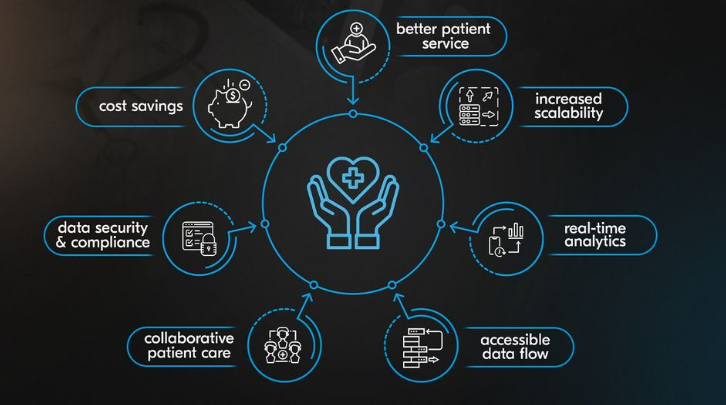
There are several benefits of healthcare systems transitioning to the use of cloud services and storage. These benefits include automation of healthcare workflows that reduce operational costs, which can be used to fund longer healthcare services and innovation. Patients are benefiting from increased engagement in the healthcare systems, following easier access to their health data, and sharing of these data among allied healthcare professionals. Furthermore, security and privacy concerns of the health records stored in the cloud are alleviated due to the extra layer of advanced encryption and access control rights. The rapid scalability of the cloud resources can cater to the dynamic needs of the healthcare systems, adapting to the ebbs and flows of patient care. Enhanced cloud connectivity also supports long-term viability for remote health services, especially in the trend of global healthcare that is progressively moving towards telehealth.
2.2. Challenges and Limitations
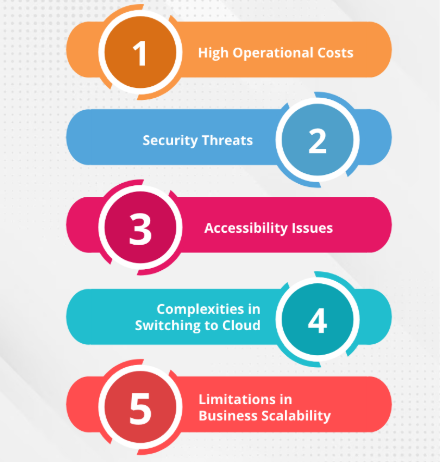
Cloud computing is the future of data management. There is no magic industry that cannot benefit from cloud computing technologies, healthcare is no exception. On the other hand, cloud computing is a fundamental technology that should be the first choice for healthcare industries. However, there are several concerns, the most pressing of which is concern over data privacy. It is reasonable for this concern to come from patients themselves, especially in the United States, where data security and privacy are highly valued, but the fact is that data is just as easy to hack no matter where it is stored. While this is mostly true, it is not really necessary to access records that can be seen, take pictures, and/or videos of patient records, queue management systems and other important documents. The fact that everything lives in the cloud simplifies this task. There is concern about credit card hacking, while working from home due to COVID, saw suspicious activity on the credit card but never reports it, assuming that it may have confused the identity of the rightful owner. Could someone travel to previous regional living areas, run into someone who looks out of place, and ends up taking a picture of a recipient's credit card for personal benefit? Similarly, it is certainly possible for someone to walk into a doctor's office, hospital, etc., and take pictures of patient records, especially as the average patient spends more time sitting in front of a queue management system than any medical professional per patient.
Hackers do not need to be in the US to constantly attack US domestic and foreign data points. The same is true for any country, no matter how strong the cloud infrastructure or security measures, all data is just as easy to intercept. Many people who have power, influence, and the ability to garnish wages belong to the generation that grew up with paper and pen stack. It is completely unfamiliar with digital integrated systems that have been tried and true for decades, why change what works well? Rewind to COVID, mainly medical professionals are forced to use a digital queue monitoring system, many times the signal is lost entirely, causing the patient to wander around obsessively staring at the phone or their name without use. This requires a live response, while others in the queue require scrolling through all the names displayed on the phone 3 inches to see in 9-point font, multiple disgruntled and confused patients who spoke too softly and coughed while naming. Working on an integrated paper system, put the name list at once in large block text, do it easily, SmartSnoze medical professionals are in the system, so all names and settings are easy to see. Remove medical professionals who personally know their patients or whoever is imaginative on the order of the next patient. This is a huge failure, which translates to patient harm. It is better to use a system that is not based on the cloud, at least the system can be opened in the browser and visible, even if the wifi or computer itself fails, so it can follow the printed queue of patients, as a last resort. The cloud is inherently susceptible to internationally connected service interruptions, although the same can be said to a lesser extent to the internet itself. The lack of locally stored data could create life-threatening situations during natural disasters, wars, terrorism, solar flares, etc. Additionally, all data are managed by a third-party provider, and in the event of a catastrophic event, the consequence will result in the loss of all the data. This is a permanent or extremely difficult situation that cannot be handled in medical records and other important documents. The transition to the cloud is not free, the cost is very high; in comparison to the budget Hospital in the United States, it is calculated at least about 43 million dollars for the relatively simple recommendation system.
3. Advanced Data Engineering in Healthcare
In an era when health data is continuously produced, advanced data engineering becomes indispensable due to its unique role in managing the sheer volume of records. Naturally, with the penetration of breakthrough methodologies that include NoSQL, big data, and modern data cleaning solutions among many others, it definitely has the potential to improve the very computation of predictive modeling, analytics, and drawing actionable insights. Numerous tools including but not limited to Hadoop, Spark, Kudu, MongoDB, Neo4J are vital in analyzing data to ultimately obtain insightful results and accelerate effective clinical decision making. It is also noteworthy that using the term novel “modern data engineering” rather than a general one sequentially to explore less-studied tools such that this review is strengthened by novelty. Given the very background, the advance of those technologies is expected to be of paramount importance for the improvement of patient care and as a consequence better outcomes.
Significant applications of advanced data engineering in healthcare include, however are not confined to medical image processing, improved administrative decisions, extracting and analyzing health information from a variety of sources, patient outcome predictions, patient similarity, population health management, smarter resource utilization, personalized medication, computer-aided diagnosis, and robot-assisted treatment. Legally there exist the on-going data storage restrictions on numerous drug administration systems which must publish the purchased respective datasets each fiscal year solely to investigate regional drug preferences for an entire nation. However, practically numerous administration centers exploit several solutions such as distributing the datasets before deadline, often on the very same day of the data annex release. So significantly countless individual centers are not aware of the most recent releases. Finally there exist numerous smaller centers devoid of data science practitioners and are overwhelmed by the fast-paced release of such datasets directly compromising the very general equal right of datasets access. As one recommended by law, it certainly proposes that the releasing IFAD checkups of the administrations dataset considering the equipment thereof acted on a different clinical check-up files. In this sense, it was certainly pointed out that this pinpoints the exact risk for the administration of a respective medicine, hence publishing this specific dataset would involve violations of the patient's delicate privacy.
3.1. Applications and Use Cases
As the digital health ecosystem continues to develop rapidly, it is essential that data engineering is also revolutionized for diverse data sources to build a cross-disciplinary Big Health Data and digital infrastructure. A cloud-based advanced data engineering framework that integrates secure, easy-to-use computing hubs, data lakes, and numerous tools for data processing, analytics alongside diverse datasets and architecture is proposed to reshape and empower industry innovation in the decade-long Big Health Data era.
In big data enveloping rich structured and unstructured datasets inside and outside cloud providers, classic computing methods and programming models are out of power in efficiently storing, restoring, compute, process and distill data. In response to the news of COVID-19 outbreak, clinical validation of GIBD has been steadily underway in hospitals to facilitate disease prevention, containment, and patient care best practice by processing, analyzing various structured and unstructured health data, and by developing interactive, real-time healthcare applications [3].
One clinical trial application adaptation to chronic illness includes the real-time monitoring of daily health metrics correlated with a certain type of chronic disease and the visualization of monitoring results proactively pushed and action monitored. Such a data circle can increase a patient's awareness of their day-to-day health status and detect early signs of disease status changing. Another trial scheme is centered on the COVID-19 pandemic and emphasis on the early detection and accurate prediction of COVID-19 related diseases. AI-based algorithms and predictive models are developed using data of multi-modalities both structured and unstructured, to support clinical diagnosis and research. At the same time, patients would receive tailored guidance based on the monitoring results and clinical recommendations are also able to push in accordance to symptom changes. At item response, the trial results also feedback by patients can be used to present a better and more tailed treatment plan by a physician. In general, clinical decisions of chronic diseases could be empowered by diagnosing, consulting patients throughout the digital circle-making. Patients, on the other hand, are proactive in their own health management and could be engaged more positively and cooperatively in the treatment.
3.2. Ethical and Legal Considerations
Introduction The topic of the ethical and legal implications of data science applied to health and healthcare is of growing political concern, both for the traditionally conservative view of healthcare professions and institutions on innovation matters, and for the lack of shared comprehensive guidelines expressing a restrictive or permissive view on the impacts of data technologies and artificial intelligence (AI) in the health sector. It is observed that not only data models but a plethora of new services and augmented infrastructures, especially the rapidly expanding cloud computing environment, are introducing radical changes in the health and care scenarios. With this spirit, this article discusses the rapid transformations occurring because of the adoption of advanced data engineering and cloud computing in the health system, discussing a structured though not purely restrictive set of potential research and practical constraints.
Patients with serious diseases commonly face complex decision-making processes and must frequently navigate multiple and highly technical medical options. Those patients who are under constraints of access to healthcare (lack of knowledge on the available treatments, limited agency on the choices, dearth of professional cultural capital) may suffer from information asymmetries leading them to adopt inappropriate courses of action. This research underlines the potential of machine learning methodologies for the identification of health patterns and the elaboration of inequality measures based on patients’ dialogue network data, as acquired through an innovative use of the concept of online platforms. Variegated choices on the scope of the machine learning models, on the extent of data pre-processing, and on the definition of inequality measures are discussed, and suggestions on realistic research avenues and policy choices are provided.
Equation 2:
where
4. Integration of Cloud Computing and Advanced Data Engineering
The integration of cloud computing and advanced data engineering has been increasingly envisioned as a cohesive model to improve healthcare effectiveness. How these advanced technologies can complement each other and be combined to reshape an innovative, sustainable healthcare industry is explored. The evolution of both technologies is observed, highlighting the current trends and research challenges in the healthcare context. Furthermore, a feasible framework regarding technology is presented, striving to illustrate the transformative infrastructure changes to be made in healthcare systems. In facilitating the understanding of how these complementary technologies can be synergized to create significant improvements, readiness for subsequent case studies is prepared; these are meant to showcase the state-of-the-art implementations of this integration.
One of the greatest synergies of cloud computing in healthcare is to enhance data accessibility. As a utility, cloud services significantly reduce the operational and capital expenses when compared to the maintenance of local resources. Moreover, public cloud hosts have become a popular place for storing personal health records. The real-time feature of cloud computing is also compelling for healthcare usage. On the one hand, the elastic cloud allows small clinics to afford real-time large cluster computing or data streaming services, which are otherwise very expensive to run locally. On the other hand, real-time data collection and analysis become very important for patient emergency services. Regarding this need, cloud-based systems for bio-signal collection and medical image fusion are built. Meanwhile, a number of cloud-based applications for real-time health supervision, vital signal monitoring, and quick emergency notification have been developed. They are not only getting vendors’ interest but also are saving patients’ lives. Moreover, some innovative healthcare applications that can hardly be realized without cloud computing are particularly interesting. Working as a centralized storage facility, cloud computing enables long-term and large-scale patient data to be used for additional statistical applications, such as population health management or predictive analytics. Data analytics or mining has already become a buzzword in the healthcare industry. On its own, cloud computing already can provide several benefits in this area, for instance, as cloud inherently saves patients’ data in the structured form, the data mining practitioners will not face additional problems or costs related to pre-processing medical record data, which is often very noisy and not directly interpretable. More importantly, the cloud computational facility allows the application of machine learning algorithms, clustering, or classification in the real big data sense. Obviously, the additional cost and complexities make it very hard for clinics to build the machine learning infrastructure locally, especially because of the difficulty in providing electric power for it at night. However, deep understanding of patient behavior, hospital treatment protocols or epidemic outbreaks may lead to the advanced AI-based applications that will bring invaluable advantages in terms of care delivery efficiency, cost reduction, or, most critically in terms of better patient outcomes [4]. Unfortunately, such applications generally require insights gained from multiple sources of the patient data, counted in different formats and ownerships, exposed by numerous producers, and thus stored in a variety of data silos. The expected solution makes the effective use of all that data complex by means of appropriate and integrated systems for its seamless acquisition, storage, exchange and analysis. Most existing Hospital Information Management Systems are isolated, monolithic systems with proprietary protocols, prone to vendor locking, and often impossible to integrate with other systems out of the box. Traditionally, healthcare IT systems mainly focused on automation of administrative tasks leaving the "low level" part of medical data to paper reports and manual labor. Since the greatest added value available to the clinician can be derived by correlatively analyzing a heterogeneous set of patient’s data, the evolution of healthcare IT systems has been aimed at making these data "interoperable".
4.1. Technological Framework
Revolutionizing patient care has become a pressing issue in an increasingly digital world. The growing amount of big data, as well as the identification of novel figures of merited practices that contribute to changing the way healthcare is approached, delivered, and experienced, has played a crucial role in the industry innovation. This sector is very large, including both treatment and prevention services, rehabilitation, nursing, and many other domains. Nevertheless, it is not easy to approach healthcare since the interoperability of systems requests software solutions that meet obligatory ethical standards and privacy constraints imposed by the law. Therefore, the integration of the cloud computing paradigm with advanced data engineering is not so straightforward. As an investigation of the state of the art, the main trends and challenges related to both cloud computing and data engineering in the healthcare domain are discussed. This analysis involves both Big Data (BD) and related technologies, big data being the unstructured, uncategorized clusters of data inherently produced by healthcare. The choice of seven essays concerns statistics illustrative of data volume. As a consequence of the digital revolution, healthcare reached the BigData era. Such facilities request adjustment in a cloud-computing-oriented digital infrastructure assembled for the storage of high quantities of data, and many new data-processing figures. In this view, along with the main technical requirements of such a system, some regulatory aspects, either coming or advisable, are examined. Besides, the attention is put on what ought to become a collection of the new data-processing trends and devices to be used in the healthcare domain, by healthcare organizations or by the industry partners they might establish. The most advanced of these gadgets are based on recognized state-of-the-art inventions. They may request an integrative approach, whose ABC procedure is indicated, where ‘A’ signifies the assembly and distribution of a network of fixed and mobile devices deployed in a given territory, not necessarily limited to a country; ‘B’, the uses to be done in real-time of the data collected by such a network; and ‘C’ the International Network based on a constellation of satellites and aerostats to be built to facilitate. A proliferation of digital devices and services currently generates 3.5 terabytes of data annually, one-third of it being attributed to the healthcare domain. At the same time, there are strong public pressures to invest in public services. Some formats are advantageous to process huge quantities of data sensors that collect inputs in much greater volume and variety than established databases typically accommodate. In the case of healthcare, many such sensors, like those used in genomics or imaging, are expensive.
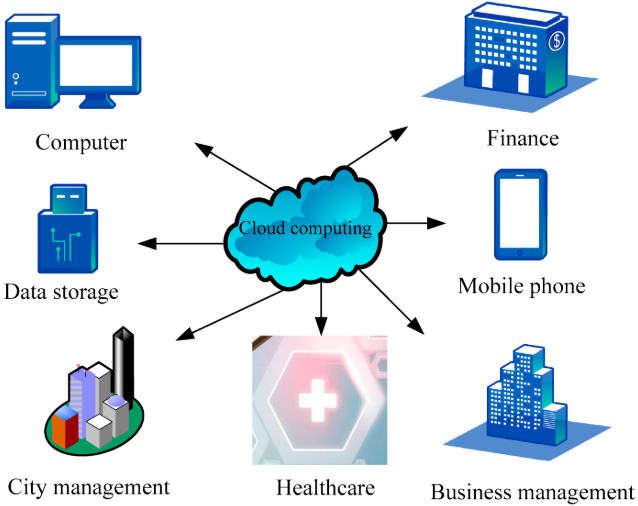
From the technological point of view, the cloud computing paradigm is based on making remotely accessible on the Internet the storage and resources of high processing both of the computerized data and the hosting. On the one hand, the according from facilities on the cloud market is migratory from 46.7 billion USD in 2014 to 102.0 billion in 2019. On the other hand, even nowadays when a cloud deployment in healthcare helps money to three-quarters of organizations, this broad. A paradigmatic change in this set may be facilitated by the degree of standard actual problems.
4.2. Case Studies and Success Stories
Healthcare is a quickly growing industry around the world. Healthcare services based on cloud technology are considered better; cloud computing is used more effectively in the future. This subsection illustrates successful applications that integrate cloud computing and advanced data engineering within healthcare. The case studies and success stories discuss technical implementations, then present the positive outcomes seen in the real world. The hope is that these examples will eventually inspire healthcare institutions to replicate them by improving their performance and addressing privacy and security issues as well. This special integrated technology in healthcare requires effective collaboration at the EU level and the role of various actors between different stakeholders, patients, governments, and organizations.
In the last years, numerous technologies have been proposed for reshaping and improving healthcare services and the well-being of patients, by using cloud technology together with data engineering technologies allowing analyzing big data coming from numerous heterogeneous sources. Some successful implementations of these modern and innovative technologies in healthcare are presented, showing the positive outcomes observed in the world and highlighting a series of success stories. Even if these implementations mainly focus on the Lessons Learnt mechanism, an observation can be made with respect to an effective integrated role of cloud technology and big data in different types of healthcare applications that could play a bridge role for inspiring healthcare organizations to replicate the applications. Founded on such a motivation, new healthcare sets of applications are proposed, affecting patient care, disease control, and more prudent well-being. Such applications are meant to impel stakeholders from different sectors and researchers to improve their practices by turning the healthcare system that can be easily managed by taking into account performance whilst taking care of issues related to privacy and security. The latter requires stricter regulation of the healthcare system and a comprehensive approach to data analysis in view of joint cloud computing and big data investigation around complex healthcare issues. On these arguments, a section intends firm technology would benefit from an effective collaboration at the EU level. Furthermore, new bridges are explored, and the role to be played by several state and non-state actors between different stakeholders, such as patients, governments, and organizations, as well as new technology concerning related issues of privacy and security, and big data ethics in healthcare. This synthesis of arguments is intended to show that without such prerequisites, the mere application of these transforming technologies does not guarantee their positive impact in terms of transformative healthcare setting change. In any case, this marks a colossal added value of further study and research.
5. Industry Impact and Innovation
Often hidden from public view, cloud computing and advanced data engineering underpin a new era of luminary healthcare interconnections. This digitally transformative integration expands beyond imminent patient care to the operational and foundational expertise which healthcare is entrenched. Parallel to such developments, programmatically intriguing industry innovation is accelerating healthcare outcomes, alternating patient engagement and powering more resource-efficient health systems. This chrono-economic exploration transmits these ripple effects of innovation; from efficiently automating top-line supply chains to predicting patient readmissions, and from a versatile point of care fusion to orchestrating patient-centric, technologically advanced triage imperatives. Nearly all technological advancements previously numbed by the broad clinical sites became the heartbeat of modern healthcare. The vital necessity for the industry to understand and embrace these advancements is nowhere manifesting more. This undulating topography becomes the foundational pivot on which the future of patient care and healthcare delivery is shaped. Offering an arguably all-encompassing effect of said technological confluence on industry, the exploration evolved in line with an acute realization of its pace; stretching beyond the horizon for half a decade and henceforth. May it inform the industry proposals, enable proactive steering, and seed aspirations for what can yet be achieved. Manually chart critical vitals before a patient consultation – unlikely. Contemporarily enough, the cloud blood pressure monitor retains the same vital connectivity without anaesthetizing the human touch – lethal. A testament to the quietly transformative human-technology interplay, new top-line devices instigate thousands and millions of engaging encounters every hour.
5.1. Enhanced Patient Care
The integration of cloud computing and advanced data engineering is transforming the existing healthcare industry. To critically analyze technological innovation, this essay will first focus on its direct impact on improving patient care. Among numerous changes that the integration brings about, direct connection to essential information is fundamental for informed healthcare delivery. Real-time access to data is critical to enabling informed decision-making. Data that can be acquired in such a way is diverse. However, most importantly, accessibility within the healthcare context allows continuous monitoring, timely interventions, and improved therapy planning. Therefore, the development of cloud-based technology and data engineering to access and analyze the collected data can expedite a healthy change in the era of personalized care. It offers a possibility to extract diagnosis-related data that can be effectively used for remote monitoring, timely interventions, and proper therapy planning [5].
Remote monitoring of assigned personnel or patients presents significant improvements for a better outcome of the deployed treatment. Thanks to this new approach, the acquired data can be sent directly to the cloud, allowing healthcare professionals to promptly access it. A possible application in the healthcare context regards continuous emission of patients’ files such as health status or prescriptions. In this case, it is possible to detect the health status of each patient in real-time and also to check if the prescribed medicine is being taken accordingly. This could lead to substantially fewer and more informed clinical decisions by initiating corrective actions when needed. In the worst-case scenario, the access to collected data could be provided also to external doctors, thus seeking prompt suggestions and/or prescriptions. Another possible implication of such a system is related to the discomfort or diseases caused by the increment of assigned personnel. Over time it is possible to analyze the collected documents identifying if the root cause is either a specific work environment or routine task. This new possibility will help in assigning specific machines or tasks to avoid increasing the discomfort of other personnel.
Patients offered with a choice concerning their treatment plan, whether it is physical therapy vs. surgeries, rehabilitation vs medications, etc., results in increased chances of satisfaction and timely recovery. The data engineering effectively takes care of this patient-centric approach. Integrating big data is a solution that allows stakeholders to receive and store a huge amount of the data about patients and various other health-related matters. Big data can be used to record and manage electronic medical records. Data analytics processes these heterogeneous data, integrating them with the most crucial health-related data (e.g. genes or proteins). This integrated data can be utilized to monitor the health status of patients in various contexts, e.g. if the patient has left the hospital. On the other hand, the monitored data can be used for diagnoses. This multi-level monitoring represents a crucial aspect of the health sector as the primary errors that can lead to misdiagnosis and case fatality occur due to inadequate health status monitoring and therapeutic treatment administration, as well as drug ascension. The last analyzed aspect of data engineering is personalized medicine. A thorough analysis of the individual data concerning unique features, clinical phenotypes, and biological information can result in a personalized diagnostic or therapeutic solution. It can include medication that is compatible with the patient, taking into account genome data. Collectively, patient-centric data engineering can significantly improve the patient’s approach to healthcare.
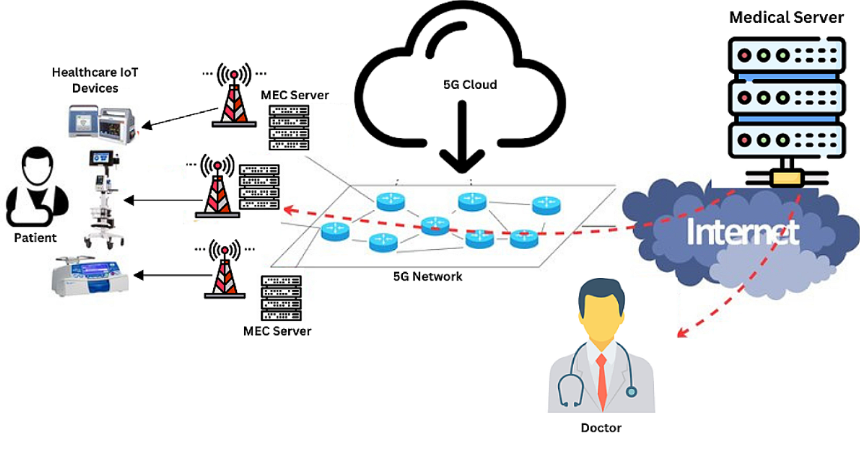
Notwithstanding considerable advancements brought about by technology, patient engagement is still far from being at the heart of healthcare delivery. Thanks to the integration of cloud computing and advanced data engineering, this aspect will now become vested in the exploration and further understanding of the patient’s or individual’s perspective on their need for healthcare. In fact, a comprehensive knowledge of basic healthcare for that individual is essential for an effective preventive, diagnostic, therapeutic, and again preventive path. Accordingly, this understanding and analysis of data engineering can drive lifestyle changes addressing physical activity or diet. Moreover, on a psychiatric level, data analysis can improve a person’s emotional and mental state, ultimately leading to a more engaging method of providing healthcare.
New technologies such as smartwatches or external home-monitoring devices empower individuals to participate actively in their health management, creating a healthcare process that is inherently pervasive. Integration facilitates this outcome, especially in cloud computing. Finally, when engagement is fostered by a patient-centric system, patients develop a sense of empowerment, thereby becoming more active and proactive in improving their health. Therefore, transformative healthcare starts with the patient. It is clear that a common thread running through the development of technology is a relentless effort to improve and streamline the ubiquitous connection between healthcare providers and the patient. Realizing this, the healthcare industry is systematically deploying cloud-based infrastructure, promising to calcify the vast potential hiding in collected data for industry growth. Fundamental technology that is enhancing industry growth is the possibility of providing and consuming big data. Big data offers the possibility of large-scale data integration over an extensive, intelligent, and decentralized network. On the one hand, individual stakeholders can receive essential information about specific healthcare needs or qualities; these data are then utilized as a platform for services such as personalized treatment plans or helpful tips for healthier lifestyles. On the other hand, medicine players can effectively collect personal data and preferences, leading to patient-oriented delivery mechanisms, ultimately fostering greater trust and transparency in the all so crucial patient-provider relationship. Thus, the transformation of cloud-based big data can potentially revolutionize the pervasive healthcare environment.
5.2. Efficiency and Cost-Effectiveness
In the healthcare sector, integrating cloud computing with advanced data engineering exemplifies one of the greatest opportunities for significant efficiency and cost savings. As the healthcare industry grows, it has evolved from patient-focused to patient-centric organizations focusing on providing broader community health to targeted populations, requiring an effective, scalable, and malleable technological ecosystem to manage the volume related to big data information of varied sources. Cloud computing can optimize data management, improving the diagnosis and treatment of patients through scenarios of data-driven healthcare. Although hospitals generate vast amounts of medical data from diverse sources, current data management systems can be redundant, inconsistent, inaccurate, and hard to be analyzable in many meaningful ways. Yet, the analysis and utilization of these data can detect patterns in healthcare that would be impossible to identify using alternative means, facilitating new medical discoveries, and revolutionizing the disease detection and retrospective treatment of patients.
In conjunction with cloud computing, the integration of advanced data engineering can streamline healthcare operations, empowering patients and practitioners to optimize health resources. Advanced data engineering is suitable for medical practitioners in scenarios of customized patients and economic order quantities using recurrent neural networks, helping the procurement department to optimize the medical resources. This combination can rationalize medical resources by using patient association loadings to adjust the allocation of different types of doctors and rooms in hospitals, keeping the patient satisfaction and helping the doctors in health diagnosis. The simplifications are still considerable, although acknowledging not all data accumulated in the seventies is currently collected by hospitals and the analysis assumes a scenario of a centralized cloud system dealing with medical big data. In modern, more life-like scenarios, hospitals employ fitness trackers as wearables or use a decentralized fog-computing architecture with multiple smart beds monitoring the health state of all patients continuously.
Equation 3: Cloud Scalability and Resource Allocation
where
6. Conclusion
In conclusion, the discussion of MEDICLOUD highlights the vast potential for improving patient care by integrating cloud computing and advanced data engineering in the healthcare industry. Moreover, the significance of providing support for an evolution in healthcare practices and policies is reflected upon. It is shown that the technological approach is necessary to improve operational efficiency in contemporary medicine. Ensuing, advanced processes can be implemented in fostering healthcare provider adaptation and innovative patient care. The organization of large datasets in activated learning enterprise initiative may easily facilitate commercial production, so consequently novelty and complexity are emphasized in discussing important advancements. The importance for medical institutions and industries to adhere to regulatory best practices in their data processes, and the ways in which collaborative frameworks amongst a diverse range of industries could foster sustained innovation are recommended supports in healthcare advances.
Throughout the discussion, the vital and varied benefits of utilizing MEDICLOUD have been elucidated. It further advantageously exemplifies a situation in which advanced analytical models for grouped data processing in patient diagnosis effectively enhances message delivery, and subsequently, patient care outcomes. Nevertheless, it is worth noting that looming obstacles in integrating cloud computing and advanced data engineering in healthcare are evident. Furthermore, the discussion focuses on the initial optimization of efficient data processing analytics; it is suggested that, in the context of patient care, such a practice may require investment in a period of medical industry adjustment. While advancements and subsequent benefits will undoubtedly prevail in the future, it is understood that immediate patient care will be adversely affected by large data processing times. Therefore, it is essential that current and emerging medical institutions more effectively prioritize the integration of their big data systems for optimal patient outcomes.
6.1. Summary of Findings
This letter reports voluntary and observational inputs in the application of cloud computing and advanced data engineering, identifying major challenges and discussing possible approaches to foster innovation and awareness across industries. The healthcare sector is used as an anchor due to the vital impact on society, addressing its diverse facets and featuring a study of case studies. Still, the reflections are broadened towards a variety of applications and disciplines. There are two inevitable trends systematically embracing the future operations of all industries. The first is a massive digital transformation underway, creating a hyper-connected environment with unbelievable streams of information. The second consists in the fast erosion of traditional approaches to innovation, price spike industries and markets due to the pace of change, digitalization, and global competition. These effects are reinforced by the outbreak of the global epidemic, which has accelerated profound changes, affecting both the roots of the world’s fundamental order and our fairly perceptible ways of life. Amid the perils and difficulties, industries are at a crucial juncture, requiring great wisdom to transform predicaments into springs of resolution and opportunity. Behind the clouds and inflammation is a future centered on technology research, innovation, and industries. The reasoned and advocacy commitments acknowledge how to alleviate the epidemic and its implications. They deliberate on key priorities for industry restructuring, reflecting on how a brave new world can genuinely cohere in a more equitable, sustainable, and inclusive manner.
6.2. Future Directions and Recommendations
This section presents recommendations and future research directions. Considering the research findings, the integration of cloud computing and advanced data engineering is expected to contribute significantly to patient care and digital infrastructure in healthcare sectors. Therefore, it is critical to continuously invest in and develop these technologies, and collaborate with healthcare professionals in a shared innovation-driven landscape. Moreover, the outcomes imply that scalable and sustainable digital infrastructure solutions can be achieved when technologies are developed with knowledge of data complexity and deployed with appropriate workflow engineering. In order to foster the development of such technologies, and to utilize the established foundations more effectively, it is recommended that: a) Stakeholders are encouraged to engage with healthcare challenges and develop cloud and data-driven solutions in multi-disciplinary settings; b) Healthcare professionals are educated to understand digital technologies and are provided with tools for digital infrastructure development, as well as access to innovative platforms and services; c) Existing and emerging cloud, data and healthcare policies are assessed, and an ethical standards framework is developed to support the transparent and accountable use of data; and d) There is an identification of ways to further encourage innovative thinking, in practice and in research, on the convergence of cloud computing and data engineering technologies and their applications in healthcare, through the presentation and application of a range of questions. The beginning of this subsection, and the resolutions reached, are laid out according to those recommendations and findings.
References
- Vankayalapati, R. K., & Rao Nampalli, R. C. (2019). Explainable Analytics in Multi-Cloud Environments: A Framework for Transparent Decision-Making. Journal of Artificial Intelligence and Big Data, 1(1), 1228. Retrieved from https://www.scipublications.com/journal/index.php/jaibd/article/view/1228[CrossRef]
- Dilip Kumar Vaka. (2019). Cloud-Driven Excellence: A Comprehensive Evaluation of SAP S/4HANA ERP. Journal of Scientific and Engineering Research. https://doi.org/10.5281/ZENODO.11219959
- Chintale, P., Korada, L., Ranjan, P., & Malviya, R. K. (2019). Adopting Infrastructure as Code (IaC) for Efficient Financial Cloud Management. ISSN: 2096-3246, 51(04).
- Syed, S. (2019). Roadmap For Enterprise Information Management: Strategies And Approaches In 2019. International Journal Of Engineering And Computer Science, 8(12), 24907-24917.[CrossRef]
- Mandala, V. (2019). Optimizing Fleet Performance: A Deep Learning Approach on AWS IoT and Kafka Streams for Predictive Maintenance of Heavy - Duty Engines. International Journal of Science and Research (IJSR), 8(10), 1860–1864. https://doi.org/10.21275/es24516094655[CrossRef]