

Mashhad is one of the important metropolitans in the northeast of Iran with over 25 million tourists per year. After evaluating the physical space of Mashhad in terms of semantics and identity with the aim of promoting tourism, 127 valuable places with cultural, historical, and religious values were identified, assessed, and analyzed using a Geographic Information Systems (GIS). Therefore, the appropriate distribution of tourist routes for travelers to visit the city of Mashhad was done and 10 corridors and zones were selected. The basis of this choice was the existence of a valuable place at origin and destination of the routes and the existence of appropriate tourism, commercial, welfare and cultural infrastructure and ability to access various uses. Percentage and number of valuable places in each proposed route necessarily meant percentage of the total, excluding repetition in other routes.
A Geospatial Analysis Approach for Mapping and Ranking of Tourist Corridors in Mashhad Metropolis Iran
November 28, 2021
January 31, 2022
February 15, 2022
February 17, 2022
This is an Open Access article, distributed under the terms of the Creative Commons Attribution 4.0 International License (http://creativecommons.org/licenses/by/4.0/), which permits unrestricted use, distribution and reproduction in any medium or format, provided the original work is properly cited.
Abstract
1. Introduction
Most of the important and large cities of Iran are traditional cities, one of the important and prominent features of which is the formation of the city from two parts, old and new [1]. In recent years, the rapid trend of urbanization has had a significant impact on the gradual decline of the old fabric of cities [2]. Thus, the old parts, which were once considered the economic center and the core of the city, are being destroyed under the influence of urban development and the growth of the industrial economy. However, due to their special advantages, including centralization, these sectors have access to potential facilities for residential construction, and public and private investments can provide the preconditions for the revitalization of these structures [3].
What is presented as a new spatial order seeks the growth of the city within it and makes the most of the existing spaces and re-conquers the lost urban spaces. The growth of the city from within makes it possible for new urban planning and urban design to take shape in its true sense. Investment within the city is an attempt to form a new concept of the growth of the city, with the aim of equal and equitable distribution of facilities and equipment, in all parts of the city and at all levels. In this way, it will be possible to reconstruct and reorganize the body of the city.
Renovation of dilapidated urban structures while eliminating the disadvantages of horizontal development of cities has advantages such as Revival of specific urban socio-cultural identity, optimal use of existing urban facilities, normalization of urban appearance, elimination of some shortage of urban housing, optimal use of land in urban services such as schools, libraries, etc. Unfortunately, the use of existing potentials in these areas has been underused (Ministry of Housing and Urban Development, 2004).
With a brief review of the historical course and the formation of cities from the past to the present, we find that the interior and exterior of the facade in different historical periods have been influenced by various factors such as governance, political, economic issues, and customs. Urban development and prosperity of cities can be the basis of economic growth. But there is always the concern that construction activities will spread irregularly and have devastating natural and social consequences. In some cases, these consequences may have outweighed the benefits. Failure to internalize invisible externalities in the cost-benefit analysis of development projects usually leads to unsustainable development [4, 5, 6].
Identity is made up of the same values that are only understood in architecture, buildings, and especially in traditional buildings, because architecture is created in such a way that it can cultivate its values and create a body for it. Islamic architecture is an independent architecture that incorporates all the beautiful elements of architecture with Islamic characteristics in mind, in a way that depicts Islamic identity and culture, an architecture that is both introverted and extroverted, but gives originality. And the outside of the building is formed by the credit inside it. This type of architecture, in addition to being designed in harmony with the environment, determines the total material and spiritual needs of human beings.
The art of architecture is undoubtedly one of the most prominent manifestations of the civilization of any nation and the type of arrangement of buildings and its interior or exterior is closely related to the culture and economy of that society. Over the past several years, because of social, political, and economic changes, many changes have taken place in the type and manner of formation of residential structures. These changes can take the form of growth and development or the decline and death of the city throughout history. Meanwhile, the historical study of urban issues and the formation of urban contexts is one of the important sociological requirements in this field.
Preservation of historical monuments and relics is one of the important tasks of governments. Religious and cultural heritage in every city and country is a common property belonging to all present and future generations and builds their identity.
Therefore, the issue of assessing all economic, social, physical, and environmental effects of development projects with a strategic and systemic perspective, in addition to identifying the strengths and weaknesses of the development and implementation of these projects can lead planners and proposers to adopt flexible policies and methods. Guide the strategy and reduce the negative effects of project implementation on its residents and users.
2. Overview of the History and Development of Mashhad
The city of Mashhad is one of the most important metropolises in Iran which the speed of change is very high. Mashhad has an area of 351 square kilometers and a population of 3,001,184 and is the second largest city in Iran after Tehran (Statistical Center of Iran, 2016). Mashhad is in the historical area of Kashaf River and between Hezar Masjed and Binalood mountains. The maximum height of Mashhad is 1150 meters, and the minimum is 950 meters. Due to the presence of the shrine of Ali ibn Musa al-Reza, the eighth Imam of the Shiite religion, the city annually receives more than 27 million pilgrims from inside and two million pilgrims from abroad (Mashhad Statistic Center, 2019)[23].
3. Historical Background of Mashhad
Origin and growth of Mashhad as the second metropolis of Iran [7], the city owes its existence to the holy shrine of Hazrat Reza (AS) who was martyred in the year 203-202 AH by Ma'mun Khalifa Abbasi. The present metropolis of Mashhad, before the martyrdom of Imam Reza (AS), was a small and summer town called "Sanabad" which is one of the functions of the city of "Noghan" - one of the four cities of the ancient Toos region (Radkan, Tabaran, Bazdigreh and Noghan) - have been. After the martyrdom of Imam Reza (AS), his holy body was buried in the garden of Hamid ibn Qahtaba near the village of Sanabad and Noghan. The village of Sanabad was considered due to the presence of the holy shrine of Imam Reza (AS) and it started to develop and expand. Around the middle of the third century AH, the followers of the Alavi family and the neighbors of the holy shrine gradually built houses around the shrine. Then Adad al-Din Faramarzali built a protective wall in 515 AH for the inhabitants of the city. In 618 AH, after Toli Khan's attack on the city, the candlesticks of the holly shrine were looted. During the reign of the Sarbadars, many of the mansions under the Holy Shrine were rebuilt and development around the Holy Shrine began. After Miranshah's attack on Tous, the survivors of the war took refuge in Mashhad and settled in the city of Mashhad, which led to the prosperity and development of this city. Later, by the order of Shahrokh Teymouri, the second fence around the city was built. One of the factors of development and development of Mashhad was the proximity of Herat as the capital to Mashhad and between 997 and 1006 AH was one of the Uzbek occupations [8].
With the advent of Safavids and the officialization of the Shiite religion in Iran, the growth and development of the city of Mashhad accelerated and compared to previous historical periods, it enjoyed a significant growth so that the main fence of the city and major streets known as upper and lower streets. The valley was built during this period. In the late Safavid period, Mashhad was invaded by Afghans and suppressed by Nader Shah Afshar. The choice of Mashhad as the capital by Nader Shah increased the prestige and greatness of this city more than before, to the point that it increased the desire to settle in Mashhad and its population reached about 250,000 people (Adib al-Sho'ra, 1346).
Mashhad was in a very unfavorable situation between Nader's assassination and the rise of the Qajar dynasty (early 13th century AH), which led to a significant reduction in the city's population while still being invaded by the Turkmen. The city of Mashhad has undergone fundamental changes since the beginning of the thirteenth century (Reza Khan came to power in 1299 AH) in line with the changes that took place in the country. The physical expansion of the city caused the destruction of the old city fence in 1310 AH [10]. According to the plans of the Pahlavi era, the city was to be divided into two parts: religious-traditional (East Mashhad or Razavi) and tourist-modern (Mashhad or West Pahlavi), which remained unfinished with the advent of the Islamic Revolution [11].
4. Old Neighborhoods and Texture of Mashhad
The historical and old texture of Mashhad, which reflects the physical changes of the city's appearance from its inception to about 1300, is 11,689 hectares, which is a rich treasure of unique and beautiful historical monuments. Despite the destruction of many of the area's archeological sites throughout the history of the valley as a result of intermittent interventions, a rare case has been considered - causing the destruction of hundreds of buildings including gates, towers, fences, government buildings (citadels), mosques, schools, water reservoirs, Caravanserais, bazaars, palaces, etc. - The evolution of civilization and human civilization can still be found in the secluded alleys of the old neighborhoods of the city [12]. Basically, the central area of Mashhad, the main feature of which is to be enclosed within the old city wall, in the past consisted of six main neighborhoods with the names of Sarab, Sarshur, Eidgah, down the street, up the street and Noghan (16). The historical context of the city includes the primary nuclei of Noghan town, Sanabad village and "religious nucleus" and the residential texture of the old neighborhoods of the city, which is based on our pre-industrial attack and transportation technology, and it is the part of today that gradually until 1300 AD. Has been formed [13]. Of the six old and important neighborhoods of Mashhad, Noghan and Sarab are the oldest. Sarshur and Eid neighborhoods are sometimes after Noghan and Sarab in terms of antiquity; The two neighborhoods above the street and below the street, which are younger, were known by this name during the construction of Mashhad Street (at the beginning of the eleventh century AH) [14]. Until the end of the Qajar period, the city had six large neighborhoods and Arg neighborhood was a small neighborhood and a sub-neighborhood of Sarab [15, 16].
Therefore, attention to such issues that should be considered by urban planners, neglected and without considering the identity of place-space and without considering the aesthetic concepts in the city of Mashhad to destroy, change land use and development [17].
Studies show that the value system can be divided into two general categories of material values and spiritual values in one category and in another category can be examined in terms of form, meaning and function. Thus, as seen in the following matrix, each material or spiritual value has an objective appearance (form, embodiment) from which there is certain expectations and provides a specific function. This particular form and function can be derived from a series of meanings, or it induces new meanings. All three categories (form, meaning and function) can be considered value or counter-value. Different sources have expressed the evaluation criteria on these three categories, different factors of some of which are mentioned below.
Form: Studies show that the evaluation of forms is in two categories: natural and artificial. Thus, in the classification of natural forms, symbolic natural environments, such as mountains, sea, river, etc., the form affected by natural features. So, attention to micro-climates, is among the valuable criteria of a natural form. Also, urban green spaces, low slope and design based on topography are considered valuable. Also in immaterial dimensions, negative preferential behaviors (causes the destruction or obstruction of the object), positive preferential behaviors (causes the survival or formation of an object or situation), security, individual behaviors, family behaviors, group behaviors can cause a positive or negative value burden for the space. A review of urban design and theoretical documents has yielded a set of form evaluation metrics that can be seen in the Table 1.
Performance: Performance is the function of space that is evaluated according to the expectations that come from space. studies show that factors such as the provision of superior services, the existence of basic infrastructure, appropriate and safe, especially advanced and efficient transportation network with emphasis on public transportation and pedestrian movement, the existence of leisure facilities, efficiency, fitness (space) By activity) - Responding to new individual and collective needs, actions and activities that are visible and have a special meaning for the audience (visibility of performance), will create valuable environments. More items to determine valuable performance can be seen in the Table 1.
Meaning: The meaning of any action or form can be derived from three factors: norms (customs and traditions), worldview (beliefs and convictions), perception and adaptation to the mental image. Studies show that meaning plays a decisive role in valuation. Norms, worldviews, and their own perceptions can also be valued or counter valued. Among these factors such as compliance with customs, compliance (form) with norms - the relationship between space and cultural and social characteristics - privacy (included in concepts such as security and privacy), symbolic elements - legibility (way, edge, Nodes, signs, zones), index signs, sense of place, sense of belonging, unique identity, and historical richness can also manifest the meaning. Therefore, places with semantic and identity value that are part of the public urban space today, can be located within the old and worn urban fabric or part of buildings and spaces designed in the style of urban planning and modern and postmodern urban architecture.
According to the above classification, a valuable urban place can be considered as a result of valuable forms, valuable functions, and valuable meanings.
Various categories for such values, and in particular, sites that have a heritage value; have been developed by theorists in this field. Among them, Bernard Fielden, the first and most comprehensive classification of values in three categories: 1- Emotional values (emotional), 2- Cultural-educational values, and 3- Applied values [18], for how to face Bernard Fielden and Jokilehto discuss the identification of values, World Heritage sites in two categories: Cultural values and Contemporary socio-economic values [19] And Randall Mason have considered it in two categories: 1- socio-cultural values and 2- economic values with emphasis on conservation planning and management [20]. Alice Rigel also values cultural heritage values in Memorial values and Today's values and another researcher has divided them into three general categories 1 - Emotional values, 2 - Historical values and 3 - Scientific values [18].
These categories indicate in a way that places and spaces with valuable identity and meaning of cities, due to their role in transmitting the history and culture of a land to the present time, have special values of great importance in urban planning programs. These places have been the site of numerous historical and social events that have given them a special meaning and originality and convey the historical identity of the city to visitors and urban residents. In addition to their great cultural role, such places are the most important elements in attracting tourists who travel with the motivation of studying and understanding the culture of nations and lands. The passage of time and the change of attitudes in the planning and management of cities throughout history, dealing with valuable urban places and intervention in them have been changed and follows various patterns. But connecting the various attractions of cities in the form of recreational corridors, while connecting attractions and valuable places, providing the necessary opportunity for tourists to know the various hidden elements are common in all patterns.
4. Methodology
This research takes a descriptive analytical view for a data collection method applying regular and systematic description of the current situation of the city and valuable places in terms of form, performance, and meaning, identity by studying the characteristics and traits of these places. In the practical dimension, the results of this research can be used in decision making and policies, as well as planning in the field of urban management and tourism management in Mashhad.
The method of this study is a combination of quantitative and qualitative methods that have been used intermittently and in accordance with each stage of the research.
- Identify and categorize places with semantic and identity value in Mashhad (existing and destroyed).
- Identification of places with valuable form.
- Investigation of functional interactions of valuable semantic-identity places and their immediate range in urban space and tourism of Mashhad, and
- Identification and introduction of tourism corridors in Mashhad.
4.1. Mapping places with existing semantic and identity values
Selecting indicators related to identifying places with semantic identity value in Mashhad and verifying it have been done by using the initial test of indicators. The method of work in this stage was based on qualitative methods (observation and study of texts related to the city) and accurate determination of the framework of indicators. The next step was to identify valuable places according to the criteria. The identification method varied according to the type of valuable places. Also, about historical valuable places, books and historical sources and the role and function of each of the identified places were used. Also, in this part of the study, valuable destroyed sites were identified and determined by referring to documents. The valuable location of the identified sites was also determined with the help of value identification authorities. The identification reference for measuring valuable places and the valuable nature of places was a questionnaire completed by religious-academic experts. The identification reference for measuring the general popularity of the identified places was a questionnaire completed by residents of Mashhad. Then, the thematic and content classification of the identified valuable places was performed based on the three categories of "meaning, function and form". Finally, the location of valuable places was extracted from latest dataset of Mashhad (2016). As some places were not exist in the dataset, exact location of them were pointed by high resolution earth observation imagery in 2020 and were geo-referenced by geographical information system (GIS). All valuable places were gathered as a data bank in the form of point or line data to be analyzed and presented by GIS. Moreover, the information related to each of them was recorded in spatial data tables. The Coordinate system used in this project was UTM.
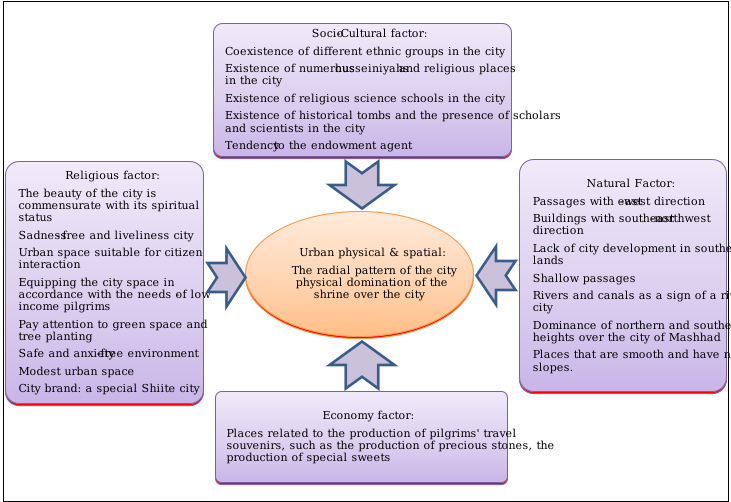
The effects of places with semantic and identity value on tourism space were investigated and the role of new uses for sustainable development of tourism and pilgrimage in the holy city of Mashhad was evaluated during the next steps:
- Selection of elements and places with identity and meaning based on the observation, questionnaires, and documents;
- Determining the immediate range of a valuable place affected by the existence of a valuable element;
- Carrying out documentary and field studies regarding the identified areas (points and their immediate area);
- Examining the types of urban uses and their suitability or incompatibility with the tourism function in the selected area; and
- Analysis and study of the effect of spaces with semantic and identity values on attracting tourists and tourism prosperity in Mashhad.
These steps were performed based on the analysis of urban development documents, field observations, and the formation and geospatial mapping of layers of spatial information in GIS.
4.2. Statistical population, sampling method and sample size
According to the classification of semantic valuable places in the two groups of existing and destroyed, the statistical population of the study also included two categories:
- To identify valuable places, statistical community includes the following: In surveying the general popularity of valuable urban places, the statistical population includes residents (over 40 years old and familiar with the central context of the city) in the thirteen districts of Mashhad. In examining the value nature of the identified places, the statistical community includes religious-academic experts aware of issues related to urban identity, urban planning, and tourism.
- To identify non-existent and destroyed valuable places, the statistical population includes residents of neighborhoods (historical memory) and knowledgeable experts and officials of devices related to the subject of research.
Stratified sampling method was used to select the sample and complete the questionnaires of Mashhad residents. Each of the municipal areas of Mashhad is considered as one class. Class sampling is used when the variance between classes is high but within the class is low. In order to selected sample including a proportionate number of all units in the community, independent sampling is performed in each category. One of the advantages of stratified sampling is the increase in sampling accuracy due to low variance within classes. There are two types of stratified sampling: stratified sampling with proportional assignment and stratified sampling with optimum assignment.
In other words, stratified sampling (random sampling with classification) is appropriate when we can divide the statistical population in relation to the relevant attribute so that the units within the classes are similar in terms of the relevant attribute. In this type of sampling, the units of the study population are grouped into categories that are more homogeneous in terms of variable traits, to minimize their variation within groups. Then, from each of the categories, several samples are randomly selected. Usually, the criterion for classifying the units of society is a variable that depends on the attribute of the variable under study.
It seems that stratified sampling with optimum assignment is the most appropriate sampling method, because in addition to the fact that the volume of each class is proportional to its equivalent volume in the statistical population - that is, in addition to being affected by the frequency; It also affects the degree of homogeneity or heterogeneity in the class. This homogeneity or heterogeneity in standard deviation is determined and the standard deviation of each class in sampling is measured separately. Therefore, each class that has more deviation - assuming other factors are constant - has a larger sample size and, conversely, classes that have less standard deviation have a smaller sample size. And this is perfectly consistent with the sampling logic.
Cochran's formula was used to determine the sample size (Kazemi and Forghani [20]. In this method, the researcher can determine the sample size of his research by having a series of assumptions that follow.
Cochran's formula is: n = (t2 pqN) / [(N-1) d2 + t2pq]
Cochran's formula assumptions:
- T: is the standard normal distribution statistic, which is equal to 1.96 at the 95% confidence level.
- N: is the size of the statistical population that represents all members of the statistical population.
- P: is the probability of success in sampling and q is the probability of failure. Most of the time, researchers use the probabilistic method and declare the values of p and q in their research to be 0.5.
- D: is the probability of measurement error, which usually varies between 0.08 and 0.05, and the researcher changes the value of d depending on whether he or she wishes to choose a sample size that is high or low. In this way, if a small value of d is selected, the sample size will increase and vice versa.
According to the above description, the sample size for the study area was calculated as follows.
| t | 1.96 | |
| p | 0.5 | |
| q | 0.5 | |
| d | 0.05 | |
Therefore, the sample size was determined and distributed among the classes according to the share of each class in the total statistical population.
Also, purposeful sampling (snowball) was used to select a sample from among the experts (religious-academic).
4.3. Methods and techniques of data analysis
The data collection tool was a researcher-made questionnaire which was compiled based on the verified and selected indicators. The technique of Delphi method was used to extract the opinions of experts and to evaluate the value of the places. Then the distribution of valuable places was presented by using GIS software (places with existing value and destroyed places). Moreover, geospatial mapping technique was used to analyze data in GIS. Among these techniques, the buffer tool of geo-processing tools was used to specify the tourist corridors.
5. Discussion
Creating tourist corridors will increase the number of tourists and tourist tours of various tourist attractions. Corridors can have different attractions. Creating special tourism routes according to the uses around the main route, existing and tourism-related infrastructure, diversity of existing tourist attractions and the continuity of culture and social customs in this environment can help define specific corridors and develop sustainable tourism. These corridors can be effective in facilitating and organizing tourism-based entrepreneurship and providing a suitable model for the prosperity of the tourism industry. Reviving the traditional context, preserving the original environment, local development, business dynamism and job creation, preventing tourist confusion and reducing costs Travel in a tourist destination Among the benefits of creating tourism corridors and a factor of economic prosperity and social vitality and strengthening local communities, various tourism corridors as one of the important projects in creating change with the desired goals is an opportunity.
The plan to create tourist corridors will increase tourist visits and tourist tours of various tourist attractions. Identifying and inviting investors and paying facilities for the implementation of job creation projects related to functional tourism corridors is one of the most important issues that need to be on the agenda of executives. Valuable semantic and identity places located in Mashhad, including existing (healthy, abandoned and ruined) and destroyed (cleared) were identified and with the total registered places of Mashhad (122 works and valuable places within the city of Mashhad) and the information received from the General Directorate of Heritage of Khorasan Razavi Province were compared. After that, from the mentioned identified places, the registered, classified, restored, ruined, cleaned, and abandoned works that have a high probability of cleaning were identified and classified. Accordingly, the number of healthy registered works located in Mashhad was 63 units (Figure 2).
Also, 26 restoration units are among the joint registration plates of the municipality and the province's cultural heritage office (Figure 3). Most of the restoration buildings mentioned in this table are in operation and are valuable buildings of the Qajar and Pahlavi eras. It should be noted that some existing works such as Reza Bazaar, due to their contemporary with the second Pahlavi era, are not seen in the list of registered works. Finally, 11 ruined and abandoned registration works in the registration plates located in Mashhad are presented in (Figure 4). These works are among the works related to the Pahlavi and Qajar periods that need attention to reconstruct and revive the past.
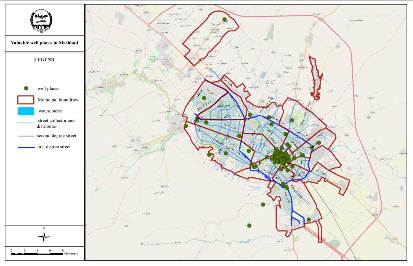
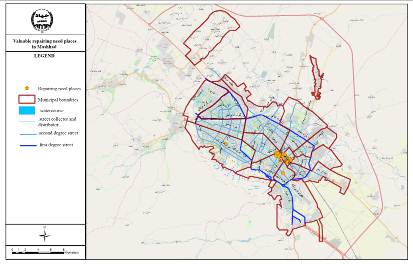
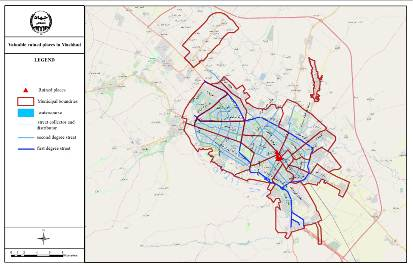
As mentioned before, of the total valuable works located in the city of Mashhad, which have been registered in the list of national monuments of Iran during the last three decades, about 18% of the valuable places in Mashhad, during the implementation of urban development plans demolished and cleared. have become. Also, due to the change in the function of the urban fabric in the study area and the evacuation of the urban population due to physical changes and change of residential to commercial and residential uses during the mentioned years, many the mentioned places have lost their previous function and are abandoned, or they are ruined. These places are in danger of being cleared and remind the city administration of the need to pay attention to rehabilitation or reconstruction.
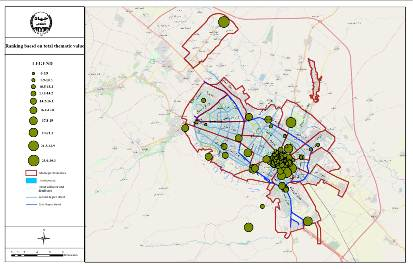
As mentioned before, the focus of most of the valuable points of Mashhad city has been in Samen region and around the holy shrine, which with the development plan of the region, many historical and old places have been destroyed, cleared or are being cleared.
5.1. How to distribute valuable urban places in Mashhad?
As mentioned in the previous pages, the distribution of valuable places as described in the addresses, with a very high concentration in the Samen area and the surrounding area of this urban area. Of these, 14 valuable works in the area (holy shrine, gardens, parks, tombs and registered parks, 4 works with linear value (Jannat sidewalk, Nawab St., Shirazi St. and Imam Khomeini St. (citadel) and 94 points ( Areas with an area of less than 1 hectare (1000 square meters) and often in the form of historical buildings, squares, historic houses, schools, mosques, reservoirs and entrances left over from historical buildings) with a value registered by the General Directorate of Cultural Heritage and Cultural Deputy Mashhad Municipality have been separated and loaded according to the form. Although the body of Imam Reza (AS) Street was considered as one of the historical monuments left from the first Pahlavi era, but with the unsuitable development plan of Imam Reza Street, only in some parts of the works of this valuable inscription and wall can be seen.
A total of 122 works from the total identified works in the form of works in three groups of healthy, restored, and ruined works, were in Mashhad and had valuation indicators for this study. Other buildings were among the cleared places that were removed from places with semantic-identity value. Therefore, only the places that were identified as valuable during the evaluation and questioning of experts were examined and the addresses of these places were referred for field observation.
The results of these studies showed that the highest concentration of valuable urban places is in the Samen region and around the holy shrine. The classification of identified places indicates the existence of four types of registration value, conservation-registration, conservation and study. These sites include national monuments, endowments, private and public property.
The results of the studies show that the highest concentration of places with semantic and identity value is in the central area of Mashhad and around the holy shrine. For this area, cultural use has been defined in the comprehensive plan, and the highest concentration of historical and cultural attractions is in the area limited to Imam Reza Street and Shirazi Street (Figure 6). Due to the vastness of the perimeter of the holy shrine, which is also known as the Samen area of the municipality, the need to develop infrastructure commensurate with the population associated with tourism can be emphasized around the holy shrine.
5.2. Classification of places with semantic and identity value in Mashhad
The first step was to select indicators related to identifying places with semantic identity value in Mashhad. This was important by referring to the second network of the group program. In addition, at this stage, efforts were made to finalize and refine the obtained indicators. This was done through an initial test of indicators. The method of work at this stage was based on qualitative methods, especially observation and the study of texts related to the city. Therefore, at this stage, the exact framework of indicators was determined.
The next step was to identify valuable places according to refined criteria, and the identification method was different for each type of valuable place. This was true of places of historical value by referring to books and historical sources and the role and function of each of the identified sites. Regarding the places in the city space, this process was done by identifying the important spaces and uses in the city space and adapting them to the calculated indicators. In this part of the study, valuable destroyed places were also introduced, and their locations were determined.
In addition, the valuation of the identified sites was determined by adapting to the valuation indicators. To measure the general popularity of the identified places, the identification authority was "citizens of Mashhad", which was also assessed by completing a questionnaire.
For this purpose, the updated information received from the General Directorate of Cultural Heritage, Handicrafts and Tourism of Khorasan Razavi Province (2019) was matched with the information in the archives of the Deputy of Urban Planning and the Cultural Deputy of Mashhad Municipality (2019) and with the help of the addresses in this Documents, location of attractions in Mashhad were identified and in order to verify the information and rank the places with identified value obtained from the documents, visits and field studies were conducted to ensure the existence of valuable places. In the meantime, valuable works such as Reza Bazaar, National Garden, Kouhsangi Park, Mellat Park, Malek Abad Garden, Nakhrisi Factory (Provincial Live Museum) and Coca-Cola Factory (Research Square) were identified and added to the list of thematic places for survey. Also, the Sepad tourist area, parks and famous museums of the city that were visited by citizens, tourists and pilgrims but were not among the works, were identified and added to this list. Then, a questionnaire was prepared to be presented to executive experts and professors. As mentioned before, another questionnaire was developed for the group of citizens of Mashhad to get their opinion on the thematic value of these places. Finally, the total value determined by citizens and experts.
Among registered places, 127 valuable places were identified as places of active or regenerative semantic-identity value. Considering that the thematic value of these places was the criterion for selecting and zoning the selected tourist routes in this project, so the total average thematic score of citizens and experts to the identified valuable places was calculated and, in the classification, and preparation of zoning maps was used as a criterion of field operations. In this thematic breakdown, 8 groups were identified as described in the table below. The holy shrine was ranked first with a completely different identity and subject matter from all valuable places, and 26 other valuable places were ranked second, most of which include historical buildings, facades, mosques, and schools. 15 valuable places were in the third rank and 7 buildings acquired fourth rank. 15 valuable places were in the fifth group, 44 places were in the seventh rank, and 6 places were in the eighth rank.
In view of experts and citizens, the highest thematic value was related to the holy shrine of Imam Reza (AS) and the lowest thematic value was related to Mashhad Flower Garden, which is a local park.
According to the findings, the gender distribution of the respondents was almost close to each other. 41.9% of the respondents were women and 58.1% were men. The age distribution of the respondents with an average age of 46 years, a minimum age of 24 years and a maximum of 84 years. The average residence time of the respondents in Mashhad is 38 years (minimum 2 years' residence and maximum 80 years' residence).
5.3. Thematic assessment of valuable places in Mashhad from the perspective of citizens and experts
In this part of the study, the thematic value of valuable places based on the opinions of citizens and experts in this field and ranking of valuable places based on thematic value of the place and including heritage value, historical value, economic value, architectural-physical value, value Religious, natural value took place. Each place scores from 1 to 5 and the result is consistent with the thematic valuation details of the valuable places.
In general, the citizens' response to the thematic evaluation forms of valuable places, showed that the total points score as below: the Imam Reza's holly shrine (3.5), the tomb of Pir Palan Douz (3.3), Ferdowsi Tomb (3.1), Goharshad Mosque (3), Reza Grand Bazaar (2.9), Khajeh Rabi Tomb (2.8), Vakilabad Forest Park (2.7), Jannat Bazaar (2.7) and Shah Hamam (2.6).
Although Ferdowsi Tomb is in the third place in terms of historical, identity and architectural indicators and Goharshad Mosque is in the fourth place in terms of historical features, unique architecture, and location, but the tomb of Pir Palan Douz is more of a thematic value for the citizens. It has been enjoyed and has taken the second place after the holy shrine. These results indicate the importance of the respondents' familiarity with the places in question and the ability of places to attract family or friends to visit them and recorded a special memory and mental image for visitors. In other words, the order of attention and ranking of citizens indicates that citizens know about these places due to their beliefs and creeds.
According to experts, the ten places with the highest rank, respectively were, Goharshad Mosque (26.2), Imam Reza's holly Shrine (25.8), Ferdowsi Tomb (23), Green Dome (22.9), Hemmat School (22), Shah Mosque (21.8), the Down street mosque (21.5), Parizad School (21.4), Babaqodrat Caravanserai (20.9) and Malek House (20.6). Expert votes represent the highest ratings for well-known attractions and remind the difference between the views of experts and citizens in the valuation of thematic ranking indicators.
But what is cited for the ranking of this research was the aggregation of the ranking of valuable places from the point of view of experts and citizens, Imam Reza's holly Shrine (29.3), Goharshad Mosque (27.3), Ferdowsi Tomb (26.1), Parizad School (25.2), Gonbad Sabz (23.9), Shah Mosque (23.6), Reza Bazaar (23.4), Hemmat School (23.4), The Down street mosque (23.1) and the tomb of Peer Palan Douz (23). The obtained scores are stored in the data table related to each thematic place and after reclassification in GIS software are presented in Figure 5.
Based on this information, there is a need for the relevant institutions to focus more on developing the tourism infrastructure and facilities needed to provide the services needed by citizens and tourists, and to develop specific programs for the rehabilitation, restoration, and protection of these places.
Considering that the city of Mashhad has undergone many changes over time, development and modernity, and most of the buildings with thematic, semantic and identity values have been destroyed or removed from their original position due to this process of decline and development, the morphological pattern A city cannot be classified in simple circular shapes and will have a chaotic distribution. In such circumstances, the central and historical core of the city, which usually has a good commercial position, is prone to rapid physical and demographic changes. Changes that, if left unchecked, create the conditions for the decline of the historical and valuable fabric.
According to the available aerial images, the interventions around the holy shrine of Mashhad, cleared part of the historical fabric of the city, in a circle around the holy shrine, initiated the process of fundamental change in the historical fabric and change in the historical core of Mashhad in the past and it has been since 1978. Also, the implementation of development plans and the comprehensive plan of the city of Mashhad after 1962, which is based on wear, unsanitary, inefficiency, unsuitability of the old texture for the automotive era, has no known value and the best way to solve these problems is demolition, debris removal. And it was the reconstruction of these areas, and the reason for the compliance of official policies and plans with the laws of the land and real estate market, was based on the theory of originality.
The study of the spatial distribution of historical buildings in Mashhad shows that almost all registered historical buildings in Mashhad are in the city development until 1952. The proximity of this space to the holy shrine and pilgrims requesting special goods and services, has caused the concentration of commercial and service spaces, especially hotels and guesthouses in this part of Mashhad, and by changing technology and the tastes of customers, owners, and investors, destroying the space The old and the creation of new commercial complexes caused significant changes and increased the added value of these areas and the originality of these areas.
5.4. Investigating the existing uses in the selected areas and determining the compatibility of the uses with the tourism function
Studies have shown that the highest concentration of valuable urban places is in the central region of Mashhad (Samen region and around the holy shrine). For this area, it has been defined in the comprehensive plan of cultural use and the highest concentration of valuable places was identified. It has (Figure 2, Figure 3, Figure 4, Figure 5, Figure 6 and Figure 7) some valuable places are in the holy shrine and are considered as tourist areas. Due to the vastness of the perimeter of the holy shrine, which is also known as the Samen area of the municipality, the need to develop infrastructure appropriate to the population associated with tourism related to the holy shrine can also be emphasized.
In the northern and northeastern parts of Samen region, the only available attractions, corresponding to the use of garden and green space as places with value of identity meaning. Commercial and commercial-residential complexes in Samen, 1, 8, 9, 10 and 11 areas of Mashhad Municipality have a considerable range. The results of the studies show that in addition to the concentration of valuable places in Samen region, the largest number of ruined and restored historical houses is also in this region. It should be noted that the highest number of valuable sites identified in this area have also been cleared due to the development without reviewing the historical background of the area, valuing areas based on historical background and exploring the holy shrine and its immediate areas.
The information obtained from the adaptation of the detailed plan land use maps and collections identified in this study as valuable points indicates that the highest concentration of valuable points is in the perimeter of the holy shrine and in the peripheral and immediate area of the holy shrine (Samen area). It also has the highest number of cultural-historical uses in Samen region. The highest concentration of historical-cultural sites in the northeastern and southeastern part of Samen region and the highest number of historical attractions is in northwest and southwest of this region. Observations and location of religious-historical attractions show the location of these valuable places along Nawab Street and Shirazi Street. In addition, historical attractions, historical-cultural attractions, and commercial-historical attractions are also observed in this area.
The information received from the detailed capacitive design also indicates the high concentration of various uses in the central area of Mashhad. Educational uses, military uses, and health uses have the extent and scattered distribution in the densely populated area of residents, pilgrims and tourists. A noteworthy point is the concentration and adaptation of residential areas with medium and high density in the area around the holy shrine with different uses.
In Samen area as a dense area in terms of valuable points, there is no cultural-historical-recreational use and no place of culturally recreational value, and these valuable points are in areas outside the Samen area. It seems that this area needs to implement infrastructure projects related to cultural-recreational uses to be able to meet the leisure needs of tourists.
According to the detailed capacitive plan in Samen region, the introduced valuable points do not have valuable recreational areas, especially extensive recreation areas. Green and recreational space is defined around the holy shrine. Therefore, it seems that due to the residential area with medium densities and high density around the holy shrine, more attention should be paid to the development of extensive recreational spaces or. What has been obtained from the adaptation of detailed plans and use of valuable places is the presence of a commercial wall in the direction of Imam Reza, Nawab, Shirazi and down streets, which indicates the need to provide souvenirs and necessities for citizens, tourists and pilgrims in the vicinity of the shrine. (Figures 2-7 (a-j)).
5.5. Selecting suitable tourism routes
To properly distribute tourist routes for travelers, 10 corridors and zones were selected, and a special radius has been defined for each of them by buffer tool of geoproessing tools of GIS software Forghani et al., [22] and Forghani et al., [23]. The basis of this choice was the existence of a valuable place at the origin and destination of the routes and the existence of appropriate tourism, commercial, welfare and cultural infrastructure and the ability to access various uses. The selected tourism routes of this research for the city of Mashhad are mentioned in Figure 6. The land use of Mashhad has been used as the ground of access buffer of valuable places to clarify the relationship between land uses and valuable points.
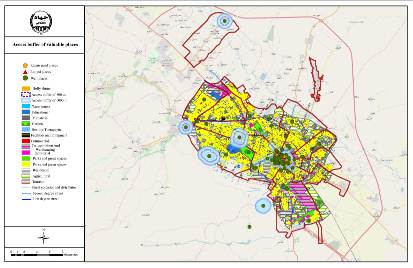
In Table 3, the percentage of valuable places in each proposed tourism corridor is specified. It should be noted that a significant percentage of places with thematic value in the location of Samen region, has a high compliance with the routes from Mosalla to Tohid Square, railway station to Akhund Khorasani and Dah-e-Dey and Kouhsangi Square. Therefore, the percentage and number of valuable places presented in each proposed route necessarily means the percentage of the total, without considering the repetition in other routes. Conceptually, if a tourist wants to visit tourist routes with the most focus and variety of topics, the best route is first the corridor of the holy shrine to a radius of 1000 meters and then the mosque route to Tohid Square. However, if the people applying to visit the valuable thematic routes are higher, the routes of Samen corridor, Mosalla to Tohid square and the railway station to Kouhsangi are suggested, respectively.
In the continuation of the discussion, the characteristics of the proposed routes for the development of tourist spaces based on valuable places are described in detail.
(A) The holy shrine zone: Considering the residential, road, commercial and accessible infrastructure, it is one of the selected valuable areas of this research. The selected area is up to a radius of 1000 meters from the holy shrine and includes 53% of the places with semantic and identity value in Mashhad.
(B) Ferdowsi Tomb zone: Ferdowsi Tomb and its surroundings are one of the most valuable historical sites in Mashhad and its proximity to Haruniyeh Tomb as an old remnant of the Abbasid era, has made this space one of the most attractive places for visitors. Ferdowsi Tomb and the fort of the old city of Toos, after the restoration of the front of the tomb, in the form of a bazaar consisting of workshops and shops of handicrafts and decorative stones is one of the important tourist destinations of Mashhad.
The Asian Road is the most important access route to this valuable place and at the end of each of the proposed tourist routes or alone can fill the tourist's time in the city of Mashhad.
(C) Khorshid park Zone: Another recreational space that has been evaluated in the list of valuable places in Mashhad is Bustan Khorshid, located in the southern heights of Mashhad (Figure 7). This recreational space is one of the most popular natural attractions in Mashhad and various theme parks are under construction in this complex. This complex has become one of the most popular attractions in Mashhad due to holding cultural events and family resorts in the form of a natural promenade. Also, the proximity to the mountaineering route of Zoo peak and Baba Kouhi stairs to reach the roof of Mashhad located in the southern heights of Mashhad and the proximity to the green belt of the city has increased the potentials of attracting tourists and recreationists. It should be noted that access to this place is possible using the public transport network and private vehicle. What adds to the value of this space is the end of the routes of Hashemieh Boulevard and Shohada Haftom Tir Boulevard to this place, which starts at the beginning of the route with commercial and entertainment towers and along the way with various commercial uses, restaurants and popular restaurants. Local and linear parks and gardens, as well as the National Library, direct tourists to the Sun Park.
It is also possible to route Vakilabad Boulevard with the origin of Mellat Park to Vakilabad Park and its side branches to the north (Imamat Boulevard) and to the southern heights (Hashemieh Boulevard, Kowsar Boulevard, Shohada Haftom Tir Boulevard and Sayad Shirazi Boulevard). It is also considered as one of the significant routes for tourists and recreationists.
(D) Mellat Park Zone: Another valuable thematic place, which is presented in the form of a valuable thematic zone in the map of valuable places, is the Mellat Park and its surroundings, which is considered as one of the most attractive and most visited valuable places in Mashhad (Figure 7). Due to the surrounding environment of Mellat Park, which is dedicated to commercial use in the walls of the main streets, this space can be introduced as one of the valuable tourist-commercial centers in the tourist visit program. Active commercial wall along Imamat streets on the west side and the commercial wall of Moallem Boulevard on the north side of Mellat Park and the underground terminal under construction of bus lines next to the bazaar and Mashhad city train station on the south side and the existence of recreational places in the park. The nation that has survived from the Pahlavi era is considered one of the most important spaces in the city of Mashhad. In this complex, cultural and educational spaces are also active, which adds to the diversity of its uses.
(E) Vakilabad Forest Park Zone: The natural value site on the property endowment list is Vakilabad Forest Park (Figure 7). This Park, which in recent years with a beautiful design and modern with nature, welcomes many tourists and citizens of Mashhad is another space with spiritual value and identity that also has historical value. This forest park can be a place at the end of the way for tourists to visit the city of Mashhad. This Park is one of the most popular tourist destinations due to the access of city trains and bus lines as well as the existence of a line taxi station. It also has other artificial attractions to fill visitors' leisure time. Adjacent to the zoo and recreation centers close to this park, the passage of the permanent river and the proximity of the main tourist destinations of Torqabeh and Shandiz to this place have made it one of the most popular destinations. A radius of 100 meters from this destination, there are various commercial and entertainment complexes such as karting track, paintball, shops and shopping markets, equestrian track and gardens and flower villages, and other features of this destination.
(F) Khalaj Residence Zone: Due to the fact that Khalaj residence is located outside the city, but it is one of the historical and valuable places of Mashhad. The surrounding environment of this place is valuable for nature around the city and as the roof of Mashhad; it has complete nobility to the city, as one of the attractive destinations with the possibility of proper access to Mashhad. It is a very short distance from the airport and the passenger terminal, and along the way from the airport and the bus terminal and Hafez Riding Park, it can reach Atlas commercial-cultural market complexes, Koushesh street commercial wall, Amin big market and Bustan Torogh, Ghadir recreation complexes. Mashhad Botanical Garden, Reyhaneh Park (Baba Ghodrat Camp) and Mosalla Torogh have access (Figure 7).
(G) Mosalla to Tohid Square Rout: The next corridor starts from the historical mosque of Mashhad and continues to Tohid Square. Similar to other selected corridors, the length of the route from Mosalla to Tohid Square has a very active and dynamic commercial-cultural and historical wall, and valuable cultural programs are implemented in Tohid Square as the entrance to the holy shrine (Figure 7). In this square, the old and traditional active commercial wall of this tourist route reminds of night and night life.
(H) Shohada Square to Dah-e-Dey Square: Shohada Square to Deh-r-Dey Square is one of the attractive routes for tourists and citizens of Mashhad. In this route, the historical square of Shohada and the old municipality building related to the Pahlavi era, the first four-story building in Mashhad and the location of the Golden Gate, the first building of Melli Bank and Sepah Bank, the property building, Pars Historical Hotel (National heritage recorded), National Garden and numerous shopping malls, Cultural Center Paradise and the house are located on a historic property. Dah-e-Dey Square is also one of the historical places of this corridor.
(I) Railway station to Kouhsangi Park Rout (historical-cultural-natural route): Another selected corridor from Mashhad railway station to Kouhsangi Park (Figure 7). The distance between Shohada Square and Shariati Square includes a collection of valuable historical and heritage houses, a very valuable and active commercial-cultural wall. Therefore, the corridor of the railway station to Kouhsangi Park is considered as one of the most attractive corridors of this research after Samen region, which can be visited using tourist buses and can be accessed by private and public transportation such as subway.
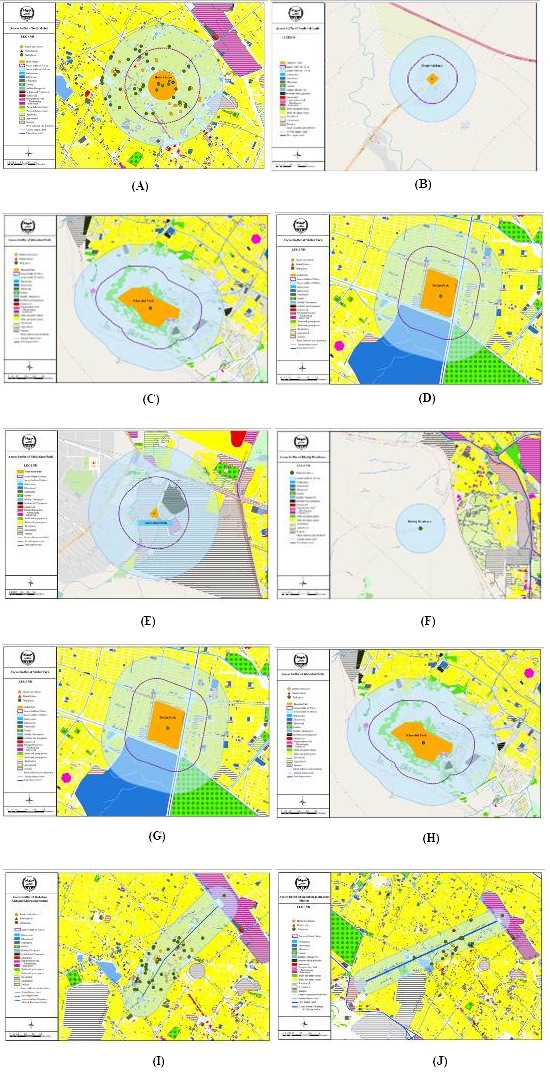
The railway station has a significant identity-semantic value as a source of entry for rail tourists. This historic station has a very long history from the Pahlavi era and has benefited from the experience of building railway stations of Russian experts and engineers. The convenient location of this valuable attraction of Mashhad with the development of the surrounding green space by the municipality and the construction of metro station line 2 with the origin of the railway station, distinguishes it from other tourist corridors of Mashhad. This source of tourism is one of the most valuable facilities and infrastructure required for tourism development, which enters Shohada Square at its next station. This square, as one of the most important historical and cultural attractions of Mashhad, is currently known as a complex consisting of offices and a large hall of Mashhad with a special view of the holy shrine, a field for holding festivals and cultural events. Shariati Square can be the third stopover along the corridor of the railway station to Kouhsangi.
An important thematic place at the end of this corridor is Kouhsangi Park. Adjacent to the attraction of Mirza Ahmad Razavi Tomb, as well as the establishment of marginal commercial uses, commercial-residential towers, shopping malls and stores of international brands, and four-star and five-star hotels on and around Kouhsangi Street, as well as the Great Museum of Khorasan Razavi and the complex Recreational-cultural and historical in Kouhsangi Park, it has a great value as a tourist destination. This park, which is located at the end of the selected tourist route of the railway station to Kouhsangi Park, is located between the origin and destination of the route, Shahid Beheshti Conservatory located on the southwest side, Africa Cinema on the southeast side of Shariati Square with cultural use and old shopping center. It has included the East Biological Complex as one of the remarkable places. Similar to the corridors defined before, according to the standards of UNESCO regarding the classification of natural, cultural and historical heritage sites, and this corridor has commercial, historical sites and historical-natural promenade, especially in the form of cultural, historical-natural corridor. Placed. Railway and historical buildings This route is known as a historical element and Kouhsangi Park due to its historical background as well as its educational space, museum, theater age and place for holding cultural ceremonies, as a cultural element and due to its natural resort feature as a natural element. It makes the corridor feature different from other proposed corridors.
(J) Railway Square to Akhund Khorasani Rout (Historical-Cultural Route): The next corridor starts from the railway station to Akhund Khorasani Street. In this distance, in addition to historical houses as well as cultural attractions, we can mention health centers and commercial markets. In this distance, valuable historical houses such as Malik's daughter's house, evangelical church, hospitals, as well as historical houses on Khamenei Street are located on Akhund Khorasani Street and Gonbad Sabz Square. According to the standards of UNESCO regarding the classification of natural, cultural and historical heritage, railway station as a historical element, Green Dome Square as a cultural-religious element, historic houses and churches in this corridor as historical and cultural elements, provides the possibility of defining the historical-cultural corridor. The reason for this is the historical and cultural value of the place, and due to the lack of religious use in existing churches or even the green dome, it does not have a high religious value at the level of the holy shrine.
6. Conclusions
Mashhad is a one of important metropolitan in the north east of Iran. Every year, over 25 million tourists enter the city, which need to fill their free time and visit their favorite attractions in the limited time of their trip. For this purpose, in order to identify and introduce suitable tourism zones and routes with the most appropriate adaptation to the existing and peripheral uses, research was conducted during the years 2018-2020. This research is a descriptive research based on the purpose of applied research and based on how to collect and analyze data. By examining the current situation and regular and systematic description of the current situation of the city and valuable places in terms of shape, meaning, identity and by studying the characteristics and traits of these places, examines the relationship between variables that can be used in decisions and policies, as well as planning in the field of urban management and tourism management in Mashhad. After evaluating the physical space of Mashhad in terms of semantics and identity with the aim of promoting tourism, valuable places in terms of type of attraction were placed in three groups of places with cultural, historical and religious value.
The General Directorate of Cultural Heritage, Tourism and Handicrafts has registered 130 valuable attractions and places in two groups (the building group and the building complex), and has divided them into four groups: removed, renovated, well and destroyed building. Of these, the removed sites were not surveyed and evaluated, and only 127 registered and unregistered sites with existing value were evaluated. The classification of identified sites included five types of registration value, protection-registration, protection and under investigation (including historical, national monuments, endowments, personal and public property). Only 19% of the detailed plan uses and 65% of the master plan uses corresponded to recreational, green, cultural, historical and pilgrimage uses, and most of the valuable sites were in commercial, residential, urban, educational and government-administrative uses. Based on this, the appropriate distribution of tourist routes for travelers to visit the city of Mashhad was done and 10 corridors and zones were selected that concluded, Zones (The holy shrine, Ferdowsi tomb, Khorshid park, Mellat Park, Vakilabad forest park and Khalaj residence) and Corridors (Mosalla to Tohid Square, Shohada Square to Dah-e-Dey Square, Railway station to Kouhsangi Park and the railway square to Akhund Khorasani). The basis of this choice was the existence of a valuable place at the origin and destination of the routes and the existence of appropriate tourism, commercial, welfare and cultural infrastructure and the ability to access various uses. Percentage and number of valuable places in each proposed route necessarily meant percentage of the total, excluding repetition in other routes. Therefore, the tourist will have a better chance of choosing than visiting the tourist routes that have the most focus and variety of topics or have a specific theme. This also facilitates conditions for city managers and planners and makes it possible to load infrastructure at a lower cost.
In other hands, the results of the analysis of patterns and approaches of planning, intervention and exposure to identifying and semantic places of cities with historical background around the world, some of which were discussed in this study, the importance of urban revitalization and reconstruction and forgotten identities. It has been included in the agenda of city managers and policy makers in the fields of urban management and tourism management in these countries. Because the process of urban regeneration will lead to the re-creation of lost spaces and the economic and social dynamism of cities, and will lead to economic mobility in these areas.
The efforts of countries in this regard are reflected in the formulation and implementation of international protocols on the identification and rehabilitation of valuable urban sites. These protocols demonstrate the importance of valuable sites and international restoration guidelines, including the Fez Charter, the Bergen Resolution, the Declaration of Santiago de Compostela, the Burra Final Charter (1999) (the ICOMOS Charter for the Restoration and Protection of Sites Culturally Valued), Krakow Charter, Quebec Declaration (Cooperation between Continental States to Ensure Restoration and Preservation of Historic Cities), Congress of Athens (1931), Congress of Venice (1964), Declaration of ICOMOS (1998), Vienna Memorandum, Seoul Declaration, Declaration Jian pointed to Hui's statement. In these international commitments, in addition to comprehensive attention to comprehensive and macro-approaches in dealing with identifying places and spaces, emphasis is placed on international cooperation and support for ideas based on the protection of indigenous cultures and the history of nations and territories.
Examining these documents, while helping to identify the latest perspectives in this area, provides an example of a practical framework for implementing "integrated conservation and regeneration" policies, including documents published by the Getty Institute in the United States and the British Heritage. Recognize the experiences and practical framework of conservation and development policies. The rules and regulations that are understood through the lines of these documents, in a way, represent a kind of evolutionary trend in conservation and regeneration approaches in historical environments, the latter type of which has been called "integrated conservation and regeneration".
It seems that the main goal in most of the necessary interventions is to protect the old urban textures as a unique social and cultural wealth and then the tourism boom. Due to the strong sense of spatial affiliation, the economic support of executive programs in this area is public, cooperative and private capital. If this feature can be seen in the manner and process of investment and operation of these spaces. Preserving the identity of cultural and religious spaces, mainly by dedicating a clear example of the sense of belonging and mental image of the meaning and identity of the city of Mashhad.
Therefore, by reviving the proposed tourism zones and corridors and preparing and formulating tourism development plans for designated corridors and operational and executive intervention, in accordance with international standards in these areas, it is possible to protect and develop single buildings (valuable places) from Reacted through reuse. Also with the functions of urban tourism (suggested uses: museum, library, book cafe, cultural center, film education, traditional and indigenous art and music, theater, revitalizing the structure of the traditional Iranian-Islamic city with the main elements, including roads, neighborhoods, businesses and Public spaces such as bazaars, mosques, baths, etc. in parts of the city that have a higher density of valuable places) strengthened them.
References
- Tehrani shafagh, A., 2014, Old Tehran to New Tehran. Boostan Publication, 2nd edition.
- Barton. H., 2009, Planning and management to old texture house: UK experience. Urban design conference. UK.
- Falamaki, M.M., 2018, Revitalization of Historical Monuments & Cities. University of Tehran press. 12 editions.
- Hanachi, P., Fadaei Nejad, S., 2011, Creating a Conceptual Framework for Integrated Preservation and Recreation in Cultural-Historical Textures, Journal of Fine Arts - Architecture and Urban Planning, No. 46, summer 2011, 15-26.
- Hanachi, P.; Khadamzadeh, M.H.; Shayan, H.R.; Kamelnia, H.; Mahdinejad, J., 2007, A Comparative Study of Urban Restoration Experiences in Iran and the World with a special look to the Historical texture of Yazd, Tehran: Sobhan Noor Pub. with collaboration Yazd Historical City Cultural Heritage Site, Fall 2007, 1-215.
- Izadi, M.S., 2009, Analytical review of modernization and renovation policies in Western Europe, Presentation at Modarres University. Nonpublished.
- Rahnama, M.R,. 1997, Introduction and evaluation of gentrification theory in process of city center renewal (case study: Sarshor Mahallih in Mashhad), Journal of Geographical Research, No. 42, 72-91.
- Hosseini Koumleh, M.; Sotoudeh Alambaz, F., 2013, The Role of Collective Memory in Urban Regeneration: in Search of Solutions to Historic Area Regeneration in Lahijan. M.Sc. thesis in Beautiful Art, Architecture, and Urbanism University.
- Rahnama, M.R,. 2009, Identification of urban valuable places, Mashhad JDM press. First edition.
- Sabet Teimouri, M.; Tavangar, M.; Zarei, A.; Tanhaiee, N., 2018, Study of international and internal experiences on urban valuable places and its role in improvement of tourism environment. Research project, ACECR, 207-208.
- Rahnama, M,R., 1998, Mashhad Urban-Cultural History, Journal of Meshkat, Vol. 58-59, 146-164.
- Ahmadi, F., Bemanmian, M.R., Ansari, M., 2018, Landscape restoration method of natural landscapes based on landscape ecology approach. The Scientific Journal of NAZAR research center for Art, Architecture & Urbanism, Vol. 14, No. 56, 5-16.
- Seyyedi farrokhad, S.M., 2014, Comparison of two corrections in the Beyhaqi history, Mashhad municipality publicaion. P. 57.
- Riyazi, G.R., 1956, Mashhad guide, containing historical, economic, and jurisprudential information of Mashhad and Khorasan cities along with necessary statistics, Zavar Publishing, Mashhad.
- Tahernia, B., 1998, Mashhad from the point of view of tourists. Astan-e-Quds Razavi Publications, Mashhad. First edition, 164-157.
- Sabet Teimouri, M.; Zarei, A., 2018, The effect of valuable and identification places revitalized on tourism development; comparative study: Istanbul, Fez and Cairo. International Journal of Humanities Education. Vol. 4, No. 1, 51-64.
- Hodjat, M., 2001, Cultural Heritage in Iran: Policies for an Islamic Country. Cultural Heritage organization Publication. (Department of education) Tehran, Vol. 99, 113-161.
- Feilden, B.M, and Jokilehto, J., 2007, Management Guidelines for World Cultural Heritage Sites (Aded & Translated in Persian by Hanachi P.,). University of Tehran Press. 22-27.
- Mason, R., 2002, Assessing Values in conservation planning, Methodological Issues and Choices, Research report: Assessing the values of cultural heritage, The Getty Conservation Institute, Los Angeles. 5-30.
- Kazemi, S., and Forghani, A., 2015, Cartographic Knowledge Acquisition: from Theory to Practice. International. Journal of Geoinformatics, Vol. 11, No. 2, June 2015, 57-72.
- Mashhad Statistic Center, 2019 - downloaded on 15 December 2021: www.mashhad-city.ir/product-tag/statistics-mashhad/
- Forghani, A. Cary C., and S., Kazemi, 2006. Introduction to GIS (Module 2). Proceedings of the Workshop on "Remote Sensing and GIS Applications in Archaeology", Ancient Cultures, New Technologies Conference, Silpakorn Computer Centre, Bangkok, 25-26 June 2006, 1-200.
- Forghani, A., K., Nadimpalli, and R.P., Cechet, 2018. Extracting Terrain Categories from Multi-Source Satellite Imagery. International Journal of Geoinformatics, June 2018, 1-10.