

The main purpose of this study was to examine Social Studies teachers’ competence in teaching and assessing learning outcomes in affective domain in senior high schools in the Aowin Municipality in Western North Region in Ghana. A quantitative approach was used in this study as it allowed the researchers to carry out an objective analysis and generate factual knowledge through measurement. The survey design was used for the study. The study population constituted Social Studies teachers in the 40 Junior High Schools in the Aowin Municipality of the Western North Region of Ghana. Simple random and convenient sampling techniques were used to select the schools and respondents for the study. The simple random sampling was used to select 20 schools to participate in the study. This was to provide an equal opportunity for each school to participate in the study. From these selected schools, a convenience sampling technique was used in selecting forty (40) teachers (two from each school in the Aowin Municipality where Social Studies is offered as a core subject. The main instrument used for the study was structured questionnaire. Descriptive statistics in the form of percentages was used to analysis the data in this study. The study concluded that Social Studies teachers hardly teach and assess directly in the affective outcome, hence the affective domain is neglected in the teaching and learning of the subject. It is recommended that the universities and other training institutions should strengthen the teaching on the use of the techniques for assessing the affective domain. In-service training courses should also be organised regularly for social studies teachers on the use of the techniques for the assessment of affective domain.
Social Studies Teachers’ Competence in Assessing Learning Outcomes in Affective Domain
May 09, 2022
June 08, 2022
June 16, 2022
June 18, 2022
This is an Open Access article, distributed under the terms of the Creative Commons Attribution 4.0 International License (http://creativecommons.org/licenses/by/4.0/), which permits unrestricted use, distribution and reproduction in any medium or format, provided the original work is properly cited.
Abstract
1. Introduction
The affective domain is not isolated in teaching Social Studies and as a result, the methods and strategies which are used in teaching Social Studies are reviewed. Also reviewed is how each of them touches on the affective learning outcomes. Methods is a particular style of instruction, while strategy is the overall plan used by a teacher to guide instruction during a period of time [1]. Teachers who possesses very good skills of pedagogy which may interact with subject matter to bolster their performance to ensures successful teaching and learning [2]. Method is the overall approach to teaching, while strategy is about sequencing of the technique during a class period [3]. What Melinger, and ASESP said about method and strategy indicate that, there should be blend of a degree of pedagogical skills with the amount of the subject matter knowledge the teacher acquires and these lead to systematic presentation and delivery of the lesson. The organisation of social studies is to be effective, the teacher must be well versed in the use of a variety of teaching methods and strategies besides the possession of adequate knowledge in several disciplines. It means that, the teacher should be knowledgeable in the various disciplines which constitute Social Studies, plan them under topics and not the various subjects guided by objectives and employ variety of methods by involving the learners to cause a change in their behaviour [4]. The approach to teaching that a teacher adopts depends on the extent of good method of teaching. A good method of teaching Social Studies should aim at the inculcation of love of work, developing the desire to work effectively to the best of one’s ability, providing numerous opportunities of participation by the learner and developing the capability for clear thinking among others [5]. Every plan and strategy as well as approaches are employed to impact knowledge into the learner with citizenship as the focus. So to Aggarwal, the learner must be made to love work. The desire to work efficiently must be developed to the best of the ability of the student [5].
1.1. Methods of Teaching Social Studies
Skilful teaching in Social Studies is paramount without it effective learning cannot take place [6]. Methods commonly used in Social Studies include the following: Team Teaching, role play, simulation, discussion, project work and fieldwork.
1.1.1. Team Teaching
The nature of Social Studies in terms of the wide array of specialised topics calls for collaborative teaching as a pedagogical method [7]. For many social studies educators, one way to address the problem of teachers for class is through team teaching [8]. Team teaching as a process in which all team members are equally involved and responsible for student’s instruction, assessment and the setting and meeting of learning objectives [9]. In the same vein, Goetz defines team teaching as a group of two teachers working together to plan, conduct and evaluate the learning activities for the same group of teachers [10]. Team teaching refers most often to the teaching done in interdisciplinary course by the several team members who have joined together to produce that course [11]. To these authors, social studies is interdisciplinary and therefore, methods should be varied and a group of teachers of two or more can teach the same subject by each of them taking a group or aspect to achieve the same goal. In teaching therefore members are equally involved in all aspects of the management and delivery of the subject [12].
1.1.2. Role Play
Role playing is an attempt to make a situation clear or to solve a problem by unrehearsed dramatization [13]. Role playing as structured, activity permitting students to take the part of a person in an imaginary situation and to act the part in a realistic manner as possible [1]. Role playing as a group problem solving method that enables young people to explore human problems in a spontaneous enactment followed by guided discussion [14]. Researchers supported this when they pointed out that it is a spontaneous acting out a situation to show the emotion reaction of the people in a real situation [15]. Its use in the classroom is to train students in effective problem solving as students pick social problems for study [16].
1.1.3. Simulation
Closely related to role-playing is simulation. Simulation is an accurate representation of reality [17]. He further explains that pupils are simulating family life, for example, when they interact with one another and conduct their affairs as if they actually were the persons whose roles are being performed [17]. Simulation combines role-playing and problem-solving, and it consists of students performing a contrived situation that duplicates a real situation or phenomena as closely as feasible so that the students will understand the real situation and or learn about how to perform in real situation [13]. The term simulation game is sometimes encountered. Instructional simulations often called simulation games are any activity designed to provide life-like problem solving experience in the form of a game [16]. Simulations rely on gaming techniques and consequently are sometimes referred to as “simulation games” [17]. However, the term simulation game was used originally to denote a classroom game as distinct from a recreational game not designed for a classroom and now the term has taken a new meaning with games that may have some elements of simulation within them as well as simulations having game elements within them. Simulation is highly motivating and enhances interest in discussion [18].
1.1.4. Discussion
Discussion as a teaching method is one of the key ways to involve students to take active part in what they are supposed to be taught and learnt. In this strategy, the teacher poses a number of pertinent questions on a theme or topic to invite student’s ideas, views or opinions on the topic or theme. Sometimes, student’s perceived idea on a topic may be a misconception and it should be invited first and cleared before the correct concept is taught. The new is built upon the old when it is correct [19]. A researcher describes discussion as both inclusionary and participatory because it implies that everyone has some useful contribution to make to the education effort and because it claims to be successful with actively involving learners [19].
Discussion method is an approach with three ingredients. First, both student and teacher talk are required; students are expected to enter into dialogue and conversation with academic materials; and students are expected to practice and publicly display their thinking. Through the dialogue learners acquire some form of learning; cognitive, affective or psychomotor which are manifested with a change of behaviour [20]. This is what Brookfield meant by saying that, the purpose of discussion is to engender change in learners what teachers define as desirable attitude [19]. This is applicable in social studies since most of the topics are controversial and need varying views to clear the air. Discussion is the popular method used in teaching Social Studies, apparently based on the fact that discussion ensures democracy in the classroom and also leads towards achieving affective ends especially in Social Studies learning [21]. In the discussion, learners are made to value others view, be tolerant, co-operative sometime in debates and accommodate and assimilate others cultural differences.
1.1.5. Project Method
Basically, varied approaches to teaching Social Studies also call for the project method [7]. Project is a child centred activity carried on by learners to accomplish a definite goal [7]. The project which had its origin in the professionalization of an occupation was introduced in the curriculum so that students could learn at school to work independently and combine theory with practice. Individual or group undertakes a study which could be an independent observation to help them solve a problem and this is a project method. This is where the learner or a group of learners get to understand the meaning of the problem to be solved. Since Social Studies concern itself with the study of environment, the project method may involve a local study whereby learners may be assigned to investigate and write a report about their local community. Within the report, it may include the location, occupation of the indigenes and festivals being celebrated by the people in that geographical area [7].
Normally, the groups write and share findings they come across in their study. Project method consider the abilities of the students and place students of varied abilities in a group so that, the weaker ones would be helped by the stronger ones. Fast writers will help slow writers. It is an approach which does not breed selfishness but co-operation, tolerance and unity [7]. Students who is a good writer can help to revise and edit a weaker writer’s essay; the learning process is, therefore, integrated [22]. On the other hand, in project work, students develop skills of analyzing and formulating hypothesis; through these students came to a logical understanding of the problem or issues to be solved [7].
1.1.6. Field Work
Fieldwork as the teaching and learning which takes place outside the classroom or laboratories, usually planned and organized to take place within the school, the environs of the school, the local community [7]. On his part, Tamakloe recognizes that, the nature of the learning collects information in his immediate and wider environment [4]. Field trips are explained excursions to sites beyond the classroom for the purpose of obtaining information and provides an opportunity for first hand observation of phenomena [23]. In the first instance, all these experts see fieldwork as very important tool for social studies teaching and learning. These motivate the teacher to extend his or her lessons beyond the four corners of the classroom into the environment for fresh information which is not diluted from the field.
Fieldwork activities can be organized under three stages. These are the pre-field work activities which deal with all the necessary arrangements put in place before the actual fieldwork activities which concern the exodus with the class on the fixed day, row call and the other activities carried out on that day and the return to school. Post Fieldwork activities is the final stage and it deals with the activities which take place after the trip and report writing as well as expressing of appreciation to the authorities of where the studies took place. Normally, fieldwork activities are not organized to anywhere but areas of economic, historical, geographical and cultural value.
Fieldwork provide learners the technique to solve problems since the class is taken out to the field, the ability to think critically, how to work in group. It also helps students to be able to locate and interpret information obtained from books and other sources. Being able to work in a group by tolerating varying views and working collaboratively with people from diverse cultural background are characters’ affective domain nurture and since fieldwork activities make provision for that, it is very pedagogical approach in teaching Social Studies. Field trip activities having long lasting consequences for students, typically involving memories of specific content. If Social Studies teaching is to be successful, fieldwork activities become prominent.
1.2. Procedures for Assessing the Affective Domain in Social Studies
Evaluation of students is an integral part of teaching and learning in Social Studies in the Colleges of Education in Ghana and is beneficial to both students and tutors if use formatively [25]. This implies that authentic assessment, as a classroom assessment strategy should be employed for effective teaching and learning in Social Studies [26]. Indication is that teachers use more authentic forms of profile dimension assessment techniques such as portfolio and peer and self-assessments techniques during lesson delivery, lay a strong foundation for knowledge base for teaching and assessing the learners learning outcomes [27]. It is clear that these profile dimensions are in objectives, that is; cognitive, affective and psychomotor domains [28]. The acquisition and understanding of knowledge had been acquired related to cognitive domain. The use of the knowledge relates to psychomotor since it employs the manipulations. Acquisition of desirable attitudes and values concern the affective domain. Since the subject stresses these three domains, the evaluation should also consider them as well.
Any curriculum designed to bring about change in the life of the people and improvement should also consider assessment procedures which will help in achieving such aims of the curriculum. The syllabus made provision for some assessment procedures to break the gap of disparities. Again, teachers can also adopt some assessment procedures which will be appropriate in assessing some learning outcomes. Some of these assessment procedures are formal and informal. For the purpose of this study, procedures which can be used in assessing the affective learning outcomes were reviewed. Most of these procedures are informal assessment procedures which include anecdotal records, checklist, conferences, journals and learning logs, observation, peer assessment, portfolio assessment, project or demonstration, self-assessment, sociometry, etc. Informal assessment procedures include observational techniques, unobtrusive measures in which the teacher is to use cumulative record forms and anecdotal records on individual pupils [7]. The School Based Assessment (SBA) which involves project works, group assignments, field works, all of which involve the use of these assessment procedures. Informal assessment is a quick way of finding about pupils’ performance [7]. He continues to say that, it gives a general picture of their achievement, character and attitudes. The procedures were reviewed in detail below.
1.2.1. Observation
Observing students as they solve problems, model skills to others, think aloud during a sequence of activities or interact with different learning situations provides insight into student learning and growth [29]. The teacher finds out under what conditions success is most likely, what individual students do when they encounter difficulty, how interaction with others affects their learning and concentration and what students need to learn next. Observations may be informal or scheduled over different periods of time in different learning contexts. Observation checklists allow teachers to record information quickly about how students perform in relation to specific outcomes from the programme of studies. Observation checklists written in a yes or no format can be used to assist in observing students’ performance relative to specific criteria [29]. They may be directed towards observations of an individual or group. These tools can also include spaces for brief comments, which provide additional information not captured in the checklists. Before you use an observation checklist, ensure students understand what information will be gathered and how it will be used [29]. Ensure checklist of a particular observation is dated to provide a record of observation over a period of time.
1.2.2. Peer Assessment
Peer assessment is the assessment of student work by other students. Peers assessment in which students comment on and judge their colleagues work, has a vital role to play in formative assessment, but it can also be used as a component in a summative assessment package [30]. One of the desirable outcomes of education should be an increased ability in the learner to make independent judgments of their own and others work. Peer and self-assessment exercises are seen as means by which these general skills can be developed and practiced. A peer rating format can encourage a greater sense of involvement and responsibility, establish a clearer framework and promote excellence, direct attention to skills and learning and provide increased feedback [31]. Medical education has embraced this procedure of assessment because it is good and very appropriate to social studies which is basically, a problem solving subject and citizenship education. Since Social Studies lends itself to group activities, the individual members contributions of the group members should be assessed by the members within the group. Peer assessment does perfectly that duty.
1.2.3. Portfolio Assessment
A portfolio assessment is a form of authentic assessment in which students collect samples of their work in a portfolio to document their progress over time. Portfolio is a purposeful collection of student work that exhibits the students’ efforts, progress, and achievements in one or more areas of the curriculum [32]. A student portfolio is a systematic collection of student work and related material that depicts students’ activities, accomplishments, and achievements’ in one or more school subjects. The collection should include evidence of student reflection and self-evaluation, guidelines for selecting the portfolio contents, and criteria for judging the quality of the work. The goal is to help students assemble portfolios that illustrate their talents, represent their writing capabilities, and tell their stories of school achievement [33].
Portfolio is a collection of a student’s work specifically selected to tell a particular story about the story [34]. With these, portfolio I think is a collection some work product by a student or group of students produced in some specific areas of study. Different types of portfolios include: showcase, which celebrate students’ best work; descriptive, which demonstrates what students can do; evaluative, which assesses students’ work against a standard and progress, which documents students’ work overtime. Process and product portfolios represent the two major types of portfolios. A process portfolio documents the stages of learning and provides a progressive record the student growth. A product portfolio demonstrates mastery of a learning task or a set of learning objectives and contains only the best work. Teachers use process portfolio to help students identify learning goals, document progress over time, and demonstrate learning mastery. In general, teachers prefer to use process portfolios because they are ideal for documenting the stages that students go though as they learn and progress. Due to the suitability of this assessment procedure, Venn states that it enables measurement of multiple dimensions of student progress by including different types of data materials [33].
1.2.4. Sociometry
Sociometry is a quantitative method for measuring social relationship [35]. The term Sociometry relates to its Latin etymology, socius meaning companion, and metrum meaning measure. Moreno further defines Sociometry as the inquiry into the evolution and organization; it attacks the problem not from the outer structure of the group, the group surface, but from the inner structure. Sociometric explorations reveal the hidden structures that give a group its form: the alliances, the subgroups, the hidden beliefs, the forbidden agendas, the ideological agreements, the stars’ of the show [35]. Sociometry is that it is a methodology for tracking the energy vectors of interpersonal relationships in a group. He went further to say that; it shows the patterns of how individuals associate with each other when acting as a group towards a specified end or goal. Moreno himself defined Sociometry again as the mathematical study of psychological properties of populations, the experimental technique of and the results obtained by application of quantitative methods [35].
Social Studies is a study of the problems of society [36]. The Social Studies teaching syllabus for senior high school says that, the subject prepares the individual to fit into society by equipping him or her with knowledge about the culture and ways of life of their society, its problems, its values and its hopes for the future. In this regard, the relationship of the people in the society within which the school is found, have the choice of whom to be friend with, work together with, isolate himself or herself from and Sociometry is use to study this relationship. It is based on the fact that people make choices in interpersonal relationships. Whenever people gather, they make choices, where to sit or stand; choices about who is perceived as friendly and who not, who is central to the group, who is rejected, who is isolated. As Moreno says choices are fundamental facts in all ongoing human relations, choices of people and choices of things. It is immaterial whether the motivations are known to the chooser or not; it is immaterial whether the choices are articulate or highly expressive, whether rational or irrational. They do not require any special justification as long as they are spontaneous and true to the self of the chooser. They are facts of the first existential order [35]. This is an assessment procedure which views attitude and relations of students about an issue or a person. The instruction is given requiring all students to indicate either their view or their choice of an issue or person.
Though Social Studies is a subject designed with good intention and goals, its success can only be seen through effective evaluation. Central to this evaluation is the assessment of learning outcomes. The evaluation is to determine how well the instructional programme and its intended targets have been achieved. Social Studies deal with human beings and their social environment. It has gained firm roots in the schools in Ghana and so it is important to understand how it started in Ghana. In contrast to other subjects, social studies differ regarding how it is taught and learnt. It is a problem solving subject and draws ideas, themes, values and concepts from many subjects. It tries to break the boundaries between subjects by identifying problems and solving by using concepts and principles from various disciplines. The social studies teacher should, therefore, be well prepared. Thus, Social Studies, more than any other subject, demands a well prepared, conscious teacher of sound knowledge [5]. These call for a sound professional training in the theory and art of teaching and assessing the learning objectives for the teachers to be able to meet the role expected of social studies to produce responsible citizens. The subject aims at effecting change in the individuals’ life, values and attitudes which are perceived to contribute to good, responsible citizenship. The teaching syllabi of social studies have objectives geared towards this desirable goal of producing responsible citizens.
Despite the provision made for the teaching and assessment of the affective domain, it is common knowledge that very little attention is given to the instruction and assessment in the affective domain by Social Studies teachers [37]. This is because for more than a decade the newspaper have been carrying stories about rape, murder, theft, corruption, violent confrontations and many other social vices in all parts of the country. These are some of the realities of life which Social Studies programmes are designed to deal with. The upsurge of moral decadence among the youth of Ghana which the newspaper give prominence to these days therefore attested to the fact that little emphasis is placed on the teaching and assessment of the affective domain [37].
Social Studies is an integrated discipline which is full of concepts which required a resourceful teacher to handle it [38]. In spite of the fact that some of the Social Studies teachers have positive attitudes towards the teaching and learning of concepts, the other teachers should be helped to be abreast with the nature of concepts in the subject and the techniques and methodology that will promote effective teaching and learning of the subject. It is an undisputable fact, that if Social Studies is to help in promoting attitudinal change in the Ghanaian society, then, it is not only the necessary teaching-learning resources that should be readily available but also there is the need for Social Studies trained teachers who have positive attitude towards the teaching and learning of the subject concepts. For Social Studies to make impact in Ghana teachers should not only be encouraged to develop positive attitudes towards the teaching and learning of the subject, they should also be trained to teach the subject well [39]. This implies that Social Studies teachers in the Junior High Schools should study the profile dimensions of the subject to enable them employ its usage in the teaching and learning process so as to achieve the desired goal (s) and objectives of the subject [40]. Social studies teachers should dedicate enough time for preparation of lesson plans, teaching learning materials and other related activities that will make the teaching of the subject effective and also impact on the attitude of learners positively []. It is against this background that the study seeks to find out Social Studies teachers’ competence in teaching and assessing learning outcomes concerned with the affective domain in Junior High Schools in the Aowin Municipality.
Despite these provisions in the Social Studies syllabi, the media have been reporting horrendous cases of rape, murder, theft and other social vices among the youth many of whom have been taught social studies. It is therefore, important to know how the affective aspects of social studies teaching are handled. The present study was, therefore, designed to find out the competence of teachers in teaching and assessing learning outcomes that concern the affective domain. The main purpose of this study was to examine social studies teachers’ competence in teaching and assessing learning outcomes in affective domain in Junior High Schools in the Aowin Municipality in Western North Region Ghana. The study sought to answer the research question - How often do teachers teach directly in the affective domain?
2. Materials and Methods
A quantitative approach was used in this study as it allowed the researchers to carry out an objective analysis and generate factual knowledge through measurement. The survey design was used for the study. It is of this usefulness that current study used survey design to investigate the Social Studies teachers’ competence in assessing affective objectives in the subject lessons. The study population constituted Social Studies teachers in the 40 Junior High Schools in the Aowin Municipality of the Western North Region of Ghana. Simple random and convenient sampling techniques were used to select the schools and respondents for the study. The simple random sampling was used to select 20 schools to participate in the study. This was to provide an equal opportunity for each school to participate in the study. From these selected schools, a convenience sampling technique was used in selecting the forty (40) teachers (two from each school in the Aowin Municipality where Social Studies is offered as a core subject. The main instrument used for the study was structured questionnaires. Descriptive statistics in the form of percentages was used to analysis the data in this study.
3. Results
3.1. Rate of Teaching Directly in the Affective Domain
This section addresses research question - How often do teachers teach directly in the affective domain, that is objectives which is describe changes in interest, attitudes and values?. Responses to this research question presented in Table 1.
From the Table 1, 14 (35%) being the majority indicated they occasionally teach directly in the affective domain. Also 13 (32.5%) rarely teach directly in the affective domain, 11 (27.5%) indicated that they do teach regularly in the affective domain. Minority of them 2 (5%) indicated they have never taught directly in the affective domain.
3.2. Methods of Teaching Social Studies Lesson
In order to find out the rate of teaching directly in the affective domain respondents were asked to indicate methods they use in the of teaching social studies lesson. Response received are presented in Table 2.
The Table 2 reveals that majority of the respondents 18(45%) occasionally use discussion method to teach social studies whilst none of them stated that they never use the discussion method. Again, 23 (57.5%) being the highest rarely use field trip as method of teaching social studies. With regards to co-operative learning, the table reveals that 17 (42.5%) occasionally use it as a method of teaching social studies as against 2 (5%) respondents who never use it as a method of teaching.
Also, 21 (52.5%) of the respondents indicated they occasionally use inquiry whilst 15 (37.5%) being the second in majority indicated the use of inquiry as a strategy of teaching social studies regularly. With the use of dramatization as a method of teaching, majority of the respondents 16 (40%) stated they use it occasionally as against the minority 7 (17.5%) who rarely use it in teaching. 14(35%) of the respondents being the majority rarely resort to the use of role-play as a method of teaching whilst 4 (10%) being the lowest never used it at all as a means of teaching. Moreover, the majority 14 (35%) of the respondents indicated the regularly use of lecture method in teaching; 10 (25%) of them never used as a method of teaching whilst 7 (17.5%) rarely use the lecture method. Furthermore, with the use of simulation, 24 representing 60% indicated they use it occasionally in teaching which the majority as against those who use it regularly 3 (7.5%) and those who never used it 3 (7.5%). Again, majority 21 (52.5%) rarely use resource person during teaching whilst the minority 4 (10%) regularly use resource person during teaching process.
3.3. Assessment of Affective Domain
This section analyses the data on how frequent teachers assess the affective domain among pupils. Affective behaviours can be developed in students when appropriate teaching methods are employed by teachers. Respondents responses are presented in Table 3.
Information in table 3 shows that eleven (27.5%) indicated they assessed affective domain three times in an academic term. Also, 9 (22.5%) assessed it two time a term, 7 (17.5%) indicated that they assessed affective domain four times. Again, 6 (15%) of the respondents indicated they do it once in a term whilst 3 (7.5%) of them assessed it five times in a term. 4 (10%) of the respondents stated they do not at all assess students in the affective domain.
3.4. Technique(s) used by respondents to find out pupils’ feelings about the behaviour of others
The researchers were interested in finding out the type of technique(s) used by respondents to find out pupils’ feelings about the behaviour of others. The responses are presented in table 4.
Table 4 reveals that majority 21 (52.5%) of the respondents resort to the use of observation as a technique to find out pupils’ feelings about the behaviour of others; 6 (15%) employed the technique of role play, 5 (12.5%) adopted the sentence completion technique, 5 (12.5%) resorted to the use of attitude scale to find out the pupils feelings about the behaviour of other pupils whilst 3 (7.5%) used any other form of technique in assessing pupils’ feeling about others.
3.5. The rate at which respondents devised situations which allowed pupils to show desired affective behaviours.
The researchers were interested in finding out the rate at which respondents devised situations which allowed pupils to show desired affective behaviours. Their responses are presented in Table 5.
Table 5 shows how often the respondents devised techniques which allowed their pupils to show the desired affective behaviours. The table reveals that 16 (40%) of the respondents often devised such situations/techniques. The result of this analysis indicates that 3 (7.5%) of the respondents did not very often devise situations/techniques which allowed their pupils to show the desired affective behaviours.
3.6. Problems faced in the construction of affective assessment instruments
The study sought to find out the problems faced in the construction of affective assessment instruments. The responses are presented in Table 6.
The data collected from the respondents in respect of difficulty in the construction of affective assessment instruments or otherwise indicated that majority, 15 (37.5%) have problem with how to construct affective assessment instruments (items) whilst 2 (5%) did not face any difficulty. The table reveals that the problem faced by majority of them is how to construct the affective instruments. The responses rated their methods of assessing easy questions as also presented in Figure 1.
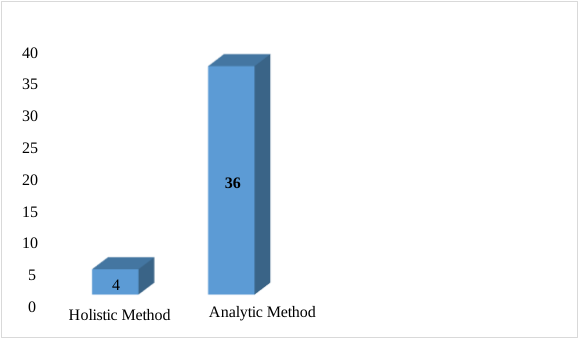
The data gathered on methods of scoring affective essay questions indicated that out of the 40 respondents, 36 used the analytic method in scoring their essay questions for affective outcomes while only 4 used the holistic method.
4. Discussions
4.1. Method and Strategies of Teaching Social Studies Lessons
The diversity of purpose and approaches as well as the broad multi-disciplinary nature of social studies call for a variety of teaching methods and strategies. With such idea in mind, teachers were asked to indicate how skilful they are in employing the methods for achieving the affective objectives.
The analysis of the data indicated that majority of the respondents occasionally use discussion method in teaching and this conflicts with previous study that discussion method is most popularly used by teachers in Ghana [21]. With the use of field trip, the findings show that majority of the respondents rarely use field trip technique of teaching. The findings contradict confirms the views of earlier studies that field trip is an important tool for Social Studies teaching and learning [4, 23]. This implies that students cannot develop good social relations such as tolerance, respect for authority, acceptance of group consensus and appreciation for authority which can be acquired through field work activities.
The analyses of the data on the use of co-operative learning technique by the respondents revealed that on the average, they occasionally used it. This implies that the students could not develop to the full the positive inter-group relations, self-esteem and positive attitude towards school and the subject being studied which cooperative learning can promote [4]. Again, majority of respondents occasionally use inquiry method in teaching social studies. This is in agreement with some researchers that absence of inquiry in the classroom means that students may not become familiar with the needs and problems in the environment [39].
The finding from the analysis of the data on the use of dramatisation technique of teaching for affective outcomes was that the respondents occasionally used it. This finding suggests that positive attitudes and values which dramatisation develops in students may not be automatically realised since repetition and reinforcement tend to make them automatic [13].
The analysis of the data on the use of role-playing technique of teaching for affective outcomes showed that majority of the respondents rarely used the role-playing technique of teaching. The rarely nature use of the role-playing technique of teaching for affective outcomes by the respondents may make the training in leadership skills, human relationship skills among others which role playing gives to students in transforming their outlook [13, 16]. The revelation from the analysis is that majority of the respondents use discussion regularly. This implies that Social Studies teaching in Ghana is dominated by the discussion method.
It was revealed by the analysis of the data on the use of simulation that the respondents rarely used the technique for affective outcomes. This implies that the attitudes and interests, which students develop by imitating other people consciously, may not be developed since they are cultivated when they become habitual [13]. With regards to resource person, majority of the respondents rarely use it as a means of teaching method.
The overall result of the analysis of the data on the extent to which the respondents used various methods and techniques of teaching for the development of the affective indicated that little attention was paid to instruction in the affective domain. This finding corroborates with a study that though affective taxonomy is more interesting and provocative and asks much more fundamental question about what our schools and their curricula are intended to do, it is less used than the cognitive taxonomy [19]. In this study, the teachers relied mostly on unplanned and incidental situations, which alone, are not satisfactory means of teaching in the affective domain [17].
4.2. Assessment of the Affective Domains
It is very important to find out from the respondents how the mode of assessment of affective domains among the students is done and the problems that they confront. The results indicate that majority of the respondents 27.5% assess their students in the affective domains three times in an academic term whilst the second large number of the respondents 22.5% do not assess their students two times in a term. The implication of this is that affective domains do not receive much attention from the respondents (teachers). The analysis of data on creation of necessary and appropriate situations for the exhibition of desired affective behaviour by students revealed that most of the sampled teachers devised techniques which allowed their students to show the desired affective behaviours but they did not often devise such situation techniques. This finding clearly suggests that the teachers did not very often teach in affective domain.
This corroborates previous study that the affective taxonomy, which is more interesting and provocative, is much less used than cognitive taxonomy [19]. The analysis of data on the construction of affective assessment instruments revealed that most of the respondents faced difficulty in constructing instruments for assessing affective outcomes and the problem they faced was how to construct the affective instruments. It can be concluded from these findings that the teachers seldom assessed their students in the affective domain and at best they assessed their students in the affective domain at the receiving level (i.e. awareness of the phenomena) since they did not have enough knowledge about the taxonomic levels of internalisation of the affective domain.
It was found from the analysis of data on scoring affective essay that most of the respondents preferred using the analytic method in scoring essay questions in order to ensure objectivity, fairness and accuracy in allocating marks. The implication of this finding is that teachers may make wrong judgment since their scoring is dependent on already designed specific expected outcomes for allocating marks as well as standardisation which the respondents rightly stated as their reasons for preferring the analytic method of scoring. However, affective essay question, like an evaluation question, has no one specific or correct answer.
5. Conclusion and Recommendation
The study concluded that Social Studies teachers hardly teach and assess directly in the affective outcome, hence the affective domain is neglected in the teaching and learning of the subject. It is recommended that The universities and other training institutions should strengthen the teaching on the use of the techniques for assessing the affective domain. In-service training courses should also be organised regularly for social studies teachers on the use of the techniques for the assessment of affective domain.
Author Contributions: Conceptualization BKA; methodology, BKA, SO, MGA, EK, and DAB
; validation, BKA, SO, MGA, EK, and DAB; formal analysis, BKA and SO.; investigation, BKA, SO, MGA, EK, and DAB; resources, BKA, SO, MGA, EK, and DAB.; data curation, BKA, SO, MGA, EK, and DAB; writing—original draft preparation, BKA, SO, MGA, EK, and DAB; writing—review and editing, BKA and SO.; visualization, BKA, SO, MGA, EK, and DAB; supervision, BKA.; project administration, BKA, SO, MGA, EK, and DAB; All authors have read and agreed to the published version of the manuscript.
Funding: “This research received no external funding”
Data Availability Statement: Data is available on request from the corresponding author.
Acknowledgments: we acknowledge the participants in this study.
Conflicts of Interest: “The authors declare no conflict of interest.” “No funders had any role in the design of the study; in the collection, analyses, or interpretation of data; in the writing of the manuscript, or in the decision to publish the results”.
References
- Melinger, H. D. (1981). (Ed.). UNESCO Handbook for the teaching of social studies. London: Billing and Sons Ltd.
- [Darling-Hammond, L. (2000). Teacher quality and student achievement. Education policy analysis archives. Retrieved from http://epaa.asu.edu/epaa/v8n[CrossRef]
- African Social and Environmental Studies Programme (1994). ASESP Social Studies: curriculum and teaching resources book for Africa. Nairobi: Author.
- Tamakloe, E. K. (1991). The nature of social studies and its curricular implications. Journal of the Institute of Education, 2(1), 41-49.
- Aggarwal, J.C. (1982). Teaching Social Studies. Delhi: Vikas
- Banks, J. A. (1990). Teaching strategies for the social studies. Inquiry, valuing and decision-making (4thed). New York: Longman.
- Adu-Yeboah, C. (2008). Transacting the social studies programme in junior high schools in the Obuasi Municipality in Ashanti Region of Ghana. Unpublished Master’s thesis. University of Cape Coast. Cape Coast.
- Booth, R. Dixon-Brown, M., & Kohut, G. (2003). Shared teaching models for business communication in a research environment. Business communication quarterly, 66(3), 23-38.[CrossRef]
- Bess, J. (2000). Integrating autonomous professionals through team- Teaching. In J. L. Bass, (Ed) Teaching alone, teaching together: Transforming the structure of teams for teaching, (p.120-122). San Francisco: Jossey-Bass.
- Goetz, K. (2000). Perspective on team-teaching, Egallery. Retrieved from http://www.acs.uca/gary.ca/egallery/goetz.html
- Davis, J. (1997). Interdisciplinary course and team-teaching. New arrangement for learning. CA: Phoenix.
- George, M., & Davis-Willey, P. (2000). Team teaching a graduate course. College Teaching, 48(2), 75-84.[CrossRef]
- Clark, L. H. (1973). Teaching social studies in elementary school: A handbook. New York: Teachers College Press.
- Shaftel, F. R., & Shaftel, G. (1982). Role playing in curriculum (2nd ed). Englewood Cliffs, NJ: Prentice Hall.
- Jacob, H., Honey, R., & Jordan, C. (2002). Getting the most out of sequential teaching. Paper presented at the 11th annual teaching and learning forum. Edith Cowan University. Australia.
- Martorella, P. (2001). Teaching social studies in middle and secondary schools (3rded). Englewood, NJ: Prentice-Hall.
- Jarolimek, J. (1971). Social studies: An overview. In H. Melinger & O. Davis (Ed). The social studies eighteen-year book of the NCSSE. Chicago: Chicago Press.
- Kirman, A. (1992) Whom or What Does the Representative Individual Represent. Journal of Economic Perspectives, 6, 117-136.[CrossRef]
- Brookfield, S.D. (1991). Discussion. In W.D. Galbraith (Ed) Adult teaching methods, (p. 23). Florida: Krieger Publishers.
- Arends, R. I. (1998). Learning to teach (2nded.). New York: McGraw Hill
- Kankam, B., Bordoh, A., Eshun, I., Bassaw, T. K., & Andoh-Mensah. C. (2014). Social Studies teachers’ content knowledge impact on students in the Senior High Schools in Ghana. Open Science Journal of Education, 2 (6), 73-82.
- Peterson, B. (1999). Tracking of the project: Rethinking schools. New York: Halt Rinehart and Winston Publishing House.
- Hayford (1992) Hayford, B. K. (1992). Introduction to social studies education in Ghana. Accra: Sedco.
- Anderson, D. B., & Pisciteli, B. (2000). Parental recollection of childhood museum visits. Museum National, 10 (4), 26-27.
- Eshun, I., Bordoh, A., Bassaw, T. K., & Mensah, M. F. (2014). Evaluation of social studies students’ learning using formative assessment in selected Colleges of Education in Ghana. British Journal of Education, 2(1), 39-48.
- Kankam, B., Bordoh, A., Eshun, I., Bassaw, T. K., & Korang. F. Y. (2014). An investigation into authentic assessment practices of Social Studies teachers in the Senior High Schools (SHSs) in Ghana. American Journal of Social Sciences, 2 (6), 166-172.
- Bordoh, A., Brew, E., Otoo, K. A., Owusu-Ansah, P., & Yaw, O, E (2021). Use of Teacher’s Profile Dimensions to Assess Social Studies Student’s Learning Outcomes at The Senior High Schools in Ghana. Innovare Journal of Education, 9(4),14-21.
- Bloom, B. S., Hastings, T., & Madaus, G. (1971). Handbook on formative and summative evaluation of student learning. NY: McGraw-Hill Inc.
- Alberta Assessment Consortium [AAC], (2005). Refocus: looking at assessment for learning (2nded). Edmanton: AB.
- Eshun, I., & Mensah, M. F. (2013a). Investigation of pedagogical content knowledge of graduate social studies teachers in Senior High Schools in the Western Region of Ghana, Journal of Education and Practice, 4(4), 176-184.
- Tamakloe, E. K. (2008). Issues in Social Studies Education (2nd ed.). Accra: Ghana University Press. [32] Paulson, F.L., Paulson, P.R., & Meyer, C. A. (1991). What makes a portfolio a portfolio? Educational leadership”, 25(5), 66-63.
- (Venn, 2000) Venn, J. J. (2000). Assessing students with special needs (2nd ed). Upper Saddle River, NJ: Merril.
- Mueller, J. (2012). Portfolio (Authentic assessment toolbox). Retrieved from jfmueller@noctrl.edu.
- (Morene, 1951) Moreno, J. L. (1951). Sociometry, experimental method and the science of society: An approach to a new political orientation. New York: Beacon House, Beacon.
- Ministry of Education (2010). Social Studies syllabus for senior high school. Accra: CRDD.
- Ghansah, V, A. (2009). Teachers’ attitude towards the teaching and assessment of affective outcomes in social studies in selected junior high schools in cape coast metropolis. Unpublished Thesis. University of Cape Coast.
- Bordoh, A., Eshun, I., Kwarteng, P., Osman, S., Brew, E., &Bakar, A. (2018). Professional qualification of teachers in teaching and learning of Social Studies concepts in the Senior High Schools in Ghana. American Journal of Social Sciences, 6(2), 25-28.
- Bordoh, A., Eshun, I., Brew, E., Osman, S., Kofie, S., & Kwarteng, P. (2019). Evaluation of Attitudes and Factors Toward Practicing of Concepts in Social Studies Curriculum in Senior High Schools in Ghana. International Journal of Multidisciplinary Research and Studies, 1(3), 34-47.
- Eshun, I., Zuure., N. D., Brew, E., & Bordoh, A. (2019). Implication of Teacher’s Knowledge of Social Studies Profile Dimensions in Teaching and Learning in Senior High Schools. Journal of Social Sciences and Humanities, 5 (3), 209-221.
- Nyantakyi, F., Bordoh, A., Anim, C., & Brew, E. (2020). Social Studies Curriculum: Teachers’ Conception and Efficacy Beliefs in Junior High Schools in Ghana. Journal of Social Sciences and Humanities, 6 (4), 297-308.