
Abstract
The national museum of a country, as a cultural symbol of the nation, plays an important role in cultural communication at home and abroad. This study explores the online brand identity construction of two national museums—the British Museum and the National Museum of China—to inform cultural brands of the discursive strategies to distinguish themselves from others and communicate with their audiences effectively. Informed by multimodal critical discourse analysis, this paper analyzes the websites of the two museums and their social media posts, depicts their brand identity prisms, and evaluates the effectiveness of their online communication. The results show that both museums use multimodal and hypertextual resources to create unique and congruent brand images in website design and social media interaction with their target audiences, fulfilling the institutional functions of museums as the symbol of national culture or world civilization. They express differential personalities and cultural values to reinforce their brand identities in different sociocultural and political contexts. The findings may provide insight into the use of multimodality in online communication for cultural institutions to enhance their brand images and promote cultural exchanges.
1. Introduction
There are many renowned cultural brands in the world which have significant influence in the field of global cultural communication. The national museum of a country is usually regarded as the symbol of national culture and has important brand value in the culture industry. A powerful brand image is essential for a museum to fulfill its function as a cultural institution to present a nation’s cultural heritage to the world. Brand identity construction has emerged as a primary concern for museums to enhance their reputation and expand their influence.
The brand identity of an organization is embodied in its visual, verbal and behavioral expressions and can be understood as the intentional construction of the brand image through semiotic language to influence the public’s perception of the organization [1]. With the fast development of internet technology and the extensive use of social media in the past decades, institutions have already started constructing their brand identities in online communities as part of their digital transformation. However, much of the existing literature about identity construction explores corporate branding on websites or social media platforms from the perspectives of business management and marketing [2, 3]. The brand identity of cultural institutions has not attracted researchers’ attention and even fewer studies have approached this issue from the perspective of discursive strategies. Against this backdrop, it is worth investigating museums’ brand identity construction strategies with a focus on the interactive multimodal discourse to provide cultural brands with insights on how to utilize multimodality to promote distinctive brand value and gain wide popularity.
This study adopts a critical approach to multimodal discourse analysis to examine the use of semiotic resources by two world-famous national museums in their website design and social media communication to construct their brand identities, focusing specifically on how the strategic integration of textual and visual elements—including texts, pictures, layout, emojis, hashtags, hyperlinks, etc.—helps to shape their distinctive brand images. It is aimed at revealing the underlying power dynamics and ideological assumptions embedded in the brands’ multimodal discourses on the Internet, in order to inform cultural institutions of effective online communication strategies.
2. Literature Review
Discourse analysis offers an approach to examining the process of identity construction because language plays an essential role in expressing and representing oneself. Critical Discourse Analysis (CDA), as an interdisciplinary approach, pursues in-depth investigation into how power is negotiated through language and reveals how social relations are established in contemporary societies [4, 5, 6]. It often adopts Systemic Functional Grammar (SFG) [7] as a tool for linguistic and textual analysis to provide a comprehensive interpretation of the functions of language used in different social contexts. CDA is therefore useful in understanding how the underlying meaning is conveyed and how the interpersonal relationship is built in the process of brand identity construction.
Previous studies of brand identity applying the CDA approach have investigated the power relations and cultural values revealed on organizations’ websites. For example, Chalupnik and Brookes analyzed the websites of 187 health service organizations within the CDA framework, exploring how they represent themselves as accountable, collaborative, responsive and self-determining organizations, and argued that these websites function as forms of “prestige advertising”, reflecting the increasingly marketized nature of contemporary UK healthcare [8].
Recent discourse studies have already paid attention to the use of social media as an indispensable platform for brand identity communication. For instance, using the theory of social interaction, Ruelle and Peverelli explored a highly interactive social media discourse by analyzing a Chinese NGO’s discursive strategies to build organizational identity within WeChat groups [9]. Mazzoli et al. adopted a content analysis approach to investigate the identity construction of luxury brands on Twitter, and found that the core concept of luxury was interactively formed by the expressed attributes of luxury products embodied in the tweets [10]. However, these studies are constrained in the analysis of verbal language only, without attending to the predominant visual features of social media communication.
Multimodality refers to various semiotic modes that are employed and combined to create meanings, which can be broken down into five categories: linguistic, visual, aural, gestural, and spatial [11]. The use of visuals, such as emoticons, pictures, videos, etc., in social media communication is indicative of a visual turn in identity construction on digital media [12]. To supplement SFG-informed textual analysis, Kress and van Leeuwen proposed Visual Grammar [13] as a theoretical framework for Multimodal Discourse Analysis (MDA), which can be used to describe the visual features of brand images.
Studies of multimodal brand identity construction have examined the functions and effects of the combination of different modalities on digital media. For example, Mafofo and Banda investigated the multimodal discourses on some South African universities’ websites, exploring how they used visual and verbal semiotics to redesign their identities on their homepages to appeal to diverse national and international clients, and how the multi-semiotic choices work together on the homepages to give the universities differentiated, competitive, powerful and attractive brands [14]. It is concluded that the homepages blended cultural semiotic artefacts, historical, global and transformational discourses, and architectural landscapes to construct different brand identities that, in turn, rebrand the universities from edifices of apartheid education to equal opportunity institutions [14].
Multimodal Critical Discourse Analysis (MCDA) adopts a critical view to uncover the public’s attitude and the underlying meaning behind the texts, pictures and videos [15]. For example, Fernández-Vallejo integrated the methods of digital corporate communication and MDA to analyze the hotel chains’ multimodal digital discursive practice on their websites, focusing on the contribution of images to sustainability meanings conveyed by the websites to different stakeholders [16]. The results show that the hotel chains prefer photographs of people in order to emphasize the human dimension and make their image more humanized [16]. As to corporate identity construction on social media, a recent study by Jaworska examined the multimodal genre of corporate image repair videos disseminated on YouTube, and analyzed its generic and semiotic features from a critical perspective, focusing on meanings, values and beliefs that were interactively produced [17], which offers insights into the growing multimodal dynamism in business settings.
Although recent research interest has been expressed in online branding, very few studies have incorporated theories and tools of CDA, MDA and brand identity construction to investigate cultural brands’ discursive strategies of identity construction in their online communication. Taking two world-famous national museums as the research objects, this study addresses the following research questions:
- RQ 1: What are the multimodal discourse features of the two museums’ websites and social media posts?
- RQ 2: What unique identities are constructed by the two museums in their online communication?
- RQ 3: What are the social and cultural implications of the two museums’ online brand identity construction?
3. Methods
3.1. Theoretical framework
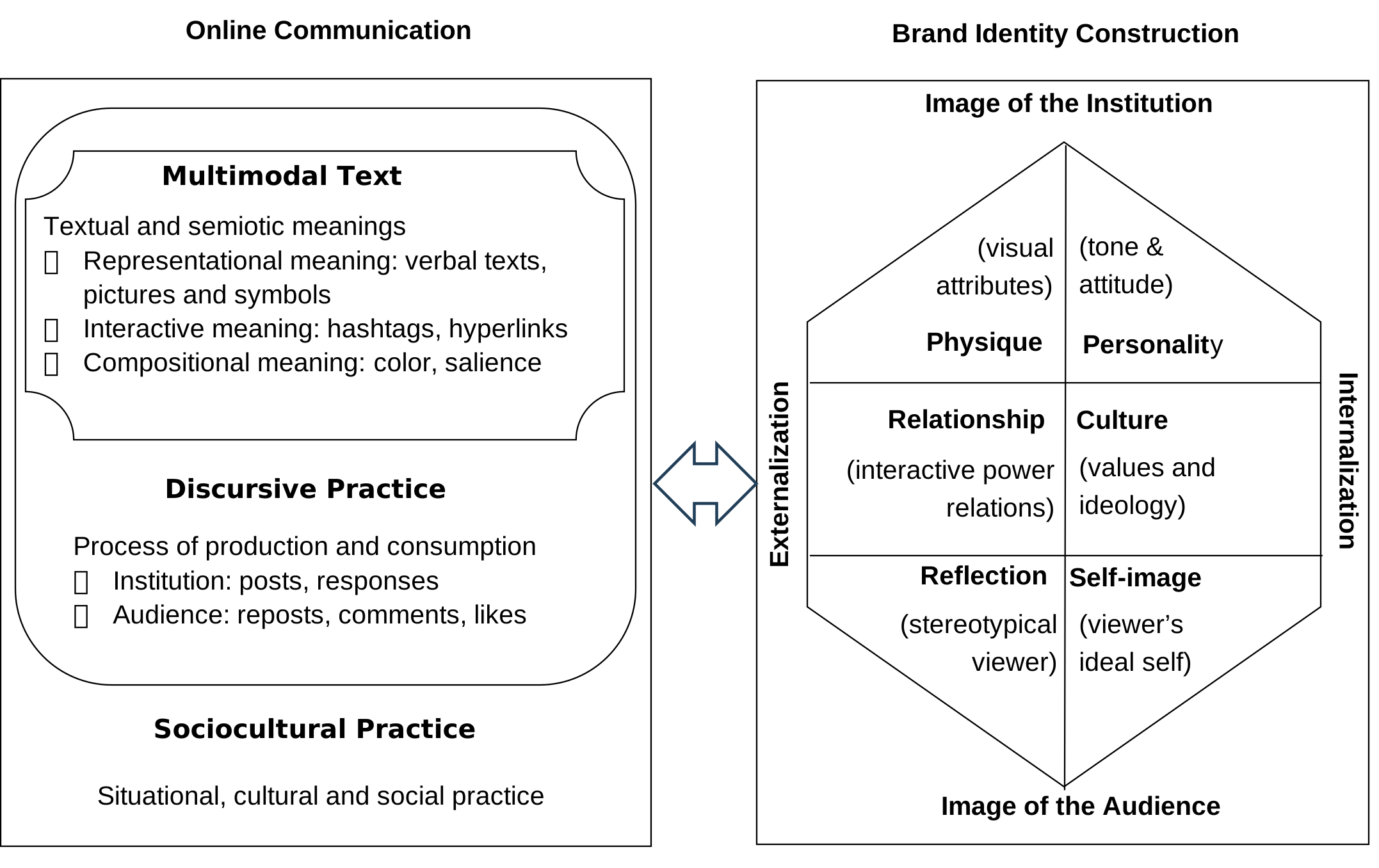
This study adopts Fairclough’s three-dimensional CDA framework [18] to critically analyze the texts, discursive practices, and social practices of the two museums’ digital communication on their websites and social media platforms, including the language features, production and consumption processes and socio-cultural contexts of their online discourse. The multimodal textual analysis applies the systemic functional approach as it views verbal and visual language as social semiotic and explains meaning creation within a social system [7, 19]. The SFG-based Visual Grammar is used to analyze the representational, interactive and compositional meanings of multimodal resources [13]. The representational meaning refers to the way in which an image represents objects, events, or concepts, and it is either narrative or conceptual, depending on whether the participants form any vectors that tell a story; the interactive meaning is concerned with how the use of visual elements creates a sense of connection between the viewer and the represented world; and the compositional meaning refers to the way in which an image is structured and composed [13].
Based on the multimodal analysis of the two museums’ websites and social media posts, as well as their discursive and social practices, their identity construction strategies will be further analyzed within Kapferer’s framework of brand identity prism which includes six facets of identity: physique, personality, culture, relationship, reflection and self-image [20]. Brand physique refers to the visual attributes of a brand, such as the logo, the color, and the design; brand personality is reflected in its tone and attitude when communicating with the audience. Cultural values, as an ideology behind the brand, function as the cohesion within the brand community, while the external relationship refers to the interactive power relations between the institution and its audience. The image of the audience includes reflection which means the stereotypical target audience associated with the brand, and self-image which means how the audience perceive their ideal selves [20]. The brand identity prism can help institutions to correctly position their brands, better understand their audience, and thus gain greater recognition from the public.
This study integrates the theoretical frameworks of CDA [18], Visual Grammar [13] and brand identity prism [20] (Figure 1) to conduct an in-depth analysis of the two museums’ online identity construction, examining their multimodal discourse features as well as their discursive and social practices.
3.2. Data collection
This study selects the British Museum (BM) and the National Museum of China (NMC) as the research objects which represent the western and eastern cultural symbols respectively. BM is one of the world’s oldest and largest comprehensive museums, with a vast collection of artefacts from various civilizations. NMC is often regarded as BM’s counterpart in China in terms of scale and importance. Both are top-tier museums in the world and house extensive collections with profound historical and cultural connotations. However, there are also significant differences between them in many aspects and their unique brand identities have differentiated themselves from other cultural institutions.
The content and layout of the two museums’ websites are examined to describe their multimodal features, and Twitter (X) and Weibo are chosen as the sites for social media data collection due to their popularity and influence among users from western countries and China. The two museums’ homepages and social media messages with both verbal texts and semiotic elements are analyzed to reveal their different positionings and social functions. The numbers of followers, likes, comments and reposts, and the use of emojis, hashtags and hyperlinks are compared to interpret their discursive practices.
3.3. Data analysis
With the integrated theoretical framework (Figure 1), this study employs a qualitative method in the multimodal discourse analysis of the two museums’ online brand identity construction. Kress and van Leeuwen’s Visual Grammar [13] is used to analyze the multimodal meaning construction on the two museums’ websites and in their typical social media posts. How the institutions and their audiences communicate online is further analyzed to interpret their social media discursive practice. The two museums’ identity construction strategies are then analyzed based on Kapferer’s brand identity prism [20], using the results from the multimodal analysis as textual and semiotic evidences to describe their brand images, based on which the ideological meaning and power relations in their online communication are discussed in the sociocultural contexts from the CDA perspective [18].
4. Results and discussion
4.1. Multimodal features of the websites
The multimodal resources on a webpage include texts, images, videos, carousels, hyperlinks, color, layout and other visual elements, which have social semiotic functions of meaning making. The homepage of BM’s website (https://www.britishmuseum.org/) and the homepage of NMC’s website (https://www.britishmuseum.org/) are analyzed under the multimodal framework of Visual Grammar, which includes three dimensions: representational meaning, interactive meaning, and compositional meaning [13].
Table 1 illustrates the multimodal resources used by the two museums to make representational meaning which includes narrative representation and conceptual representation. The narrative representation refers to the description of the content of the website, including the action process, reactional process and speech/mental processes, and reflecting the vector of action and transactional relation. The conceptual representation is concerned with classification, analytical structure and symbolic meaning.
It can be seen from Table 1 that both museums use moving images (videos or carousels) to display core exhibits or special exhibitions, and construct the “cultural treasure” narrative through photos of cultural relics (e.g. BM’s Rosetta stone tablet from Ancient Egypt and NMC’s Houmuwu square cauldron from China’s Shang Dynasty). The gaze of visitors forms a vector of action, suggesting an interactive process of learning experience. Viewers can use the mouse (such as zooming in) to form a user-exhibit interaction in the virtual tours or 3D exhibit displays. The navigation bar classification (exhibitions, collection, visit, learn, etc.) reflects the educational function of museums. The symbolic attributes of cultural relics strengthen the institutional significance of museums.
Differences can be found in the narrative focus, symbolic meaning and classification logic of the websites. BM focuses on global multiple civilizations (Egyptian, Greek, Chinese, etc.), while NMC emphasizes the Chinese civilization (Bronze Age, feudal dynasties, revolutionary history, etc.). BM bills itself as the Encyclopedia of World Culture, whereas NMC is usually positioned as China’s National Cultural Palace. BM classified its collections by geographical regions (Africa, Asia, Europe, etc.), while the Chinese cultural relics in NMC are classified by historical periods (ancient China and modern times) with some posters (such as the “Ancient China Exhibition”) presenting a time-sensitive narrative, suggesting a historical context through the arrangements of exhibitions. Therefore, BM features a global collection of colonial history, representing the dialogue between world civilizations, whereas NMC highlights a diachronic storytelling and serves the construction of national identity.
The interactive meaning of a website involves the relationship between the image and the viewer, showing how images guide audience participation through contact, social distance, perspective and modality. Table 2 summarizes the two museums’ multimodal resources used to convey interactive meaning on their websites.
The multimodal resources of interactive meaning used by the two museums as shown in Table 2 have some obvious similarities. The main photos of cultural relics on both homepages are “offer” images taken at the eye-level, which suggests an equal relationship—a dialogue between the audience and the relics—and emphasizes the knowledge dissemination function of museums. “Demand” buttons (such as “Book tickets” or “Book visits”) are used to increase audience engagement, and new technology involves more viewer interaction by virtual tours. The social media icons or QR codes invite viewers to click and direct them to other platforms. Thus, the online interaction is further expanded. The core exhibits are mostly photographed with medium and long shots to maintain the solemnity of the museums. The photos of both museum buildings are taken from the low angle to highlight the impressive architecture and the authority of the institutions.
The different color patterns on the two websites reflect the two nations’ personality traits. The BM homepage presents main images against black color to form strong contrast, but uses white and greyish colors with low saturation as the background, reflecting the British elegance. On the contrary, NMC foregrounds the red, gold and white colors against a crimson background with high saturation, which is in line with Chinese traditional aesthetics. As to the interactive guidance, BM focuses on “exploration” (such as virtual tour and folding menu) with knowledge sharing embedded in exploratory interaction, but NMC emphasizes “participation” (such as educational activities in cooperation with middle schools), strengthening the government’s advocacy of state-led cultural participation.
The compositional meaning focuses on the layout of visual elements, including three dimensions: information value, salience, and framing. The results of multimodal analysis of the compositional meaning construction on the two museums’ websites are shown in Table 3.
Table 3 shows some similarities in the compositional meaning of the two museums’ websites. Both museums adopt the hierarchical structure to present information value, i.e. the three-tier structure of top navigation (brand identity), central core content and bottom supplementary information. The size and color of the main images, the text titles and the interactive buttons are contrasted to highlight the key points. Visual elements have a dominant presence on both homepages compared with verbal texts, because pictures present the concrete images of cultural relics to the audience and make them directly perceive the world culture or national culture through the sense of sight.
BM’s logo in the upper left corner of its website is the art font of the museums’ English name; NMC’s name in both Chinese and English and the image of the museum building are also put on the top left part of the homepage. BM uses dynamic folding menu (with more content wrapped in) to direct viewers to multi-layered webpages, but NMC uses fixed navigation bar and has a high information density on the homepage. In terms of visual frame, BM uses weak segmentation and soft transition between pictures and texts on the page (mainly left blank), reflecting openness and inclusiveness, while NMC uses strong segmentation with clear separation between columns, such as red lines and section titles printed in bold, reflecting order and authority.
To sum up, both museums construct differential brand images on their websites by means of multimodal resources to fulfil the functions of social education and cultural communication. Both homepages use carousel banners, photos and videos (representational meaning), guided interaction design (interactive meaning) and clear hierarchical layout (compositional meaning) to present cultural relics to viewers, with navigation functioning as classification. The solemn visual style (high modality, medium distance) indicates authority, while interactive buttons promote public participation. The similarities of the multimodal features in the two websites strengthen the positioning of the museums as national cultural institutions, but the brand images of the two museums constructed on their websites show distinct differences. BM takes a global perspective, and uses images of artefacts from other countries to reinforce the symbolic significance of global cultural heritage, emphasizing multiple civilizations of the world, while NMC features national narrative and cultural identity, displays cultural relics passed down from ancient China to symbolize the continuity and uniqueness of Chinese national culture, presenting a linear history of the country. The visual design of NMC’s website integrates traditional elements (red and gold tone) with modern interaction (online exhibition), reflecting the policy orientation of “revitalization of cultural relics”. BM encourages the viewers to have exploratory interaction, but NMC calls for national mobilization and public participation.
4.2. Multimodal features of the social media posts
The two museums’ personality traits spotted in their websites are further enhanced in their social media posts, which are collected for detailed analysis to illustrate the multimodal meaning making. Figure 2 illustrates the two museums’ representative posts on their porcelain collections.
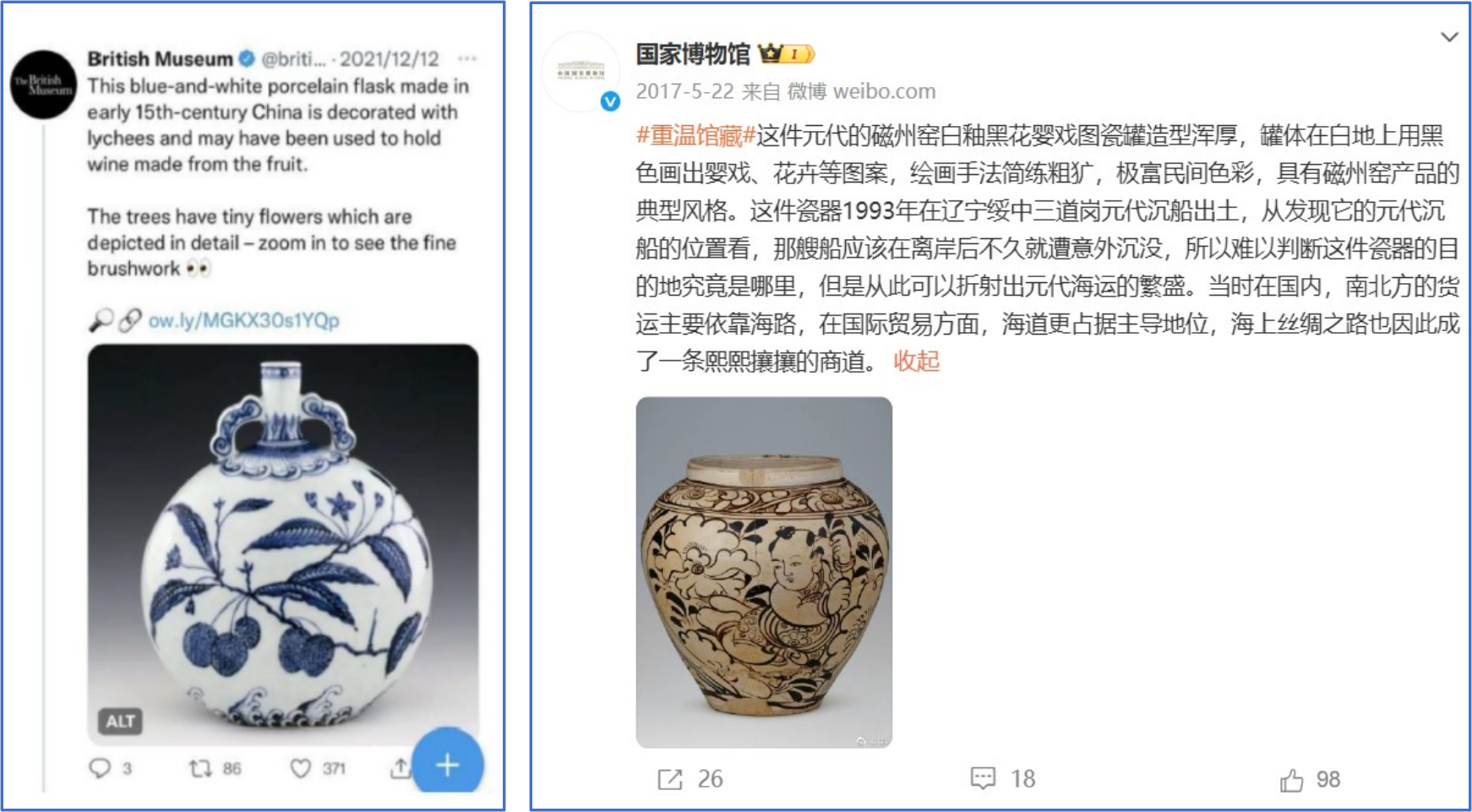
BM’s tweet in Figure 2 (left) introduces a porcelain flask with a photo of the collection, describes its color (blue-and-white), decoration (patterns of lychees, flowers and trees) and function (to hold wine made from the fruit), and also mentions when and where it was made (in early 15th-century China). The representational meaning of this tweet is conceptual, presenting the object to the viewer as a representative symbol of Chinese culture. The picture is taken at an eye-level angle, establishing a sense of equality with the viewers. The interactive meaning is both “offer” (showing the collection to viewers) and “demand” (inviting the viewers’ action). The imperative sentence “zoom in to see the fine brushwork”, the emojis “look” ( ) and “search” (
 ), and the hyperlink “ow.ly/MGKX30s1YQp” are used to give the viewers directions to further explore the details and other information about the collection. The dark background of the picture makes the image of the object salient, but the text does not explain much about the historical and cultural values of the collection.
NMC’s Weibo post in Figure 2 (right) puts more emphasis on the text, which is much longer than that of BM’s tweet. The text informs the viewers of the origin of the porcelain pot (Cizhou Kiln) and the time when it was made (Yuan Dynasty), describes the appearance of the pot (black patterns of a playful baby and flowers on the white glaze), and explains the artistic style of this artwork (simple and bold painting technique). What is impressive is the information about the archaeological excavation: “This porcelain was unearthed in 1993 from a shipwreck of the Yuan Dynasty under the Sandaogang sea waters in Suizhong, Liaoning Province.” The historical significance of this collection is also discussed: “It can reflect the prosperity of shipping in the Yuan Dynasty, when domestic freight mainly depended on the sea route which was also dominant in international trade, and the maritime Silk Road had become a bustling trade route.” The representational meaning is both narrative and conceptual as the textual message tells the story of the artefact, and the picture presents the object to the viewers. The photo of the pot is also taken at the eye-level angle, and the medium shot puts the image at a social distance. The hashtag “#review collections#” (#重温馆藏# in Chinese) directs the viewers to more concentrated discussions on the values of the museum’s collections, which is the expansion of interaction between the museum and the viewers. The yellowish color of the pot indicates a sense of ancient times, and the informative text highlights the educational function of the museum.
Ancient Chinese paintings are cultural treasures of high value in the history of art. Figure 3 compares BM and NMC’s relevant social media posts on Ancient Chinese painting works.
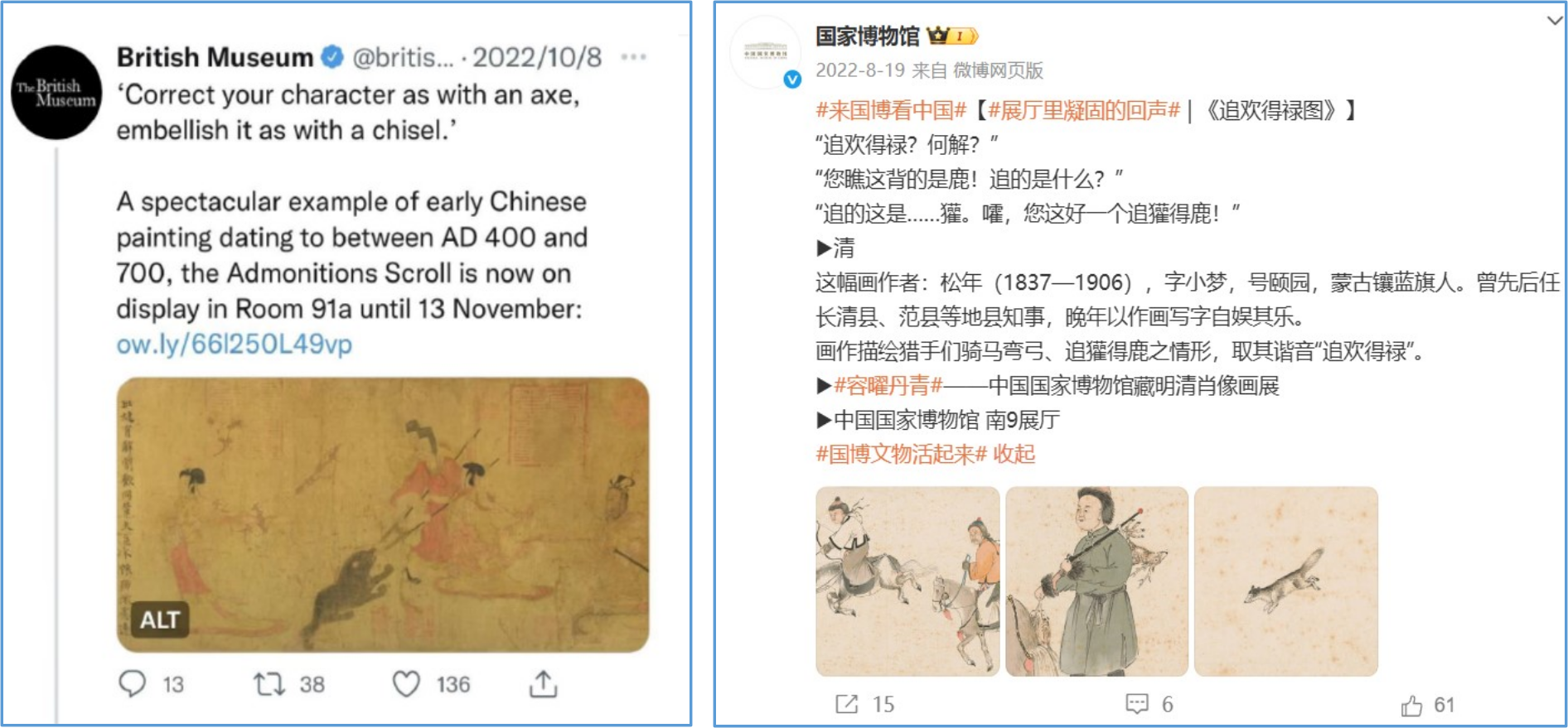
From BM’s tweet in Figure 3 (left), besides the picture of part of the painting, the viewers only learn about the title of the work, the time when it was drawn, and the notice about when and where it is on display. The text at the beginning of the tweet “Correct your character as with an axe, embellish it as with a chisel” seems to explain the content of the painting, but it has nothing to do with the story depicted in the painting or the historical background of the artwork, which may mislead the viewers about the painter’s purpose and the artistic value of the exhibit. This famous Chinese painting “The Admonitions Scroll” was lost during the Eight-Nation Alliance’s invasion of China, but BM’s tweet omits the explanation of how it was acquired, only providing a hyperlink “ow.ly/661250L49vp” for viewers to further explore by themselves.
NMC’s Weibo post on the right (Figure 3) contains a much longer text, explaining the title and the meaning of the painting, introducing the painter and his life, informing the viewers of the exhibition theme and the exhibition hall, and including four hashtags which direct the viewers to more discussions on relevant collections. It can be learned from this message that the painter Song Nian lived in the Qing Dynasty, when hunting was a popular activity. The title of the painting “追欢得禄” (meaning “Chasing Joy and Getting Money”) contains two homophones. The Chinese character “欢” (pronounced as “huān”, meaning “joy”) has the same pronunciation as “獾” (meaning “badger”, an animal usually taken as the game of a hunt). Another character “禄” (pronounced as “lù”, meaning “salary, money”) is homophonous with “鹿” (meaning “deer”, an animal also as the prey of a hunt). In the hunting scene depicted in the painting, the hunters on horseback were chasing a badger and shooting an arrow at the prey, and their attendant was carrying on his back a deer they had just captured. Therefore, the meaning of the painting “chasing badgers and getting deer” has the same pronunciation of “chasing joy and getting money” which is used as the title (a pun). Among the four hashtags mentioned in the post, i.e. #come to NMC to see China#, #frozen echoes in the exhibition hall#, #glorious paintings of portraits#, and #cultural relics in NMC come alive#, the last one is particularly interesting, which indicates a shift of NMC’s messaging strategy to a livelier style. The humorous dialogue at the beginning of the post also reflects this tendency:
- “Chasing Joy and Getting Money? What does it mean?”
- “Just look at what the man is carrying on his back, a deer! And what are they chasing?”
- “What they are chasing is … a badger. Ah! What a homophone! Chasing badgers and getting deer!”
This lively and interesting conversation seems to mimic an imagined dialogue between two viewers in front of the exhibit, which not only vividly explains the meaning of the title, but also brings the static ancient painting back to life. This life-like online communication with the viewers reflects NMC’s practice of “making cultural relics come alive”—a state policy which is also a special column on the homepage of NMC’s website.
The comparative multimodal analysis of the two museums’ social media communication further strengthens the two museums’ brand identity, with BM focusing on world civilizations beyond national boundaries and NMC emphasizing Chinese national cultural inheritance. Relatively speaking, NMC provides more detailed information about the cultural relics, including the origin, the historical background, the artistic value, the cultural significance, etc. of each collection. The length of texts also reflects the significance attributed to the relics by the museum. NMC therefore puts a special emphasis on the museum’s function of social education, and at the same time promotes the country’s cultural communication strategy of “revitalization of cultural heritage”.
4.3. Functions of emojis and hashtags used in social media posts
The use of emojis in social media posts can help institutions to enhance their communication effects through visualizing emotions and boosting engagement. BM prefers to use emojis in its tweets as part of its visual image construction. The functions of emojis in BM’s tweets with typical examples are summarized in Table 4.
It can be seen from Table 4 that BM’s use of emojis in its tweets makes the messages highly interactive. Emojis are often used by BM to arouse the viewers’ interest, e.g. asking a question at the beginning of a tweet with a thinking face emoji ( ) to provoke thought. The main message in a tweet can be highlighted by adding emojis at the beginning and/or at the end of a sentence, which can be more conspicuous than the words only, and can thus leave the viewers with a distinct impression. BM sometimes uses imperative sentences together with instructional emojis, such as “look” (
 ) or “point” (
 ), to encourage viewers’ further exploration and engagement. On special occasions, like birthday or New Year, BM usually uses emojis, such as “fireworks” (
 ) to create a happy atmosphere and resonate with the viewers. Emojis can also be used to express feelings, such as “love” embodied by the heart emoji (
 ). By giving the viewers a strong visual impact, emojis can help to make a tweet more memorable and effective in conveying the intended message [21].
Hashtags are used to categorize similar content posted by social media users who are concerned with the same topics. Both museums use hashtags in their social media posts to increase content exposure and engage the viewers in discussions on particular themes. Compared with BM, NMC employs a larger number of hashtags in its Weibo posts, but seldom uses emojis. Functions of NMC’s hashtags in its posts are illustrated in Table 5.
Table 5 shows different kinds of hashtags used by NMC with a variety of functions. Basically, hashtags are employed to issue information about regular exhibitions, specialized exhibitions and online exhibitions. Around important exhibits or collections, popular topics in the form of hashtags can attract viewers’ participation in online discussions. In response to the country’s policy to revitalize cultural relics, NMC initiates a series of online discussions by formulating interesting hashtags and using anthropomorphism to bring ancient artefacts to life. For example, the cultural relics are personified as humans who have waken up and can talk about their own stories. One of national museums’ major functions is to disseminate cultural knowledge to the citizens. NMC offers different types of lectures or courses, inviting experts to give free lessons to the public, which fulfils its social educational function. During festivals, NMC usually uses relevant hashtags to trigger discussions about Chinese traditions. Another function of hashtags is to highlight international cultural exchanges when special exhibitions are being held in collaboration between NMC and foreign museums. For example, the hashtag #diversification of beauty# invites viewers to comment on a cooperative project jointly organized by NMC and the National Archaeological Museum in Greece, displaying artefacts which reflect ancient Greek art and life. Hashtags used in social media posts play an important role in raising public awareness of an institution, enhancing its credibility, stressing its unique brand image, and building communities around specific topics [22]. More comments, likes, and shares can be generated among a wider audience who are connected by hashtags.
To sum up, BM’s use of emojis can help the museum enhance its visual image and brand personality. The expressive characteristics of emojis are convenient for quickly conveying emotions, simplifying complex information (e.g. using the Earth icon “ ” to represent “global culture”), and conforming to the fragmented reading habit. BM has more global visitors and international online viewers, so the interlinguality of emojis makes the social media communication less text-dependent and more suitable for international audiences. The easiness and friendliness of emojis are in line with the “personalized” and “interesting” communication style of Western social media. In contrast, NMC’s use of hashtags is conducive to information classification, which is easy to aggregate content and useful for systematic publicity. For example, the hashtag #Chinese stories in the cultural relics# gathers NMC’s posts and the viewers’ comments on NMC’s collections, and the stories related to these collections are also shared among the netizens. The labeled themes are thus reinforced as the institution’s official narrative, which is in line with the national museum’s demand for content control. Hashtags also provide guided interaction, encourage the viewers to participate in discussions, which forms the unique “topic culture” of Chinese social media.
The differences in BM and NMC’s preferences for posting style on social media are due to the two national museums’ positionings and communication strategies. Twitter (X) users in Europe and the United States favor relaxed and concise expressions, so BM’s priority on friendliness and international influence caters for the platform users’ personal habits. Emojis, as a universal linguistic symbol, can help cross the language barrier and improve the interaction rate. Western museums usually tend to play down the official color and narrow the distance with the public through interesting content, short texts, visual images and interactive links, which is a typical cultural image BM wants to establish. However, NMC tries to achieve authoritative and systematic communication on social media with its audience who are mainly domestic users in China. Some of the labels of hashtags are directly related to the country’s policy orientation (e.g. # Chinese civilization exploration#) and thus help to strengthen the official narrative of cultural confidence. The mechanism of hot search list of Chinese social media (Weibo, WeChat and other platforms) makes hashtags become an entry point to Internet traffic, which promotes the platform ecology. NMC’s vigorous and thematic content adapts to the Chinese collective communication mode, which is different from the western social media’s individual orientation. In the west where social media is seen as a dialogue tool, emojis enhance human communication and weaken the sense of institutional authority, but in China where social media is usually regarded as a site for official publicity by institutions run by the state, hashtags help to increase the volume of multiple voices which converge on the platform to form the “main melody”. At the same time, different platform algorithms, e.g. Twitter (X)’s recommendation mechanism vs. Weibo’s hot search list, also force institutions to adopt different strategies.
4.4. Communication effectiveness of the online interaction
Communication effectiveness can be analyzed through the major key performance indicators of the social media accounts’ engagement, including the average numbers of likes, comments and reposts, and the ratios [23]. The Comment Like Ratio is used to see what content triggers more discussions, which fosters a sense of participation and community, and the Repost Like Ratio indicates the quality and recognition of the content and reflects the reach and influence of a post. Based on these indicators, the communication effectiveness of the two museums’ social media posts can be compared with the statistics of online interaction observed from their social media accounts, i.e. @britishmuseum (https://twitter.com/britishmuseum) and @中国国家博物馆(https://weibo.com/u/1865129365), as shown in Table 6.
The comparison between BM and NMC’s followers and the numbers of likes, comments and reposts of their posts on social media, as illustrated in Table 6, indicates that both museums’ accounts are highly active, but BM’s tweets are characteristic of high frequency update, strong interaction and international engagement, achieving greater effectiveness in online communication than NMC’s Weibo posts. Although NMC has more followers due to the large population of China, its Repost Like Ratio and Comment Like Ratio are lower than those of BM which is better at triggering retweets and eliciting comments from its followers. In other words, BM has developed a greater brand awareness due to its wider reach. Some of its controversial tweets, i.e. those related to its colonial history and the attribution of cultural relics, may elicit more discussions with heated arguments erupting in the comments section. In contrast, NMC shows obvious official authority and educational attributes in its Weibo posts. Compared with BM’s audience on Twitter (X), Weibo users take less initiative to leave comments or repost NMC’s messages. NMC’s serious information release, simple interactive design, little appeal to young people, lack of multilingual content and limited international influence may result in less viewer participation. The higher counts of likes, comments and reposts often appear during important events, and students’ group visits organized by schools may also improve the interactivity to a certain extent.
4.5. Differential brand identities constructed in online communication
A brand identity with differential features can help to create a consistent and memorable image that sets a brand apart from other brands of the same kind, leading to increased brand loyalty by maintaining a strong emotional connection in the community [24]. Based on Kapferer’s brand identity prism [20], the core characteristics of the two museums’ online identities as cultural brands can be summarized in Table 7, which depicts the images of both institutions and audiences as well as their internal cultures and external relationships.
The identity of each brand is co-constructed by the physique and personality of the institution displayed on the website and social media in relation to the target audience’s image which consists of general reflection and self-perception, as illustrated in Table 7. The use of black and white colors by both brands in their logos constructs a solemn visual image, which is a universal feature of museum as a cultural institution. But the brand personality revealed in their online communication is quite different, with BM’s friendliness and NMC’s authoritativeness as distinctive features. BM claims to be an encyclopedia of civilizations spanning human history and geography, trying to establish an equal relationship with its viewers, while NMC’s positioning is the highest historical, cultural and artistic palace representing the national cultural image to impart knowledge and disseminate culture among domestic audience. BM’s visitors consist of international tourists who actively participate in the exploration and interpretation of diversified global cultural relics, but NMC’s visitors are mainly domestic audience, including students who take part in organized group visits with the purpose of learning Chinese history and national culture, practitioners in the culture industry, and middle-aged and elderly people who truly love Chinese traditional culture.
The ideology underlying the two museums’ online communication reveals different brand cultures and identity construction strategies. They use a combination of multimodal features appealing to their target audiences, post messages on social media with distinctive personalities, and create differential brand images on their websites. They strategically choose cultural symbols with underlying values to construct unique and congruent brand identities, which fulfils their institutional functions and caters for their audience’s preferences. The influence of social, cultural, historical and political backgrounds of the two countries plays an important role in the two museums’ brand identity construction. Due to its colonial historical heritage, BM presents its image as a depoliticized global cultural intermediary—the “guardian of global knowledge”. In the postcolonial context, it is necessary for BM to balance “global treasures” and “colonial historical disputes” by downplaying politics and emphasizing “universal civilization”. The sanitization of politics can be seen from the introductory texts of the collections: only the origins of the exhibits are mentioned but how they were acquired is minimized or omitted. As a cultural institution, BM also positions itself as a charity, so a “Donate” button is used on its homepage to raise money for the operation. The “ticket purchase” and “shop” buttons and the membership promotion column highlight its commercial nature and market orientation. On the contrary, NMC’s online communication is part of the national discourse system of China, its linear historical narrative serves the government’s policy of “cultural confidence”, and its patriotism education is aimed at enhancing national cohesion. NMC positions itself as the leading inheritor of historical and cultural traditions, playing a vital role in national identity construction. The free booking and social education columns on its website enhance its image as a non-profit public welfare institution, providing educational and cultural services to the public. This comparison reveals how multimodal discourse, as a visual representation of power and meaning, is deeply influenced by political ideology, cultural tradition, and institutional mission.
5. Conclusion
This study has examined the multimodal discourse features of two national museums’ websites and social media posts through the lens of multimodal critical discourse analysis to interpret the logic underlying their brand identity construction processes and evaluate the communication effectiveness of their online interaction.
The findings suggest that the two museums share some common features in constructing their online identities as cultural brands because of the universal functions of museums as cultural institutions and the common practices in the social media communities. The use of pictures on websites and social media adds visual interest to the textual messages, increasing the brands’ visibility and reach. Emojis and hashtags are used to convey emotions and encourage participation, which is conducive to a wider and more close-knit online community. The underlying values and the semiotic meaning of the cultural symbols reinforce the brands’ image and positioning, which can increase brand popularity, foster a sense of shared experience among their target audiences and attract new followers who are also interested in the cultural content.
The two museums also show their distinctive personality traits when presenting their different public images, emphasizing both congruence and uniqueness of their brand identities. BM’s friendly interaction with international viewers and NMC’s authoritative content release to domestic audience help to create two differentiated cultural brands. It is argued that cultural institutions can demonstrate a strong character that aligns with their cultural values depending on their different positionings and target audiences, as evidenced by the two museums which have developed corresponding online communication strategies based on their specific brand identities. The results of the comparative analysis also suggest that the website design and social media content of museums should be further improved to attract more viewers and engage more participation by fully utilizing platform affordances, so as to enhance the international influence of national culture and promote global cultural communication.
This study only selects two museums as the cultural brands for comparison while more brands in the culture industry deserve further investigation. The abundant social media discourse of other institutions could provide further evidence for differentiated brand identity construction. Therefore, it is worthwhile to build a multimodal corpus for comprehensive analysis, and investigate how the multimodal and hypertextual elements are combined together to enhance the brand images. In addition, different target audiences’ responses to the museums’ different discursive strategies should be further analyzed, because the viewers’ attitudes and behaviors towards the institutions could reveal the effects of their brand communication. Further research in other industries is also needed to explain the organizations’ strategies of website design and social media communication, and offer new insights into the effectiveness of brand identity construction in different fields.
Funding: This work was supported by a grant from “National Social Science Foundation of China” (Grant No. 20BYY076).
Conflict of Interest: “The author declares no conflict of interest.”
References
- Tourky, M., et al. (2020). Conceptualizing corporate identity in a dynamic environment. Qualitative Market Research: An International Journal, 24(2), 113-142.[CrossRef]
- Cheng, F.W. (2016). Constructing hotel brands: A multimodal analysis of luxury hotel homepages. Iberica, (31), 83-108.
- Cho, M., Yun, H., & Ko, E. (2023). Contactless marketing management of fashion brands in the digital age. European Management Journal, 41(4), 512-520.[CrossRef]
- Fairclough, N. (1995). Critical Discourse Analysis: A Critical Study of Language. London: Longman.
- van Dijk, T.A. (2015). Critical discourse analysis. In Tannen, D., Hamilton, H., & Schiffrin, D. (Eds.), Handbook of Discourse Analysis. Wiley-Blackwell, pp. 466-485.[CrossRef]
- Wodak, R., Meyer, M. (2009). Critical discourse analysis: History, agenda, theory, and methodology. In Wodak, R., & Meyer, M. (Eds.), Methods for Critical Discourse Analysis. Sage, pp. 1-33.
- Halliday, M.A.K., & Matthiessen, C.M.I.M. (2004). An Introduction to Functional Grammar (3rd ed.). London: Routledge.
- Chalupnik, M. & Brookes, G. (2021). ‘You said, we did’: A corpus-based analysis of marketizing discourse in healthcare websites. Text & Talk, 41(5-6), 643-666.[CrossRef]
- Ruelle, O., & Peverelli, P. (2017). The discursive construction of identity through interaction on social media in a Chinese NGO. Chinese Journal of Communication, 10(1), 12-37.[CrossRef]
- Mazzoli, V., et al. (2019). Luxury and Twitter: An issue of the right words. Qualitative Market Research: An International Journal, 22(1), 33-49.[CrossRef]
- Kress, G. (2009). Multimodality: A Social Semiotic Approach to Contemporary Communication. Routledge, London.
- Mirzoeff, N. (2023). An Introduction to Visual Culture (3rd ed.). London: Routledge.[CrossRef]
- Kress, G., van Leeuwen, T. (2021). Reading Images: The Grammar of Visual Design (3rd ed.). London: Routledge.[CrossRef]
- Mafofo, L., & Banda, F. (2014). Accentuating institutional brands: A multimodal analysis of the homepages of selected South African universities. Southern African Linguistics and Applied Language Studies, 32(4), 417-432.[CrossRef]
- Zhang, N. (2022). A multimodal critical discourse analysis of Brexit images across British media. Modern Linguistics, 10(4). 668–674.[CrossRef]
- Fernández-Vallejo, A.M. (2023). Visual strategies of sustainability communication on corporate websites: A critical multimodal discourse analysis in the hospitality sector. Iberica, (45), 109-137.[CrossRef]
- Jaworska, S. (2023). But then something happened: A critical multimodal genre analysis of corporate image repair videos. English for Specific Purposes, 69, 95-108.[CrossRef]
- Fairclough, N. (2001). Language and Power (2nd ed.). New York: Longman.
- Halliday, M.A.K. (1978). Language as Social Semiotic: The Social Interpretation of Language and Meaning. London: Edward Arnold.
- Kapferer, J.-N. (2012). The New Strategic Brand Management: Advanced Insights and Strategic Thinking (5th ed.). London: Kogan Page.[CrossRef]
- Li, M., et al. (2019). An empirical analysis of emoji usage on Twitter. Industrial Management & Data Systems, 119(8), 1748-1763.[CrossRef]
- Kwon, S., & Ha, S. (2023). Examining identity- and bond-based hashtag community identification: The moderating role of self-brand connections. Journal of Research in Interactive Marketing, 17(1), 78-93.[CrossRef]
- Begkos, C., & Antonopoulou, K. (2020). Measuring the unknown: Evaluative practices and performance indicators for digital platforms. Accounting, Auditing & Accountability Journal, 33(3), 588-619.[CrossRef]
- Kotler, P., & Armstrong, G. (2019). Principles of Marketing (18th ed.). New York: Pearson.