

The therapeutic effect of Cyclophosphamide (CPA) is thus attributed to phosphoramide mustard and acrolein leads to the formation of high levels of reactive oxygen species (ROS), which results in decreased antioxidant activity. Excessive production of ROS could also culminate in oxidative stress. Objectives: This study aims to evaluate the effect of sub-lethal dose of the cyclophosphamide, 5-FU, combination of 5-FU, and CPA on testicular antioxidant status, and oxidative stress in male albino rats. Materials and Methods: Twenty-eight male adult rats were grouped randomly into four groups (n=5 each group). Group I (control): Rats were injected with saline intraperitoneally and at a dose of 1.0 ml/kg b.w. for 14 days. Group II cyclophosphamide (CPA): Cyclophosphamide at a dose of 10 mg/kg day by day through i.p. to rats for 14 days. Group III Fluorouracil (5-FU): 5-Fluorouracil at a dose of 10 mg/kg day by day in saline was given through i.p. to rats for 14 days. Group IV (CPA+5-FU): Rats were given CPA followed by 5-FU at a dose of 10 mg/kg per day (day by day) through i.p. to rats for 14 days. At the end of the experimental period, rats were anesthetized using light ether. Blood and testes tissue samples were taken and prepared for biochemical measurements. Biochemical parameters in rat serum and tissues were evaluated. Results: Individual injection of CPA and 5-FU to rats were reduced testes TAC, GSH concentration, GR, and CAT activities compared to control. However, the combination treatment of rats with 5-FU and CPA increased the levels of these non-enzymatic and enzymatic antioxidant compared with those treated with CPA alone. Also, results showed significantly increased TBARS and NO concentration in the testes of CPA treated rats when compared to normal ones, while 5-FU increased NO only compared with the control. Conclusion: It can be concluded that treatment of rats with CPA is associated with the production of free radicals that leads to hazardous alterations in certain non-enzymatic, and enzymatic functions. The increase in lipid peroxidation probably leads to the intracellular accumulation of ROS with the subsequent development of testes tissue injury. However, 5-FU and CPA combination could produce a significant amelioration in most cases for these changes, and it may be considered as a potentially useful candidate in the combination chemotherapy with CPA to combat oxidative stress mediated non target organs injury even if it was not a complete protection. Future work should consider combined chemotherapy regimens, as two or more mechanisms of action of chemotherapeutic drugs could be more powerful than one mechanism.
5-fluorouracil Improves the Testicular Antioxidant Status and Alleviates Oxidative Stress in Male Albino Rats Treated with Cyclophosphamide
September 12, 2022
October 24, 2022
November 01, 2022
November 03, 2022
This is an Open Access article, distributed under the terms of the Creative Commons Attribution 4.0 International License (http://creativecommons.org/licenses/by/4.0/), which permits unrestricted use, distribution and reproduction in any medium or format, provided the original work is properly cited.
Abstract
Introduction
The therapeutic effect of CPA is thus attributed to phosphoramide mustard and acrolein is associated with unwanted side effects [1]. Bioconversion of CPA into these metabolites leads to the formation of high level of reactive oxygen species (ROS), which results in decreased antioxidant activity [2]. Excessive production of ROS could also culminate in oxidative stress [3]. The cytotoxic metabolites formed in the liver are distributed to different tissues by systemic circulation. Oxidative stress has been reported to play a role in CPA-induced tissue damage. Free radicals an atom or groups of atoms with one or free radicals. An atom or group of atoms with one or more unshared electrons, which may enter into chemical-bond formation, is called a free radical [4]. They are produced in response to exposure to chemical contaminants that are present in the air, water, and food. Free radicals are usually highly reactive and unstable, free radical molecules a very high level of oxygen which empowers them to destroy unwanted toxins through the process of oxidation. Free radicals have unpaired electrons in the outer shell of the molecules, exposure to certain chemicals helping in the formation of large free radical molecules which are causing serious damage to the cell, Xanthine oxidase, aldehyde oxidase, transition metal ions, drugs, tobacco smoking, gases, chlorinated organics as pesticides, Herbicides, fungicides, insecticides, solvents, and other sources are sources to produce free radicals where these radicals cause oxidative stress, lipid peroxidation, protein damage, DNA damage, affect in Sex ratio and other effects [4].
2. Objectives
The aim of this study is to evaluate the effect of sub-lethal dose of the cyclophosphamide, 5-FU, combination of 5-FU, and CPA on testicular antioxidant status, and oxidative stress in male albino rats.
3. Materials and Methods
The present research was conducted in the Environmental Toxicology Laboratory, Department of Environmental Studies, Institute of Graduate Studies and Research, Alexandria University, Egypt.
3.1. Chemicals
Reduced glutathione (GSH), 1-chloro-2,4-dinitrobenzene, thiobarbituric acid, cyclophosphamide, and 5-fluorouracil and all other chemicals were purchased from Sigma Chemical Company (Saint Louis, USA).
3.2. Animals
Twenty-eight male adult rats (Sprague Dawley) with an average body weight of 180±10 g were obtained from the Faculty of Agriculture, Alexandria, and acclimatized for two weeks before the experiment. They were assigned to four groups and housed in Universal galvanized wire cages at room temperature (22-25°C) and in a photoperiod of 12h/day. Animals were provided with a balanced commercial diet.
3.3. Experiential protocol
Twenty-eight male adult rats were grouped randomly into four groups (n=5 in each group).
Group I (control): Rats were injected with saline intraperitoneally and at a dose of 1.0 ml/kg b.w. for 14 days. Group II cyclophosphamide (CPA): Cyclophosphamide at a dose of 10 mg/kg day by day through i.p. to rats for 14 days [5]. Group III Fluorouracil (5-FU): 5-Fluorouracil at a dose of 10 mg/kg day by day [6] in saline was given through i.p. to rats for 14 days. Group IV (CPA+5-FU): Rats were given CPA followed by 5-FU at a dose of 10 mg/kg per day (day by day) through i.p. to rats for 14 days.
At the end of the experimental period, rats were anesthetized using light ether. Blood samples were taken from the vena cava of the rat heart. Tubes were used to compile blood drawn from the heart directly; serum formation, blood was allowed to set for 30 min at 4oC to clot, then centrifuged for 5 minutes at 1000 xg. Packed cells were discarded and the supernatant serum samples were decanted and stored into capped sterile polyethylene tubes at -20oC until used (within 24 hours). The abdominal cavity of each rat was opened where the testes were excised. Tissue was blotted on a filter paper to remove excess buffer, and the tissue was weighed prior to the addition of 5-10 ml cold 50 mM potassium phosphate buffer, pH 7.5 containing 1 mM EDTA per gram tissue. Then, the tissue was homogenized using a glass pestle (glass homogenizer). The homogenate was centrifuged at 10,000 x g for 15 min at 4°C, and the supernatant was collected and stored at -80 oC for further use.
3.3.1. Determination of glutathione concentration
One portion of the testis was homogenized in 5-10 mL of cold buffer (50 mM Tris-HCl, pH 7.5; 5 mM EDTA; 1 mM DTT) per gram tissue. Homogenized tissue was centrifuged at 10,000 rpm for 15 min at 4oC. The supernatant was removed and stored on ice. If not assayed on the same day, the supernatant was freezed at -80oC. Reduced glutathione was estimated by the method Moron et al. [7].
3.3.1.1. Determination of glutathione reductase activity
Glutathione reductase was determined spectrophotometrically according to the method of Goldberg and Spooner [8].
3.3.2. Determination of catalase activity
Catalase was determined according to Góth [9], using commercial kits obtained from Bio-diagonestic, Egypt.
3.3.3. Total antioxidant capacity
The total antioxidant capacity of testicular tissue was measured by using the ferric reducing antioxidant power (FRAP) assay method [10].
3.3.4. Measurement of NO concentration
Blood samples for the determination of NO concentration were diluted (1:1) (vol/vol) with (0.9%) saline, protein-precipitated 30% ZnSO4, 0.05 ml per ml of blood and centrifuged at 700 g for 10 minutes and frozen at -20°C until the determination of NO level. The NO level in the blood and tissue was determined by measuring nitrite concentrations, a stable metabolic product of NO with oxygen. Conversion of NO3-2 into NO2-2 was done with elementary zinc. NO2-2 concentration in serum and tissue was determined by classic colorimetric Griess reaction [11].
3.3.5. Malondialdehyde concentrations in testicular tissues
The extent of lipid peroxidation was assayed by the measurement of thiobarbituric acid reactive substances (TBARS) according to Yoshioka et al., [12].
3.4. Statistical Analysis
The values are expressed as mean ± SEM. All values are expressed as mean±standard error of the mean (). The Kolmogorov-Smirnov test was used to assess the normality of the distribution of continuous variables. Comparisons between the treatment groups and pathogenic control group were performed by analysis of variance (ANOVA) followed by the Tukey- test. P<0.05 was considered as significant [13].
4. Results and Discussion
CPA is an alkylating agent, with its metabolites causing alkyl crosslink within and between DNA strands of dividing cells, causing them to apoptosis [14]. 5-FU has been widely used in the chemotherapy of a variety of human carcinomas including head and neck, gastrointestinal tract and breast cancer, using various schedules [15].
4.1. Antioxidant
Numerous studies have demonstrated that ROS such as superoxide, hydroxyl radical anion, and hydrogen peroxide are important mediators of DNA damage and tissue injury [16]. Glutathione reductase and catalase are important antioxidant enzymes of cell defense against free radical damage. Glutathione reductase also, is important enzyme regenerates GSH by converting GSSG. CAT is a hemoprotein, which catalyzes the reduction of hydrogen peroxides and is known to be involved in the detoxification of H2O2 concentrations [17].
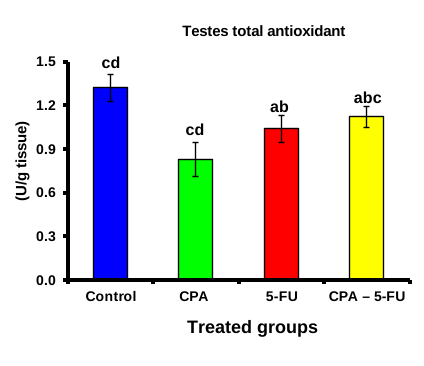
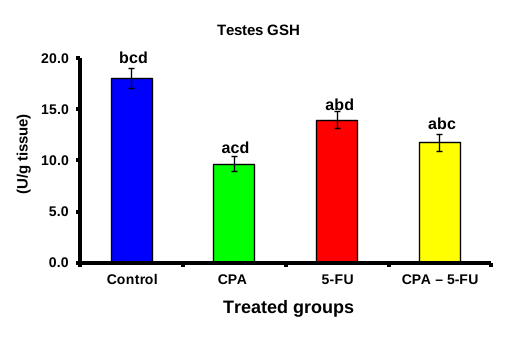
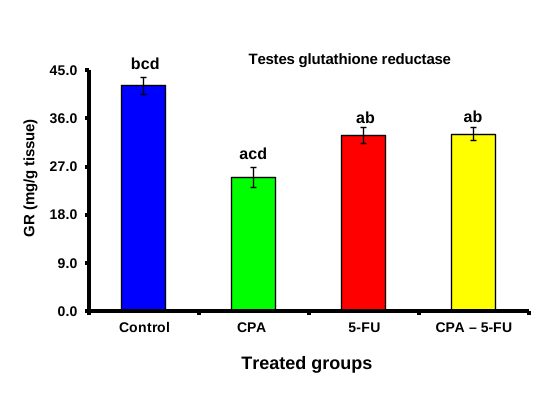
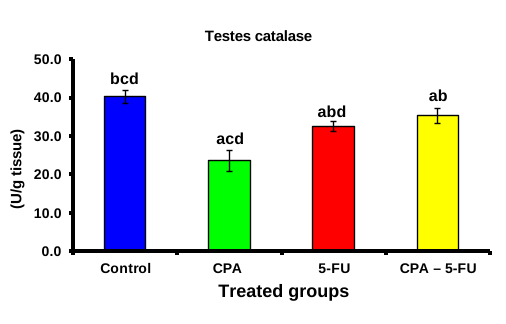
Individual injection of CPA and 5-FU to rats reduced testes TAC, GSH concentration, GR and CAT activities compared to control. However, the combination treatment of rats with 5-FU and CPA increased the levels of these non-enzymatic and enzymatic antioxidant compared with those treated with CPA alone (Tables 1, Figures 1-4).
The above data indicate that antioxidant defense mechanisms must take part in the toxicity of cyclophosphamide [18]. They have shown that patients receiving high-dose cyclophosphamide displayed significant reductions of antioxidant parameters in plasma [19]. In the present study, many changes in rat blood serum antioxidative systems also have been observed after cyclophosphamide administration. Cyclophosphamide injection caused a decrease in the activity of antioxidant enzymes: CAT and GR. It is possible that this decrease is a result of protein structure modification through the reactive metabolite acroleine and/or reactive oxygen species generated during cyclophosphamide metabolism as well.
In the present study, the levels of TAC, GSH, GR, and CAT decreased in CPA-treated rats as reported earlier [17, 20], which could be due to the inactivation of cellular antioxidants by the lipid peroxides and ROS that are produced due to CPA intoxication. However, combination of 5-FU and CPA restored the enzyme levels and decreased the formation of lipid peroxidation byproduct MDA. The partial elevation in antioxidant levels inside the testes due to the antagonistic effects of the two chemotherapy.
4.2. Biochemical findings of lipid peroxidation and nitric oxide
Cyclophosphamide, one of the most widely drugs in chemotherapy, is a cytotoxic alkylating drug with a high therapeutic index and is effective against a variety of cancers. Although CPA is effective for the treatment of cancer, it induces a wide range of adverse side effects and toxicity, such as nausea, vomiting, and hematopoietic toxicity that restrict the use of this drug in clinic [21]. The pathogenetic pathways may include oxidative damage, release of some inflammatory endocoids such as cytokines and nitric oxide as well as poly (adenosine diphosphate-ribose) polymerase activation [22]. Therefore, it is necessary to search for agents that can reduce the harmful side effects of CPA.
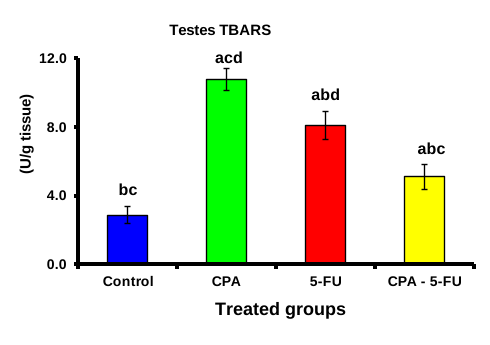
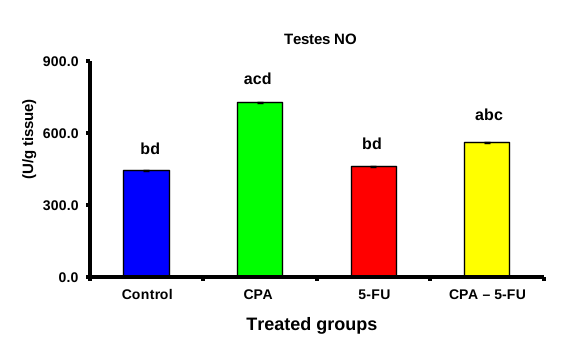
Our results showed significantly increased TBARS and NO concentration in the testes of CPA treated rats when compared to normal ones, while 5-FU increased NO only compared with control (Tables 2; Figures 5, 6). Bhatia et al. [23] and Kouidhi et al. [24] revealed that CPA-induced hepatotoxicity involves induction of oxidative stress due to excessive formation of ROS which causes lipid peroxidation of the cellular membrane. When rats treated with the combination of CPA and 5-FU a reduction occurred in lipid peroxidation and NO concentration in testes compared with CPA treated rats which could be attributed to the antagonistic interaction of the two chemotherapy (Tables 2; Figures 5, 6). The inhibition in lipid peroxidation may indicate the reduced level of oxidative stress.
Changes in activity of antioxidant enzymes are accompanied by intensification of lipid peroxidation processes, which is confirmed by elevated MDA serum levels that we observed in rats receiving CPA and 5-FU. In quantitative terms, MDA is the most important component among reactive aldehydes originating from lipid peroxidation. For this reason, it is commonly considered as an index of oxidative stress severity [25].
Increased oxidative stress represents an imbalance between intracellular product of free radicals and the cellular defense mechanisms; notably, MDA is one of the most important markers of oxidative stress [26]. Many researches demonstrated that CPA is a chemotherapeutic agent cause oxidative stress in a dose- and time-dependent manner [27, 28], and increases levels of MDA, depletes GSH [29]. These reports suggested that the generation of oxidative products is mainly related to the DNA damage caused by CPA. In addition, Zhang et al. [30] reported that CPA at a dose of 100 and 200 mg kg_1, i.p. significantly caused DNA damages in both mouse bone marrow cells and peripheral lymphocyte cells, and markedly inhibited the activities of glutathione peroxidase and SOD, and increased MDA contents in mouse blood. In our study, the enhanced production of tissue lipid peroxides observed is an agreement with other studies.
5. Conclusion
It can be concluded that treatment of rats with CPA is associated with the production of free radicals that lead to hazardous alterations in certain non-enzymatic, and enzymatic functions. The increase in lipid peroxidation probably lead to the intracellular accumulation of ROS with subsequent development of testes tissue injury. However, 5-FU and CPA combination could produce a significant amelioration in most cases for these changes, and it may be considered as a potentially useful candidate in the combination chemotherapy with CPA to combat oxidative stress mediated non target organs injury even if it was not a complete protection. Future work should consider combined chemotherapy regimens, as two or more mechanisms of action of chemotherapeutic drugs could be more powerful than one mechanism.
References
- Colvin, O.M. (1999). An overview of cyclophosphamide development and clinical applications. Cur Pharmacol Des., 5: 555-560.
- Stankiewicz, A., Skrzydlewska, E. and Makiela, M. (2002). Effects of amifostine on liver oxidative stress caused by cyclophosphamide administration to rats. Drug Metabol. Drug Interact., 19: 67-82.[CrossRef] [PubMed]
- Scherz-Shouval, R. and Elazar, Z. (2007). ROS, mitochondria and the regulation of autophagy. Trends Cell Bio., 17: 422-427.[CrossRef] [PubMed]
- Nagmoti, D.M., Khatri, D.K., Juvekar, P.R. and Juvekar, A.R. (2012). Antioxidant activity Free radicals-scavenging potential of Pithecellobium dulce Benth seed extracts. Free rad. Antiox., 2: 37-43[CrossRef]
- Muralikrishnan G, Amalan Stanley V, Sadasivan Pillai K (2001). Dual role of vitamin C on lipid profile and combined application of cyclophosphamide, methotrexate and 5-fluorouracil treatment in fibrosarcoma-bearing rats. Cancer Lett 169:115–120.[CrossRef]
- Subramaniam S, Shyamala Devi CS (1995) Vitamin E protects intestinal basolateral membrane from CMF-induced damages in rat. Indian J Physiol Pharmacol 39:263–266
- Moron, M.S., Depierre, J.W. and Mannervik, B. (1979). Levels of glutathione, glutathione reductase and glutathione S-transferase activities in rat lung and liver. Biochim. Biophys. Acta., 582:67-78.[CrossRef]
- Goldberg, D.M. and Spooner, R.J. (1983). In H.V. Bergmeyer (Ed.). Methods of enzymatic analysis , 3rd ed. Deerfield Beach, FL: Verlag Chemice. 3: 258-265..
- Goth, L. (1991). A simple method for determination of serum catalase activity and revision of reference range. Clinica Chimica Acta, 196: 143-151.[CrossRef]
- Benzie, I. F. and Strain, J.J. (1996). The ferric reducing ability of plasma (FRAP) as a measure of ¨antioxidant power¨: the FRAP assay. Anal. Biochem., 239: 70-76.[CrossRef] [PubMed]
- Green L.C., Wagner D.A., Glogowski J., Skipper, P.L.; Wishnok, J.S. and Tannenbaum, S.R. (1982). Analysis of nitrate, nitrite and 15N nitrate in biological fluids. Anal. Biochem., 126:131-138[CrossRef]
- Yoshioka, T., Kawada, K., Shimada, T. and Mori, M. (1979). Lipid peroxidation in maternal and cord blood and protective mechanism against activated- oxygen toxicity in the blood. Am. J. Obstet. Gynecol., 135: 372-376.[CrossRef]
- Howell, D.C. (1995). Fundamental statistics for the behavioral sciences, 3rd ed.. Duxbury press. An imprint of Wads Worth publishing company Belmont. California. pp. 163-166.
- Matalon, S.T., Ornoy, A. and Lishner, M. (2004). Review of the potential effects of three commonly used antineoplastic and immunosuppressive drugs (cyclophosphamide, azathioprine, doxorubicin on the embryo and placenta). Reprod Toxicol., 18: 219-230.[CrossRef] [PubMed]
- Chu, D., Gu, J., Liu, W., Paul Fawcett, J. and Dong, Q. (2003). Sensitive liquid chromatographic assay for the simultaneous determination of 5-fluorouracil and its prodrug, tegafur, in beagle dog plasma. J Chromatogr B Analyt Technol Biomed Life Sci., 795: 377-382.[CrossRef]
- Kehrer, J.P. (1993): Free radicals as mediators of tissue injury and disease. Crit. Rev.Toxicol., 23: 21-48.[CrossRef] [PubMed]
- Lin, H.M., Yen, F.L., Ng, L.T. and Lin, C.C. (2007). Protective eff ects of Ligustrum lucidum fruit extract on acute butylated hydroxytoluene-induced oxidative stress in rats. J. Ethnopharmacol., 111: 129–136.[CrossRef] [PubMed]
- Parke, D.V. and Sapota, A. (1996). Chemical toxicity and reactive oxygen species, Int. J. Occup. Med. Env. Health., 9: 331-340.
- Durken, M., Agbenu, J., Finckh, B., Hubner, C., Pi¬chlmeier, U., Zeller, W., Winkler, K., Zander, A. and Kohlschutter, A. (1995). Deteriorating free radical-trapping capacity and antioxidant status in plasma during bone mar¬row transplantation, Bonne Marrow Transplant., 15: 757-762.
- Selvakumar, E., Prahalathan, C., Mythili, Y. and Varalakshmi, P. (2004). Protective effect of DL-α-lipoic acid in cyclophosphamide induced oxidative injury in rat testis. Reprod. Toxicol., 19: 163–167.[CrossRef] [PubMed]
- Zhang, J., Tian, Q. and Zhou, S. (2006). Clinical pharmacology of cyclophos-phamide and ifosfamide. Curr Drug Ther., 1:55-84.[CrossRef]
- Dang, K., Lamb, K., Cohen, M., Bielefeldt, K. and Gebhart GF. (2008). Cyclophosphamide-induced bladder inflammation sensitizes and enhances P2X receptor function in rat bladder sensory neurons. J. Neurophysiol., 99: 49-59.[CrossRef] [PubMed]
- Bhatia, K., Ahmad, F., Rashid, H. and Raisuddin, S. (2008). Protective effect of S-allylcysteine against cyclophosphamide-induced bladder hemorrhagic cystitis in mice. Food Chem. Toxicol., 46:3368-74.[CrossRef] [PubMed]
- Kouidhi, S., Rouissi, K., Hamrita, B., Ouerhani, S., Cherif, M. and Benammar, A.E. (2012). Therapeutic effects of aloe Vera plant extract against cyclophosphamide and buthionine sulfoximine induced toxicities in the bladder. Biochem. Pharmacol., 1: 1.[CrossRef]
- Niki, E., Noguchi, N., Tsuchihashi, N. and Gotoh, N. (1995). Interaction among vitamin C, vitamin E, Beta carotene. Am. J. Clin. Nutr., 62:1322-1326.[CrossRef] [PubMed]
- Kucukkurt, I., Ince, S., Aytekin, I. and Birdane, Y.O. (2010). The effects of flumethrin and flumethrin+vitamin C application on oxidative stress biomarkers in Chios sheep. Kocatepe Vet. J. 3, 13–17.
- Manda, K. and Bhatia, A.L. (2003). Prophylactic action of melatonin against cyclophosphamide-induced oxidative stress inmice. Cell. Biol. Toxicol. 19, 367–372.[CrossRef] [PubMed]
- Tripathi, D.N. and Jena, G.B. (2009). Intervention of astaxanthin againstcyclophosphamide induced oxidative stress and DNA damage: a study in mice. Chemico-Biol. Int., 180: 398–406.[CrossRef] [PubMed]
- Premkumar, K., Pachiappan, A., Abraham, S.K., Santhiya, S.T., Gopinath, P.M. and Ramesh, A. (2001). Effect of Spirulina fusiformis on cyclophosphamide and mitomycin-C induced genotoxicity and oxidative stress in mice. Fitoterapia 72: 906–911.[CrossRef]
- Zhang, Q.H., Wu, C.F., Duan, L. and Yang, J.Y. (2008). Protective effects of ginsenoside Rg (3) against cyclophosphamide-induced DNA damage and cell apoptosis in mice. Arch. Toxicol. 82: 117–123.[CrossRef] [PubMed]