Articles
Browse all published research articles
To Be Twice as Good to Get Half
“To Be Twice as Good to Get Half” is a common mindset among high aspiration and ambition Black individuals in the U.S., capturing the lived reality of Minorities’ Diminished Returns (MDRs). This paper... Read more
Educated Yet Unhealthy? Diminished Returns of Education for Immigrants in the USA
Background: Minorities’ Diminished Returns (MDRs) theory posits that the health benefits of socioeconomic resources, such as education, are smaller for marginalized and minoritized populations,... Read more
Academic Aspirations of 12th Grade Students in the United States: Place-Based Diminished Returns of Parental Education in Rural Areas
Background: The Motivational Theory of Life-Span Development suggests that individual aspirations are shaped by both internal and external resources. Parental education is a key d... Read more
Place-Based Diminished Returns of Parental Education on Adolescents’ Inhalant Use in Rural Areas
Background Adolescent substance use is often influenced by socioeconomic and geographical factors. While higher parental education is typically associated with lower substance use, these... Read more
Diminished Returns of Educational Attainment on Unpaid and Paid Maternity Leave of Mothers Giving Birth in Poverty
Background: Maternity leave, whether paid or unpaid, is a critical resource that can significantly impact maternal well-being and newborn outcomes. However, its availability and utilizat... Read more


Trauma Erodes Financial Returns of Educational Attainment
Background: Educational attainment is often regarded as a pathway to economic stability and social mobility. However, the Minorities’ Diminished Returns (MDRs) framework has demonstrated that t... Read more
Unequal Benefits: How Parental Education Falls Short for Black and Latino Youth
Background: Parental education is a key determinant of academic performance, yet its protective effects may differ by race and ethnicity. The concept of Minorities’ Diminished Returns (MDRs) hi... Read more
High Socioeconomic Status Black Adolescents Attend Worse Schools than Whites
Background: School characteristics — including poverty levels, teacher experience, graduation rates, and college enrollment — are essential determinants of students’ academic outcomes an... Read more
Diminished Returns of Educational Attainment on Hypertension Prevalence among American Indian and Alaska Native Adults: National Health Interview Survey 2023
Background: Research on Minorities’ Diminished Returns (MDRs) consistently reveals that social determinants of health, especially educational attainment, do not yield equal health benefits acro... Read more
Financial Strain Partially Explains Diminished Returns of Parental Education in the ABCD Study
Background: Previous research shows that socioeconomic status (SES) positively impacts children's development, yet the benefits are not equally distributed across racial groups. According to th... Read more
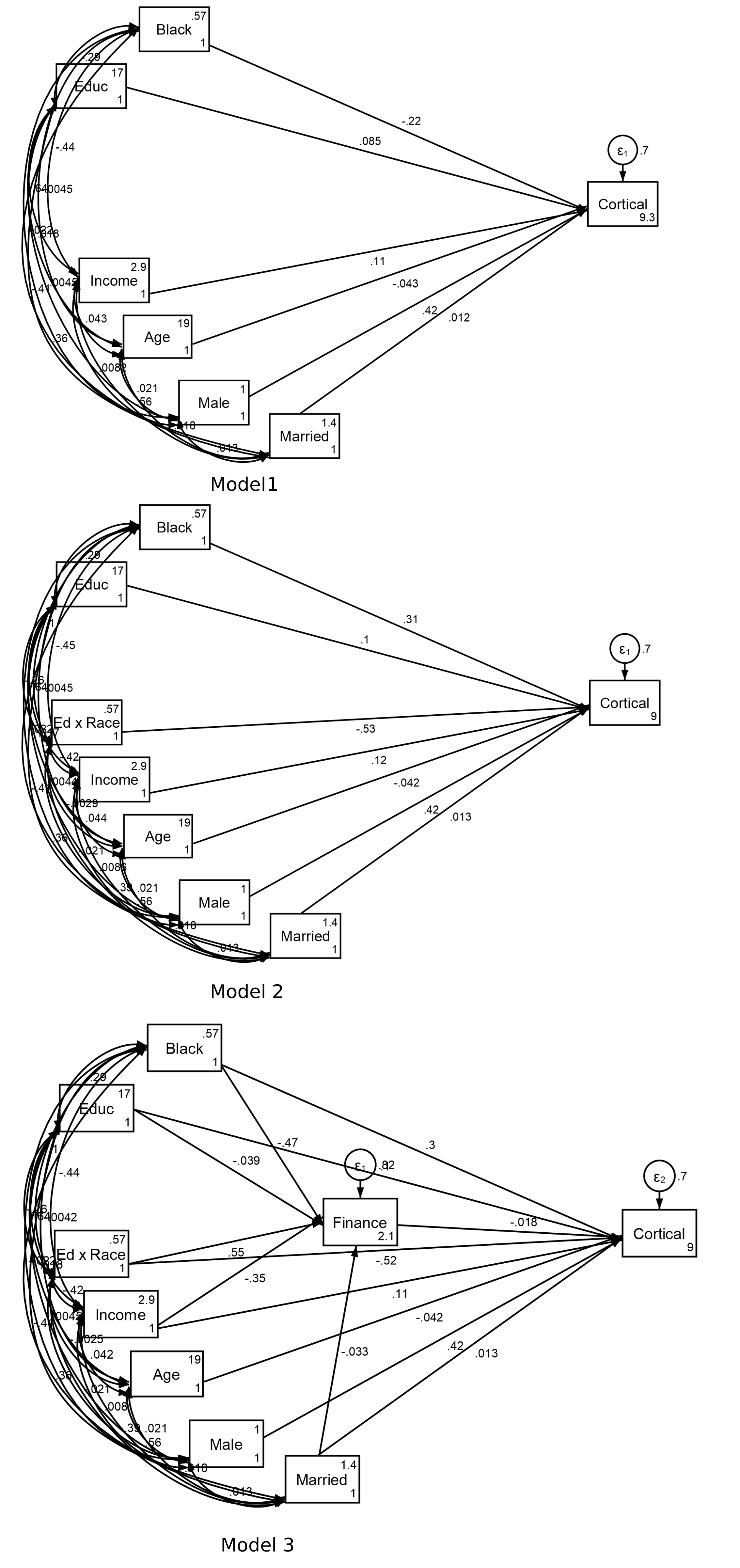
Education Does Not Equally Increase Financial Well-being for All
Background: Financial well-being is a key domain of overall well-being, encompassing an individual's ability to meet financial obligations, secure their financial future, and maintain a sense o... Read more
Tobacco Susceptibility Explains Diminished Returns of Family Income on Black Adolescents' Tobacco Initiation
Background: Minorities’ Diminished Returns (MDRs) theory posits that socioeconomic resources have weaker protective effects on health and behavior for racial and ethnic minorities compared to W... Read more

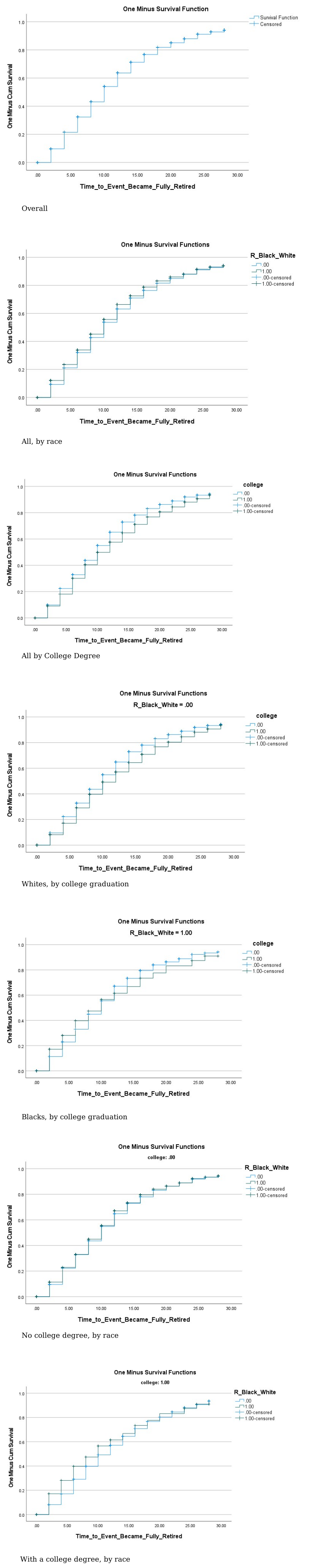
Race, College Graduation, and Time of Retirement in the United States: A Thirty-Year Longitudinal Cohort of Middle-Aged and Older Adults
Introduction: College education is typically associated with the ability to work in less physically demanding occupations, allowing for a later retirement age. However, research i... Read more