Articles
Browse all published research articles
Performance Evaluation of Filter Cloth Washing Water Recycling at SOMAÏR, Niger
Water management is a critical challenge for uranium processing operations in arid regions, where industrial activities depend heavily on limited groundwater resources. This study evaluates the performance of the filter cloth washing water recycling circuit at the Aïr Mining compagny (SOMAÏR) uranium processing plant in Niger and identifies the principal factors limiting continuous water reuse. The investigation combined operational water-flow monitoring, historical production records, field sampling from Pit 3, physicochemical characterization of recycled water, suspended-solids determination, and particle-size analysis. Under normal operating conditions, the recycling circuit achieved an average recycling efficiency of 57.5%, corresponding to approximately 850 m3/day of industrial water savings. The recycled water exhibited a density of 0.994 g/cm3, pH of 2.53, oxidation- reduction potential of 480 mV, and suspended-solids concentration of 2052 mg/L. Particle-size analysis showed that approximately 97.6% of the suspended particles were smaller than 200 μm, allowing a substantial fraction of solids to bypass the 250 μm vibrating-drainer screen and accumulate in Decanter 1. Progressive sediment accumulation, together with screen deterioration and mechanical limitations, reduced clarification capacity and ultimately interrupted the recycling circuit. Engineering measures including improved fine-particle separation, optimization of screen aperture, systematic screen maintenance, improved sludge removal, and continuous monitoring are therefore proposed. These measures could enhance recycling reliability, reduce freshwater consumption, and improve water- management sustainability at SOMAÏR.
Water management is a critical challenge for uranium processing operations in arid regions, where industrial activities depend heavily on limited groundwater resources. This study evaluates the perfor... Read more
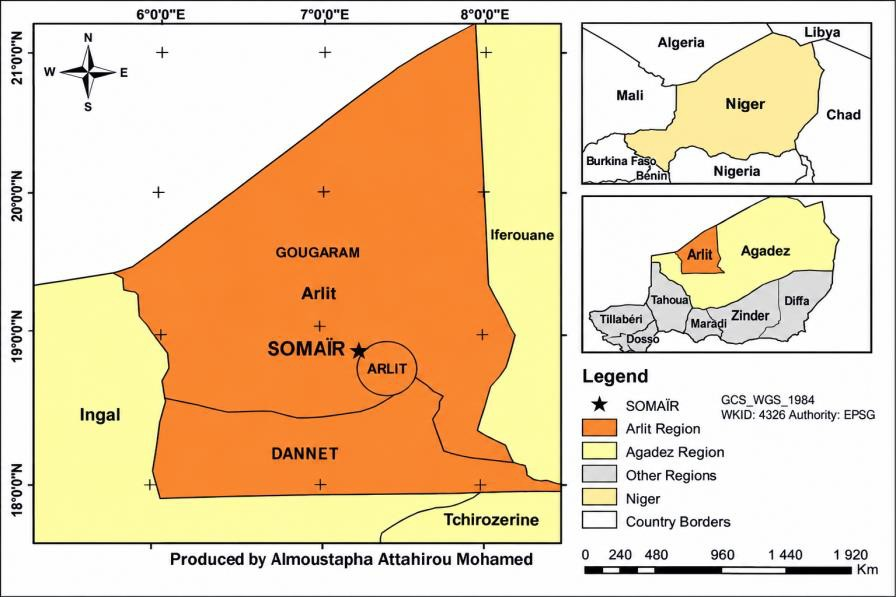
Figure 1. Geographical Location of SOMAÏR
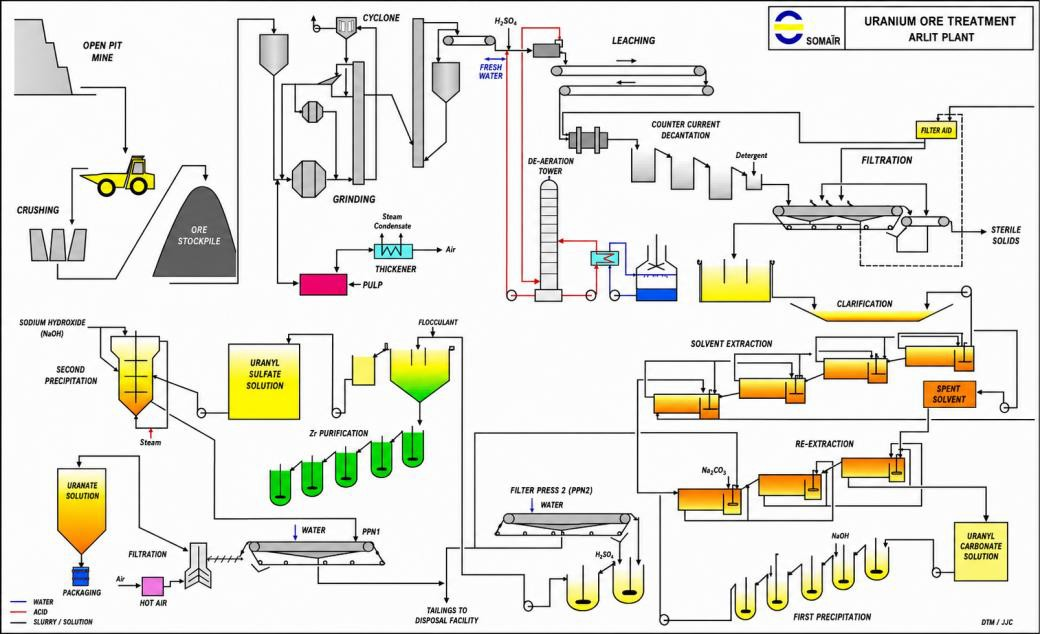
Figure 2. Flowsheet of the dynamic processing chain
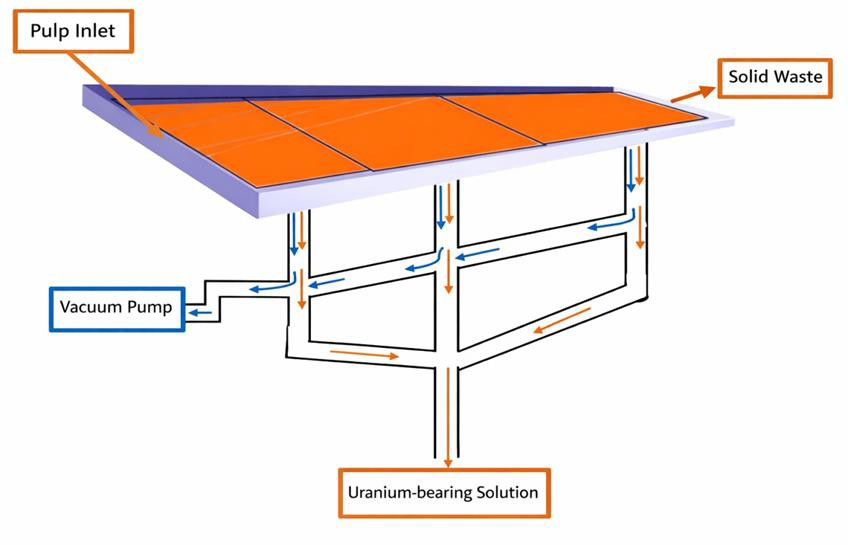
Figure 3. Filtration workshop
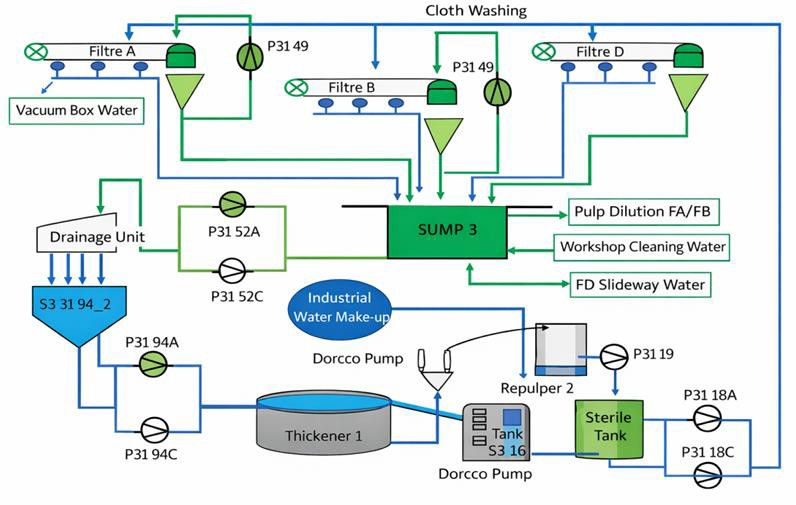
Figure 4. Flowsheet recycling circuit pit 3
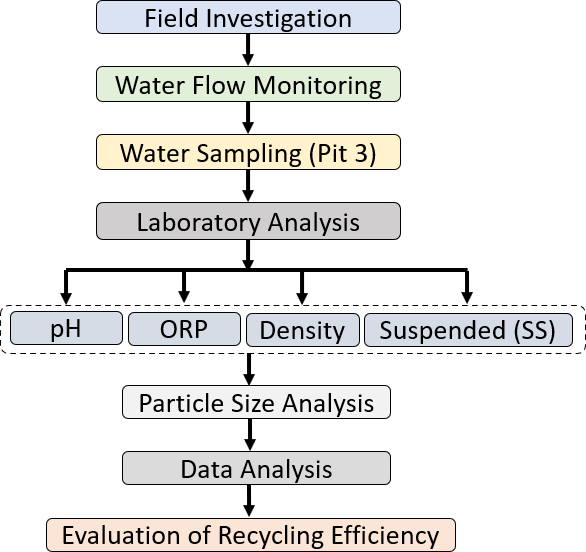
Figure 5. Flowchart of the experimental methodology adopted in this study
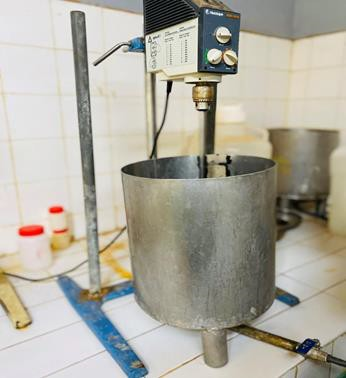
Figure 6. Sampling and sample preparation procedure for recycled water samples
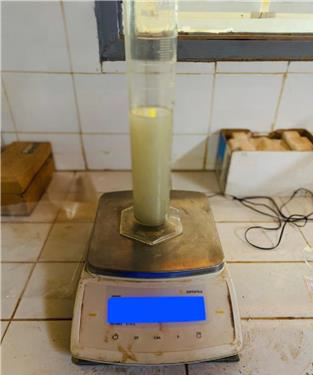
Figure 7. Density measurement procedure for recycled water samples
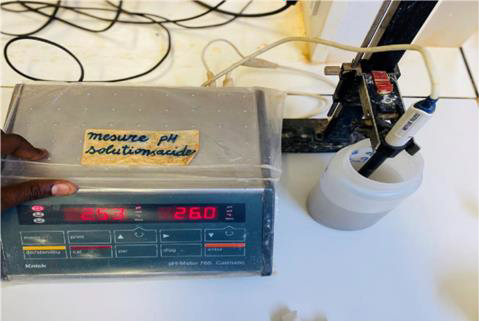
Figure 8. Electronic pH meter for pH measurement
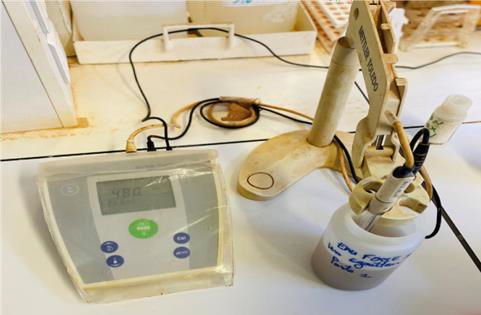
Figure 9. Electronic ORP meter used for oxidation reduction potential measurement
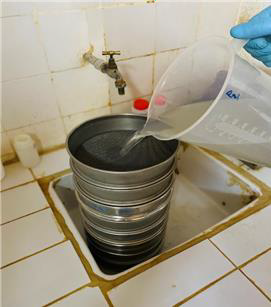
Figure 10. Passing the sample through the sieves for particle size analysis
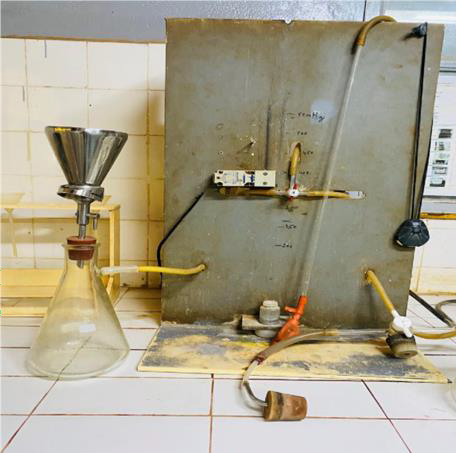
Figure 11. Filtration apparatus used for suspended solids concentration measurement
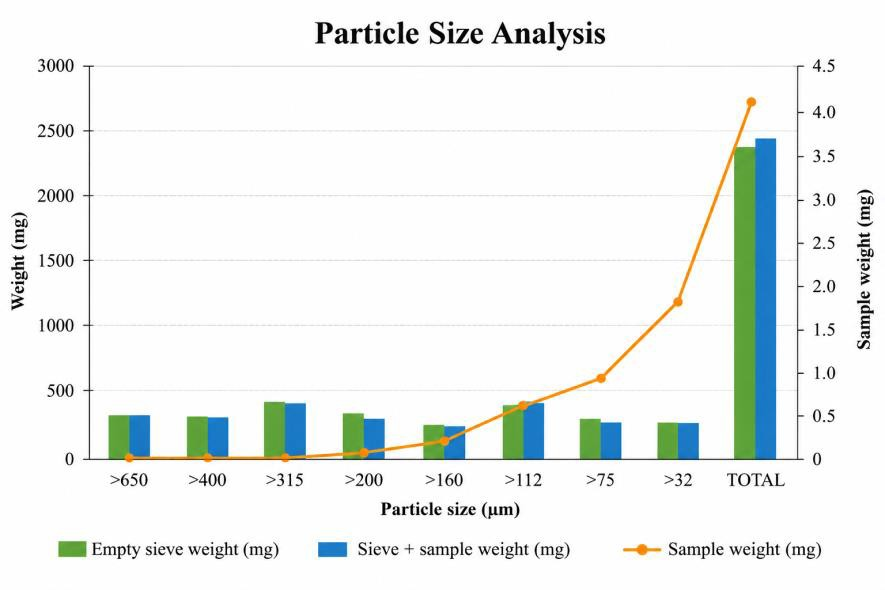
Figure 12. Particle size distribution of suspended solids in the recycled water collected from Pit 3
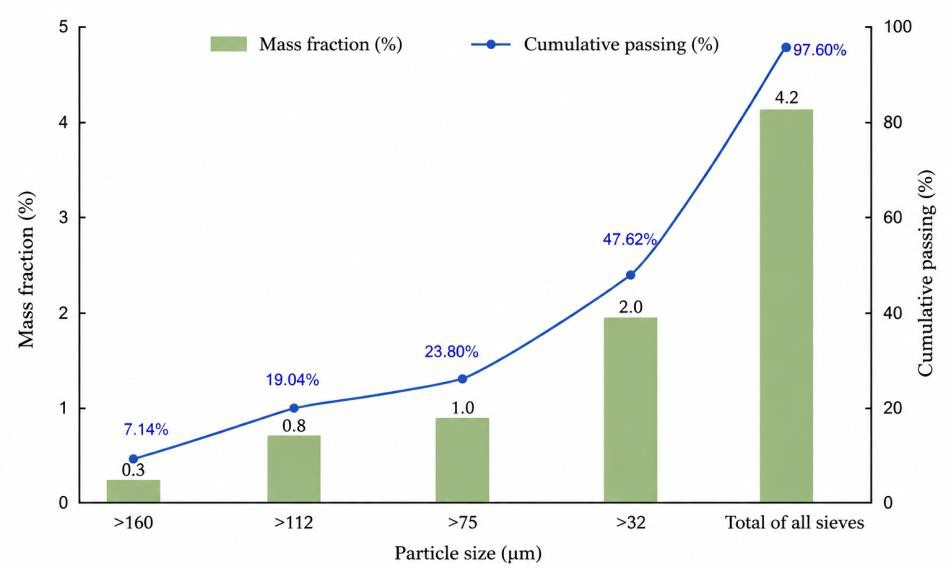
Figure 13. Distribution and cumulative percentage of suspended particles smaller than 200 μm in the recycled water
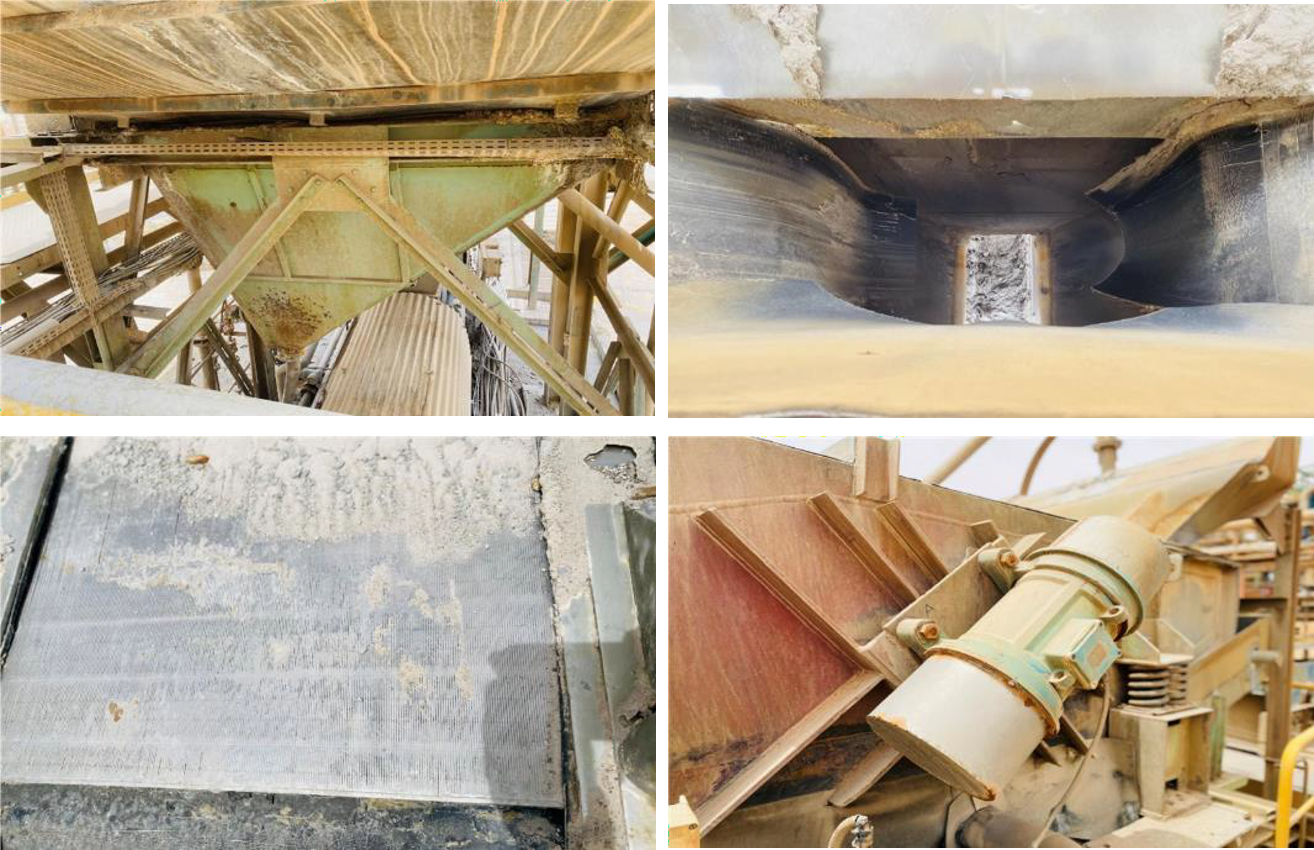
Figure 14. Operational components of the vibrating drainer and associated recycling equipment: (a) drainer screens or sieves, (b) drip motor, (c) water collection tank, and (d) sand recovery chute
Recycling Fabric Waste into Functional Interior Decoration Pieces
This study seeks to collect, recycle and repurpose fabrics waste into decorative household items to reinforce the concept of recycling as a viable alternative to indiscriminate dumping that leads to environmental pollution. It has been observed that garment producers, fashion designers, dressmakers, seamstresses and tailors generate several quantities of fabric waste which are initially piled up to occupy space at their workshops then later disposed indiscriminately. For this studio-based study, an average of 300kg of fabric remnants which are generated by the 30 workshops of garment producers in four suburbs of Kumasi in the Ashanti region of Ghana were collected. The fabric waste was sorted into types, sizes, colours and textures, out of the 300kg collected, approximately 250kg were identified as cotton and the remaining 50kg were an assortment of polyester, nylon, rayon, wool, acetate and sateen. It also came out that the garment producers lack adequate knowledge on waste management, hence the indiscriminate disposal of the waste fabrics. The need for effective means of recycling without adverse repercussion to the environment was found critical. Based on the idea of recycle art, 280 kilograms of the fabric waste collected were converted into interior decoration pieces such as a pair of footrest, a set of arm rest, a set of chair-back, Others include a set of table mats, a set of placemats, a door mat, and a set of curtains and window blinds. It is anticipated that such craft activities will serves as pointers to craft people about the potential of waste fabrics as cheaper raw materials for diverse products and by extension help to reduce the waste management problems associated with fabric waste.
This study seeks to collect, recycle and repurpose fabrics waste into decorative household items to reinforce the concept of recycling as a viable alternative to indiscriminate dumping that leads to e... Read more

Figure 1. Dimensions of the designed footrest
Figure 2. Dimensions of the designed footrest

Figure 3. Spider web design of the footrest
Figure 4. Spider web design of the footrest

Figure 5. Piping the joints of the footrest
Figure 6. Piping the joints of the footrest

Figure 7. Finished pair of footrests produced from fabric waste and remnants
Figure 8. Finished pair of footrests produced from fabric waste and remnants

Figure 9. Outline drawing of each arm rest
Figure 10. Outline drawing of each arm rest

Figure 11. Cutting out the square shape
Figure 12. Cutting out the square shape

Figure 13. Finished arm rests (7 pieces)
Figure 14. Finished arm rests (7 pieces)

Figure 15. Design outline of the chair backs with motif from the Sankofa symbol
Figure 16. Design outline of the chair backs with motif from the Sankofa symbol

Figure 17. A set of chair backs and arm rest from fabric remnants
Figure 18. A set of chair backs and arm rest from fabric remnants

Figure 19. Design for coffee table mat
Figure 20. Design for coffee table mat

Figure 21. Design for centre table
Figure 22. Design for centre table

Figure 23. Lining and stitching over the fringes
Figure 24. Lining and stitching over the fringes

Figure 25. Stitching around the <i>S</i><i>ankofa </i>with embroidery technique
Figure 26. Stitching around the <i>S</i><i>ankofa </i>with embroidery technique

Figure 27. A set of finished table mats (coffee and centre mats)
Figure 28. A set of finished table mats (coffee and centre mats)

Figure 29. Dimension of the place mat
Figure 30. Dimension of the place mat

Figure 31. A set of place mats (for dining table)
Figure 32. A set of place mats (for dining table)

Figure 33. Wooden frame with nails of 2cm interspacing
Figure 34. Wooden frame with nails of 2cm interspacing

Figure 35. Fabric remnant knotted to nylon cords on the wooden frame for door mat
Figure 36. Fabric remnant knotted to nylon cords on the wooden frame for door mat

Figure 37. Finished door mat
Figure 38. Finished door mat

Figure 39. Design layout for the curtains
Figure 40. Design layout for the curtains

Figure 41. Stitching the edges of the curtain and attaching frays to the finished work
Figure 42. Stitching the edges of the curtain and attaching frays to the finished work

Figure 43. Design outline for window blind

Figure 44. Final window and door curtains produced
Figure 45. Final window and door curtains produced
Figure 46. Design outline for window blind
Figure 47. Reinforcing the Fabric Strips with Vilene
Figure 48. Reinforcing the Fabric Strips with Vilene

Figure 49. Joining the pieces to ac<b>quire the finished blind straps</b>
Figure 50. Joining the pieces to ac<b>quire the finished blind straps</b>

Figure 51. Design Outline for Window Blind
Figure 52. Design Outline for Window Blind

Figure 53. Square Fabric Shapes Joined for the Curtain Blinds
Figure 54. Square Fabric Shapes Joined for the Curtain Blinds

Figure 55. Sewing the ends of the straps to acquire the final pieces for the blinds
Figure 56. Sewn straps

Figure 57. Sewn straps

Figure 58. Finished Blind
Figure 59. Finished Blind