Articles
Browse all published research articles
Material Convergence: An Exploration of Textiles Techniques in the Creation of Decorative Flower Vases
This Practice-based research explores the innovative application of textiles in the creation of decorative flower vases, positioning them at the intersection of functional design and contemporary art. The study investigates the potential of techniques such as weaving, embroidery, and applique to transcend the conventional boundaries of the medium. Through a methodological framework combining material experimentation interviews with textile artisans and pottery producers in Accra, and critical reflection, the research examines the interplay of materiality, form and aesthetics. It integrates traditional Ghanaian motifs with modern design principles to create culturally resonant, sustainable artworks. The findings demonstrate textiles' significant versatility and creative capacity for producing unique decorative objects. This study contributes to discourses on material innovation and sustainable design by highlighting textiles as a dynamic medium for artistic expression. It offers practical insights for artisans and designers, underscoring the role of textiles in evolving traditional crafts for contemporary contexts.
This Practice-based research explores the innovative application of textiles in the creation of decorative flower vases, positioning them at the intersection of functional design and contemporary art.... Read more
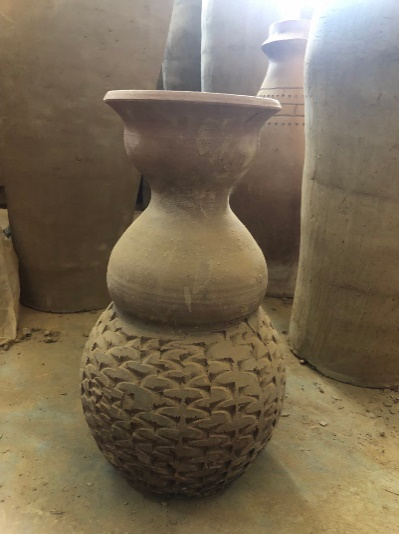
Figure 1. Monitoring and Evaluation Measures for Health and Safety Programs
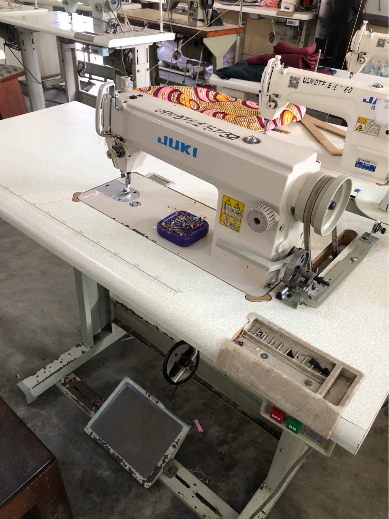
Figure 2. Effectiveness of OHSM Practices and Policies is measured
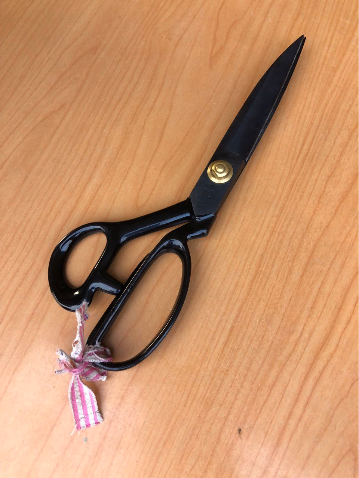
Figure 3. Positive Impacts of Effective Health and Safety Management on Project Outcomes
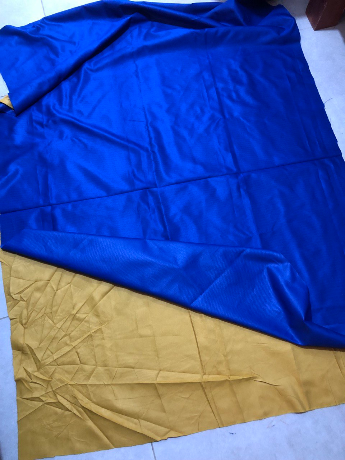
Figure 4. Textiles fabrics
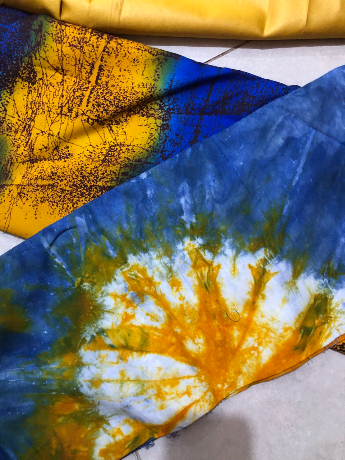
Figure 5. Tie and Dye fabrics
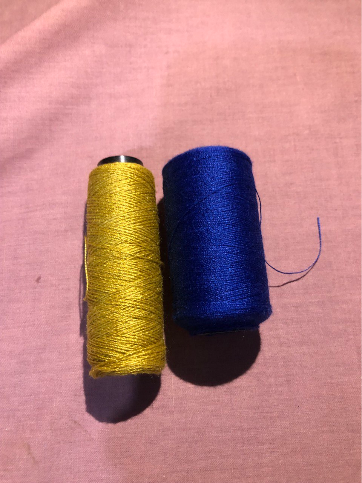
Figure 6. Threads or Yarn
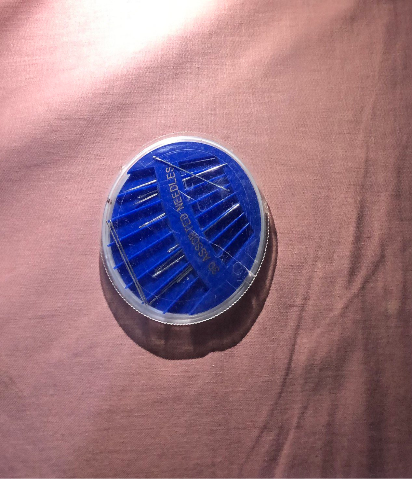
Figure 7. Needles
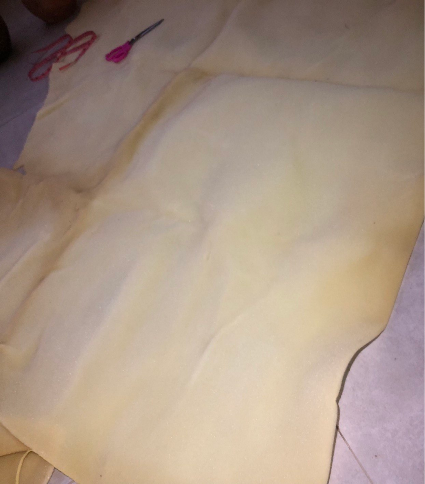
Figure 8. Foam
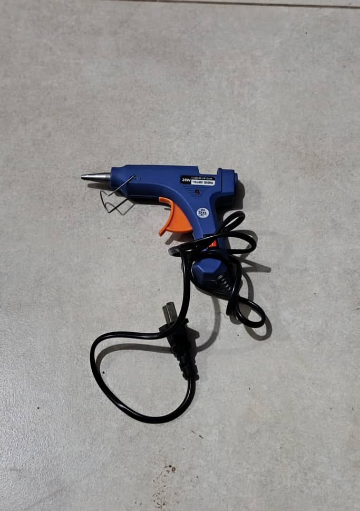
Figure 9. Glue Gun
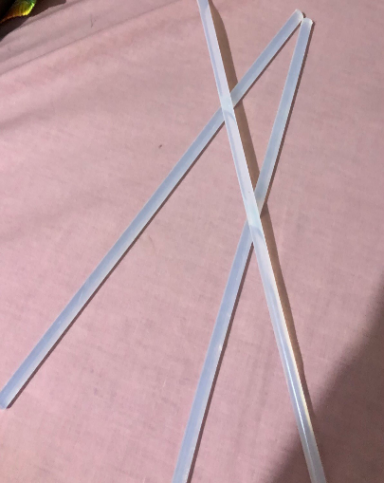
Figure 10. Glue Stick
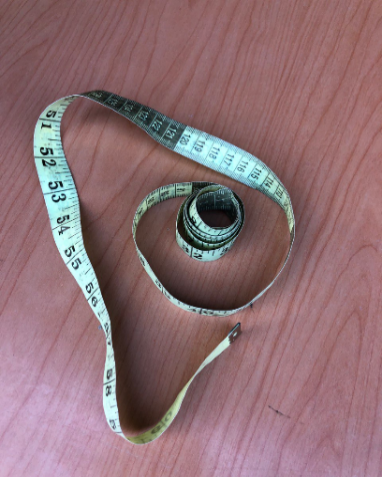
Figure 11. Measuring Tape
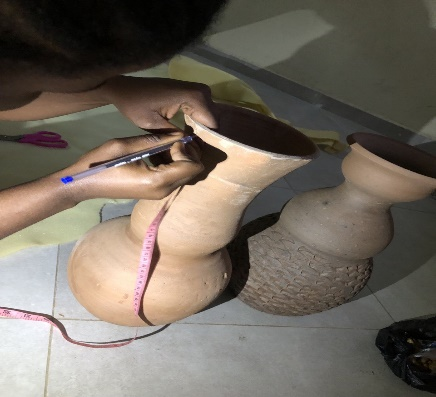
Figure 12. Measuring of the vase mouth
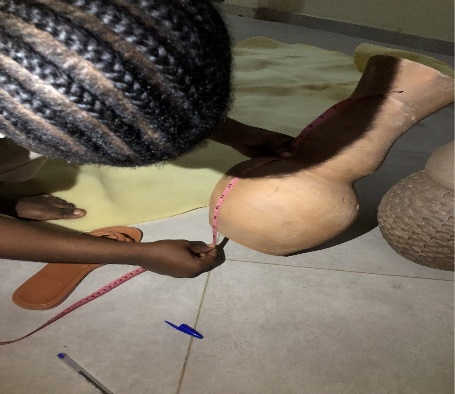
Figure 13. Measuring of vase base
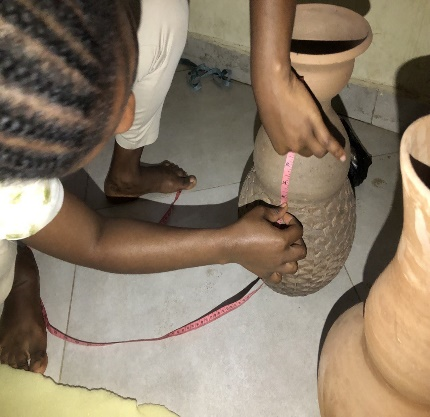
Figure 14. Measuring of the flower pot body
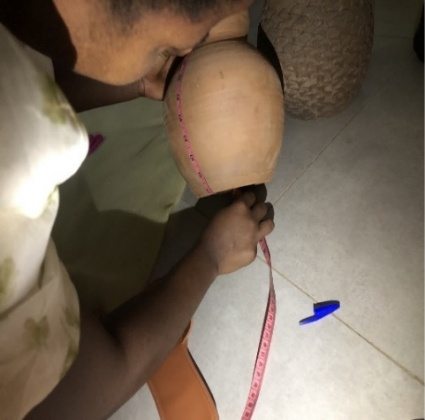
Figure 15. Measuring the circumference of the vase
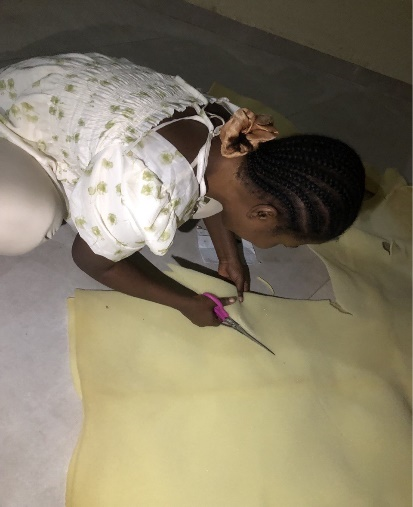
Figure 16. Foam cutting
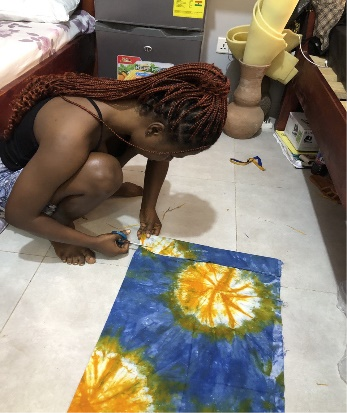
Figure 17. Cutting of fabric (Tie-Dye)
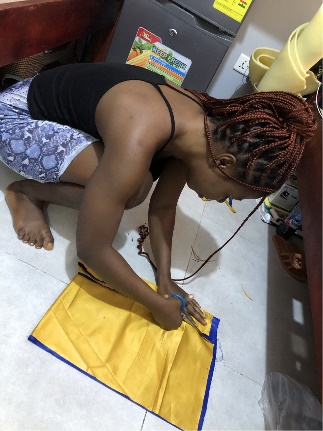
Figure 18. Cutting of plain fabric
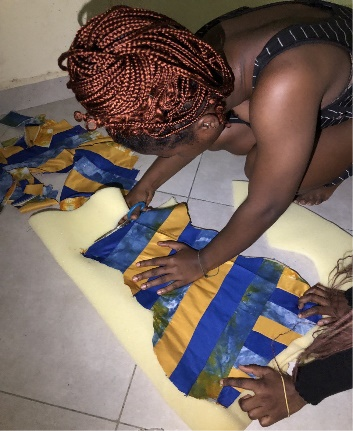
Figure 19. Cutting foam for the fabric
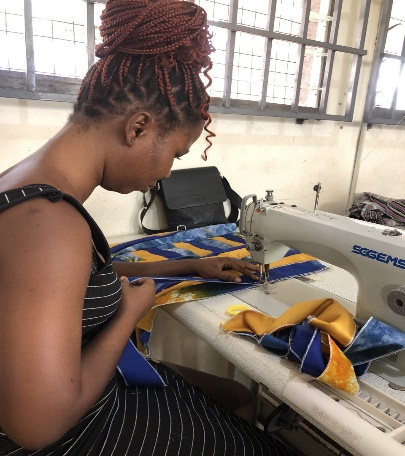
Figure 20. Machine sewing of cut fabrics
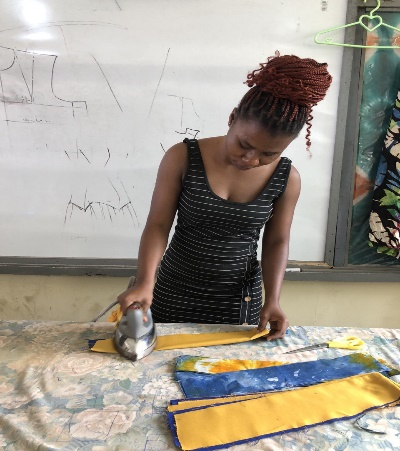
Figure 21. Ironing of fabric
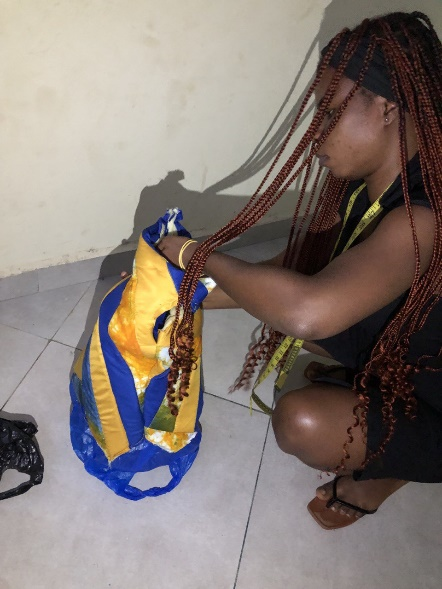
Figure 22. Covering of flower vase with sewed fabrics
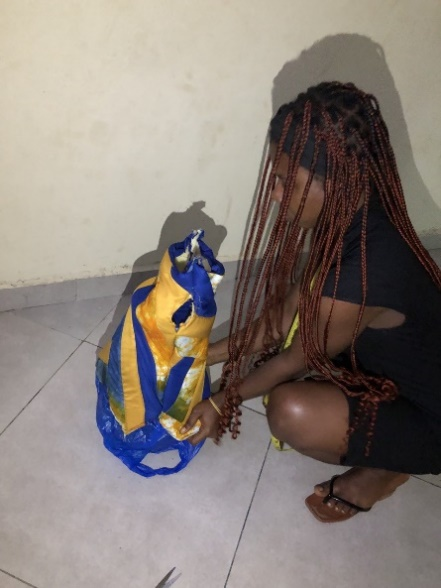
Figure 23. Covering of flower vase two
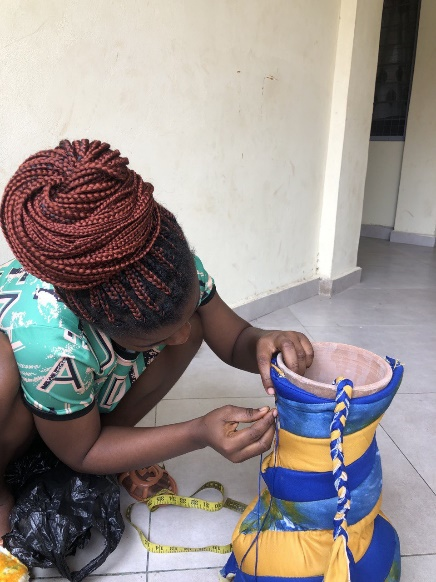
Figure 24. Hand stitching of flower vase
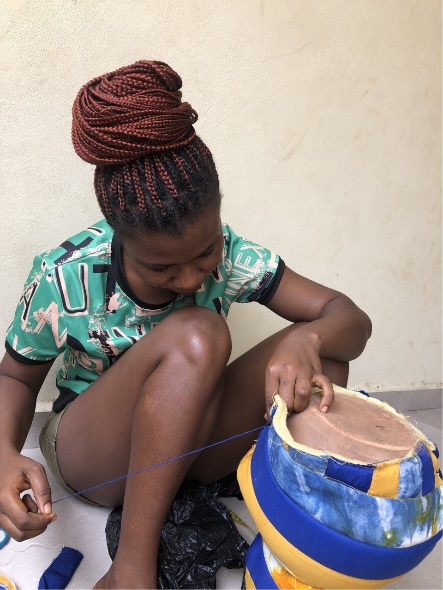
Figure 25. Hand stitching of flower vase base
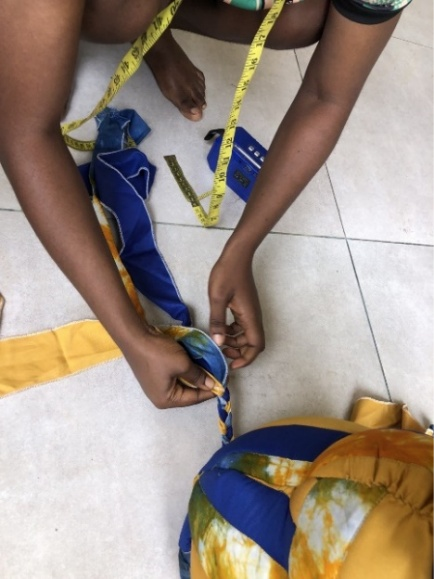
Figure 26. Braiding of fabrics
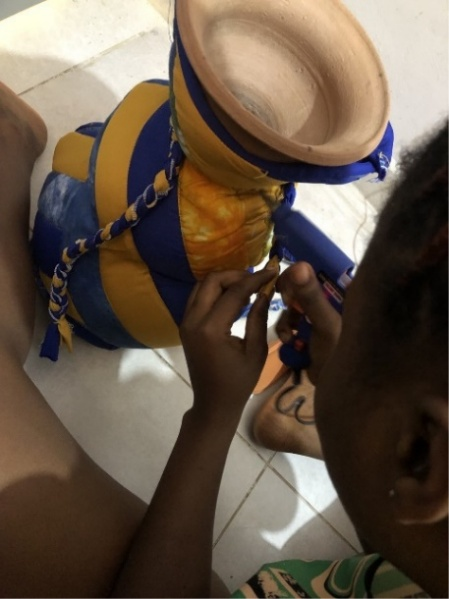
Figure 27. Gluing of the braids
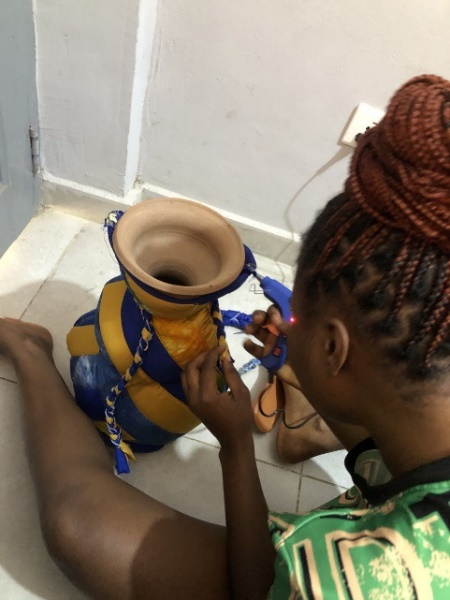
Figure 28. Gluing
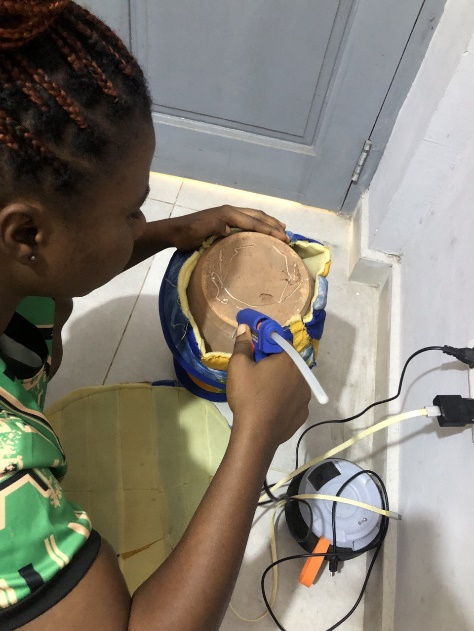
Figure 29. Gluing the Base
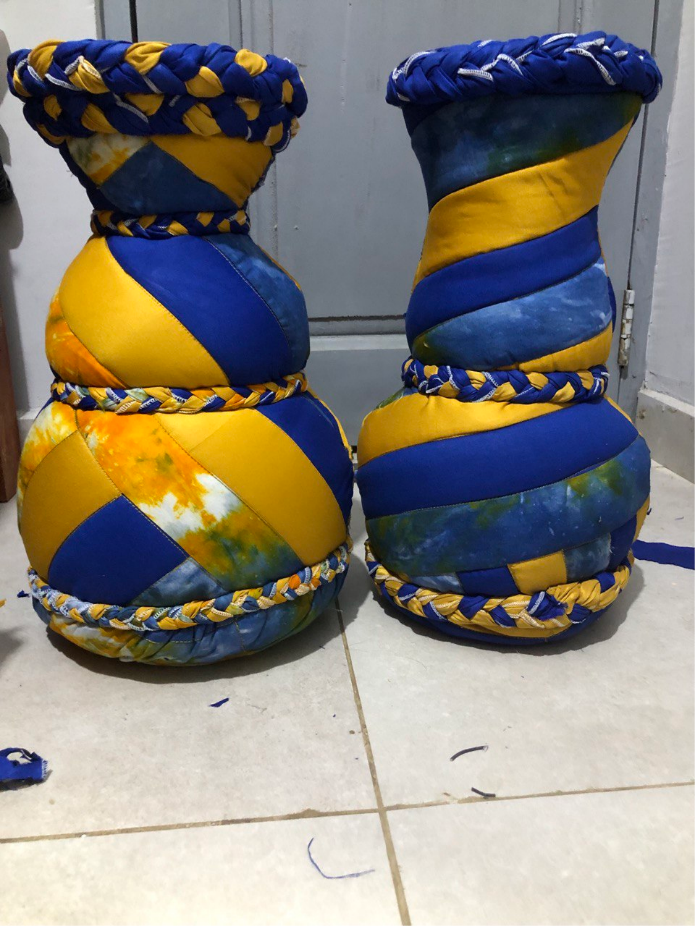
Figure 30. Finished vase
An Assessment of Structural Attributes of Black and White Printed Printex Textile Fabrics
The purpose of this study was to assess the structural attributes of black and white Printed Printex Textile Fabrics in Ghana. The study adopted a factorial experimental research design. The three fabrics with black prints and white as base colours were purchased from the market. These three fabrics had the same designs but two had different fabric finishes and the third one had no finish (plain, embossed and plisse). Key soap purchased from the Ghanaian market and standard soap from Ghana Standard Authority were used for the study. A purposive sampling procedure was used in choosing the fabrics and soap for the study. Specimens totalling 219 were cut randomly from along the warp and weft directions of the Printex black and white cotton fabric with finishes (plain, embossed and plisse). The use of laboratory experiments and the apparatus used to experiment. The data obtained were presented using both descriptive and inferential statistics. The descriptive statistics (frequencies, percentages, means and standard deviation) were used as summary statistics of variables of the study. The one-way analysis of variance (ANOVA) was used to test for significant differences among three variables (three washing cycles), whereas the independent samples t-test was used to test for statistically significant differences between the performance of the fabric finishes under Key soap and the standard soap. The study indicated that differences in the attributes of the finishes caused differences in the structural attributes of the fabrics. This was because some of the finishes required certain structural attributes to bond well with the fabrics. The implication is that continuous washing weakens the structural attributes of fabrics which causes them to fail or weakens their resistance to stress tests. The study, however, found that differences in the structural attributes of the fabric finishes caused differences in the effects of washing on the selected fabric finishes. It is recommended that Printex Textile Limited should place critical emphasis on the weight of the fibres used in the construction of the fabrics. This was necessary since the study found that the fabric finish with the greatest weight performed better in tensile strength than those with the lowest weight. As a result, the use of fibres with high weight is expected to improve the use and care of the fabric finishes in terms of their ability to resist stress or tension during washing.
The purpose of this study was to assess the structural attributes of black and white Printed Printex Textile Fabrics in Ghana. The study adopted a factorial experimental research design. The three fab... Read more
Recycling Fabric Waste into Functional Interior Decoration Pieces
This study seeks to collect, recycle and repurpose fabrics waste into decorative household items to reinforce the concept of recycling as a viable alternative to indiscriminate dumping that leads to environmental pollution. It has been observed that garment producers, fashion designers, dressmakers, seamstresses and tailors generate several quantities of fabric waste which are initially piled up to occupy space at their workshops then later disposed indiscriminately. For this studio-based study, an average of 300kg of fabric remnants which are generated by the 30 workshops of garment producers in four suburbs of Kumasi in the Ashanti region of Ghana were collected. The fabric waste was sorted into types, sizes, colours and textures, out of the 300kg collected, approximately 250kg were identified as cotton and the remaining 50kg were an assortment of polyester, nylon, rayon, wool, acetate and sateen. It also came out that the garment producers lack adequate knowledge on waste management, hence the indiscriminate disposal of the waste fabrics. The need for effective means of recycling without adverse repercussion to the environment was found critical. Based on the idea of recycle art, 280 kilograms of the fabric waste collected were converted into interior decoration pieces such as a pair of footrest, a set of arm rest, a set of chair-back, Others include a set of table mats, a set of placemats, a door mat, and a set of curtains and window blinds. It is anticipated that such craft activities will serves as pointers to craft people about the potential of waste fabrics as cheaper raw materials for diverse products and by extension help to reduce the waste management problems associated with fabric waste.
This study seeks to collect, recycle and repurpose fabrics waste into decorative household items to reinforce the concept of recycling as a viable alternative to indiscriminate dumping that leads to e... Read more

Figure 1. Dimensions of the designed footrest
Figure 2. Dimensions of the designed footrest

Figure 3. Spider web design of the footrest
Figure 4. Spider web design of the footrest

Figure 5. Piping the joints of the footrest
Figure 6. Piping the joints of the footrest

Figure 7. Finished pair of footrests produced from fabric waste and remnants
Figure 8. Finished pair of footrests produced from fabric waste and remnants

Figure 9. Outline drawing of each arm rest
Figure 10. Outline drawing of each arm rest

Figure 11. Cutting out the square shape
Figure 12. Cutting out the square shape

Figure 13. Finished arm rests (7 pieces)
Figure 14. Finished arm rests (7 pieces)

Figure 15. Design outline of the chair backs with motif from the Sankofa symbol
Figure 16. Design outline of the chair backs with motif from the Sankofa symbol

Figure 17. A set of chair backs and arm rest from fabric remnants
Figure 18. A set of chair backs and arm rest from fabric remnants

Figure 19. Design for coffee table mat
Figure 20. Design for coffee table mat

Figure 21. Design for centre table
Figure 22. Design for centre table

Figure 23. Lining and stitching over the fringes
Figure 24. Lining and stitching over the fringes

Figure 25. Stitching around the <i>S</i><i>ankofa </i>with embroidery technique
Figure 26. Stitching around the <i>S</i><i>ankofa </i>with embroidery technique

Figure 27. A set of finished table mats (coffee and centre mats)
Figure 28. A set of finished table mats (coffee and centre mats)

Figure 29. Dimension of the place mat
Figure 30. Dimension of the place mat

Figure 31. A set of place mats (for dining table)
Figure 32. A set of place mats (for dining table)

Figure 33. Wooden frame with nails of 2cm interspacing
Figure 34. Wooden frame with nails of 2cm interspacing

Figure 35. Fabric remnant knotted to nylon cords on the wooden frame for door mat
Figure 36. Fabric remnant knotted to nylon cords on the wooden frame for door mat

Figure 37. Finished door mat
Figure 38. Finished door mat

Figure 39. Design layout for the curtains
Figure 40. Design layout for the curtains

Figure 41. Stitching the edges of the curtain and attaching frays to the finished work
Figure 42. Stitching the edges of the curtain and attaching frays to the finished work

Figure 43. Final window and door curtains produced
Figure 44. Final window and door curtains produced

Figure 45. Design outline for window blind
Figure 46. Design outline for window blind
Figure 47. Reinforcing the Fabric Strips with Vilene
Figure 48. Reinforcing the Fabric Strips with Vilene

Figure 49. Joining the pieces to ac<b>quire the finished blind straps</b>
Figure 50. Joining the pieces to ac<b>quire the finished blind straps</b>

Figure 51. Design Outline for Window Blind
Figure 52. Design Outline for Window Blind

Figure 53. Square Fabric Shapes Joined for the Curtain Blinds
Figure 54. Square Fabric Shapes Joined for the Curtain Blinds

Figure 55. Sewing the ends of the straps to acquire the final pieces for the blinds
Figure 56. Sewn straps

Figure 57. Sewn straps

Figure 58. Finished Blind
Figure 59. Finished Blind
Textile Design and Product Innovations from Adinkra and Bogolanfini Ideographic Mergers
This study seeks to introduce an interactive design concept by merging Adinkra and Bogolanfini symbols into textile designs and convert them into utilitarian products. The qualitative research design method and the human-centred design approach were employed to identify, understand and assess how effective Adinkra and Bogolanfini ideographs can be adapted for textile designs and other product applications. The target samples for this study comprises variety of Adinkra symbols and Bogolanfini patterns. The significance of sampling in this study was to select suitable kinds of Adinkra and Bogolanfini patterns. Lines, shapes and texture were utilised to determine which particular symbols were included and which were not suitable. The CorelDraw vector software was used to convert and develop images of the Adinkra symbols and Bògòlanfini patterns and then manipulated into the final textile design. The design outcomes are indicative of the fact that varieties of Adinkra symbols and Bogolanfini patterns are prospective image resources for textile designs. The study recommends that textile design students and practitioners at various institutions and dispositions should be encouraged to explore the breadth of ideographs available across the West African sub-region for design ideas.
This study seeks to introduce an interactive design concept by merging Adinkra and Bogolanfini symbols into textile designs and convert them into utilitarian products. The qualitative research design ... Read more
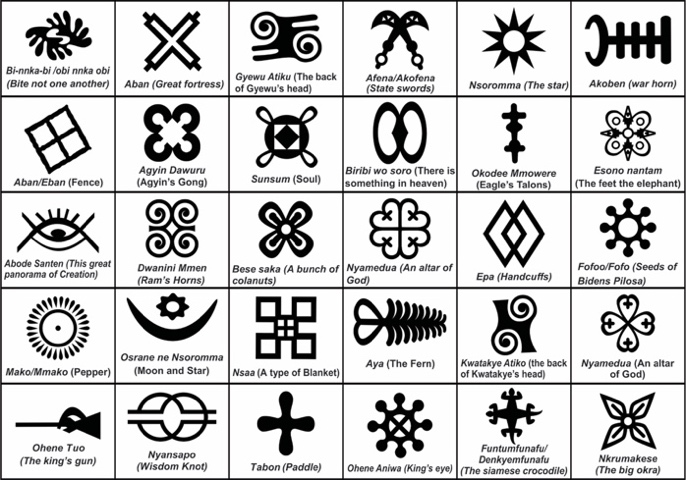
Figure 1. Adinkra symbols. Source: [10]
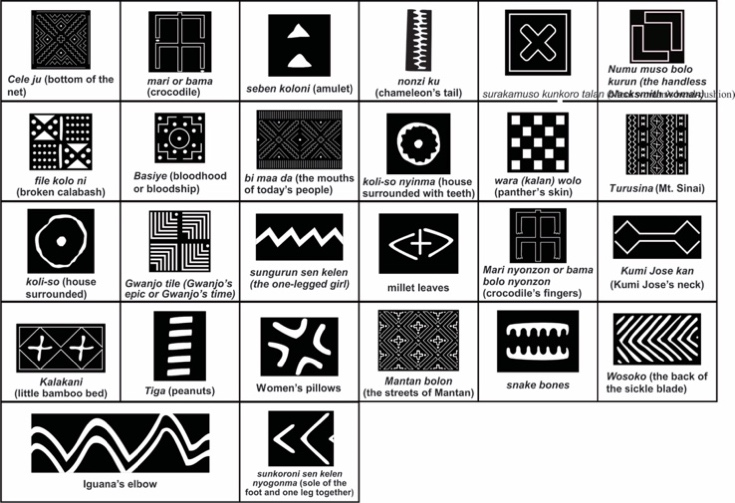
Figure 2. Bogolanfini patterns. Source: [11]
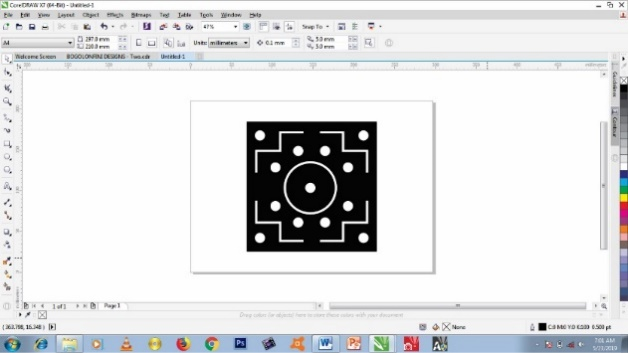
Figure 3. <i>Basiye</i> (Bloodhood or bloodship) opened in CorelDraw
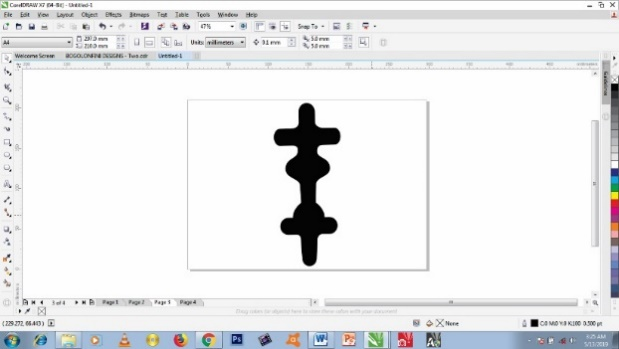
Figure 4. <i>Okodee</i><i> </i><i>Mmowere</i><i> </i>(Eagle’s Talons) opened in CorelDraw
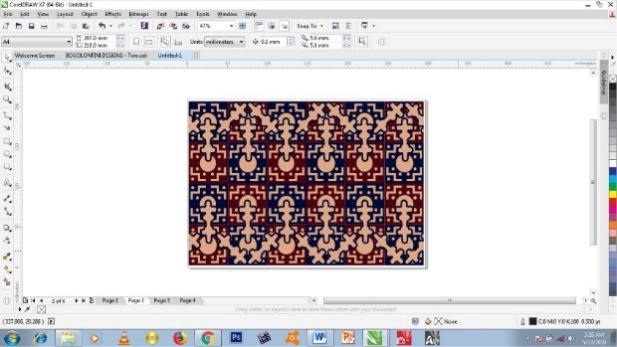
Figure 5. Final design as represented in CorelDraw
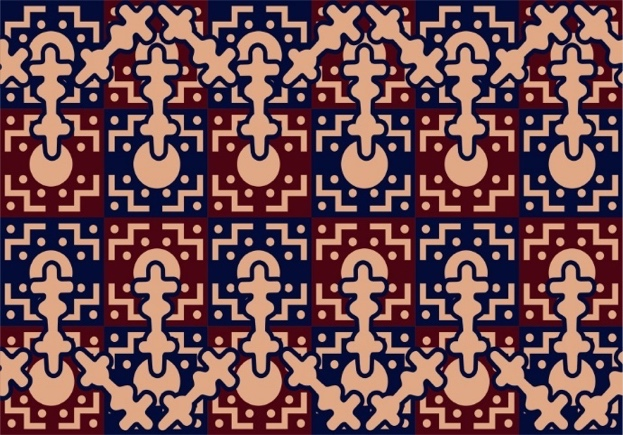
Figure 6. Final design
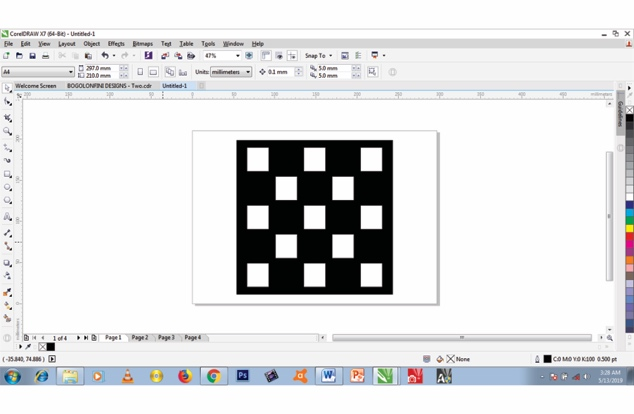
Figure 7. <i>Wara</i><i> (</i><i>kalan</i><i>) </i><i>wolo</i> (panther’s skin) opened in CorelDraw
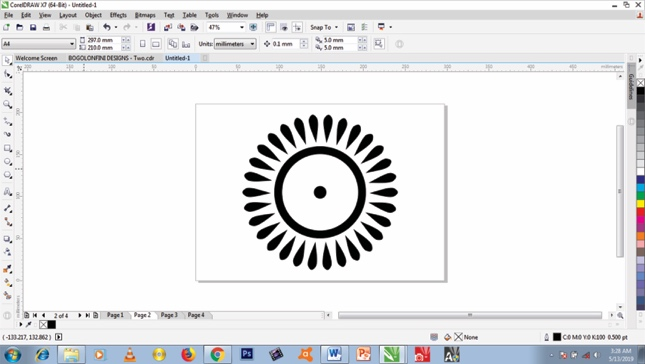
Figure 8. <i>Mako/</i><i>Mmako</i> (Pepper) opened in CorelDraw
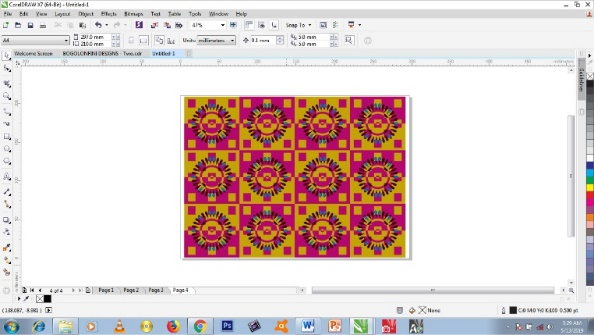
Figure 9. Final design as represented in CorelDraw
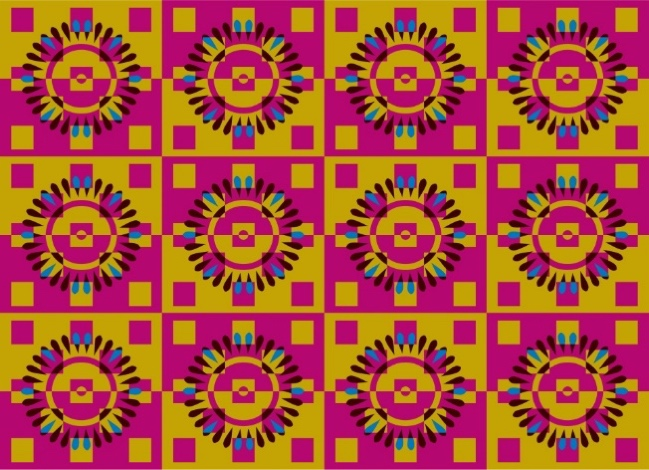
Figure 10. Final Design
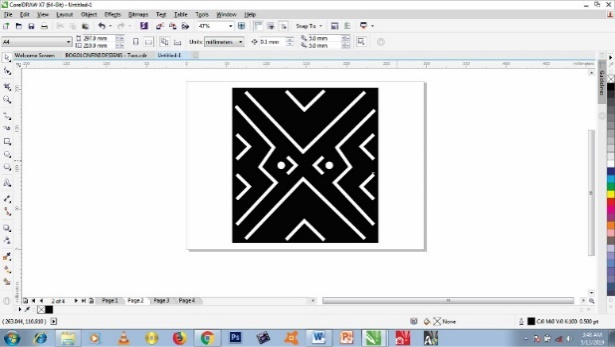
Figure 11. Juguru Fara (The feet of the tortoise) opened in CorelDraw
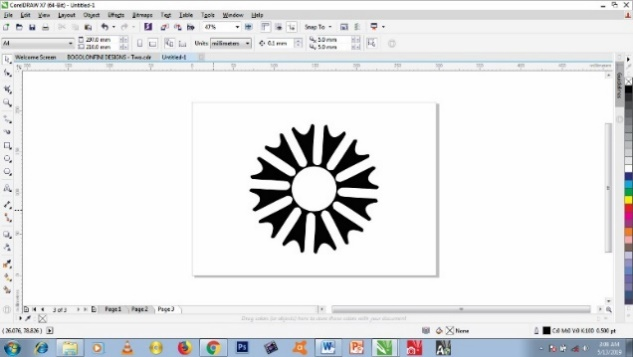
Figure 12. <i>Ohene </i>(King) opened in CorelDraw
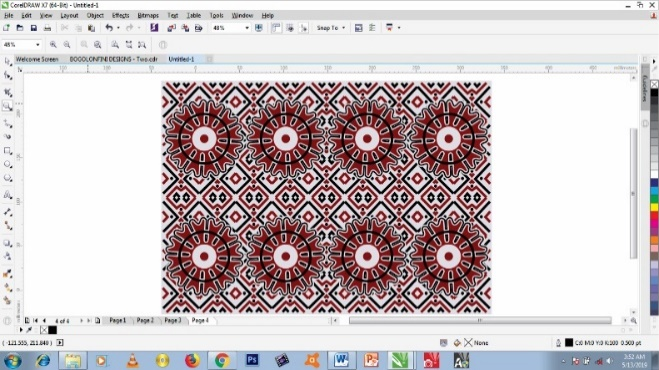
Figure 13. Final design as represented in CorelDraw
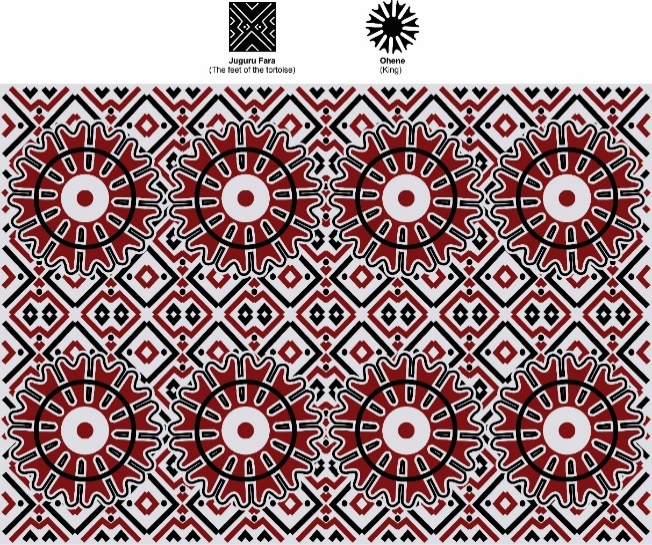
Figure 14. Final Design
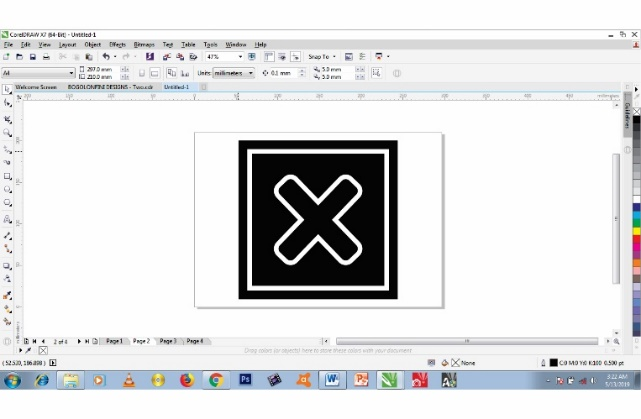
Figure 15. <i>Surakamuso</i><i> </i><i>kunkoro</i><i> </i><i>talan</i><i> </i>(Moor woman’s head-cushion) opened in CorelDraw
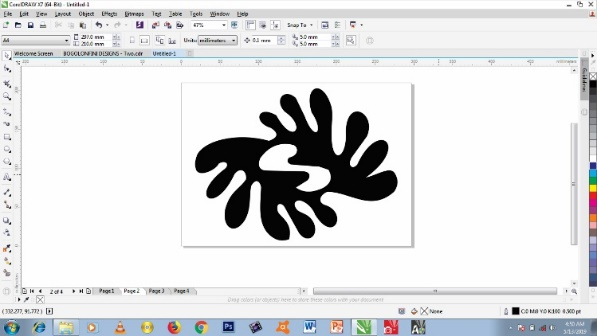
Figure 16. <i>Bi-</i><i>nnka</i><i>-bi /obi </i><i>nnka</i><i> obi </i>(Bite not one another) opened in CorelDraw
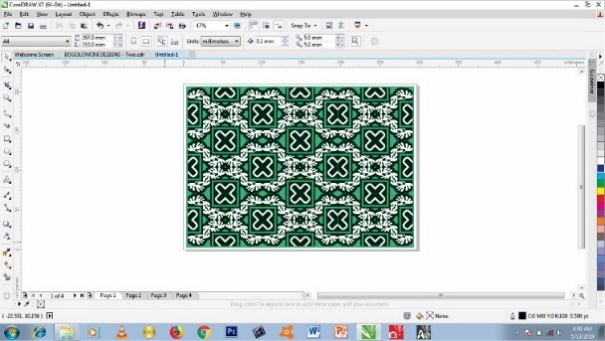
Figure 17. Final design as represented in CorelDraw
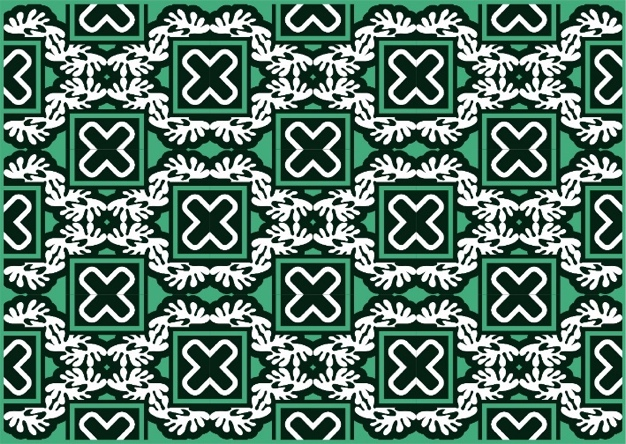
Figure 18. Final design
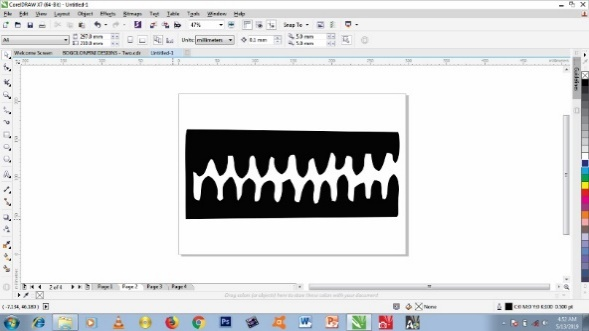
Figure 19. <i>Nonzi</i><i> </i><i>ku</i><i> </i>(chameleon’s tail) opened in CorelDraw
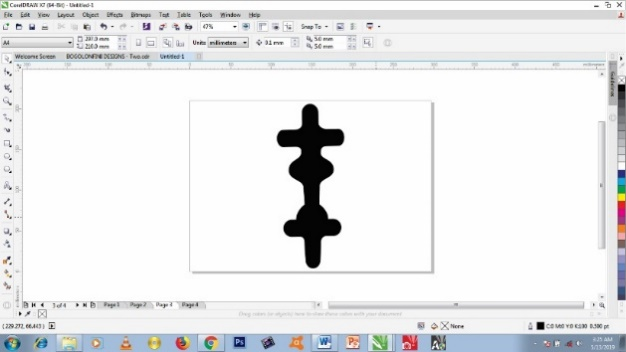
Figure 20. <i>Okodee</i><i> </i><i>Mmowere</i> (Eagle’s Talons) opened in CorelDraw
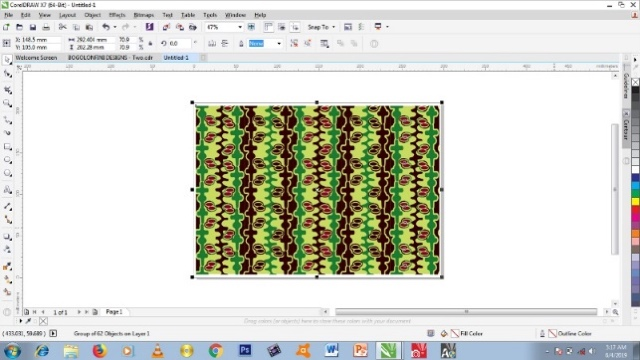
Figure 21. Final design as represented in CorelDraw
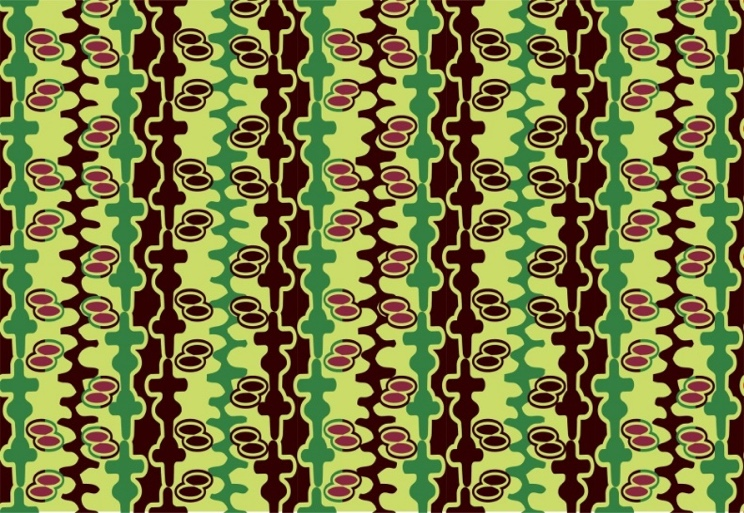
Figure 22. Final design
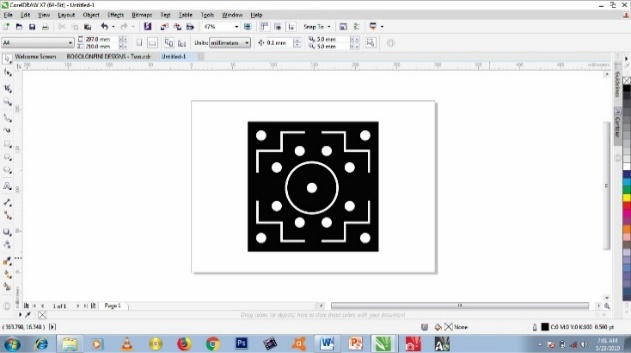
Figure 23. <i>Basiye</i> (bloodhood) - Bogolanfini pattern opened in CorelDraw

Figure 24. <i>Ohene </i>(King)<i> – </i>Adinkra symbol opened in CorelDraw
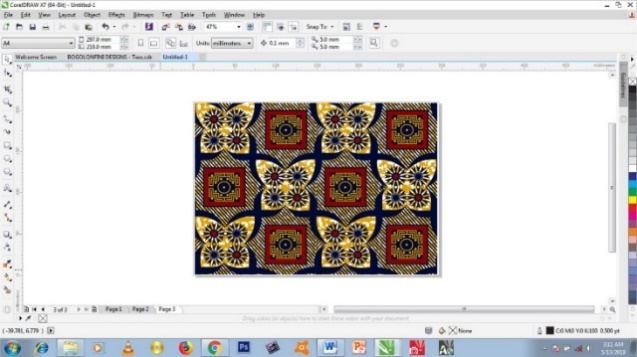
Figure 25. Final design opened in CorelDraw
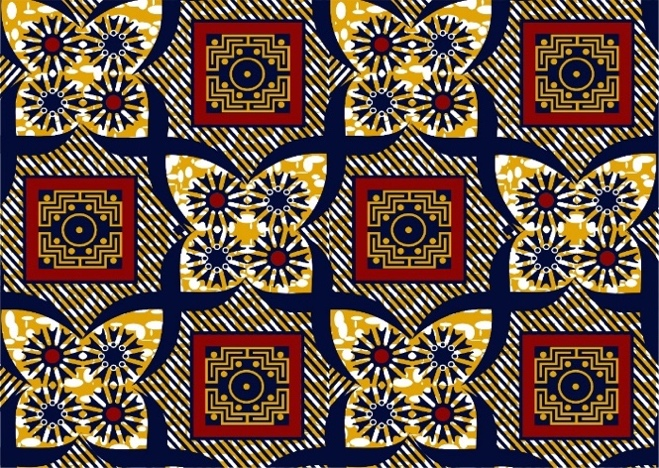
Figure 26. Final design
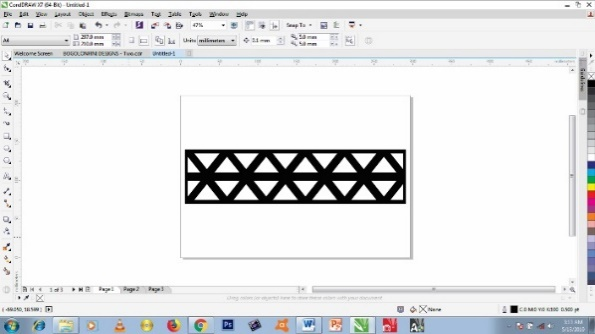
Figure 27. <i>Seben</i><i> </i><i>Koloni</i> (The small old amulet) - Bogolanfini pattern opened in CorelDraw
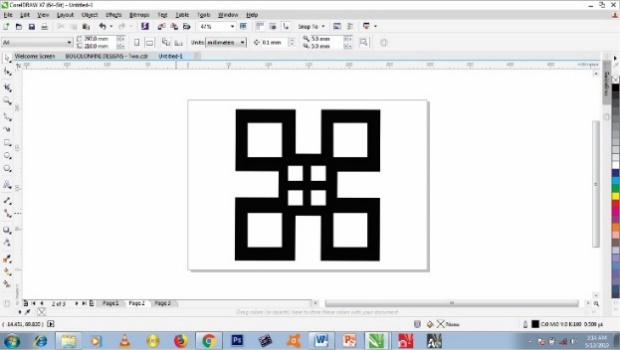
Figure 28. (A type of Blanket) - Adinkra symbol opened in CorelDraw
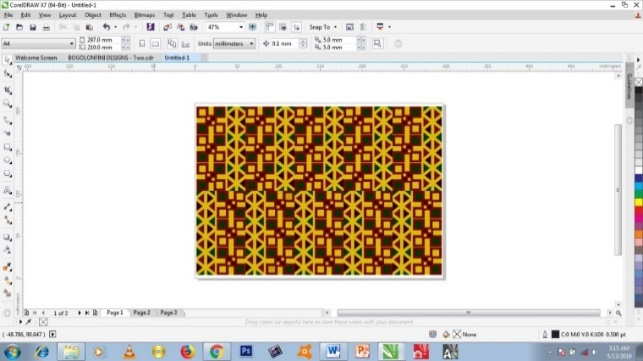
Figure 29. Final design opened in CorelDraw
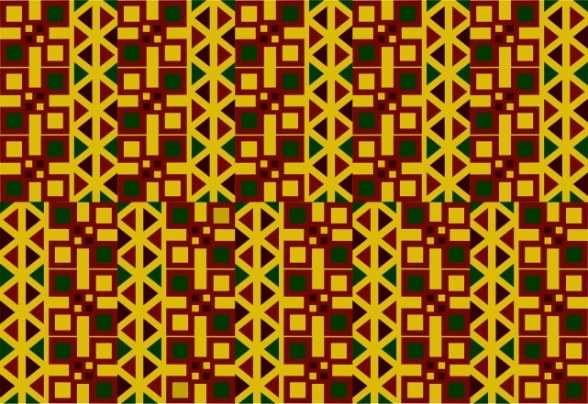
Figure 30. Final design
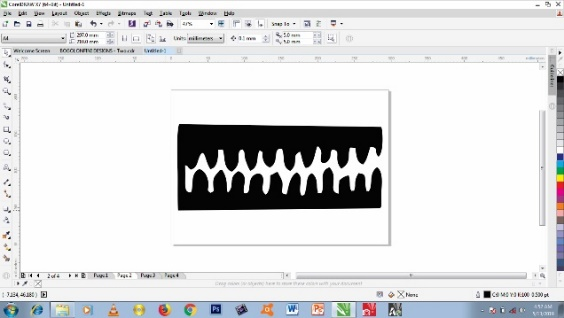
Figure 31. <i>Nonzi</i><i> </i><i>ku</i> (chameleon’s tail) - Bogolanfini pattern opened in CorelDraw
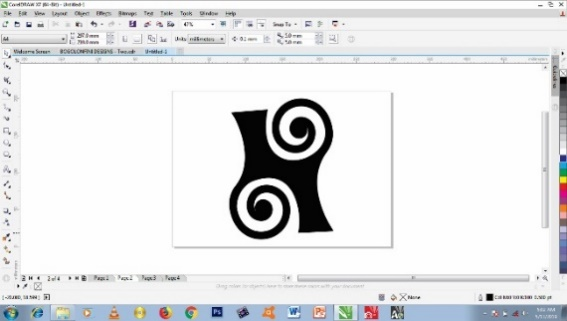
Figure 32. <i>Kwatakye</i><i> </i><i>Atiko</i> (the back of Kwatakye’s head) - Adinkra symbol opened in CorelDraw

Figure 33. Final design opened in CorelDraw
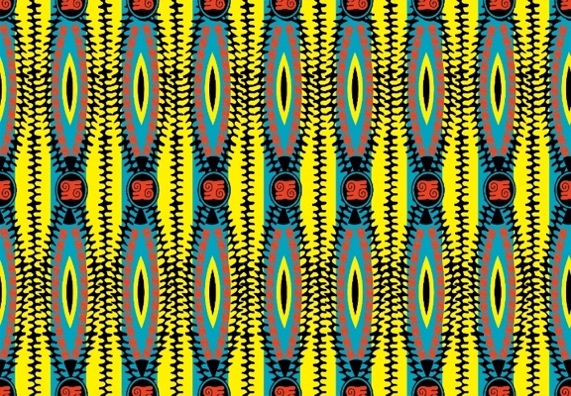
Figure 34. Final design
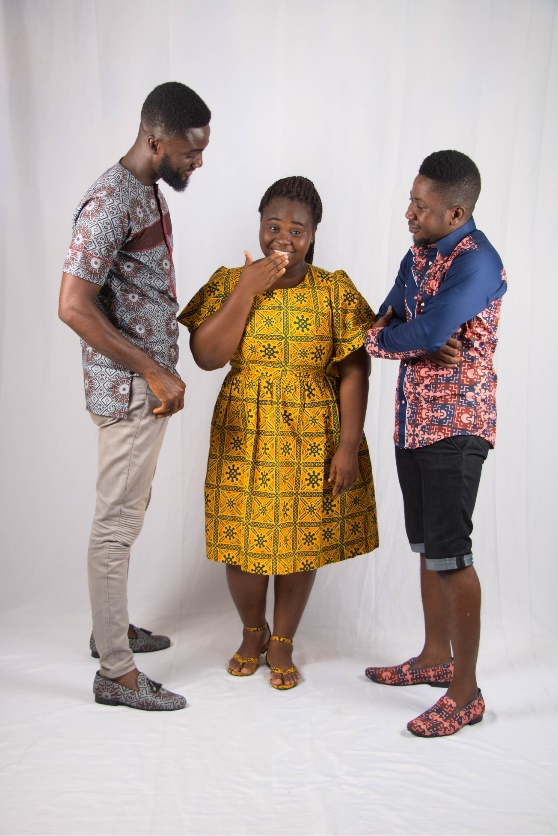
Figure 35. Men and Ladies apparel (Outsourced to Nii Addo’s Design, 2020)
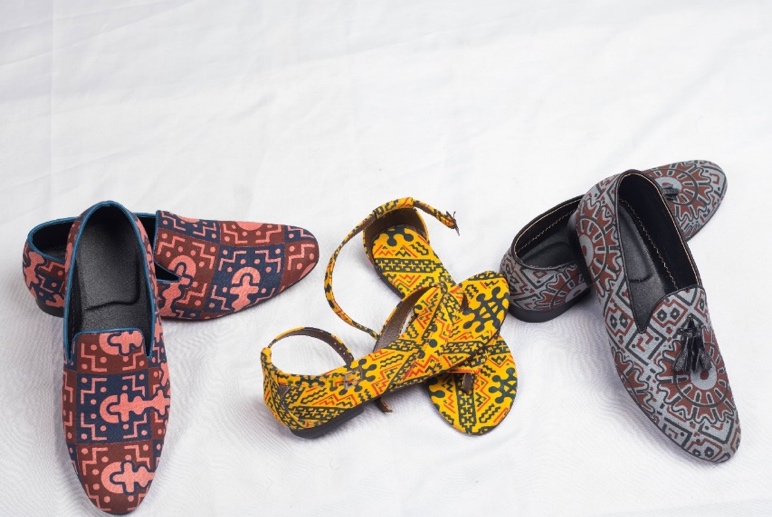
Figure 36. Men and ladies’ footwear (Outsourced to Edisef Enterprise, 2020)
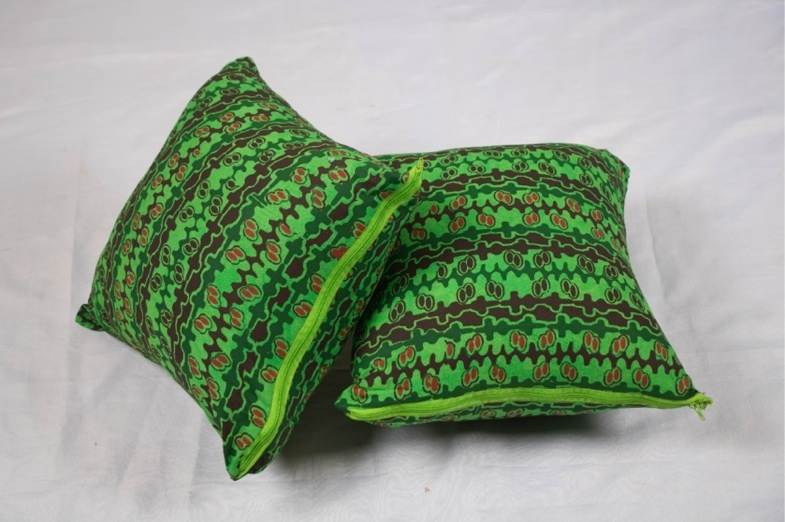
Figure 37. Armrest (Outsourced to Nii Addo’s Design, 2020)
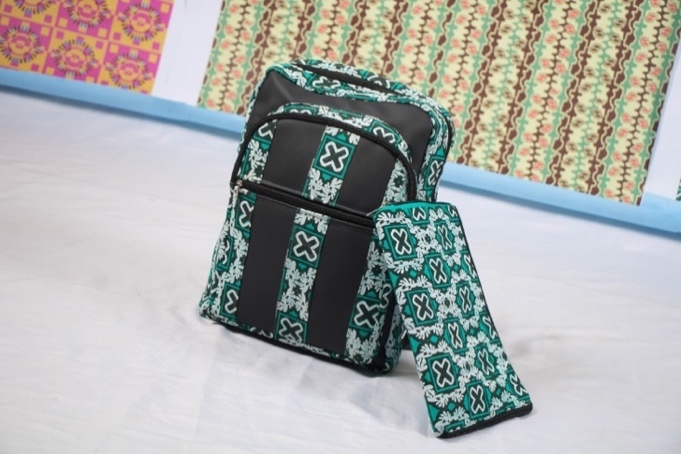
Figure 38. Bag pack and accessory (Outsourced to Galaxy Textile Collection, 2020)
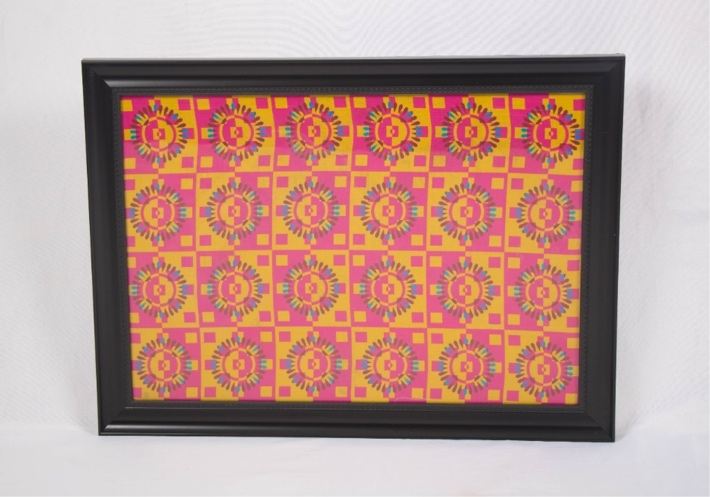
Figure 39. Wall hanging (Outsourced to Dignity Frames, 2020)