Back to Article
Spatial Mismatches between Cyclone Exposure and Food System Impacts in Vanuatu: Integrating Topographic, Agro-Ecological, and Infrastructure Mediators for Resilience Planning
Universal Journal of Food Security
| Vol 3, Issue 1
Figure 5
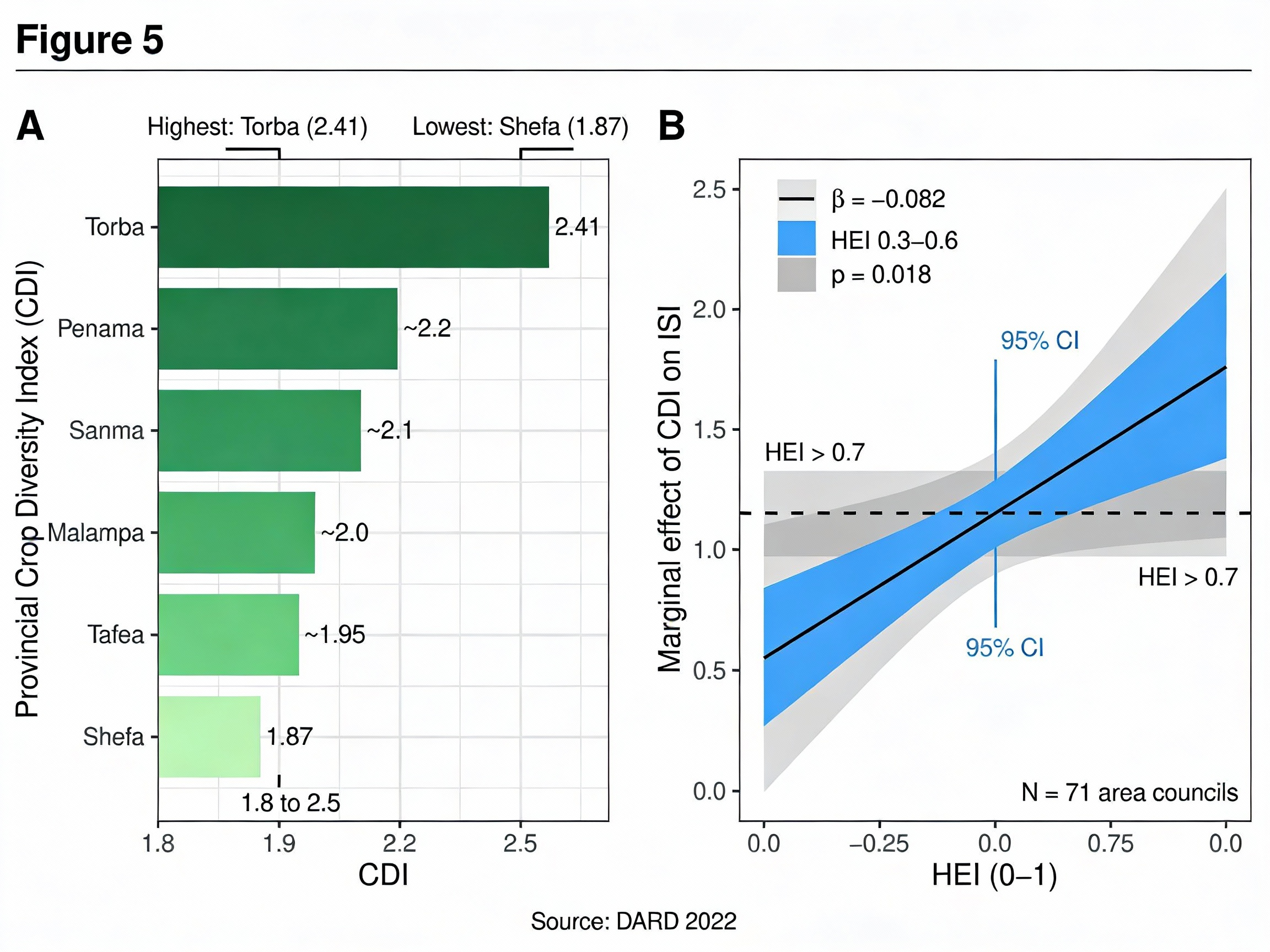
Figure 5.
Crop diversity buffers food system impacts in moderate-exposure contexts but is overwhelmed under extreme cyclone loading. A significant north-to-south decline in provincial Crop Diversity Index (CDI 2.41 in Torba to 1.87 in Shefa) coincides with increasing cyclone exposure, yet diversity confers measurable impact reduction only where HEI remains below 0.7 (β = −0.082, p = 0.018); above this threshold, the buffering effect collapses entirely — identifying a critical adaptive capacity boundary for agro-ecological resilience planning.