
Abstract
Background: In Systemic lupus erythematosus (SLE), a chronic multisystem autoimmune disease, central nervous system infections are uncommon, affecting about 1% of cases. However, diagnosis is often challenging due to overlapping autoimmune and infectious features, nonspecific neurological symptoms, and limited diagnostic specificity, which may delay appropriate treatment and worsen outcomes. Case Report: An 80-year-old male with a five-year history of systemic lupus erythematosus (SLE) presented with a two-day history of generalized weakness that subsequently progressed to recurrent focal seizures and later to generalized seizures accompanied by a profound decline in consciousness. Despite adequate administration of antiepileptic and sedative therapy, persistent seizure activity was observed. Meningitis Panel evaluation confirmed herpes simplex virus type 1 (HSV-1) encephalitis, complicated by severe systemic inflammation, anemia, thrombocytopenia, renal dysfunction, and respiratory acidosis findings indicative of multi-organ failure. Magnetic resonance imaging of the brain revealed bilateral asymmetric hyperintense lesions involving the insular regions, medial temporal lobes, and frontal cortices, consistent with viral encephalitis. The patient underwent comprehensive intensive care management, including intravenous antiviral, antimicrobial, corticosteroid, and supportive therapies. However, his clinical condition progressively deteriorated, culminating in death on the fourth day of hospitalization. Discussion: This case illustrates the diagnostic and therapeutic complexity of herpes simplex virus type 1 (HSV-1) encephalitis in a patient with systemic lupus erythematosus (SLE), a rare but fatal complication. In immunocompromised individuals, atypical clinical and cerebrospinal fluid findings may obscure diagnosis and delay treatment. Immunosuppressive therapy and underlying immune dysregulation further increase vulnerability to opportunistic infections and multi-organ failure. Early recognition of viral encephalitis in SLE patients with acute neurological symptoms is therefore crucial to optimize outcomes. Conclusion: Encephalitis in SLE is a rare but serious complication with overlapping autoimmune and infectious features. Early recognition and timely antiviral immunosuppressive therapy are essential to improve outcomes.
1. Introduction
Encephalitis, defined as inflammation of the brain parenchyma, represents a significant cause of morbidity, mortality, and long-term neurological disability in both adult and pediatric populations [1]. The global incidence is estimated at 1.9–14.3 cases per 100,000 population annually, with reported mortality rates ranging from 5.6% to 39.3% despite advances in diagnosis and management [1]. Encephalitis The most common etiologic agent is Herpes Simplex Virus (HSV), which frequently presents with altered consciousness, fever, seizures, movement disorders, or focal neurological deficits [2]. Nonetheless, atypical presentations lacking fever or other classical symptoms may also occur, posing diagnostic challenges [3, 4]. Even with appropriate antiviral therapy, encephalitis continues to carry a substantial burden, with mortality rates reaching up to 30% and a high risk of severe, permanent neurological sequelae [5].
Systemic lupus erythematosus (SLE) is a chronic autoimmune disorder that affects multiple organ systems and follows a relapsing remitting pattern [6]. The disease exhibits extensive clinical variability and produces numerous autoantibodies, which often complicates accurate diagnosis [6]. Although significant progress has been made in treatment such as the use of immunosuppressants, monoclonal antibodies, plasmapheresis, and intravenous immunoglobulin (IVIG) both morbidity and mortality remain considerable, despite a gradual decline in death rates over the past two decades [6, 7, 8]. Central nervous system (CNS) infections represent a rare complication in patients with systemic lupus erythematosus (SLE), occurring in approximately 1% of cases [9]. Diagnostic accuracy is often hindered by the presence of atypical or nonspecific neurological features and the limited specificity of ancillary investigations. Consequently, these challenges may lead to delays in diagnosis and treatment initiation, thereby complicating clinical management and potentially affecting patient outcomes [9, 10].
2. Case Report
An 80-year-old man was referred from a regional hospital with a chief complaint of generalized weakness that had persisted for two days prior to admission. Subsequently, he developed recurrent focal seizures occurring more than ten times, each episode accompanied by brief loss of consciousness with rapid recovery. The condition later progressed to generalized seizures associated with a rapid and profound decline in consciousness.
Despite the administration of adequate antiepileptic and sedative therapy, the patient continued to exhibit ongoing seizure activity characterized by uncontrolled twitching movements. His medical history revealed a diagnosis of systemic lupus erythematosus (SLE) established five years earlier, along with comorbid hypertension and elevated D-dimer levels. The patient was on regular treatment consisting of mycophenolate sodium, a renoprotective agent, and anticoagulant therapy as part of his maintenance regimen.
On initial physical examination, the patient presented with a Glasgow Coma Scale (GCS) score of E1M2V1. Vital signs showed a blood pressure of 120/50 mmHg, heart rate of 122 beats per minute, respiratory rate of 23 breaths per minute, and body temperature of 38.3°C. Neurological examination revealed that the right pupil was difficult to assess, while the left pupil measured 2 mm with sluggish or poorly assessable light response. No clear lateralizing neurological signs were observed.
The encephalitis panel yielded negative results across all tested parameters, including antibodies against the NMDA receptor, AMPA1/2 receptor, CASPR2, GABA-B receptor, LGI1, DPPX, as well as Mycobacterium tuberculosis. Overall, these findings are indicative of HSV-1 encephalitis occurring in a patient with systemic lupus erythematosus (SLE), further complicated by severe systemic inflammation consistent with sepsis, anemia, thrombocytopenia, renal dysfunction, and respiratory acidosis (Tables 1, 2 and 3). Collectively, these abnormalities reflect a critical clinical condition characterized by multi-organ failure.
Chest radiography demonstrated bilateral perihilar inhomogeneous opacities, along with aortic elongation and evidence of thoracic spondylosis. Brain MRI and MRA without contrast revealed bilateral asymmetric hyperintense lesions on FLAIR, DWI, and T2-weighted sequences, predominantly involving both insular regions, bilateral medial temporal lobes, and bilateral frontal cortical areas (Figure 1). These findings were suggestive of viral encephalitis, with autoimmune encephalitis considered as a differential diagnosis. Additionally, multiple lacunar lesions were identified in the bilateral frontal and parietal lobes, internal and external capsules, and pons.
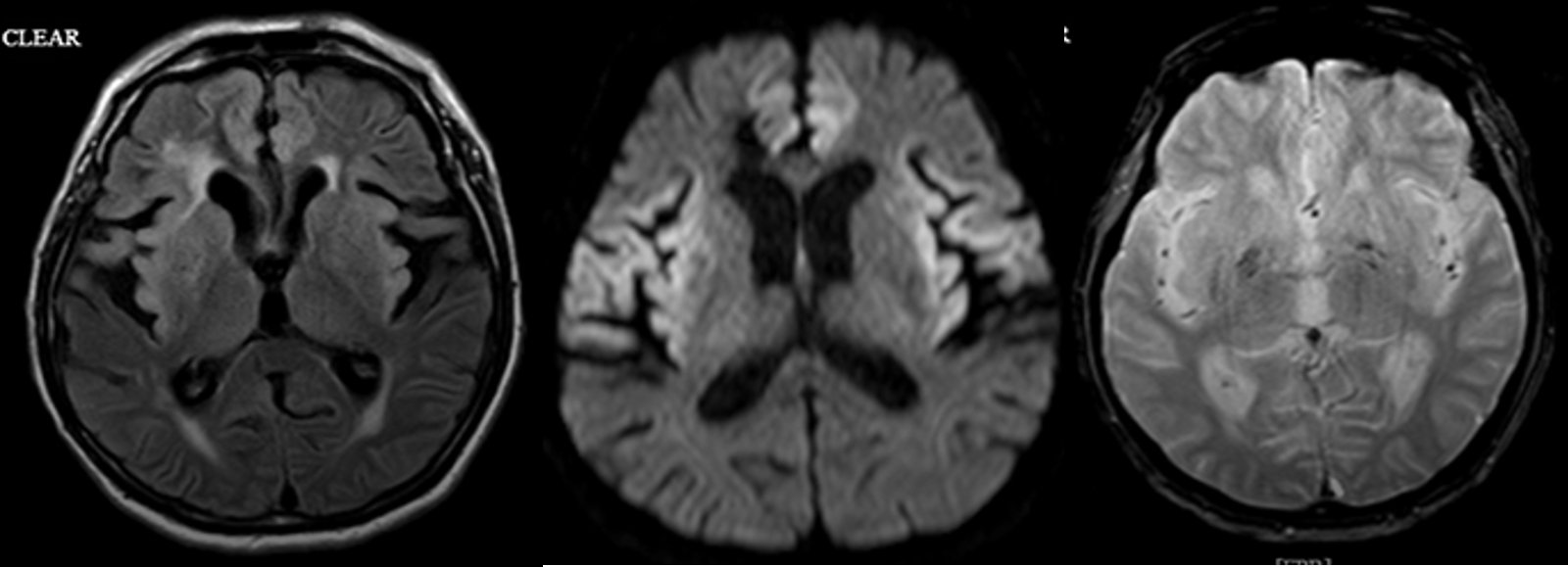
The patient was subsequently admitted to the Intensive Care Unit (ICU) and managed with mechanical ventilatory support, central venous catheterization via the subclavian vein, and insertion of a double-lumen catheter into the right femoral vein. Comprehensive intensive care management was provided, including multiple antiepileptic drugs, intravenous antiviral, antibiotic, antifungal, and corticosteroid therapy, alongside supportive care and maximal-dose vasoconstrictors. Despite aggressive and multidisciplinary critical care interventions, the patient’s clinical condition continued to deteriorate, ultimately resulting in death on the fourth day of hospitalization.
3. Discussion
Encephalitis, defined as inflammation of the brain parenchyma, is most commonly attributed to viral infections particularly herpes simplex virus (HSV) type 1 [10, 11]. However, autoimmune etiologies such as N-methyl-D-aspartate receptor (NMDAR) antibody–associated encephalitis are increasingly being recognized [10, 11]. The classic clinical triad of acute encephalitis consists of fever, headache, and altered mental status [11]. Broader diagnostic criteria have been established to improve diagnostic accuracy and include the presence of seizure activity unrelated to a pre-existing seizure disorder, new focal neurological deficits, cerebrospinal fluid (CSF) pleocytosis, new neuroimaging abnormalities suggestive of encephalitis, and electroencephalographic findings consistent with encephalitic processes [11, 12]. These criteria have proven particularly useful for diagnosing encephalitis in immunocompetent individuals [11, 12].
However, the diagnostic approach differs considerably in immunocompromised patients. In such individuals, central nervous system (CNS) HSV infection may often be underdiagnosed due to atypical or subtle clinical presentations [10]. This was evident in the present case, where the patient initially presented only with mild generalized weakness for two days before developing seizures [10]. Furthermore, several studies have shown that immunocompromised patients with HSV encephalitis are less likely to exhibit CSF pleocytosis, thereby complicating diagnosis [10]. In these cases, polymerase chain reaction (PCR) testing for HSV DNA becomes essential, even in the absence of CSF pleocytosis [10]. Typically, viral encephalitis presents with CSF pleocytosis (>5 white blood cells × 10⁹/L), predominantly lymphocytic in nature [10]. Early in the disease course, neutrophilic predominance or even a normal white cell count may occasionally be observed [10]. CSF protein levels are usually normal to moderately elevated, while glucose remains within the normal range [10]. In this patient, however, there was no evidence of pleocytosis, and both protein and glucose levels were elevated an atypical finding that further underscores the diagnostic challenges of HSV encephalitis in immunocompromised hosts [2, 10]. This poses a significant challenge in settings where advanced diagnostic modalities such as PCR, MRI, or EEG are not available. In such circumstances, it becomes extremely difficult for clinicians to establish an accurate diagnosis and initiate appropriate treatment promptly.
Patients with systemic lupus erythematosus (SLE) frequently exhibit a wide range of neuropsychiatric manifestations collectively termed neuropsychiatric systemic lupus erythematosus (NPSLE) [13]. NPSLE involves both the central nervous system (CNS) and peripheral nervous system (PNS) and may present with diverse clinical symptoms, including cognitive impairment, organic brain syndrome, delirium, seizures, headache, and psychosis. It is estimated that approximately 30–40% of individuals with SLE experience neuropsychiatric involvement [13]. In some cases, neuropsychiatric symptoms may represent the initial manifestation of SLE, and they can occur even when systemic disease activity is minimal [13]. However, the presence of neuropsychiatric symptoms (NPS) in patients with SLE does not necessarily confirm a direct causal relationship with lupus itself, as these manifestations may also result from comorbid conditions, coincidental occurrences, or complications related to SLE therapy [13]. NPSLE is further categorized into primary and secondary forms [13]. Primary NPSLE arises from direct autoimmune-mediated inflammatory processes affecting the CNS or PNS, whereas secondary NPSLE develops as a consequence of indirect mechanisms, including adverse effects of immunosuppressive therapy, opportunistic CNS infections due to chronic immunosuppression, or SLE-associated end-organ damage [13].
To date, no large scale epidemiological investigations have specifically assessed the incidence of encephalitis among patients with systemic lupus erythematosus (SLE). A systematic review and meta-analysis by Molooghi et al. (2021) represents the first study to evaluate the prevalence of central nervous system (CNS) infections in SLE within Asian populations [9]. The analysis revealed that CNS infections occurred in only 1.1% of 17,751 SLE patients, corresponding to approximately 209 cases, thereby indicating that CNS infection constitutes a rare complication of SLE [9]. The most frequently identified pathogens were bacterial, predominantly Cryptococcus neoformans and Mycobacterium tuberculosis, followed by fungal and viral agents. The overall mortality rate reached 29%, with M. tuberculosis-associated CNS infection representing the leading cause of death. Moreover, 13.3% of survivors exhibited persistent neurological sequelae [9].
Two contrasting yet interrelated pathophysiological mechanisms have been proposed to explain both the low incidence and the potential occurrence of CNS infections in SLE [9, 14]. On one hand, immunosuppressive therapy, which remains central to SLE management, may increase susceptibility to opportunistic CNS infections. Conversely, certain therapeutic agents, particularly hydroxychloroquine (HCQ), demonstrate protective effects against infection-related morbidity and mortality owing to their broad spectrum antimicrobial and immunomodulatory properties [9, 14]. HCQ inhibits intracellular bacterial proliferation by alkalinizing phagosomes, suppresses fungal growth by limiting iron release within phagolysosomes in a pH-dependent manner, and prevents viral entry by elevating lysosomal pH and inhibiting post-translational modification of viral envelope glycoproteins [9, 14]. Additionally, HCQ modulates immune responses by downregulating proinflammatory cytokines such as IL-1, IFN-α, and TNF, and by blocking Toll-like receptor (TLR) signaling, particularly TLR7 and TLR9 pathways [9, 14]. A retrospective cohort study by Tang et al. (2024) found an association between HSV infection and the use of immunomodulatory or immunosuppressive agents, such as mycophenolate mofetil (MMF), cyclosporine, and azathioprine, suggesting that patients receiving these therapies may have an increased susceptibility to encephalitis [15]. However, the study did not specifically identify MMF as a direct causative factor [15]. In contrast, a randomized controlled trial by Gong et al. (2025) reported that MMF may exert a protective effect in autoimmune encephalitis by reducing the risk of relapse [16]. Overall, current evidence remains insufficient to establish a direct link between MMF use and HSV encephalitis [16]. In contrast, prolonged or high-dose use of corticosteroids and other immunosuppressive agents may predispose SLE patients to opportunistic CNS infections, notably tuberculosis reactivation [9, 14]. Hence, the choice and dosage of immunosuppressive therapy should be individualized based on disease activity, severity, and infection risk, to achieve an optimal balance between disease control and infection prevention [9, 14].
In systemic lupus erythematosus (SLE), disturbances in humoral immune regulation are closely associated with the development of autoimmune encephalitis [17, 19]. Among these, anti-NMDAR encephalitis may manifest concurrently with SLE due to molecular mimicry and cross reactivity between anti-DNA antibody and the NR2 subunit of the NMDA receptor [17, 19]. In contrast, the coexistence of herpes simplex virus (HSV) encephalitis with SLE is exceedingly uncommon, with only a single case documented to date [20]. Despite adequate treatment, central nervous system (CNS) infections in SLE remain associated with exceptionally high mortality and morbidity rates [19]. This unfavourable prognosis is largely attributed to the underlying immune dysregulation that affects both innate and adaptive immune mechanisms [21]. Furthermore, the use of immunosuppressive therapies, which are essential in SLE management, further impairs host immunity, thereby heightening susceptibility to opportunistic and chronic infections and contributing to increased morbidity and mortality [21].
4. Conclusion
In summary, encephalitis in patients with systemic lupus erythematosus is an uncommon yet severe complication that can be difficult to diagnose because of overlapping autoimmune and infectious features. Immunosuppressive treatment heightens the risk of opportunistic infections such as HSV encephalitis, and atypical laboratory findings often complicate detection. Prompt recognition, molecular confirmation, and early combined antiviral and immunosuppressive therapy are crucial may improve clinical outcomes.
Acknowledgements
None
Funding Information
This research received no external funding.
Author Contribution
E.A., V.F.G., S.N., contributed to the conception and design of the study, data collection, analysis and interpretation of data, drafting of the manuscript, and final approval of the version to be published.
Conflict of interest
The authors declare that there is no conflict of interest regarding the publication of this paper.
References
- Wang, H., Zhao, S., Wang, S., Zheng, Y., Wang, S., Chen, H., Pang, J., Ma, J., Yang, X., & Chen, Y. (2022). Global magnitude of encephalitis burden and its evolving pattern over the past 30 years. Journal of Infection, 84(6), 777–787. https://doi.org/10.1016/j.jinf.2022.04.026[CrossRef] [PubMed]
- Ellul, M., & Solomon, T. (2018). CME INFECTIOUS DISEASES Authors: A specialist registrar in neurology. In The Walton Centre NHS Foundation Trust (Vol. 18, Issue 2).
- Na, Y., Lee, J.-J., Kim, B. K., Lee, W.-W., Kim, Y. S., & Yoo, I. (2024). Herpes simplex encephalitis initially presenting without fever or cerebrospinal fluid pleocytosis and with typical neuroimaging findings: a case report. Encephalitis, 4(2), 31–34. https://doi.org/10.47936/encephalitis.2023.00220[CrossRef] [PubMed]
- Chotmongkol, V., Chimsuk, U., & Chuesakoolvanich, K. (2003). BENIGN FORM OF HSE CASE REPORT BENIGN FORM OF HERPES SIMPLEX ENCEPHALITIS.
- Hammami, F., Koubaa, M., Ellouze, Y., Feki, W., Rekik, K., Smaoui, F., Elleuch, E., Marrakchi, C., & Jemaa, M. ben. (2021). Management and outcome predictors during Herpes simplex virus encephalitis. Annals of Infection, 5, 5–5. https://doi.org/10.21037/aoi-20-14[CrossRef]
- Ameer, M. A., Chaudhry, H., Mushtaq, J., Khan, O. S., Babar, M., Hashim, T., Zeb, S., Tariq, M. A., Patlolla, S. R., Ali, J., Hashim, S. N., & Hashim, S. (2022). An Overview of Systemic Lupus Erythematosus (SLE) Pathogenesis, Classification, and Management. Cureus. https://doi.org/10.7759/cureus.30330[CrossRef]
- Daoud, A., Dweik, L., & Pamuk, O. (2025). Temporal Trends and Demographic Insights Into Mortality From Systemic Lupus Erythematosus, 1999–2020. Arthritis Care and Research, 77(8), 988–997. https://doi.org/10.1002/acr.25509[CrossRef] [PubMed]
- Lao, C., White, D., Rabindranath, K., van Dantzig, P., Foxall, D., & Lawrenson, R. (2024). Mortality and causes of death in systemic lupus erythematosus in New Zealand: a population-based study. Rheumatology (United Kingdom), 63(6), 1560–1567. https://doi.org/10.1093/rheumatology/kead427[CrossRef] [PubMed]
- Molooghi, K., Sheybani, F., Naderi, H., Mirfeizi, Z., Morovatdar, N., & Baradaran, A. (2022). Central nervous system infections in patients with systemic lupus erythematosus: A systematic review and meta-analysis. In Lupus Science and Medicine (Vol. 9, Issue 1). BMJ Publishing Group. https://doi.org/10.1136/lupus-2021-000560[CrossRef] [PubMed]
- Saylor, D., Thakur, K., & Venkatesan, A. (2015). Acute encephalitis in the immunocompromised individual. In Current Opinion in Infectious Diseases (Vol. 28, Issue 4, pp. 330–336). Lippincott Williams and Wilkins. https://doi.org/10.1097/QCO.0000000000000175[CrossRef] [PubMed]
- Curtis, N., Finn, A., & Pollard, A. J. (Eds.). (2011). Hot Topics in Infection and Immunity in Children VII (Vol. 697). Springer New York. https://doi.org/10.1007/978-1-4419-7185-2[CrossRef] [PubMed]
- Alam, A. M., Easton, A., Nicholson, T. R., Irani, S. R., Davies, N. W. S., Solomon, T., & Michael, B. D. (2023). Encephalitis: diagnosis, management and recent advances in the field of encephalitides. In Postgraduate Medical Journal (Vol. 99, Issue 1174, pp. 815–825). Oxford University Press. https://doi.org/10.1136/postgradmedj-2022-141812[CrossRef] [PubMed]
- Justiz-Vaillant, A. A., Gopaul, D., Soodeen, S., Arozarena-Fundora, R., Barbosa, O. A., Unakal, C., Thompson, R., Pandit, B., Umakanthan, S., & Akpaka, P. E. (2024). Neuropsychiatric Systemic Lupus Erythematosus: Molecules Involved in Its Imunopathogenesis, Clinical Features, and Treatment. In Molecules (Vol. 29, Issue 4). Multidisciplinary Digital Publishing Institute (MDPI). https://doi.org/10.3390/molecules29040747[CrossRef] [PubMed]
- Hidekawa, C., Yoshimi, R., Saigusa, Y., Tamura, J., Kojitani, N., Suzuki, N., Sakurai, N., Yoshioka, Y., Sugiyama-Kawahara, Y., Kunishita, Y., Kishimoto, D., Higashitani, K., Sato, Y., Komiya, T., Nagai, H., Hamada, N., Maeda, A., Tsuchida, N., Hirahara, L., … Nakajima, H. (2023). Protective effect of hydroxychloroquine on infections in patients with systemic lupus erythematosus: an observational study using the LUNA registry. Frontiers in Immunology, 14. https://doi.org/10.3389/fimmu.2023.1227403[CrossRef] [PubMed]
- Gong, X., Liu, Y., Ma, Y., Yan, B., An, D., Guo, Y., Liu, X., Li, X., Cai, L., Deng, X., Zhou, D., Li, J. M., & Hong, Z. (2025). Long-term maintenance of mycophenolate mofetil in anti-NMDA receptor encephalitis (LEARN): a multicentre, open-label, blinded-endpoint, randomised controlled trial. Journal of Neurology, Neurosurgery and Psychiatry, 96(10), 998–1007. https://doi.org/10.1136/jnnp-2024-335400[CrossRef] [PubMed]
- Tang, A., Yoshida, K., Lahey, H., Wilcox, D. R., Guan, H., Costenbader, K., Solomon, D., Miyawaki, E. K., & Bhattacharyya, S. (2024). Herpes Simplex Virus Encephalitis in Patients With Autoimmune Conditions or Exposure to Immunomodulatory Medications. Neurology, 102(10). https://doi.org/10.1212/WNL.0000000000209297[CrossRef] [PubMed]
- Wu, Y. Y., Feng, Y., Huang, Y., & Zhang, J. W. (2016). Anti-N-methyl-D-aspartate receptor encephalitis in a patient with systemic lupus erythematosus. In Journal of Clinical Neurology (Korea) (Vol. 12, Issue 4, pp. 502–504). Korean Neurological Association. https://doi.org/10.3988/jcn.2016.12.4.502[CrossRef] [PubMed]
- Arika, G., Kambayana, G., & Kurniari, P. (2020). DIAGNOSTIC AND MANAGEMENT PROBLEMS IN PATIENT WITH SYSTEMIC LUPUS ERYTHEMATOSUS (SLE) AND ANTI N-METHYL-D-ASPARTATE RECEPTOR (NMDAR) ENCEPHALITIS. International Journal of Medical Reviews and Case Reports, 0, 1. https://doi.org/10.5455/ijmrcr.lupus-enchepalitis[CrossRef]
- Ribeiro, F. M., & Signorelli, F. (2017). The role of infections in neuropsychiatric lupus. Lupus, 26(5), 490–496. https://doi.org/10.1177/0961203317691375[CrossRef] [PubMed]
- Zhang, L., Liu, J. J., & Li, M. T. (2013). Herpes simplex virus type 1 encephalitis and unusual retinitis in a patient with systemic lupus erythematosus. Lupus, 22(13), 1403–1408. https://doi.org/10.1177/0961203313502112[CrossRef] [PubMed]
- Kunzler, A. L. F., & Tsokos, G. C. (2023). Infections in Patients with Systemic Lupus Erythematosus: The Contribution of Primary Immune Defects Versus Treatment-Induced Immunosuppression. European Journal of Rheumatology, 10(4), 148–158. https://doi.org/10.5152/eurjrheum.2023.23068[CrossRef] [PubMed]