
Abstract
The growing complexity and variability in healthcare delivery and costs within Medicare Advantage (MA) and Medicare Supplement (Medigap) plans present significant challenges for improving health outcomes and managing expenditures. Neural networks, a subset of artificial intelligence (AI), have shown considerable promise in optimizing healthcare processes, particularly in predictive modeling, personalized treatment recommendations, and risk stratification. This paper explores the application of neural networks in enhancing health outcomes within the context of Medicare Advantage and Supplement plans. We review how deep learning models can be leveraged to predict patient risk, optimize resource allocation, and identify at-risk populations for preventive interventions. Additionally, we discuss the potential for neural networks to improve claims processing, reduce fraud, and streamline administrative burdens. By integrating various data sources, including medical records, claims data, and demographic information, neural networks enable more accurate and efficient decision-making processes. Ultimately, this approach can lead to better patient care, reduced healthcare costs, and improved satisfaction for beneficiaries of these programs. The paper concludes by highlighting the current limitations, ethical considerations, and future directions for AI adoption in the Medicare Advantage and Supplement sectors.
1. Introduction
Intensive care unit patients may suffer complications that cause irreversible damage or hasten the dying process. Despite treatment, the health of the patients does not improve. In severe cases, the mortality rate may rise to as high as 80%. Plenty of these patients, under the busy conditions of intensive care units and the associated emotional burden, provide unnecessary bed occupancy, use of intensive care unit resources, and recurrent labor of health care workers, despite the fact that they cannot be saved. Therefore, it suggests reevaluating initial decisions regarding intensive care. Should the collection of intensive care resources continue to be made on the basis of data interpretation that does not contain evidence, or is a method with a more scientific basis needed? The purpose of this study is to use inverse-stage neural networks to replace apperceptional decisions in prognostic evaluation in the intensive care unit. The model in this study supplied sensitive results for prognostication in intensive care units with a changeable threshold in an inverse-stage neural network. The notion that every parameter paper must have the results of consecutive prospective studies should be reconsidered. The conclusion is that experienced intensive care unit staff cannot have sufficient apperceptional decisions that should be left to stage neural networks, which are based on evidence. Whichever direction is taken among the many broad discussions about the care program, it is crucial for those benefiting from such programs to optimize health outcomes—one of the main objectives of the regulations for these programs. Advantage is where an individual turns over responsibility for identifying other plan choices back to the insurance company and pays a premium to do so. A burgeoning group of new cardholders that want the protections afforded by the Supplement plans would obtain coverage for the four basic benefits directly from the cardholders for a while. The level of dissatisfaction with coverage through the basic card is reflected by declining enrollment, reduced choices of less expensive plans, and a growing phalanx of advertising aimed at selling the higher-income version of the card with Core coverage. Plans have been marketed with branding identifying other products, including Supplement plans in various states. Applying the methodology established in the predictive modeling field harbors the potential to significantly further this aim in plans targeted at the elderly.The increasing complexity of care in intensive care units (ICUs) necessitates a more data-driven, scientific approach to decision-making, particularly when prognostic evaluation is required. Despite the best efforts of healthcare providers, many ICU patients suffer from irreversible complications that lead to poor outcomes, with mortality rates as high as 80% in severe cases. This results in unnecessary resource utilization, prolonged bed occupancy, and continued labor for healthcare workers, all while patient health shows no significant improvement. Traditional, perceptual decision-making by ICU staff may not always be sufficient in accurately assessing patient prognosis. To address this, the application of inverse-stage neural networks offers a promising solution by providing a more sensitive, evidence-based method of prognostication with a flexible threshold. By integrating predictive modeling, healthcare systems can move away from subjective, inconsistent decision-making towards a more objective, scientifically-grounded approach that optimizes resource allocation and patient outcomes. This shift toward evidence-based decision support could also be applied in broader healthcare plans, such as those for the elderly, where predictive tools can enhance decision-making about coverage options and ultimately improve health outcomes [1].
1.1. Background and Significance
The landscape of Medicare Advantage plans and Medicare Supplement plans reflects the historical progression in healthcare from a commodity approach to one focusing on enhancing value with a more complex commodity or service. These signature modern plans, which collectively have over 25 million enrollees, provide paying consumers and insurers with healthcare options of standardized care or incremental care after a specific standardized level of purchasing. In the modern healthcare system in general and in these plans specifically, the design and associated management philosophies have aimed to enhance the quality of care received by the individual enrollee while at the same time controlling both the fixed costs and the manipulation and submission of cost atmosphere that has evolved over the years. The significance of this discussion is in understanding the barriers that exist when trying to organically create improvements in the care delivery context. Providing care through these plans is made difficult due to the numerous and very specific attributes of care required by the enrollee, the healthcare system, the established guidelines, and payers. Measuring the impact of change is a particularly drawn-out process, and the changes often do not directly impact the sector of healthcare needed to bring about actual prevention, augmentation in a particular type of care, or a better service. Hence, the performance of a healthcare provider in a quality measure does not always move the healthcare outcome of interest, and the government has been unable to make significant progress in moving health measures. To their credit, American healthcare reimbursement agencies have attempted to direct some recent focus in care delivery processes from pure process to outcomes, but very little of the work has a significant focus on health outcomes. As a compelling driver to pursue new processes to target health outcomes, a significant percentage of Americans and adult patients use the Internet for healthcare information or advice. Neuronal nets and machine learning tools are perfectly suited for integrating information to predict trends in an open system based on an individual behavioral or episodic attribute and can therefore be thought of as a breakthrough directional technology for medicine. The neural network is a computer science innovation replacing static rule-based models. Given the increase in national health costs, the identification of the network that predicts high-cost events is of meaningful interest even in a more targeted environment. Medicare Advantage and Medicare Supplement plans rapidly captured the health insurance market for the 65-plus age group, increasing significantly in 2019 alone. We estimate that the average plan, with more than 40,000 lives, can predict care for over 62.5 thousand patients a month, nearly 62.5 times the average monthly population served by a community-based organization. The possible savings in terms of voiding one ED visit per month would be between a specified range per month or a specified range per year. Our estimated costs per patient would enable us to evaluate the real potential of this model if a prospective demonstration authorization were to be granted in which this model could be offered on the market for a single individual, and its effects measured. Given the estimated Medicare health spending, it's not just future evidence that is important, but rather can this insight be profitably realized and offered to an insurer [3].
1.2. Research Objectives
We propose two research goals for the application of neural networks in practice. First, we want to address the theoretical question of what exactly should be optimized when selecting introductory health insurance products in Supplement and Medicare Advantage plans. Second, we would also like to address the practical question of how health outcomes should be optimized after enrolling in long-term health insurance. Our approach builds on the theory that certain health outcome indicators are key to older adults, which could be enhanced by a medical intervention. However, further research questions remain. Since care providers have been performing better with fewer hospital admissions after changes are made in the healthcare systems, we want to find out the answers to the following two questions:
- Should caregivers use those findings for their practices?
- Will the barriers to extending the research to administrative health data prevent neural networks from being added to a healthcare provider's current services?
2. Understanding Medicare Advantage and Supplement Plans
Medicare Advantage (MA) and Medicare Supplement (Medigap) plans are health insurance plans in the United States that offer services and additional coverage that are not provided by traditional Medicare—holes in Medicare coverage such as deductible payments, copay amounts, and prescription drugs. Differences between MA and Medigap plans include administrative structure, services, facilities, and payment structure. When enrolling in MA, the federal government pays the chosen plan’s private insurance company a fixed monthly amount for covering each beneficiary’s care. The insured individual then pays cost-sharing when services are used: reductions in service cost or reduction in cost share. All three parts of Medicare combined—with care provided through fee-for-service plus MA and Medigap supplemental insurance coverage—are known as “Medicare coverage” or “dual coverage”[4].
Medicare plans have certain challenges. Each combination of benefits under MA or Medigap must cost the federal government less than fee-for-service Medicare plus a stand-alone prescription drug plan. Costs of healthcare services rise every year due to changes in technology, turnover in the negotiated fees between insurance companies and health care providers, and changes in providers, patients, and treatment protocols. Population health varies geographically and by the percentage of beneficiaries served by MA versus traditional Medicare. Thus, some plans have healthier patients and are lower cost, while other plans may have sicker patients. As a result, effective care management can help plan administrators optimize health outcomes for their specific populations. Although fee-for-service under traditional Medicare is the primary way that people receive their Medicare coverage, there are currently over 40 million people enrolled in MA and nearly 13 million Medicare beneficiaries who are enrolled in traditional Medicare and have chosen to purchase a Medigap insurance policy [6].
Equation 1: Patient Stratification and Risk Grouping
2.1. Overview of Medicare Advantage and Supplement Plans
Introduction to Medicare Advantage and Medicare Supplement plans. Today, in the United States, the majority of people over the age of 65 are eligible for Medicare benefits. Depending on what choices are made, an individual will either have "original Medicare" or be receiving that coverage through a private insurance company. Specifically, "an individual benefits package in original Medicare is actually composed of separate parts: hospital insurance, supplementary medical insurance, prescription drug insurance, and Medicare Advantage." Plans Medicare Advantage and Prescription Drugs Medigap Benefit are often provided by private health insurance companies and are not part of traditional or original Medicare; although private companies can provide hospital and clinical coverage as well. Many people with original Medicare purchase a supplemental plan operated through private insurers referred to as Medigap. Others desiring additional benefits get them through a plan developed by an insurer. Both "Medigap" and the insurer's benefits usually help pay for some or all of what Medicare does not cover; however, the structure, cost, co-pay, and other details differ from one to the other. In this paper, the practice is restricted to Medicare Advantage Plans, medical coverage-management organizations written to deliver not only Medicare benefits but also typically include pharmaceuticals and, even, beyond-health care. The Medicare Advantage package deals with all standard benefits, usually with additional benefits such as hearing, vision, and dental. There are even minor benefits not included in original Medicare like over-the-counter drugs and transportation. However, participation in Medicare Advantage Plans may require additional cost-sharing mechanisms like copayments, coinsurance, and deductibles, generally linked to specific services received like hospitalization, clinical visits, or drugs [5].
Medicare Advantage Plans, including PPOs, are healthcare plans provided by Medicare-approved private insurance companies. They offer an all-in-one Medicare Plan. Plans that include prescription drug coverage may have a structure that adjusts as the formulary of approved drugs changes from year to year. Some plans charge additional premiums; some may offer a yearly refund of some of the Part B premium. Many of these companies have formed partnerships with healthcare providers across the country. Each healthcare provider agrees to provide fee-for-service for a set amount negotiated with the Medicare Advantage Plan. Most members are in HMOs or PPOs. Many Medicare users are also provided with Part C - Medicare Advantage benefits such as full dental, vision, and hearing benefits or with a Medicare Supplement Plan. In return for an average Medicare Advantage Plan bid, for each star-rating system year, health insurance firms operate Medicare Advantage plans with basic benefit packages of traditional, fee-for-service Medicare for users and their dependents. Each company determines value-added benefits to add to the basic package. Thus, many incorporate Part D benefits in their Part C plan. Medicare rates benefit differently; however, one method adjusts for case mix; why plans can do well is partially influenced by marketing, membership, and operations. A plan that provides beneficiaries Medicare Part D prescription coverage uses methods of a retrospective price index from year to year to set plan bid amounts higher than actual beneficiary expenses. With its own regional benchmarks that differ in some cases from the input data available, regional weights for beneficiaries are computed [8].
2.2. Key Challenges in Health Outcome Optimization
Optimization of health outcomes poses several challenges. Care coordination can be challenging for Medicare plans given that health systems can be fragmented, and the capabilities, perspectives, and services of providers are not harmonized. Additionally, patient needs and health status are not uniform and so require a "mission command" approach to care delivery. These disparities in patient need and community factors may contribute to the disparities by population in the rate of hospitalization, discharge to a therapy center, or skilled nursing facility. There are also disparities in hospice use and health outcomes such as successful discharge to residence, self-care, health status outcomes, and hospital readmission rates [9].
Limited data sharing and integrated data platforms have been a historical barrier to care improvements. It is also challenging to access data about community resources and social determinants that impact care coordination and management. To be truly innovative healthcare organizations, we have to be able to use data to create actionable information to improve the quality, cost outcomes, and satisfaction. The new capabilities of machine learning require absolute data integrity. In addition, we always need an understanding of data as garbage in = garbage out and data management. Finally, healthcare costs are increasing every year, but last year saw a jump to a 4 trillion cost. MCOs that utilize health plans have to be concerned that our pathways will become a cost burden and not sustainable in the marketplace. Finding a competitive advantage and solution to these challenges necessitates strategic thinking, partnerships, and innovation [11].
3. Neural Networks in Healthcare
Neural networks are at the forefront of healthcare and have the potential to greatly improve patient outcomes. They fall within the arena of artificial intelligence and its subset, machine learning, which is the capability that allows computers to analyze and learn from data. Neural networks adapt and change in response to limitations or alternative paths when learning, which closely resembles the human brain’s design. In healthcare, neural networks allow physicians and clinicians to detect patterns and trends within datasets that are seemingly complex and chaotic. This technology will take what was previously impossible and significantly improve patient diagnostics and clinical outcomes [10].
In this report, we will demonstrate how neural networks were trained to resolve common and complex problems within the Medicare Advantage and Medicare Supplement plans. These solutions include solving member engagement issues or triaging those in need of intervention. First, we will provide a basic understanding of neural networks, give a background of Medicare Advantage and Medicare Supplement memberships, and provide some common challenges that organizations in this field often face. Then, we will detail the development and successful outcomes of these two models [12].
Neural networks combine machine learning, artificial intelligence, clinical analysis, and biomedical engineering into one, creating a healthcare superpower. Companies utilizing neural networks have seen a range of outcomes related to patient care, from providing predictive modeling to new treatments and designs of personalized care plans. However, it can be difficult to integrate artificial intelligence into healthcare system decision-making rather than individual patient care. Many AI models and algorithms are difficult to interpret and can be influenced by a person’s own bias, which is why neural networks and AI in general can be so contentious. The organizational ethical responsibility is to ensure they are utilizing AI ethically and to make sure they can provide an explanation to stakeholders challenging the outcomes of a data model [14].
3.1. Fundamentals of Neural Networks
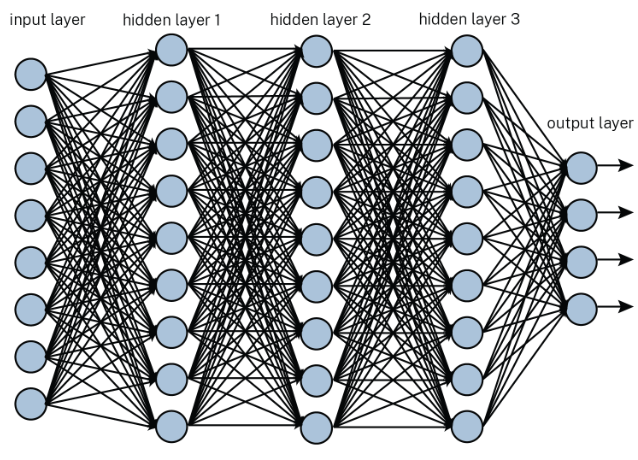
Neural networks are a type of model used for predictive analytics, a subfield of machine learning, that forms the basis for the modern era of deep learning. In its simplest form, a neural network is composed of neurons linked together. These neurons are organized in layers such that they form an interconnected network with input neurons, one or multiple hidden layers, and output neurons. The hidden layers consist of neurons that build new representations from the input features. For example, if a feature is a patient's age, some neurons in the hidden layers build and combine new information about the age that may be related to specific health outcomes, such as segmentation in pediatric versus geriatric patients, and the way age affects patients with cancer or thyroid conditions [13].
Neural networks learn patterns from data when they are being trained on enormous data sets using algorithms. Once trained, they can make assertions that have not been explicitly programmed and have the capability of self-improvement since the learning component continues to evolve and adjust as new data is presented. The algorithms use a massive amount of randomly generated, spread-out connection data to effectively tune the connections between each unit so that the input data are transformed into the desired output. Once the network of neurons is constructed and the connections are optimized, the neural net can start making predictions about new inputs into the system. Neural networks today are designed using architectures that are able to handle massive amounts of complicated structures that outperform standard statistical methods. With this ability to reach deeper and deeper layers, more complicated interactions that are sometimes more difficult to tease out with standard statistical means become revealed. There are many types of neural nets that are useful for healthcare applications. Some of the most common for imagery are convolutional neural nets and for dynamic interactions/recurrent events, recurrent neural nets [16].
Equation 2: Personalized Treatment Recommendations
3.2. Applications in Healthcare
An increasing body of evidence indicates the vast potential of neural networks in automating various clinical and administrative tasks within a care delivery system. For example, neural networks have revolutionized the field of diagnostics through their ability to mimic and often outperform human diagnostic accuracy. Applications such as these can be found in virtually every clinical subdiscipline. Emphasizing personalization of care through the application of neural networks, hospitals are using input features such as diagnostics, medications, and demographics to compare a new patient with similar patients in the past. Neural networks are also used for the prediction of outcomes such as readmission and inpatient mortality because they permit response personalization by including patient-specific data such as historical outcomes and patient preferences. Currently, efforts are being made to leverage data on comorbidities and patient trajectories to predict potential public health crises [15].
Neural networks have the ability to synthesize data from multiple sources, making them ideal for healthcare applications that draw from a diverse range of data points and types. They can and have been used to predict various conditions' comorbidities and determine their different causal pathways. They are critical in monitoring and managing chronic diseases because neural networks can be trained to adjust patient care pathways based on a patient's changing physical condition. In the same vein, a neural network is used to continually update the treatment plan proposed by computers by integrating new data and strengthening or weakening the relation of different criteria to predict the model or treatment. In the former, the neural network is just the engine behind a decision-support system that enables personnel or healthcare providers in real-time to provide better care to patients. Overall, the applications of neural networks have the potential to reduce healthcare costs by capturing administrative efficiencies and identifying areas of waste in care delivery. The potential value is particularly high in situations in which large volumes of structured and unstructured data can be assembled and analyzed into patterns and used to guide decision-making. In addition to these efficiencies, the use of neural networks has the potential to guide treatments and uncover early interventions, thus improving the quality of care [17].
4. Integration of Neural Networks in Medicare Advantage and Supplement Plans
Healthcare costs have been on the rise, and so has the use of artificial intelligence (AI). Medicare Advantage and Supplement plans offer add-on coverage to qualified patients. A majority of this population is geriatric, and with recent changes in social determinants of health, AI technologies like neural networks can be integrated to facilitate decision-making to improve patient healthcare outcomes. Neural networks differ from other machine learning models by emulating the human brain's function and structure to solve complex problems. The techniques that are looked into are suitable for Medicare Advantage and Supplement plans to make use of neural networks or are part of predictive modeling using neural networks or enhancing health outcomes. They range from optimizations and hybrid neural networks or using data mining techniques to reduce churn [19].
Neural networks can be integrated to mimic the operational framework of Medicare Advantage and Supplement Plans for healthcare providers and insurers to benefit and have better use of resources at the point of utilization of the healthcare facility. In this regard, our participating Centers of Excellence examine how neural networks can be used in Medicare Advantage and Supplement Plans to optimize health outcomes for plan beneficiaries. At the present time, basic neural networks can be used to better classify, predict, and prescribe healthcare methodology for the individual beneficiaries enrolled in plans. For example, in healthcare or drug interaction, better chemo regimens given are based on the genomics of the person and other co-existing disorders, or better prediction of disease intervention to reduce the score in the remaining life of a person. The main theme can be divided into two parts: first, for healthcare administration that would result in better patient engagement and compliance; and second, for the insurer that would help them in having evidence-based, data-driven decision-making models to figure out the cost and related risk mitigation and patient population stratification and segmentation for cost reduction [18].
Although there are potentially limitless applications for using advanced technologies, it should not be forgotten that these models are built upon methods that are dependent on algorithms that are data-hungry and require huge sets of information from available claims, prescription drugs, patient-reported outcomes, along with lab cues and chart information. Due to the various constraints mentioned above, not all plans or organizations would be able to capitalize and invest through such methodologies. Moreover, consumer protection laws could prevent this progression if the collective data is not secure. Fraud, waste, and abuse are other areas of concern since building a hybrid neural network model may provide outlier queries or may violate regulatory compliance as model accuracy depends on the type of question, clinical settings, and large amounts of missing data that curate bias. Hence, it is important to carefully carve the question into the hybrid neural network model. Moreover, physicians' and nurses' perceptions and acceptance of the model could also be a major determinant of the benefits, and it would be essential to get user feedback to make required adjustments to the model. To capitalize and have better returns on investment, we need to be very strategic in progressing through the process, and it may take some time before this methodology can be streamlined as a mainstream model for operations due to the major data constraints [20].
4.1. Benefits and Potential Impact
The complexity of both clinical concepts and the multitude of comorbidities and biological signals suggest that emerging developments in analytics could significantly benefit patients enrolled in managed care programs. Integrating neural networks into Medicare Advantage and Supplement Plans may be the first large-scale application in the value-based care context. Predictive analytics that are more complex and consider a greater number of relevant factors can lead to enhanced potential targets for promoting better outcomes and may also minimize some inappropriate utilization. With widespread use across healthcare decisions, predictive analytics may provide a new way to entrench personalized medicine in healthcare decisions. This ability to simulate population outcomes using individual data can also lead to improvements in operational efficiency with tailored care delivery and easier prioritization of required connections between patients and community services. The ease of decision-making and reduced labor intensity using advanced data analytics include further helpful applications in the management and further development of value-based care settings. For Medicare Advantage stakeholders, these applications could jointly result in value creation while also achieving a strategic goal of serving all patients based on their individual profile and potential rather than simply on their diagnosis. For commercial and pharmacy benefit managers, increased coordination would extend the scope for further use, ranging from the administrative details of reporting programs to increased ability to engage patients in their treatment. The following lists more detailed applications from a toolset of advanced technological capabilities relative to currently available predictive models. The technical capabilities of these models inform the implications of applying these technologies, as well as the potential challenges related to these capabilities that will be outlined in Subsection [22].
4.2. Challenges and Limitations
Data Privacy Concerns: Healthcare data is sensitive and should not be misused. It should not be disclosed to anyone unless the data holder allows it. Even if it is generally used to predict, classify, cluster, or treat, the chances of a data breach will be the target of an outside hacker [23].
Complexities in Multiple Data Management and Integration: The data used in healthcare maintenance is generated by different data sources. The confusion in this data will lead to inaccurate results, so different tools are used for combining and processing healthcare-generated information [21].
Resistance to Change: In addition to high variability in technical skills, healthcare providers are searching for solid evidence of use and to bring people on board. Many models show neural networks to be fully effective, but the unusual behavior of this event makes it hard to recognize [24].
High Training and Deployment Model Costs: Several businesses are incapable of delivering some innovations in healthcare. Cognitive processing enables the minority to build a solid plan about general benefits and which techniques are chosen for automating machine learning models in healthcare management [25].
Even though neural networks in Medicare Advantage and Supplement Plans have a great number of advantages, there are a few limitations to be discussed. It should be conducted properly so that the limitations arising from the implementation of neural networks will not have a significant effect on the assessment [27].
Data Privacy and Regulatory Compliance: The healthcare industry is currently one of the most regulated fields, and several firms have struggled with regulatory constraints in order to build the industry to use business-developing technology. There will be many regulations introduced if a technology is integrated into healthcare services. Then, under the law, they have to comply with that provision [26].
Shortage of Quality and Quantity of Data: There is a lot of variability among the data collected in various states. In many states, specific information isn't even provided. So if a patient's race is required for a prediction in a pharmaceutical company, they would face problems in gathering the data [28].
Equation 3: Predicting Patient Health Outcomes (e.g., Hospitalization Risk, Disease Progression)
5. Case Studies and Real-world Applications
Case studies show practical examples of neural networks being used to optimize care in a large Medicare population. Different neural networks have been developed to address various issues with the health of a population across an insurance company. Measuring home health patient turnover time using neural networks is a submission to conferences. There are many ways to measure Medicare Advantage and Supplement plan quality of care and/or optimal plan operations for the members covered. One approach to measuring the quality of care delivered to patients involves measuring actual health outcomes. The following are case studies of different neural networks being used across an insurance company to optimize care in a large Medicare population [29].
Measures of actual health outcomes There are multiple ways in which insurance companies use neural networks to measure actual health outcomes. One insurance company raised the premiums on Medicare Advantage plans that provided the company with data on their patients. The neural network models revealed that the patients in the higher premium plans, on a per member per month basis, had fewer inpatient hospital admissions and emergency department visits. The shortfall came when the insurance company raised the premiums; the patients left the higher cost plan and therefore took away the lower per member per month inpatient and emergency department costs. Another company used input variables that are directly attributable to their plan-mandated benefit programs. The identification of discrete benefit programs that have a direct effect on health outcomes and/or an association with the plan-to-member relationship for the insurance company allowed the insurance company to optimize the marketing of the Medicare Advantage plans. The neural network produced a predicted output score for medical cost savings; the higher score identified more cost savings for the insurance company [31].
Incorporating AI with external databases In a collaborative project, a company serving long-term care facilities is piloting the use of AI to classify, utilizing longitudinal data, the change in mortality in nursing facilities. Specifically, does facility performance over time result in a lower probability of residents having life-sustaining therapy? This project plans to access databases that contain medications, vitals, and nursing documentation on long-term care residents, and Electronic Health Record data, which includes length of stay, active diagnosis, medications, and resident demographics. The target consumer is the nursing facility medical director. The outcomes and a standardized methodology will be provided to the facility. The power of AI is that mortality and life will be measured similarly to how the industry measures success – using, for example, the current predictors of prior late room transfer to the hospital, a lump sum of the top conditions, hospital readmissions, a cost of care/expected death ratio, and changes in cognition [30].
5.1. Successful Implementations
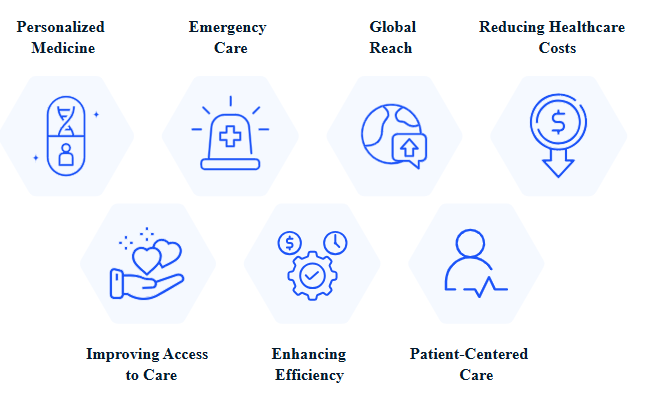
Who makes up 6% of a Medicare-related plan with 1.8 million members is an example of an application of neural networks that has demonstrated success in impacting health outcomes. Combining neuroscience research, predictive analytics, machine learning, and world-class data assets through a strategic partnership, proprietary machine learning models have been developed that accurately predict the conversion from high risk to liability among Medicare Advantage members while activating the target populations, focusing the interventions to maximize the outcome and targeting members for case integration to ensure that members and providers are aware of the problems and that the data focus is accuracy. As a result, hospital admissions were down 32.84% and hospital days were down 32.51% in a 3-month period. Working with both the providers—the physicians and their care management team—and in the health plan, frontline employees are part of the client team for execution, and data scientists on the team—the results are descriptions of success in optimal health performance. It is expected that the ability to improve the effectiveness of interventions to maintain optimal health performance impacts those ER, urgent care, specialists, and even primary care visits in the care continuum by having additional high-quality knowledge in parallel systems to ensure access, continuity of care provider that serves as the health ambassador, and ensures a yearlong ongoing and other healthcare services and resources deployment that ensures that member needs are met. The case studies will be reported when proven. It is suggested that health plans predict member contacting service to identify future high-using members and to help them engage downstream with utilizing wellness and lifestyle management. The neural networks will also play a role in prediction by integrating sensor biomarkers, social determinants of health, and other member characteristic data. This combined data will train neural networks and identify neural subgrouping to empower different strategies of wellness resource deployment that not only support downstream wellness but also front-end services provided in programs such as provider continuity of care networks, on-site and near-site health center deployment, risk assessment testing training development, and in-house programs and direct member care intervention and resources [32].
5.2. Lessons Learned
Much has been learned through the implementation of neural networks in Medicare plans. Some common challenges are as follows:
- Convincing PCPs of the validity of model findings is an ongoing struggle.
- Presenting patients and caregivers with the unbidden truth about their health or prognosis can result in disappointment and sometimes anger [37].
- Continuously training and supporting providers is time-consuming and expensive, but possibly necessary for success.
The use cases and findings discussed here suggest a few points of interest. The need for stakeholder approval suggests a necessary public relations campaign in support of the project. Good communication might have avoided issues of information availability and PCP oversight requirements. The expertise of data management staff can support PCF operations. Previous experiences of stakeholders with computer modeling or large data sets might indicate what education and training need to be provided. But, as we have seen, people need constant reassurance. They do not like math. Most do not trust computer-based answers. We are human, after all. A number of issues presented here could lay the groundwork for a research agenda. In particular, developing recommendations for essential communication strategies is an area that would benefit from foundational research, as well as small-scale developmental research. Understanding the success rate in obtaining approval is of paramount interest, given the increasing complexity and sensitivity of future projects to be planned. A team of experienced health management professionals might also learn a great deal from unapproved projects that were not implemented. By understanding the reasons proposed that were met with skepticism or hostility, fine-tuning of public relations can be achieved. Overall, learning from the past can simply help practitioners do a better job. This should be the main goal for analytic operations [34].
6. Conclusion
There is a need to address the challenges faced by Medicare Advantage plans and Medicaid/supplement plans. CMC NC Geisinger Health Plan, Optimum Health Division has been working with predictive neural networks to unlock the power of data for the betterment of patient care and clinical outcomes that are population-based. As we all are aware the workforce at our disposal today is aging and has more chronic maladies than a younger cohort. By application of Neural Networks in our day-to-day operation, we have been able to identify some in the population that should be flagged as they would be highER utilizers. These artificial neural networks are critical for financial planning – to assess the risk of taking that new plan member, not in the short term but in the long run ranging from approximately 5 to 30 years. Lastly, neural networks are drilled into member care data to predict where a potential enrollee is on the social determinants. Our second proposed research is to use the same technology, an artificial neural network, to assist the cross-section of case management; customer service & provision of better care. Using an artificial neural network to predict the order in a member's life of acute – LTC-hospice-facility-home to provide transition support, long-term care assessments, behavioral health services, home health services, and covered benefit interpretation. Lastly using artificial neural network to gauge the best time and method to engage a member in enhancing the member's health products. Technology evolves around us – to be successful we need to stay ahead of the technology game in healthcare. Ongoing research is needed to see further application where the neural network could replace the stratification system, that predicts a member’s journey, including death and accidental true predictors of death. More specific research would include the use of the neural network, as described, in a Medicare Advantage/managed care setting [36].
6.1. Future Trends
There are several emerging and futuristic paradigms within the healthcare system and future plan designs that could utilize neural networks. Learning occurs through interactions between the patient and the healthcare system. Sensors such as wearables or even subdermal implants measure vitals and provide additional information. The collection of other disparate data, including but not limited to lifestyle and the full dynamics of the patient, family, and sub-sectors of their neighborhoods, provides a more holistic picture of the patient compared to clinical or EHR data alone. Scaling down to a more detailed level, changes in public policy that force newer and more personal care options to become available and beneficial within the current medical system can also benefit from this type of prediction. In any case, we anticipate that new consumer rights will be recognized, and these predictions can guide consumers on when and where to be proactive for new services and support [35].
Changes at the analytics level are occurring. As more tools are developed and approved in the deep learning space, companies can start to use different algorithms to determine whether they are better positioned to predict various regimens of care or to predict costs at a higher level. Ultimately, many of these solutions will determine predictive outcomes for medication adherence, mental health diagnostic testing, and much more. Momentum around privacy will also continue to progress. The industry will begin laying the groundwork for a new style of interaction in the 2030s. More intuitive interfaces will better inform a true partnership. Near-term models will predict numerical and symptomatic health outcomes; new infusion models will predict effects on health costs as well. This field continues to evolve as more medical residents become data-fluent. Given that more data will continue to become available, the future will see decentralized networks that use in-network consensus in a primary layer of the algorithm so that changes to the model are made by the whole space. This will also open up a true working relationship between data regulation, rule makers, and the network health sub-units, software tools, and other assistive technologies [38].
References
- Syed, S. (2022). Towards Autonomous Analytics: The Evolution of Self-Service BI Platforms with Machine Learning Integration. In Journal of Artificial Intelligence and Big Data (Vol. 2, Issue 1, pp. 84–96). Science Publications (SCIPUB).https://doi.org/10.31586/jaibd.2022.1157[CrossRef]
- Danda, R. R. (2022). Innovations in Agricultural Machinery: Assessing the Impact of Advanced Technologies on Farm Efficiency. In Journal of Artificial Intelligence and Big Data (Vol. 2, Issue 1, pp. 64–83). Science Publications (SCIPUB). https://doi.org/10.31586/jaibd.2022.1156[CrossRef]
- Nampalli, R. C. R. (2022). Neural Networks for Enhancing Rail Safety and Security: Real-Time Monitoring and Incident Prediction. In Journal of Artificial Intelligence and Big Data (Vol. 2, Issue 1, pp. 49–63). Science Publications (SCIPUB). https://doi.org/10.31586/jaibd.2022.1155[CrossRef]
- Bansal, A. Advanced Approaches to Estimating and Utilizing Customer Lifetime Value in Business Strategy.
- Aravind, R., Shah, C. V., & Surabhi, M. D. (2022). Machine Learning Applications in Predictive Maintenancefor Vehicles: Case Studies. International Journal of Engineering and Computer Science, 11(11), 25628–25640.https://doi.org/10.18535/ijecs/v11i11.4707[CrossRef]
- Korada, L., & Somepalli, S. (2022). Leveraging 5G Technology and Drones for Proactive Maintenance in the Power Transmission Industry: Enhancing Safety, Continuity, and Cost Savings. In Journal of Engineering and Applied Sciences Technology (pp. 1–5). Scientific Research and Community Ltd. https://doi.org/10.47363/jeast/2022(4)260[CrossRef]
- Mandala, V., & Surabhi, S. N. R. D. (2020). Integration of AI-Driven Predictive Analytics into Connected Car Platforms. IARJSET, 7 (12).[CrossRef]
- Kommisetty, P. D. N. K. (2022). Leading the Future: Big Data Solutions, Cloud Migration, and AI-Driven Decision-Making in Modern Enterprises. Educational Administration: Theory and Practice, 28(03), 352-364.
- Shah, C., Sabbella, V. R. R., & Buvvaji, H. V. (2022). From Deterministic to Data-Driven: AI and Machine Learning for Next-Generation Production Line Optimization. Journal of Artificial Intelligence and Big Data, 21-31.[CrossRef]
- Perumal, A. P., Deshmukh, H., Chintale, P., Desaboyina, G., & Najana, M. Implementing zero trust architecture in financial services cloud environments in Microsoft azure security framework.
- Avacharmal, R. (2022). ADVANCES IN UNSUPERVISED LEARNING TECHNIQUES FOR ANOMALY DETECTION AND FRAUD IDENTIFICATION IN FINANCIAL TRANSACTIONS. NeuroQuantology, 20(5), 5570.
- Syed, S. (2021). Financial Implications of Predictive Analytics in Vehicle Manufacturing: Insights for Budget Optimization and Resource Allocation. Journal of Artificial Intelligence and Big Data, 1(1), 111–125. Retrieved from https://www.scipublications.com/journal/index.php/jaibd/article/view/1154[CrossRef]
- Danda, R. R. (2021). Sustainability in Construction: Exploring the Development of Eco-Friendly Equipment. In Journal of Artificial Intelligence and Big Data (Vol. 1, Issue 1, pp. 100–110). Science Publications (SCIPUB). https://doi.org/10.31586/jaibd.2021.1153[CrossRef]
- Nampalli, R. C. R. (2022). Machine Learning Applications in Fleet Electrification: Optimizing Vehicle Maintenance and Energy Consumption. In Educational Administration: Theory and Practice. Green Publication. https://doi.org/10.53555/kuey.v28i4.8258[CrossRef]
- Bansal, A. (2022). Establishing a Framework for a Successful Center of Excellence in Advanced Analytics. ESP Journal of Engineering & Technology Advancements (ESP-JETA), 2(3), 76-84.
- Korada, L. (2022). Low Code/No Code Application Development - Opportunity and Challenges for Enterprises. In International Journal on Recent and Innovation Trends in Computing and Communication (Vol. 10, Issue 11, pp. 209–218). Auricle Technologies, Pvt., Ltd. https://doi.org/10.17762/ijritcc.v10i11.11038[CrossRef]
- Mandala, V. (2018). From Reactive to Proactive: Employing AI and ML in Automotive Brakes and Parking Systems to Enhance Road Safety. International Journal of Science and Research (IJSR), 7(11), 1992-1996.[CrossRef]
- Vehicle Control Systems: Integrating Edge AI and ML for Enhanced Safety and Performance. (2022).International Journal of Scientific Research and Management (IJSRM), 10(04), 871-886.https://doi.org/10.18535/ijsrm/v10i4.ec10[CrossRef]
- Perumal, A. P., & Chintale, P. Improving operational efficiency and productivity through the fusion of DevOps and SRE practices in multi-cloud operations.
- Avacharmal, R., & Pamulaparthyvenkata, S. (2022). Enhancing Algorithmic Efficacy: A Comprehensive Exploration of Machine Learning Model Lifecycle Management from Inception to Operationalization. Distributed Learning and Broad Applications in Scientific Research, 8, 29-45.
- Syed, S. (2019). Roadmap for Enterprise Information Management: Strategies and Approaches in 2019. International Journal of Engineering and Computer Science, 8(12), 24907–24917. https://doi.org/10.18535/ijecs/v8i12.4415[CrossRef]
- Danda, R. R. (2020). Predictive Modeling with AI and ML for Small Business Health Plans: Improving Employee Health Outcomes and Reducing Costs. In International Journal of Engineering and Computer Science (Vol. 9, Issue 12, pp. 25275–25288). Valley International. https://doi.org/10.18535/ijecs/v9i12.4572[CrossRef]
- Rama Chandra Rao Nampalli. (2022). Deep Learning-Based Predictive Models For Rail Signaling And Control Systems: Improving Operational Efficiency And Safety. Migration Letters, 19(6), 1065–1077. Retrieved from https://migrationletters.com/index.php/ml/article/view/11335
- Bansal, A. (2022). REVOLUTIONIZING REVENUE: THE POWER OF AUTOMATED PROMO ENGINES. INTERNATIONAL JOURNAL OF ELECTRONICS AND COMMUNICATION ENGINEERING AND TECHNOLOGY (IJECET), 13(3), 30-37.
- Laxminarayana Korada, Vijay Kartik Sikha, & Satyaveda Somepalli. (2022). Importance of Cloud Governance Framework for Robust Digital Transformation and IT Management at Scale. Journal of Scientific and Engineering Research. https://doi.org/10.5281/ZENODO.13348757
- Chintale, P. (2020). Designing a secure self-onboarding system for internet customers using Google cloud SaaS framework. IJAR, 6(5), 482-487.
- Avacharmal, R. (2021). Leveraging Supervised Machine Learning Algorithms for Enhanced Anomaly Detection in Anti-Money Laundering (AML) Transaction Monitoring Systems: A Comparative Analysis of Performance and Explainability. African Journal of Artificial Intelligence and Sustainable Development, 1(2), 68-85.
- Nampalli, R. C. R. (2021). Leveraging AI in Urban Traffic Management: Addressing Congestion and Traffic Flow with Intelligent Systems. In Journal of Artificial Intelligence and Big Data (Vol. 1, Issue 1, pp. 86–99). Science Publications (SCIPUB). https://doi.org/10.31586/jaibd.2021.1151[CrossRef]
- Bansal, A. (2021). OPTIMIZING WITHDRAWAL RISK ASSESSMENT FOR GUARANTEED MINIMUM WITHDRAWAL BENEFITS IN INSURANCE USING ARTIFICIAL INTELLIGENCE TECHNIQUES. INTERNATIONAL JOURNAL OF INFORMATION TECHNOLOGY AND MANAGEMENT INFORMATION SYSTEMS (IJITMIS), 12(1), 97-107.
- Laxminarayana Korada. (2022). Optimizing Multicloud Data Integration for AI-Powered Healthcare Research. Journal of Scientific and Engineering Research. https://doi.org/10.5281/ZENODO.13474840
- Chintale, P. SCALABLE AND COST-EFFECTIVE SELF-ONBOARDING SOLUTIONS FOR HOME INTERNET USERS UTILIZING GOOGLE CLOUD'S SAAS FRAMEWORK.
- Syed, S., & Nampalli, R. C. R. (2021). Empowering Users: The Role Of AI In Enhancing Self-Service BI For Data-Driven Decision Making. In Educational Administration: Theory and Practice. Green Publication. https://doi.org/10.53555/kuey.v27i4.8105[CrossRef]
- Bansal, A. (2021). INTRODUCTION AND APPLICATION OF CHANGE POINT ANALYSIS IN ANALYTICS SPACE. INTERNATIONAL JOURNAL OF DATA SCIENCE RESEARCH AND DEVELOPMENT (IJDSRD), 1(2), 9-16.
- Korada, L. (2021). Unlocking Urban Futures: The Role Of Big Data Analytics And AI In Urban Planning–A Systematic Literature Review And Bibliometric Insight. Migration Letters, 18(6), 775-795.
- Chintale, P., Korada, L., WA, L., Mahida, A., Ranjan, P., & Desaboyina, G. RISK MANAGEMENT STRATEGIES FOR CLOUD-NATIVE FINTECH APPLICATIONS DURING THE PANDEMIC.
- Syed, S., & Nampalli, R. C. R. (2020). Data Lineage Strategies – A Modernized View. In Educational Administration: Theory and Practice. Green Publication. https://doi.org/10.53555/kuey.v26i4.8104[CrossRef]
- Bansal, A. (2020). An effective system for Sentiment Analysis and classification of Twitter Data based on Artificial Intelligence (AI) Techniques. International Journal of Computer Science and Information Technology Research, 1(1), 32-47.
- Chintale, P., Korada, L., Ranjan, P., & Malviya, R. K. ADOPTING INFRASTRUCTURE AS CODE (IAC) FOR EFFICIENT FINANCIAL CLOUD MANAGEMENT.