

Introduction: Ovarian torsion is a rare gynecological emergency that can result in permanent ovarian loss if not promptly recognized and managed. Cases involving multiple rotations of the ovary are highly unusual and pose a significant risk for ovarian viability. Clinical Description: A 33-year-old P2 woman presented with sudden severe lower abdominal pain. Imaging showed a complex midline adnexal mass, more towards left and mild free fluid with suspected torsion. Emergency laparotomy showed a sixfold torsion of the right ovary with a dermoid cyst. Detorsion and cystectomy were performed with preservation of the ovary. Postoperative recovery was uneventful and histopathology further confirmed a benign dermoid cyst. Discussion: Ovarian torsion with multiple rotations is extremely rare so early recognition and timely surgical intervention enable ovarian salvage even in severe cases. Moreover, Dermoid cysts are the most common predisposing factor. Conclusion: This case highlights the importance of prompt diagnosis and immediate management of ovarian torsion to prevent complications, preserve ovarian integrity and fertility.
Acute Right Ovarian Torsion with Six Twists: Successful Ovarian Preservation Following Detorsion
November 16, 2025
December 17, 2025
December 25, 2025
December 28, 2025
This is an Open Access article, distributed under the terms of the Creative Commons Attribution 4.0 International License (http://creativecommons.org/licenses/by/4.0/), which permits unrestricted use, distribution and reproduction in any medium or format, provided the original work is properly cited.
Abstract
1. Introduction
Ovarian torsion is an acute gynecological emergency caused by twisting of ovarian pedicle thus compromising the blood flow and contributes about 2.7% of all gynecological emergencies [1]. It requires prompt diagnosis and management to prevent irreversible damage and loss of reproductive function [2]. Ovarian torsion often presents with acute abdominal or pelvic pain accompanying with nausea or vomiting thus overlapping with other acute abdominal pathologies [3, 4] and is commonly associated with adnexal masses of >5-6cm in about 70-80% of cases, being most common with dermoid cysts [1, 5]. It can occur at any age group and can also occur in normal ovaries in 20-30% of cases [6, 7]. Moreover, surgical intervention is the gold standard for diagnosis [8].
2. Case Report
A 33-year-old woman, para 2+0 with prior uncomplicated spontaneous vaginal deliveries presented to the Emergency Department with sudden onset of severe lower abdominal pain associated with nausea and vomiting for the past few hours. She had no significant past medical or surgical history. On examination, she was stable hemodynamically but distressed and abdominal palpation revealed marked tenderness in the lower abdomen without guarding or rigidity. A urine pregnancy test was negative.
Investigations showed a hemoglobin level of 13.3 g/dl and normal white blood count. Trans abdominopelvic ultrasound showed an anteverted uterus with a normal echotexture, a smooth endometrium measuring 4mm in thickness and both ovaries were not clearly visualized. A midline complex adnexal lesion, predominantly on the left side measuring 8.5 × 5.6 cm [Figure 1] with solid and cystic components and absent vascularity was noted with mild free fluid in the pouch of Douglas. Imaging impression suggested a complex ovarian mass with suspected torsion.
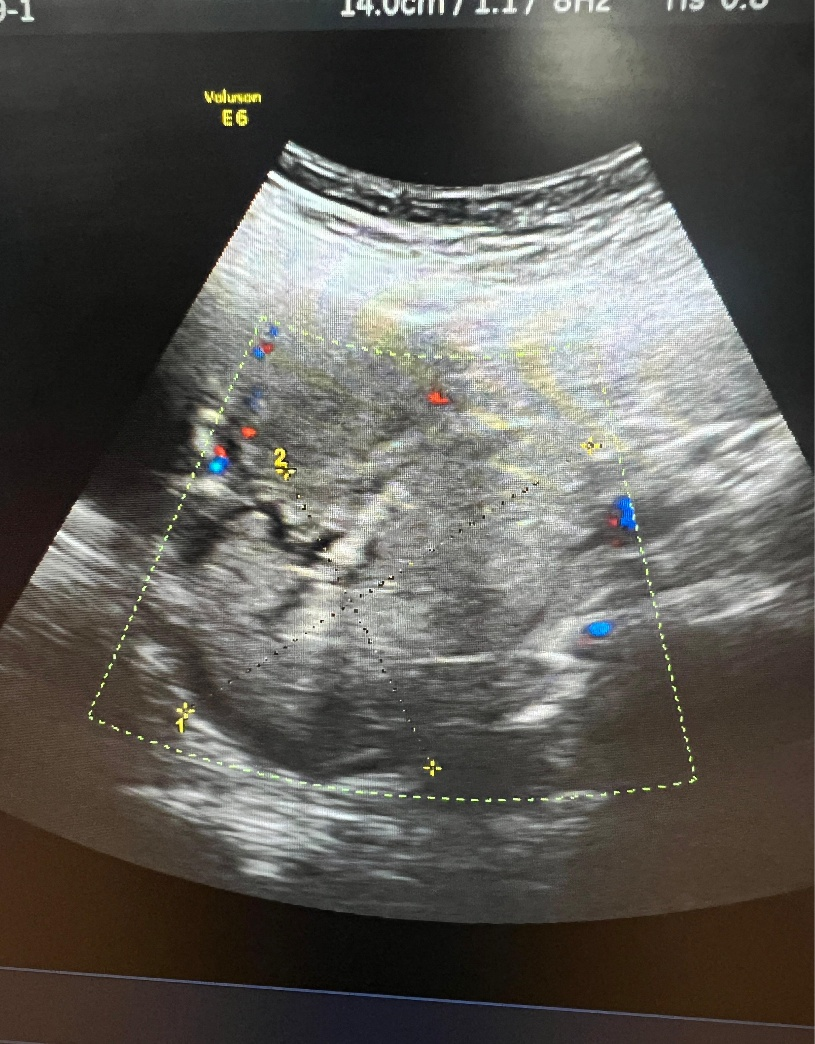
Based on acute presentation, the size of the lesion and strong suspicion for torsion, emergency laparotomy was performed.
Intraoperatively, the right ovary was grossly enlarged, congested and twisted six times around its pedicle but viable [Figure 2]. Timely detorsion resulted in gradual reperfusion of the engorged ovary. A right ovarian cystectomy was also performed and the specimen was sent for histopathological examination which later revealed a benign mature cystic teratoma-Dermoid cyst. The left adnexa and right fallopian tube were normal. Mild free pelvic serosanguinous fluid was noted and a left intraperitoneal drain was inserted.
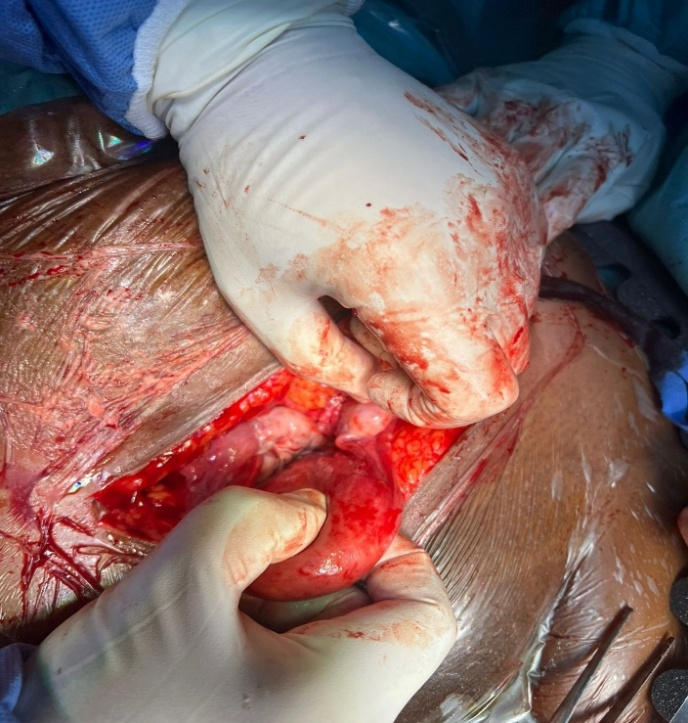
Postoperative recovery was uneventful. On day 2, drain output was 25 ml of serosanguinous fluid and was removed. Hemoglobin was 12.2 g/dl and she was discharged in stable condition with preserved right ovarian function. Follow up scan after 4 weeks in the outpatient clinic showed normal size right ovary with restored vascularity with no free fluid noted.
3. Discussion
Ovarian torsion is a gynecologic emergency that requires immediate diagnosis and timely management. The presented case highlights a classic picture in a reproductive age group presenting with acute abdominal pain and a complex adnexal mass of>5 cm with absent vascularity [1, 5, 6, 7].
This case also emphasizes the diagnostic challenges of ovarian torsion as ultrasound suggested a midline left sided complex adnexal mass but surgical intervention revealed a right sided torsion caused by a dermoid cyst. Such variances are well documented, particularly when the ovary is displaced by a mass thus reinforcing the need for early surgical intervention when strong clinical suspicion is suspected [9]. Moreover, there is 70-85% of reported sensitivity of ultrasound for diagnosing ovarian torsion [10].
Emergency intervention and detorsion preserving ovarian function in this case aligns with ACOG and RCOG guidelines recommending prompt surgical intervention [11, 12]. The American College of Obstetricians and Gynecologists (ACOG) also recommend detorsion within 24 hours to preserve ovarian function [11].
Concurrent cystectomy as in this case is advised for benign lesions to prevent recurrence while maintaining ovarian reserve for future fertility and minimizing the risk of repeated torsion [11, 13].
Postoperative recovery was uneventful and 4 week follow up confirmed preserved ovarian function, concordant with outcomes reported in the literature [11, 14].
4. Conclusion
This case exemplifies the importance of timely recognition and surgical exploration of ovarian torsion. Prompt detorsion with cystectomy for benign ovarian mass led to preservation of ovarian function, fertility and reduction of recurrence risk. Ovarian torsion should always be considered as differential diagnosis in women presenting with acute lower abdominal pain.
Learning Points
- Ovarian torsion should always be considered as differential diagnosis in women presenting with acute lower abdominal pain as symptoms and imaging may be misleading and nonspecific.
- Normal doppler ultrasound does not exclude torsion so clinical assessment should guide the need for prompt surgical management.
- Early detorsion with cystectomy for benign ovarian masses can successfully allow ovarian salvage and fertility preservation even in advanced torsion and marked congestion.
Acknowledgement:
The authors reported no conflict of interest and no funding was received for this work.
References
- Huang, C., Hong, M. K., & Ding, D. C. (2017). A review of ovarian torsion cases. TAO Taiwan Obstetrics & Gynecology, 56(2), 141-145.
- Bayer, A. I., & Wiskind, A. K. (1991). Adnexal torsion: A case-control study. Journal of Reproductive Medicine, 36(9), 631-634.
- Huchon C, Fauconnier A. Adnexal torsion: A literature review. European Journal Obst. Gynecology, Reproductive Biology. 2010;150(1):8-12.[CrossRef] [PubMed]
- Yuval Y, et al. Ovarian torsion during reproductive years: A literature review. Orphanet J Rare Dis. 2024; 19:101.
- Sasaki, K. J., & Epiney, M. (2008). Ovarian torsion. Journal of Minimally Invasive Gynecology, 15(2), 127-132.[CrossRef]
- Oelsner G, Cohen SB, Soriano D, Admon D, Mashiach S, Carp H. Minimal surgery for the twisted ischemic adnexa: A case-control study. J Am Assoc Gynecological Laparosc. 2003;10(2):167-171.
- White, M., & Stella, J. (2020). Ovarian torsion: A review of the literature. Journal of Clinical Ultrasound, 48(5), 261-268.
- European Journal of Obstetrics & Gynecology and Reproductive Biology. (2019).
- StatPearls [Internet]. Ovarian Torsion. Treasure Island (FL): StatPearls Publishing; 2025.
- Neto JS, et al. Accuracy of imaging modalities for adnexal torsion: systematic review and metaanalysis. Reported pooled ultrasound sensitivity ~79%. PubMed 2020.
- ACOG Practice Bulletin No. 174. Obstet Gynecol. 2016;128(4): e1-e8.
- RCOG Green-top Guideline No. 52. 2011.
- Caspi B, et al. Adnexal torsion in dermoid cysts: clinical features and management. Hum Reprod. 1990;5(7):102–106.
- Houry D, Abbott JT. Ovarian torsion: a fifteen-year review. Ann Emerg Med. 2001;38(2):156–159.[CrossRef] [PubMed]