

Perceptions and Effective Implementation of Peace Education in Senior High Schools in the Central Region of Ghana
March 31, 2022
April 30, 2022
May 08, 2022
May 10, 2022
This is an Open Access article, distributed under the terms of the Creative Commons Attribution 4.0 International License (http://creativecommons.org/licenses/by/4.0/), which permits unrestricted use, distribution and reproduction in any medium or format, provided the original work is properly cited.
Abstract
1. Introduction
In contemporary era, it is recognized that the quest for peace is a global issue. This assertion is confirmed by an author that the current manifestations of conflicts and violence with their associated fatalities across the world require global efforts to promote peace. Indeed, scholars have adduced evidence to support the necessity to promote international and national peace [2]. For instance, the Heidelberg Institute for International Conflict Research observed that contrary to the notion that international conflicts have declined after World War II, the world has witnessed a rise in internal or intrastate conflicts. Particularly, the report noted that there has been an escalation in interstate and internal conflicts since 2015. It is deduced from this report that despite the decrease in international conflicts in post-World War II, nations are confronted with diverse forms of conflicts that impede the realization of global peace [3]. Basically, practitioners in peace studies maintained that internal conflicts require similar attention as international conflicts. For instance, internal conflicts call for the use of international resources of other countries like the military to ensure peace. Africa, like other continents, witnessed several conflicts as occurred in Congo (1960-1964), Nigeria (Biafra) (1967-1970), Chad (1965-1979), Angola (1975-2002), Mozambique (1975-1994) and Sudan (Southern Sudan) (1955-1972). It is construed from these reports that internal conflicts assume a global dimension which is a clarion call on the international community to evolve strategies to avert conflicts of all forms and promote peace [4].
Meanwhile, reports have recounted the consequences of conflicts across the world. For instance, the Institute for Economics and Peace indicated that the world recorded an upsurge in the number of fugitives as a result of conflicts since 2015 with sub-Saharan Africa recording the highest number of 4.41 million refugees, 40.8 million internally displaced persons, and 3.2 million asylum seekers [5]. Likewise, the United Nations estimated that the casualties that are directly related to conflict in the world were four hundred thousand (400,000) [6]. The World Bank also reported that there are currently two billion people living in countries affected by conflicts, and 80 percent of all the humanitarian need in the world is due to conflicts [7]. Literature has discovered that violence has devastating effects on civilian populations with large-scale displacement and loss of livelihood [8]. It is inferred from these reports that conflicts and violence have inflicted destructions on societies which suggest that peace matters.
In efforts to promote global peace, practitioners and scholars in peace studies have suggested that peace education in secondary schools is required. Secondary schools need to fulfill their role in promoting students’ conflict resolution competences through academic and training programmes. The authors argued that the secondary school period is critical and plays a crucial role in the acquisition of conflict resolution skills, and the appreciation of peace. Accordingly, countries have initiated steps to ensure that peace education is implemented in secondary schools [9]. In Northern Ireland, for example, the government introduced peace education at the secondary school level with the aim of instilling peace among the students [10]. It is essential to introduce peace education in secondary schools in all countries “in order to harness young people’s creativity and minimize their destructive potential.” [11]. It is construed from this assertion that secondary school students have the tendency to be involved in violent behaviours that are inimical to the maintenance of peace. Therefore, students at this education level need peace education to develop their proficiencies in peace promotion. It is evident from the preceding views that secondary schools are potential settings for violence which requires programmes that are channeled for the realization of peace.
The Ministry of Education and the Ghana Education Service have made efforts to promote peace education in the Ghanaian secondary schools. A study recommendation that education policy should make peace education an integral component of school subjects so as to educate students on how to peacefully live together, Social Studies was made a compulsory subject in the Ghanaian secondary schools [12]. Some scholars lauded this initiative when they observed that Social Studies is valuable for the promotion of national integration and the development of the right attitudes and values which are needed for peace education [13]. However, the curriculum content in Social Studies appears inadequate for peace education, hence they proposed that there should be an integration of co-curriculum activities into the school programmes. Therefore, secondary schools in Ghana celebrate regional and national sports festivals, debates, quizzes, inter-ethnic exchange programmes, inter-cultural, and inter-religious activities to engender peaceful co-existence among the students. However, the efforts made by the Ministry of Education and the Ghana Education service to promote peace education in the Ghanaian secondary schools have not yielded desired results. In the view of peace educators, the curriculum content in Social Studies and other subjects appears inadequate for a successful peace education [14]. Besides, an author displeased with the implementation of peace education in the Social Studies curriculum, and therefore suggested that peace education concepts should be further integrated into the curriculum to ensure effective peace education in the secondary schools. Apart from the inadequacies in the Social Studies curriculum for peace education, it was noted that the entire education system is unable to adequately promote peaceful attitudes among students [15]. The education systems across the world are preoccupied with “education for a living” or “learn in order to earn” which promotes the materialistic tendencies of the human mind without the love for peaceful co-existence [16].
Indeed, there are reports that suggest that secondary school students in Ghana are prone to violence. For instance, a report indicated that students of Savelugu Senior High School went on rampage and destroyed property and caused harm to tutors of the school. Similar violence was also reported involving students of Bawku Senior High School and Bawku Technical Institute destroying thousands of properties [18, 19]. These reports imply that the efforts of the Ministry of Education in Ghana and the Ghana Education Service have not been successful in inculcating the culture of peace among the students. This provides basis for education stakeholders to worry about the extent to which secondary schools are effectively implementing peace education. It is against this background that this study is being carried out to investigate the implementation of peace education in secondary schools located in the Ekumfi District of the Central Region of Ghana.
Ekumfi District, like other parts of Ghana, has witnessed relative peace in past times. However, recent reports have documented violent conflicts in the district. A study reported that a violent conflict between the Fantes in Narkwa and the Ewes in the Ekumfi District in which a chief of Narkwa, Nana Eguase was beheaded and buried. The report showed that three persons were killed in a gun battle, houses and other properties were burnt [20]. In addition, post-election violence between the supporters of the National Democratic Congress (NDC) and the New Patriotic Party (NPP) in the parliamentary and presidential elections. The clash led to four people sustaining gunshot wounds, and properties such as cars and residence were damaged. These reports indicated that the conflicts in the district had adverse effects on lives and property [21].
Even though the school is expected to instill the culture of peace among students, evaluations of the effectiveness of peace education in schools are limited [22]. Although significant work has been done to define and describe the elements that constitute peace education, less work has been done on evaluating its effectiveness [23]. Consequently, there is little empirical evidence to assess the extent to which peace educators are implementing components of peace education in schools. Other scholars are worried that peace education is inadequately incorporated in public school’s curriculum [24]. It is inferred from these concerns that there are challenges in the implementation of peace education in schools. The point is made in the preceding views that peace education is ineffectively implemented in schools. However, there is no evidence to support this claim in secondary schools located in the Ekumfi District which forms the basis for the study. The purpose of the study was to examine the perceptions and implementation of peace education in educational institutions in the Ekumfi district. The study was guided by these research questions (1) what are the perceptions of students on their understanding of peace education in Senior High Schools in the Ekumfi District? (2) what measures could be put in place to ensure effective implementation of peace education in Senior High Schools in the Ekumfi District?
1.1. Theoretical Framework of the Study
The study was underpinned by the Integrative Theory of Peace Education (ITPE) propounded by [1]. The theory is “based on the concept that peace is, at once, a psychological, social, political, ethical, and spiritual state with its expressions in intrapersonal, interpersonal, intergroup, international, and global areas of human life” [1]. The writer argues that “The skills taught are primarily about how to create peace within ourselves, between us and other individuals, in our families, in our places of work, in our communities and finally in the context of whole nations” [1]. It is inferred from these positions that the Integrative Theory of Peace Education conceives peace as a broad and multi-faceted construct. It is deduced from the theory that unlike other peace theories that perceive violence as unavoidable, the Integrative Theory of Peace Education stresses that violence is needless and preventable.
The author explained his theory in the following ways. Firstly, the theory holds that all human states of being, including peace, are the result of human cognitive (knowing), emotive (loving), and conative (choosing) capacities. Secondly, peace is presented as a comprehensive state of being that has a bearing on all aspects of human individual and group existence. Thirdly, peace as a holistic and all-inclusive condition requires a comprehensive and integrative approach that embraces all these dimensions of human life.
Based on his propositions, ITPE consists of four sub theories:
- peace is psychosocial and political as well as a moral and spiritual condition.
- peace is the main expression of a unity-based worldview.
- comprehensive, integrated, lifelong education is the most effective approach for developing a unity-based worldview.
- a unity-based worldview is a prerequisite for creating both a culture of peace and a culture of healing [1].
However, substantiates that the is concerned with creating peace by focusing on the creation of unity in the context of diversity. It is through the acquisition of a more integrative, unity-based worldview that the human develops capacity to mitigate conflict, create unity in the context of diversity, and establish sustainable cultures of peace [1]. In this regard, peace education enhances this worldview transformation through unity-promoting attitudes and behaviours.
1.2. Concept of Peace Education
Literature has shown that there is lack of consensus on the precise definition of peace education as scholars find it difficult to define and pin down the concept in a single definition. Scholars support this assertion that peace education is difficult to conceptualize because different people’s perceptions of peace differently impact their understanding and description of the concept [25]. The complexity in defining the concept of peace education because “it always has a time and a place, as well as representatives and protagonists in diplomatic, military, or civilian guise, and exists in multiple forms in overlapping spaces of influence.” [26] The definition of peace education is not absolute as it is perceived differently by different people in different circumstances [27].
Peace education is described as those aspects of formal and non-formal education implemented in school and out-of-school aimed at the elimination of groups’ prejudice, stereotypes, violence, exclusion, and destruction [28]. It is deduced from this description that peace education seeks to purge people of all behaviours and inclinations that elicit and fuel violence. In essence, this definition suggests that humans are prone to violence, and therefore it is through conscious human efforts that it could be avoided. Peace education develops reflective and critical thinking individuals, and erases in their minds the urge for militarism, culture of prejudices and all forms of evil tendencies while inculcating in them the culture of peace necessary for harmonious living and peaceful co-existence. Therefore, peace education involves the initiation of programmes in an attempt to alter people’s mindset and penchant for harmonious living than violence [29]. Consistent with this assertion, some researchers note that peace education “cultivates the knowledge base, skills, attitudes and values that seek to transform people’s mindsets, attitudes and behaviours that, in the first place, have either created or exacerbated violent conflicts.” [30]. This definition indicates that peace education stimulates attitudinal and behavioural changes from violence to peace. Besides, the definition requires that individuals are equipped with relevant knowledge and desirable attributes to choose peace over violence.
Similar to the preceding views, peace education is referred to as efforts directed at removing negative feelings by creating a forum for people to come together and allow them to know, trust, and cooperate with each other, and thus coexist [31]. It is understood from this description that peace education initiatives thrive when people are given the opportunity to meet and develop communal values that engender peaceful existence. This idea of peace is supported by the notion that peace is not inborn but an ongoing process that can be attained and renewed [32]. Peace education as teaching encounters that draw out from the learners their desires for peace and provide them with nonviolent options for successful conflict management and transformation [33]. This definition suggests that the central aim of peace education is the development of conflict resolution skills to analyze fundamental causes and conditions that undermine the establishment of peace. It follows that peace education is mainly focused on providing learners with information, attitudes, values and behavioural competencies needed in addressing conflicts nonviolently and in building peaceful relationships.
Peace education encompasses processes of inculcating elements of peace in the learners to enable them develop the ability to manifest tolerance, the skills for non-violent conflict resolution and the sense of dedication to the establishment of a culture of peace. Peace education in this case takes place after the occurrence of conflicts such that peace education is curative and restorative process in a post-conflict era [34]. The essence is that peace education is feasible in areas that suffer from conflict, and where there is the need for peace building. Peace education as a process of “moral inclusion”. The essence of justice and interdependence among people, and the desire to safeguard each other’s welfare through equitable distribution of resources [35]. Therefore, there is an ethical undertone in the concept of peace education where the people make conscious efforts to treat others in socially established and acceptable manner.
Peace education is a process of promoting the knowledge, skills, attitudes, and values needed to bring about behaviour changes that will enable children, youth, and adults to prevent conflict and violence, both overt and structural, to resolve conflict peacefully, and create the conditions conducive to peace, whether at an intrapersonal, interpersonal, intergroup, national, or international level [22]. Three strands of debate emerged from this definition. Firstly, unlike the previous definitions where the category of people was not stated in the process of peace education, this definition points out that peace education involves people from different age brackets which indicates that efforts at peace is a collective resolve. Secondly, it is both preventive and curative. This position contradicts a view which suggested that peace education is post-conflict curative phenomenon [34]. Finally, the definition suggests that peace education is vital not only between parties, but also within an individual. It is therefore concluded that the boundaries of peace education are limitless as it assumes an individual, group, national as well as worldwide posture. Peace education to the formal education setting when he states that it is concerned with how education systems can contribute to peace building and social transformation. To this author, the experiences of peace education are structured and organized under the auspices of the school. Implicitly, the school is considered as an important agent to groom students in fostering and sustaining peace [36]. In the context of the current study, peace education is conceptualized as the learning experiences that equip students with knowledge, attitudes, and behaviours to eschew violence, prejudice, and stereotypes so as to live in harmony with themselves and others.
1.3. Ways for Effective Implementation of Peace Education in Schools
The school has been seen as a vital platform for the transmission of peace education. Indeed, the school approach to peace education considers the school system as a major agent of socialization, and in this context the focus is on utilizing the school in order to change people’s attitudes and promote positive relations within society [37]. To accomplish the goals of peace education, researchers in peace studies have catalogued measures that could be adopted to enhance the effective implementation of peace education initiatives. Researchers have suggested curriculum reforms as a way to promote peace education in schools. Peace education does not have a space within school curriculum; therefore, it is often not seen as a subject itself by the educational authorities in most educational institutions leading to lack of devotion of time for its implementation. Meanwhile, the author noted that peace education requires specific content, objectives, and pedagogies [33]. To resolve this challenge, a research suggested that a new curriculum needs to be designed to comprehensively address peace related issues [33]. In this new curriculum, emphasis should be placed on peace education themes such as national healing, conflict resolution and critical thinking [38]. In addition, the process for the curriculum development ought to entail wider consultation of the public to select peace education content that is necessary and acceptable to all sections of the public in any given society as well as reflects the daily needs of the concerned people [39]. By this suggestion, peace education would appear on the school timetable, and it would be given the necessary attention in terms of provision of teaching and learning materials, teachers, and assessment.
Unlike the preceding writers who supported the design of a new curriculum solely devoted to peace education, there is consensus among peace educators that peace education needs to be embedded in the school curricula if it is to produce optimal results [40]. Other scholars have noticed that peace education has been integrated in all subjects offered in the school system [41]. This arrangement implies that all teachers become peace educators, and students experience peace education while learning other subjects. The integration of peace education in existing subjects has several implications. Even though peace education is likely to receive limited time with the integration system, it provides a broader platform for its implementation. Besides, peace education becomes a way of life and encountered in diverse instances rather than a fixed period on the timetable. Co-curricular activities have been considered as one of the means through which peace education could be implemented in schools. Indeed, peace educators in Sri Lanka used co-curricular activities to deliver peace education in schools [42]. In the view of Wisdom and Imo curriculum content appears inadequate for peace education, therefore the integration of peace education into co-curriculum activities of schools is crucial to effectively promote peace education in schools. In essence, peace education would be incorporated into activities such as sports, school cultural festivities, and school clubs [14].
To achieve effective peace education programmes in schools, scholars have noted that teacher education in peace concepts is key. A study argued that if teachers are to play a leading role in the peace building initiatives in schools, then they have to receive thorough preparation in peace education particularly at pre-service levels [43]. Accordingly, efforts at the national level directed at equipping teachers with skills and knowledge will enable them to teach peace and tolerance in schools [44]. Training in the preparation of teachers to impart peace education in schools could be both pre-service and in-service teacher education [45]. The point is made that teachers need to be well abreast with the issues related to peace education if they are required to offer quality instruction to students. Therefore, colleges of education, universities tasked with teacher education like the University of Education, Winneba, and the University of Cape Coast are expected to mount programmes in peace studies courses in Social Studies curriculum to equip graduates with the necessary knowledge, skills, and attitudes to implement peace education programmes in other to right wrong in the society. In addition, practicing teachers should be trained through in-service programmes such as school-based and cluster-based in-service programmes, workshops, seminars, conferences, and symposia.
In addition to the design of new curriculum for peace education, practitioners in peace education recommend the provision of reading materials for both primary and secondary schools purposefully developed to promote a culture of peace, non-violence, national unity, and reconciliation [9]. The development of new textbooks, manuals, and related learning materials is a vital strategy for promoting peace education initiatives in schools. The call for the production of textbooks and other instructional materials is appropriate if a new curriculum is required to enhance peace education in schools [46].
In the opinion of some scholars, formulation and implementation of national policies are crucial for successful peace education initiatives in schools. For instance, researchers found in Israel that peace educators were challenged to carry out peace education programmes in schools because of lack of official peace education policies in the country [47]. Due to the lack of national policies, peace education in Israel was presented by non-governmental organizations and private colleges that lacked wider coverage and a sense of nationality [48]. Elsewhere in Sweden, the government has legislated anti-bullying and anti-discrimination laws as means to promote peace education efforts in the country. Moreover, the promulgation of national policies in Sweden paved the way for peace education to be implemented in educational institutions and other in-formal and non-formal settings to promote peace, diversity, human rights and conflict resolution [48]. The literature has shown that the enactment of national policies on peace education stimulates national enthusiasm, and offers legal backing and impetus to peace education instruction in schools.
2. Material and Methods
The study adopted the mixed methods approach where the exploratory sequential mixed method design was employed. The population for the study therefore consisted of all students in public senior high schools in the Ekumfi District. This comprised 800 girls and 1200 boys, totaling 2000 students. However, the accessible population consisted of all first and second year students who were available at the time of the study. This was made up of 1750 students. The final year students were excluded from the study because they were busy writing their examinations as at the time of the study. It was therefore difficult to get access to them during data collection. Convenient and stratified random sampling techniques were to select the three hundred and seventy (370) participants for the study. The convenience sampling technique was used to select twenty (20) respondents for the qualitative stage of the study and stratified random sampling technique was also used to select three hundred and fifty (350) respondents for the quantitative stage of the study as well.
Semi-structured interview guide and questionnaire were the two (2) main instruments used for gathering data for the study. A researcher alluded that qualitative studies, the interview guide was pre-tested to check the suitability of the interview schedule, determine if any equipment required (tape recorder) works efficiently, the location is accessible and appropriate, and to estimate the length of time the interviews will take. The researcher used the pre-test to ascertain the clarity of the questions, and concerns of the respondents about the length and pace of the interactions [49].
Concerns of validity and reliability are crucial issues in quantitative studies. The study addressed two types of validity: face validity and content validity. Face validity refers to whether the instrument appears as though it is measuring the appropriate construct [50]. The questionnaire was given to colleagues on the master’s programme to check grammatical errors, the length of the items, and the difficulty level of the language used. Their views on the length of some items and ambiguities were considered in fine-tuning the instrument. Face validity also checks that the questionnaire seems to measure the concept being tested [51]. Therefore, the colleagues expressed their opinions on the relevance of the questionnaire items in measuring the variables under study.
Content validity ensures that an instrument includes an adequate and representative set of items to cover a concept, and it is determined through expert agreement [52]. Therefore, the questionnaire was given to colleague lecturers who have knowledge in the issues under study to determine its content validity. Suggestions were given on the adequacy of the questionnaire items in measuring the variables concerned. Reliability of a questionnaire refers to its ability to yield the same data when it is re-administered under the same conditions [53]. Researchers suggest that 5% to 10% of the target sample should constitute the pilot test [54]. The questionnaires were pre-tested, using a sample of 35 respondents to determine reliability. Research experts believe that reliability for quantitative research focuses mainly on stability and consistency [50]. However, for the purpose of this study, reliability was approached as internal consistency where the Cronbach alpha was used. The Cronbach alpha is a measure of internal consistency, and can be used to determine the reliability of the scales [55]. Internal consistency refers to the degree of correlation between the various items of a measuring construct. The Cronbach alpha is based on the inter-item correlations. If the items are strongly correlated with each other, their internal consistency is high and the alpha coefficient will be close to one. On the other hand, if the items are poorly formulated and do not correlate strongly, the alpha coefficient will be close to zero [56].
To achieve this, the questionnaire was administered to the respondents involved in the pre-testing once, and the data were entered into the Statistical Product for Service Solutions (SPSS) version 20.0 as presented in Table 1. Where the alpha reliability coefficients were computed to establish the internal consistency of the instrument. Cronbach’s alpha has a range of values between 0.00 and 1.00, and a value greater 0.7 is acceptable [56]. Based on these results in Table 1, it was concluded that the reliability of the questionnaire is adequate.
The quantitative data were coded and entered into the Statistical Product for Service Solutions (SPSS) version 20. The descriptive statistics such as frequency and mean and inferential statistics like independent samples t-test and analysis of variance were used to analyze the data. The thematic analysis was used to analyze the qualitative data. The data were analyzed with the aid of NVivo 11.
3. Results
3.1. Perceptions of Peace Education
This section of the study present results on the research question, what is the perceptions of students on the need for peace education in Senior High Schools in the Ekumfi District? The research question sought to collect the views of the students on the need for peace education in senior high schools. The first part of the responses required the respondents to indicate either ‘Yes’ or ‘No’ to the question on whether there is the need for peace education in the schools, and the responses are shown in Figure 1.
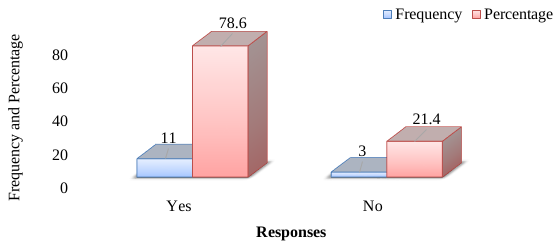
The information in Figure 1, disclosed that more than two-thirds of the respondents indicated that there is the need for peace education in the schools (n=11, 78.6%) as compared to those who felt peace education should not be taught in the schools (n=3, 21.4%). Based on this finding, there was adequate evidence to argue that it is essential to teach peace education to students in the schools.
The study further the asked whether there was the need to teach peace education in schools? Six themes emerged from the responses of the participants as presented in Figure 2.
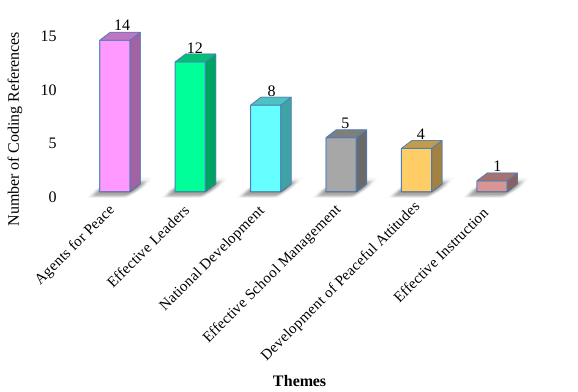
It is observed from Figure 2 that the themes generated from the data included agents for peace, effective leaders, national development, effective school management, development of peaceful attitudes, and effective instruction. The responses of the participants in relation to each theme is presented in subsequent sections.
Agents for Peace
The interviewees indicated that peace education needs to be taught I the schools because it will equip them to become agents of peace in the community. In relation to this, the respondents commented that:
“If we the students learn about peace, we can go home and talk to our parents and friends who do not understand the importance of peace (Cynthia). Since we [students] will be the ones to teach the next generation and also since most of our parents are not education, we can help our parents to understand the need to live peacefully with others in the community (Mark). We are the next generation who will be expected to teach the young ones, so if we are knowledgeable in peace related issues, we can extend it to the children in the future (Olivia)”.
These excerpts suggest that the teaching of peace education in the schools will prepare and empower the students who will become peace educators in their communities.
Effective Leaders
The second major theme was that the interviewees perceived peace education as a means in preparing them for effective leadership. The following comments confirm this view:
“We are the future leaders and we are in the Senior High now, so if we are taught about peace, we will be good leaders in the future. This is because leaders are expected to promote peace. So, if we know about peace today, it will prepare us to become good leaders who love peace (Bernard). Students at the Senior High School level are the future leaders who need to educate and direct the followers. So our knowledge in peace issues will help us in the future in leading our people peacefully (Comfort)”.
These comments showed that the students conceived peace education in the schools to provide them with peaceful attitudes that are desired of a leader.
National Development
The analysis of the interview data revealed that the students were hopeful that peace education in the schools will enhance national development. This opinion is captured in the following statements:
“Student are important in the development of the nation, so peace matters will be very good in the classroom to prepare us for future tasks that are necessary for development of our society. When there is peace, development will follow (Isaac). There will be no development without peace, and students are very important in the development process of any nation. So peace education is needed in school to train peace-loving citizens for development (Paulina)”.
The point is made that peace is a determinant of national development, therefore peace education in the schools provides the avenue to producing peaceful citizens for the development of the society.
Effective School Management
Effective school management arose as one of the reasons why peace education should be taught in the schools. The respondents alluded to this when they commented that:
“Teaching peace in the school will help the authorities to run the school well. I say this because when everybody in the school love peace, there will be no problems in the school, and the school authorities will have peaceful minds to manage the school (Kingsley). Learning about peace will help in the smooth management of the school by the headmaster and the staff. When there is peace in the school, conflicts will be avoided. The authorities of the school will then have enough time to concentrate of issues that will help the school to develop, not on solving conflicts (Mavis)”.
It is inferred from these comments that peace education in the school helps in reducing conflicts which makes management of schools to devote ample time in the effective administration of the schools.
Development of Peaceful Attitudes
The respondents believed that peace education in the schools will help instill peaceful attitudes in the youth. The respondents had these to say:
“Students are part of the active population so most of us engage in conflict. Therefore, if we are taught about peace issues, we will be able to adopt a peaceful habit and it will affect the whole society by reducing conflicts in our communities (Mavis). Learning about peace in the school will make us behave well in school and after school. We don’t have our parents here, so we need to learn about peace to develop good character. So as a school, I think it will be good if peace issues are taught here (Rejoice)”.
The comments implied that the teaching of peace education in schools will enable the students to develop peaceful attitudes and character.
Effective Instruction
One of the respondents asserted that the teaching of peace education would ensure effective instruction in the schools. This view is contained in the following statement: “Without peaceful atmosphere in school, effective teaching and learning cannot be possible (Sandra)”. This comment suggested peace education promotes peace in schools which is vital to effective teaching and learning in the schools.
The themes generated from the qualitative data were analyzed quantitatively, based on the research question: What is the perception of students on the need for peace education in Senior High Schools in the Ekumfi District? and the results were presented in Table 2.
In Table 2, the results showed that the respondents had varied perspectives on the need for peace education in the schools. Indeed, the findings pointed out that majority of the respondents rated students being agents of peace as the major reason for the necessity of peace education in the schools (n=177, 52.4%), followed by training students to become effective leaders (n=76, 22.5%), for national development (n=66, 19.5%), ensuring effective school management (n=12, 3.6%), development of peaceful attitudes among students (n=5, 1.5%) while ensuring effective instruction as the least rated reason for the need for peace education in the schools. Based on these results, the study concluded that students as agents of peace, training students to become effective leaders, and promoting national development were perceived as the need to for the implementation of peace education in the schools.
3.2. Effective Implementation of Peace Education
This sub-section presents results on the research question; what measures could be put in place to ensure effective implementation of peace education in Senior High Schools in the Ekumfi District? The views of the respondents were analyzed, and five themes were discovered as presented in Table 3.
The information in Table 3 showed that the suggestions of the respondents were based on designing peace education syllabus, training of teachers, encouraging boarding school system, intensifying co-curricular activities, and teachers as role models. Evidence on each of the themes are presented in the following sections.
Designing Peace Education Syllabus
According to the respondents, designing a syllabus on peace education will ensure effective implementation of the peace education in the schools. The following comments confirmed this suggestion:
“I suggest that there should be a whole new syllabus and subject on peace. The authorities in education should introduce a syllabus on peace that will look at peace as a subject on its own. I believe that regular teaching of peace develops peace habits in student, so they should treat peace as a subject and a way of life (Bernard).
The authorities can create a subject on peace so that there will be regular teaching of peace and we should write examination on it as we do in other subjects. Peace is needed for development, so the government should introduce peace education as a subject in Senior High Schools so that we can help develop the country in future (Isaac). Peace related issues should be taught continuously in schools and everywhere. This can be done by making peace as a compulsory subject. Every student should be made to learn it from the basic level to the higher level (Sandra)”.
The respondents were convinced that peace education could be effectively implemented in schools when there is a syllabus purposely designed on the concept. Besides, the respondents called for the study of peace education as a mandatory subject across the levels of education.
Training of Teachers
The respondents submitted that there is the need to train teachers on matters related to peace education in an effort to effectively teach peace issues in the schools. The subsequent statements were made to explain their point:
“I believe teachers should be given special knowledge on peace so that they can also teach us well (Paulina). There should be special teachers who are well trained to teach peace in the school. I say this because each subject has teachers who are knowledgeable in the area. For example, the English is not made to teach Mathematics, therefore there should be teachers who will teach peace (Rejoice)”.
In line with these comments, the respondents were convinced that when teachers are adequately trained on peace education, they would be equipped to effectively teach peace in the schools.
Encouraging Boarding School System
In the opinion of the respondents, the boarding school system is an avenue to instil peaceful behaviours in them. These were the views of the respondents:
“The boarding system is very good to unite us, so it should be encouraged as it brings together all people from different cultural background (Comfort). There should be more boarding houses in Senior High Schools so that students can stay and do things together as one people because as day students, we only meet our mates on the compound which does not teach us much as to how to live peacefully (Mavis). The boarding house is very good and every school should be made a boarding so that the students can learn to live together in unity (Rejoice)”.
It is understood from the above comments that the boarding system affords the students to co-exist, and brings them together to live peacefully.
Intensifying Co-Curricular Activities
It was found in the study that when co-curricular activities are intensified, it would lead to the effective teaching of peace education in schools. The respondents made this call when they stated that:
“There should be a special occasion in the school when peace issues are taught through lectures organized by the school authorities (Cynthia). Peace Day celebrations should be organized in all the Senior High Schools to make the students aware of the importance of peace (Isaac). I think there should be peace clubs in the schools so that they can create awareness in the various schools on the importance of peace (Susan)”.
The findings showed that the organization of co-curricular programmes such as Peace Day celebrations and peace clubs would help to ensure that peace education is effectively implemented in the schools.
Teachers as Role Models
In the understanding of the respondents, teachers are expected to be epitomize peace in their dealings. This position suggests that when teachers exhibit peaceful behaviours, the students are likely to emulate such behaviours. The respondents offered that:
“Teachers should set examples for the students so that it can be an attitude that students can copy. I mean the teachers should try and live peacefully among themselves and with the students. This will encourage the students to follow the examples of the teachers (Comfort)”.
The point is made that the teachers are required to possess and demonstrate peaceful characters so that the students would emulate them.
This part of the study examined the themes generated from the qualitative data quantitatively on the views of the respondents on measures that could be put in place to ensure effective implementation of peace education in the schools, and the results are shown in Table 4.
It could be observed from Table 4 that the respondents rated highest the training of teachers on peace education (M=4.52, SD=1.531), followed by designing peace education syllabus (M=4.13, SD=1.240), intensifying co-curricular activities (M=3.59, SD=1.523), encouraging boarding school system (M=2.19, SD=1.630), and teachers as role models ranked as the lowest (M=2.12, SD=1.495) suggestion on the effective implementation of peace education in the schools. Hence, it was concluded that the training of teachers on peace education, designing peace education syllabus, and intensifying co-curricular activities were the key suggestions on enhancing peace education in the schools.
4. Discussion
In relation to the first research question, the study discovered that the major reasons why the respondents felt peace education is necessary to be taught in the schools were preparing students as agents of peace, training students to become effective leaders, and promoting national development. It is inferred from this finding that the students were convinced that peace education plays a crucial role in the socio-economic development of every nation. Similar position is held by scholars who advocate for the implementation of peace education in second cycle institutions. It is understood from the preceding findings that the lack of peace education in the schools is inimical to the advancement of any civilized society. Hence, education policy makers and other relevant bodies charged with the mandate in delivering education to the citizenry are required to expend resources towards the implantation of peace education in the schools [9, 11, 12, 13, 14, 15, 16, 17, 18, 19, 20, 21, 22, 23, 24, 25, 26, 27, 28, 29, 30, 31, 32, 33, 34, 35, 36, 37, 38, 39, 40, 41, 42, 43, 44, 45, 46, 47, 48, 49, 50, 51, 52, 53, 54, 55, 56, 57, 58].
Finally, the study gathered the views of the participants on measures that could be applied to ensure effective delivery of peace education in the schools, and the findings established that training of teachers on peace education, designing peace education syllabus, and intensifying co-curricular activities were recommended as the major steps towards the effective delivery of peace education in the schools. A similar study enumerated similar suggestions in his studies as the major steps for improving peace education in schools. The point is made that teacher competencies, a comprehensive syllabus, and adequate co-curricular programmes that are geared towards peace education are required to boost the teaching of the peace education in the schools [33].
5. Conclusions and Recommendations
The study indicated that peace education in the schools is relevant in mentoring students who would be advocates of peace in their respective communities, preparing future leaders who are required to uphold peace and espouse peaceful attributes in their dealings with the publics as well as championing the path of national development. The perceptions among the students that peace education is needed in the schools imply that the students would commit themselves to instructions and programmes that are intended to promote peace education in the schools. The study also revealed that teachers needed to be trained on the principles, knowledge, and skills required to effectively deliver peace education in the schools. The point is made that when these challenges are tackled, it will pave the way for the smooth implementation of peace education in the schools.
Peace education needed to be taught in the schools due to its potential in developing students to become agents of peace, effective leaders, and enhancing national development, it is recommended that peace education should be accorded the needed importance in the school curriculum. This could be achieved by intensifying peace education in classroom instruction where concepts related to peace are taught to the students. It is also recommended that the management of the schools should design and implement co-curricular programmes that are tailored towards the delivery of peace education to the students. Peace-related matters could be integrated into the organization of sports, cultural activities, and anniversary celebrations. It is further recommended that the National Council for Curriculum and Assessment (NaCCA) of the Ghana Education Service should incorporate peace education as a topic in the Social Studies curriculum as part of the curriculum reforms for the Senior High Schools in Ghana. This will afford the teachers and students to devote ample time to the teaching and learning of peace-related issues in the schools.
Author Contributions: Conceptualization; methodology; formal analysis; investigation; resources; data curation; writing—original draft preparation,.; writing—review and editing,; visualization, AB; supervision,; project administration . Authors have read and agreed to the published version of the manuscript.
Funding: “This research received no external funding”
Data Availability Statement: Data is available on request from the corresponding author.
Acknowledgments: We acknowledge the schools and the students for their immense help.
Conflicts of Interest: “The author declares no conflict of interest.” “No funders had any role in the design of the study; in the collection, analyses, or interpretation of data; in the writing of the manuscript, or in the decision to publish the results”.
References
- Danesh, H. B. (2006). Towards an integrative theory of peace education. Journal of Peace Education 3:55–78.[CrossRef]
- Norton-Taylor, R. (2015). Global Armed Conflicts Becoming More Deadly, Major Study Finds. The Guardian, May 20, 2015, sec. World news. http://www.theguardian.com/world/2015/may/20/armed-conflict-deaths-increase-syria-iraqafghanistan-yemen.
- Heidelberg Institute for International Conflict Research [HIIK] (2019). Conflict Barometer 2018 [PDF file]. Retrieved from https://hiik.de/konfliktbarometer/aktuelle-ausgabe/
- Pettersson, T., & Wallensteen, P. (2015) Armed conflicts, 1946–2014. Journal of Peace Research, 52(4) 536–550.[CrossRef]
- Institute for Economics & Peace (2018). Positive Peace Report 2018: Analysing the factors that sustain peace, Sydney, October 2018. Available from: http://visionofhumanity.org/reports (accessed 6-05-2022).
- United Nations (2016). Report of the Secretary-General on women, peace and security, p. 14
- World Bank. (2017). Land Area (Sq. Km) | Data. 2017. https://data.worldbank.org/indicator/AG.LND.TOTL.K2?end=2016&start=1998.
- Sundberg, R., Eck, K.., & Kreutz, J. (2012). Introducing the UCDP Non-State Conflict Dataset. Journal of Peace Research, 49(2), 351 –362.[CrossRef]
- Abebe, T. T., Gbesso, A., & Nyawalo, P, A. (2006). Report of the Working Committee meeting on peace education in Africa. Addis Ababa: University of Peace.
- Hagan, M., & McGlynn, C. (2004). ‘Moving barriers: Promoting learning for diversity in initial teacher education’, Intercultural Education, 15(3), 243–252.[CrossRef]
- Subban, P. (2006). Differentiated instruction: A research basis. International Education Journal, 2006,7(7), 935-947.
- Aguba, C. (2010). Peace education in Nigerian Universities: An imperative for the curriculum planners. Nigerian Journal of Curriculum Studies 17 (3) 8-13.
- Edozie, G.C., & Ezeoba, K. O. (2010). Pedagogical development needs of primary school teachers for meeting global challenges in Social Studies curriculum. Nigeria Journal of Curriculum Studies, 17 (3) 112-120.
- Wisdom, I. J., & Imo, M. O. (2010). Literacy in co-curricular programmes and enhancement of peace education in schools. Nigeria Journal of Curriculum Studies 17 (3) 128-136.
- Enu, D. B. (2005). New challenges foe social studies curriculum content in a globalised social system. World Council for Curriculum and Instruction (WCCI) Nigeria Chapter Forum 5(2) 207-214.
- Terence, G. (2020). “Kant’s Foedus Pacificum: Path to Peace or Prolegomena to Neoliberalism and Authoritarian Corporatist Globalization in Contemporary Liberal Democratic States?” Annales. Ethics in Economic Life 23 (2), 7–20. https://doi.org/10.18778/1899-2226.23.2.01.[CrossRef]
- Alhassan, S. A. (2007). Working behind the scenes: State actors and judicial processes in the houses of chiefs in Ghana. University of Ghana Press.
- Issifu, K. A. (2017). Role of Civil Society Organizations in Conflflict Resolution and Peacebuilding in Ghana. Journal of Interdisciplinary Conflict Science, 3(1), 6-15
- Boutros-Ghali, B. (1992). An agenda for peace: Preventive diplomacy, peacemaking and peacekeeping. New York: United Nations.[CrossRef]
- Nyarkoh. K. (2012, June 7). Two Communities Clash over Murder of Clan Head. p.12.
- Donkor, J. (2016, December 13). 4 injured in Ekumfi in post-election violence. p. 23.
- United Nations Educational, Scientific, and Cultural Organization (UNESCO) (2000) (2000). Declaration of principles on tolerance. Paris, France: UNESCO.
- Mlačić, B. (2016). Social and reputational aspects of personality. International Journal of Personality Psychology, 2 (1), 15-36.
- Biton, Y., & Salomon, G. (2006). Peace in the eyes of Israeli and Palestinian youths: Effects of collective narratives and peace education programmes. Journal of Peace Research, 43 (2), 167-180.[CrossRef]
- Brantmeier, R. J., & Lin, J. (2008). Introduction: Toward Forging a Positive, Transfornmtive Paradigm for Peace Education. Transfomiing Educationfor Peace. Greenwich, CT: Infornlation Age Publishing.
- Richmond, O. P. (2007). Critical agendas for peace: The missing link in the study of international relations. Alternatives: Global, Local, Political, 32 (2), 247-274.[CrossRef]
- Savir, U. (2008). Peace first: A new model to end war. San Francisco: Berret-Koehler Publishers.
- Nsikak-Abasi, U., & Nneji, L. (2010). The curriculum as a panacea for peace to usher in the post economic meltdown era. Nigeria Journal of Curriculum Studies 17 (3) 146-157.
- Nwafor, O. M. (2007). Educational Innovation, production, product and process. Enugu: University Press.
- Navarro-Castro, L., & Nario-Galace, J. (2008). Peace education: A pathway to a culture of peace (2nd edn.). Quezon City: Center for Peace education.
- Agarwal, A. (2011). Educating toward a culture of peace. Journal of Peace Education, 8(1), 79-80.[CrossRef]
- Clarke-Habibi, S. (2008). Transforming worldviews: The case of education for peace in Bosnia and Herzegovina. Journal of Transformative Education, 3, (1), 33-56.[CrossRef]
- Harris, I. (2002). Conceptual underpinnings of peace education. London: Lawrence Erlbaum Associates, Publishers.
- Akunole, L. (2010). The formal, non – formal and Informal Continuum in Peace Education Curriculum. Nigerian Journal of curriculum Studies, 17(13) 8-13.
- Opotow, S.V., Gerson, J. C., & Woodside, S. (2005). From Moral Exclusion to Moral Inclusion: Theory for Teaching Peace. Theory Into Practice, 44, 303 - 318.[CrossRef]
- Kang’ethe, S. M. (2012). Attitudes of PLWA and other selected communities in Tsabong towards operationalizing bio medical and traditional therapies in tandem to face the AIDs epidemic. Social Work/Maatskaplike, 46 (1), 55-69.
- Bar-Tal, D. (2008). Coexistence education. Encyclopedia of Peace Education, 1-4.
- Schimmel, N. (2009). Towards a sustainable and holistic model of peace education: A critique of conventional modes of peace education through dialogue in Israel. Journal of Peace Education, 6 (1), 51-68.[CrossRef]
- Wiggins, J. L. (2011). The search for balance: Understanding and implementing yoga, peace, and democratic education. Journal of Peace Education and Social Justice, 5 (2), 216-234.
- Cabezudo, A., & Haavelsrud, M. (2013). Rethinking peace education. Journal of Conflictology, 4 (1), 3-13.[CrossRef]
- Thapa, M., Dhungana, R. K., Mahalingam, B. & Conilleau, J. (2010). Peace by piece: Mainstreaming peace education in South Asia. Stockholm: Save the Children Sweden.
- Hoeks, C. C. M. Q. (2012). Sri Lankan teachers as agents of peace: Perceptions and actions of formal secondary school teachers within the larger policy and governance framework of post-conflict Sri Lanka. Netherlands: University of Amsterdam.
- Bjerstedt, A. (1994). Teacher training in relation to peace education in schools: Views expressed by members of the peace commission network. Peace Education Miniprints, No 67: 1-19.
- Smith, R., & McCully, A. (2013). Organisational self-evaluation and teacher education for community relations in a transforming society? European Journal of Teacher Education, 1-27.[CrossRef]
- Schweisfurth, M. (2006). Global and cross-national influences in post-genocide Rwanda. Oxford Review of Education, 32 (5), 697-707.[CrossRef]
- Johansson, R. (2011). Voices today from the eighties-constructing peaceful citizens. London: Children’s Identity Citizenship in Europe Central Coordination Unit.
- Zembylas, M., & Bekerman, Z. (2013). Peace education in the present: Dismantling and reconstructing some fundamental theoretical premises. Journal of Peace Education, 10 (2), 197-214.[CrossRef]
- Andersson, I., & Zaleskiene, I. (2011). Peace education and teacher training today in the context of yesterday: A comparative perspective between Finland, Lithuania and Sweden. London: Children’s Identity and Citizenship in Europe.
- Gerrish, A. T., & Lacey A. (2006). Sampling: Research in Nursing (6th ed.). Wiley-Blackwell, Oxford.
- Polit, D. F., & Beck, C.T. (2010). Essenitals of Nursing Research: Appraising Evidence for Nursing Practice, (7th ed). Philadelphia: Wolters Kluwer Health | Lippincott Williams & Wilkins.
- LoBiondo-Wood, G., & Haber, J. (2010). Nursing Research Methods and Critical Appraisal for Evidence-Based Practice (7th ed.). St. Louis: Mosby Elsevier.
- Sekaran, U. (2006). Research methods for business: A skill-building approach (3rd ed.). New York: John Wiley.
- Parahoo, K. (2006). Nursing Research Principles, Process and Issues (2nd ed.). Hampshire: Palgrave Macmillan.
- Gall, M.D., Gall, J.P. & Borg, W.R. (2007) Educational Research: an introduction (8th edition). Needham Heights MA: Allyn & Bacon.
- Tavakol, M., & Dennick, R. (2011). Making sense of Cronbach’s alpha. International Journal of Medical Education, 2, 53-55.[CrossRef] [PubMed]
- Sekaran, U., & Bougie, R. (2010). Research Methods for Business: A Skill Building Approach (5th edition). New Jersey: John Wiley and Sons.
- Muijs, D. (2004). Doing quantitative research in education. London: Sage Publications[CrossRef]
- Montgomery, A. & McGlynn, C. (2009). New peace, new teachers: Student teachers' perspectives of diversity and community relations in Northern Ireland. Teaching and Teacher Education, 25 (3), 391-399.[CrossRef]