
Abstract
This study aimed to explore the relationship between teacher training and challenges in delivering effective sex education in the Sagnarigu district in the Northern region of Ghana. The Social-cultural theory underpins the study. A descriptive survey research design was adopted for the study. The population of this study comprises teachers, head teachers and a School Improvement Support Officer (SiSo) in basic schools in the Gumani/Nyanshegu circuit in the Sagnarigu district of the Northern Region. This study adopted multi-sampling methods to select respondents. Random and purposive sampling techniques were used to select the study's 10 basic schools and 83 respondents. The main tools used for the data collection were the questionnaire and interview. The data was analysed using Statistical Package for Social Scientists (SPSS) software version 23 tools. Descriptive Statistical tools such as frequencies were used to gauge the number of occurrences of the studied variables. The qualitative data was also further analysed in line with the research questions to establish patterns of similarities and variations. These were then validated with the quantitative data for any possible contradictions in the findings. The study concludes that people's socio-cultural and religious beliefs and practices affect the teaching of sex education in school. It was observed that sex education could be misconstrued as an encouragement to young people to engage in early sexual promiscuity. Finally, the study concludes that there cannot be effective sex education without the appropriate logistics such as T.L.M.s, syllabus and time allocation for the subject. The study also acknowledges that the availability of these materials must go along with appropriate capacity building for teachers to be well-positioned to teach the subject. It is recommended that Sexuality education should be included in the curricular and academic calendar of basic schools, along with the provision of adequate T.L.M.s and the proper collaboration with appropriate agencies for the effective teaching of the subject. Sex education needs to be given maximum attention, just as any of the life skills subjects, with adequate investment and motivation to both teachers and pupils to ensure a meaningful impact. There should be regular monitoring, supervision, and assessment of the training of teachers and its influence on the teaching of the subject, as well as ensuring that ethical considerations regarding cultural and religious sensitivities and individual privacy issues are upheld.
1. Introduction
1.1. Sex Education Globally and in Africa
People under 20 years of age, who constitute about 50% of the world's population, are at the highest risk of sexual and reproductive health challenges, thus making sexuality the foundation of most sexual and reproductive health problems [1]. While many countries, societies and cultures around the world are yet to approve of the introduction of sexual health education in schools because of the variation in their socio-cultural background, belief system, political system and religion, some countries consider sex education as a basis to dealing with issues related to reproductive health and sexual preferences among teenagers. Sexual health education is one of the five core aspects of the WHO global reproductive health strategy, which was approved by the World Health Assembly in 2004 [2]. In Sweden, sex education has been a mandatory part of school education since 1956. The subject usually starts for children between 7 and 10 and continues to the other grades. It is integrated into different subjects, such as biology and history. Also, the Swedish National Board of Education designed a curriculum that makes sure children in the country are introduced to reproductive biology and, by the ages of 10 to 12, would have been well informed about the various forms of contraception [3].
In England, on the other hand, sex education is not compulsory in schools as parents refuse to let their children take part in such lessons. Their curriculum concentrates on the reproductive system, foetal development, and safe sex is discretionary and discussion about relationships is often neglected. Britain has one of the highest teenage pregnancy rates in Europe, and sex education is a heated issue in government and media reports [4]. However, in Germany, sex education has been part of the school curriculum since 1970. In 1992, sex education became mandatory by law. It usually covers all subjects regarding the growth processes, body changes, puberty, emotions, the biological process of reproduction, sexual activity, partnership, homosexuality, unwanted pregnancies and the implication of abortion, the danger of sexual abuse and violence, child abuse, and sexually transmitted diseases. Similarly, in Japan, sex education is also mandatory from age 10 or 11 years, mainly comprising biological topics such as menstruation and ejaculation. In China and Sri Lanka, sex education traditionally consists of reading the reproduction sections of biology textbooks. On the contrary, in most African countries, especially in Nigeria, sex education is scorned as a taboo that should not be talked about among children. Generally, children are not permitted to have access to information on sexual health because society frowns upon it with the perception that such exposure will pervert their minds and influence them to become victims of early sexual intercourse. Hence, the subject is not part of the primary school curriculum. In 2002, the Nigerian Educational Research and Development Council (NERDC), in conjunction with the Federal Ministry of Education, civil societies and many other International Development Partners, designed and proposed a detailed curriculum on Sexuality Education for both primary and secondary schools; this was met with mixed feelings and triggered robust debates, especially in Northern Nigeria. Within a very short time, religious leaders and other gatekeepers hijacked deliberations on its acceptability or otherwise and were given different connotations and colouration [6].
1.2. Sex Education in Ghana
A confluence of sensitive cultural, religious and geographical factors has created a very sticky environment in Ghana, where issues of sexuality and reproductive health have remained delicate and unspoken subjects for decades [7]. In the view of the same author, even though sexual health is a crucial factor for productivity and national development in every society, the mere mention of 'Sex' in Ghana seems to evoke uncomfortable feelings among both young people and adults. Traditionally, children, especially girls in Ghana, are raised with strict discipline that makes it almost impossible to question their parents on matters of their sexuality. The effect is that young people become afraid to ask questions relating to sexual issues for fear of being misunderstood and as "disrespectful" and "disobedient" because of the perception that sexual issues are topics for adult discussions only [8]. Sexuality education in Africa dates back to pre-colonial times when parents and community elders provided it to reflect the culture and values of the particular place a person hails from [9]. Pre-colonial African societies had no formal educational institutions like the ones today. Hence, pre-colonial children and adults were educated through informal systems [10]. The traditional family educational system, which usually starts from birth and ends at death during pre-colonial times, was such that each community made arrangements to ensure that all its community members were well-educated on desirable social behaviours, necessary basic knowledge and relevant skills for their lives [11]. The stage at which sex education should start in our schools has become a very controversial topic. A writer describes how his mother lost her teaching job in 2004 for teaching her Class One (P1) pupils the parts of the body. According to him, the Ghanaian government’s approach toward sex education is one of uncertainty because, even though the subject is officially part of the science syllabus of the school curricula, it is not “effectively taught” in practice [12]. Hence, governments want to satisfy society's religious critics by neglecting their policy guidelines [13].
However, the primary sources of information about sexuality for most students are peers and various media, which are limited in scope and accuracy. For example, talking to friends is unsatisfying since they are uninformed [14]. At the same time, parents are unwilling to discuss sexual matters with their children because they are too embarrassed or because their cultural orientation and beliefs oppose it [15, 16]. Meanwhile, children and teenagers are exposed to a barrage of information related to sexuality, which requires guidance from the family and school for healthy sexual development and responsible behaviour. Due to the impact of Western civilisation, there is a need to supplement the training of young people in the art of family life by their parents and family members with a school-based sexuality education programme. Studies in the area have mainly addressed sexual behaviour in the context of H.I.V. and AIDS in terms of risk and prevention, such as the use or non-use of condoms [17]. Other researchers reported that adolescents are knowledgeable about the mode of preventing unintended pregnancies, yet still, they engage in unprotected sex [18]. A writer addressed adolescent sexuality in terms of early initiation of sexual intercourse and adolescents’ sex partners [19]. Sex education is necessary for students, and it plays a vital role in the prevention of HIV/AIDS and influences contraceptive knowledge and behaviour [20, 21].
Parents are generally uncomfortable talking to their children about human sexuality, and mothers are reluctant to talk about sex education to their daughters as they find it embarrassing to discuss those issues [22]. Studies have shown that parents and teachers involved in sex education should have some unique personal characteristics as well as good training and an attitude towards sex education to be encouraging in their behaviour [23, 24]. The majority of parents, teachers and students supported that sex education should be introduced in school curricula to help prevent unwanted pregnancies, enhance healthy relationships between opposite sexes, prevent parental transmission of HIV/AIDS infections and S.T.D.s and provide knowledge of sex interactions, consequences and responsibilities [25]. Schoolchildren are positively inclined to accept formal AIDS education as a part of classroom teaching.
Sex education will not prompt students to have sex. Hence, sex education should be included in the curriculum [26]. The study area, Gumani/Nyanshegu circuit, is heavily populated with seventeen Basic schools in the Sagnarigu district in Tamale in the Northern Region. The inhabitants are mostly Dagombas, predominantly Muslims, with many Christians and other denominations. Demographic information reveals that the area's population are primarily young people between the ages of one and nineteen. Classroom interactions with school pupils reveal that most of them are entirely ignorant of sexuality issues, and this results in many of them getting pregnant and dropping out of school. According to the School Assessment Report for Our Lady of Fatima School Complex, ten pupils dropped out of school for the 2014/2015 academic year, four out of them due to pregnancy [27]. Also, data available from the information systems unit of the Sagnarigu District Office revealed that every year, an average of two pupils drop out of basic school due to sexuality-related challenges such as pregnancy and early marriages [28]—the lack of structured content for the teaching and learning of sex education compounds this situation. Teachers do not also have the knowledge and appropriate techniques for handling sexuality-related issues in the classroom. In this regard, teacher training on sex education is critical to equipping teachers with the right content, skills and techniques to handling issues of sexuality with their students. However, studies on sex education have always concentrated on adolescents, basic school learners and senior secondary school learners. From the literature reviewed for this study, it is evident that no studies have been conducted to train teachers on the influence of sex education in primary schools as the focus in Ghana. This study, therefore, seeks to fill the gap in the training of teachers on sex education, which is vital to teaching sex education in basic schools in the Gumani/Nyanshegu circuit. The study explores the relationship between teacher training and challenges in delivering effective sex education in the Sagnarigu district in the Northern region of Ghana. These research questions guided the study – (1) how does the training teachers receive influence the teaching of sex education? (2) What are the challenges affecting the teaching of sex education?
1.3. Teacher Training on Sex Education
Capacity building on sexuality education for teachers often focuses on preparing them with adequate knowledge, skills and the proper disposition to enable them to construct a more learner-friendly environment void of fear or intimidation for pupils' to learn about their sexuality and the challenges associated. Changes in the world today, associated with rapid urbanisation and the movement of human beings, have affected the way information about sexuality is taught to young people. The author is of the view that the expansion of technology across the globe, which has enabled the unprecedented speed of information sharing, including the transmission of sexual materials, has had extremely negative impacts on young people [29]. It is the view of many researchers that content for the professional development of teachers should focus on connecting content-related activities with students’ learning ability of such content [30, 31]. This suggests that “content is crucial to providing effective professional development for sex educators” [32].
The professional development of sex educators needs to be emphasised more on content-related strategies that teachers need to use to develop and improve students' learning outcomes [33]. Effective engagement with pupils allows teachers to closely monitor and interact with pupils during learning [30]. This method of instruction produces better learning outcomes and greater chances of retention of the knowledge acquired [34]. The active learning strategy, which enables teachers to acquire techniques for helping pupils from their close interactions with them, is most profound and supports the view that it should be focused on content [30]. The authors further argue that when the content of teachers learning is consistent with their personal goals and also in sync with policy, professional development is best described as coherent [30, 31]. Professional development becomes meaningful to teachers and sex educators when there is coherence and consistency between learning and beliefs. This gives teachers the satisfaction of providing knowledge relevant to the pupils' learning. Unfortunately, education on sex is relatively slow in reaching teenagers early enough to prevent the negative consequences of their ignorance [30]. This maintains that “the best sex education is given in the home, where there is love and respect” [35].
1.3.1. Capacity of teachers in teaching sex education
Considering the teacher's central role in the school setting, the success of every school-based program, such as sex education, will depend on how well-placed the teacher is to support it. Therefore, it may be overly simplistic to view the teacher as an insignificant information disseminator. It could instead be argued that the teacher is a core strategic agent within specific social contexts geared towards any school-based programme's success. As discussed earlier, schools, for instance, have proven to be the practical starting point for understanding gender roles and basic social norms. Studies conducted in some selected secondary schools in South Africa and Uganda discovered that male and female teachers continuously demonstrated differences in their gender norms in their relationship with one another and their students. Several studies conducted on the subject also revealed unequal power relations being exploited by male teachers to harass girls within the school environment sexually [36, 37]. Also, the broader environmental factors, such as the community setting, have a considerable effect on the ability of teachers to teach sex education in schools. Predominant norms that run counter to sex education programmes may prevent or direct how sex education should be taught. This often breeds an attitude of reluctance in the teachers, thereby defeating the purpose of such programmes [38, 39]. Teachers are worried about parental opposition to sexual health education in schools. Teachers believe that most parents associate media promotion of contraceptive use with sex education and would often pull their children out of such programmes as a result of such perceptions. Eventually, this led to redesigning the curriculum to reduce the time spent discussing contraceptive use. With the teachers reducing the amount of time they spent discussing contraceptives, it is reported that only in a small number of cases did parents pull their children from the programme [40]. However, it is unclear whether these threats were perceived or accurate as they reflect the rigid framework in which the programme was implemented even though teachers did not abandon their teaching.
Moreover, as this study sought to find out teacher-ability in the teaching of sexual education to students, what is most important is how the teacher places his students and how methodologies of teaching are affected. A writer postulates that “childhood concepts in Western communities for the past 200 years have experienced a reasonable change from the old traditional point of view to a more protective one while still maintaining that children have fundamental legal rights”. Currently, researchers are preaching the education approach indicating that children are “skilled social actors in their own right, generating their understanding of the world” [41]. In this view, teachers are entreated to expose students to the appropriate skills, knowledge, and attitudes, which will go a long way in helping them establish their own opinions on issues and make the right decisions and choices. [41].
In sub-Saharan Africa, however, levels of appreciation are still low concerning the youth and their sexuality. The challenge is not recognising that the youth also experience sexual desire and pleasure [42]. Rather, youths are perceived as inexperienced and clueless about issues of sexuality and need protection instead of information. Youth cannot act in empowered ways without being treated as agents” ([43]. Hence, the level of appreciation teachers have for the consequences of students' ignorance of sexuality will influence the content and teaching methodologies used in teaching the subject. The lack of knowledge might not be the same for all pupils, but the beliefs, traditions and gender roles of teachers determine how their students are taught. Writers revealed that girls were described by teachers as either victims or as 'fallen' and, therefore, as 'temptresses'. Whichever way, their sexuality was only defined concerning boys. In the Sub-Saharan African (S.S.A.) context, girls tend to remain quiet in sexual health lessons. This often results in an environment where female students are not encouraged to participate, thus reproducing norms of girls as submissive and their male peers as dominant [43].
However, writers caution against interpreting agency in dualistic terms such as present or absent, dominant and the submissive, robust and the powerless, because many studies have shown girls to express agency in numerous, yet often subtle ways, the nature of which is often dependent on internal as well as external factors. 44, 45]. This is because the gender norms in Sub-Saharan Africa make it difficult for girls to express themselves about their sexuality. A female student may feel humiliated sharing what she knows about sexual experiences during a sexual health class. However, when her peers in the class, from homes, sexual health and reproductive issues freely discussed by their parents and siblings began sharing their knowledge about sexuality and their own sexual experiences, such girls learned to build some relative confidence about sexuality issues from their peers in the classroom, thus moving from ‘thin’ to ‘thick’ on the continuum. It is, therefore, essential to acknowledge the significance of the organisational context in which these actions take place and acknowledge their ability to negotiate this in different ways.
Sex and sexuality issues are generally regarded as taboo in most parts of Sub-Saharan Africa. They are perceived as matters of extreme privacy, which should only be discussed among adults within society and especially within the family [46]. Most teachers who took particular interest in handling sex and sexuality matters in schools emphasised what Kelly (2004) describes as the risks that are related to students' sexual activity, like unplanned pregnancies, S.T.D.s including H.I.V. infections, which lead to AIDS, and poor academic performance. The prevalence of HIV/AIDS in most Developing countries has an implication on the quality of teaching and learning in schools. It adds to a high attrition rate among teachers and their death-related shortage. In Ghana, it is estimated that about 3.5 per cent of the adult population is infected with HIV/AIDS. In 2023 alone, about 1,698 children under 15 children were infected [47].
Some people in the rural setting still think that sex education is equivalent to a social taboo that might lead to social snobbery on the part of those teachers who resort to it [48]. As a result, teachers and parents do not allow for open and frank discussions about sex education, so the learners resort to advice and guidance from their peers and older siblings [49]. For example, teachers interviewed in Guinea and Mexico had no adequate knowledge of the school's role in pupil failure and dropout. Instead, they blame the pupils and their family environment [50]. The above confirms that children and teenagers are not exposed to sex education early enough to prevent them from suffering the consequences of early sex and unprotected intercourse.
Teachers cannot teach or advise children on sexuality issues because they were not exposed to sex education in their homes, and their training did not also include the subject [49]. This lack of trust and confidence in teachers' knowledge or discretion tends to prevent many young learners from approaching their teachers for information or advice about their sexuality, hence resorting to their peers [51]. A blind leading the blind where friends and peers play vital roles in each other’s sex education with incomplete and wrong information. [51]. It is, therefore, appropriate and essential to teach adolescents about healthy and positive sexual situations as well as life skills. However, concerns are often raised about what, when and how the message of sex education should be introduced to adolescents. What is essential here is considering the attitudes of teachers, parents, and learners before trying to teach the subject. If a positive attitude is developed, all the parties involved will feel comfortable when issues of sexuality are taught or discussed without any hindrance.
1.4. Challenges affecting the teaching of Sex Education
There are several challenges confronting teachers in their quest to teach sex education to their students in school. Chief among these problems is the passive attitude of most parents towards the subject, either in school or at home [49]. In the rural setting, people still harbour the belief that sex education is a socially forbidden subject that has the potential to mislead the youth and their teachers into adopting pretentious social lifestyles [48]. Parents and guardians who are the first point of contact for learning for young people are, unfortunately, often not supportive of them in providing the correct information on sexuality at the home level, which should form the solid foundation for accurate knowledge about their sexuality. Additionally, the lack of opportunity for teachers to update their knowledge on sex education through in-service training, coupled with the absence of time allocation for the subject and the lack of structured content for the teaching of sex education, are all part of the problems affecting the teaching of the subject. Learners' attitudes regarding sex education vary from one community to another based on their social beliefs, peer groups, religious backgrounds, and cultural settings within which learners are raised. [52]. This confirms findings in the study area that learners do not feel comfortable talking about their sexuality because of their religious and social orientation.
Ignorance of sexuality among young people often leads them into trouble, primarily when the challenges they face are not appropriately handled. In the view of a writer, most teenagers who have sex in Rwanda rarely use contraceptives. Such ignorance only leads them to unplanned pregnancies and other sexual-related challenges. According to the author, at least 10% of single teenagers aged 18 years in sub-Saharan African countries get pregnant unwillingly due to a lack of information about their sexuality [53]. The writer further argues that unmarried mothers sometimes encounter many more difficulties than married mothers because they receive less support from their families and communities and often have few resources to take care of their children’s education [53].
Family members least speak about sexual issues in almost all societies in the world. Young people who experience hormonal changes during their transition into adulthood often shy away from discussing their experiences with their parents and guardians [54]. The same author is further of the view that teenagers find it easier and more comfortable seeking information about their sexuality from their peers or books, magazines, articles and videos on the internet. Information often obtained from these sources is inaccurate and only exposes them to more danger. The author also argues that the issue of unplanned pregnancies has been a social problem among young girls for a long time in many societies of the world, including Rwanda, due to a lack of accurate information [54]. In pre-colonial times, girls in Rwanda who engaged in premarital sex and got pregnant were ostracised and taken to an Island located in the Kivu Lake, which separates Rwanda and the Democratic Republic of Congo. Most of those girls died due to harsh weather conditions and lack of food and medicine. The lucky ones were chanced by men from the Democratic Republic of Congo who married and took them to stay with them. [55]. Similarly, a writer also observed that premarital unplanned pregnancies generate persistent problems often between parents and their female children who fall victim to such. Such actions create problems not only for the teenage girls themselves but also for their unplanned children, who become a burden to them. Their action often further cause them to suffer other social prejudice, psychological trauma, and depression [54].
Children born to unmarried parents are usually deprived of suitable conditions for proper upbringing. Access to adequate health, food, and education is often a significant challenge for them; depriving the children of a healthy childhood experience eventually affects their adult life [55]. According to FHI/IMPACT, families in Rwanda and Nigeria traditionally have developed a substantial prejudice against children born out of premarital relationships. The organisation is of the view that several factors put young girls in risky situations, thereby exposing them to unintended pregnancies. Most of the young girls are forced to give in to sexual advances by unscrupulous men due to poverty. Others are also persuaded by their friends and even their parents or guardians to accept sexual advances to gain good grades from their teachers at school or for some social recognition. Unfortunately, a lot of them eventually give up their education and enter into full-time prostitution to take care of their economic and social needs [56].
Despite the availability of knowledge and information on sexuality in the 21st century, many young girls still fall prey to deceit by young men who claim that sexual intercourse heals young women's pimples and abdominal pains during their monthly menstrual periods, thereby suggesting that young women should experiment sex, leading to sexual problems such as unwanted pregnancy, S.T.D.s and HIV/AIDS. Most of these young girls usually resort to more painful ways of abortion from unqualified practitioners when they get pregnant, or better still, some would abandon or throw newborn babies into toilets [53]. The latter revealed in his study conducted in America that abortion became the best option for half of the female teens who became pregnant. This, however, included teens from various denominational traditions where matters such as abortion are highly prohibited. In many instances, the teens mentioned that the possible condemnation from their families and congregations if they became mothers out of wedlock and the stigma they would face for being pregnant in church influenced their decisions [57].
Complications from illegal abortion are the leading cause of young girls losing their lives in many societies in Rwanda where abortion is illegal or severely restricted. Some of the explanations given by these young girls who opt for abortion are that they were not prepared emotionally and physically to have or nurture children at their age, especially when they got pregnant against their will, coupled with the fear of community sanctions and the stigma that comes with premarital childbearing. Young girls did not want to have children out of wedlock and were also scared of being sent out of school for being pregnant [58]. As the same author argues, tackling these challenges requires creating a more conducive and open environment, making room for adolescents in and out of school the opportunities to assess information on how to protect themselves to prevent pregnancies and also offer guidance and counselling on sexual relationships. Considering the above, reaching young people early enough with the correct information and services will be possible.
1.5. Social-Cultural Theory
Social-cultural theory has significantly influenced educational psychology studies [59]. The overriding concept of Vygotsky’s theory that relates to the central principle of the social-cultural theory is the principle of co-construction of knowledge between the individual and social processes, the function of social Interaction in the development of the human brain and the concept of the zone of proximal development to explain learning and teaching [60]. In a further analysis of Vygotsky’s theories, a writer believed that the main aspects of Vygotsky's theory that apply to teacher attitude are the theory of socio-cultural activity and the theory of distorted development. That is to say, Vygotskian theory establishes a link between an understanding of the need for specialised education, such as sex education and the effect of the lack of special knowledge and the means to compensate for it [59, 61]. It is, therefore, essential for teachers to undergo regular on-the-job training on sex education in order to understand and appreciate not just the need to teach the subject in school but also provide support to young people to understand issues about their sexuality.
2. Methods and Materials
A descriptive survey research design was adopted for the study. The population of this study comprises teachers, head teachers and a School Improvement Support Officer (SiSo) in primary schools in the Gumani/Nyanshegu circuit in the Sagnarigu district of the Northern Region. Random and purposive sampling techniques were used to select the schools and respondents for the study. A random sampling approach was adopted to select ten (10) out of fifteen (15) basic schools in the circuit, including Christian Mission schools, Islamic Mission schools, and local government basic schools. The same sampling approach was also used in selecting seventy-two (72) basic school teachers out of one hundred and four teachers in the circuit. The purposive sampling approach was then adopted in selecting ten (10) head teachers and one (1) circuit supervisor, who are known to be critical informants on the topic under study and thus could have enough information about the survey being conducted [62]. The main tools used for the data collection were the questionnaire and interview. The data was analysed using Statistical Package for Social Scientists (SPSS) software version 23 tools. Descriptive Statistical tools such as frequencies were used to gauge the number of occurrences of the studied variables. The qualitative data was also further analysed in line with the research questions to establish patterns of similarities and variations. These were then validated with the quantitative data for any possible contradictions in the findings.
3. Results and Discussion
This section presents results and discussion on these two research questions: (1) how does the training teachers receive influence the teaching of sex education? (2) What are the challenges affecting the teaching of sex education?
3.1. Influence of Training Teachers Receive on the Teaching of Sex Education
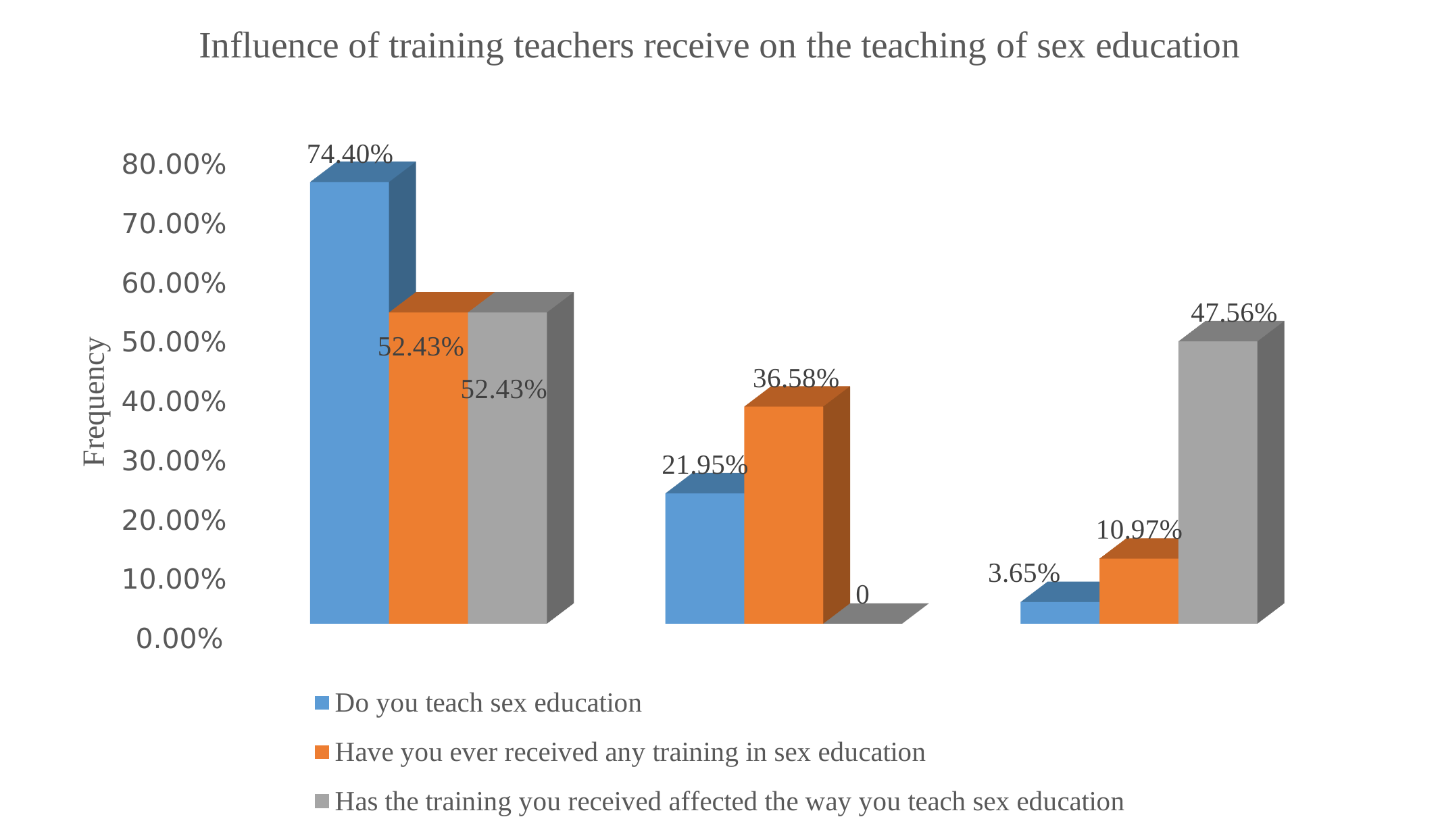
The study examined how the training teachers receive influences their teaching of sex education at the primary school level. A series of probes to answer this question examined whether respondents teach sex education and whether they have ever received any training on sex education. The findings revealed that the majority of respondents, about seventy-four point four zero per cent (74.40%), indicated that they do not teach sex education. Twenty-one point nine five per cent (21.95%) of respondents indicated that they teach sex education to their pupils. Three-point six-five per cent (3.65%) of respondents indicated that they were not sure if they teach sex education or not. Of the twenty-one point nine five per cent 21.95% who teach sex education, fifty-two point four three per cent (52.43%) said they had ever received training on sex education. Thirty-six point five-eight per cent (36.58%) said they have never received any training on sex education. While Ten point nine, seven cent (10.97%) said they were unsure. Even though most respondents do not teach sex education in school due to their lack of training and mastery of the subject, some teachers who have had the opportunity to participate in training programmes on the subject do teach it in school. This is corroborated by an analysis of qualitative data presented earlier, which suggests that the district education office occasionally collaborates with other organisations to organise in-service training for teachers on various topics. Also, interviews with the Head Teachers further revealed that even though there is no prescribed syllabus for teaching sex education in primary schools, some aspects of sex education are found in the Citizenship Education and the Natural Science syllabus. However, due to the absence of a structured syllabus backed by clear policy direction and the diversity of pupils' cultural backgrounds, teachers treat these topics with extreme caution. This concurs with an illustration from a previous study about how his mother lost her teaching job in 2004 for teaching her class one (1) pupils the parts of the body. According to him, the Ghanaian government's attitude toward sex education is best described as ambivalent because, though the subject is officially part of the school curricula, it is not "effectively taught” in practice [12].
3.2. Challenges affecting the teaching of sex education
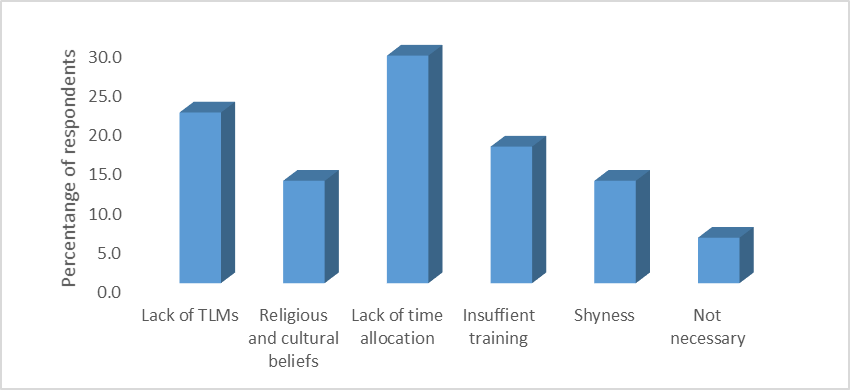
Regarding challenges, all respondents (100%) indicated that their inability to teach the subject was the main challenge. However, some views about the specific issues needing attention included the lack of a structured syllabus, lack of Teaching and Learning Materials (T.L.M.s), insufficient knowledge of teachers in sex education, shyness of students and lack of time allocation for teaching the subject. The analysis presented in Figure 2 reveals that twenty-one point seven percent (21.7%) of respondents indicated a lack of teaching and learning materials, thirteen percent (13.0%) of respondents indicated religious and cultural barriers, twenty-nine percent (29.0%) of respondents indicated lack of time allocation on the academic timetable for the subject, seventeen point four percent (17.4%) of respondents indicated lack of in-service training for teachers resulting in insufficient knowledge, skills and techniques in handling the subject, whilst thirteen percent (13.0%) of respondents also mentioned shyness on the part of students and teachers as barriers in the teaching of the subject. However, five point eight (5.8%) of respondents maintained that the teaching of the subject in school was not necessary because it was more likely to expose pupils to early sex and promiscuity than help them live responsible lives since they are more likely to experiment some of the things they learn from the classroom. This view concurs with the view of an earlier study that “cultures' hesitant attitudes about sexuality is evident in the limitations placed on sex education in primary and secondary schools and often in its total absence from the curriculum” [63]. Since teaching and learning materials are a vital part of every pedagogy, some respondents maintained that the absence of textbooks, videos, and other helpful learning materials in schools disincentives teachers who even desire to teach the subject amidst all the other challenges.
Also, socio-cultural and religious factors such as family orientation and religious beliefs, including teachers, affect people's behaviour in society. Such beliefs affect teachers' appreciation of training in such subjects as sex education. In the Gumani/Nyanshegu area, for example, matters of sexuality are not encouraged in most homes. As such, parents and teachers alike do not give first information about sexuality to their wards. This makes it appear somewhat awkward to contemplate teaching sex education in school. Knowledge enhancement and continuous updating are critical to the work of teachers [64]. Unfortunately, teachers are constrained in content because they are not exposed to critical concepts about sex education. Vygotsky’s theories that apply to teacher attitude are the theory of socio-cultural activity and the theory of distorted development. That is to say, Vygotskian theory establishes a link between an understanding of the need for specialised education, such as sex education and the effect of the lack of special knowledge and the means to compensate for it [59, 61]. It is, therefore, essential for teachers to undergo regular on-the-job training on sex education in order to understand and appreciate not just the need to teach the subject in school but also provide support to young people to understand issues about their sexuality. Shyness about the subject, as expressed by 13% of respondents, further contributes to the low interest in teaching it. Most teachers and pupils feel shy and uncomfortable to talk about sexuality issues in class, perhaps due to their upbringing. Most basic school pupils often feel that speaking about sexuality issues in class will make them appear as 'bad' children. The absence of the subject in the academic calendar and the lack of in-service training for teachers make it difficult for teachers to guide pupils adequately.
4. Conclusion and Recommendation
The study concludes that people's socio-cultural and religious beliefs and practices affect the teaching of sex education in school. It was observed that sex education could be misconstrued as an encouragement to young people to engage in early sexual promiscuity. Finally, the study concludes that there cannot be effective sex education without the appropriate logistics such as T.L.M.s, syllabus and time allocation for the subject. The study also acknowledges that the availability of these materials must go along with appropriate capacity building for teachers to be well-positioned to teach the subject. It is recommended that Sexuality education should be included in the curricular and academic calendar of primary schools, along with the provision of adequate T.L.M.s and the proper collaboration with appropriate agencies for the effective teaching of the subject. Sex education needs to be given maximum attention, just as any of the life skills subjects, with adequate investment and motivation to both teachers and pupils to ensure a meaningful impact. There should be regular monitoring, supervision, and assessment of the training of teachers and its influence on the teaching of the subject, as well as ensuring that ethical considerations regarding cultural and religious sensitivities and individual privacy issues are upheld.
Author’s Contributions: Conceptualisation; methodology; validation; formal analysis; investigation; resources; data curation; writing—original draft preparation; writing—review and editing; visualisation; supervision; project administration. All authors have read and agreed to the published version of the manuscript.
Funding: "This research received no external funding."
Data Availability Statement: Data is available on request from the corresponding author.
Acknowledgements: I acknowledge the respondents for their time and patience.
Conflicts of Interest: "The author declares no conflict of interest." "No funders had any role in the study's design; in the collection, analyses, or interpretation of data; in the writing of the manuscript, or in the decision to publish the results".
References
- Briggs, N. D. (1991). Adolescent sexuality and its problems in an African Society. Adolescent Genealogy, 235-239.
- World Health Organisation. (2010). Developing Sexual Health Programmes, A framework for action. Geneva: WHO.
- Halonen., J., & Santrock, J. (1996). Psychology: contents of behaviour. Madison: Brow & Benchmark.
- Huffstutter, P. J. (2007, April 8). States are refusing Bush's abstinence-only sex ed—the Los Angeles Times.
- C.D.C. (2017, February 20). https://www.cdc.gov/healthyyouth/data/yrbs/pdf/2017/2017_ standard_yrbs_item_rationale.pdf. Retrieved from Youth Risk Behaviour survey: www.cdc.gov/healthyyouth
- Eko, J. E., Abeshi, S. E., Osonwa, K. O., Uwanede, C. C., & Offiong, D. A. (2013). http://economics.txstate.edu/arp/285. Journal of Sociological Research, 4, No.2. doi:10.5296/jsr.v4i2.3836[CrossRef]
- Mack, J. (2011). Institutionalised stigma in Ghana: Stigma, Shame and Sexuality: Gender across borders. Retrieved 3 25, 2012, from /blog/2011/09/21/institutionalised stigma: www.rhrealitycheck.org/
- Brocato, V., & Dwamena-Aboagye, A. (2007). Violence against Women & HIV/AIDS. In e. a. Yvette Amissah, Violence Against Children In Ghana. Achimota, Ghana: The Ark Foundation Ghana.
- Mbeo, F. E. (1997 ). A Social, cultural study for institutionalising F.L.E. in Tanzania's schools and teachers' colleges. Dares salaam: Dares -salaam University Press.
- Kenyata, J. (1972). Facing Mount Kenya, the tribal life of Kikuyu. London: Secker and Warburg.
- Occiti, P. J. (1993). An Introduction to indigenous education in East Africa. Makerere: Makerere University Press.
- Osei, A. (2011, 09 28). Sex Education in Ghanaian Society: The Skeleton in the Cupboard. Retrieved from Retrieved from ashesi.edu.gh: www.ashesi.edu.gh/images/academics/ writing/center/09_osei_ess ay.pdf
- Ankomah, A. (2001). The International Encyclopedia of Sexuality: Ghana. New York: Robert T. Francoeur Publishers.
- Mbonile, L., & Kayombo, E. J. (2008). Assessing parenting/guardians of adolescents toward introducing sex and reproductive health education. East African Journal of Public Health Association, 5 (1), 26 – 31.[CrossRef]
- Marwa, J. J., & Lyamuya, R. (2023). Perception of Students Towards Sex Education in Tanzania: A Case of Secondary Schools in Kibaha District. International Journal of Research in Engineering, Science and Management, 6(10), 36-42.
- UNICEF. (2006). Knowledge, attitudes, practices and behaviours study. Windhoek: United Nations International Children's Emergency Fund.
- Lugoe, W. L. (1996). Prediction of Tanzania students H.I.V. risk and preventive behaviour in Arusha Tanzania. Arusha: Unpublished.
- Mwakagile, D., Mmari, E., Makwaya, C., Mbwana, J., Biberfeld, G., Mhalu, F., & Sandstrom, E. (2001). Sexual behaviour among youths at high risk for HIV-1 infection in Dar es Salaam, Tanzania. B.M.J. Journal, 255–259.[CrossRef]
- Ikamba, L. M., & Ouedraogo, B. (2003). High-risk sexual behaviour: knowledge, attitudes and practice among youths at Kichangani Ward. Paper Presented at the Workshop on Youth and HIV/AIDS in Tanzania. Dar es Salaam: Workshop on Youth and HIV/AIDS in Tanzania.
- Tilakavathi, S., Divekar, A., & Mehendale, S. (1997). Attitude Towards Sex Education among College Lectures. Trends in Social Science Research, 4, 103-108.
- Dawson, D. (1986). The Effects of Sex Education on Adolescent Behaviour. Family Planning Perspective, 18(4), 162-170.[CrossRef]
- Reis, J., & Seidl, A. (1989). School Administrators, Parents and Sex Education: A Resolvable Paradox. Adolescence, 24(5), 639-645.
- Kakavoulis, A. (2001). Family and Sex Education: A Survey of Parental Attitudes, Sex Education: Sexuality, Society and Learning. Journal of Sex Education, 1(2), 163-174.[CrossRef]
- Badhan, S., Lal, P., & Kashyap, G. (2002). A study of Awareness and Attitude Regarding HIV/AIDS Amongst School Teachers of Delhi. International Journal on HIV/AIDS, 15, 11-16.
- Orji, E., & Esimai, O. (2003). Introduction of Sex Education into Nigerian Schools: The Parents', Teachers' and Students' Perspectives. Journal of Obstet Gynaecol, 23(2), 185-188.[CrossRef]
- Todaro, M., & Smith, S. (2009). Economic Development, Tenth Edition, U.S.A. U.S.A.: Pearson Education Limited.
- Baidoo-Anu, D. (2023). Classroom assessment culture in Ghana’s education system (Doctoral dissertation, Queen's University (Canada).
- EMIS. (2016). The dropout rate in primary schools in the Sagnarigu Municipal. Sagnarigu: Ghana Education Service.
- Shuby, K. (2004). Sexual and reproductive health need of young people: A study examining the fit between need and current programming Responses in India. University of Bielefeld, India: Unpublished PhD Theses.
- Desimone, L. M., Porter, A. C., Garet, M. S., Yoon, K. S., & Birman, B. F. (2002). Effects of professional development on teachers’ instruction: Results from a three-year longitudinal study. Education Evaluation and Policy Analysis, 24(2), 81-112.[CrossRef]
- Garet, M., Porter, A., Desimone, L., Birman, B., & Yoon, K. (2001). What makes professional development effective? Analysis of a national sample of teachers. American Education Research Journal, 38(4), 915-945.[CrossRef]
- Guskey, T. R. (2003). “What Makes Professional Development Effective?”. Phi Delta Kappan, 748-750.[CrossRef]
- Hirsh, S. A. (2007). The Learning Educator: A New Era in Professional Learning. Oxford, Ohio: National Staff Development Council.
- Bonwell, C. C., & Eison, J. A. (1991). Active learning: Creating excitement in the classroom. Washington, D.C.: The George Washington University.
- Nyarko, K., Adentwi, K. I., Asumeng, M., & Ahulu, L. D. (2014). Parental attitude towards sex education at the lower primary in Ghana. International Journal of Elementary Education, 3(2), 21-29.[CrossRef]
- Adekola, A. P., & Mavhandu-Mudzusi, A. H. (2021). Addressing learner-centred barriers to sexuality education in rural South Africa: Learners' perspectives on promoting sexual health outcomes. Sexuality Research and Social Policy, 1-17.[CrossRef]
- Mirembe, R., & Davies, L. (2001). Is Schooling a Risk? Gender, Power Relations, and School Culture in Uganda. Gender and Education, 13(4), 401-416.[CrossRef]
- Mkumbo, K. A. (2012). Teachers' Attitudes Towards Comfort about Teaching School-based Sexuality Education in Urban and Rural Tanzania. Global Journal of Health Science, 4(4), 149-158.[CrossRef]
- Smith, K., & Harrison, A. (2013). Teacher’s attitudes towards adolescent sexuality and life-skills education in rural South Africa. Sex Education: Sexuality, Society and Learning, 13(1), 68-81.[CrossRef]
- Plummer, M. L., Wight, D., Obasi, A., Wamoyi, J., Mshana, G., Todd, J., . . . Ross, D. A. (2006). A process evaluation of a school-based adolescent sexual health intervention in rural Tanzania: MEMA kwa Vijana programme. Health Education Research, 22(4), 55-512.[CrossRef]
- Wight, D. (1999). Limits to empowerment-based sex education. Health Education, 6, 233-243.[CrossRef]
- Braeken, D., & ardinal, M. (2008). Comprehensive Sexuality Education as a Means of Promoting Sexual Health. International Journal of Sexual Health, 50-62.[CrossRef]
- Francis, D. (2010). Sexuality education in South Africa. International Journal of International Development, 30, 314-319.[CrossRef]
- Bell, J. (2005). Doing your Research Project: A guide for first-time researchers in education, health and social science (4thEd). Berkshire: Open University Press.
- Bhana, D. (2012). Girls are not free – In and out of the South African School. The International Journal of Education and Development, 32, 352-358.[CrossRef]
- Shemdoe, A. I. (2005). The attitude of parents towards sexual socialisation of adolescents: A case study of the Zaramo tradition – Kisarawe. Dar es Salaam.: Unpublished M.A. Dissertation University of Dar es Salaam.
- https://www.myjoyonline.com/ghana-recorded-17774-new-hiv-infections-in-2023/
- Macleod, C. X. (1999). The causes of teenage pregnancy. South African Journal of Psychology, 29 (I), 32-40.[CrossRef]
- Ndlangisa, N. J. (1999). Perceptions of adolescents and their parents on the content and source of sex education. . Transkei. : Unpublished masters' thesis, Umtata: University of Transkei.
- Carron, G., & Chau, T. (1996 ). The quality of primary schools in different development contexts. Paris: UNESCO.
- Moore, S., & Rosenthal, D. (1993 ). Sexuality in adolescence. London.: Routledge.
- Gallagher, J., & Gallagher, A. (1996). A young women's guide to teenage sexuality. New York: Harper Collins.
- Uwibambe, L. (2004). A sociological study on sexual education of Rwandese girls, U.L.K. female students aged 18 to 25 and women in the Nyamwezi district after the 1994 genocide, Mémoire, U.L.K. Kigali: U.L.K.
- Bezuidenhout, J. F. (2004). A Reader on Selected Social Issues (3rd ed.). Pretoria,: Van Schaik.
- Mukasekuru., E. (2001). Social reintegration of women and girls victims of sexual abuse during the 1994 genocide in Rwanda, case of the association ABASA-BUTARE. U.N.R., Butare.
- FHI/IMPACT. (2000). Young Persons Fact Sheet. Nigeria: The Facts of Life in Nigerian Journal of General Practice, 6(5), 425-37.
- Mash, R., & Kareithi, R. (2005). Youth and Sexuality Research Ages 12-19 years in the Diocese of Cape Town, South Africa. Cape Town: Fikelela AIDS Project.
- Uwiragiye, B. (2005). Knowledge of young people about HIV / AIDS and social communication as a channel for changing their behaviour towards this pandemic, Kanombe district, Memory. Kigali: U.L.K.
- Vygotsky, L. S. (1993). The collected works of L. S. Vygotsky. Volume 2: The fundamentals of defectology (abnormal psychology and learning disabilities) (R. et al. Carton, Eds.; J. et al. Stevens, Trans.). New York: Plenum.
- Mahn, H. (1999). E.S.L. students and the reading and writing processes: An attitudinal profile. Unpublished master's thesis, California State University. Los Angeles, CA.
- Gindis, B. (1995). The social/cultural implication of disability: Vygotsky's paradigm for special education. Educational Psychologist, 30(2), 77-82[CrossRef]
- Feldman, R. S. (1985). Social psychology: Theories research, and applications. New York: McGraw-Hill Book Company.
- Baron, R., & Byrne, D. (1994). Social psychology: Understanding human Interaction. Boston: Ally Bacon.[CrossRef]
- Billingsley, B. (2004). Exceptional education teacher retention and attrition: A critical analysis of the research literature. The Journal of Special Education, 38(1), 39-55.[CrossRef]