
Abstract
This study addresses the critical challenge of material scarcity within Ghana’s creative industries by pioneering the synthesis of professional-grade stage blood from indigenous, locally-sourced materials. In the context of Ghanaian theatre and film, practitioners face significant barriers due to the high cost and limited availability of imported special effects products, often resulting in the use of inadequate substitutes that compromise aesthetic realism, safety, and narrative authenticity. This paper responds by exploring the potential of cassava starch, tapioca, kenkey dough, and fufu wax. Grounded in Schumacher’s theory of Appropriate Technology, the paper reframes indigenous resources not as inferior alternatives but as technologically and contextually appropriate solutions that align with Ghana’s economic, environmental, and social realities. The study provides detailed, reproducible recipes for both flowing and clotted blood variants, validated through practical application in simulated special effects such as gunshot wounds and deep-tissue scars. These formulations meet key performance criteria: visual fidelity under theatrical and cinematic conditions, controlled viscosity, ease of application and removal, and performer safety. Beyond technical innovation, this research contributes to shifting academic and professional discourse from dependency and scarcity toward resourcefulness, sustainability, and artistic self-reliance. It offers a practical framework for reducing production costs, enhancing the quality of visual storytelling, and fostering local value chains within Ghana’s growing creative economy.
1. Introduction
Special effects makeup is a transformative art that alters an actor’s appearance through prosthetics, liquid latex, gels, and other materials to create realistic injuries, ageing, fantastical creatures, or supernatural transformations, all essential for narrative authenticity in theatre. Unlike standard stage makeup, which enhances facial features under theatrical lighting, Special effects makeup serves as a narrative tool that visually communicates plot developments, character evolution, or emotional states, demanding collaboration across the design, costume, and direction departments. As Buchman (1990) [1] elucidates, Special effects techniques enable profound character metamorphoses, such as ageing a young performer into an elderly figure or simulating grotesque wounds, thus amplifying the production’s visceral impact and audience immersion.
Debreceni (2013) [2] argues that stage blood is a cornerstone of special effects makeup, functioning as both a visual prop and a semiotic device that heightens dramatic realism and emotional intensity. Moodie (1992) [3] historicises the narrative, contending that stage blood evolves from symbolic red fabrics to sophisticated formulations such as Kensington Gore, comprising corn syrup, food colouring, and thickeners. Stage blood replicates the sheen, flow, and staining properties of real blood while remaining safe for actors and washable after performance. Its significance lies in its capacity to convey violence, sacrifice, or transformation instantaneously, as evidenced in productions where splattered blood denotes conflict, or in productions where Kensington mixtures seep convincingly into costumes, mirroring physiological reality.
The scholarship underscores blood’s role in semiotics and audience perception: Ellis (2021) [4] demonstrates through empirical testing that blood’s interaction with fabrics, skin, and sealants enhances believability, and formulations such as gravity-fed drips or momentum sprays enable dynamic onstage effects without compromising safety. In theatrical contexts, blood integrates with prosthetics and gels to simulate lacerations or haemorrhages, amplifying catharsis as theorised by Artaud’s Theatre of Cruelty, where visceral imagery assaults sensory boundaries to evoke primal responses.
Furthermore, its formulation must account for lighting gels and projection, ensuring colour fidelity across stage conditions and thereby contributing to special effects makeup’s overarching goal of illusionistic verisimilitude. Ultimately, stage blood’s versatility, from
offstage applications to choreographed splatters, elevates special effects makeup from cosmetic enhancement to an indispensable tool in stage and cinematic productions.
It is apparent that the distinction between compelling illusion and distracting artifice hinges on the most visceral details. Details that ought to convince the audience and stimulate acceptance or appreciation of otherwise certain scenes or scenarios often rest on the meticulous application of stage blood as a bridge between the performer’s body and the spectator’s psyche. The efficacy of stage blood is only as persuasive as the materials it employs. As practitioners note, the effectiveness of the stage blood used is a primary motivator for a successful production. However, stage blood is not only difficult to obtain or buy here in Ghana for stage and cinematic productions, but there is also a lack of knowledge, even in the feign preparation of the same, and this has resulted in the exploitation of all kinds of concoctions that mimic stage blood but lack certain industry standards and quality. The adage junk in, junk out often holds not from a lack of skill but from acute material scarcity.
This creates a profound practical gap. For makeup artists and filmmakers in Ghana, this material challenge is not merely an artistic hurdle but a barrier. This scarcity forces a stark choice: compromise professional standards with inadequate substitutes or navigate the costly and unreliable process of procurement. This leaves artists fundamentally handicapped, unable to reliably create the transformational bloody illusions they so wish to. Consequently, there is an urgent and pragmatic need within Ghana’s burgeoning creative economy for a locally synthesised, professional-grade blood substitute that strategically balances cost-effectiveness, accessibility, and uncompromised realism.
Again, while Western technical literature provides extensive, formulaic documentation on synthesising stage blood from industrial ingredients such as synthetic polymers, glycerine, and corn syrups (e.g., Buchman, 1990; Palma, 1985) [1, 5], a profound theoretical silence envelops the Global South, particularly Sub-Saharan Africa. Current discourse is overwhelmingly centred on the application of finished, often imported, products rather than on the development of solutions rooted in local contexts. There is a critical absence of research exploring how indigenous, bio-based materials, abundant in regional agriculture, can be repurposed as effective thickening agents, colourants, and substrates for special-effects synthesis. This oversight perpetuates a paradigm of material and technological dependency, ignoring the potential of situated knowledge and frugal innovation.
This study directly addresses this dual practical and theoretical void. It moves beyond lamenting resource constraints to actively investigate how indigenous Ghanaian materials, such as cassava starch, tapioca, and kenkey dough, can be transformed into non-toxic, edible, and hypoallergenic stage and screen blood. In doing so, it seeks to shift academic and professional discourse from one of lack and dependency to a framework of resourcefulness, sustainability, and indigenous technical knowledge. This paper champions a model of artistic self-reliance tailored to the local ecosystem by documenting viable, context-specific recipes and their applications. The paper provides more than a set of recipes; it offers a scholarly and practical framework for achieving aesthetic self-sufficiency and localised control over the essential technical tools for stage and cinematic productions in Ghana.
Ultimately, the paper aims to empower practitioners, reduce production costs, enhance special- effects make-up, and contribute to the sustainable growth and global competitiveness of Ghana’s creative industries. It posits that the future of convincing special effects in contexts like Ghana may not arrive in imported bottles, but may be cultivated, quite literally, from local soil.
2. Literature Review
2.1. Theoretical Footing
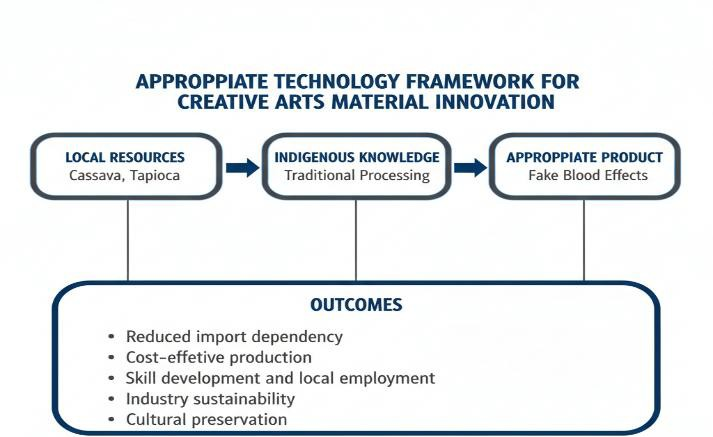
The quest for sustainable, locally-driven solutions in developing economies has long been a subject of scholarly discourse. This study examines Schumacher’s Appropriate Technology (AT) Theory as the foundational lens through which the use of indigenous materials for fake blood production in Ghana’s film and stage industry can be understood. The theory provides a robust framework for analysing how resource-constrained environments can achieve professional-grade results through self-reliance and innovation.
Appropriate Technology emerged as a counter-narrative to the dominant industrialisation paradigm of the mid-twentieth century. First articulated by E.F. Schumacher in his seminal work Small is Beautiful, the theory argues that the pursuit of large-scale, capital-intensive technologies is often incompatible with the social and economic realities of developing nations. Schumacher proposed a human-centred approach prioritising technologies that are simple, affordable, and aligned with local conditions.
This perspective is profoundly relevant to the Ghanaian creative arts, where practitioners frequently face daunting challenges due to the high cost and limited availability of imported
special effects materials. Imported products often create a cycle of dependency and prove unsustainable when exorbitant freight charges and market constraints hinder access.
Scholars characterise AT by five defining pillars: affordability, simplicity, environmental sustainability, labour intensity, and cultural compatibility. This study aligns with these principles by transforming indigenous materials such as cassava starch, tapioca, and kenkey dough into sophisticated visual enhancers.
Akubue (2000) [6] emphasises that true appropriateness requires local control, empowering communities to adapt technologies to their evolving needs. In this context, providing makeup artists with the knowledge to manufacture their own fake blood fosters an environment in which mediocrity is rejected in favour of high-quality, locally managed craftsmanship.
Appropriate Technology is the preferred theoretical foundation for this research for several reasons: it validates the use of local ingredients such as fufu wax and cassava starch, not as inferior substitutes but as technologically appropriate materials suited to Ghana’s environmental and economic context. Secondly, it addresses the exorbitant costs and market unavailability mentioned by practitioners. The theory’s focus on health-appropriate applications supports the study’s emphasis on non-toxic, edible, and hypoallergenic ingredients to safeguard performers. Using Willoughby’s (1990) [7] taxonomy, this study successfully combines the physical tools (hardware) with the specialised knowledge of formulation (software) to improve the quality of visual illusions in the Ghanaian industry.
The key argument here is that, as the paper advocates, technology should be locally appropriate, affordable, sustainable, and aligned with available resources rather than dependent on expensive foreign imports. Therefore, applying AT theory transforms the Ghanaian makeup artist from a passive consumer of expensive imports into an active innovator of sustainable, indigenous technology. This alignment not only eases market constraints but also ensures the long-term expansion and sustainability of the nation’s creative arts sector.
2.2. Stage Blood in Theatrical and Cinematic Practice
Stage blood, also known as fake blood, theatrical blood, or Kensington Gore, is a synthetic substance designed to simulate the appearance and physical properties of real blood for performance purposes. Its primary function is to create the illusion of injury, violence, or physiological trauma without posing health risks to performers or damaging costumes and sets. Unlike real blood, stage blood is formulated to meet specific aesthetic, practical, and safety requirements across varied performance conditions, including theatrical lighting, camera close-ups, and live audience sightlines (Buchman, 1990; Debreceni, 2013) [1, 2]. This review synthesises existing scholarship on the historical development, material formulations, semiotic functions, and practical challenges of stage blood, with particular attention to its role in enhancing narrative authenticity and emotional impact.
2.3. From Symbolic Ritual to Synthetic Formulation
The use of blood-like substances in performance predates modern theatre, originating in ritualistic and religious ceremonies in which animal blood symbolised sacrifice or divine intervention (Moodie, 1992) [3]. In classical Greek theatre, violence occurred offstage, and blood was rarely depicted. By the Elizabethan era, theatrical blood, often made from animal bladders filled with pig’s blood or red wine, had become a spectacle in revenge tragedies (Pecktal, 1999) [8]. The 19th century saw the rise of melodrama, in which blood served as a visceral cue for moral extremity. The term “Kensington Gore”, a colloquialism for stage blood, originated in mid- 20th-century British theatre, named after the Kensington district where many theatrical suppliers were based (Ellis, 2021) [9]. Early recipes used corn syrup, food colouring, and thickening agents such as cocoa powder or flour to mimic blood’s viscosity and sheen. The development of synthetic polymers and glycerine-based formulas in the late 20th century allowed greater control over consistency, drying time, and washability, revolutionising special effects in both theatre and film (Debreceni, 2013) [2].
2.4. Material Formulations and Technical Considerations
Stage blood formulations are highly specialised, tailored to specific performance contexts. Key considerations include viscosity, colour fidelity under lighting, adhesion to skin and fabric, and ease of removal (Palma, 1985) [5]. For theatre formulations, the blood must be visible from a distance and under bright stage lights. Glycerine-based blood remains glossy and wet-looking, while acrylic-based mixtures dry to a crusted finish for “aged” wounds (Parker & Smith, 2003) [10]. However, for film formulations, high realism is required for close-up shots. Silicone-based blood is often used for its ability to mimic the surface tension and reflective quality of real blood (Buchman, 1990) [1]. There are also safety and allergy concerns; formulations must be non- toxic, hypoallergenic, and edible for scenes involving the mouth. Common bases include corn syrup, methylcellulose, or polyethene glycol (Debreceni, 2013) [2]. Application Techniques: Methods range from gravity-fed drips and concealed capsules for sudden “blood hits” to airbrush systems for fine spatter (Ellis, 2021) [4]. Recent innovations include thermochromic blood that changes colour with temperature and UV-reactive formulas for fantastical or horror effects (Killick, 2018) [11].
2.5. Stage Blood as a Visual Language
Stage blood functions as a semiotic device within the performance’s visual language. It communicates narrative information instantly and viscerally, transcending linguistic or cultural barriers (Pecktal, 1999) [8]. Signifier of Violence and Trauma: Blood’s appearance marks a narrative turning point, signalling injury, death, or sacrifice. Its quantity and placement convey severity; a trickle versus a gush denotes different levels of trauma (Moodie, 1992) [3]. Realistic blood effects trigger visceral audience reactions, enhancing empathy, horror, or catharsis. This aligns with Artaud’s (1938) [12] Theatre of Cruelty, which sought to assault the senses through stark, physical imagery (Parker & Smith, 2003) [10]. In horror and thriller genres, blood is a central aesthetic. In period drama, its use may be restrained to maintain historical authenticity (Debreceni, 2013) [2]. Blood can symbolise guilt (e.g., Macbeth), lineage, or sacrifice, adding thematic depth beyond literal injury (Pecktal, 1999) [8].
2.6. Challenges in Global and Resource-Limited Contexts
While Western theatre and film industries have well-documented, commercially available blood products, practitioners in the Global South, particularly in Sub-Saharan Africa, face significant material constraints (Koomson, 2024) [13]. Professional-grade stage blood is often imported and prohibitively expensive, forcing artists to rely on inadequate substitutes such as paint, food colouring, or fruit pulps that lack realism and safety standards (Killick, 2018) [14]. Technical literature also focuses on industrial ingredients (e.g., synthetic polymers, glycerine) that may be unavailable locally. This creates a knowledge gap in adapting indigenous materials (e.g., cassava starch, plant-based gums) for blood synthesis (Palma, 1985; Ellis, 2021) [5]. Furthermore, imported formulas may not account for local climate conditions (e.g., high humidity affecting drying time) or cultural sensitivities regarding colour symbolism (Koomson, 2024) [13]. This gap highlights the need for frugal innovation, developing effective, affordable solutions using locally available resources, a concept underexplored in current stage blood literature (Killick, 2018) [14].
2.7. Future Directions and Research Gaps
The scholarship on stage blood remains largely technical and Eurocentric. Key research gaps include studies exploring bio-based thickeners (e.g., okra gum, cassava starch) as sustainable alternatives to synthetic polymers, and research on how blood symbolism varies across cultures and how formulations can be adapted for different performative traditions. The rise of digital theatre and virtual production raises questions about the role of physical blood effects versus digital augmentation, and about how training programmes in theatre schools in Africa and Asia incorporate low-resource material synthesis into their curricula.
In essence, the foregoing review of related literature concludes that stage blood is far more than a technical prop; it is a complex intersection of chemistry, artistry, and semiotics. Its evolution from ritualistic symbol to sophisticated synthetic compound mirrors broader trends in special effects technology. However, material and knowledge inequities between Western and non-Western contexts reveal a critical gap in both practice and scholarship. Future research must prioritise decentralised, context-sensitive innovation, developing stage blood solutions that are not only realistic and safe but also accessible, sustainable, and culturally resonant. As Koomson (2024) [13] argues, the next frontier in stage blood innovation may lie not in newer synthetic chemicals but in the strategic repurposing of indigenous resources, fostering artistic self-reliance and expanding the creative possibilities of performance communities worldwide.
3. Methodology
This study employed a mixed-methods, practice-based research design to develop, test, and validate synthetic stage blood formulations using indigenous Ghanaian materials. The methodology comprised three sequential phases: (1) exploratory interviews with industry practitioners, (2) experimental formulation and prototyping, and (3) practical application and testing of the blood products in simulated special effects scenarios. This approach ensured that the research was grounded in professional needs, informed by local knowledge, and validated through hands-on artistic practice.
To contextualise the research within Ghana’s creative industry, purposive sampling was used to select key and experienced professionals in special effects makeup. Participants included makeup artists, theatre and film directors, and production designers with at least five years’ professional experience and a portfolio featuring blood effects. Semi-structured interviews explored: current challenges in sourcing and using stage blood; safety and performance criteria considered essential; and local materials already experimented with or perceived as promising.
All participants were fully informed of the research objectives, procedures, and intended use of their insights. Written consent was obtained before interviews. For practitioners whose images or insights appear in this paper, explicit written consent for publication was obtained. Anonymity was offered and respected where requested.
Material selection was guided by principles derived from Appropriate Technology theory and practitioner input. Criteria included: Availability and Accessibility: Materials must be locally abundant, affordable, and easily sourced within Ghana. Safety and Edibility: All components must be non-toxic, hypoallergenic, and safe for use on the skin and, where relevant, for ingestion.
Items such as cassava starch, tapioca, kenkey dough, and fufu wax were selected for their historical and contemporary use in Ghanaian households and their physical properties (e.g., thickening, adhesion, malleability). These materials were sourced from local markets and households in Winneba and Accra, ensuring consistency with what is readily available to practitioners.
4. The Synthesising
The synthesising was the practical phase of the study, during which the stage blood was prepared. Two types of blood were prepared: the flowing blood and the clotted blood. To begin with, tools and materials for this session are very necessary to acquire as an initial step in the process. Steps in the preparation of stage blood creation are not laborious, but keen attention must be paid to the process to achieve the expected results.
4.1. Tools and Materials Needed
A gas burner, a gas lighter, two (2) cooking source pans, a mixing bowl, measuring spoons, transparent bottles, plates, a wooden spatula, red, blue and black food colours, starch, water, tissue paper, tapioca, Cassava fufu dough, and kenkey dough.
4.2. Preparation of Cassava starch Flowing Blood Step One
A realistic, flowing fake blood can be made using cassava starch as a thickener, just as corn syrup. The resulting cassava-based fake blood is non-toxic and edible. The cassava plant is readily available on the Ghanaian market and can be acquired, grated and converted into starch, which serves as the base for fake blood. In summary, the project seeks to employ products that are edible and will not injure the user, making preparation easier and more affordable.
Buchman (1990) [1], an expert in film and television makeup, opines that to make blood, one cup of Karo corn syrup is poured into a clean glass, one teaspoon of red vegetable colouring is added, one-half teaspoon of yellow vegetable colouring is added, and the mixture is stirred. When the mixture settles, one-half teaspoon of non-toxic, water-soluble poster paint is added and mixed. According to Buchman, the result has the opacity and consistency of blood. Alternatively, the authors of this exploratory search have demonstrated below the preparation of an alternative way of preparing flowing and clotted blood with food items and a digitalised format of enhancing the quality and flow of screen blood.
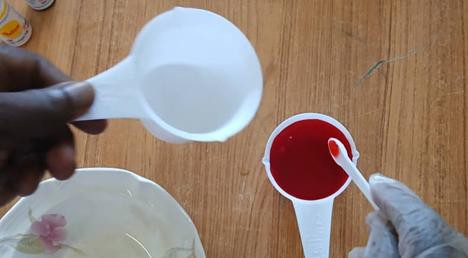
It is advisable to wear surgical gloves and an apron when handling food colour, as it is a key ingredient in the fake blood recipe and can stain one’s clothing if care is not taken during preparation. To begin, two tablespoons of red powdered or liquid food colour are poured into a cup, mixed with a quarter litre of water from the measuring cup, and dissolved to form a red mixture, as shown in Figure 1.
4.3. Step Two
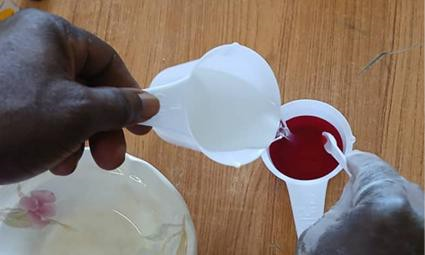
A pinch of yellow and blue food colours is added to the already mixed red food colour and mixed to appear as a dark red colouration, as shown in Figure 3. The mixture must be well stirred with a spoon to dissolve every particle settled at the base of the mixture. At this stage, the expected colouration of the required content of blood has been achieved without its thickness quality.
4.4. Step Three
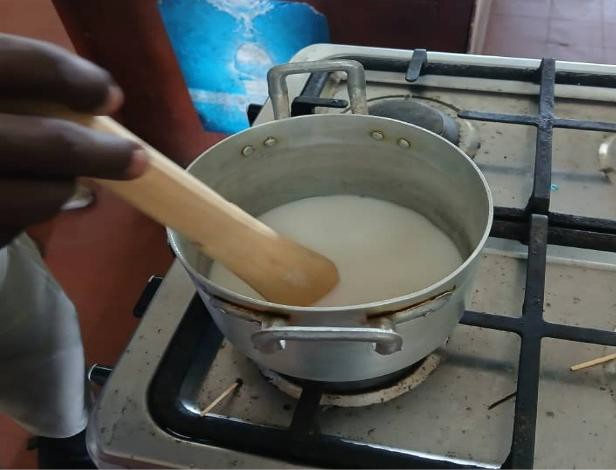
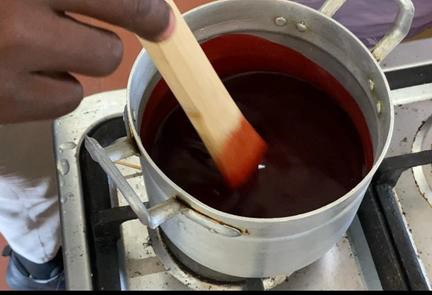
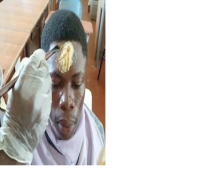
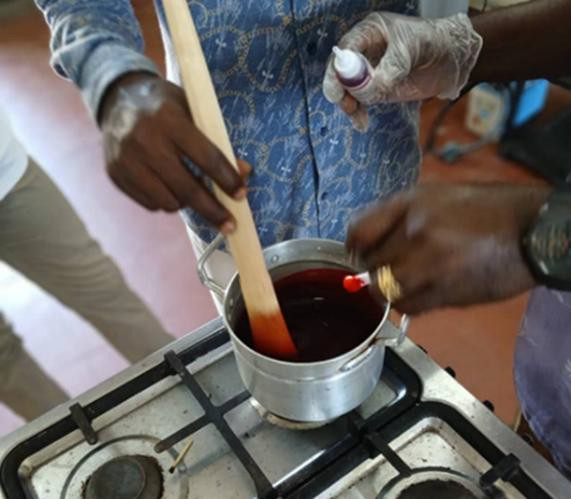
In Figure 4, two tablespoons of starch are dissolved in a measuring cup of half a litre of water and steamed in a saucepan on the gas burner to cook for four minutes until it assumes a state of light textured quality. While the starch is steaming on the burner, the mixture of a quarter litre of water in the measuring cup, one teaspoon of red and blue food colours is added to the water in the cup, mixed and poured into the starch in the saucepan on the burner and stirred well to assume the adequate texture and tone of the running fake blood. This should take ten seconds on the burner. While the mixture is on fire, it is important to observe the thickness of the mixture so that it has the texture quality and flow of thin blood at the end of preparation, as shown in Figure 4. After preparation, the efficacy of the running sample blood was checked through the initial creation of an effect gunshot bullet wound Figure 5. The bullet wound was created with the use of Kenkey dough in place of liquid latex. Figure 6 shows the completed bullet wound for a fake gunshot wound.

4.5. Preparation of Cassava Starch Clotted Blood
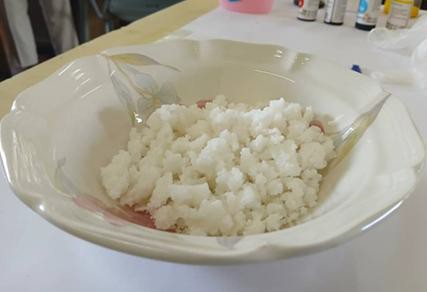
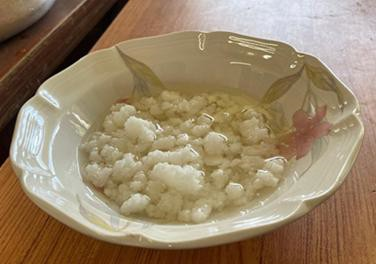
Figure 8 shows tapioca made from grated cassava root, strained to remove starch and steamed. Tapioca is a major constituent of the clotted blood ingredient. To begin preparing the clotted blood, tapioca is soaked in water in a bowl for ten minutes, as shown in Figure 8, to soften. After the tapioca is softened, the mixture of tapioca and red and blue food colours is poured into a saucepan, as shown in Figure 9, and allowed to steam for four minutes, while the mixture is gently stirred in the saucepan. Additionally, a teaspoon of red food colour is added to the mixture to produce a dark red, saturated fake blood (Figure 10, Figure 11), which steams within four seconds and is taken off the gas burner as cooked.
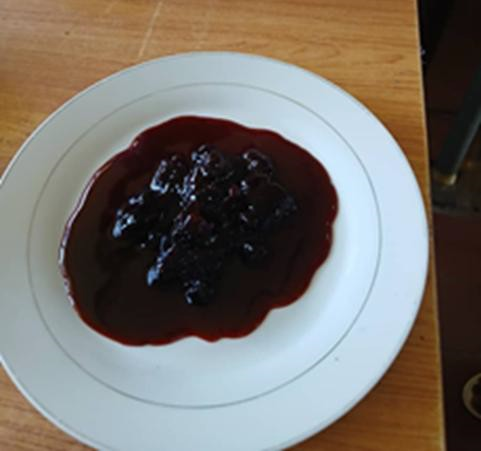
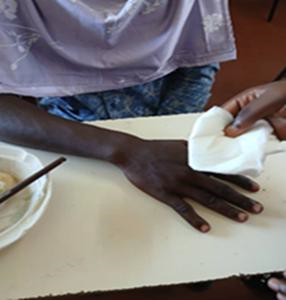
After preparing the clotted blood, the mixture is applied to a deep scar with exposed bones behind the palm to demonstrate the efficacy of the blood clot. To achieve the scar effect behind the palm, the area is cleaned with a wet wipe to remove sweat or dirt (Figure 12).
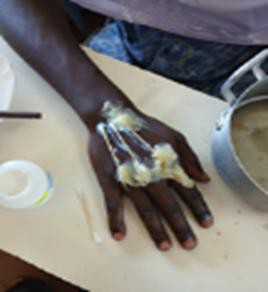
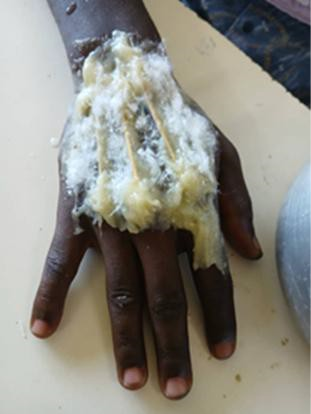
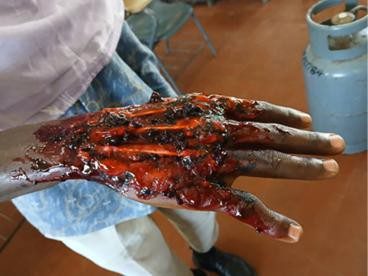
The construction of the scar begins with the layout of the basic features: the bones, represented by three cotton swabs, and patches of mutilated flesh, represented by fufu dough on the cotton swabs. After this stage, a portion of the Ghanaian local fufu latex material is pasted behind the palm to aid in moulding the scar effect. Fufu latex is peeled, boiled cassava that has been pounded with a pestle in a mortar and turned into a thick paste, suggested as wax. In Figure 13, three cotton swabs that represent tiny bones are arranged and fitted behind the palm with bonded glue and fufu wax. After laying out the fufu material per the design, stretches of thin cotton wool are spread between the cotton swabs as pads to absorb the fake blood clot, as shown in Figure 14. The next stage is to apply the fresh flowing blood and blood clot on the cotton and fufu wax to suggest the extent of damage to the skin (Figure 15).
5. Conclusion
This study has undertaken the critical task of synthesising professional-grade stage blood from indigenous Ghanaian materials, directly addressing the dual challenges of material scarcity and knowledge gaps within the nation’s creative industries. By exploring the transformative potential of locally abundant resources such as cassava starch, tapioca, kenkey dough, and cassava-based fufu wax, the research has demonstrated that high-quality, realistic, and safe stage blood can be produced without reliance on costly and often inaccessible imported products. The documented recipes for both flowing and clotted blood variations provide practical, reproducible solutions that meet key performance criteria: visual realism, appropriate viscosity, safety for performers, and ease of application and removal.
The theoretical framework of Appropriate Technology (Schumacher, 1973) [15] has proven essential in grounding this work. It validates the use of indigenous materials not as makeshift substitutes but as technologically and contextually appropriate choices that align with the economic, environmental, and social realities of Ghana. This approach fosters artistic self-reliance, transforming local practitioners from passive consumers into active innovators and curators of their own technical toolkit. By merging indigenous knowledge with specialised formulation techniques, the study bridges the gap between “hardware” (local materials) and “software” (technical know-how), empowering makeup artists and filmmakers to achieve professional standards sustainably.
The practical implications of this research are significant. It offers a pathway to reduce production costs, enhance the aesthetic quality of special effects, and increase the health safety of performers through the use of non-toxic, edible, and hypoallergenic ingredients. Furthermore, it contributes to the sustainable growth of Ghana’s creative economy by promoting local value chains, reducing import dependency, and stimulating further innovation rooted in regional agro-products.
However, this work is a beginning, not an end. It highlights several avenues for future research and development: Further studies are needed to rigorously test and refine the formulations under varied climatic conditions and for different performance media (stage, film, photography). Research can expand to evaluate other locally available bio-based thickeners, colourants, and preservatives, such as okra gum, plantain starch, or hibiscus extracts. Investigations into how blood symbolism and visual expectations vary across Ghanaian and broader African performative traditions can inform culturally resonant formulations. Theatre and film training institutions in Ghana and across Africa are encouraged to incorporate modules on indigenous material synthesis into their curricula, formalising this knowledge for future generations of artists.
Ultimately, this paper argues convincingly that the future of professional special effects in resource- conscious contexts like Ghana does not lie in perpetual importation but in the innovative harnessing of local resources. In documenting a viable, context-sensitive methodology, it shifts the discourse from one of lack and dependency to one of resourcefulness, sustainability, and empowerment. The ability to cultivate convincing stage illusions from local soil is more than a technical achievement; it is a step toward genuine artistic and industrial self-sufficiency, enhancing both the authenticity of Ghanaian storytelling and the global competitiveness of its creative output.
References
- Buchman, H. (1990). Film and television makeup. Watson-Guptill Publications.
- Debreceni, T. (2013). Special makeup effects for stage and screen: Making and applying prosthetics (2nd ed.). Focal Press.[CrossRef]
- Moodie, C. (1992). The five-minute eye make-over. Breslich & Foss Ltd. Netzley, P. D. (2000). Encyclopedia of movie special effects. Oryx Press.
- Ellis, S. (2021). The art of practical effects: Blood, gore, and guts in modern cinema. Media Tech Press.
- Palma, D. D. (1985). Makeup artist handbook for stage, screen, and video. Sterling Publishing Co.
- Akubue, A. (2000). Appropriate technology for socioeconomic development in third world countries. The Journal of Technology Studies, 26(1), 33–43.[CrossRef]
- Willoughby, K. W. (1990). Technology choice: A critique of the appropriate technology movement. Westview Press.
- Pecktal, L. (1999). Costume design: Techniques of modern masters. Back Stage Books.
- Ellis, M. (2021). The props builder’s handbook. Routledge.
- Parker, K., & Smith, J. (2003). Stage makeup: A practical guide for theatre and performance. Theatre Arts Books.
- Killick, J. (2018). Technological innovations in horror production: From pigment to pixel. Cinematic Science Quarterly, 5(2), 12-29.
- Artaud, A. (1938). The theatre and its double. Grove Press.
- Koomson, S. (2024). Material scarcity and innovation in Ghanaian theatre production. African Performance Arts Journal, 12(2), 45–67.
- Killick, J. (2018). Stage blood: A cultural and material history. University of Chicago Press.
- Schumacher, E. F. (1973). Small is beautiful: Economics as if people mattered. Blond & Briggs.