
Abstract
Neural networks are bringing a transformation in wearable healthcare technology analytics. These networks are able to analyze a vast amount of data to help in making decisions concerning patient care. Advancements in deep learning have brought neural networks to the forefront, making data analytics a straightforward process. This study will help in unveiling the use of ICT and AI in medical healthcare technology, crawling through some industry giants. Wearable Healthcare Technologies are becoming more popular every day. These technologies facilitate collecting, monitoring, and sharing every vital aspect of the human body necessary for diagnosing and treating an ailment. At the advent of global digitization, health data storage and systematic analysis are taking shape to ensure better diagnostics, preventive, and predictive healthcare. Healthcare analytics powered by neural networks can significantly improve health outcomes, maximizing individuals' potential and quality of life. The breadth and possibilities of connected devices are getting wider. From personal activity monitoring to quantifying every bit of health statistics, connected devices are making an impact in measurement, management, and manipulation. In healthcare, early diagnosis could be a lifesaver. Data analytics can help in a big way to make moves and predictions to save lives. We are in another phase of the digitization era, Neural Network and Wearable Healthcare Technology Analytics. A neural network could be conceived as an adaptive system made up of a large number of neurons connected in multiple layers. A neural network processes data in a similar way as the human brain does. Using a collection of algorithms, for many neural networks, objects are composed of 'input' and 'output' layers along with the layers of the neural network.
1. Introduction
The combined demands of an aging population, increasing chronic disease prevalence, and a declining number of healthcare workers have driven many efforts to integrate technology into healthcare delivery. One area receiving significant attention, for these and other reasons, is wearable healthcare technology. Wearable devices have evolved from simple pedometers to more complex devices capable of measuring a diverse set of health-relevant factors. As the nature of the measures has changed, so too have the data analytics needs. The further evolution of healthcare wearables will require improved analytics. We believe that applying diverse and well-designed machine learning models, notably neural network architectures, to such data will significantly enhance analytical capabilities. This paper explores the use of neural networks and the potential for improved performance across a diverse array of wearable health-relevant physiological measures using existing health data [1].
Wearable devices are evolving at a rapid pace, allowing for the continuous monitoring of a diverse set of physiological, movement, and vital signs data. This generates enormous volumes of data requiring computational processing and interpretation in order to usefully inform health monitoring or medical interventions. This data is playing an increasing role in data science and artificial intelligence research.
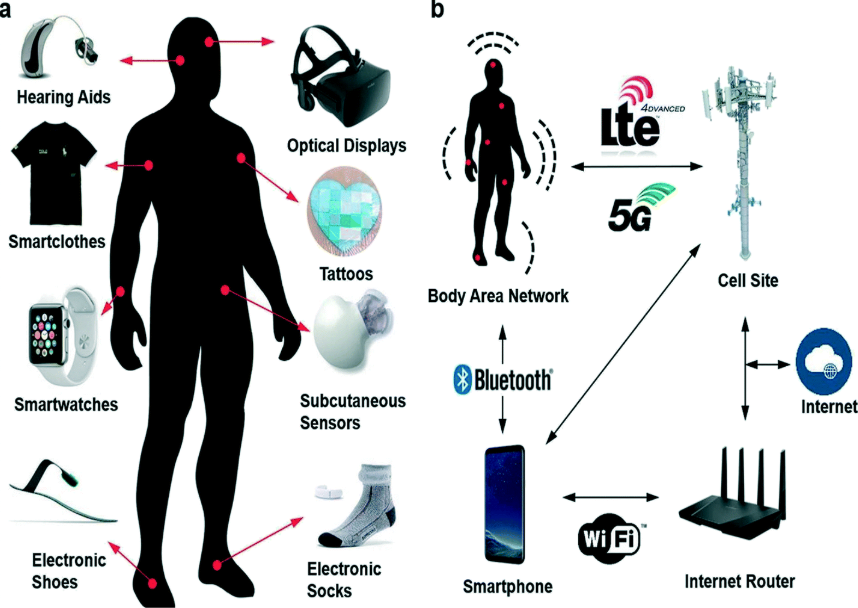
Contrary to traditional statistical approaches, machine learning methods enable the computation of insights and models from health data. Machine learning approaches have found myriad applications in healthcare, including medical image recognition, prediction of health outcomes, and dosing recommendations, among others. In most existing work with medical images, or from application domains using similar signal types, one of the most promising machine learning models is the neural network. This is because of their ability to extract increasingly complex latent features that can be used for classification, segmentation, or learned generative models. Using neural networks on wearable health-relevant signal data, however, is relatively underexplored.
1.1. Background and Significance
Chronic illnesses have pushed wearable healthcare technology into the next era. The previously unknown aspect of providing pathophysiological feedback is feasible via innovative health monitoring. The accuracy and utility of this information are the two major objectives of future end-user wearable health devices. Since the 1980s, wearable healthcare technology has been progressing to the next stage. Because of the miniaturization and ease of use of biometric devices, which has lasted for several years, the wearables business is now experiencing its heyday and rapid expansion. The impending evolution of neural networks will have an impact on the world. Neural networks are amassing a large quantity of data, enabling the use of superior processing algorithms such as deep learning, thereby creating artificial intelligence across a wide variety of fields. With the rapid advancements in technology, such as the advent of graphical processing units, effective strategies for constructing very large deep learning networks have been developed, unleashing the functioning power of increasingly complex neural network models across various problem domains. A significant portion of the adult population embraces some form of health technology solutions, predicated on recent measurements and studies. Intelligent systems have the potential to reform healthcare practices and enhance health outcomes. The number of patients adhering to their treatment in situations involving chronic or long-term illnesses is extremely significant. Such chronic illnesses are curable if the patient is disciplined. There is a significantly better convergence power of neural networks to persuade humans to adopt better habits or faithfully adhere to a treatment schedule.
1.2. Purpose of the Paper
Introduction. The purpose of the paper is to explore how some of the cutting-edge computational techniques, notably deep learning, and neural networks, assist healthcare analytics by integrating data streams from wearables and providing a complete picture of a patient's health. The paper seeks to (1) identify some of the main issues in using such techniques, such as the interpretability of models or training on scarce data; and (2) investigate how researchers propose to manage them, including combining techniques, using patient data to interpret models, and introducing synthetic or transfer learning. Research in the deployment of neural networks in the health space is crucial, as it could help address some of the current issues of wearable technology versus healthcare needs. It will be of interest to practitioners and researchers in both technological and biological disciplines and to those wanting deep insights into how such strategies need to be deployed in health settings for a holistic appreciation of individual patients' data.
As detailed in the previous discussion, advances in neural networks and hardware technology have brought about a renaissance in data analysis capabilities, resulting in rapid selective accumulation, classification, and parsing of health and human performance data. While considerable progress has been made in both health monitoring and in the related hardware specifications for wearable devices, more in-depth studies are required to clarify the integrated capabilities of such hardware and software in the health domain, particularly with respect to the interpretation and orientation of neural network and deep learning methodologies. This paper therefore aims to summarize some of the outstanding questions and potential integrative solutions in terms of: (1) 'Interpretation' of these models on real neurological/functional data, such as to develop a sense of a qualitative output which could be deployed—we hope initially in a supportive role—to healthcare data analysts. (2) 'Data sparse situations', such as applying learned models based on continuous sensor feeds to shorter wear interval datasets. Representing these varying datasets as a joint model space could show the potential expansion of long-term neurological reporting tools. (3) Bridging gaps between targeting the principles in these three areas.
Equation 1: Neural Network Output for Health Prediction
where:
: Predicted health condition (e.g., heart rate, blood pressure),
: Input features (e.g., sensor readings),
: Weights for each input,
: Bias term,
: Activation function.
2. Overview of Wearable Healthcare Technology
The last two decades have witnessed the market emergence of objects designed to be used by people on a daily basis and worn directly on their skin. These wearable devices are interconnected, equipped with embedded sensors, and may or may not be dedicated to healthcare. Wearable healthcare technology is defined as any medical device for patient use that does not require much, if any, clinical or technical training to use the device is powered by a non-rechargeable energy source, and has a physical configuration that can be worn by the patient. In this systematized review, we consider a broader definition that goes beyond wearable medical monitors and includes consumer-oriented fitness gadgets. In doing so, we are consequently dealing with devices spanning a wide range of functionalities, from ordinary consumers' heart rate measurement to ECG recording, detecting falls, activity, and gesture recognition with a more specific focus on healthcare-relevant data and on data represented as time series [2].
There are several wearable healthcare analytics divided into different classes based on the purpose, measurements, or technology. Few wearable devices lack any explicit smartphone technology and enable smart technology as well. Moreover, due to this rapid development, the distinction that was traditionally made between fitness trackers and medical-grade sensors is becoming less relevant. Worldwide shipments of wearable devices reached over 300 million units. Just under 15% of the UK adult population used a wearable device to track their fitness and activity levels. Two-thirds of users track their exercise level and two-fifths track their heart rate, sleep patterns, distances, or speed. These findings show that there is a market drive for commercial wearable technology in healthcare. Wearable devices are very popular; they are seen as such an innovative solution that companies try out new business models involving 'free' wearable devices to attract and keep consumers to their services. They offer ample opportunities to entirely revolutionize the healthcare systems, both in timely data retrieval and remote health monitoring. They are looked upon as a pathway disrupting the pharmaceutical industry. This is because of smaller cycles of research, and hence a lesser time-to-market for drugs.
2.1. Definition and Types
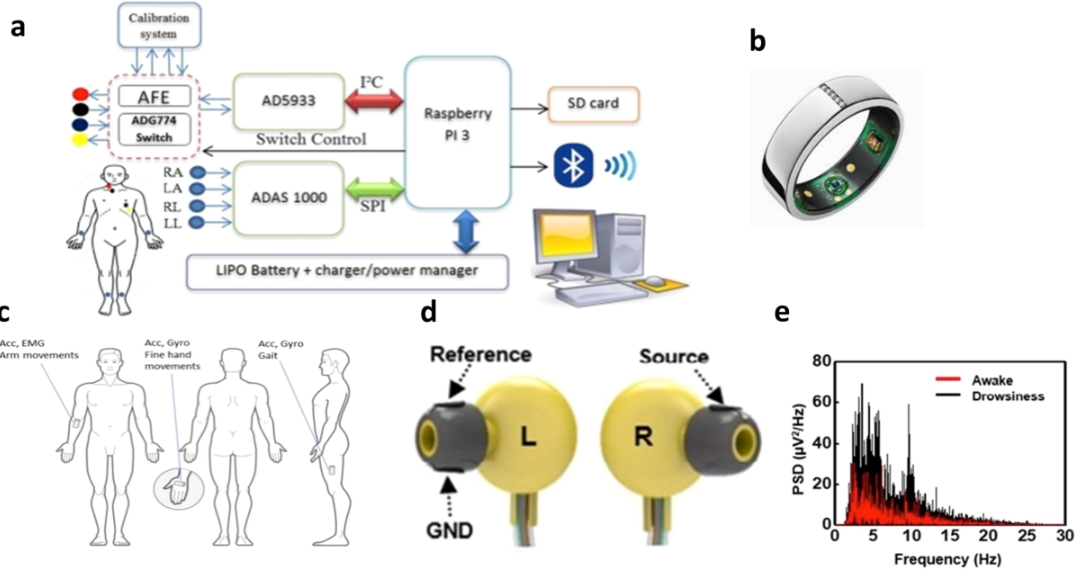
Wearable devices that are designed to measure user health parameters have gained much popularity in the last decade. Choosing an appropriate definition of "wearable" healthcare technology is quite challenging, but generally, wearables are those devices—ranging from pedometers to more comprehensive biosensors (tattoo-like, implantable, air-borne platforms, etc.)—that do not restrict user mobility and comfort while monitoring or recording healthcare-related measurements. These could be local (measuring, e.g., heart rate) and/or subtle (predicting, e.g., stress levels from gait patterns). For example, wearables can be classified according to their application, e.g., fitness trackers, health monitoring systems, or providing medical feedback for chronically ill people. In addition, some devices can be used to treat a particular health condition, e.g., actigraphy for sleep and fatigue disorders. Multisensory wear-based devices are now providing an active vital sign assessment. However, the ability to non-intrusively assess neurophysiological parameters is still challenging. Physicians are attracted to advanced technologies that can collect, identify, and monitor the current and future capabilities of individual wearables, such as devices measuring brain activity that could offer a new diagnosis in the field of hypertension-related complications.
The wear-based technology used in healthcare can be categorized as activity trackers, T-shirts, wrist-worn devices, in-ear wearables, eyeglasses, headbands, wristlets, etc. Based on its wide area of usage, there are quite a few devices available in the consumer technology market. These include devices for the visually challenged user, and some thought-reading hardware like brain wave technology, which could be used as a translating device for the blind and may also be useful for other disabilities in the future if the making of a prototype by testing specifications is successful using a neural network.
2.2. Benefits and Challenges
Healthcare wearables have a broad range of potential uses, from the real-time tracking and monitoring of patients to providing those on the go with insights into their health and data. Data provided through wearable devices give healthcare organizations a useful overview of the user’s health, with any irregularities in their routine instantly flagged. For the user, the information given through these devices can offer insights into their health, as well as give advice about how to live a longer and healthier life. Overall, this has contributed to a higher standard of living for many users. These wearables can ‘learn from you,’ harnessing one’s data to give more personalized, proactive, and preventative advice. The devices can learn when one sleeps, eats, drinks, and exercises, and therefore advise when it is best to sleep, when to eat and drink, and so forth.
However, progress in the field has been held back somewhat by the limitations that wearables typically face. Battery life, processing power, miniaturization, and the ability to shut down and restart the component parts of a device all remain sticking points. These all must be overcome while keeping certain considerations in mind, such as power budgets and the need not to compromise other features. Also, an ethical challenge exists in using and interpreting the data available from wearables. The data is very personal. It is also complex and historic. Ethically, consent is needed to use and interpret it with, at the very least, the same consideration, rigor, and oversight that one uses to conduct medical trials and use patients’ historical medical data for research or treatment. These considerations raise significant technological challenges and barriers to functionality, but developing such a device that effectively manages them will ensure a secure and ethical wearables environment in the future.
3. Neural Networks in Healthcare
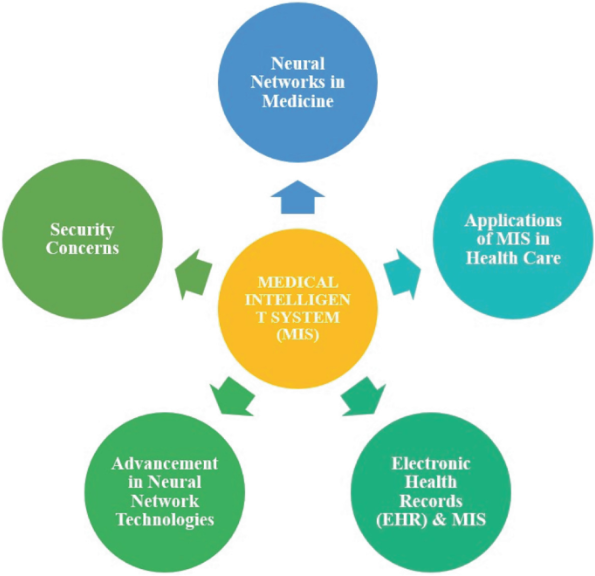
An artificial neural network (ANN) or a neural network in machine learning is basically a computational system or software that is partially motivated by the functioning of neural networks in the human nervous system. A neural network in machine learning includes a highly sophisticated set of learning algorithms and architectures. Neural networks in machine learning are particularly beneficial in cases where relationships between inputs and outputs are highly associated with each other, but these associations may happen in an infinite number of ways. Neural networks are, therefore, capable of dealing with big data, such as wearable devices to monitor health parameters [3]. Among the supervised machine learning techniques, neural network methods are currently being used in the healthcare industry to facilitate prediction, assist in diagnosing diseases, suggest different treatments, and create models for improving healthcare services. The neural network machine learning model helped in identifying anemia via applications by examining nail palm images to define anemic and non-anemic patients. Similarly, neural networks were used to predict the chances of chronic febrile or febrile illness in children based on routine laboratory results and patients' other clinically available information. In addition, the system used this likelihood information to formulate specific management practices in the emergency clinic. The neural network is never going to take complete control of the clinician's mind but will continue to challenge and improve our clinical practice, help shift us into a new generation of patient-centered care, shared decision-making, and improved patient engagement, and increase the challenge of our health delivery system to accurately measure and deliver on the promise of our scientific discoveries to keep patients healthier, prevent disease, and treat only when necessary. Moreover, even the most complete medical record and chart review is only a snapshot in time. As healthcare providers increase their focus on precision and predictive analytics, neural networks using artificial intelligence and machine learning can be added to existing decision algorithms and frameworks to increase predictive accuracy, reduce errors, and enhance clinician proficiency analysis in a consumer-friendly manner.
3.1. Fundamentals of Neural Networks
Artificial neural networks (ANNs) are designed to replicate the workings of the biological human brain. The most basic form of an ANN includes an input layer that accepts the data to be processed, one or more hidden layers, and an output layer that produces predictions or classifications. Information travels through these layers from end to end via nodes, which represent mathematical functions that operate on the received data and then relay it as output to the next layer. An individual node may gather weighted information from several nodes in the prior layer, apply a nonlinear function, known as an activation function, and then output the result to nodes in the next layer. The input into the activation function is a summation of the products of the weights and inputs combined with the node’s bias. Neural networks are trained rather than explicitly instructed, learning from examples rather than relying on human programming. Features or patterns are identified within datasets and used to make predictions due to the layering of individual nodes. Generally, neural networks frequently utilize vast datasets as they are required for optimizing these weights through a type of training or learning process.
Convolutional neural networks (CNNs) are a type of neural network that is primarily used for image-based analytics and are designed to process data, such as images and videos. A large number of nodes in a given hidden layer of a CNN are linked to a handful of neighboring nodes in the prior layer to enhance speed and performance. CNNs have been designed with two additional types of layers, beyond the input, hidden, and output layers that fundamental ANNs contain. Rather than including generic hidden layers, CNNs contain convolutional layers and pooling layers. In contrast to ANNs, CNNs do not require the raw images to be in fixed, equal dimensions, as convolutional layer filters are utilized to focus on specific points of interest in an image. Operationally, a kernel is moved over each respective layer of the input image during the convolutional process, with the CNN extracting any features present at each distinct location. In order to calculate the input and output dimensions, which bear forth input and output values, the padding, stride, and kernel size are utilized. Pooling layers are then introduced to conduct down-sampling operations to ensure that the identified features are encoded at various spatial and translational values. As a result, the pooling layer reduces the down-sampled strength of the data to emphasize translation, rotation, and rotational variance.
Recurrent neural networks (RNNs) have recurrent architecture; in other words, every hidden layer in an RNN sends output back to itself, acting as input in future steps and enabling RNNs to make predictions about sequential data. In effect, RNNs make use of the notion of time to give context or meaning to inputs, learning from the sequence. In an RNN, each node in the hidden layer sends a recurrent output back to itself or others, enabling layers to use previous time step outputs as input in future time steps. Thus, every output at time 't' serves as input, alongside the current input, at time 't+1'. RNNs are less encapsulated than ANNs and CNNs as RNNs represent a directed graph that may consist of loops. In contrast to CNNs, where inputs are independent of one another, RNNs analyze a sequence by imposing a specific order and importance on their input. However, a significant drawback of conventional RNNs has been their historical over-reliance on the most recent previous step when making predictions or classifications, often ignoring foundational context in complex data sequences or multiple causal dependencies in some cases. Long short-term memory (LSTM) networks were created to alleviate this drawback, allowing RNNs to maintain memory of specific events or functions that occurred in the sequence input. This improves the efficiency of RNNs when processing time-based data.
3.2. Applications in Healthcare
As a part of hospital management, neural networks allow for diagnosing results and saving doctors' time. Neural networks can provide information, so they are expected to be used in fields like engineering, agriculture, and health. Especially in the field of health, this technology can diagnose someone's illness. In this case, the neural network algorithm can be used to determine a person's illness based on disease symptoms. Healthcare data includes a patient's main complaint, history of the present illness, family history, personal history, hematological parameters, radiology, and scan reports. The literature review gathers a large amount of medical data, which becomes a challenging job for any medical practitioner to analyze in order to extract knowledge.
Neural networks—and machine learning in general—are best equipped for handling complex data. This makes them a good fit for diagnostics, where they can analyze a wealth of health data to make better assessments of the likelihood of certain diagnoses. When tested using real clinical data, a new AI-augmented wearable sensor was able to detect heart rate abnormalities leading to atrial fibrillation with over 85% accuracy. Smartwatches are another form of healthcare wearables that use neural networks for predictive analytics. The ECG feature on certain smartwatches can generate ECG waveforms similar to a single-lead electrocardiogram. As an application in healthcare, a new concept of health monitoring utilizes wearable technologies. The predictive module uses the back-propagation neural network AI technique. The use of this module is very useful for doctors in deciding the status of a patient's body, and the data can also be accessed by patients and related parties, making it useful for improving the health education of an indigenous community.
Equation 2: Cost Function for Model Training (Mean Squared Error)
where:
: Cost function,
: Number of training examples,
: True health value for the -th example,
: Predicted value for the -th example.
4. Integration of Neural Networks in Wearable Healthcare Technology
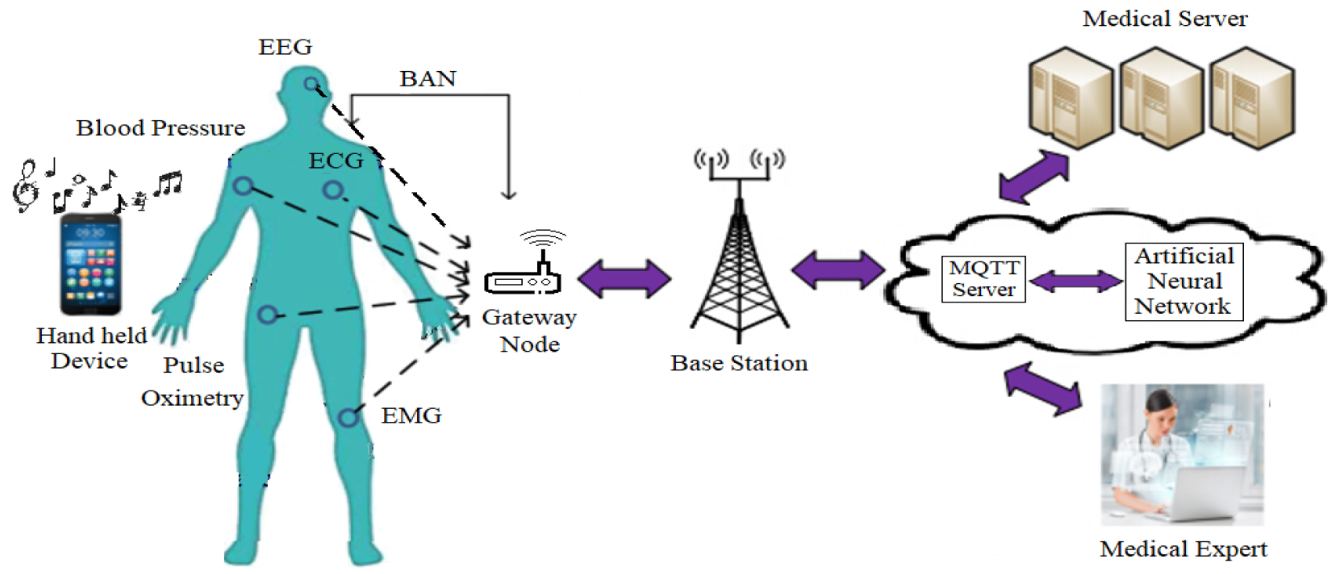
An essential step in advancing the quantified self is bringing wearable healthcare technology and data analytics together. While several possibilities exist for harnessing the power of data analytics in this manner, our specific interest lies in integrating neural networks. For this, we develop data preprocessing steps for their input data necessity, focusing on reducing relevant health data collected daily by wearables [4]. Therefore, the entire model input routine can be employed within a wearable device worn on the body, meaning processed health data are stored within the system locally.
The system corresponds to a neural network development flow from an extensive curation of all relevant literature. Relevant research methodologies are undertaken to ensure openness for the applicability of the procedure in our system. By linking these wearable developments and proposed procedures, we pave the way for the successful accordance of system usage with actual requirements and real healthcare needs. The synthesis of wearable devices and neural networks results in a step change for monitoring human health.
To run a neural network, follow these steps: Collect data – at the quantified self, it is DNA or health data generated by sensors worn on the body. Preprocess the collected data – convert the raw collected data into a suitable neural network input format. Develop and select algorithms – select which architecture is best to use within your neural network design to get the best results. Train algorithms with data it has never seen – use a subset of the complete dataset to fine-tune the internal parameters of your neural network. Test and validate – once you complete training, assess algorithm efficacy with a new dataset it has never seen and make changes. Do steps 3-5 iteratively.
4.1. Data Collection and Preprocessing
While the actual analysis of health data will be executed using neural networks in this short paper, the data collection and preprocessing stages are essential prerequisites to ensure that the neural networks can be trained using valuable input data for an efficient process. Data can be gathered using multiple methods at regular intervals of time or constantly. The data from the wearable devices include participants' heart rate, body temperature measured using infrared radiation, and now even motor unit actions to estimate general stress in the nervous system. Measurable health factors related to movements and muscles consist of, for example, muscle activity, muscular force, joint angles, and speed of movement. Up to now, reliable data strips have been collected from one participant for a length of at least seven consecutive days, where at least one workout per day is recorded. They are now used to train neural networks for the prediction possibility of overtraining.
After collecting comprehensive datasets from the wearable devices, the next important step is to preprocess the healthcare datasets using different techniques before feeding them to neural network models for training. The data gathered from sensors is usually in volume and velocity, making it challenging to analyze all health data steadily and correctly. For instance, raw sensor data or health data can be noisy and can contain random errors and processing artifacts at different instances, which usually appear despite the accuracy of the sensors. As a result, the data may require some sort of processing, such as resizing, filtering, resampling frequency, and removing preprocessing artifacts or standardizing measurements before they can be altered or stored back into the system. Neural network models also require the use of preprocessed datasets to function properly, as outliers and unwanted noisy data in the health datasets can lead to incorrect models that may not reflect reliable generalizations of the data. In sum, enforcing these essential steps can lead to the derivation of meaningful insights from the training models, especially in relation to the medical impact of overtrained subjects. Last but not least, the collection of data should also be in line with research and national ethics requirements concerning data protection and user privacy, leading to non-discrimination behavior towards the respective participants.
4.2. Model Development and Training
Creating an effective predictive model for wearable healthcare technology analytics involves a series of steps, including collecting data, cleaning and preprocessing the data, selecting a method or algorithm, designing the model architecture, training the model, and testing the model. In data analysis, applying an effective algorithm accounts for the success of the model: the prediction performance of a weak model cannot match that of a strong model. Methods or algorithms such as fuzzy cognitive maps, support vector machines, and k-nearest neighbors are used in healthcare analytics.
Like other machine learning methods, neural networks must be designed using an appropriate method or algorithm, creating an effective model architecture and conducting training. However, training determines how well the neural network learns. Unlike simple ANNs, deep learning ANNs known as neural networks with more than one single hidden layer require specialized techniques during training. Various methods and techniques can be used to design and train a neural network model. Factors such as methods for selecting the appropriate algorithm, designing the architecture, and training the model can account for an enormous extent of the model's success. During model training, a tremendous amount of time and computational resources may be necessary; the process often needs to be repeated with different model configurations and model hyperparameters. Accordingly, several challenging issues must be considered in designing an effective training procedure.
When developing realistic neural network architectures and training them, conflicting practical considerations should be kept in mind. First, most real-world applications have limitations on computational resources and run time. Hence, model practitioners report using model hyperparameter tuning via cross-validation on a validation dataset, while subsequently reporting results on an independent test dataset. The use of a validation dataset for fine-tuning the model parameters and validation is ideal for model selection and deciding on model architectures that generalize well. In contrast to the validation set, the test set is intended to measure the performance of the final model. That the test set is not used to modify the model implicitly or indirectly in any way is a fundamental principle in model training and testing. In summary, creating and training any effective predictive model during the model development pipeline plays a critical role in balancing interpretability and performance trade-offs in wearable data analytics. This means that a deeper understanding of training dynamics is crucial to model practitioners.
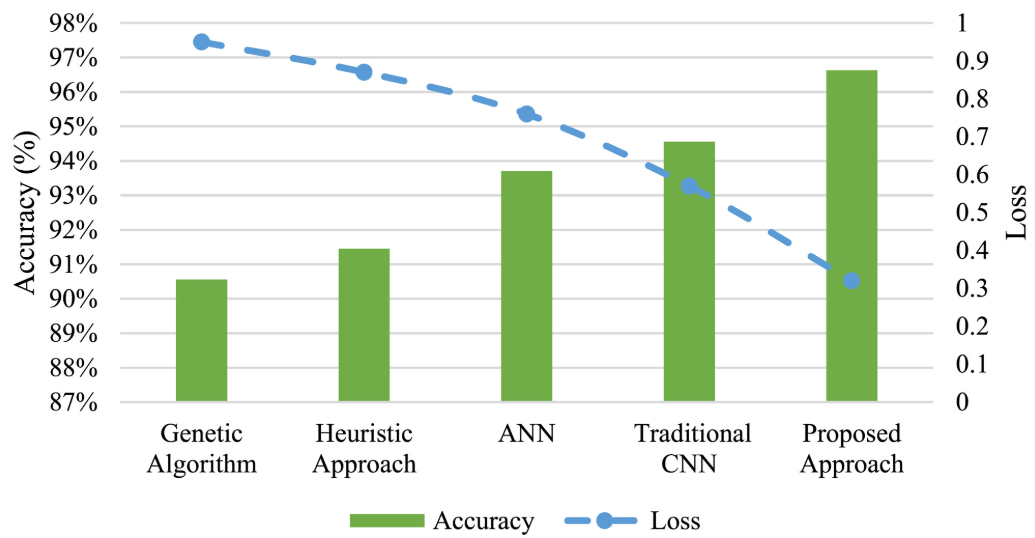
5. Challenges and Future Directions
Integrating neural networks in WHCT has its own challenges. The first concern is the data privacy of the end users. Even though some online platforms allow users to give consent to their data, there are ethical issues that these AI algorithms could observe hidden secrets from people, with or without their consent. There are also dual-use ethical issues from using unsuspecting people’s biometric signals for military purposes. Possible biases in the AI algorithm’s base networks need to be addressed, and in some circumstances, for example, if the goal is to extend the times the deployed embedded model can obtain (which in some applications is the case), then, for example, in neurological dysfunctions or specific high athletic performance, smart gadgets could be deployed using this feature. The current AI algorithms might not be robust enough for the complexity that the modeling of the multimodal WHCT requires, and their applications might be limited. In some studies, the robustness of the AI, which is related to the healthcare predictive modeling of the WHCT, is imperative and essential for AI deployment in practice. These include discrimination tests alongside model robustness baselining, the so-called double-blind test, and, most importantly, obtaining approval or disapproval from healthcare professionals from different disciplines. Research in the future will be required to understand and analyze the strengths and limitations, as well as the potential mistakes of both technologies so that their weaknesses can be taken into account and addressed. Hence, this will pave the way for better strategies that an interdisciplinary group of researchers will utilize to combine different information and knowledge into a necessarily comparative and integrative study between neurophysiology and computation. As such, training specifically nurses on the possibilities and limitations of AI-assisted wearable biometric markers in healthcare is critical in establishing free communication between healthcare professionals and technologists.
Equation 3: Gradient Descent Update for Neural Network Weights
where:
: Weight parameters,
Bias parameters,
: Learning rate,
: Gradient of the cost function with respect to weights,
: Gradient of the cost function with respect to bias.
5.1. Ethical Considerations
Raising awareness about possible ethical challenges is particularly important in a healthcare setting. This subsection discusses the ethical implications pertinent to the intersection of neural networks and wearable healthcare. Since much of this technology can be invasive of patients' privacy, the first ethical consideration is the collection and processing of patient data [5]. A concern is whether patients or their relatives are informed about the data collection methods, where the data are stored, and what analyses are conducted using them. When the patients or their relatives do consent to data analysis, it needs to be taken into account that discussions must occur with patients of ethnic and culturally diverse groups. Processing patient data without their consent is non-transparent, non-consensual, and inclusive algorithms pose a potential risk for biased data and potential social harm.
An additional risk of using wearable healthcare technology is end-user data. This is the first time this information has been gathered, and as a result, the infrastructures used need to be more secure than before. Security and privacy are two of the primary concerns that arise. If unauthorized parties access the data, this may result in various plots such as data tampering or attacks on wearable healthcare devices. Consequently, the primary risk presented by machine learning-based wearables is the privacy of patients. If unauthorized parties access said information, data may be exposed and privacy may be damaged. Building technology at the expense of patient privacy jeopardizes patients' trust in the care network, ultimately dissuading them from receiving the care they require. In addition, individual devices may also collect sensor and diagnostic data from health-related body functions, such as the user's ECG, blood pressure, brain activity, or diabetic condition. Social discrimination, exclusion, or mental harm are all potential consequences of unauthorized access to health and medical information. Crucially, unauthorized access to healthcare data influences the rules of the patient-caregiver relationship, which is informed by trust. In essence, without trust, accessible medical information is essentially fruitless. Preferred candidates should keep in mind when developing machine learning models to evaluate your model's data, dividing the data into groups of the population, and considering whether some or all populations are excluded from the model or are underrepresented in the data. Identify barriers to digital access and maintain an up-to-date inventory of the information received.
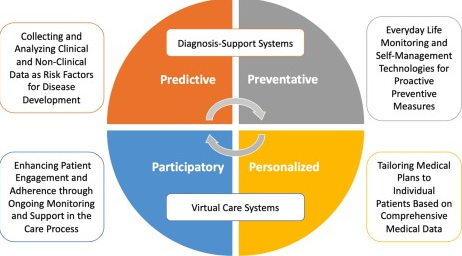
5.2. Technological Limitations
Technological limitations can pose a significant barrier to the integration of neural networks in wearable healthcare technology, which is present as follows: Data Scalability: As neural networks have been extended for millions of parameters and more than thousands of layers, they require a significant amount of data to be trained. Processing Power: The state-of-the-art neural network models often work better with GPU processing units. With GPUs supporting nearly 5000 CUDA cores, training in standalone personal computer systems can be processed, but for real-time or advanced large-scale use, thousands of computing resources are available. Complexity: The wearable technology shall collect healthcare data, for example, wearable-based ECG signals, human kinematics, etc., where the signals' range of complexity varies. The data, for example, the wearable ECG data, would have varied ways in which wearables generate different types of unstructured data encoded into wearable proprietary dialects. Interoperability: There are various platforms existing in wearables. There is a need for advanced standardizations among the platforms and integration in the cloud system. This demands more technological advancements in wearable cloud infrastructure. Additionally, an algorithm might perform well on a specific dataset taken for a specific wearable, giving general conclusions while it might be weak in different datasets. Wearable technology and researchers should work together to overcome these challenges and limitations. One of the immediate approaches is to develop technological advancements that can go hand in hand with wearable data so that they can be modeled to fit the neural network. Currently, research knowledge works by analyzing the improvements over the existing data by modeling the data with neural networks into the datasets. Even though the aforementioned limitations are at the application stage, today, it still requires a continuous struggle to ensure a kind of parallelism that can solve these issues by combining interdisciplinary technologies in computer science engineering, biomedical engineering, IT management, healthcare quality management, and data science.
References
- Vankayalapati, R. K., & Rao Nampalli, R. C. (2019). Explainable Analytics in Multi-Cloud Environments: A Framework for Transparent Decision-Making. Journal of Artificial Intelligence and Big Data, 1(1), 1228. Retrieved from https://www.scipublications.com/journal/index.php/jaibd/article/view/1228[CrossRef]
- Dilip Kumar Vaka. (2019). Cloud-Driven Excellence: A Comprehensive Evaluation of SAP S/4HANA ERP. Journal of Scientific and Engineering Research. https://doi.org/10.5281/ZENODO.11219959
- Chintale, P., Korada, L., Ranjan, P., & Malviya, R. K. (2019). Adopting Infrastructure as Code (IaC) for Efficient Financial Cloud Management. ISSN: 2096-3246, 51(04).
- Syed, S. (2019). Roadmap For Enterprise Information Management: Strategies And Approaches In 2019. International Journal Of Engineering And Computer Science, 8(12), 24907-24917.[CrossRef]
- Mandala, V. (2019). Optimizing Fleet Performance: A Deep Learning Approach on AWS IoT and Kafka Streams for Predictive Maintenance of Heavy - Duty Engines. International Journal of Science and Research (IJSR), 8(10), 1860–1864. https://doi.org/10.21275/es24516094655[CrossRef]