
Abstract
This paper is a general summary of Neuralink, a revolutionary technology set to elevate human life and neurology. Neuralink itself is a key testimonial to the evolution of neuroscience and even brain-computer interfaces, otherwise known as BCI. The original few BCI experiments were conducted on monkeys in the 1960s and 70s, in which the experiment itself narrowed down and understood brain function as a general concept [3]. More specifically, Work on these technologies began in the early 1970s, led by computer science professor J.J. Vidal at UCLA [12]. Science itself progresses day by day, growing rapidly in recent years, especially in neuroscience, something highlighted as a focal point in the previous statement. Moreover, recently we have seen technology go on a rampant rise in terms of popularity, inventions, and changes to the human lifestyle. The interactions humans had with technology initially developed with wearables or wearable technology, such as Apple Watches, AirPods, and Fitbits, and now they have even prompted advancements in brain-computer interfaces. Technology has had the power to advance science, but now it’s capable of changing the human mind. Going back to Neuralink, it’s a startup that began its initiative in 2016 and was approved by the FDA for clinical trials in May of 2023, ready to create a wave of change in the field of neuroscience [6]. The foremost baffling thing is how this chip plans on being placed in the somatosensory system. The somatosensory system is a part of the brain that deals with motor actions, recognition, and perception, and applying Neuralink in this area should supposedly allow for cures and treatment of amyotrophic lateral sclerosis, Parkinson’s disease, spinal cord injuries, epilepsy, autism, depression, schizophrenia, and possibly blindness [9]. Neuralink is deemed to lead to a life-changing future, and with co-founders and investors like Elon Musk, there is a lot to know about this piece of technology.
1. Introduction
Brain-computer interfaces have been a headline topic, making a storm in the media and medicine. Through the development of brain-computer interfaces, technology has taken the world by storm, with a device the size of a one-pound coin that can reevaluate issues like amyotrophic lateral sclerosis, Parkinson's disease, spinal cord injuries, epilepsy, autism, depression, schizophrenia, and possibly blindness. As of May 2023, Neuralink was additionally approved for human trials, putting the company into true action [3]. Co-founder of the company, Elon Musk, has shown recent resilience. Alongside the development of such technology came a reexamination of the bioethics of the chip, the science behind the chip, and what’s to come with the chip itself. The chip itself has many complications in how it functions, which is key and vital to understanding how topics around Neuralink came to be. The Neuralink chip works by using tiny electrodes that connect the human brain to a computer, ultimately merging the worlds of the human brain and artificial intelligence. The device's connection to a computer allows for effortless communication between the two.
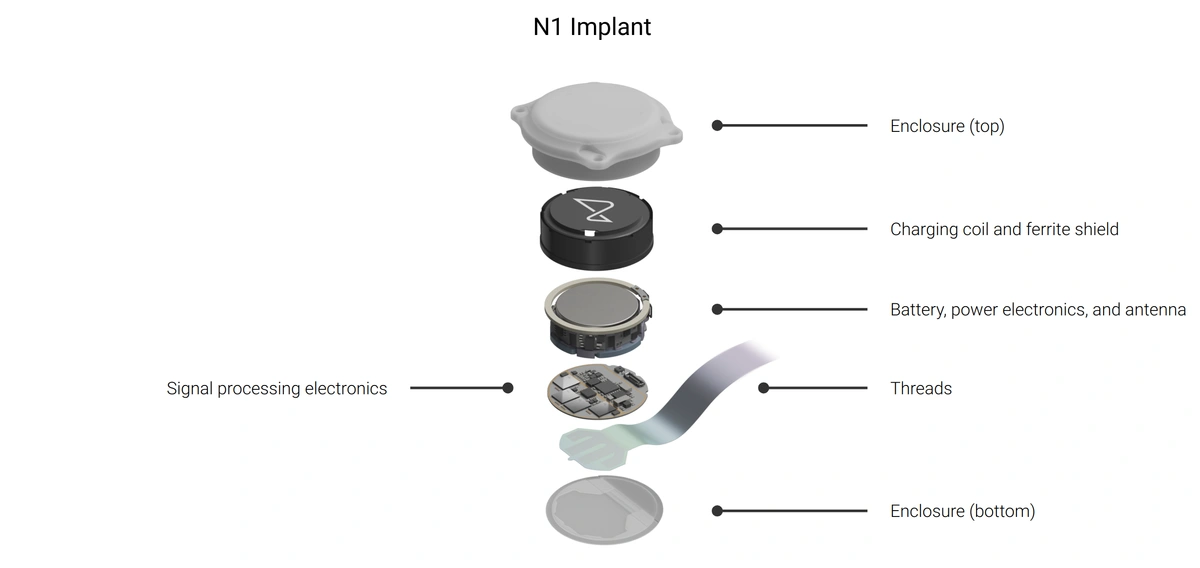
The diagram given above highlights the different areas and parts of the implanted chip, showing how it’s all put together [15]. Firstly, we can take a look at the electrode threads, which are shown in the diagram. These electrode threads take in and record neural activity in a generally better way than modern-day technology, allowing for more accurate reports and usage of the technology. The power of these threads also allows for an unmatched amount of detail, being highly revelatory for neuroscience and all sorts of research being done in the field of neuroscience. Secondly, another key part of the given technology is the N1 chip, the driving force of Neuralink, helping provide details between the brain and computer and acting as the mediator of all that happens. It can additionally reach up to the processing of 10,000 channels, allowing for the computer to swiftly take in, analyze, and respond as if it were second nature to them [2].
Neuralink itself has the potential to help people with issues related to neurological disorders, such as Parkinson’s or paralysis, come in contact with the world around them through the means of the Neuralink chip. With the company itself stating that their “First goal is to give people with paralysis their digital freedom back” [7]. Neuralink could lead to unimaginable changes, for example, giving nonverbal autistic children the ability to cohesively communicate back, allowing them to express what they believe or feel.
According to Elon Musk, his goal with Neuralink is to “create a symbiotic relationship between humans and machines” [2]. Speculation of how he may achieve this goal has further led to skepticism and bioethical standards, with reconsiderations on the imposition of Neuralink in the future. Skeptics and general people alike believe that there is too much room for misuse of this technology and room for creating above-average humans, or “cyborgs,” redefining the line between humans and technology [13]. Redefining, in essence, that is Neuralink, a redefining in neuroscience and humans alike.
2. Future of Neuralink
When taking a deep dive into Neuralink, we tend to notice that it ends up having lots of opportunities and a whole new field of medicine to explore. To restate what was previously mentioned, Neuralink is destined to reiterate cures and treatment of amyotrophic lateral sclerosis, Parkinson’s disease, spinal cord injuries, epilepsy, autism, depression, schizophrenia, and possibly blindness. While additionally becoming as popular and in demand as the iPhone.
Neuralink hopes to bring a wide variety of effects, with the few shortlisted ones being the creation of direct brain-to-computer interfaces, treatment of neurological disorders, restoration of movement, enhancement in humans, a merger between natural intelligence with artificial intelligence, and advancements with future models of the chip itself [3].
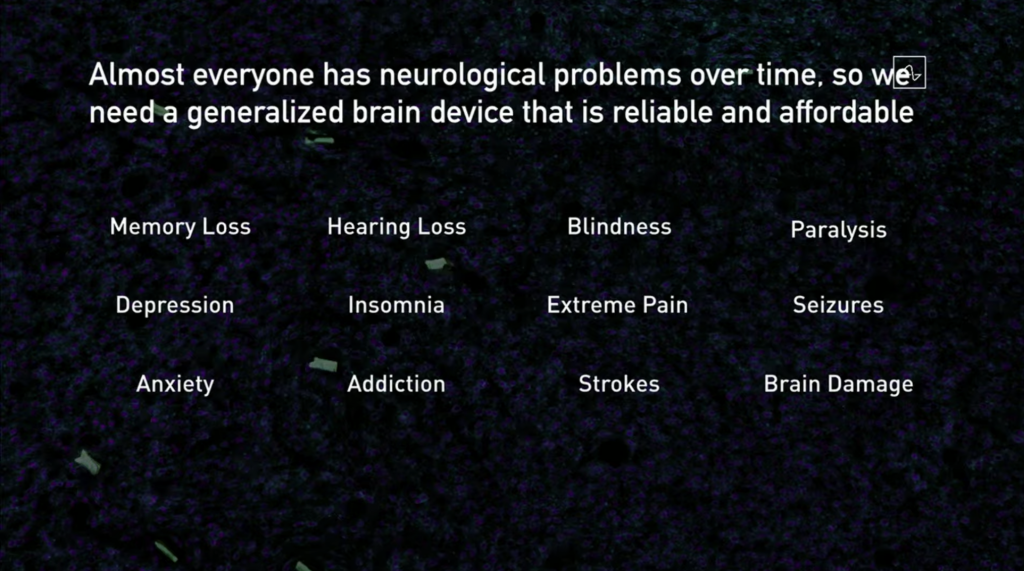
Firstly, the implementation of Neuralink will create direct brain-to-computer interfaces through the usage of 1,024 electrodes being placed in the cerebral system of the brain, more specifically, the somatosensory cortex [8]. The placement & connection of these 1,024 electrodes further allow for a quick connection between the brain and the computer, giving the same versatility you would have with a mouse [11]. The only difference in this case is that now, instead of moving your hand to drag the cursor on your computer, your mind could do it, “With as many as 3072 electrodes per array distributed across 96 threads” [1]. The possibilities are limitless, but additionally, it holds potential applications in treating injuries and suppressing epilepsy through seizure detection. After previously going over possible cures, treatments, or advancements, Neuralink can allow for a variety of ways to assist us human beings in daily life and as we grow old. Some key or important issues Neuralink can assist with are shown below in Figure 2. Furthermore, the chip hopes to continue fighting obstacles medically, primarily neurological and movement-based disorders. The reason for it being that these two areas stand-out is because the chip controls and interacts with computers through the somatosensory cortex of the brain, in other words, the part of the brain that controls movement, pain detection, and the feeling of touch.
Additionally, with the rise of these human advancements and disease prevention precautions that are being made, we see a general trend of an increase in terms of well-being due to this device itself. Although this generally creates the idea of human advancements, Neuralinks also allow for AI access, allowing a merge between artificial and natural intelligence systems, allowing us to compute and work in an unfathomable manner.
3. Neuralink Functioning
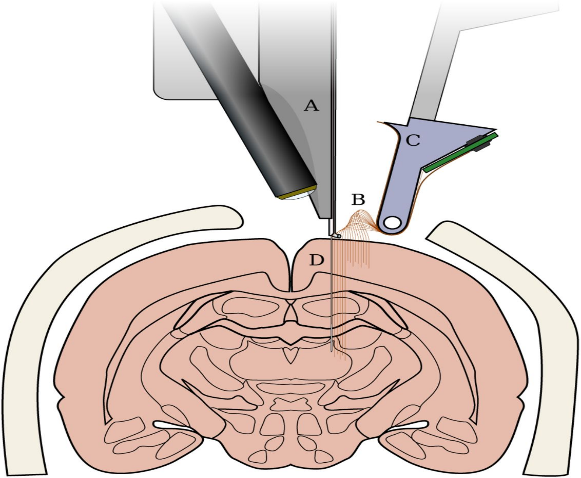
Neuralink is a coin-shaped chip that is easily put in the somatosensory cortex of your brain through an incision, allowing it to help our body in various ways with motor actions and cognitive enhancements. Furthermore, this spans a wide array of how the chip is inserted with the use of a robot and how it allows function in new profound ways, such as the facilitation of motor and cognitive enhancements. Some vital parts that are otherwise key for understanding, as well, include the surgical robot, electrode threads, high-channel recording, custom chip processing, and wireless transmission [5]. Firstly, when taking a look at this, it’s key to understand that Neuralink causes not only a revelation of neurology and brain-computer interfaces but also, within niche areas like neurosurgery, as well. Currently, the coin-sized Neuralink chip, referred to as “The Link,” is implanted through a surgical robot that puts every single electrode thread with a very minimal incision [4]. A module of the tiny incision that is made and the general concept of how the electrodes are put in is presented below as Figure 3.
Secondly, we have the previously covered electrodes that are made with a flexible, biocompatible polymer with a thin film around them. These electrodes, once woven into the cerebral cortex, take a record of electrical signals from the neurons and send it to the main center of the device; this further takes this data, connecting with a computer interface through the use of Bluetooth. Additionally, these electrodes remain ultra-thin to reduce any damage and the chance of infection, bleeding, and tissue damage.
Going more in-depth into where the information is stored and connected, we will understand how the high-channel recording system and custom chip processing system work. These systems generally work together in this case through the application of crucial application-specific integrated circuits (ASICs). ASIC does a variety of tasks as a high-channel recording system that uses 256 individually programmable amplifiers, analog-to-digital converters, and peripheral circuit control. In general terms, ASIC takes all of these 256 components and utilizes them. Now, this is where the custom chip processing part comes in, as the transformation of neural activity into binary code allows for the easy spread of information in various ways. The way this information is spread tends to use Bluetooth, a form of wireless transmission, and the way ASIC does this is through custom chip processing, which allows tasks like this to be done in real-time.
4. Role of Ethics in Neuralink
The role of ethics in Neuralink is no tiny examination; it takes a lot of aspects to be reviewed. The meaning of ethics itself is the “moral principles that govern a person's behavior or the conduct of an activity.”. Ethics itself decides upon what is right and what is wrong, and Neuralink brings up various statements on morals and whether it’s right to be used, and how we know how it will be used. A few areas to be reflected upon include autonomy, privacy, and medical ethics.
In terms of autonomy, we have a big dilemma, as there is a big issue, as we don’t know who can interfere with our thoughts and, in a sense, drive us to certain ideas or people. Moreover, we could also see the possibility of intervention between the decisions people make, as the chip can be easily used to make decisions, undermining the autonomy people have to make decisions for themselves. We could also see external forces like governments or corporations enforcing their thoughts on people mindlessly, though all of this remains hypothetical as of right now; it still stands as something that could be a realistic threat in the future, creating the question, what are we to do against this? As a solution, the potential for brain-computer interfaces like Neuralink to enhance human capabilities is immense, but so are the risks associated with their misuse. To prevent the undermining of autonomy, we must approach this technology with caution, implementing a combination of legal safeguards, technological protections, transparency, and active research into ethical solutions. Most importantly, the right to privacy, informed consent, and individual control over one’s thoughts and decisions must remain central to all discussions surrounding neural interfaces. As technology develops, it is crucial to keep asking the fundamental question: How can we protect human autonomy in a future where our minds could be manipulated? By considering these challenges today, we can ensure that brain-computer interfaces evolve in ways that serve humanity rather than subvert it.
Privacy-wise, we can also see similar issues arise as our thoughts are interpreted into binary code in a device; it allows for it to be possibly hackable or overseen by companies. This puts us as humans at risk, as things we may not want to be known by others can be used against us, as our thoughts can be used against us in discrimination, profiling, and social manipulation. The possibility of intrusion into our inner thoughts puts systematic issues on the table: How are we supposed to put up security, and how should people be ready and prepared against data security risks? We can mitigate this risk by exploring the advent of brain-computer interfaces that brings immense possibilities, but also significant risks, particularly when it comes to privacy and data security. The idea that our thoughts could be read, recorded, and potentially exploited is both fascinating and frightening. As we move closer to this reality, we must establish robust security protocols, legal protections, and individual empowerment to safeguard our most personal and private realm: our minds. By addressing these challenges through encryption, decentralized data processing, transparency, and awareness, we can mitigate the risks of cognitive data misuse. But ultimately, the responsibility lies with both developers and society to ensure that these powerful technologies are used ethically and securely, so that the benefits of innovation do not come at the cost of our fundamental right to mental privacy.
Next up in terms of medical ethics, we have to understand that there can be physical harm to our bodies, as a robot, and the development of this technology involves the implant of this chip. The surgery itself, being implanted on the brain by a robot, raises questions as to whether it’s safe or not; well, based on the FDA, it is, as careful control and supervision over the robot are required. The long-term side effects stand to be unknown, as it is a relatively new chip, and that’s why many people are doubtful about the chip. It can cause unforeseen side effects like inflammation, tissue rejection, and damage to brain tissue. Additionally, in March of 2023, the FDA believed the Link implant “raised safety concerns” [14].
5. Conclusion
Neuralink stands to be a revolutionary technology coming to us shortly, reestablishing and redefining concepts of not only human-computer interactions and brain-computer interaction, but even neuroscience itself. The company itself stands not only as a possible source of business but also as a source of science, as well as revealing science in ways many fathom to believe. It’s no shock that something like this was going to come, a matter of fact, it was inevitable. Breaking onto the scene in 2016, gaining FDA approval in May of 2023, and now with the first being implanted in early 2024, the takeover and revolution are near [11]. Beyond healing and helping treat medical conditions like Parkinson’s disease, epilepsy, spinal cord injuries, and even mental health conditions like depression and schizophrenia, it resides in being able to enhance cognitive ability. Furthermore, this would entail the restoration of motor functions and seamless communication as well as engagement service between the brain and computer.
The abilities Neuralink holds are additionally incomparable, firstly being able to decode neural information with the help of the previously mentioned 1,024 high-channel recording electrodes and wireless transmission process, which transmits neural activity with unprecedented resolution. The way everything pieces together in coin-sized chips in the somatosensory cortex of your brain is magnificent and an amazing display of what is to come in something that will become a part of our day-to-day lives. While going over all of this, one category stands out that shouldn’t be that easily overlooked, and that is the ethical implications of a chip inside your brain. Responsible use of this transformative data is something that has to be looked into, as who knows what private information you may interpret can get hacked or even leaked. The possible unintended consequences are reasons for further ethical frameworks and oversight on the management of the chip. As Neuralink continues to develop and redefine science, it’s bound to transcend into something life-changing and beneficial in a variety of aspects of our day-to-day lives. With all the benefits that are to come with Neuralink, it’s most rational to weigh out the ethical considerations in play as well [10]. Neuralink itself is not just another piece of technology but rather the start of new integration between Humans, Machines, and Artificial Intelligence. The story and path Neuralink will follow have only begun, and the way it will grow is yet to come.
References
- Musk, Elon, and Neuralink. "An Integrated Brain-Machine Interface Platform With Thousands of Channels." Journal of Medical Internet Research, vol. 21, no. 10, 31 Oct. 2019, https://doi.org/10.2196/16194.[CrossRef] [PubMed]
- "How Does Neuralink Work?" Tomorrow Bio,https://www.tomorrow.bio/post/how-does-neuralink-work-2023-05-4511147577-neuroscience. Accessed 12 Jan. 2025.
- "How Brain Implants Are Helping People." BBC News, https://www.bbc.com/news/health-68169082. Accessed 26 Jan. 2025.
- "What Is Neuralink? What We Know So Far." Built In, https://builtin.com/hardware/what-is-neuralink. Accessed 26 Jan. 2025.
- "Neuralink's Brain Chip: How It Works and What It Means." Capitol Technology University, https://www.captechu.edu/blog/neuralinks-brain-chip-how-it-works-and-what-it-means. Accessed 26 Jan. 2025.
- "Neuralink Brain Implant Device: Progress & Latest Updates." Indian Express, https://indianexpress.com/article/technology/science/neuralink-brain-implant-device-progress-latest-updates-9502918/. Accessed 26 Jan. 2025.
- "Pager Plays MindPong." Neuralink Blog, https://neuralink.com/blog/pager-plays-mindpong/. Accessed 26 Jan. 2025.
- "Prime Study Progress Update." Neuralink Blog, https://neuralink.com/blog/prime-study-progress-update/. Accessed 26 Jan. 2025.
- "Researchers’ Ethical Concerns About Using Adaptive Deep Brain Stimulation for Enhancement." PubMed Central (PMC), https://pmc.ncbi.nlm.nih.gov/articles/PMC9050172/. Accessed 26 Jan. 2025.
- "An Integrated Brain-Machine Interface Platform With Thousands of Channels." SpringerLink, https://link.springer.com/article/10.1007/s10439-024-03511-2. Accessed 26 Jan. 2025.
- "What Is Neuralink? How Elon Musk’s Chip Works, Price, and Dangers." Evening Standard, https://www.standard.co.uk/news/tech/what-neuralink-elon-musk-chip-how-works-price-dangers-b1135719.html. Accessed 26 Jan. 2025.
- "Understanding the Neuralink Brain Chip: A Brain-Computer Interface." Verita Neuro, https://veritaneuro.com/news/understanding-the-neuralink-brain-chip-a-brain-computer-interface/. Accessed 26 Jan. 2025.
- "Elon Musk's Neuralink: Why Brain-Computer Interfaces Are Revolutionary." Vox, https://www.vox.com/future-perfect/23899981/elon-musk-ai-neuralink-brain-computer-interface. Accessed 26 Jan. 2025.
- "Physicians Committee's Statement on Neuralink Reportedly Receiving Approval for Human Trials." Physicians Committee for Responsible Medicine, 25 May 2023, https://www.pcrm.org/news/news-releases/physicians-committees-statement-neuralink-reportedly-receiving-approval-human.
- "Elon Musk-Owned Neuralink Corp Creates a Brain Chip to Help Quadriplegics." Thunderword, 5 Dec. 2024, https://thunderword.highline.edu/2024/12/05/elon-musk-owned-neuralink-corp-creates-a-brain-chip-to-help-quadriplegics/.
- "How to Watch Elon Musk's Neuralink Reveal." CNET, https://www.cnet.com/science/how-to-watch-elon-musks-neuralink-reveal-computer-brain-interface-work/.
- "Neuralink Demo Event 2020: The Presentation." Elon Musk Interviews, 7 May 2021, https://elon-musk-interviews.com/2021/05/07/neuralink-demo-event-2020-i-the-presentation/.