
Abstract
The study aimed at determination of the effect of intercropping maize and beans on the maize yields Isingiro Town Council, Isingiro District, South Western Uganda. The study used a randomized complete block (RCBD) experiment in which 8 treatments in 4 replicas of each to make a total of 32 sub-plots. Two rows of maize spaced at 4.5cm within rows and 90cm between rows were intercropped with two rows of velvet beans spaced at 30cm with rows and 90cm between rows. Two rows of NABE16 spaced at 4.5cm within rows and 75cm between rows were intercropped with maize a pacing of 5.5cm within rows and 75cm between rows. Rows of beans were separated from those of maize by 75cm in a 10m by 8m sub-plot. The experiment was conducted in two seasons (March to May 2020 and August to November 2021). Standard agronomical practices were followed from planting to harvesting, after which dry maize grain weight was taken and recorded. Data analysis was done using ONE WAY ANOVA in STATA version 13. Results show that the significant statistical difference in season one (p = 0.0000)** was higher than that in season two (p = 0.0211)*. The study concluded that unpredictable (too much or too little) rainfall negatively affects maize productivity. Early planting and application of organic fertilizers were recommended to improve maize productivity.
1. Introduction
Climate change and climate variability have threatened food security in Sub-Saharan Africa (SSA) counties and mitigation measures are required from all stakeholders [1]. Previous studies conducted in Malawi projected that rain-fed maize production in Lilongwe may decrease up to 14 % and may reach 33% by mid-century because of climate change resulting in increased household poverty in the country [2]. Technology-driven and innovative strategies have the potential to increase crop yields and food production for meeting the food and fiber demands of fast-growing populations. Resilient agricultural innovations that can withstand climate change stress in developing countries in the present century should be adopted by smallholder farmers to improve crop productivity. For instance, intercropping maize and wheat increased yield and water retention in China [3] hence enhancing crop productivity while intercropping maize and wheat increased yield components of wheat and maize in wheat – maize intercropping system in the Netherlands [4] and conservation agriculture in Malawi enhanced resistance of maize to climate stress [5]. On the other hand, intercropping of maize, millet, mustard, wheat and ginger was reported to have increased land productivity and economic returns for smallholder farmers in Nepal [6]. This has potential for improving farmers’ income and reduce poverty in other developing countries including Uganda. More so, intercropping wheat and maize with straw mulching on the soil surface was reported to have a positive effect on improving the super-compensatory effect of late-maturing maize, thus improving total yield in intercropping system in arid oasis areas of China [7] and intercropping with reduced Nitrogen rate maintained sweet maize production, while also reducing environmental impacts and climate change [8]. Although several studies have been done in African countries on the benefits of legumes and cereals intercropping systems [], there is paucity of information regards its benefits in Isingiro District landscape. This study aimed at determination of the effect of intercropping maize and beans on the maize yields in Isingiro Town Council, Isingiro District, South Western Uganda.
2. Methodology
2.1. Study area
The experiment was conducted in Isingiro Town Council (Figure 1) with geographic coordinates 0°47'42.08"S and 30°48'57.18"E. The average annual rainfall is between 973mm-1200mm and the average temperature is between 15.170C and 27.18oC for the last 30 years. The area has a tropical climate and Acrisol soils which have rich clay content, limited soil nutrients thus potential for crop productivity [12]. The primary crops grown in the area, supported with fertilizers (both organic and artificial), include:-bananas, coffee, beans and maize for supporting household food and income security.
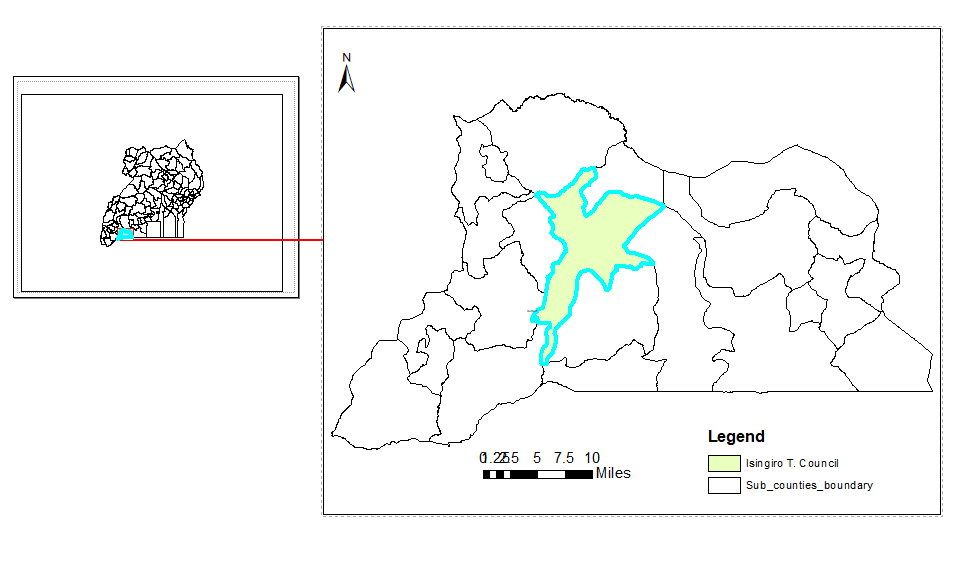
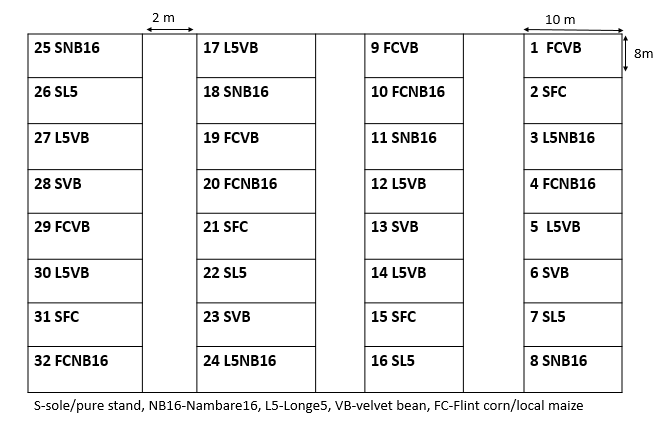
Figure 2 shows the design of experimental plots. A randomized complete block design (RCBD) experiment was used for this experiment with 8 treatments in 4 replica of each to make a total of 32 sub-plots. Two varieties of maize were intercropped with two varieties of beans in lines on one acre piece of land. Maize were intercropped with dry beans (Phaseolus vulgaris L.) and velvet beans (Mucuna pruriens (L.) DC var. utilis). Two varieties of maize (Longe5 and Flint corn) were grown for yield comparisons under same environmental conditions. Monocropping systems were used as control experiments for each variety to compare treatment effects. A randomized complete block design (RCBD) approach was used for this experiment because it is robust and yields good data for statistical analysis [13].
3. Data Analysis
3.1. Season one
3.1.1. Descriptive statistics
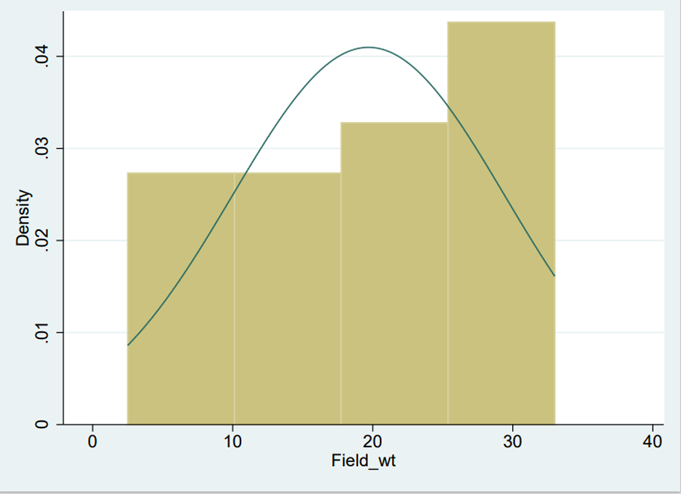
Data was tested for normality and was found conforming to the ANOVA conditions (Figure 3).
The data was found almost normally distributed hence fit for one way ANOVA Analysis. A bar graph of field weight against density was drawn using STATA version 13 for season one to find out the distribution of the dataset (Figure 3). The output curve is near that for normal distribution hence making the data fit to proceed with ANOVA analysis and subsequent tests [14].
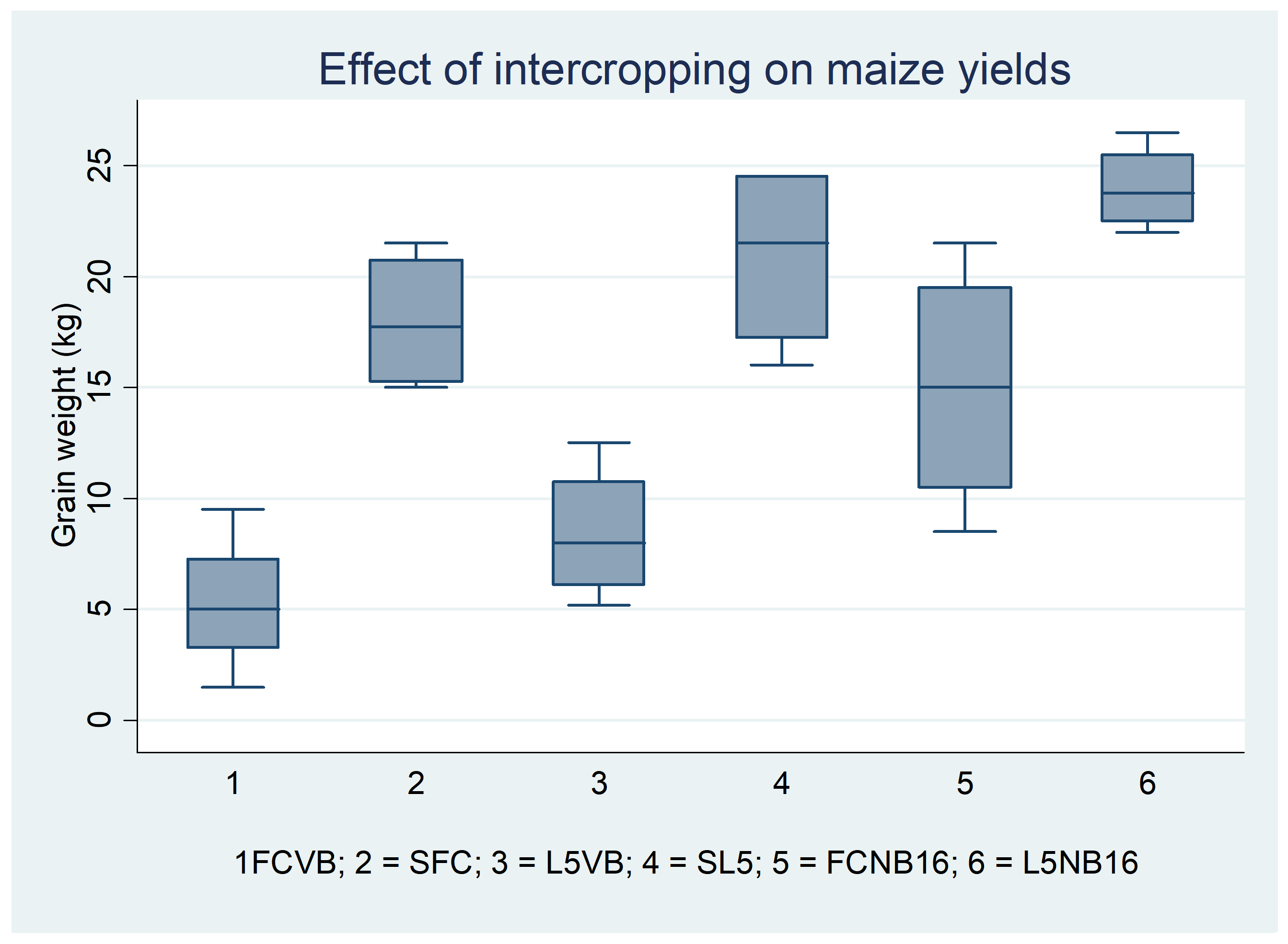
Box plots for all treatments (Figure 4) show the effect of intercropping beans with maize in season one (March to May 2020). Intercropping Longe5 with nambare16 (treatment 6), table 1 showed the highest grain weight (Median = 24kg) and intercropping flint corn with velvet beans (treatment 1) had the lowest grain weight (Median = 5kg).
An average grain harvest when applied treatment four yielded the largest grain weight (20.875kg) while the lowest yield was obtained from treatment one (5.25kg).
3.1.2. KEY
- FCVB-Flint/local maize intercrop with velvet beans
- SFC-sole/pure local maize
- L5VB-Longe5 intercropped with velvet bean
- SL5-Sole/pure Longe5
- FCNB16-local maize intercropped with Nambare16
- L5NB16-Longe5 intercropped with Nambare16
- ghvt-grain harvest
- treat-treatment
3.1.3. Testing homogeneity of variance
H0: The variance among each treatment is equal.
HA: At least one treatment has a variance that is not equal to the rest.
The test was carried out using ANOVA and Bartlett’ test in STATA version 13.
A one-way ANOVA (table 2) shows that there was a very high statistically significant difference between at least two treatment (F (5, 18) = 14.69, p = 0.0000).
Bartlett’s suggest non-homogeneity of variance across all treatments (p = 0.667) which is greater than 0.005 thus rejecting the null hypothesis.
Pairwise comparison of all treatments was carried out to find out significant differences between treatments
3.1.4. Pairwise comparisons: The Tukey post hoc test
From the results in table 3, we deduce that at least one of the group means is different from the other. Further analysis revealed that here was a statistically significant difference between groups as determined by one way ANOVA F (5, 18) = 14.69, p=0.0000. Tukey post-hoc test revealed that grain harvest was statistically higher in the treatment 2 compared to the treatment 1 (12.75±2.7 kg, p=0.002; statistically higher in the treatment 4 compared to the treatment 1 (15.63±2.67 kg, p=0.000; statistically higher in the treatment 5 compared to the treatment 1 (9.75±2.67 kg, p=0.019; statistically higher in the treatment 6 compared to the treatment 1 (18.75±2.67 kg, p=0.000; statistically higher in the treatment 3 compared to the treatment 2 (-9.57±2.67 kg, p=0.022; statistically higher in the treatment 4 compared to the treatment 3 (12.45±2.67 kg, p=0.002; statistically higher in the treatment 6 compared to the treatment 3 (15.58±2.67 kg, p=0.000; statistically higher in the treatment 6 compared to the treatment 5 (9.00±2.67 kg, p=0.034.
3.1.5. KEY
- FCVB-Flint/local maize intercrop with velvet beans
- SFC-sole/pure local maize
- L5VB-Longe5 intercropped with velvet bean
- SL5-Sole/pure Longe5
- FCNB16-local maize intercropped with Nambare16
- L5NB16-Longe5 intercropped with Nambare16
3.2. Season two
3.2.1. Descriptive statistics
Figure 5 shows that the lowest maize yields were observed for treatment FCVB (grain less than 1kg) while the highest was SFC (grain yield median 14kg).
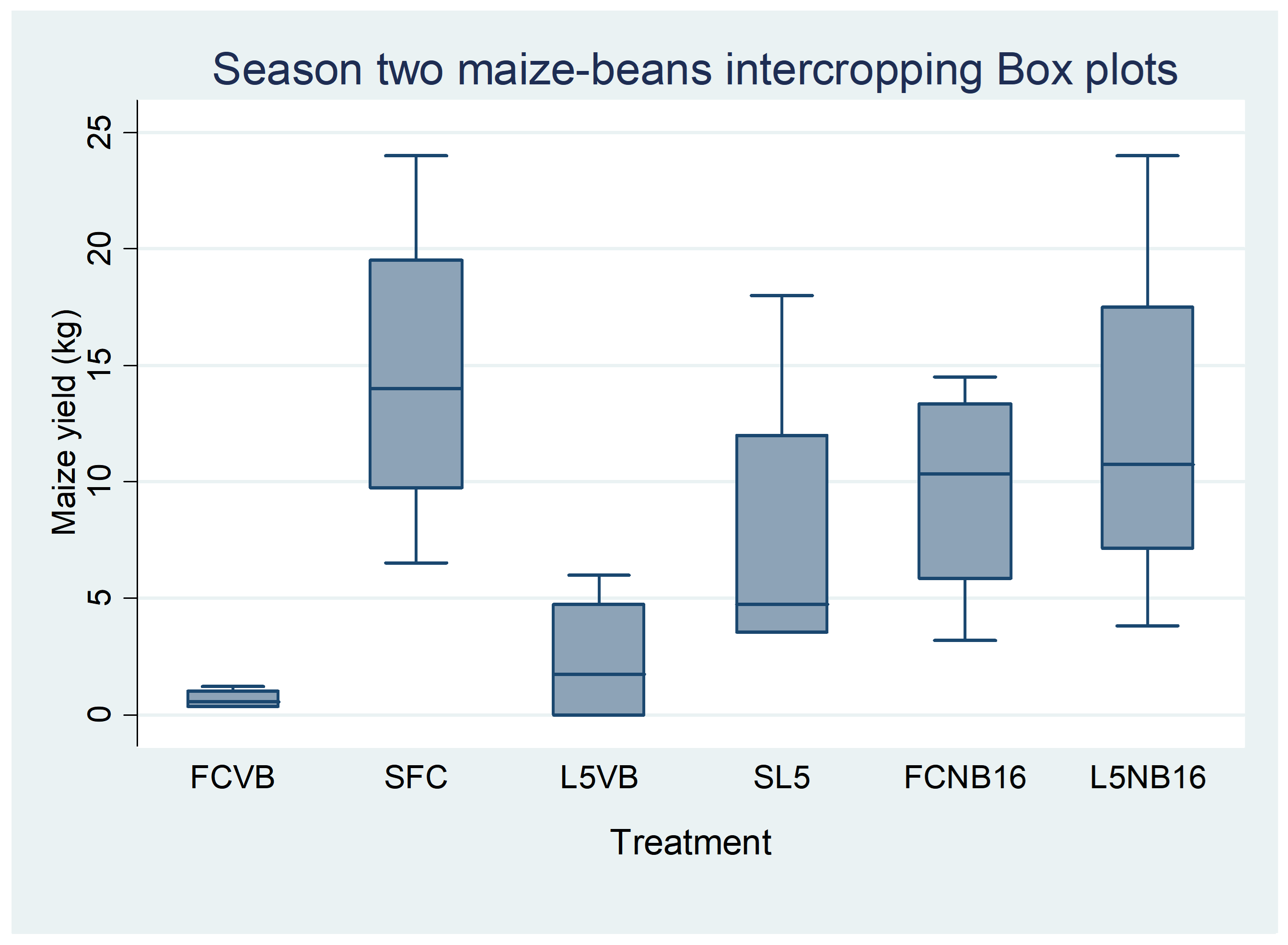
Table 4 shows descriptive statistics for season one followed by one way ANOVA output.
A one-way ANOVA (table 5) shows that there was a statistically significant difference between at least two treatments (F (5, 18) = 3.54, p = 0.0211), less than 0.05.
To establish which pairs of treatments were statistically significant in grain yield, a Tukey post hoc test was carried out.
Table 6 shows pairwise comparisons results for the Tukey post hoc test for season two for all 6 treatments to find out where the significant effect resulted from. The statistically significant difference was only observed between treatment 2 and 1 (p =0.33) and the rest showed no statistically significant difference because their p values were greater than 0.05.
4. Discussion
Intercropping is a climate smart option with potential benefits to soils, climate change mitigation, crop productivity, smallholder farmers’ incomes, inter alia. Season one (February-May) agrees with previous studies conducted in the USA pointed out that lablab bean intercropped with corn increased crude protein higher than those grown in Monocropping experimental plots [15]. Related studies conducted in Indonesia found that intercropping maize with legumes reduced pests and disease infestations in the cropping system thus increasing crop productivity and smallholder farmers’ incomes in the region [16]. Similar studies carried out in Morocco pointed out that intercropping barley with faba bean benefited barley plants and not for faba bean in terms of shoot and root biomasses and Phosphorus contents hence promoting the growth and development of the former for provision on livestock feeds [17]. Related studies conducted in Western Kenya revealed that intercropping maize with crotalaria, groundnut and green gram showed significant economic benefits because all farming systems improved land productivity, household food and income security over the maize mono crop [18]. The study agrees with related studies conducted in Malawi which revealed that intercropping maize with groundnuts improved soil nutrients, maximized the use of environmental resources, resulting in increased maize productivity [19]. Similarly, studies conducted in Ethiopia, pointed out that intercropping of maize with different crops including soybean and desmodium resulted in reduced termite damage to maize and increased maize yield for the improved farmers’ livelihoods [20]. Related studies conducted in Tigray, Ethiopia pointed out that In this study, one maize and two potato row arrangement showed 58% yield advantage over the sole cropping thus improving household food security and income [21]. The finding of this study also agree with the study conducted in Alvorada do Gurguéia which concluded that intercropping maize with cover crops increased maize grain yield, macronutrient contents, and straw dry matter accumulation and grain yield of cowpeas [22]. More so studies conducted in China revealed that strip intercropping of maize and soybean improved the absorption of nitrogen, phosphorus, and potassium of maize, while prevented the continuous cropping, increased plant density achieved a high yield of both the two crops in the intercropping systems, increased land equivalent ratio as high as 2.2 culminating in increased crop productivity [3].
On the other hand, velvet beans in season two (September-December) over competed maize plants for soil nutrients, light and water and the productivity of maize was reduced. These findings disagrees with studies conducted in Ghana which found out that maize-velvet bean intercropping increased soil nutrients resulting in increased maize yields []. Disagreements in the results might have been caused by the difference in the velvet beans planting period. In this study, velvet beans were planted at the same time with maize while study in Ghana, they were planted 3 weeks after planting maize. Field observation showed poor ear filling and rotting of maize in those plots where intercropping was done with velvet beans. Furthermore, maize stems were found bent or laying down due to the weight of velvet beans that were climbing on them. Over competition reduced the numbers of maize plants in the same plots thus reduced yields of main grains. The findings of this study agrees with studies conducted in South Africa which pointed out that when velvet beans are planted earlier and density in a maize-velvet bean intercropping system, velvet beans will outcompete maize because of their much vigor [25]. Rains delayed to come due to climate change and planting was delayed hence causing increased pests and diseases culminating into poor maize yields. Maize streak disease, aphids and fall army worm were observed on most maize plants which might have affected the grain yield of maize. To reduce the spread of pests and diseases, Megas and Rocket pest sides were sprayed on crops and diseased maize plants removed from the garden to prevent further spread to healthy crops. The above findings disagree with previous researchers who reported that velvet beans intercropping with maize before 42 days reduced the weed burden and maize yield while planting after 42 days of maize planting increased maize yield [26].
5. Conclusions and recommendations
Intercropping maize and Nambare16 increases maize yields. Longe5 intercropped with Nambre16 produced the highest yields maize grain yield while intercropping flint corn with velvet beans produce the lowest maize grain yields for both season one and season two. Both scanty and too much rain fall are not favorable to maize yields because they result into pest and diseases infestations that result into reduced crop productivity.
The study recommends that in velvet bean-maize intercropping systems, velvet beans should be planted 3 weeks after planting maize to increase soil fertility and maize yields. Secondly, early planting and use of climate resilient seed should be embraced by small holder farmers to increase crop yields amidst climate uncertainties in the region.
Acknowledgements
I thank the African Centre of Excellence for Climate Smart Agriculture and Biodiversity Conservation management for the funding support they provided through World Bank which enabled me pursue my PhD study at Haramaya University. I thank the Professor Maud Kamateni-Mugisha for giving me a study leave to pursue PhD, FAEST dean and AAE staff for their moral support and standing in the gap when I went for further studies. Special thanks go to all my academic advisors for supervising my PhD study and providing technical support during my study. God bless you all, Our God Reigns!
Authors’ contributions: Wycliffe Tumwesigye:-PhD student who conducted the study and wrote the manuscript
Professors: Tesfaye Lemma Tefera, Bobe Bedai and Majaliwa Mwanjalolo Jackson-Gilbert supervised my proposal writing and gave technical guidance during data analysis. Prof David Osiru provided technical assistance on experimental design.
Funding: Funding was provided by ACE, Haramaya University, Ethiopia
Competing interests: The authors declare that they have no competing interests
Declaration: Authors declare no conflict of interest
References
- Torquebiau E, Rosenzweig C, Chatrchyan AM, Andrieu N, Khosla R. Identifying Climate-smart agriculture research needs. Cah Agric. 2018;27(2).[CrossRef]
- Msowoya K, Madani K. Climate Change Impacts on Maize Production in the Warm Heart of Africa. Water Resour Manag [Internet]. 2016;5299–312. Available from: http://dx.doi.org/10.1007/s11269-016-1487-3[CrossRef]
- Jun-bo DU, Tian-fu HAN, Jun-yi GAI, Tai-wen Y, Xin SUN, Xiao-chun W, et al. Maize-soybean strip intercropping : Achieved a balance between high productivity and sustainability. J Integr Agric [Internet]. 2018;17(4):747–54. Available from: http://dx.doi.org/10.1016/S2095-3119(17)61789-1[CrossRef]
- Gou F, Ittersum MK Van, Wang G, Putten PEL Van Der, Werf W Van Der. Yield and yield components of wheat and maize in wheat – maize intercropping in the Netherlands. Eur J Agron [Internet]. 2016;76:17–27. Available from: http://dx.doi.org/10.1016/j.eja.2016.01.005[CrossRef]
- Steward PR, Thierfelder C, Dougill AJ, Ligowe I. Conservation agriculture enhances resistance of maize to climate stress in a Malawian medium-term trial. Agric Ecosyst Environ [Internet]. 2019;277(July 2018):95–104. Available from: https://doi.org/10.1016/j.agee.2018.07.009[CrossRef]
- Chapagain T, Pudasaini R, Ghimire B, Gurung K, Choi K, Rai L, et al. Intercropping of maize, millet, mustard, wheat and ginger increased land productivity and potential economic returns for smallholder terrace farmers in Nepal. F Crop Res [Internet]. 2018;227(August):91–101. Available from: https://doi.org/10.1016/j.fcr.2018.07.016[CrossRef]
- Hu F, Feng F, Zhao C, Chai Q, Yu A, Yin W, et al. Integration of wheat-maize intercropping with conservation practices reduces CO2 emissions and enhances water use in dry areas. Soil Tillage Res [Internet]. 2017;169:44–53. Available from: http://dx.doi.org/10.1016/j.still.2017.01.005[CrossRef]
- Xiao J, Yin X, Ren J, Zhang M, Tang L, Zheng Y. Complementation drives higher growth rate and yield of wheat and saves nitrogen fertilizer in wheat and faba bean intercropping. F Crop Res [Internet]. 2018;221(July 2017):119–29. Available from: https://doi.org/10.1016/j.fcr.2017.12.009[CrossRef]
- Christense K. Maize- ‐ Legume Intercropping. 2014;
- Hailu G, Niassy S, Zeyaur KR, Ochatum N, Subramanian S. Maize–legume intercropping and push–pull for management of fall armyworm, stemborers, and striga in Uganda. Agron J. 2018;110(6):2513–22.[CrossRef]
- Mpairwe DR, Sabiiti EN, Ummuna NN, Tegegne A, Osuji P. Integration of forage legumes with cereal crops: II. Effect of supplementation with lablab hay and incremental levels of wheat bran on voluntary food intake, digestibility, milk yield and milk composition of crossbred cows fed maize–lablab. Livest Prod Sci [Internet]. 2003;79(2/3):213. Available from: http://proxy.library.adelaide.edu.au/login?url=http://search.ebscohost.com/login.aspx?direct=true&db=aph&AN=8723062&site=ehost-live&scope=site[CrossRef]
- Ekesa B, International B, Bashaasha B, Muyanja C. A situational analysis of agricultural production and marketing , and natural resources management. 2015.
- Plant R. RCBD Review Agriculture Innovation Program. 2014;1–14.
- Baldi B, Moore DS. One-Way Analysis of Variance: Comparing several Means. Pract Stat Life Sci. 2018;605–34.
- Armstrong KL, Albrecht KA, Lauer JG, Riday H. Intercropping corn with lablab bean, velvet bean, and scarlet runner bean for forage. Crop Sci. 2008;48(1):371–9.[CrossRef]
- FAO. Biodiversity for Food and Agriculture Biodiversity for Food and Agriculture. 2011.
- Mouradi M, Farissi M, Makoudi B, Bouizgaren A, Ghoulam C. Effect of faba bean (Vicia faba L.)–rhizobia symbiosis on barley’s growth, phosphorus uptake and acid phosphatase activity in the intercropping system. Ann Agrar Sci [Internet]. 2018;16(3):297–303. Available from: https://linkinghub.elsevier.com/retrieve/pii/S1512188717301689[CrossRef]
- Midega CAO, Salifu D, Bruce TJ, Pittchar J, Pickett JA, Khan ZR. Cumulative effects and economic benefits of intercropping maize with food legumes on Striga hermonthica infestation. F Crop Res [Internet]. 2014;155:144–52. Available from: http://dx.doi.org/10.1016/j.fcr.2013.09.012[CrossRef]
- Nyirenda H, Balaka V. Conservation agriculture-related practices contribute to maize (Zea mays L.) yield and soil improvement in Central Malawi. Heliyon [Internet]. 2021;7(3):e06636. Available from: https://doi.org/10.1016/j.heliyon.2021.e06636[CrossRef] [PubMed]
- Demissie G, Mendesil E, Diro D, Tefera T. Effect of crop diversification and mulching on termite damage to maize in western Ethiopia. Crop Prot [Internet]. 2019; Available from: https://doi.org/10.1016/j.cropro.2019.01.029[CrossRef]
- Kidane BZ, Hailu MH, Haile HT. Maize and potato intercropping: A technology to increase productivity and profitability in tigray. Open Agric. 2017;2(1):411–6.[CrossRef]
- Batista De Morais D, Felippe Ratke R, Bortolon L, Junio De Jesus Lacerda J, Loiola Edvan R, Mario Zuffo A, et al. Maize Intercropping Systems Improve Nutrient for the Cowpea Crop in Sandy Soils. Commun Soil Sci Plant Anal [Internet]. 2020;51(4):491–502. Available from: https://doi.org/10.1080/00103624.2020.1718688[CrossRef]
- DU J bo, HAN T fu, GAI J yi, YONG T wen, SUN X, WANG X chun, et al. Maize-soybean strip intercropping: Achieved a balance between high productivity and sustainability. J Integr Agric [Internet]. 2018;17(4):747–54. Available from: http://dx.doi.org/10.1016/S2095-3119(17)61789-1[CrossRef]
- J.A.Adediran et al. Effect of mucuna intercropped with maize on soil fertility and yield of maize. Ghana Jnl agric, Sci. 2004;37:15–22.[CrossRef]
- Chakoma I, Manyawu G, Gwiriri L, Moyo S, Dube S. The agronomy and use of Mucuna pruriens in smallholder farming systems in southern Africa. ILRI Extenstion Br. 2016;(December):1–4.
- Gbaraneh LD, Nwonuala AI. Sequence of planting mucuna (Mucuna pruriens) into maize on maize grain yield and weed infestation in southeastern Nigeria. Acta Agron Niger. 2011;11(1/2):50–6.