
Abstract
The purpose of the study was to assess teachers’ use of field trips in evaluating Social Studies lessons in Winneba Senior High School in Effutu Municipality in the Central Region of Ghana. Qualitatively, a case study research design was employed for the study. The population of this study comprised all the four (4) Social Studies teachers and Social Studies Association president in Winneba Senior High School. Convenient and purposive sampling techniques were used to select the municipality, Winneba Senior High School and Social Studies teachers and Social Studies Association president for the study. The main instrument for data collection was semi-structured interview guide. The data was analysed through the use of the interpretative method on the themes identified during the data collection. The study indicated that the use of field trips in the teaching and learning of Social Studies has the potential to influence the understanding levels of students and teachers. Therefore, field trips have the potential to help students and teachers to gain new knowledge that may not have been obtained through theoretical learning in the classroom. The study also revealed that organisation of field a trip has some challenges, such as, time as the main factor, financial problems, inadequate support from School Management, Parents and some teachers, nature of the curriculum, the behaviour of students outdoor were related to the research questions and interpreted on the number of issues raised by respondents. It is recommended that procedures for seeking permission be outlined by the Ghana Education Service to facilitate easy permission processes and to reduce the stress associated with seeking permission for organizing field trips for teachers and students in Senior High Schools. It is also recommended that students should be educated more and more by their Social Studies teachers on the importance of embarking on field trips to eliminate the lukewarm attitudes of some of the students. It is recommended that the Regional and District directors of education should ensure constant and effective supervision of teachers to encourage the use of field trips as a teaching strategy for the evaluate Social Studies lessons.
1. Introduction
1.1. Theoretical framework
A theoretical framework comprises the theories expressed by experts in the field into which a researcher plans to conduct research, which he/she draws upon to provide a theoretical coat hanger for data analysis and the interpretation of results. The theoretical framework is a structure that summarizes concepts and theories, which a researcher develops from previously tested and published knowledge which synthesize to help the researcher to have a theoretical background, or basis for data analysis and interpretation of the meaning contained in research data. The theoretical framework is the structure that can hold or support the theory of a research study [1]. The theoretical framework of research is not a summary of your own thoughts about your research. Rather, it is a synthesis of the thoughts of giants in a field of research. In essence, the theoretical framework comprises what leaders in the field of research say about the research question, about the problem you plan to investigate, and might even include suggestions of how to solve that problem, including how to interpret the findings in research data [1].
In order to solidify our qualitative research, we solicited the views of different scholars in relation to the issue and concept under study. This gave proven evidence of thoughts and ideologies expressed by experts on the benefits and challenges teachers face in integrating field trips in teaching and learning of Social Studies. Teaching and learning can become intrinsically natural and student-centred when it is moved from the classroom into the world at large [2]. The combined learning atmosphere that results from the unique relationship advanced outside the tutorial room into the concrete learning. Fieldtrips offers a variety of opportunities to teachers and learners by providing solution to curiosity since young people are said to be always curious.
Field trip experiences are supreme learning potential since they give learners a chance to explore the real world and gain first-hand knowledge [3]. Field experience, early in students’ careers, can be formative and can stimulate the student to continue in a field [2]. However, the sense of curiosity enables the school dropouts to remain aware of the freshness of the world around them and keep a spark of liveliness which is often lost when schooldays are over [3]. On the other hand, material that is learnt in the field through direct interaction is more effective and lasting [4]. This is due to the fact that when students learn by doing, they become responsible and they are likely to be active participants in the teaching and learning process. This implies that knowledge is constructed during the learning process and that a student discovers knowledge for him/herself, rather than receiving knowledge, and this inspires the notion of performance-based assessment [5].
Learning experiences outside the classroom are fundamentally interdisciplinary. When we go out into the world, we encounter it as a whole and are forced to engage in multiple modalities [6]. Outdoor learning requires the realization that such instruction requires a willingness to devote meaningful progress planning. Field trips also give learners a chance to transform words into experiences by showing them real things [7]. All genuine education comes through experience. Today, field trips of all types are common practice at least at the primary schools’ level. However, in practice, teachers often fail to maximise the learning opportunities afforded by exhibits, models, and natural settings guesses [8]. When the field trips are properly planned and well facilitated, they can provide students with valuable experiences, lasting memories, and strong academic benefits. Many teachers understand the importance of field trips but for certain reasons. Some schools may face budget cuts that make the cost of admission to historical museums, cultural centres, and sites in addition to transportation costs of other fees prohibitive [9]. It is clear that fieldtrips have the capacity to enhance the casual link between learners’ responses and deeper learning [9].
Extending the classroom lessons into fieldtrips brings a deeper insight, greater understanding, and real meaning to areas merely read and discussed hence, learners easily grasp certain concepts in the subject [10, 11]. Field trips provide learners with the opportunity to test ideas and concepts during learning activities [10]. When learners are engaged in fieldtrip activities, they feel involved in the real life and environmental issues that are of concern to their local communities [12]. Fieldtrips make learners develop their own understanding of different perspectives on social, political, and economic issues which enable them to clarify and justify their values at the same time acknowledging the values of other people [12]. School administrators as well as teachers may see field trips as extra activities that cut class time and contribute little to student achievement. Studies on the educational field trips have been conducted in many continents which include Europe and Africa in general. Although in Zimbabwe research that are taking place in that area is minimum. It is through field trips that new teaching methodologies and technologies have become available.
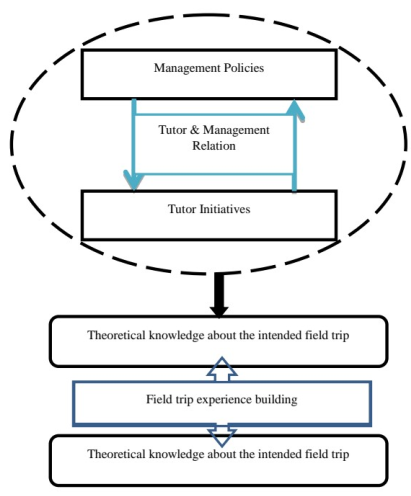
Simply put, the group three (3) Field Trip Framework developed by the researchers argues that, for a successful field trip to take place, there is the need for a cordial relationship between teachers and the management body. Once this is achieved, teachers can then go ahead and plan all the procedures that will facilitate optimum teaching and learning. However, during the field trip, the acquisition of new knowledge is facilitated by constant referral to theoretical knowledge and real experience on the ground. It is in this regard that the group three (3) Field Trip Framework is seen with a dotted oval shape around the relationship between headmasters and teachers with an arrow showing a link to the actual field trip section. This is so because, failure to establish a good relationship will cause failure in the field trip. It is in light of this that a study of this nature is worthwhile to conduct. This study seeks to analyze teachers’ use of educational field trips to evaluate Social Studies lessons in Senior High Schools in Ghana. The main purpose of the study was to assess teachers’ use of field trips in evaluating Social Studies lessons in Winneba Senior High School. The study was guided by these research questions (1) What are the benefits of using field trips by teachers to evaluate Social Studies lessons at Winneba Senior High School in the Effutu Municipality in the Central Region of Ghana.? (2) What are the challenges faced by teachers in using field trips to evaluate Social Studies lessons at Winneba Senior High School in the Effutu Municipality in the Central Region of Ghana?
1.2. Benefits of Field Trips in Teaching and Learning.
A field trip, which may also be termed an instructional trip, school excursion, or school journey is a curriculum-approved trip with educational intent. Field trips as students’ experiences outside the classrooms at interactive locations designed for educational purposes [13]. A scholar defines a field trip as a form of teaching carried out in specific but relevant locations outside the school to learn or investigate certain issues or phenomena [14]. He states further that field trips may serve as an introduction to a new concept, or provide experiences that reinforce ideas or topics introduced in the classrooms 14]. This indicates that field trips are activities conducted outside the classroom which enable students to have a real feel of what is taught in the classroom to facilitate teaching and learning. It has the power of influencing the thoughts of students about the concepts taught in the classroom. Among the benefits offered by field trips are the following:
1.2.1. Helping Students to Develop Social Skills
Field trips can have profound effects on students’ learning, attitudes, beliefs and perceptions, regardless of gender, ethnicity, and religious background. Field trips positively influence the interests and attitudes of students in Social Studies. Students develop their cognitive, affective, and psychomotor domains of learning when they move from the classrooms to the outdoor and real-life environment [15, 16, 17, 18]. Field trips help to sharpen students’ skills of observation and perception because it appeals to all the senses [19]. By implication, field trips broaden the minds of students and help them to analyze issues in groups from different perspectives which boosts their confidence levels in and outside the classroom. Field trips are viable tools for assessing community resources for effective Social Studies instructions. Field trips provide unlimited potential for active learning in Social Studies. Social Studies centred on the current knowledge and understanding of what the subject is; issues centred and problem solving [20]. This implies that critical thinking is the most important skill for problem solving, inquiry and discovery in Social Studies.
1.2.2. Exposing Students to Different Situations
Field trip as an opportunity to do something new and different in a new environment, breaking away from the humdrum of the school routines [22]. Field trips reinvigorate students and breathe life into the lesson plans. Field trips train learners on how to go about their social responsibilities and heighten learners’ interest in the career of their choice [22]. Field trip is the act of taking students out of the classroom into the community for the purpose of learning [24]. This means that field trips play key roles in generating interest in Social Studies lessons. The very mention of a field trip often makes the most reticent students excited. Field trips have long been recognized as an important part of Social Studies education. With proper implementation, field trips enable students to interact and make effective connections to their prior knowledge in the class, the reading, and what they experience on the field. This will guard against teachers not assessing the salient areas that are the pith and core of the subject and not the mere standardized test [25].
1.2.3. Creating Connections to the Curriculum
While fostering the development of social skills in students and exposing students to different situations are both very important and meaningful aspects of field trips, there is also an increasing need for field trips to relate to the curriculum. As the nation is moving closer and closer to a unified curriculum, driven by common goals, standards, and standardized testing, it is more important now than ever for teachers to be able to justify the use of certain activities [25, 26]. By this, the researchers can say that field trips are paramount to the teaching and learning of Social Studies as it aids teachers to relate students to what is taught in the curriculum for better understanding. It also makes the assessment of students easier for teachers and students since students can connect what is outside to what is taught in the curriculum.
1.2.4. Helping to Translate the Theoretical Lessons to Reality
Teachers with students can embark on field trips that will enable them to translate the theoretical lessons learnt in the classroom to reality. That is, students may be able to have real experiences with whatever they have learnt in the classroom. Students and teachers may be alternating between theoretical knowledge and the new knowledge they are acquiring through experience. This promote formative assessment practices that enhance the efficacy of instructional strategies of Social Studies teachers [27]. Field trips helps to provide firsthand experience through which students’ interest and motivation in Social Sciences are stimulated using relevant learning methods and interrelationships [28]. Field trips strengthen observation and perception skills, and also promote personal (social) development. It can be deduced that, teachers who have not been integrating field trips in their lessons make it difficult for students to comprehend certain concepts taught in the classroom. This is because teaching will be done in abstract terms, which makes it complicated for most of the students to connect the classroom to the outside world [28].
1.2.5. Helping Students to Assimilate and Accommodate New Understanding and Cognition
Fortunately, field trips take students to locations that are unique and cannot be duplicated in the classroom. Each student observes natural settings and creates personally relevant meaning to the experiences. Interactive exhibits help students play with concepts and activities often not possible in the classroom. Earlier course content suddenly becomes relevant as students assimilate and accommodate new understanding and cognition [27, 29]. The connection between the field trip venue and the classroom links the field trip’s experiential learning with prior experiences and learning from the classroom [30]. Field trips develop the thinking capacity of students and help students with easy identification of concepts to construct knowledge during evaluation processes.
1.2.6. Development of Affective Domain of the Students
It is instructive to note that, field trips can be linked to the affective development of students based on the destination or location selected. A visit to a more art destination could help the students to learn more in relation to how they feel about a given situation or event. Many researchers have suggested that, even though cognitive gains are important in field trips, there is a need to promote social and affective gains also by engaging in field trips to museums and places of art as shown in the studies of [31, 32, 33, 34, 35]. However, in Ghana, it appears much work has not been done in the use of field trips to measure the cognitive and affective domains of learning among students, the gap which this study seeks to address. It is important to note that teachers and School Authorities make it a point to integrate field trips in teaching and learning processes to facilitate teaching fraternity.
1.3. Challenges faced by the teachers in the implementation of field trips
1.3.1. Time Constraints
The challenges of implementation of field trips range from one nation to another and from one region to another. Most teachers face a lot of challenges in using field trips as a teaching method since their preparation requires more time as compared to other methods. The participatory field trip is more time-consuming than any other method [36]. Supervision of learners during excursions tends to be very difficult. However, it is important to appreciate the value of the field trips as learners would observe, touch, and analyze to construct knowledge. Thus, the process needs more time as compared to other activities on the school teaching timetable [37]. It is imperative to note that teachers need more time in preparing and organizing effective field trips for Students. The researchers are of the view that the syllabus and the teaching timetable must be flexible to enable teachers to have enough time to plan and organize field trips to buttress teaching and learning for the effective cognitive and affective development of learners. Other researchers also argue that finding time for the trip and making arrangements for students who cannot make the trip add tasks to an already busy teaching schedule [38, 39].
1.3.2. Financial Constraints
Though attendance at Senior High School in Ghana has become free, there are other financial burdens placed on parents regarding the education of their children. Thus, most students sometimes cannot afford the cost of field trips considering the amount involved. Parents or guardians pay Parents Teacher Association (P.T.A.) dues to various authorities in Senior High Schools on annual basis. Also considering the economic situation in the country, purchasing power of most parents has dwindled, with most of them earning below what is considered the minimum income to support decent standards of living. Hence, many parents tend to be unsupportive of the idea of students embarking on field trips. Again, in Ghana, unstable climatic conditions tend to affect the agricultural activities of the majority of farmers in the rural areas considering the fact that they heavily rely on rain-fed agriculture, the failure of which results in added difficulties and lower incomes. As a result, most parents go as far as providing for items needed by their wards in Senior High Schools leaving additional levies. A study postulates that field trips are one of the largest items of recurrent expenditure in the departments of an institution [40]. This, therefore, indicates that teachers can plan and organize effective and vital educational field trips that will assist students to construct requisite knowledge for better evaluation and assessment of lessons. However, parents’ inability to finance their wards to embark on these trips ruin teachers’ good intention. Financial reasons or constraints sometimes cancel out the opportunities of carrying out field trips in many schools. The researchers suggest that the various stakeholders of education should find appropriate solutions to resource mobilization in Senior High Schools to enable them to embark on field trips as often as may be required. The financial injections into the field trips of Schools by the P.T.A, Old Students Association, Community business concerns as well as Philanthropist would not be a bad idea to suggest [40].
1.3.3. Inadequate support from School Management or Authorities
Again, sometimes teachers feel demotivated because the administrative bottlenecks and financial difficulties are just too many to handle. Teachers need to determine and secure the logistics to transport students. Large introductory classes present unique challenges due to the need for larger transportation facilities, safety issues, more student logistical planning, and time lost trying to organize a large group [41]. Michie an author, however, collaborates by identifying seven barriers to successful field trips namely:
- Transportation
- Teacher training and experience
- Time issues such as school schedule and teacher’s ability to prepare
- Inadequate School administrators’ support for field trips
- Curriculum inflexibility
- Poor students’ behavior and attitudes
- Lack of venue options [28].
Finding time for the trip and making arrangements for students who cannot make the trip add tasks to an already busy teacher schedule [38, 39]. In the light of these challenges, it is imperative that the teacher prepares the students for the field trip in order to maintain a level of control that will allow for learning to occur when the class arrives at the venue [42]. Kalvaitis suggested that often, a teacher’s biggest fear is losing control of the students once at the field trip location [43]. Upon arrival at a field trip venue, students are often disoriented resulting in excitement, explorative, and unrestrained behavior [44]. The teacher should be prepared to focus the students’ mental and physical energy toward participation at the venue [29].
1.3.4. Inadequate Support from Some Teachers
Teachers tend to fall into one of three patterns of participation while on a field trip [45]. They could get involved fully, partially, or passively. Teachers can fully involve and participate in all the preparation and field trip activities. If the field trip is one that has occurred regularly over the years, school tradition may dictate that teachers partially participate as they follow an established routine, which may or may not be participatory at all. Passive teachers do not participate with the students during the experience. For example, a teacher may rely completely on the school administration to set up a field trip, and may not personally communicate with or visit the venue, before or during the field trip if he is unsure about his safety. By indication of teachers’ involvement counts a lot if field trips will be effectively utilized. Teachers themselves must show massive involvement to motivate students and must as well partake in the field trips to harness understanding of what is taught in class and for effective evaluation of lessons.
1.3.5. Incompetency of some Teachers in Organizing Field trips
Pedagogical acumen of teachers or field trip facilitators can also affect their involvement and become a challenge to academic trips, especially where they have little training or pedagogical knowledge relating to the process of field trip planning and preparation [46, 47]. Some intern teachers may experience a field trip during their internship program but still, demonstrate very little enthusiasm towards the organization of such trips. This can deprive them of valuable hands-on experiential knowledge. In effect, they generally are unable to learn the pedagogy or methods necessary to plan and orchestrate a field trip in a more functional way [48, 49]. Teachers who gain field experience at a non-school venue gain a more functional, applicable view of constructivist education and its teaching skills. For this reason, teacher education programs should include experiential education like field trip preparation and implementation for all intern teachers, who need to understand their responsibilities and role before, during, and after a field trip [47, 50]. This implies that for a successful field trip to take place, teachers should be well informed and knowledgeable about the concepts taught to enable students to connect to the outside world. Teachers should also be abreast with the necessary processes and procedures before, during and after the trips and have the courage to control students at the field trip site. Last but not least is the challenge of the security of lives and property of participants during the trip. Most often, very little attention is given to issues of insurance coverage for possible damage during the trip. This shows that both teachers and students are likely to demonstrate little interest in field trips if it is unclear, who bears the cost of their safety should an accident occur. The researchers suggest that, there should be special insurance coverage for teachers and students to promote their effective involvement in field trip activities for effective teaching and learning and for proper evaluation of lessons.
1.4. Teacher’s use of field trips in teaching and learning of Social Studies
The integration of field trips into the Senior High School curriculum is something to be desired by teachers. Thus, if the integration of field trips is not incorporated into the teaching and learning of Social Studies in the Senior High Schools, it may be left to the students to devise means of achieving it. There are three-part models that can integrate field trips into the curriculum. The three parts of the models indicated by Orion include;
- The preparatory unit prepares students for the field trip with well stated learning outcomes usually incorporated in hands-on-tasks. It could be said that learners work with materials and equipment that will be used in the field to gain the basic concepts and skills required.
- The second part of the integral model is that, field trips serve as a concrete bridge towards more abstract learning levels which makes field trips the central part of the teaching programme rather than using it as a summary of enrichment activity. This means that field trips have the potential of concretizing learners’ need to move on to higher levels of cognitive learning when they return from the field.
- Further, the third part of the model suggested that there is a need to base on the summary of the complex and abstract concepts that have been made easier through field trips to new situations or levels. Per this model, one may say that, if field trips are well integrated with systematic plans into the school curriculum of Senior High Schools, it will help teachers prepare well to give concrete examples to students in order to boost the learning of complex and abstract concepts. One may also question how students may learn from visiting familiar places [51].
The teachers’ use of field trips in teaching and learning as well as assessment strategy may be demanding as the relative novelty or familiarity of the field trip setting may affect learning. Students may feel reluctant to embark on field trips they have undertaken before getting admission to the Senior High School since it may be boring and resource demanding on their part. For instance, according to Falk and Balling, settings that are too novel, cause fear and nervousness [44]. In the same way, settings that are too familiar, cause boredom, fatigue, and diversionary activities. Educators can also provide students with an itinerary of activities and details with regard to the type of work they are expected to do at each learning station, possible weather conditions, safety hazards and precautions, and location of restrooms among others. Considerations need to be made if learning activities are to be maximized. However, the amount of knowledge acquired could be questionable considering the duration of field trips which are normally limited to one day. In this same line of thought, researchers argued that cognitive learning outcomes are valued by many teachers, parents, and management bodies, and that it is imperative to consider field trip designs that will take into account the best and unique learning avenues presented by the field trip destinations. In effect, field trips contribute to the cognitive development of students [52].
2. Materials and Methods
Research approach used in connection with this study was qualitative. Qualitative methods are used to answer questions about experience, meaning, and perspective, most often from the standpoint of the participant. These data are usually not amenable to counting or measuring. Qualitative research techniques include ‘small-group discussions’ for investigating beliefs, attitudes, and concepts of normative behavior; ‘semi-structured interviews’ to seek views on a focused topic or, with key informants, for background information or an institutional perspective; ‘in-depth interviews’ to understand a condition, experience, or event from a personal perspective; and ‘analysis of texts and documents [53]. A case study research design was employed for the study. A case study is an in-depth study of a particular research problem rather than a sweeping statistical survey or comprehensive comparative inquiry. It is often used to narrow down a very broad field of research into one or a few easily researchable examples [54]. The researchers adopted this design because that is the best design for qualitative research which allows the researchers to explore the topic under study, specifically the benefits of integrating field trips in Social Studies lessons as well as the various challenges that teachers face in using this technique. With this approach and design, semi structured interview guide with open ended questions like what? And how? were used to give room for respondents to explore on the questions asked during data collection processes in the Winneba Senior High School in the Effutu Municipality. The population of this study comprised all four (4) Social Studies teachers and Social Studies Association president in Winneba Senior High School in Effutu Municipality in the Central Region of Ghana.
Sampling procedure can be described as a method or plan used by researchers to select a representative sample from the total population for a study. It is a process of selecting a statistically representative sample of individuals from the population of interest [55]. In this study, the non-probability sampling is used. Non-probability sampling methods are used by researchers to learn about a population [56]. This is intended to ensure the availability of experience-rich elements to supplement the course and objectives of the study. Convenient and purposive sampling techniques were used to select the municipality, Winneba Senior High School, and Social Studies teachers and Social Studies Association president for the study. Two main sources of data were used in order to achieve the main and the specific objectives; the primary and secondary sources of data. This is because the two sources (primary and secondary sources) would complement each other, and since the main aim is to achieve minimal flaws; it was therefore prudent to use both of them to achieve maximum results. The primary data essentially contained first-hand information and field notes which were collected from the respondents; selected students, and teachers from the Social Studies department at the Winneba Senior High School in the Effutu Municipality through interview guide specifically designed to answer the research questions. This data was analyzed to help draw accurate inferences. Secondary information was essentially acquired from already existing documents on the research topic which is largely on the internet, specifically through the “Google Scholar” search engine. They consisted of academic articles, journals, and books written on field trips. The main instrument for data collection was semi-structured interview guide. Interviews were useful to explore the experiences, views, opinions of the respondents when it came to the roles of field trips in teaching and learning of Social Studies and the challenges teachers face in their bid to implement field trips to evaluate Social Studies lessons in schools. The interviews were conducted mainly in a semi-structural manner with the aid of an interview guide based on topic lists, reflecting on the objectives of the research questions. The data was analysed by the use of the interpretative method based on the themes arrived at during the data collection. The themes were related to the research questions and interpreted based on the number of issues raised by respondents.
3. Results and discussion
3.1. Benefits of using field trips in evaluating Social Studies lessons
The study sought to inquire about the relevance of field trips in the assessment of Social Studies lessons at Winneba Senior High School. As a result of that, the teachers were asked to express their views on how field trips influence their teaching and evaluation of the subject.
All the teachers unanimously agreed that, “filed trips were very beneficial in the teaching and evaluation processes because they offer learners the real practical experience of whatever is taught in the classroom”. One of the respondents said:
“Field trips are beneficial, out of door activities are beneficial because the student tends to see things in their real form. They don’t become abstract anymore to the student, learning in abstract is sometimes confusing as compared to getting the information on the ground. However, the concept, we teach are mostly in abstract, and apart from that some things are far away from where the schools are located. Again, it is not everything unfortunately, that student can partake in, for example, festivals and marriage ceremonies which are part of socio-cultural practices of the people. As a result, we normally resort to the use of videos and pictures in the classroom to teach. So, we barely use field trips but they are beneficial”.
In order to confirm the responses of the teachers, the students expressed the view that field trips have benefited them during the teaching and learning of Social Studies to have a clear understanding of concepts discussed in the classroom. It was very clear from all the responses that the learners were very excited whenever field trips were organized. Learning becomes interesting and they all perform well in the evaluation processes. In order to understand the nature of the evaluation practices of teachers after the field trips, the teachers were asked to explain how the learners are assessed after embarking on a field trip. It was however, discovered from the study that “teachers mostly put the students into groups of about five members and they are tasked to write a report of their field experiences”. A previous study supported the current findings that the students are able to perform very well since they have real experiences on the ground [48, 57]. The implication is that field trips if well planned and organized by teachers has the potential to influence students positively and facilitate the teaching and learning of Social Studies lessons and by extension contribute in great measure to the realization of the goals and objectives of the subject.
3.2. Challenges faced by Social Studies Teachers in using Field Trips
As part of our study, we were ascertained from teachers the challenges they face in using field trips as a technique to teach and to assess students in Social Studies lessons. All the three teacher respondents established that they face a lot of challenges whenever field trip is being used to facilitate knowledge acquisition in students and to assess students’ ability to connect classroom activities to the real world. One of the respondents lamented:
It is a very big challenge. Anything involving money is quite difficult in Ghana education service, especially when you have to take students out. Even when there are no monetary issues involved, out of door activities are normally full of dangers and risks like snake bites, scorpion bites as well as other accidents. So, it is very difficult using such activities. It takes a long time to also plan for this event and so practically, at least once a year we try to undertake field trip.
The researchers wanted to be sure of what the teacher respondents said, so the student respondent was also asked the same question, and it was confirmed that there are numerous challenges confronting both teachers and students during field trips for academic purposes, especially students’ inability to mobilize the needed financial resources to enable them to take to part in field trips. The responses from the teacher respondent and student are in line with the position of another researcher that financial problem is a major setback in mitigating against the organisation of field trip for academic purposes [40]. This implies that with the above-mentioned challenges facing teachers, they mostly become disinterested in integrating field trips into Social Studies lessons for effective teaching and evaluation processes. Teaching and learning would therefore be carried out in abstract terms and students might not comprehend various concepts taught in Social Studies lessons to effect change when they are being assessed and evaluated. The study further revealed that, Management has not been showing positive and supportive attitudes towards field trips when permission is sought to organize one for students in Winneba Senior High School. Out of the three teacher respondents, two agreed that the assertion is true. This is what one of them said:
“Management was always reluctant to grant us the permission. They are always quick to raise concerns about the recent wave of accidents involving students embarking on field trips as an excuse to turn down the request. For instance, the Aburi Girls issue at Kintampo waterfalls in which deaths were recorded and the tragedy that occurred when students of the University of Education, Winneba were travelling to Mountain Afadjato in the Volta Region are often cited. In view of this, we often have to write officially and give convincing and compelling reasons before the green light is given”.
In order to confirm what the teacher respondents said, a student also opined that;
“their parents do not want them to join field trips organized by teachers in the school for the very same reasons outlined above”. This is because their parents are afraid of the various risks that are associated with field trips.
The implication of this is that majority of teachers would be discouraged from embarking on field trips with students since management are reluctant to grant permission to them and this would not allow teachers to implement field trips in teaching and learning Social Studies. Students will find it difficult to connect what is taught in class to reality for easy understanding. In the study, the teacher respondents maintained that, time constraints have also not allowed them to be using field trips in teaching Social Studies effectively as they should. This view was expressed when we asked if time has also been a challenge, and this was the response:
Well, it is a hectic something. It takes a long time to plan and it is not easy at all with Social Studies being a core subject. For example, there are twenty-one (21) form one classes now and so if you have fifty (50) students per class and you multiply by twenty-one (21), then we are talking about one thousand and fifty (1050) students. So, if you want to take such a number on a field trip, you can imagine the number of buses you may need, if you decide to take everyone on board.
When embarking on such a journey with students, the researchers also thought of the security and safety aspect of the teachers and students in case of any causality. Therefore, the researchers asked the respondents if insurance coverage is provided for students and teachers. All the teacher respondents were not sure. One of them responded: I am not quite sure about that in this school.
We again asked for confirmation from students’ respondents and they equally responded that they do not know anything about that.
The implication is that almost all the teachers might not be willing to use the field trip for teaching and learning Social Studies to enhance students understanding of concepts, since they are not covered by any insurance policy hence, students will not have access to connect teaching and learning to reality for affective cognitive development to aid proper evaluation and assessment of students.
In order to clear our doubts about the perception that organizers use field trips as money making ventures, we asked the teachers to express their take on the matter. The respondents posited, that, the assertion is false. However, getting to the later part of the responses, one of the teachers agreed that some teachers do so. Here are the responses:
I have never seen one in my Department, it has never happened.
However, this could depend on the individual teacher concern, but I personally believe that any Social Studies teacher worth his or her sort should not use field trips to gain money because the objectives of the subject itself recommend the use of this technique as the integral component of the subject. So, even though from other places that some teachers may want to cash in on students to make money from organizing field trips, such an enterprise is a recipe for disaster on the part of the teacher concerned while students are disadvantaged because academic benefits become sacrificed at the expense of financial gains.
The indication is that this perception will demotivate some teachers to use field trips to evaluate Social Studies lessons to improve students’ understanding.
4. Conclusions and recommendations
The study indicated that the use of field trips in the teaching and learning of Social Studies has the potential of influencing the understanding levels of students and teachers. Therefore, field trips have the potential of helping students and teachers to gain new knowledge that may not have been obtained through theoretical learning in the classroom. The study also revealed that the organization of field trips has some challenges such that, time as the main factor, financial problems, inadequate support from School Management, Parents and some teachers, the nature of the curriculum, the behaviour of students outdoor, among others. The researchers concluded that the national curriculum does not put much emphasis on the most preferable place to promote the use of field trips in relation to specific topics taught or to be taught as highlighted above. It can also be concluded that undertaking field trips to evaluate Social Studies lessons may also depend on parents and school management, as teachers and students responded that management and parents were not showing positive support towards the field trips mainly because of the risks and financial burden involved.
5. Recommendations
Based on the findings of the study; the following recommendations were made:
- Procedures for seeking permission should be outlined by the Ghana Education Service to facilitate easy permission processes and to reduce the stress associated with seeking permission for organizing field trips for teachers and students in Senior High Schools.
- Students should be educated more and more by Social Studies teachers on the importance of embarking on field trips to eliminate lukewarm the attitude of some of the students
- The Regional and District directors of education should ensure constant and effective supervision of teachers to encourage the use of field trips as a teaching strategy for the evaluate Social Studies lessons.
- The Ministry of Education should reduce the protocols and the time taken for the procedures and approval of field trips so that teachers will be able to organize and uphold field trips as many times as possible to facilitate the teaching and learning of Social Studies in schools.
- The School Authorities and teachers are also encouraged to sanction students who are found misbehaving during the time of field trips.
- The examination bodies should make field trips examinable and contribute to the learner’s final mark.
- The National Council for Curriculum and Assessment (NaCCA) should strongly emphasis the use of field trips as a teaching strategy in Social Studies in Ghana.
Author Contributions: Conceptualization TKB, FAT, STD and AB; methodology, TKB, FAT, STD and AB; validation, TKB, FAT and STD and AB; formal analysis, AB.; investigation, TKB, FAT, STD and AB.; resources, TKB, FAT, STD and AB.; data curation, AB; writing—original draft preparation, AB; writing—review and editing, TKB, and AB; visualization, TKB, and AB; supervision, TKB, FAT, STD, and AB.; project administration, TKB, FAT, STD and AB; All authors have read and agreed to the published version of the manuscript.
Funding: “This research received no external funding”
Data Availability Statement: Data is available on request from the corresponding author.
Acknowledgments: we acknowledge the participants in this study.
Conflicts of Interest: “The authors declare no conflict of interest.” “No funders had any role in the design of the study; in the collection, analyses, or interpretation of data; in the writing of the manuscript, or in the decision to publish the results”.
References
- Swanson, K. (2013). Urban ethnographic research. Researching the City: A Guide for Students, 54-69.[CrossRef]
- Claiborne, J. M. (2014). Feasibility Study for the Redevelopment of the Historic Sacramento PG & E Power Station (Doctoral dissertation, California State University, Sacramento).
- Fisher, C. & Binns, T. (Eds.) (2000). Issues in geography teaching. London: Routledge
- Taneo, M., & Ly, P. (2014). The influence of field trips and inquiry learning methods on understanding the concept of local history. Journal of Turkish Science Education, 11(1), 3-23.
- Bekoe, S. O., Eshun, I., & Bordoh, A. (2013). Formative assessment techniques tutors use to assess teacher-trainees’ learning in Social Studies in Colleges of Education in Ghana. Research on Humanities and Social Sciences, 3(4), 20-30.
- Bloom, C. P., Fletcher, C. R., Van Den Broek, P., Reitz, L., & Shapiro, B. P. (1990). An on-line assessment of causal reasoning during comprehension. Memory & cognition, 18(1), 65-71.[CrossRef] [PubMed]
- Webster, G. D. (2003). Bibliography and index of Paleozoic crinoids, coronates, and hemistreptocrinoids. Geological Society of America Special Paper, 363, 1758-1999.
- Williams, M. K. (2017). John Dewey in the 21st century. Journal of Inquiry and Action in Education, 9(1), 7.
- Boyle, A., Maguire, S., Martin, A., Milsom, C., Nash, R., Rawlinson, S., ... & Conchie, S. (2007). Fieldwork is good: The student perception and the affective domain. Journal of Geography in Higher Education, 31(2), 299-317.[CrossRef]
- Behrendt, M., & Franklin, T. (2014). A review of research on school field trips and their value in education. International Journal of Environmental and Science Education, 9(3), 235-245.
- Bordoh, A., Eshun, I., Kwarteng, P., Osman, S., Brew, E., &Bakar, A. (2018). Professional qualification of teachers in teaching and learning of Social Studies concepts in the Senior High Schools in Ghana. American Journal of Social Sciences, 6(2),25-28.
- Mills, L. A., & Katzman, W. (2015). Examining the Effects of Field Trips on Science Identity. International Association for Development of the Information Society.
- Tal, T., & Morag, O. (2009). Reflective practice as a means for preparing to teach outdoors in an ecological garden. Journal of Science Teacher Education, 20(3), 245-262.[CrossRef]
- Meiranti, R. (2012). Improving Students’ Writing Skills through Field Trip Method. English Review: Journal of English Education, 1(1), 89-96.
- Ebrahim, I., Johnson, I., Parbhoo, S., Johnson, S., McGibbon, L., Turpin, B., ... & Raimondo, D. (2010). CREW News.
- Görmez, I. (2014). The Effect of field trip oriented instruction on ninth grade students' achievement in animal diversity unit, continuing and academic motivation.
- Knutson, K., & Crowley, K. (2016). Collaborating Across the University/Informal Boundary: Broader Impacts Through Informal Science Education. In Intersections of Formal and Informal Science (pp. 181-191). Routledge.[CrossRef]
- Adisendjaja, Y. H., Abdi, M. M. K., Amprasto, A., & Fardhani, I. (2019). The Influence of Field Trip on Junior High School Students: Naturalistic Intelligence and Problem-Solving Skill in Ecosystem Subject. Jurnal Pendidikan IPA Indonesia, 8(3), 339-346.[CrossRef]
- Nabors, M. L., Edwards, L. C., & Murray, R. K. (2009). Making the case for field trips: What research tells us and what site coordinators have to say. Education, 129(4).
- Quashigah, A. Y., Dake, Y. G., Bekoe, S. O., Eshun, I., & Bordoh, A. (2014). Evaluation of Colleges of Education (CoE) social studies curriculum vis-à-vis the Junior High School (JHS) social studies curriculum in Ghana. European Journal of Training and Development Studies, 1(2), 1-13.
- Bekoe, S. O., Quashigah, A. Y., Kankam, B., Eshun. I. & Bordoh, A. (2014). Sense of efficacy in implementing the basic school social studies curriculum in Ghana. International Journal of Educational Research and Information Science, 1(4), 53-61.
- Fuller, I. C. (2012). Taking students outdoors to learn in high places. Area, 44(1), 7-13.[CrossRef]
- Obadiora, A. J. (2016). Comparative effectiveness of virtual field trip and real field trip on students’ academic performance in social studies in Osun State Secondary Schools. Mediterranean Journal of Social Sciences, 7(1), 467-467.[CrossRef]
- Madya, S., Hamied, F., Renandya, W. A., Coombe, C., & Basthomi, Y. (2018). Contact with the nature: Field trip strategy in enhancing writing descriptive text. In ELT in Asia in the Digital Era: Global Citizenship and Identity (pp. 271-280). Routledge.[CrossRef] [PubMed]
- Kankam, B., Bordoh, A., Eshun, I., Bassaw, T. K., & Korang. F. Y. (2014). An investigation into authentic assessment practices of Social Studies teachers in the Senior High Schools (SHSs) in Ghana. American Journal of Social Sciences, 2 (6), 166-172.
- Ramachandiran, M., & Dhanapal, S. (2016). Evaluation of the Effectiveness of Field Trips in the Teaching and Learning of Biosciences. In Assessment for learning within and beyond the classroom (pp. 159-173). Springer, Singapore.[CrossRef]
- Bordoh, A., Bassaw, T. K., & Eshun, I. (2013). Social Studies tutors’ cognition in formative assessment in colleges of education in Ghana. Development Country Studies, 3(11), 1-11.
- Michie, M. (1998). Factors influencing secondary science teachers to organise and conduct field trips. Australian Science Teacher’s Journal, 44(4), 43-50.
- Lei, S.A. (2010a). Assessment practices of advanced field ecology courses. Education, 130(3), 404-415.
- Lei, S.A. (2010b). Field trips in college biology and ecology courses: Revisiting benefits and drawbacks. Journal of Instructional Psychology, 37(1), 42-48.
- Wellington, J., & Ireson, G. (2013). Science learning, science teaching. Routledge.[CrossRef]
- Plutino, A. (2016). Anything can happen out there: A holistic approach to field trips. Innovative language teaching and learning at university: enhancing participation and collaboration. Dublin: Research-publishing. net, 113-120.[CrossRef]
- Moseley, C., Summerford, H., Paschke, M., Parks, C., & Utley, J. (2020). Road to collaboration: Experiential learning theory as a framework for environmental education program development. Applied Environmental Education & Communication, 19(3), 238-258.[CrossRef]
- Uztemur, S., Dinc, E., & Acun, I. (2019). Teaching social studies in historic places and museums: An activity based action research. International Journal of Research in Education and Science, 5(1), 252-271.
- Ayaaba, D. A., Eshun, I., & Bordoh, A. (2014). Achieving the citizenship education goal of the social studies curriculum in Ghanaian Senior High Schools: Challenges and the way forward. Open Science Journal of Education, 2 (6), 61-65.
- Kent, M., Gilbertson, D. D., & Hunt, C. O. (1997). Fieldwork in geography teaching: A critical review of the literature and approaches. Journal of geography in higher education, 21(3), 313-332.[CrossRef]
- Kyriacou, C., & Kunc, R. (2007). Beginning teachers’ expectations of teaching. Teaching and teacher education, 23(8), 1246-1257.[CrossRef]
- Mayer, C. (2016). Growing closer to nature: students’ environmental attitudes and perspectives after a field trip to the Bamfield Marine Sciences Centre (Doctoral dissertation, University of British Columbia.
- Riegel, U., & Kindermann, K. (2016). Why leave the classroom? How field trips to the church affect cognitive learning outcomes. Learning and Instruction, 41, 106-114.[CrossRef]
- Kent, M., Gilbertson, D. D., & Hunt, C. O. (1997). Fieldwork in geography teaching: A critical review of the literature and approaches. Journal of geography in higher education, 21(3), 313-332.[CrossRef]
- Ijebor, E. E., Cascalheira, C. J., & Lucero, L. (2022). Using Field Trips to Create Relevant Social Justice Informed Mathematics Lessons in an Elementary Teacher Education Program: An Action Research Study. Action in Teacher Education, 44(4), 344-362.[CrossRef]
- Chang, Y., Davidson, C., Conklin, S., & Ewert, A. (2019). The impact of short-term adventure-based outdoor programs on college students’ stress reduction. Journal of Adventure Education and Outdoor Learning, 19(1), 67-83.[CrossRef]
- Kalvaitis, D. (2007). A recipe for outdoor classroom management. Green Teacher, (81), 36.
- Morag, O., & Tal, T. (2012). Assessing learning in the outdoors with the field trip in natural environments (FiNE) framework. International Journal of Science Education, 34(5), 745-777.[CrossRef]
- Alon, N. L., & Tal, T. (2017). Teachers as secondary players: Involvement in field trips to natural environments. Research in Science Education, 47(4), 869-887.[CrossRef]
- Bozdogan, A. E. (2012). The Practice of Prospective Science Teachers regarding the Planning of Education Based Trips: Evaluation of Six Different Field Trips. Educational Sciences: Theory and Practice, 12(2), 1062-1069.
- Subramaniam, K., Asim, S., Lee, E. Y., & Koo, Y. (2018). Student teachers’ images of science instruction in informal settings: A focus on field trip pedagogy. Journal of Science Teacher Education, 29(4), 307-325.[CrossRef]
- Anderson, D., Kisiel, J., & Storksdieck, M. (2006). Understanding teachers' perspectives on field trips: Discovering common ground in three countries. Curator: The Museum Journal, 49(3), 365-386.[CrossRef]
- Tal, R. T. (2004). Using a field trip to a wetland as a guide for conceptual understanding in environmental education–A case study of a pre-service teacher’s research. Chemistry Education research and practice, 5(2), 127-142.[CrossRef]
- Kisiel, J. (2006). Making field trips work. The Science Teacher, 73(1), 46.
- Larsen, C., Walsh, C., Almond, N., & Myers, C. (2017). The “real value” of field trips in the early weeks of higher education: the student perspective. Educational Studies, 43(1), 110-121.[CrossRef]
- Uztemur, S., Dinc, E., & Acun, I. (2019). Teaching social studies in historic places and museums: An activity based action research. International Journal of Research in Education and Science, 5(1), 252-271.
- Hammarberg, K., & Taylor, L. (2019). Survey of maternal, child and family health nurses’ attitudes and practice relating to preconception health promotion. Australian Journal of Primary Health, 25(1), 43-48.[CrossRef] [PubMed]
- Hörberg, A., Lindström, V., Kalén, S., Scheja, M., & Vicente, V. (2017). Striving for balance-A qualitative study to explore the experiences of nurses new to the ambulance service in Sweden. Nurse education in practice, 27, 63-70.[CrossRef] [PubMed]
- Mohebbi, E., Kamangar, F., Rahimi-Movaghar, A., Haghdoost, A. A., Etemadi, A., Amirzadeh, S., ... & Zendehdel, K. (2019). An exploratory study of units of reporting opium use in Iran: Implications for epidemiologic studies. Archives of Iranian medicine, 22(10), 541-545.
- Petersen, M., Winterton, R., Warburton, J., & Wilson, J. (2022). Negotiating the care convoys for a diverse group of older Australians living in rural communities: a large qualitative study. Ageing & Society, 1-21.[CrossRef]
- Stocklmayer, S. M., & Rennie, L. J. (2017). The attributes of informal science education: A science communication perspective. In Preparing informal science educators (pp. 527-544). Springer, Cham.[CrossRef]