
Abstract
Introduction: Concurrent infections or co-infections in patients diagnosed with Coronavirus Disease-19 (COVID-19) are not uncommon and predict a pejorative prognosis. A co-infection accounts for 1 out of every 5 cases of COVID-19 and increases the likelihood of adverse health outcomes such as mechanical ventilations, ICU admissions, and death. Specifically, Legionella spp. co-infection presents additional challenges in COVID-19 patients because of its rarity, similar clinical presentation to SARS-CoV-2, and poorer outcomes without prompt treatment. Cases Presentation: Case 1. A 62-year-old female presented with a 3-day history of subjective fever and worsening shortness of breath. Room air saturation (saO2) was 70% and improved to 100% on noninvasive positive- pressure ventilation (NIPPV). Lung auscultation revealed rales BL. Chest X –Ray (CXR) showed patchy airspace opacities bilaterally (BL), SARS-CoV-2 PCR and urine legionella antigen tests were positive. The diagnosis of hypoxic respiratory failure secondary to COVID-19 and Legionella pneumonia was made. Patient was admitted to intensive care unit (ICU) and managed with decadron, remdesivir, one unit of convalescent plasma for COVID-19 and Azithromycin for Legionella. Patient subsequently developed acute respiratory distress syndrome (ARDS). ARDS protocol was initiated. 13 days after, the patient was compassionately extubated. Case 2. A 41-year-old male presented with 5-day history of fever, worsening shortness of breath, cough and diarrhea. Patient admitted history of ethanol abuse. SaO2 was 88% and improved on oxygen canula. Lung auscultation revealed rhonchi BL. CXR showed extensive left lung consolidation. Urine test for legionella antigen was positive. COVID-19 PCR was negative, but SARS-CoV-2 IgG was reactive. The diagnosis of Legionnaire disease was made. Despite initial treatment with Azithromycin, patient's hypoxia continued to worsen requiring NIPPV, and subsequently mechanical ventilation in the ICU. The adjunction of empiric treatment for COVID-19 with convalescent plasma, remdesivir and steroids improved both clinicals and laboratory findings. Discussion: The cases illustrated the practical challenges of managing COVID-19 and legionella co- infection. Legionella spp and SARS-CoV-2 overlapping incubation periods and similar clinical presentations and complications. In the absence of diagnosis and treatment, legionella pneumonia has an intrinsic mortality rate of up to 80%. As some COVID-19 mitigation strategies, such as the closure of businesses, have enhanced the conditions for Legionella spp proliferation, the incidence of Co-infection with COVID-19 may increase. We recommend clinicians to have high-indexed suspicion of COVID-19 and Legionella co-infection in order to obtain complete work up at patient’s initial presentation.
1. Introduction
The public health effort to mitigate the COVID-19 pandemic has also reshaped priorities and diagnosis patterns, at the risk of overshadowing other life-threatening diseases such as legionella pneumonia. The public health response to the COVID-19 pandemic has included assigning more hospital beds and staff to COVID-19 patients [1]. The redistribution of hospitals capacities due to the COVID-19 pandemic is not without consequences. For instance, a recent survey has shown that efforts to mitigate COVID -19 have also exacerbated the challenge of managing rare and undiagnosed diseases [2].
A more aggressive identification of commodities present among COVID-19 patients will increase the yield of a hospitalization. 1 of 5 patients presenting with COVID-19 has a concomitant infection or a co-infection. The most common bacteria include Mycoplasma pneumoniae (42%), followed by Pseudomonas aeruginosa (12%) Haemophilus influenzae (12%). Co-infections in Covid-19 patients worsen prognosis. 10 % of Co-infections in patients with COVID-19 will be admitted to Intensive Care Unit (ICU) for mechanical ventilation, and the Odd ratio of death is 3.3 (compared to patients COVID-19 alone). Legionella spp co- infection is rarely diagnosed and carries a higher intrinsic mortality rate, up to 80% without treatment. Indeed, Co-infections with Legionella in COVID-19 patients have been described in a retrospective analysis of the urine of Covid-19 patients [3, 4, 5].
Pneumonia caused by Legionella spp present with acute onset of lower respiratory illness similar to COVID-19 infection. Symptoms common to both diseases include fever, cough, shortness of breath, and diarrhea [5, 6]. Due to the similarity in presentations, it is crucial for clinicians to have a high index-suspicion for co-infections. Some experts have recommended that all patients hospitalized for community-acquired pneumonia without a known cause be tested for Legionella infection since most of the Legionnaires' disease cases are not routinely diagnosed [5]. We report two cases of severe pneumonia due to COVID-19 and Legionella co-infection in times where both pathogens are prevalent.
2. Cases Description
Case 1. A 62-year-old female patient with a history of hypertension presented with a 3-day history of subjective fever and worsening shortness of breath. The patient was initially treated by her primary care doctor with doxycycline with no relief of symptoms.
On arrival to the emergency department, the patient was afebrile at 98.7 F (37.1 C), tachycardic to 122 bpm, hypertensive 135/60 mmHg and hypoxic at 79% on room air. The patient was placed on Bi-Level Positive Airway Pressure, and his saturation improved to 100%.
On examination, the patient appears to be in acute distress, with rales on lungs auscultation bilaterally.
Initial laboratory tests are reported in the Table 1.
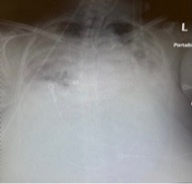
Chest x-ray( CXR) was significant for bilateral patchy airspace opacities indicating possible viral pneumonia as shown in Figure figure 1. Computed tomography angiography with intravenous contrast noticed diffuse bilateral multi-lobar ground-glass opacifications, but no evidence of pulmonary embolism. SARS-CoV-2 PCR result was positive
The patient was admitted to the intensive care unit (ICU) for the management of acute hypoxic respiratory failure secondary to COVID-19 Pneumonia with Noninvasive positive-pressure ventilation (NIPPV).
The treatment for COVID-19 consisted of Decadron, remdesivir, and one unit of convalescent plasma. In addition, the urine Legionella antigen result was positive, and the patient was started on a course of antibiotics with azithromycin. Subsequently, the patient was weaned from BiPAP to High Flow Nasal Cannula. However, the patient later developed respiratory distress with worsening hypoxia. The medical team decided to intubate the patient. PaO2/FiO2 ratio was consistent with moderate acute respiratory distress syndrome (ARDS). ARDS protocol was initiated for a total of 13 days. The patient’s oxygenation requirements did not improve enough for him to be considered as a candidate for tracheostomy. The patient’s family decided to do not resuscitate/do not re-intubate and requested comfort measures only. Ultimately, the patient was compassionately extubated.
Case 2. A 41-year-old male patient presented with a five-day history of fever, chills, worsening shortness of breath, productive cough, sore throat, and diarrhea. He reported significant sick contacts for the COVID-19 in his family. His past medical history included chronic alcohol abuse and smoking.
At the emergency department, the patient’s vital signs were as follow: Temperature: 104°F (40°C), heart rate regular at 147 beats/minute, blood pressure at 120/64 mmHg, and respiratory rate of 22 breaths/minute with SPO2 of 88% requiring oxygen via nasal cannula.
On physical examination, the patient appeared to be in mild distress. Chest percussion noted dull areas over the middle and lower zones of the left hemithorax. Lungs’ auscultation revealed bilateral rhonchi, more prominent on the left.
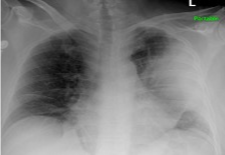
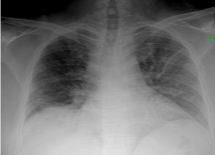
Initial laboratory tests findings are reported in the Table 1. The CXR showed extensive left lung consolidation, as illustrated in the Figure 2 and Figure 3.
Based on the initial findings, the patient was admitted to the hospital floor for suspected COVID-19 and Legionella pneumonia. During the hospital course, the patient’s urine tested positive for Legionella antigen and the patient’s COVID-19 PCR came back negative. However, the IgG antibody against SARS-CoV-2 was reactive.
Initial treatment with levofloxacin for Legionella pneumonia did not improve the patient clinically. The patient became more hypoxic and required continuous NIPPV for acute hypoxic respiratory failure. The patient’s respiratory function continued to deteriorate and was transferred to the ICU for intubation. In the ICU, the patient received empiric treatment for COVID-19 with convalescent plasma, remdesivir, and steroids for Covid-19 Infection which resulted in an excellent clinical response and improvement of CXR findings as seen in Figure figure 2. The patient was successfully extubated after 2 weeks.
3. Discussion
Legionella infection presentation may mimic COVID-19 thus delaying its diagnosis. As seen in our cases, patients presented with fever, cough, shortness of breath, diarrhea which are common symptoms to both Legionella infection and COVID-19. Severe cases of Legionella pneumonia require hospitalization as severe COVID-19, and it is not uncommon for Legionella pneumonia to decompensate to acute respiratory failure requiring intensive care. Also, because of the ongoing COVID-19 pandemic and public health effort to mitigate COVID-19, physicians tend to test repeatedly for COVID-19 before considering the alternative of infection caused by Legionella. [6, 7].
Risk factors and laboratory findings are another common ground between COVID-19 and Legionella pneumonia: old age, diabetes, history of alcohol abuse, pre-existing chronic lung diseases and elevated inflammatory markers and hyponatremia [8]. The only significant risk factor for Legionella pneumonia found in our cases was the history of alcohol abuse in Case 2. CXR showed left-sided lung consolidation in Case 2, which is not a common finding in COVID- 19 pneumonia. However, CXR of Case 1 showed bilateral scattered infiltrates, a common finding of COVID-19 pneumonia.
Some COVID-19 mitigation strategies paradoxically increase the incidence of Legionella pneumonia. The closure of facilities in effort to mitigate the COVID-19 pandemic for several months exacerbated the conditions for Legionella spp proliferation. Indeed, warm water environments and stagnant indoor water sources such as plumbing and cooling systems are breeding grounds for Legionella providing the most favorable conditions for proliferation, and exposure during the summer and early fall season. [9].
Beside similarities between COVID-19 and Legionella pneumonia presentations, a co- infection is possible and further challenges the patient’s management. Both Legionella spp and SARS-CoV-2 have overlapping incubation periods, 5-6 days and 2-14 days respectively [8]. Targeted microbiological testing for both is recommended during the initial presentation. Testing modalities in our cases included Legionella urinary antigen test (UAT) and sputum culture and PCR in the initial evaluation. Legionella UAT has a relatively low cost and is recommended in areas of the US with higher prevalence [10, 11]. Interestingly, in our second case, COVID-19 PCR was negative and SARS COV 2 antibody IGG was reactive. This raises the probability that our patient was previously COVID-19 PCR positive. And the response to empiric Covid-19 treatment suggested the possibility of an active infection.
Early testing and empiric treatment are strongly recommended when Legionella infection is suspected. Legionella UAT does not detect Legionella disease caused by non-Legionella pneumophila serogroup. Because of the high morbidity and mortality related to Legionella pneumonia, the American thoracic society and infectious diseases society of America recommend early empiric antibiotic therapy with a fluoroquinolone or macrolide such as levofloxacin and azithromycin. [7]. Early testing with UAT and PCR could also potentially improve the clinical response of patients delayed antibiotic therapy may not always be effective [8].
4. Conclusion
We report 2 cases of Legionella and COVID-19 co-infection leading to severe acute hypoxic respiratory failure. The clinical similarities between covid-19 and Legionella as both lead to pneumonia and other atypical symptoms demand a high level of clinical suspicion. The ubiquity of COVID-19 pneumonia has increased the possibility that co-infection with other pathogens may be overlooked and belatedly diagnosed. Because of the high morbidity and mortality related to COVID-19 and Legionella Co-infection, we recommend a low threshold of suspicion for co-infections with early testing and empiric treatment.
Reference
- Song W, Jia X, Zhang X, Ling Y, Yi Z. Co-infection in COVID-19, a cohort study. J Infect. 2021;82(3):414-451. doi:10.1016/j.jinf.2020.10.006[CrossRef] [PubMed]
- Chung CC, Wong WH, Fung JL, Hong Kong RD, Chung BH. Impact of COVID-19 pandemic on patients with rare disease in Hong Kong. Eur J Med Genet. 2020;63(12):104062. doi:10.1016/j.ejmg.2020.104062[CrossRef] [PubMed]
- Musuuza JS, Watson L, Parmasad V, Putman-Buehler N, Christensen L, Safdar N. Prevalence and outcomes of co-infection and superinfection with SARS-CoV-2 and other pathogens: A systematic review and meta-analysis. PLoS One. 2021;16(5):e0251170. Published 2021 May 6. doi:10.1371/journal.pone.0251170[CrossRef] [PubMed]
- Lansbury L, Lim B, Baskaran V, Lim WS. Co-infections in people with COVID-19: a systematic review and meta-analysis. J Infect. 2020;81(2):266-275. doi:10.1016/j.jinf.2020.05.046[CrossRef] [PubMed]
- Dey R, Ashbolt NJ. Legionella Infection during and after the COVID-19 Pandemic. ACS ES&T Water. September 2020. doi:10.1021/acsestwater.0c00151(4)[CrossRef] [PubMed]
- Legionnaires Disease Clinical Features | Legionella | CDC. https://www.cdc.gov/legionella/clinicians/clinical-features.html. Published February 8, 2021. Accessed March 20, 2021.
- Phin N, Parry-Ford F, Harrison T, Stagg HR, Zhang N, Kumar K, et al. Epidemiology and clinical management of Legionnaires’ disease. Lancet Infect Dis. 2014;14(10):1011–21.[CrossRef]
- Cassell et al. Pneumonia (2021) 13:2.[CrossRef] [PubMed]
- Simmering JE, Polgreen LA, Hornick DB, Sewell DK, Polgreen PM. Weather- Dependent Risk for Legionnaires’ Disease, United States. Emerg Infect Dis[Internet]. 2017; 23(11).[CrossRef] [PubMed]
- Reller L, Weinstein MP, Murdoch DR. Diagnosis of Legionella Infection. Clin Infect Dis. 2003;36(1):64–9.[CrossRef] [PubMed]
- Henry C, Boethel C, Copeland LA, Ghamande S, Arroliga AC, White HD. Clinical Utility of Testing for Legionella Pneumonia in Central Texas. Ann Am Thorac Soc. 2017;14(1):65–9.[CrossRef] [PubMed]