
Abstract
Advances of wearables, sensors, smart devices, and electronic health records have generated patient-oriented longitudinal data sources that are analyzed with advanced analytical tools to generate enormous opportunities to understand patient health conditions and needs, transforming healthcare significantly from conventional paradigms to more patient-specific and preventive approaches. Artificial intelligence (AI) with a machine learning methodology is prominently considered as it is uniquely suitable to derive predictions and recommendations from complex patient datasets. Recent studies have shown that precise data aggregation methods exhibit an important role in the precision and reliability of clinical outcome distribution models. There is an essential need to develop an effective and powerful multifunctional machine learning platform to enable healthcare professionals to comprehend challenging biomedical multifactorial datasets to understand patient-specific scenarios and to make better clinical decisions, potentially leading to the optimist patient outcomes. There is a substantial drive to develop the networking and interoperability of clinical systems, the laboratory, and public health. These steps are delivered in concert with efforts at enabling usefully analytic tools and technologies for making sense of the eruption of overall patient’s information from various sources. However, the full efficiency of this technology can only be eliminated when ethical, legal, and social challenges related to reducing the privacy of healthcare information are successfully absorbed. Public and media are to be informed about the capabilities and limitations of the technologies and the paramount to be balanced is juvenile public healthcare data privacy debate. While this is ongoing, the measures have been progressed from patient data protection abuses for progress to realize the full potential of AI technology for hosting the health system, with benefits for all stakeholders. Any protection program should be based on fairness, transparency, and a full commitment to data privacy. On-going innovative systems that use AI to manage clinical data and analyzes are proposed. These tools can be used by healthcare providers, especially in defining specific scenarios related to biomedical data management and analysis. These platforms ensure that the significant and potentially predictive parameters associated with the diagnosis, treatment, and progression of the disease have been recognized. With the systematic use of these solutions, this work can contribute to the realization of noticeable improvements in the provision of real-time, personalized, and efficient medicine at a reduced cost [1].
1. Introduction
In a moment when the world is still dealing with the unprecedented fallout from the pandemic, combating it will continue to be the major healthcare imperative for the foreseeable future. The global population is rapidly aging and facing a growing number of complex healthcare challenges. At the same time, we are witnessing an emergence of disruptive technologies—digital health, artificial intelligence, connected care—that are breathing new life and transformative potential into healthcare systems. Some geographies and health systems will adopt these transformative capabilities more rapidly than others, often driven by funding mechanisms and government mandates. With continued innovation and research focus, it is more likely that these new technologies will be complemented by AI, predictive analytics, data resources, or other game-changing approaches.
AI applications will continue to advance due to an astonishing pace of increase seen in publications, capabilities, real-world implementation, and investment. However, the race to cap AI’s potential—learning it, getting specific applications, capabilities, and real-world implementation—will still be significant. One of those important areas for AI will be in healthcare, given the rapid and transformational potential it has for patient outcomes. With aging world populations putting strain on healthcare resources, it is also likely that AI in healthcare applications will advance globally [2].
As healthcare researchers, stakeholders, technologists, and providers, the time is now to bring AI, digital health, and precision healthcare into patient settings for better patient outcomes. It is vital that this is done in a manner that is approvable, economically viable, and aligned with forward-thinking investment strategies. There remains a rich array of complex healthcare challenges, ones that necessitate early collaboration, investment, and intelligent approaches. However, the ultimate prize is worth the effort—better patient outcomes for those who need it most.
1.1. Background and Significance
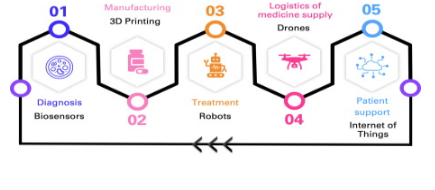
Healthcare providers are daily faced with making life-saving choices while also having to manage an unprecedented flow of information. The spread of technology and mobile networks combined with the increased usage of digital and social networks have drastically altered the way we produce and access data, resulting in a rapid accumulation of disparate data modalities. The healthcare setting is evolving accordingly, with a high flux of multidimensional data streams, such as diverse time series (electrocardiograms, heart rate), imaging data, and unstructured world knowledge (reports, papers, guidelines). Faced with such changes, it is necessary for the healthcare sector to embrace innovative solutions. Artificial Intelligence has emerged as a possible answer at a crossroads of mathematical, statistical, algorithmic, and engineering methods, providing opportunities to efficiently find patterns in vast datasets and build effective decision-making systems.
It is demonstrated how the significant advances in the field of learning vector space in the Discrete Pelletizing Analysis framework can be employed to derive a feasible, versatile, and interpretable representation of irregular spatiotemporal events. Such expertise enables the broad unsupervised analysis of events across different data modalities and categories, like the joint extraction of clinical states from multiresolution physiological data and scientific texts, and holds great promise for a merging of predictive and inference assignments. A critical consideration to make AI in healthcare really endure is the requirement for healthcare professionals’ recognition and deployment. To this goal, the development of AI modeling and inference should be explainable and accompanied by efficient resource designs. To this end, the provided tools fit within a sophisticated hierarchical DL framework, enhanced for implementations in competition. A sensible explanation is given for detected heart failure predictions and levies for the need for an investigation of the pertained clinical state (ps).
On the top of predictors of clinical states, the proposed method makes it possible to derive ps courses, which offers new roentgen scope hypotheses about CHF pathophysiology. Saliency maps, being a common explanation method in DL representations, are exploited here to assess the significance for various capability methods parameters and give additional observation about the statistical power of the ps representation.
Equation 1: Predictive Modeling with AI (Machine Learning Algorithms)
Where:
- is the number of training samples,
- and are the features and outcomes of each patient
2. The Role of Artificial Intelligence in Healthcare
Artificial intelligence (AI) is revolutionizing the landscape of the creative and the scientific, the mundane and the extraordinary. Its contributions are felt across every frontier of human knowledge, that ever-expanding border which forever trades the familiar for the realm of the imaginable. And without dispute it has enriched the field of healthcare, that most essential of human pursuits, in ways every bit as mundane and impactful. The former of these contributions, with equal parts frustration and hope, this article will diversify upon as it recounts the quiet tales of illness, and wellness, and time spent amidst them half-healed. For the latter, the hopeful, as the imperfect healer strives to stand upright [3].
Four Seasons After is His Malady: Yet, curing be achieved! This opening line, itself an exquisite work of art, marks the beginning of a memorable monologue between two learned gentlemen. It is here that the question of reality and magic is debated across the centuries, evoking feelings of both hope and despair. And it is here that the tread begins; one familiar to the lover of all things related to health, healing, and doubt, exotic and otherworldly. Illness. The word itself bears an acrid shadow, one most seem happy to bequeath to the minds of their imagination. It signals decay and crisis, the harbingers of disruption and diminishment. When it arrives, it cancels the land of the healthy, shrouding it like a lens, revealing new certainties but denying them a recognizable form. Yet the land of the sick becomes unfurled, its myriad corners uncovered through uncomfortable trial. It gives everything a fresh clarity, a renewed urgency, which normally lapses within the honeyed covers of regularity. Illness carries malignancy in its name, and predictably finds heart on barren ground.
Perhaps it is also blameless: One’s progeny, the societal offspring of our globe, has aged prodigious. It seems this crucible of birth has unleashed the whole brood untouched upon the world, diseases perilously new, rooted in the genealogy of millions. Their upper mechanics, as much a riddle as their inception, have long eluded, not minds, but empires, at grand ruin upon the pyre of their health. When one is thus visited, an ailment uninvited to the fetid host, it behooves the ill one to undertake a path littered with certainties and unknowns. Of the manifold unwashed soli, first lays forward the savoir as fractal; it is after-all to one the rope of the drowning sailor. And if an end be made to bark the weary soul from the damp alley of unrelenting dread, so be it.
2.1. AI Algorithms and Their Applications
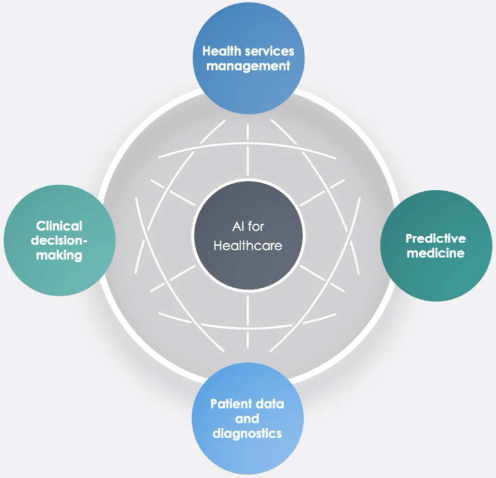
Despite current discussions stressing the growing importance of doctors becoming more adept in using big data and analytics to produce clinical insights, it is equally possible that doctors will be largely sidestepped in shaping the quantitative evidence that will change policy and patient care. At least some of the increased reliance on quasi-professionals might ultimately be laid at the feet of AI. In practical terms, the possibilities may well be bigger than most of the current applications, including many of the most effective and high-profile uses. Furthermore, such development could happen quite suddenly. The planning for such a shift, in fact, seems to have been quite inadequate. It is so far unclear how the epidemiology community might adapt to an environment with much larger amounts of potentially relevant data, and in which the publication of findings no longer follows a pre-specified time frame. Importantly, in relation to funding allocation, these conceptual difficulties intersect with more well-worn methodological criticisms to cast doubt on epidemiology’s ability to inform policy. Moreover, patient care in all disciplines will certainly be revolutionised. It is already clear that AI companies will meet the demand for AI systems that can engage humans in ways that are more intuitive or personable than a technologically mediated interaction, even if the “superintelligent” machines that can actually understand human musings and emotions are not forthcoming [4]. However, concerns should be expected regarding who has access to relevant and reliable information, and who therefore has the best chance of anticipating any given patient’s “needs” and whether any such “need” actually exist, or have merely been insinuated.
2.2. Challenges in AI Implementation
This circumstance underscores the need for clinicians not only to remain inquisitive and to practice good hygiene, but also to operate with the humility that arises from an awareness of the depth of ignorance that inclusively attends our efforts to provide good care. This same circumstance connotes the complexity of the clinical environment that AI systems must navigate to improve the quality and safety of care. However, a loud voice is given to the manifold ways that AI research and development converge on understanding and addressing health-related issues. Amid these “Grand Challenges,” AI for long draws from and benefits greatly other scientific facets of detecting, predicting, avoiding, and beating diseases. A plethora of pending issues derives from traditional disciplines (physiology, genetics, epidemiology, etc.), whereas lately the boost in sophisticated analytical tools should allow unraveling more intricate and previously unnoticed patterns. Critically, professionals’ feedback and consultancy are crucial to leverage technology into applicable healthcare solutions [5].
AI-based strategies hold the promise to substantially impact such essential tasks for early cancer detection as symptom triaging, risk assessment, disease staging, and monitoring of therapy response. Existing tools confront a twofold challenge: on one side, model training implies the accurate definition of predictive features and labels, a task for which clear guidance is still lacking. Without interpretability, clinicians mistrust the provided results or fail to grasp how to leverage them at best. At the same time, after deployment, concerns arise regarding performance drift, stability, and ethical constraints.
3. Digital Health Technologies
Advances in digital technologies are infinitely transforming medicine, personal health, and well-being to bring a significant improvement in health care and broad operational management. A revolution in medicine is on the horizon as innovations enable the early diagnosis of diseases when treatment is most treatable. Personalized treatment and combination therapies are better designed, considering the disease conditions of each individual patient extrapolated from monitoring data. Patient-specific monitoring, processing, and treatment devices are electronically and biologically connected to each other to form an autonomous cyber-physical system coordinating medical procedures. Such a device function is the goal of the eProjects Horizon 2020 project. To meet the objectives, adaptive and artificial intelligence (AI) automated treatment processes are revolutionized by new AI-driven procedures. As AI derives flexible engineering solutions from the user/model/process interaction of monitored information and learned experience, the unique skills of the individual device and system are now parameterized and generalizable. Real-time physiological data are sent to the controller for analysis in one standard format, resolving output for the treatment device. Responses of data analysis are user-specific and dictate the procedures to be instigated by the treatment device. Acquired treatment experiences are loggable in the system for consulting purposes or are input in the AI trainer to fine-tune the adaptive models. The new war with COVID-19 has intensified the need to change the medical paradigms of treating symptomatic diseases for large populations and imposed the need for consistent individualized solutions. The proposed tailored treatment modalities and the autonomous holistic patient platform capability to adjust to the patient disease trajectories and requirements aim to assist patients, physicians, and healthcare systems in dealing with the current emergency and potential pandemics. Physiological.
3.1. Telemedicine and Remote Patient Monitoring
The coronavirus disease (COVID-19) pandemic has led to significant impacts on people’s health lifestyle globally. In the advent of the coronavirus outbreak, public health systems worldwide have significantly increased their investments in the digitalization of healthcare and the adoption of different digital health solutions in the forecast to slow the increasing number of infected people. To handle epidemics, real-time results must be instantly available to get continuous data. It is in this road, the arrangements established in this paper are expected to permit the rapid worldwide deployment of digital health solutions. Recent cases of Severe Acute Respiratory Syndrome (SARS), influenza A virus subtype H1N1, and Ebola Virus Disease taught us many valuable lessons about the usefulness of digital health in public health crises that can be utilized to enhance our reaction to the coronavirus disease 2019 (COVID-19) pandemic. Different issues have been positively identified, and several recommendations have been developed to improve the worldwide wellbeing preparedness for such catastrophes in the forthcoming. The production of real-time health surveillance and detection offers through existing or quickly deployable digital health solutions for the general public, particularly healthcare professionals, is crucial in coping with any public health crisis. The detection of severe acute respiratory infections (SARI) or pneumonia can be considerably improved by adopting high-resolution imaging technologies. The use of telemedicine, particularly telesonography, is recommended inside districts or in developing countries with inadequate SARI or pneumonia diagnostic capabilities. Also, advances in the integration of telemedicine as a part of digital health technology are advocated within the geographical units that might be denoted as red zones [6]. Telemedicine can be beneficial in the management of chronic patients, in monitoring mild-to-moderate COVID-19 cases without hospitalization, and in protecting healthcare workers. Nevertheless, the escape strategies of coronaviruses have similarities to those combatants during chronic treatment with antiviral drugs.
3.2. Wearable Devices and Health Tracking
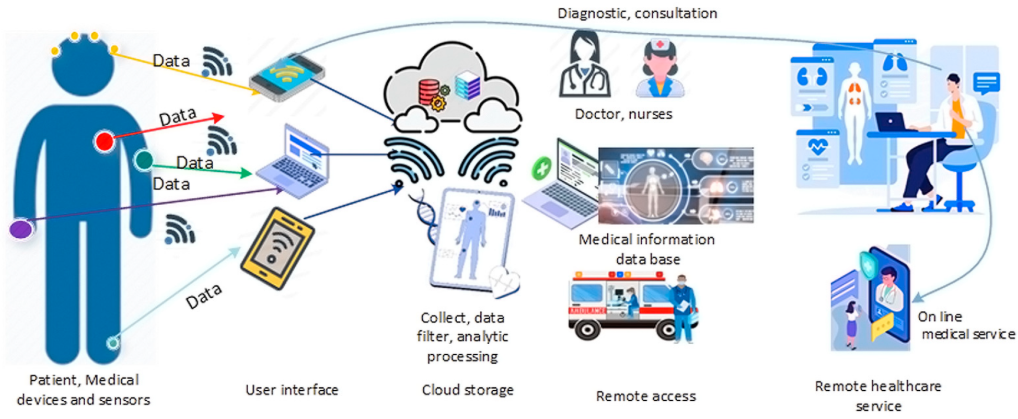
Navigating contemporary healthcare, wearable technology and smartphones are marking the dawn of a transformative era in patient observation and personalised care. Recent wearable device innovations in the form of rings, headbands, and wristbands have been recognised for their substantial medical and fitness potential, ranging from remote patient monitoring to point-of-care diagnostics and therapeutic application. This shift is patently evident as healthcare providers and patients alike are becoming increasingly embracing of the wearable driven tools, enabling continuous health monitoring outside of the realms of traditional clinical settings. The advent of the COVID-19 lockdown has further accentuated the shift, prompting a notable spike in stand-alone wearable health tracking applications. These trends are underscored by the omnipresence of smartphone penetration, showcasing the prevalence of such devices across a vast demographic span. Consequently, smartphones are increasingly recognised not only as a general-purpose smart device but as pivotal health monitoring instruments with an array of accessories further extending their reach into clinical territories [7].
Patients use health and fitness tracking applications, as well as wearables to monitor health parameters. Wearables for certain health conditions are designed to seamlessly integrate with existing health data ecosystems to offer a straightforward alternative for continuously monitoring a patient’s condition, outside traditional healthcare settings. If marketed commercially and further developed, wearables might become more widely incorporated within the healthcare ecosystem, driving a profound change in patient observation and care. Such devices could offer richer, more personal and timely features, such as individualised health guidance, reminders, or appointment notifications at various stages in the healthcare journey, ranging from health promotion to dealing with chronic conditions or permanent health issues. A few examples of healthcare institutions with in-place routines are showcased, featuring at-home digital health monitoring for blood glucose, blood pressure, and various medical records available at patients’ fingertips.
Equation 2: Precision Medicine (Tailoring Treatment to Individuals)
Where:
- is the treatment plan,
- is the patient’s genetic profile (e.g., gene mutations),
- is environmental factors (e.g., pollutants, lifestyle),
- is lifestyle data (e.g., diet, physical activity).
4. Genomic Data in Patient Care
As genomic data integrate into patient care, AI, digital health technologies, and new services emerge that support health systems in the detection, context understanding, and translation of relevant findings in personal health information. Recent efforts have developed a framework for biocompatible and HIPAA-compliant sharing of this data, with a particular focus on secondary analysis and workflows that originate from certain analysis prompts.
The emergence of new business models for mobile technology, easy access to genetic tests, and the primary interpretation of consumer DNA testing expand genomics’ value proposition beyond biomedicine research and healthcare. These new paradigms are expected to exceed unseen hurdles for traditional approaches for privacy implementation and data storage, as consumer technologies also bring a large volume of data compounding heterogeneity and the need for multi-modality processing. The growing commercialization of mobile applications for digital genomics and the broad utilization of cloud services stress the development of a novel framework that establishes a HIPAA-compliant digital health space for the analysis and storage of genomic data sourced from multiple providers. With genomic data integration into health care, digital health technologies have emerged, but each clinic can define its niche in the cooperative network. With that framework, health ecosystems can move beyond the siloed and limited understanding of genomic data to foster health systems’ emergence supporting processes for the detection, context understanding, and translation of relevant bioinformatic findings in personal health information [8].
4.1. Tailored Treatment Strategies
Recent advancements in artificial intelligence (AI), digital health technologies, and precision medicine present innovative approaches to enhance patient outcomes. Data show that the population aged 65 years or older is expected to double by the middle of the century, from 12.7% in 2020 to 24% in 2060. As people age, the probability of healthcare needs increases due to various chronic diseases. The recent COVID-19 pandemic also affected global health. Hospital resources have been overruled, and patients’ healthcare plans have been postponed. The versatility of the severe acute respiratory syndrome coronavirus 2 (SARS-CoV-2) encourages a shift in the world’s healthcare paradigm by leveraging considerable technologies in terms of artificial intelligence (AI), digital health (DH), and precision medicine (PM). Developed AI algorithms and computational models can be applied not only to assist in early diagnosis, epidemiological research, and therapy discovery of COVID-19 but also to provide doctors and patients with remote advice and medication precautions. During the COVID-19 pandemic, telemedicine, such as tele-consultation and telemonitoring, has been the most frequently used means to prevent hospital infection. DH, including DH devices (DHd) and DH products (DHp), has contributed by avoiding direct contact between doctors and patients. Non-contact DHd can monitor physiological or behavioral data for chronic disease patients and the elderly, and an appropriately designed platform can predict patients’ health status and schedule in advance. This remote route provides the elderly with a safe and reassured medical approach and decreases the burden on the healthcare system. In terms of infection, non-contact DH service doesn’t transmit viruses, preventing medical techniques and minimizing the opportunity cost of face-to-face consultations in the clinic [9].
It is novel to identify and treat diseased organs and tissues before a patient is injured greatly. The innovative methods can support the growing infrastructure, extending this design into healthcare construction prepared for the elderly. It is important that without reconstruction concerning the healthcare government, elderly people will suffer more while this world faces a huge batch of aged individuals. Non-contact treatment can be considered an approach able to resolve this problem. Surgical robotic systems such as the Da Vinci Surgical System have greatly enriched the surgical process, bringing improvements in terms of minimally invasive surgery, high adaptation magnetic navigation, robot-assisted therapy, and automatic anatomical modeling. Nanomedicine provides various innovative approaches in drug design and delivery, drug target identification, and drug testing, to make sure drugs only interact with the targeted part. Regenerative medicine leverages tissue engineering, gene design, as well as biological materials to push tissue restoration. The 3D Bioprinting Technology is capable of producing spatially sophisticated bio fabricated devices to associate cells, biological frames, and chemo-mechanical interfaces, generating patient-specific theoretical organ replacements.
4.2. Ethical Considerations in Precision Medicine
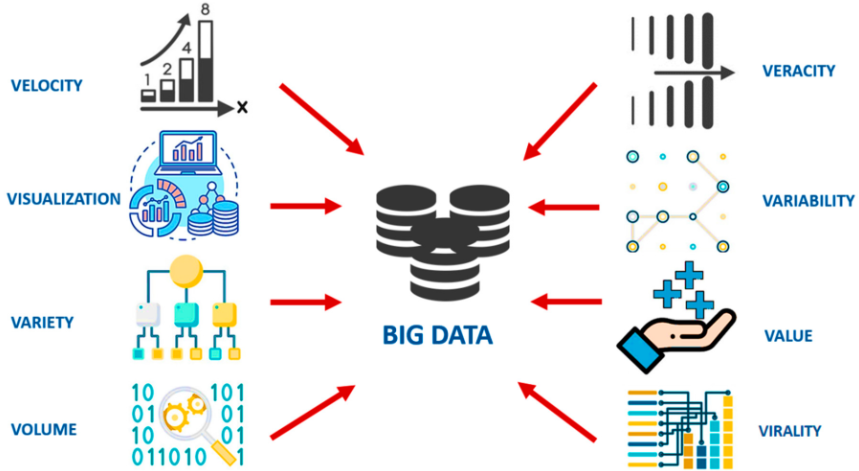
Following large-scale initiatives in medical genetics and genomics, precision medicine aims to provide individualized treatment founded on molecular and clinical information. However, the large datasets necessary for this task also pose technical, legal, and ethical challenges. Concerning data, a key area of precision medicine, such projects often overlook the difficulty of gathering extensive genome-wide information on a large number of patients.
5. Integration of Technologies in Healthcare
Currently, there are various challenges that AI technology has to face, like education of patients and professionals, the need for transparency, or ethical considerations. Also, systems have to be evaluated, models have to be produced to shape the regulations and standard procedures for testing efficacy and safety have to be built. However, there is also a broad interest and ongoing activity in dealing with challenges and realizing the promises of AI and robotics. Recently, an increasing number of studies have appeared on how these technologies can support each other and how to develop medical systems that are both AI- and robotics-enabled. This approach is discussed here in the context of health care systems. The ultimate goal would be to build a digital twin of a patient that is fully aware of privacy regulations and ethical guidelines. Such a model would get data from IoMT sensors and patient records and use it to identify the person's health state. In turn, this would trigger recommendations for treatment, medication, lifestyle changes, etc. Also available is a set of models (possibly some supported by robots) that make use of the digital twin to predict how effective those treatments might be, how the patient may respond to a new medication, etc. There are standards to share data between models and allow automatic model invocation. This is the vision of P5 medicine, and it is still far from today's reality [10].
5.1. Interoperability of Health Systems
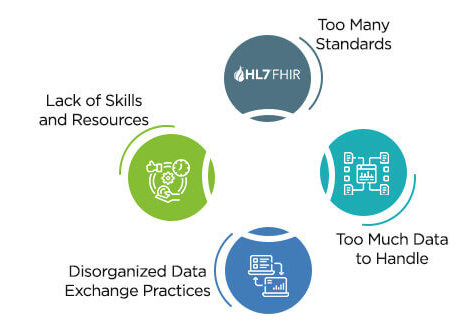
Health systems around the globe are in a revolution. These changes encompass scientific and medical advances; new technologies that can yield improved diagnosis and treatment; new ways of organizing care; greater awareness by people of lifestyle and social determinants of health; and the potential for different understandings of health and disease through data. The future of health systems will foster technology with the evolving relationship between man and machine at its core. This relationship provides new tools essential for health systems ensuring effective, personalized, and sustainable health care. Health systems will combine EHRs in order to allow patient data from one territory to be accessed by hospitals in another area. The health systems will update their EHR software to be more aware of and interoperable with citizens' health data generated by wearables, smartphones, or other devices. The health systems will integrate AI systems that help analyze and decision-make patient information to expand their diagnosis and treatment capabilities and improve anticipate different population health scenarios.
Fifty-two million health files were stolen from a health entity in Brazil early. In the years since, data has been leaked from more than 50 health websites across the globe. This new war has taken note of hospitals’ precarious cyber standards and their susceptibility to ransomware, but hackers do not just operate online. Several cybercriminal hygiene infractions from a different health system have occurred. A year’s worth of data has been stolen. Widened the malware attack surface by slackening mail protocol surveillance. A botnet breach had centered on the combination of piping and standardized fax machines.
5.2. Data Sharing and Privacy Concerns
We will need to look beyond the glowing promises and allure of health and health-care systems transformed by AI to consider which stakeholder interests and values are served by various AI ventures, and to debate whose interests and values should be served. Patient health data have value which varies depending on the way they are captured or processed, and on the model being trained, leading to interest in data sharing agreements or licensing of such data. There are many ways in which commercial or other interests can limit effective governance of PHI data by publicly funded health-care systems or universities.
There is already wide recognition of the value of models generated through AI and used in health domains. As a consequence, new types of data sharing agreements or licenses are being implemented to govern the way patient health information can be accessed. These data are typically collected and stored in diagnostic and therapeutic practice to also benefit the pharmaceutical industry, health app developers, and more recently, the health AI industry. However, the interest of these third parties is primarily in data relating to health outcomes, which can vary greatly in value.
Equation 3: Digital Health Technologies (Monitoring and Data Collection)
Where:
- are the real-time vital signs,
- is the historical patient data,
- represents the parameters of the model,
- is the predicted outcome at time .
6. Case Studies of Successful Innovations
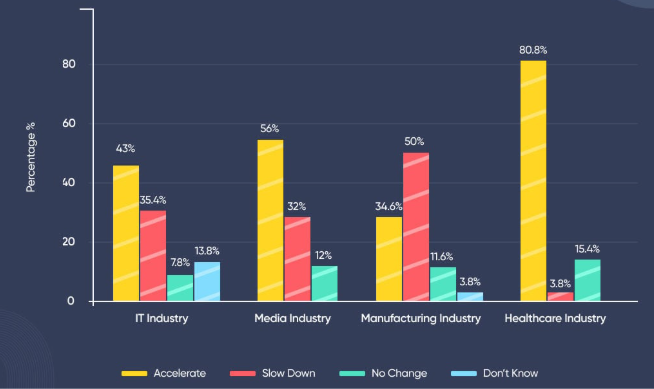
Introduction: Between January 1, 2020, and April 4, 2022, there were 146 successful applications for accelerated designation and 461 for fast track, with 450 accelerated approvals (AA) and 2,011 fast track designations. AAs accounted for 9.5% of total approvals in the same timeframe. Historically, AAs have been granted for patient populations with grave unmet need or based on surrogate endpoints, like PFS or ORR for cancer. Since 2012, 22% of AAs were granted for oncology-related indications. Over 1,200 drugs in clinical development. 47% of NMEs are fast-tracked. Growth in oncology, gene therapy, and HCIT. Only 5% of accelerated approvals are for breakthrough devices. Healthcare professionals are always looking for ways to innovate and find new ways to improve patient experiences or outcomes. Undoubtedly, innovation is what has kept the healthcare industry moving forward to experience new and dynamic outcomes and results that significantly give insight into hiding problems and issues. This paper will highlight healthcare industry innovations through 2021 while also examining the innovation process [11].
Recent healthcare innovation in commercial industries has been used to help the creation of a healthcare innovation system that is within and between industries. This will be accomplished by looking at six innovations in examined industry sectors between 2021 and 2022: data security, insurance, cosmetic, pharma industry, and healthcare services, facial parts, and diet together. In addition to this, the more will also be paid on the creation and continuation of innovations that occurred within the same examined period across multiple industries. With the emergence of similar innovations across multiple sectors, a healthcare innovation prediction system that operates syncically is explored and designed.
6.1. AI in Diagnostics
We are at the beginning of the AI era and the expectations are extremely high. AI has tremendous potential in several specialties in medicine. In some instances its quality is already on par with experts, and soon it will exceed what humans are capable of. The top AI startups are discovering fundamentally new knowledge and processes, which could effectively establish them as some of the largest market players within years. Smart Diagnostics will monitor and interpret a narrow window of health hallmarks of an individual, utilizing a blood immune-assay and an independent AI-algorithmic interpretation. So, what’s so smart about this technology?. Transparency and Interpretability – AI is already being used in many applications, but the “black-box” nature of its algorithms raises many concerns about their operation. It is currently difficult to determine the gradient of a neural network or understand the decision making process. Broad models will have good qualities and learn on less biased data, but will struggle to be interpretable. Differential Privacy – With data privacy becoming more important, there have been many tools to obfuscate data making it useless for outside visitors, but still workable for models. Such methods, while effective at preserving raw data, are not as effective for high-dimensional health data. Privacy and Security – Additive genetic architecture in health data is well characterized, so highly accurate health suggestions can be made on the minuscule fractions of health data available in the public domain. This is unlike social data, where the “most” sensitive information is dependent on an individual’s list of friends. Biases – Without third-party data, data collection, and upstream bias, current models create representational bias. This is evident in early AI self-driving cars reliant on pre-Upstream models to detect the human-related bias [12].
6.2. Digital Health Solutions in Chronic Disease Management
Digital Health Solutions Can Reduce the Burden and Improve Efficiency of Primary Healthcare Facilities
Chronic disease is a serious burden faced by healthcare systems worldwide, accounting for approximately 70% of all deaths globally and is a serious concern in the elderly population. Developing countries account for up to 80% of the global mortality rate due to chronic diseases. Most developing countries, particularly rural countries, have only primary healthcare facilities where comprehensive prevention and therapy for chronic diseases are lacking. The emergence of precise medicine together with AI technologies now makes it viable. Besides, digital health solutions can reduce the burden and improve efficiency of primary healthcare facilities. Inspired by this situation, an innovative framework is presented describing a comprehensive strategy for the prevention, prediction, therapy, and long-term management of chronic diseases. This framework consists of a series of practical and efficient strategies based on electronic health records (EHRs) and the data of community healthcare service centers. AI models are at the core of the framework and are designed to assist in decision-making. Specifically, a chronic disease detection and risk assessment model is carefully designed. To improve the prediction performance, attention mechanisms and sequence models for structured data are incorporated into the model. Additionally, a mobile text-based chronic disease management system is involved in the management of different types of chronic disease for further integration [13].
7. Conclusion
Technology is dramatically changing the healthcare landscape and, as a result of the recent pandemic crisis, healthcare solutions required a radical rethinking to reassure patients and participants. A focus on improving health and wellness has begun to unintentionally diminish living happiness and satisfaction. However, technology-driven health systems can create expert systems and scalable, data-driven approaches to advance healthcare innovation during the crisis. This disturbance accelerated the transformation of worldwide healthcare, stimulating an unprecedented need for technology-based solutions. Consequently, healthcare systems suffer enormous, increasing pressure to redesign solutions to better fit new constraints. Countries around the world were unable to provide an adequate response, and even healthcare systems in more integrated countries struggled to address the emergency. Deep learning approaches are investigated to analyze chest X-ray radiographs and other clinical information as support to the rapid evaluation of community-acquired pneumonia cases, a major pulmonary syndrome. Developed solutions are compliant with stringent legislation and are cloud-based, requiring the future deployment of similar approaches as a support for healthcare centers. Data sources do not include individual identification, and neither I nor personal information are recorded, reflecting important requirements regarding ethics and privacy. The complete validation process of the best-performing model is offered, including a detailed description of the open method and information on the related hermeneutic [14].
7.1. Future Trends
In this constantly evolving world, where virtually all demographic, social, environmental, and economic indicators are in a state of flux, the future question is never simple. In the healthcare industry, where researchers, practitioners, and policy makers are required to optimally combine enterprise-level analysis, to understand emergent trends, with strategic and operational interventions with the aid of foresight scenarios, the forecast challenge becomes even harder [15].
It is vital to reflect on the advancements that have taken place across a broad range of fields that will shape the future of healthcare. Various advancements in these spaces, from artificial intelligence to health wearables and sensor technologies, have already begun to revolutionize health. With the onset of the pandemic, technological advances in health quickly became integral, as global health systems scrambled to meet the challenge. These advances notably include widespread use of telemedicine and the development of a digital health passport. Digital Transformation is a multidimensional endeavor. However, enthusiasm for scientific-technological disruption or innovation is fostered by commitments and trends in the economic paradigm and political domain. With the Kubler-Ross model, Stages of Grief, often used in contexts psychological and in particular for loss, it will be possible to issue some considerations on a wider level starting from the stringent individual level and leading immediately after to the social level itself as a sum of individuals, as well as on knowledge co-evolution and exponential thinking at both single and collective level, considering the possible usage starting from the Platform on Exponential Technologies Toward the Healthcare Democratization Brake Paradigm Shift for Do-It-Yourself Healthcare .
References
- Kalisetty, S., & Ganti, V. K. A. T. (2019). Transforming the Retail Landscape: Srinivas’s Vision for Integrating Advanced Technologies in Supply Chain Efficiency and Customer Experience. Online Journal of Materials Science, 1, 1254.[CrossRef]
- Sikha, V. K. (2020). Ease of Building Omni-Channel Customer Care Services with Cloud-Based Telephony Services & AI. Zenodo. https://doi.org/10.5281/ZENODO.14662553
- Siramgari, D., & Korada, L. (2019). Privacy and Anonymity. Zenodo. https://doi.org/10.5281/ZENODO.14567952[CrossRef]
- Maguluri, K. K., & Ganti, V. K. A. T. (2019). Predictive Analytics in Biologics: Improving Production Outcomes Using Big Data.[CrossRef]
- Sondinti, K., & Reddy, L. (2019). Data-Driven Innovation in Finance: Crafting Intelligent Solutions for Customer-Centric Service Delivery and Competitive Advantage. Available at SSRN 5111781.[CrossRef]
- Siramgari, D., & Korada, L. (2019). Privacy and Anonymity. Zenodo. https://doi.org/10.5281/ZENODO.14567952[CrossRef]
- Polineni, T. N. S., & Ganti, V. K. A. T. (2019). Revolutionizing Patient Care and Digital Infrastructure: Integrating Cloud Computing and Advanced Data Engineering for Industry Innovation. World, 1, 1252.[CrossRef]
- Somepalli, S. (2019). Navigating the Cloudscape: Tailoring SaaS, IaaS, and PaaS Solutions to Optimize Water, Electricity, and Gas Utility Operations. Zenodo. https://doi.org/10.5281/ZENODO.14933534[CrossRef]
- Ganti, V. K. A. T. (2019). Data Engineering Frameworks for Optimizing Community Health Surveillance Systems. Global Journal of Medical Case Reports, 1, 1255.[CrossRef]
- Somepalli, S., & Siramgari, D. (2020). Unveiling the Power of Granular Data: Enhancing Holistic Analysis in Utility Management. Zenodo. https://doi.org/10.5281/ZENODO.14436211[CrossRef]
- Pandugula, C., & Yasmeen, Z. (2019). A Comprehensive Study of Proactive Cybersecurity Models in Cloud-Driven Retail Technology Architectures. Universal Journal of Computer Sciences and Communications, 1(1), 1253. Retrieved from https://www.scipublications.com/journal/index.php/ujcsc/article/view/1253[CrossRef]
- Vankayalapati, R. K. (2020). AI-Driven Decision Support Systems: The Role Of High-Speed Storage And Cloud Integration In Business Insights. Available at SSRN 5103815.
- Somepalli, S. (2021). Dynamic Pricing and its Impact on the Utility Industry: Adoption and Benefits. Zenodo. https://doi.org/10.5281/ZENODO.14933981[CrossRef]
- Yasmeen, Z. (2019). The Role of Neural Networks in Advancing Wearable Healthcare Technology Analytics[CrossRef]
- Satyaveda Somepalli. (2020). Modernizing Utility Metering Infrastructure: Exploring Cost-Effective Solutions for Enhanced Efficiency. European Journal of Advances in Engineering and Technology. https://doi.org/10.5281/ZENODO.13837482[CrossRef]