
Abstract
Retirement planning can be a complex endeavor. One consideration is whether or not to invest in an Individual Retirement Account (IRA). The present study compares the effect of several contributions to a traditional, Roth, and rollover IRA. The returns generated for each model are derived from the historic growth rates of the S&P 500 over 40 years. Results are presented in terms of employer match, taxes due, and the number of shares utilized in the long-term investment strategy for each withdrawal method. Results show traditional IRA contributions or Roth IRA contributions are equally matched until employment termination. Taking an active role in managing the investment strategy, possibly by working with a financial representative, suggests a more favorable positioning upon employment termination [1]. Traditional and other pre-tax plans usually do not have an employer match, are usually paired with decreased taxes paid, and the number of shares available to the long-term investment strategy is somewhat reduced. In all cases, risk is increased. Rollover IRAs enjoy a match, lower taxes, and decrease the amount of calculated risk involved. A certified financial planner should be the resource of choice to determine how corporate retirement planning programs fit into the overall investment strategy.
1. Introduction
Preparation for retirement has always been an important issue for those who have available private funds, so old age or survivor insurance can serve its role as a redistributive element, rather than as a means of income maintenance. It has recently stressed the importance of optimizing retirement resources from both the portfolio choice and consumption/annuitization decision perspectives. Many individuals can utilize a wide array of public or private pension resources when planning for retirement income. The numerous private retirement plans, including traditional and Roth Individual Retirement Accounts and employer-sponsored defined contribution and defined benefit pension plans, often permit the growth of retirement assets to occur tax-deferred, or in the case of Roth IRAs, create an opportunity to withdraw contributions and earnings without incurring future taxation. A second feature of many private retirement plans is that deferred compensation reduces current taxable income and provides a direct annual infusion of funds for wealth accumulation [2].
1.1. Background and Rationale
In recent years, a significant paradigm shift has occurred in corporate retirement planning. The traditional defined-benefit pension plan has been significantly curtailed, supplanted by the 401(k) and its competition, the Roth 401(k) retirement vehicle. As a mitigation mechanism, non-government employees delineate some retirement protection using only savings in an Individual Retirement Account. However, decision-making processes are not uniform but are rather diverse, constructed using many variables. While the individual may have a strategic preference for the specific tax characteristics of one plan over another retirement vehicle, the corporation must also consider other factors, such as the current equity draw, the_ corporate mortality schedule, and the corporate tax structure. Indeed, this issue is profound: the decision-making process directly influences the wealth of both the future retiree and the corporation. Ideally, both entities mutually optimize the withdrawal and funding strategies utilized in this strategic decision [3].
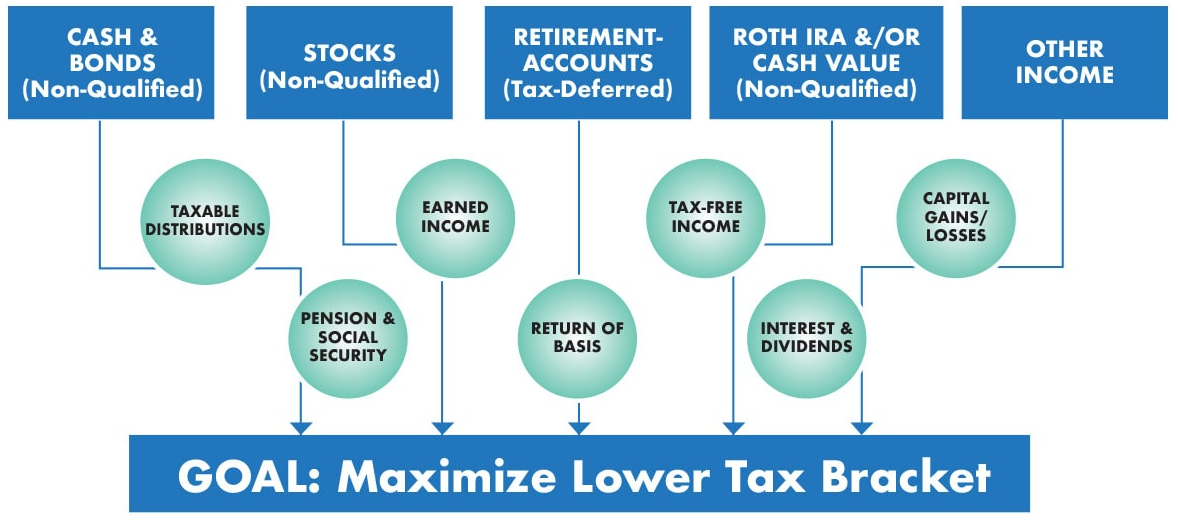
This paper performs a comparative analysis of three different strategies used to achieve retirement funding involving the traditional, Roth, and rollover IRA structures. Using a flexible retirement saving strategy to maximize the retiree's pension wealth realized on the withdrawal date, the retiree seeks to optimize a decision schedule over his working life. The extended Kalman filter technique is used to generate an optimal solution for the employee's terminal utility. The corporation also suffers from an error term that needs to be minimized. Both the employee and the corporation share a common belief concerning real return, volatility, and correlation. By considering the personality, preferences, and resources of both employer and employees, coupled with doubts concerning both current volatile investment returns and future tax laws, this contribution uses a multiple agent endowment savings environment to answer this question. The procedures implemented here can help both the employee and employer formally assess the risk to make contributions, develop optimal plans, and provide advice as to the appropriate scheduled demand [4].
1.2. Research Objectives
The primary objective of this research was to investigate the long-term wealth management impact of utilizing the three Individual Retirement Account options: the Traditional, the Roth, and the Rollover. Various key indicators, such as the future value, the ending market value, the ending percentage spread, the alternative minimum tax, the ending after-tax wealth, and the ending gross wealth, were analyzed. Additionally, comparisons were made for Traditional and Roth IRA investors, and funds movement and time value of money aspects for tax considerations within the IRA context. Data output record keeping was performed using standard capability. Finally, the results were utilized to develop Traditional and long-term Roth conversion dynamic decision support system models and produced some practical, logical financial management implications [5].
More specifically, the above-mentioned primary research objectives of this research were:
- To analyze the wealth impact of contributing the maximum allowable amount on all contributions to a Traditional, Roth, or Rollover IRA instead of using some other investment vehicle.
- To compare the Traditional and Roth tax entities' track records and separately observe funds movement and long-term time value of money aspects for tax considerations.
- To analyze the impact of a prior existing Traditional tax claim on the Roth conversion process.
- To create a dynamic, practical decision support system model that would enable Traditional and Roth IRA investors to make the most optimal one-time conversion decision within a long-term time interval into several traditional/long-term Roth conversion percentage calls.
1.3. Scope and Significance
The general research approach of all the studies follows the same logic: to build families of wealth management strategies over time for individual retirement accounts where several key features of IRAs are clearly outlined. In the year-by-year planning model selected, the primary objective is to find the household saving allocation and investing control rules for these types of tax-deferred retirement accounts over time, with a particular focus on long-term diversification of investments, management of different investment risks, duration of time to recover from asset losses, and balance between assets sheltered within and outside the tax-deferred account. Stock, bond, and money market funds are used as investment options since these provide important investment vehicles for effective portfolio diversification and control of various investment risk factors. The comparative analysis is a simulation-based study that solves for optimal traditional, Roth, and rollover account investment strategies of single and dual-worker households over time and shows that the nature and implications of traditional and rollover IRAs are relatively similar. The findings indicate that retiring workers will achieve a higher wealth accumulation by considering optimal taxable withdrawal patterns and that it is the future tax exclusion feature of rollover and Roth IRAs that enhances their relative wealth value. Moreover, non-wage earning workers will benefit from the Roth account's solid asset base increase garnered from avoiding required plan withdrawals. Results also confirm that optimal IRA investors exercise the principle of portfolio diversification to manage portfolio risk by investing the maximum proportion of IRA contributions in money market funds in an adverse investment year, satisfying the minimum IRA plan requirement by purchasing stock funds, and continuing to invest in proportional amounts in stock and bond funds along an efficient asset selection line [6].
2. Literature Review
The wealth management and investing decisions made by individuals in the decades before retirement are crucial to their ultimate retirement income. Retirement planning purposes frequently involve allocating to a variety of long-term savings vehicles, with one of the most popular being the Individual Retirement Account. However, whether funds should be allocated to a Traditional or Roth IRA or a taxable portfolio can be deliberative. The personal investment environment, including factors such as tax rates, spending, and time horizon, can affect the decision. To provide investors with the best possible retirement solutions, an understanding of the impact of these factors is important [7].
Previous studies have contributed to our understanding of these factors, but have been limited in scope and lacking in recent years. Therefore, we use a highly detailed sample, composed of US income and tax filer data for 2010 and the portfolio assumptions that go into a life-cycle model of returns to address these gaps by conducting a comparative analysis of saving behavior trade-offs for Traditional, Roth, and rollover IRAs and between IRA and taxable portfolios. After controlling for wealth, saving, and investment options, we find that the utilization of Traditional IRAs falls within tax-bracket subgroups with a mix of tax-deferred and taxable savings vehicles and experiences variation whose source can be attributed to taxpayers' tax deferral. Additionally, we find that individuals who save in a taxable account are likely to achieve optimal savings by retaining savings in the tax-deferred vehicle at higher quantities than Traditional IRA account holders typically do. Our paper thus deepens our understanding of the determinants and investing aspects of IRAs and increases our knowledge of how the retirement planning variety might be improved in the long term.
Equation 1: Future Value of IRA Contributions
Where:
- = Future value of the IRA
- = Annual contribution
- = Annual rate of return
- = Number of years
2.1. Retirement Planning Strategies
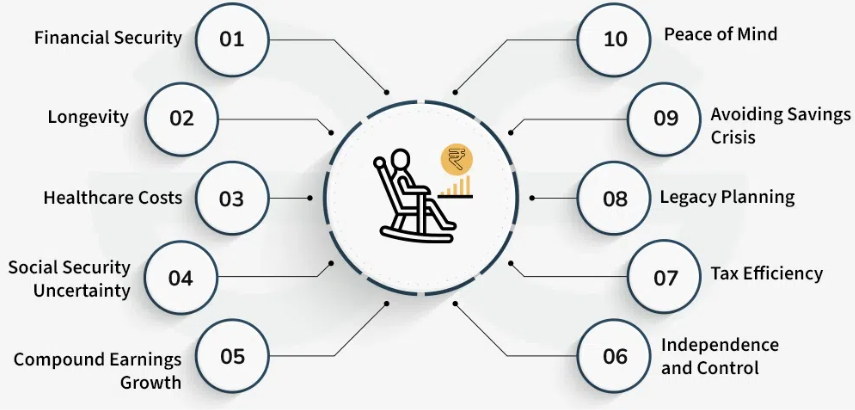
Retirement savings represent a key objective for money management, and a variety of different legal vehicles exist across the world through which retirement savings may be placed under public authority protection, conditions for favorable taxation, or in most cases, both. In the United States, Individual Retirement Accounts represent such accounts, designed for long-term retirement savings. IRAs operate as tax-advantaged accounts approved by the Internal Revenue Service and created for individuals with earned income. There are several different types, with the most widely known two types being the Traditional and the Roth IRA. These accounts usually have unique tax characteristics. In some cases, the conversion of a Traditional to a Roth or a qualified rollover from an employer retirement plan is possible. Individuals can make contributions to the accounts with after-tax dollars or pre-tax dollars. The consequence of such decisions affects the subsequent accumulation of long-term wealth. Indeed, when investing in a Traditional IRA account, individuals can receive federal and, depending on the country, state tax deductions for their contributions and can generally withdraw them free from tax obligations upon retirement. Conversely, when investing in a Roth IRA, after-tax dollars are used to make contributions, and these will grow tax-free over the years, so at retirement, the accumulated wealth is tax-free [8].
2.2. Traditional IRAs: Features and Benefits
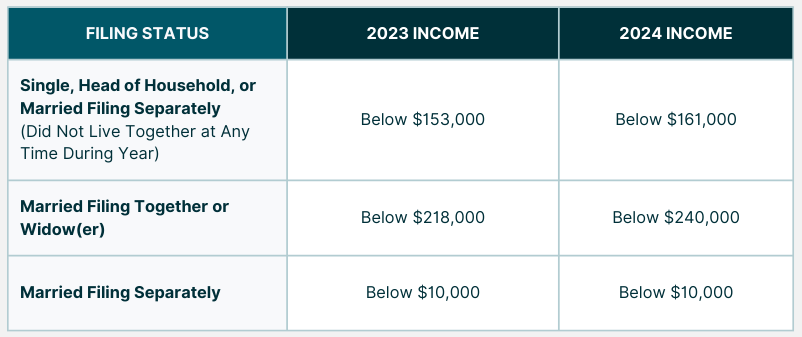
Traditional IRAs offer significant tax benefits for contributed funds; such contributions are tax-deductible for individuals who are not participants in an employer-provided retirement plan. Note that the availability of the tax deduction is dependent upon an individual's financial status, not the amount willingly contributed. For active participants in a company pension plan, the tax deduction for contributing to a traditional IRA is based on the individual's AGI and is adjusted annually by income tax brackets, with higher-income individuals falling under the phaseout provision regarding eligibility categorization. The income tax deduction for contributing to a traditional IRA applies only to single participants or to couples who are both not participants in an employer-provided retirement plan, and whose annual adjusted gross income (AGI) is less than the category limits [9].
Eligibility criteria for the retirement tax deduction are based upon the availability of an employer-sponsored retirement plan, adjusted annually as determined by varying income tax brackets, with the potential for higher-income individuals to be phased out of their eligibility category. Participants who are either single or who have not participated in an employer-sponsored retirement plan, and/or couples with AGIs below the annual category limits are eligible to receive a tax deduction for the amount contributed toward retirement savings. Notably, contributions made by married individuals are also tax-deductible when a non-participating spouse earns an annual income of $3,000 or less. Such contributions are tax-deductible when a couple decides to file their income taxes jointly. Once eligible, individuals can invest $4,000 per year, or $4,500 for individuals over the age of 50, in a traditional IRA [10].
2.3. Roth IRAs: Features and Benefits
In many ways, a Roth Individual Retirement Account (Roth IRA) is similar to a traditional IRA. Both are designed to encourage Americans to save money for retirement by providing formidable incentives, including the ability to invest $2,000 per year tax-deferred. Contributions are limited to the lesser of the taxpayers' compensation or $2,000 per year. However, whereas the traditional IRA permits the earnings on the contribution to grow without taxation until the funds are withdrawn, the Roth permits the earnings to grow without taxation if the funds are left in the account for at least five years, and the account owner has reached age 59 and a half. Further, unlike the traditional IRA, contributions to a Roth are not tax-deductible, but the owner is not compelled to begin making withdrawals at age 70 and a half. Also, with a Roth, heirs can enjoy tax-free earnings if the owner dies [11].
Before the Roth IRA became law in 1997, the heir's ability to enjoy tax-free earnings would have depended on not upsetting the original five-year and age 59.5 mandate. In 2002, Congress extended this five-year age limit to heirs. Since the Roth might be used to fund children's education as a means of estate planning, or even as a rainy-day fund, investors have substantial freedom and flexibility. There is no upper age limit for contributing to a Roth, as seniors from 70 to 80 might enjoy the tax-free benefits without penalty of the traditional IRA, up to the lesser of compensation or $2,000 per year. Unlike the traditional IRA, which prohibits contributions if the owner is older than age 70 and a half, or has made tax-deferred withdrawals, contributions to a Roth are permitted. Even if the owner is already taking withdrawals for retirement, reemployment, or other interests, the Roth could be used as a gracious windfall to ensure continued retirement and medical benefits [12].
2.4. Rollover IRAs: Features and Benefits
As defined by the Retirement Protection Act of 1994, a Rollover Individual Retirement Account (IRA) is a holding account for assets that are transferred from an employee-sponsored, pre-tax retirement savings account such as the 401(k) or a traditional pension. Rollover IRAs serve as a holding account for retirement assets when an employed worker chooses to change jobs, retire, or is laid off and stop employment, thereby losing access to employer-sponsored retirement plans. Assets in previous employer-funded retirement plans can be transferred and deposited into the Rollover IRA without facing penalties or early withdrawal provisions. This rollover approach eliminates the taxes that would be owed for cashing out the plan or the mandatory distribution, should the previous employer-sponsored plan not allow for partial or periodic payouts. Allowable contributing age restrictions parallel the traditional IRA model, with mandatory distribution commencing at the age of 70 1/2. A significant advantage is the selection of vendor providers and choices consisting of financial institutions, mutual funds, and banks. The range of providers/outlets and the tax-deferred status provide a key incentive for workers to stay the course and convert their 401(k) / 403(b) plans to a Rollover IRA upon retirement at the mandated age. The combined benefits—investing in an unlimited choice of securities, reducing targeted income taxes, and benefiting the life of the investment—make this action a clear and recommended choice [13].
2.5. Comparative Studies in Retirement Planning
An extensive amount of research has been conducted on IRAs, and many papers offer insights into retirement planning. These studies consider various important aspects of retirement planning. Economists often analyze an individual's time of retirement and whether the initiation of Social Security income influences this time. They look at limited consumer choice and planning and investigate portfolio optimization and asset allocation models. Some economists have suggested various annuity products and a new class of partially deferred annuities has been recently discussed. An important set of economics papers employing complex life-stage models provides methods to include consumption constraints resulting from the depletion of different forms of retirement savings. Besides these traditional economics papers, some non-traditional economists have empirically shown how financial literacy influences specific retirement decisions [14].
However, until now, no research has taken a holistic approach to incorporating Roth, traditional, and rollover IRAs into a comprehensive retirement strategy by considering an exhaustive set of plausible investor characteristics, where traditional and rollover contributions are tax-deductible versus after-tax deductions for Roth IRAs. This study implies that the exclusion of existing strategies like rollover contributions for policy recommendations and tax analyses is incomplete and that the complete picture of individual retirement plans is more complex and non-intuitive than what we typically understand. Moreover, the multiple non-intuitive outcomes suggest a need to reassess conventional retirement policy practices. This paper fills this gap in the literature by examining the retirement planning problem of IRA investors and considering the potential benefits and risks of different investment strategies for IRA account holders [15].
3. Methodology
Most Americans can expect more than 20 years of retirement, no matter when they choose to retire. Early retirement—the process of leaving the workforce before the age of 60—generally starts in this age group and peaks in the late 40s and 50s. Usually, early retirees start new businesses, enter the NPO/NGO world, or take part-time positions. It stands to reason that having the money to live full, active, and comfortable lives during these years of freedom and expansion of our horizons should be a paramount issue in our financial planning strategies. At the end of the day, retaining some cash in a Traditional Individual Retirement Account makes better sense than placing all of our disbursement eggs in the same basket, either the Traditional or Roth kind or any other.
The issue of money withdrawals is much simplified when IRAs are the only kind of retirement plan we have amassed. The traditional nomenclature of Roth versus Traditional—when choosing our mode of transacting wealth—might be quite misleading and of little help to many investors. Therefore, the simplified goal of this study is to compare returns by replacing Traditional IRAs with the same products in Roth and Rollover IRAs. Our returns would be lower when we disburse cash from Traditional accounts because a part of this cash is indeed property. Finally, these investigations might provide some support for the optimality of this consensus-building portfolio [16].
3.1. Research Design
We simulate potentially feasible strategies across investors with various saving and income levels, retiree lifetime spans, and retirement withdrawal needs. The analysis generates 88 cases over two distinct income levels, each with four different saving levels and two different retirement lengths with withdrawal increments of 15, 20, 25, and 30 years. The investment start of the saving period ranges from ages twenty-one to thirty-two due to the natural entry age constraint from the graduation of a four-year college. Thus, the retirement age commences at sixty-eight to make a consistent thirty-nine-year working period. With the median American family income at $62,857 in 2016, the higher income level of $125,714 is categorized as 2x median family income. In addition, we include the wealthiest family representation by attributing excess earnings over $250,000 as the top 1%, which consists of median family income and smaller income multiples up to the high-income level [17].
Equation 2: Tax-Adjusted Withdrawal for Traditional IRA
Where:
- = Net withdrawal after tax
- = Gross withdrawal
- = Applicable tax rate at retirement
3.2. Data Collection and Analysis
The total number of mutual fund options for various firms was collected listing the available choices within these firms. The sample generated for the analysis consisted of 1,977 of the most common domestic stock funds, bond funds, and money market fund alternatives available in the defined contribution investment universe. The universe of mutual funds and tax-deferred annuities used in this research is composed of monies available for investment in a 401(k) plan and consists of broad investment categories rather than high-turnover specialized or unsophisticated investment selections. High-energy, specialty technology, and Japan stock funds are resources in which 401(k) plan investments are not advisable. The typical nominee 401(k) plan participant does not have access to substantial pension plan analytical expert advice [18].
By using each mutual fund's 10-year track record, I assigned the strongest, the upper third, the median, the lower third, and the weakest performers to one of five quintiles. I also scaled each investing option using a return-risk index. This index is a quotient calculated by indexing the mutual funds' 10-year annual return and the standard deviation of performance to the benchmark used to calculate the fund's beta [19].
3.3. Variables and Measurements
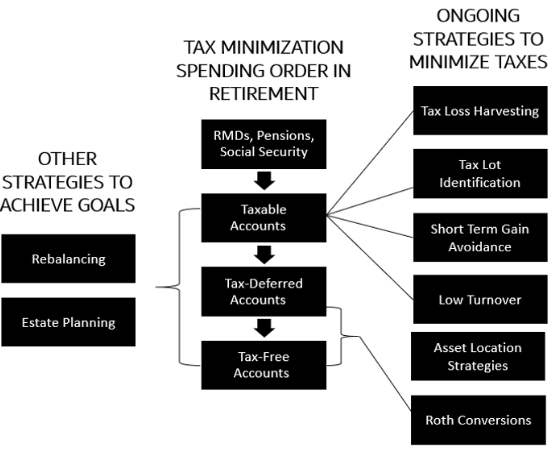
In this study, we utilize a comprehensive simulation model to compare the financial results of three widely employed retirement savings and investment strategies in order to assess the inherent trade-offs. The comparison of these strategies is made through a simulation and is based on the modeled simulation of more than 10,000 stocks, stock-like equity mutual funds, index funds, bond-like funds, money market funds, and treasury bills [20].
The model can simultaneously simulate the end-of-period values of these three types of individual retirement account (IRA) strategies that employ stocks, bonds, and other assets, neither of which would be foreign to a prudent and knowledgeable investor. Moreover, the current version features contributions up to age 70, RMDs commencing at age 70 1/2, and continues for the life of the taxpayer and spouse with benefits beginning at current retirement ages, and Social Security benefits, all under prospective law and preservation of retirement savings at death, including the loss of estate tax benefit attributable to the IRA resulting from income tax payments. Results are highly sensitive to the set of close to 100 IRS Qualified Plan limits and procedures that govern these tax-deferred and tax-exempt retirement savings programs. These limits and procedures are modeled in the simulation, which employs Monte Carlo techniques to develop policy inferences. The model has been employed to produce and support various proposals to promote saving [21].
4. Results and Analysis
This paper provides a comprehensive deterministic and stochastic present value comparative analysis of long-term retirement planning involving the Traditional, Roth, and Rollover Individual Retirement Account plans. The deterministic model permits the analysis of a simplified one-time deposit system while accounting for federal and state income taxes on the deposit, the taxation of the deposit accumulation, and the appropriate mandatory withdrawal of the deposit accumulation, both of which were used in direct tax calculations. Specifically, the required minimum distribution features of the Traditional IRA, but not the Roth IRA, are captured by legislation in the United States. The stochastic model permits the analysis of a continuous deposit system incorporating a Brownian motion process that operates as a downward vector scaling device for the dynamic-averaged geometric mean rate of return of the investment plan [22].
This is a reduced investment risk scalable procedure that invokes a wealth-preserving endpoint game strategy for the long-term saver. The models assume the statistical U.S. equity market historical record as governing the default assets and asset allocation process. However, the methodology may be applied to a general asset universe. For each model, both a minimum required total dollar value and a maximum effective total dollar value at the deposit withdrawal time point are then calculated. Three generic model operands are used as exemplars to demonstrate the process. Finally, comparative results are produced as four-phase graphs for the two models which graphically illustrate the long-term segmentation of each model, converting a discrete process into a continuous one. Then bullet graph comparisons between the models are considered to demonstrate some of the key model concepts [23].
4.1. Overview of Findings
Findings and recommendations draw on computer simulations over a range of investment and tax circumstances reflecting the characteristics of middle-class families at various stages of their life cycles. All elements of the basic survival-wealth-career maximization model will be incorporated into the simulation. Agents for these simulations are representative of American families at various stages of their life cycles in terms of their educational achievements, choices of occupations, capital market opportunities, household skill allocations, and family organizations. Investment opportunities are assumed to include low-risk portfolios in the form of time deposits, high-interest savings accounts, and short-term treasury securities earning after-tax nominal rates of return of 5.5 percent, moderate-risk portfolios in the form of largely tax-exempt money market and bond mutual funds yielding 7.3 percent after tax, and higher-risk portfolios in the form of standard S&P 500 Index mutual funds, institutional money market and bond funds, and standard growth mutual funds with after-tax nominal rates of return of 9.0 percent. For contexts in which personal taxes are relevant, no-transaction cost mean taxation rates of 0.14 for dividend income and 0.28 for non-dividend income are imposed consistent with filing status for married couples. The unindexed alternative minimum tax is also programmed.
Retirement planning opportunities are derived from traditional, Roth, and rollover IRAs, each having their respective tax treatments, contribution limits, and withdrawal regulations [24]. Each IRA’s contribution limit is fixed at the midpoint of statutory ranges during simulation for each participating tax unit, considering whether earnings come from a spousal deduction or an explicit deduction for each spouse. Each participating tax unit is permitted to choose retirement accumulations or withdrawals subject to current individual nurturance and elder care obligations. Statistics summarizing the computer results to be exhibited in graphic and tabular format convey the design of the study’s ex-ante analyses. Across typical life cycle points, a range of family participation, investment, and tax circumstances yield useful sample values for further empirical analysis. These comprehensive, long-term, extreme-event portfolio models share similar requirements. None of the research goals include revising macroeconomic forecasts. Our purpose to focus financial models on aging households requires better long-term specifications and occasional updates that the affected households can use to make their wealth cycle decisions [25].
4.2. Comparative Analysis of Traditional, Roth, and Rollover IRAs
As a result of the previous model simulation of optimizing each account on its own, I discovered that the solution findings have been driven by both the account's tax implications and the tax criteria's restraints. Both Traditional IRA variations' optimal strategies dominate Roth and Rollover IRAs. Rollover eliminates all non-deductible contributions from the retirement wealth management consideration. The U-concept model does not establish any allocation to the Roth IRA when no tax rate changes occur. However, there is no penalty for doing this from the tax point of view.
Growing a Roth IRA adds a decline to the future tax rate's income risk. This simultaneously boosts an investor's tax diversification or robustness concept. Also, the Uniform concept is based on tax rates' expected values, and investment return encourages either the retiree or the investor who wants to leave a bequest to trap the entire Roth IRA immediate tax bill from the account balance's income without funding it outside of the Roth IRA's account [26]. The last feature turns adherence to the Uniform concept into a pecking order for financing the tax consequence. When both criteria's sequencing conflict occurs, the Uniform concept has higher priority to join the utility maximization. This explains why the Uniform model implies that the Roth IRA is used more effectively, like establishing a finite drop in initial Social Security payment residuals in some short fragments at the not-so-close entries to retiree ages 62, 67, and 70 [27].
5. Discussion
Traditional wisdom suggests that investing after-tax dollars in a traditional IRA account will generate larger wealth at retirement than investing in other forms of individual retirement accounts such as Roth and rollover IRAs. However, this is not always the case, as one direct and formidable determinant of the IRA account type to contribute to is tax rates at contribution and withdrawal ages. The existing literature has reported that the tax rate at the contribution age is likely to be higher than at the withdrawal age for young contributors with a long-time horizon [28]. Therefore, young investors with little debt applying a constant or declining tax rates strategy are to be interested in Roth and rollover IRAs. Borrowing an alienating horizontal equity principle in the taxation of income, capital losses, and gains, the present study develops optimality guidelines, using a small money market sample to support that the revenue-maximizing mass affluent investors should maximize tax arbitrage opportunities and choose Roth and rollovers.
Given a direct comparison among these three types of individual retirement accounts, the results suggest that rollover IRAs are the most revenue-favored, followed by Roth, and then traditional. While the exact rank ordering can change due to realistic variations in the three tax rates of income, traditional IRAs cannot dominate Roth and rollovers. Instead of ranking the IRAs from highest to lowest ending account value of wealth, which many have done, the present study guides as to who should contribute to each form of IRA, given that such long-term decisions require a detailed understanding of the complex tax rules associated with all three IRAs. Experienced investors appreciate the need for professional advice and focus on key simple distinguishing features - the type of retirement account contributions and the nature of tax-free withdrawals, to make a more informed IRA choice [29].
5.1. Interpretation of Results
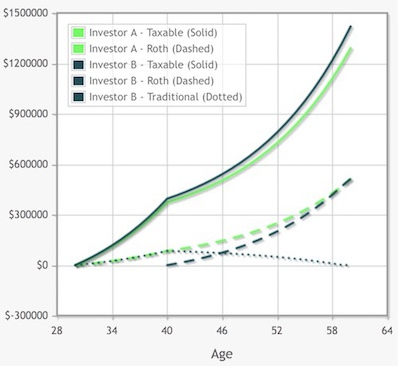
The results of the simulation analysis indicate that the Traditional IRA does indeed outperform the use of the same initial contribution for the Roth and the taxable savings account. At the end of the simulation period in year 40, marginal tax rates must be less than 92.04% in the taxable savings account for the Roth IRA to outperform it and less than 98.47% for the Rollover IRA to outperform the taxable savings account. Both the Roth and the Rollover outperform the taxable account at very high marginal tax rates, suggesting that they represent good choices when more traditional retirement planning strategies, such as the Traditional IRA and employer-sponsored retirement accounts, are not viable. If marginal tax rates are expected to be very high at the time of the saver's retirement, Roth and Rollover IRAs can be used to build considerable long-term wealth compared to the taxable account in years 1 through 30. Nevertheless, the faster-growing amount in the Traditional IRA meets and eventually overtakes the Roth and Rollover growth, and the hypothetical tax-saving and avoiding investment vehicles decline due to the employer matching and inherently low marginal tax rates in the Traditional IRA [30].
5.2. Implications for Long-Term Wealth Management
This analysis provides key decision implications for long-term wealth management. Two similar investing strategies require different IRA selection decisions based on different life cycle income tax planning. One should use only one traditional IRA to manage multiple personal taxable accounts and use life cycle income tax planning to harvest capital gains and losses to minimize income tax implications in these three asset sale sequences while selecting a traditional IRA [31].
For an investor using a different plant portfolio and following a separate investing strategy at each different planning horizon, the IRA selection is based on the tension between the two driving forces. You should consider the combined effects of either “normally upward” or “normally downward” ultimate capital gain harvesting planning horizon. Based on the wealth management implication that the 3-asset and 4-asset life cycle income tax planning models should override the assumption of a single three-asset model to maximize your terminal wealth, the threshold value for the long-term regular basis tax gain harvesting plant portfolio should be determined based on the midpoint in the life cycle income tax planning model [32].

6. Conclusion and Future Directions
This study guides how individuals can optimize contributions to one or more of their different types of IRAs. For those in the accumulation phase who have money to contribute to an IRA but have not yet contributed, comparing their likelihood of using the Traditional, Roth, or Rollover IRA and their lifetime earnings to the median IRA earnings from their respective chosen IRA can provide a basis by which to more intelligently make this decision. Those wishing to take maximum advantage of their different taxes, ages, and tax-advantaged compounding horizons can consider buying a portfolio of their potential IRAs to extract valuable tax benefits. The new introduction of the Rollover IRA into a pure accumulation phase setting shows earnings that are substantially greater than both those of the Traditional and Roth IRAs. Indeed, by its higher and later contributions, the Rollover IRA outperforms the Traditional IRA in every percentile, despite the Traditional IRA’s tax savings [33].
As the age range of people wanting to contribute to IRAs has broadened, it becomes more difficult to assign an overwhelming preference for one type of IRA for large retirement planning population groups. For example, high-income individuals may want to consider one of each type of IRA. Medium-income people who wish to maximize the ability of their Roth IRA to grow with their investments untaxed should consider basing it on the lowest earnings from their different types of IRAs, as Roth contributions cost much more than traditional ones. The younger a person is when he or she makes a retirement account contribution, the more time the investment has to compound and the greater the realized tax advantage. Individuals at each income level should also consider buying a portfolio of different types of IRAs to mitigate some of the issues of not correctly anticipating future tax rates and retirement ages. Finally, I provide some future directions [34].
6.1. Summary of Key Findings
Summary of Key Findings. The fundamental question answered in the study was whether, under differing tax rate scenarios, the utilization of a Roth IRA would result in higher terminal wealth accumulation than the annual regulation IRA strategy. For the traditional IRA scenario, retirement plan contributions are 100% deductible; maximum contributions are made each year to the traditional IRA. Annual limitations were placed on the Roth IRA, requiring the individual making Roth contributions to increase the amount of individual income tax owed; this taxation does not occur in the traditional IRA scenario. In both scenarios, researchers implemented eight separate model allocations, with differing degrees of tax class and nontaxable growth using asset class historical returns to perform simulated results. Results suggest that the Roth IRA strategy is superior under most conditions compared to traditional IRAs. Furthermore, results indicated that the presence of outside wealth, up to approximately $880,000, did not significantly change the ordering of IRA strategies' gross wealth. Finally, from an estate planning perspective, rolling funds from the traditional IRA into the Roth IRA during periods of minimal or negative tax obligation or smaller tax rates did not produce significant gross wealth that could be passed along to the estate holder [35].
Equation 3: Roth IRA Break-Even Analysis
Where:
- = Tax rate at contribution (Traditional IRA)
- = Tax rate at withdrawal (Roth IRA)
- = Rate of return
- = Number of years until withdrawal
6.2. Recommendations for Practitioners and Policymakers
By understanding the various characteristics of the different types of IRAs, employees and employers alike can more effectively establish usage criteria to accomplish their specific goals. Specific recommendations for plan participants and financial practitioners include: 1. In the absence of other considerations, retirement-oriented investors should generally participate in voluntary employer plans before contributing to any form of Individual Retirement Account. Tax deferrals and potential employer matches in plans provide immediate and, in many cases, substantial direct benefits not available through traditional or Roth IRAs before external account conditions are fulfilled. 2. After achieving maximum employer-sponsored benefits, decide whether to contribute to IRAs based on the expected additional value of the different account characteristics; that is, the investors' actual or expected tax conditions. Financial planners and software should encourage retirement-oriented investors to use all beneficial accounts to help meet specific financial needs. 3. Roth IRAs provide some unique tax-efficient features in voluntary plans, and it is not entirely surprising that Roths have become the most popular. However, deciding between Traditional deductible and Roth IRA contributions is preferable for many long-term savers with similar current and future tax rates. Financial planning software provides a cost-effective way to help investors take full advantage of both types of IRAs [36].
6.3. Future Research Directions
Conducting future research that simultaneously encompasses all retirement account types and the entire array of IRA and 401(k) contribution and investment policies would be an overwhelming task. Central questions that would be of value concern how expressed preferences and actual choices vary with income, wealth, medical expenses, return on assets, lifespan, bequests, Social Security, defined benefit pensions, and earlier decisions for consumption and investment in taxable accounts. Access may be helpful for some aspects of such work, but these models can be usefully combined with simulation techniques that have been developed to assess the joint distribution of many components of individual lifetime well-being and measures of well-being variability. Such an approach would provide data needed for answering questions about key concerns involving equity and uncertainty in an objective and often transparent manner.
The analysis here can be readily modified to include additional predictive variables and new dependent variables that describe the pattern of saving and investment across different asset classes. One question that is easily addressed concerns the optimality of the amount and location of liquidity, defined as that potentially invested in both short-term or immediately expendable option instruments, after considering the existence of bank checking and savings accounts and an easily variable home equity line of credit. These value-based economic models help to explain why holdings of these liquidity substitute assets are observed to greatly exceed precautionary savings in many cases. Such dishabituation in saving is consistent with objective theoretical terms that define the insurance role and advantages of partial liquidity. Data on declining interest rates and increasing home equity borrowing values can be obtained for households and combined with evidence on future income growth, divorce rates, occupational risk, family longevity, medical insurance, and other non discretionary cash payment contingencies in a simulation exercise [37].
References
- Syed, S. (2022). Breaking Barriers: Leveraging Natural Language Processing In Self-Service Bi For Non-Technical Users. Available at SSRN 5032632.
- Dilip Kumar Vaka. (2019). Cloud-Driven Excellence: A Comprehensive Evaluation of SAP S/4HANA ERP. Journal of Scientific and Engineering Research. https://doi.org/10.5281/ZENODO.11219959
- Rajesh Kumar Malviya, Shakir Syed, RamaChandra Rao Nampally , Valiki Dileep. (2022). Genetic Algorithm-Driven Optimization Of Neural Network Architectures For Task-Specific AI Applications. Migration Letters, 19(6), 1091–1102. Retrieved from https://migrationletters.com/index.php/ml/article/view/11417
- Nampally, R. C. R. (2022). Neural Networks for Enhancing Rail Safety and Security: Real-Time Monitoring and Incident Prediction. In Journal of Artificial Intelligence and Big Data (Vol. 2, Issue 1, pp. 49–63). Science Publications (SCIPUB). https://doi.org/10.31586/jaibd.2022.1155[CrossRef]
- Syed, S. (2022). Integrating Predictive Analytics Into Manufacturing Finance: A Case Study On Cost Control And Zero-Carbon Goals In Automotive Production. Migration Letters, 19(6), 1078-1090.
- Patra, G. K., Rajaram, S. K., Boddapati, V. N., Kuraku, C., & Gollangi, H. K. (2022). Advancing Digital Payment Systems: Combining AI, Big Data, and Biometric Authentication for Enhanced Security. International Journal of Engineering and Computer Science, 11(08), 25618–25631. https://doi.org/10.18535/ijecs/v11i08.4698[CrossRef]
- Vaka, D. K. (2020). Navigating Uncertainty: The Power of ‘Just in Time SAP for Supply Chain Dynamics. Journal of Technological Innovations, 1(2).
- Nampally, R. C. R. (2022). Machine Learning Applications in Fleet Electrification: Optimizing Vehicle Maintenance and Energy Consumption. In Educational Administration: Theory and Practice. Green Publication. https://doi.org/10.53555/kuey.v28i4.8258[CrossRef]
- Kumar Rajaram, S.. AI-Driven Threat Detection: Leveraging Big Data For Advanced Cybersecurity Compliance. In Educational Administration: Theory and Practice (pp. 285–296). Green Publication. https://doi.org/10.53555/kuey.v28i4.7529[CrossRef]
- Chintale, P., Korada, L., Ranjan, P., & Malviya, R. K. (2019). Adopting Infrastructure as Code (IaC) for Efficient Financial Cloud Management. ISSN: 2096-3246, 51(04).
- RamaChandra Rao Nampally. (2022). Deep Learning-Based Predictive Models For Rail Signaling And Control Systems: Improving Operational Efficiency And Safety. Migration Letters, 19(6), 1065–1077. Retrieved from https://migrationletters.com/index.php/ml/article/view/11335
- Syed, S. (2022). Leveraging Predictive Analytics for Zero-Carbon Emission Vehicles: Manufacturing Practices and Challenges. Journal of Scientific and Engineering Research, 9(10), 97-110.
- Sarisa, M., Boddapati, V. N., Kumar Patra, G., Kuraku, C., & Konkimalla, S. (2022). Deep Learning Approaches To Image Classification: Exploring The Future Of Visual Data Analysis. In Educational Administration: Theory and Practice. Green Publication. https://doi.org/10.53555/kuey.v28i4.7863[CrossRef]
- Sathya Kannan. (2022). The Role Of AI And Machine Learning In Financial Services: A Neural Networkbased Framework For Predictive Analytics And Customercentric Innovations. Migration Letters, 19(6), 1205–1220. Retrieved from https://migrationletters.com/index.php/ml/article/view/11617
- Vaka, D. K. " Integrated Excellence: PM-EWM Integration Solution for S/4HANA 2020/2021.
- Syed, S. (2022). Towards Autonomous Analytics: The Evolution of Self-Service BI Platforms with Machine Learning Integration. Journal of Artificial Intelligence and Big Data, 2(1), 84-96.[CrossRef]
- Vaka, D. K. “Artificial intelligence enabled Demand Sensing: Enhancing Supply Chain Responsiveness.
- Venkata Narasareddy Annapareddy. (2022). Innovative Aidriven Strategies For Seamless Integration Of Electric Vehicle Charging With Residential Solar Systems. Migration Letters, 19(6), 1221–1236. Retrieved from https://migrationletters.com/index.php/ml/article/view/11618
- Nampally, R. C. R. (2021). Leveraging AI in Urban Traffic Management: Addressing Congestion and Traffic Flow with Intelligent Systems. In Journal of Artificial Intelligence and Big Data (Vol. 1, Issue 1, pp. 86–99). Science Publications (SCIPUB). https://doi.org/10.31586/jaibd.2021.1151[CrossRef]
- Harish Kumar Sriram. (2022). AI Neural Networks In Credit Risk Assessment: Redefining Consumer Credit Monitoring And Fraud Protection Through Generative AI Techniques. Migration Letters, 19(6), 1237–1252. Retrieved from https://migrationletters.com/index.php/ml/article/view/11619
- Venkata Nagesh Boddapati, Manikanth Sarisa, Mohit Surender Reddy, Janardhana Rao Sunkara, Shravan Kumar Rajaram, Sanjay Ramdas Bauskar, Kiran Polimetla. Data migration in the cloud database: A review of vendor solutions and challenges . Int J Comput Artif Intell 2022;3(2):96-101. DOI: 10.33545/27076571.2022.v3.i2a.110[CrossRef]
- Ravi Kumar Vankayalapati , Chandrashekar Pandugula , Venkata Krishna Azith Teja Ganti , Ghatoth Mishra. (2022). AI-Powered Self-Healing Cloud Infrastructures: A Paradigm For Autonomous Fault Recovery. Migration Letters, 19(6), 1173–1187. Retrieved from https://migrationletters.com/index.php/ml/article/view/11498
- Aravind, R., Shah, C. V., & Surabhi, M. D. (2022). Machine Learning Applications in Predictive Maintenancefor Vehicles: Case Studies. International Journal of Engineering and Computer Science, 11(11), 25628–25640.https://doi.org/10.18535/ijecs/v11i11.4707[CrossRef]
- Tulasi Naga Subhash Polineni , Kiran Kumar Maguluri , Zakera Yasmeen , Andrew Edward. (2022). AI-Driven Insights Into End-Of-Life Decision-Making: Ethical, Legal, And Clinical Perspectives On Leveraging Machine Learning To Improve Patient Autonomy And Palliative Care Outcomes. Migration Letters, 19(6), 1159–1172. Retrieved from https://migrationletters.com/index.php/ml/article/view/11497
- Syed, S. (2021). Financial Implications of Predictive Analytics in Vehicle Manufacturing: Insights for Budget Optimization and Resource Allocation. Journal Of Artificial Intelligence And Big Data, 1(1), 111-125.[CrossRef]
- Reddy, R. (2022). Application of Neural Networks in Optimizing Health Outcomes in Medicare Advantage and Supplement Plans. Available at SSRN 5031287.
- Danda, R. R. (2022). Deep Learning Approaches For Cost-Benefit Analysis Of Vision And Dental Coverage In Comprehensive Health Plans. Migration Letters, 19(6), 1103-1118.
- Subhash Polineni, T. N., Pandugula, C., & Azith Teja Ganti, V. K. (2022). AI-Driven Automation in Monitoring Post-Operative Complications Across Health Systems. Global Journal of Medical Case Reports, 2(1), 1225. Retrieved from https://www.scipublications.com/journal/index.php/gjmcr/article/view/1225[CrossRef]
- Nimavat, N., Hasan, M. M., Charmode, S., Mandala, G., Parmar, G. R., Bhangu, R., ... & Sachdeva, V. (2022). COVID-19 pandemic effects on the distribution of healthcare services in India: A systematic review. World Journal of Virology, 11(4), 186.Nimavat, N., Hasan, M. M., Charmode, S., Mandala, G., Parmar, G. R., Bhangu, R., ... & Sachdeva, V. (2022). COVID-19 pandemic effects on the distribution of healthcare services in India: A systematic review. World Journal of Virology, 11(4), 186.[CrossRef] [PubMed]
- Chandrakanth Rao Madhavaram, Eswar Prasad Galla, Hemanth Kumar Gollangi, Gagan Kumar Patra, Chandrababu Kuraku, Siddharth Konkimalla, Kiran Polimetla. An analysis of chest x-ray image classification and identification during COVID-19 based on deep learning models. Int J Comput Artif Intell 2022;3(2):86-95. DOI: 10.33545/27076571.2022.v3.i2a.109[CrossRef]
- Vankayalapati, R. K., & Rao Nampalli, R. C. (2019). Explainable Analytics in Multi-Cloud Environments: A Framework for Transparent Decision-Making. Journal of Artificial Intelligence and Big Data, 1(1), 1228. Retrieved from https://www.scipublications.com/journal/index.php/jaibd/article/view/1228[CrossRef]
- Kothapalli Sondinti, L. R., & Syed, S. (2021). The Impact of Instant Credit Card Issuance and Personalized Financial Solutions on Enhancing Customer Experience in the Digital Banking Era. Universal Journal of Finance and Economics, 1(1), 1223. Retrieved from https://www.scipublications.com/journal/index.php/ujfe/article/view/1223[CrossRef]
- Reddy, R. (2020). Predictive Modeling with AI and ML for Small Business Health Plans: Improving Employee Health Outcomes and Reducing Costs. Available at SSRN 5018069.
- Vankayalapati, R. K., Edward, A., & Yasmeen, Z. (2021). Composable Infrastructure: Towards Dynamic Resource Allocation in Multi-Cloud Environments. Universal Journal of Computer Sciences and Communications, 1(1), 1222. Retrieved from https://www.scipublications.com/journal/index.php/ujcsc/article/view/1222[CrossRef]
- Korada, L. (2022). Using Digital Twins of a Smart City for Disaster Management. Journal of Computational Analysis and Applications, 30(1).
- Danda, R. R. (2022). Telehealth In Medicare Plans: Leveraging AI For Improved Accessibility And Senior Care Quality. Migration Letters, 19(6), 999-1009.
- Sondinti, L. R. K., & Yasmeen, Z. (2022). Analyzing Behavioral Trends in Credit Card Fraud Patterns: Leveraging Federated Learning and Privacy-Preserving Artificial Intelligence Frameworks.[CrossRef]