
Abstract
Objective: This study examines racial disparities in educational outcomes—including reading proficiency, grade point average (GPA), school discrimination, and school disciplinary actions—across regions with different levels of educational childhood opportunity index (COI). Our aim is to explore how these racial gaps between Black and White students vary in areas with differing educational opportunities. We hypothesize that higher COI is associated with smaller academic achievement gaps but may also correspond with greater racial bias in unfair school treatment. Methods: Data were drawn from the Adolescent Brain Cognitive Development (ABCD) study, which provides comprehensive measures of educational outcomes, cognitive performance, and COI. National COI rankings were used to classify regions into five categories: very high, high, average, low, and very low educational opportunity. We analyzed racial gaps in reading proficiency, and experiences of discrimination and suspension across these COI categories. Multi-group Structural Equation Models (SEM) were used to assess how the relationship between race and educational outcomes varies across COI levels. Results: Our findings confirmed that Black-White gaps in reading proficiency and cognitive test performance (Flanker task) were less pronounced in regions with higher COI. However, racial disparities in school disciplinary actions and experiences of discrimination were more pronounced in higher-opportunity areas. Specifically, the effect of Black race was stronger in regions with the highest COI, where Black students experienced a disproportionately higher rate of unfair school treatment, including both school discrimination and suspensions, compared to their White peers. Conclusion: This exploratory study supports that while higher educational opportunities are associated with smaller academic achievement gaps between Black and White students, they might be linked to increased racial bias in school disciplinary actions and discriminatory treatment. These findings underscore the complexity of educational equity, suggesting that improving access to quality education alone is insufficient to eliminate racial disparities in school experiences. Addressing school-based bias and discrimination must accompany efforts to enhance educational opportunities.
1. Introduction
Racial disparities in educational outcomes—such as reading proficiency, grade point average (GPA), and the frequency of school disciplinary actions—persist across generations in the United States. These disparities contribute to significant inequalities in college admissions, which serve as a critical gateway to economic success and social mobility. Scholars have explored various factors contributing to these gaps, with some emphasizing the role of family background, while others highlight potential genetic factors. However, the influence of schooling and the broader school environment is undeniable [1, 2].
School quality and educational opportunities are among the most critical factors shaping cognitive development and future economic outcomes [1]. The racial gap in access to high-quality schools is a persistent issue, exacerbating inequalities in educational attainment. Unfair treatment in schools—whether in the form of discrimination or disproportionate disciplinary actions such as suspensions—also plays a significant role in the Black-White achievement gap. These forms of systemic bias further hinder Black students' academic progress and long-term success.
While educational opportunities for Black children are often constrained by structural factors, some Black families live in areas with better schools and more favorable educational environments. However, it remains unclear whether the Black-White achievement gap, cognitive performance disparities, or experiences of unfair treatment (discrimination and suspension) differ across regions with varying levels of educational opportunity [5].
Recent efforts have emerged to assess educational opportunities on a national scale, enabling researchers to compare racial disparities in achievement, cognitive development, and school-based discrimination across regions with different levels of childhood opportunity. This study aims to explore these variations in racial gaps by examining achievement, cognitive performance, and instances of unfair treatment in areas with low versus high levels of educational childhood opportunity index (COI) [3, 4].
Our hypothesis is that as educational opportunities increase, the cognitive and academic achievement gaps between Black and White students will diminish. However, these improved educational environments may also exhibit increased biases against Black students, potentially resulting in higher rates of unfair treatment such as discrimination and suspension. Thus, this study seeks to investigate the complexities of how educational opportunity shapes both achievement gaps and the experiences of racial bias in school settings.
2. Methods
2.1. Setting and Design
This study utilized data from the Adolescent Brain Cognitive Development (ABCD) study, a large-scale, longitudinal dataset designed to explore the factors influencing children’s brain development, cognitive functioning, and educational outcomes. The ABCD study is nationally representative, drawing from a diverse population of children across the United States. It collects comprehensive information on participants' family socioeconomic status (SES), neighborhood characteristics, academic performance, and neuroimaging data related to brain development. The ABCD data is particularly well-suited for examining how environmental and contextual factors—such as educational opportunity—shape cognitive and educational outcomes over time.
2.2. Measures
2.2.1. Moderator (Strata):
Educational Opportunity Levels: Educational opportunity levels were measured using residential data that capture local school quality, the availability of educational resources, and access to academic enrichment opportunities in the neighborhood. This measure is based on the Childhood Opportunity Index (COI) available in the ABCD dataset, which reflects the broader social and educational context in which children are raised. Higher COI values indicate greater access to high-quality educational opportunities. For this analysis, COI was treated as a five-level ordinal variable, categorized into very high, high, average, low, and very low educational opportunity.
2.2.2. Predictor
Race: Race was self-reported by the participants or their guardians and was dichotomized into Black and White for the purposes of this study. This dichotomization was necessary to explore specific racial disparities in educational outcomes and school experiences.
2.2.3. Outcomes
Flanker Task Performance: We measured cognitive control using the NIH Toolbox Flanker Inhibitory Control and Attention Test, age-corrected. This task assesses a participant's ability to focus on a central stimulus while inhibiting responses to surrounding distracting stimuli. The resulting score is a continuous variable, where higher scores indicate better cognitive function, reflecting greater attentional control and inhibition.
Reading Ability: Reading ability was assessed using the NIH Toolbox Reading Recognition Test, age-corrected to account for developmental differences across participants. This test measures a student's ability to recognize and comprehend written words. Like the Flanker task, the reading ability score is a continuous variable, with higher scores reflecting greater reading proficiency.
Perceived School Discrimination: Perceived school discrimination was assessed through student self-reports using a series of items designed to capture discriminatory experiences in the school setting. These items included questions about unfair treatment by teachers or peers based on race or ethnicity. The responses were averaged to create a continuous measure of perceived school discrimination, where higher scores indicate greater experiences of discrimination.
School Discipline (Suspension): School disciplinary actions were measured using a self-reported item that asked students whether they had ever been suspended from school. This variable was binary, with responses coded as 1 for students who had been suspended and 0 for those who had not. This measure captures an important aspect of school disciplinary actions often associated with racial disparities.
Depression (Withdrawal): Depression symptoms were measured using the depression and withdrawal subscale from the Child Behavior Checklist (CBC). This subscale provides a continuous measure of depressive symptoms, where higher scores indicate greater levels of depression and withdrawal behaviors. The CBC is widely used in research for assessing emotional and behavioral problems in children and adolescents.
2.2.4. Covariates
Several covariates were included to control for other factors that might influence educational outcomes:
Child’s age: Continuous variable to account for developmental differences.
Gender: Dichotomized as male and female.
Parental marital status: Included to account for family structure, which may influence educational experiences and outcomes.
2.3. Statistical Analysis
We employed Structural Equation Modeling (SEM) to investigate the associations between race and educational outcomes across the five levels of childhood educational opportunity. SEM allows for the simultaneous modeling of multiple relationships between variables, making it ideal for examining how race, as a predictor, interacts with other factors like COI. The primary focus was on the coefficient for race (coded as Black = 1, White = 0) to quantify the racial disparities in educational outcomes (e.g., reading proficiency, Flanker cognitive performance), emotional outcome (depressed), and treatments (e.g., school suspensions, discrimination).
We conducted multigroup SEM analyses, where educational opportunity levels (based on COI)0 defined the groups. This approach allowed us to explore whether the relationship between race and educational outcomes differed across regions with varying levels of educational opportunity.
2.4. Ethical Considerations
The ABCD Study adhered to rigorous ethical standards and was approved by the institutional review boards (IRBs) of all participating research sites. Parents or legal guardians provided informed consent for their children's participation, and the children themselves provided assent. All data were de-identified to ensure participant privacy and confidentiality throughout the research process.
3. Results
Table 1 provides the descriptive statistics for the key study variables. The average age of the children in the sample was 9.48 years (SE = 0.005), with a 95% confidence interval ranging from 9.47 to 9.49. Cognitive performance, as measured by the Flanker task, had a mean score of 95.59 (SE = 0.136), and reading ability, adjusted for age, had a mean score of 103.07 (SE = 0.192). Depression levels, represented as Z-scores, had a mean of -0.014 (SE = 0.010), indicating slightly below-average depression symptoms. The mean level of perceived school discrimination was 1.281 (SE = 0.006), with a confidence interval between 1.268 and 1.293.
In terms of race, 72.9% of the sample identified as White (SE = 0.006), and 27.1% identified as Black (SE = 0.006). When broken down by educational childhood opportunity index (COI) levels, 17.1% of the children lived in the lowest opportunity areas, 11.8% in low opportunity areas, 15.3% in average opportunity areas, 21.7% in high opportunity areas, and 34.1% in the highest opportunity areas.
The sample was fairly balanced by gender, with 47.6% of participants identifying as female (SE = 0.007) and 52.4% as male (SE = 0.007). Regarding the marital status of the household, 34.0% of children lived in an unwed household (SE = 0.006), while 66.0% lived in a married household (SE = 0.006).
Finally, the majority of children had not been suspended from school, with 93.7% reporting no suspension (SE = 0.003), and 6.3% having experienced suspension (SE = 0.003).
The correlation matrix presented in Table 2 shows significant associations among the key study variables. Being Black (Race) was significantly correlated with lower cognitive function, as measured by the Flanker task (r = -0.128, p < 0.05), and with lower reading scores (r = -0.211, p < 0.05). Black children were also significantly more likely to experience school suspension (r = 0.215, p < 0.05) and report higher levels of perceived school discrimination (r = 0.167, p < 0.05). Age was not significantly correlated with race (r = -0.008, p > 0.05), but was positively associated with a higher likelihood of school suspension (r = 0.042, p < 0.05). Male children were more likely to face school suspension (r = 0.133, p < 0.05) and perceive higher school discrimination (r = 0.090, p < 0.05). Living in a married household was associated with better cognitive function (r = 0.094, p < 0.05), higher reading scores (r = 0.206, p < 0.05), and lower rates of both perceived school discrimination (r = -0.117, p < 0.05) and school suspension (r = -0.183, p < 0.05). Depression was not significantly associated with race (r = 0.038, p < 0.05), but was positively correlated with school suspension (r = 0.130, p < 0.05) and school discrimination (r = 0.078, p < 0.05).
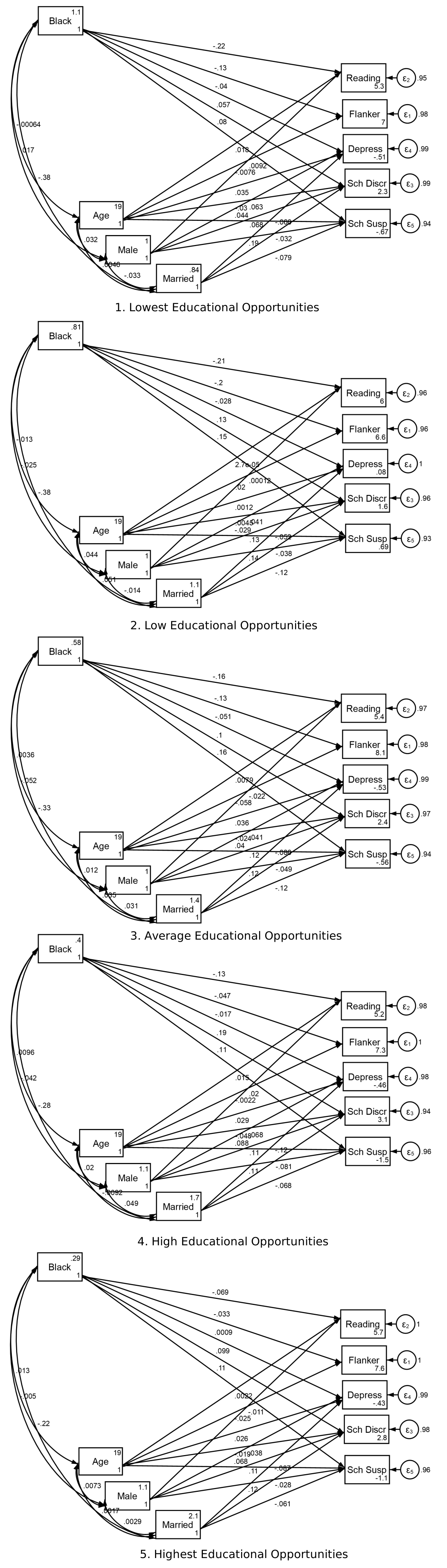
Table 3 presents a summary of the five Structural Equation Models (SEMs) across groups defined by different levels of childhood educational opportunity (COI). Figure 1-1 to 1-5 show the models.
Lowest Educational COI:
In the lowest educational opportunity areas, being Black was significantly associated with poorer cognitive function (B = -0.125, p < 0.001) and lower reading scores (B = -0.218, p < 0.001). Black children had a slightly higher likelihood of being suspended from school (B = 0.080, p = 0.017). However, Black students did not report significantly higher perceptions of school discrimination compared to White children (B = 0.057, p = 0.062). There was no significant association between race and depression (B = -0.040, p = 0.167).
Low Educational COI:
In areas with low educational opportunity, Black children showed significantly lower cognitive function (B = -0.196, p < 0.001) and reading scores (B = -0.205, p < 0.001) than White children. Black children also reported significantly higher perceived school discrimination (B = 0.127, p < 0.001) and were more likely to be suspended from school (B = 0.149, p < 0.001). There was no significant association between race and depression (B = -0.028, p = 0.381).
Average Educational COI:
In areas with average educational opportunities, Black children had significantly lower cognitive function (B = -0.130, p < 0.001) and reading scores (B = -0.158, p < 0.001). They also experienced significantly higher levels of perceived school discrimination (B = 0.103, p < 0.001) and were more likely to be suspended from school (B = 0.157, p < 0.001). There was no significant association between race and depression (B = -0.051, p = 0.062).
High Educational COI:
In high educational opportunity areas, Black children showed slightly lower cognitive function (B = -0.047, p = 0.023) and significantly lower reading scores (B = -0.128, p < 0.001). Black students also reported significantly higher perceived school discrimination (B = 0.189, p < 0.001) and were more likely to be suspended from school (B = 0.109, p < 0.001). Race was not significantly associated with depression (B = -0.017, p = 0.423).
Highest Educational COI:
In the highest educational opportunity areas, Black children did not exhibit significantly lower cognitive function (B = -0.033, p = 0.058) but had slightly lower reading scores (B = -0.069, p < 0.001) than White children. However, they were considerably more likely to face school suspension (B = 0.113, p < 0.001) and reported significantly higher perceived school discrimination (B = 0.099, p < 0.001). There was no significant association between race and depression (B = 0.001, p = 0.959).
4. Discussion
This study set out to examine the Black-White achievement gap across regions with varying levels of educational childhood opportunity index (COI), focusing on both academic outcomes and experiences of school-based discrimination. We hypothesized that higher COI would be associated with smaller gaps in academic achievement but would also exacerbate racial disparities in school discipline and discrimination. The findings confirmed this dual pattern: while academic achievement gaps in reading proficiency and cognitive performance narrowed in regions with higher COI, racial disparities in school discipline and experiences of unfair treatment widened in these same regions.
The first key takeaway from our analysis is that higher educational opportunity is indeed associated with a reduced Black-White gap in reading proficiency and cognitive performance. This supports prior research indicating that better schooling environments can mitigate some of the racial inequalities in educational outcomes by providing Black students with access to higher-quality resources, teachers, and academic support. However, the persistence of even small achievement gaps, despite improvements in COI [3], suggests that structural inequalities beyond school quality, such as differential access to out-of-school learning resources and lingering effects of early childhood disadvantages, may continue to affect Black students’ educational outcomes. Thus, while increasing educational opportunities is a crucial step toward reducing racial disparities, it does not fully close the achievement gap.
A more concerning finding from this study is that the regions with higher COI also showed more pronounced racial disparities in school disciplinary actions and experiences of discrimination. Black students in these higher-opportunity areas faced disproportionately higher rates of suspensions and reported more instances of unfair treatment compared to their White peers. These results align with research on the Marginalization-Related Diminished Returns (MDRs) framework, which posits that Black individuals may experience fewer returns on their socioeconomic resources, such as access to high-quality education, due to systemic bias and discrimination [5]. This suggests that even when Black students are placed in educational environments that should theoretically foster their success [2, 3], they are still vulnerable to racially biased treatment that can undermine their academic and socio-emotional well-being [5].
The finding that higher COI is associated with increased school discrimination and suspension rates for Black students presents an important challenge for policymakers and educators aiming to promote educational equity. It suggests that merely improving educational opportunities without addressing underlying racial biases in school environments may not be enough to ensure equal treatment and outcomes for Black students [5]. Anti-racist training for educators, reforms in school disciplinary policies, and greater accountability for discriminatory practices are critical to creating school environments where all students can thrive, regardless of race.
These results are also indicative of "Minority Diminished Returns" (MDRs [5]). Diminished returns of family socioeconomic status for Black families, known as "Minority Diminished Returns" (MDRs [5]) is supported by evidence showing that Black children often do not benefit from socioeconomic resources to the same extent as their White counterparts. Despite achieving similar levels of parental education and income, Black families frequently face structural barriers such as residential segregation, discrimination in housing and employment, and underfunded schools in predominantly Black neighborhoods [6, 7, 8, 9, 10, 11, 12, 13]. These systemic inequalities reduce the impact of family SES on educational opportunities. For example, research has shown that in affluent neighborhoods, Black families encounter discrimination and isolation [14, 15, 16]. Additionally, systemic discrimination in school systems, including disparities in disciplinary practices and tracking, further limits Black children's access to the full range of educational opportunities, undermining the potential benefits of parental education and income [17]. These structural factors contribute to the weaker association between family SES and educational outcomes for Black children, highlighting the need for policies that address racial inequities at multiple levels, from housing to school funding.
In addition to diminished educational opportunities, our findings may explain why we observe weaker cognitive and neurodevelopmental benefits typically associated with higher SES for Black than White children [18]. This aligns with previous research showing that Black children from high SES backgrounds often exhibit weaker brain development outcomes compared to their White peers [19, 20, 21, 22, 23]. Factors such as chronic stress, exposure to trauma, and limited access to mental health resources may contribute to this discrepancy, reducing the impact of parental education and income on Black children’s brain development.
4.1. Implications
The findings of this study have several key implications for educational policy and practice. First, they underscore the importance of increasing access to high-quality educational opportunities as a means of reducing racial achievement gaps. However, the results also highlight the need for a more comprehensive approach that addresses the racial biases embedded within school systems. Policies aimed at promoting educational equity should not only focus on enhancing access to educational resources but must also tackle the systemic issues of racial discrimination and disproportionate school discipline. Without addressing these biases, even the best-resourced schools may fail to provide equitable educational experiences for Black students. Furthermore, these findings suggest that interventions such as bias training for educators and reforms in school disciplinary policies are essential components of any strategy aimed at closing the racial achievement gap.
4.2. Limitations
Despite the robust dataset from the ABCD study and the advanced modeling techniques used, this research has several limitations. First, the cross-sectional nature of the data limits our ability to establish causal relationships between COI and racial disparities in adolescents’ outcomes. Longitudinal data would provide a clearer picture of how these disparities evolve over time and whether changes in educational opportunity or school policies influence the observed outcomes. Second, our reliance on COI rankings as a measure of educational opportunity may oversimplify the complex factors that contribute to school quality and student success. Future research could incorporate more nuanced measures of school environments, including teacher quality, curriculum diversity, and peer support. Lastly, the study does not account for potential variation in individual student experiences within the same regions, which may be influenced by factors such as socioeconomic status, neighborhood segregation, or parental involvement.
4.3. Next Research Steps
Future research should aim to build on these findings by addressing the limitations mentioned above. Longitudinal studies that track students over time could offer deeper insights into the causal relationships between educational opportunities, racial disparities, and student outcomes. Additionally, future studies should explore the intersection of race with other variables such as gender, immigration status, and socioeconomic background to understand how different forms of marginalization interact with educational opportunities and bias. Researchers should also examine specific school policies and practices—such as zero-tolerance discipline policies and school-level anti-racism initiatives—that may influence racial disparities in disciplinary actions and discrimination. Finally, future work could investigate interventions designed to reduce school-based discrimination and disciplinary disparities, assessing their effectiveness in reducing the racial gap in both academic achievement and experiences of unfair treatment. By expanding our understanding of these dynamics, future research can contribute to more comprehensive strategies for promoting racial equity in education.
5. Conclusion
In conclusion, while higher educational COIs reduce some aspects of the Black-White achievement gap, they also expose Black students to greater risks of unfair treatment within schools. This duality highlights the complex nature of educational inequality in the United States. To fully address these disparities, interventions must go beyond improving access to educational opportunities and focus on transforming the school culture to eliminate racial bias and discriminatory practices.
Authors’ Contributions:
Conceptualization, SA; methodology, SA; validation SA and HZ; formal analysis, SA.; resources, SA, and HZ; data curation, SA; writing—original draft preparation, SA; writing—review and editing, HZ, visualization, SA; supervision HZ, project administration, SA; Both authors have read and agreed to the published version of the manuscript.
Authors’ Funding
Part of Hossein Zare effort comes from the NIMHD U54MD000214. Shervin Assari is supported by funds provided by The Regents of the University of California, Tobacco-Related Diseases Research Program, Grant Number no T32IR5355. No funders had any role in the design of the current manuscript or in the analyses or interpretation of the data.
ABCD Funding:
Data used in the preparation of this article were obtained from the Adolescent Brain Cognitive Development (ABCD) Study (https://abcdstudy.org), held in the NIMH Data Archive (NDA). This is a multisite, longitudinal study designed to recruit more than 10,000 children age 9–10 and follow them over 10 years into early adulthood. The opinions, findings, and conclusions herein are those of the authors and not necessarily represent The Regents of the University of California, or any of its programs. The ABCD Study® is supported by the National Institutes of Health and additional federal partners under award numbers U01DA041048, U01DA050989, U01DA051016, U01DA041022, U01DA051018, U01DA051037, U01DA050987, U01DA041174, U01DA041106, U01DA041117, U01DA041028, U01DA041134, U01DA050988, U01DA051039, U01DA041156, U01DA041025, U01DA041120, U01DA051038, U01DA041148, U01DA041093, U01DA041089, U24DA041123, U24DA041147. A full list of supporters is available at https://abcdstudy.org/federal-partners.html. A listing of participating sites and a complete listing of the study investigators can be found at https://abcdstudy.org/consortium_members/. ABCD consortium investigators designed and implemented the study and/or provided data but did not necessarily participate in the analysis or writing of this report. This manuscript reflects the views of the authors and may not reflect the opinions or views of the NIH or ABCD consortium investigators.
References
- Hanushek EA, Rivkin SG. School quality and the black-white achievement gap. 2006.[CrossRef]
- Krueger AB, Whitmore D. Would smaller classes help close the black-white achievement gap?. 2001.
- Noelke C, McArdle N, Baek M, Huntington N, Huber R, Hardy E, Acevedo-Garcia D. Child Opportunity Index 2.0. Technical documentation, 2020, 2020-02.
- Jackson AP, The effects of family and neighborhood characteristics on the behavioral and cognitive development of poor black children: A longitudinal study. American Journal of Community Psychology, 2003; 32, 175-186.[CrossRef] [PubMed]
- Bakhtiari E. Diminished returns in Europe: socioeconomic status and ethno-racial health disparities across 30 countries in the European social survey. Journal of Racial and Ethnic Health Disparities. 2022;9(6):2412-2426.[CrossRef] [PubMed]
- Gee GC, Ford CL. STRUCTURAL RACISM AND HEALTH INEQUITIES: Old Issues, New Directions. Du Bois Rev. Apr 2011;8(1):115-132. doi:10.1017/S1742058X11000130[CrossRef] [PubMed]
- Gee GC, Ford CL. Structural racism and health inequities: Old issues, New Directions1. Du Bois review: social science research on race. 2011;8(1):115-132.[CrossRef] [PubMed]
- Gee GC, Hicken MT. Structural racism: the rules and relations of inequity. Ethnicity & Disease. 2021;31(Suppl 1):293.[CrossRef] [PubMed]
- Gee GC, Hing A, Mohammed S, Tabor DC, Williams DR. Racism and the Life Course: Taking Time Seriously. Am J Public Health. Jan 2019;109(S1):S43-s47. doi:10.2105/ajph.2018.304766[CrossRef] [PubMed]
- Gee GC, Walsemann KM, Brondolo E. A life course perspective on how racism may be related to health inequities. Am J Public Health. May 2012;102(5):967-74. doi:10.2105/AJPH.2012.300666[CrossRef] [PubMed]
- Paradies Y, Ben J, Denson N, et al. Racism as a Determinant of Health: A Systematic Review and Meta-Analysis. PLoS One. 2015;10(9):e0138511. doi:10.1371/journal.pone.0138511[CrossRef] [PubMed]
- Paradies Y, Priest N, Ben J, et al. Racism as a determinant of health: a protocol for conducting a systematic review and meta-analysis. Syst Rev. Sep 23 2013;2:85. doi:10.1186/2046-4053-2-85[CrossRef] [PubMed]
- Shariff-Marco S, Breen N, Landrine H, et al. MEASURING EVERYDAY RACIAL/ETHNIC DISCRIMINATION IN HEALTH SURVEYS: How Best to Ask the Questions, in One or Two Stages, Across Multiple Racial/Ethnic Groups? Du Bois Rev. Spring 2011;8(1):159-177. doi:10.1017/S1742058X11000129[CrossRef] [PubMed]
- Assari S, Gibbons FX, Simons RL. Perceived discrimination among black youth: An 18-year longitudinal study. Behavioral sciences. 2018;8(5):44.[CrossRef] [PubMed]
- Assari S. Does school racial composition explain why high income black youth perceive more discrimination? A gender analysis. Brain sciences. 2018;8(8):140.[CrossRef] [PubMed]
- Assari S, Moghani Lankarani M. Workplace racial composition explains high perceived discrimination of high socioeconomic status African American men. Brain sciences. 2018;8(8):139.[CrossRef] [PubMed]
- Monroe CR. Why are" bad boys" always black?: Causes of disproportionality in school discipline and recommendations for change. The Clearing House: A Journal of Educational Strategies, Issues and Ideas. 2005;79(1):45-50.[CrossRef]
- Assari S, Akhlaghipour G, Boyce S, Bazargan M, Caldwell CH. Parental Human Capital and Adolescents’ Executive Function: Immigrants’ Diminished Returns. Medical research archives. 2020;8(10)[CrossRef] [PubMed]
- Assari S. Dimensional Change Card Sorting of American Children: Marginalization-Related Diminished Returns of Age. Child Teenagers. 2020;3(2):72-92. doi:10.22158/ct.v3n2p72[CrossRef] [PubMed]
- Assari S. Age-Related Decline in Children's Reward Sensitivity: Blacks' Diminished Returns. Res Health Sci. 2020;5(3):112-128. doi:10.22158/rhs.v5n3p112[CrossRef] [PubMed]
- Assari S. Parental Education and Nucleus Accumbens Response to Reward Anticipation: Minorities' Diminished Returns. Adv Soc Sci Cult. 2020;2(4):132-153. doi:10.22158/assc.v2n4p132[CrossRef] [PubMed]
- Assari S. Mental Rotation in American Children: Diminished Returns of Parental Education in Black Families. Pediatr Rep. Nov 20 2020;12(3):130-141. doi:10.3390/pediatric12030028[CrossRef] [PubMed]
- Assari S, Boyce S. Family's Subjective Economic Status and Children's Matrix Reasoning: Blacks' Diminished Returns. Res Health Sci. Nov 29 2021;6(1):1-23. doi:10.22158/rhs.v6n1p1[CrossRef] [PubMed]