
Abstract
M&A is a strategic concept of business growth through consolidation, gaining market access, increasing strategic positions, and increasing operational efficiency. To understand the dynamics of M&A, this paper looks at aspects such as targeted firm identification, evaluation, bidding for the target firm, and post-acquisition integration. All forms of M&A, including horizontal, vertical, conglomerate, and acquisitions, are discussed in terms of goals and values, including synergy, cost reduction, competitive advantages, and access to better technology. However, issues such as cultural assimilation, adhesion to regulations, and calculating an inaccurate value are also resolved. The paper then goes deeper to provide insight into how predictive analytics applies to M&A, using ML to improve decision-making with forecasting benefits. Including healthcare, education, and construction industries, the presented predictive models using regression analysis, neural networks, and ensemble techniques help to make decisions. Through time series and real-time data, PDA enables sound M&A strategies, effective risk management and smooth integration.
1. Introduction
One good approach to rationalising and growing a firm’s operations is through mergers and acquisitions (M&As). M&As are major strategic business phenomena that have pros and cons for the firms and the market/industry [1]. Various aspects of M&As are the following: enhanced market presence, cost advantages, higher levels of synergy, diversified portfolio, new markets, and new technologies [2]. Conversely, they have the potential to cause a decrease in competitiveness, the loss of employment, market hazards, regulatory obstacles, and excessive acquisition costs. M&As have been studied extensively over the past few decades. One of the earliest publications that sparked interest in this field was the pivotal one by [3]. His investigation into how the market for corporate control affects big businesses sparked a lot of study in the field [4, 5]. Ever since scholars have explored various facets of mergers by centring their attention on a handful of basic questions, these include how (mechanisms) these transactions take place, when (activity) they take place, and what (consequences) these transactions have for various stakeholders like shareholders, creditors, managers, and employees [6, 7]. All things considered, the body of research on M&As has significantly increased [8]. Although a few outstanding evaluations on this significant topic have sometimes been published, their depth and extent have been constrained. Figure 1 shows the M&A activity for 1985–2021.
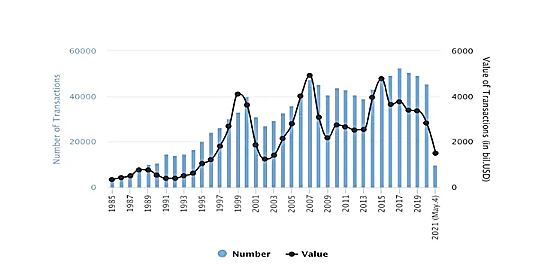
The field of advanced analysis that produces accurate forecasts about future events is called predictive analysis, and it is used in mergers and acquisitions [9]. Data science and large datasets are the most typical contexts in which it is used. Equipment log files, pictures, transitory databases, sensors, films, and a plethora of other data sources are now being mined by companies [10]. Data scientists sift through mountains of data in search of patterns, insights, and future occurrences using ML and DL. Among these, you may find decision trees, linear regression, and support vector machines [11, 12]. Prescriptive analysis can make use of predictive analysis's findings and lessons to speed up the activities that predictive analysis reveals. Any data set may be used to train these prediction models with regard to any new data collection. These findings have the potential to influence market and consumer behaviour. It creates a timeline of future outputs in relation to what has already happened. Two distinct models exist in the field of predictive analytics: classification models and regression models. A number is predicted by the first, and membership in a class is predicted by the second. Both the volume and value of mergers and acquisitions have been on the rise in recent years. In 2017, there were a record 50,600 announced merger and acquisition agreements worth a total of USD 3.5 trillion [13]. More than twenty times as much activity occurred as in 1985 when both the number of trades and their value were approximately the same. The M$A activity from 1985 to 2021 is summarised in Figure 1 up there. Similar to the dot-com boom of the 2000s, the financial crisis of 2007–2009, and the most recent economic shifts brought on by COVID-19, merger and acquisition activity tends to follow cyclical patterns. The academic literature is rich with studies on these patterns, which are called merger waves [14].
The following paper is structured as: Section II provide the aspects of M&A, Section III give the overview of Predictive Analysis in M&A, Section IV and V provide the ML Techniques in Predictive Analysis Role of ML In M&A Applications of ML in M&A, Section VI discussed the existing work on this topic as a Literature Review, Section VII provide the conclusion of this work with future directions.
2. Aspects of Merger and Acquisition (M&A)
The study of mergers and acquisitions is attracting academics from all around the globe since it is a powerful strategy for international company growth. The term M&A describes the monetary transactions that bring together two or more businesses or assets [15]. A merger happens when two businesses decide to come together and function as one, usually in order to create synergy, reach a wider audience, or simplify operations. Conversely, an acquisition occurs when one business buys another, either by acquiring a majority share or taking over all of its activities [16]. Strategic goals like expanding market share, breaking into new markets, cutting costs, or acquiring a competitive edge are often what motivate M&A activity. These transactions involve complex financial, legal, and operational considerations and are often supported by thorough due diligence and analysis to ensure their success.
2.1. M&A process
Research attention has been directed to the importance of the process that links pre-deal to M&A outcome since pre-deal company characteristics have limited ability to explain M&A success. Although there are other different process models, the traditional method depicted in Figure 2 is basically as follows:
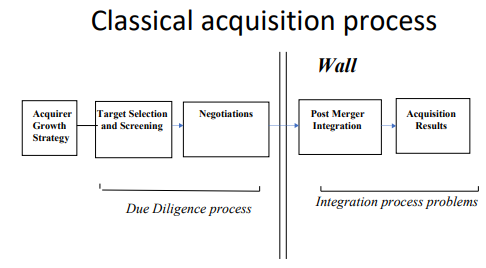
The classic M&A process, as depicted by Jemison and Sitkin (1986), involves several key phases:
- Pre-deal Target Selection: Identifying and evaluating potential targets for acquisition.
- Due Diligence: Conducting detailed financial, legal, and operational analyses to uncover risks.
- Valuation and Negotiation: Determining the target’s worth and agreeing on terms.
- Integration Planning: Preparing for post-acquisition integration.
- Post-Acquisition Integration: Combining operations, aligning strategies, and merging cultures.
The process often includes additional steps in practitioner models, emphasising integration planning and execution.
Jemison and Sitkin's seminal work from 1986 highlights the significance of the acquisition process as a mediator between pre-acquisition traits and post-acquisition results [17]. The process itself is brought to light as a problem by their participation, which also brings attention to the difficulties of "momentum" and "fragmentation," which will be discussed later. One thing to keep in mind is that the number of phases illustrated in the M&A process has grown over the years, especially among professionals in the field. For example, according to the Corporate Finance Institute's ten-step procedure, planning is the fourth phase, and it mostly deals with pre-deal target identification and due diligence. Integration planning is similarly absent from their image, with the exception of step 10, which pertains to integration after an acquisition. There are a lot of cases when planning is either disregarded or seen as a secondary step in selecting targets.
2.2. Type of Merger and Acquisition (M&A)
- Horizontal Merger: A horizontal merger involves two companies in the same industry combining to increase market share and reduce competition, achieving economies of scale and improved market presence.
- Vertical Merger: The goal of a vertical merger is to increase control over manufacturing and distribution while decreasing costs and increasing efficiency by merging enterprises at different points in the supply chain.
- Conglomerate: A conglomerate merger joins unrelated businesses to diversify risks by spreading operations and venturing into new lines of production since it cuts across many fields.
- Acquisitions: An acquisition is a method of taking over one business by another whereby the acquiring firm buys a dominant interest in value or acquires the assets of the other firm. It contributes to diversification of market, obtainment of new technologies and technologies and exclusion of competitors.
2.3. Key Processes of Merger and Acquisition (M&A)
- Due Diligence: Problems and essential decisions are detected by carrying out some extensive research on the target company’s financial, operational, and risky aspects.
- Valuation: Valuation establishes the value of the target company by means of financial rate of return calculations including DCF and comparables and sets a reasonable price for the transaction.
- Negotiation: Bar gaining is whereby the buyer and the seller reach consensus on factors such as price and the mode of payment in a bid to get both a satisfactory deal.
- Integration: It is the management of changes and the coordination of efforts in the post-acquisition and post-merger and acquisition strategic process to realise synergistic and strategic objectives.
2.4. Benefits of M&A
Enterprise benefits realised through M&A include, market and regional diversification which translates to an enhanced market share through geographical coverage that provides firms with an opportunity to access new clients. There are also other potential benefits, which are direct ones that relate to cost efficiency, including increases in scale, rationalisation of activities, and use of common assets from mergers and acquisitions [18]. After, M&A opens opportunities for acquiring better technologies, fresh products, and a distinct skilful workforce that will again spearhead future business performance. Knowledge of these advantages ensures that firms build a strong market placement, minimise operational risks, and adapt to changing market environments as they enhance competitiveness in the industry.
2.5. Challenges in M&A
The following challenges in M&A are;
2.5.1. Cultural and Operational Integration Issues
The major issue when it comes to M&A deals is that there is always a clash between organisational culture and business model of the merging firms. Lack of compatibility of organisational cultures, the variety of managers’ approaches, and the peculiarities of work contexts may cause resistance, misconceptions, and tensions in the workplace. This then tends to affect teamwork, leading to low morale among employees as well as a general downturn in productivity. Integration is a process that must be well thought out and communicated between the two companies so that the two entities have compatible cultures and methods.
2.5.2. Regulatory Compliance and Legal Hurdles
Regulatory and legal barriers present a major problem when undertaking an M&A transaction because there are antitrust laws, industry-specific regulatory agencies, and other legal requirements in any given transaction. Overcoming the difficulties of these regulations may be both time and money-consuming. Non-compliance with regulatory requirement or lack of approval can result to slowdown or penalties resulting to deal shutdown. It is beneficial for companies to collaborate with other legal professionals in a bid to conform and the process easier.
2.5.3. Overestimating Synergies or Paying Excessive Valuations
The first obstacle is integrative implications, where integrative negotiations face challenges in identifying synergies and assessing the value of the target. Synergies—of costs or revenues, for instance—are similar to views; overestimating can lead to dissent and failure if the claimed benefits never occur [19]. Further, the act of acquiring the target company at a premium price leads to bankruptcy for the acquiring firm and less return on investment. Conducting thorough due diligence and realistic financial modelling is essential to avoid these pitfalls and ensure a fair transaction.
3. Overview of Predictive Analysis in M&A
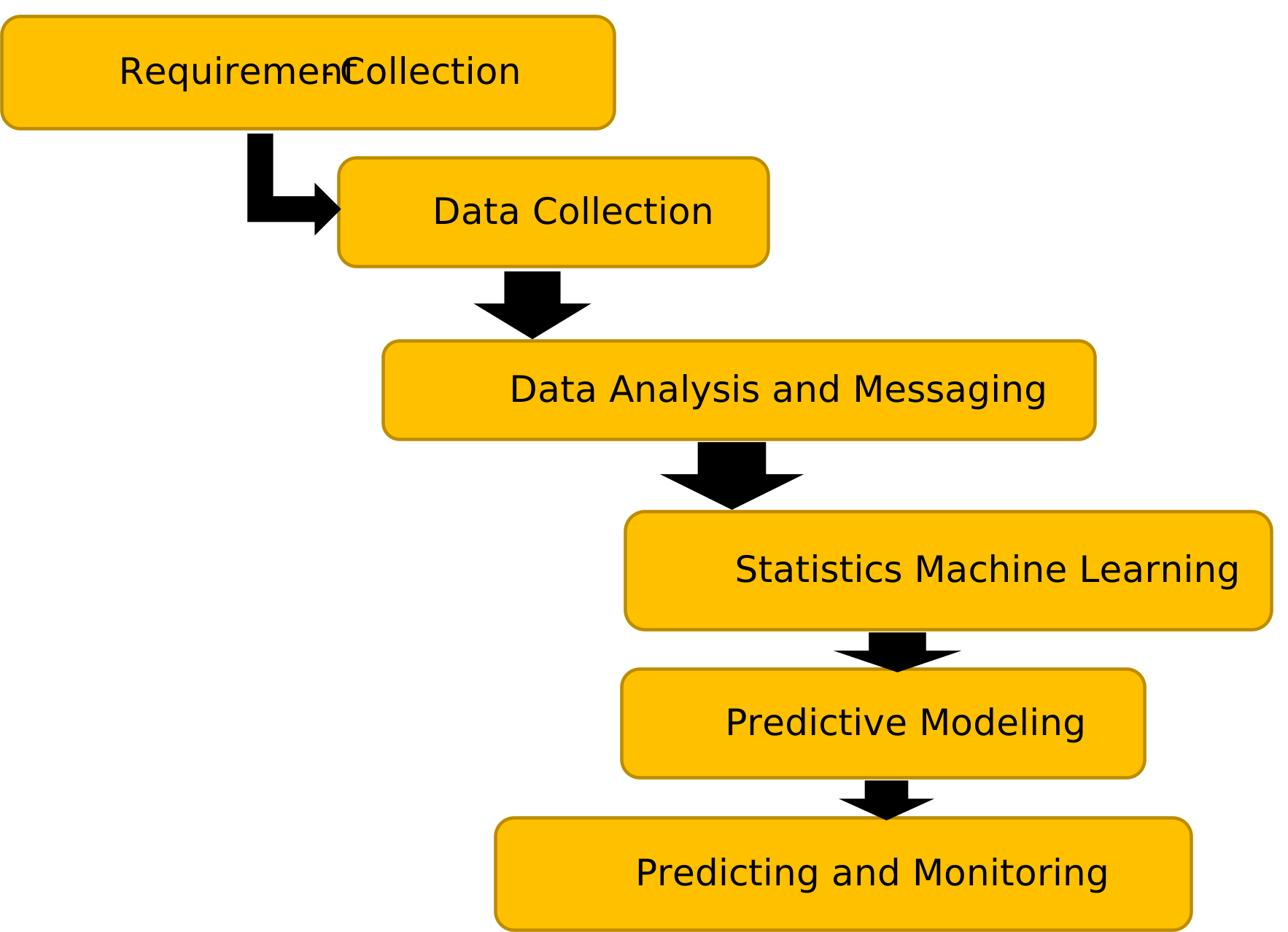
This data analyst may use current and historical data to make predictions about the future by following the several processes of predictive analytics. Figure 3 below depicts this predictive analytics process:
3.1. Requirement Collection
The purpose of prediction must be understood before creating a predictive model. The forecast should specify the kind of information that will be acquired [20]. To prevent the expiration of their drugs, pharmaceutical companies, for instance, would like to know the sales estimate for a certain area. Clients and data analysts meet to discuss the needs of building the predictive model and the ways in which the customer stands to gain from the model's output. It will be determined which customer data is necessary for model development.
3.2. Data Collection
The analyst will gather the datasets needed to build the predictive model, which may come from several sources, after learning the client organisation's requirements. The following may be an exhaustive list of people who have purchased or used the company's goods. This information could be in an organised or unorganised format. The analyst checks their own data against the client's data at their location.
3.3. Data Analysis and Massaging
Data analysts examine the gathered information and get it ready for further examination and model use. [21] This process transforms the unstructured data into a structured format. The quality of the data is assessed once it has been made available in its organised form. The primary dataset may include inaccurate data, or there may be a large number of missing values for the characteristics; these issues need to be fixed. The quality of the data has a direct impact on how well the prediction model performs. Sometimes, the analysis step is called "data munging" or "massaging the data," which refers to transforming the raw data into an analytics-useful format.
3.4. Statistics, Machine Learning
Numerous statistical and ML techniques are employed in predictive analytics. Two important analytics techniques are regression analysis and probability theory [22]. DT, SVM, and ANN are just a few of the ML approaches used by many predictive analytics systems [23]. Machine learning and statistics are the backbones of nearly any predictive analytics model. Prediction models are constructed by analysts using statistics and ML. Although statistics are essential to every prediction model, ML approaches perform better than traditional statistical methods.
3.5. Predictive Modeling
This step involves building a model using the sample dataset and other ML and statistical methods. Tests are run on the test dataset, which is a subset of the main dataset when development is complete. If the tests pass, the model is deemed fit. After fitting, the model is able to accurately predict outcomes based on newly input data. The multi-model approach is frequently chosen for solving problems in various applications [24].
3.6. Prediction and Monitoring
The client's site uses the model for daily forecasts and decision-making after successful prediction testing. The outcomes and reports are generated by models or administrative procedures. For reliable findings and predictions, the model is continuously tested and improved [25]. This demonstrates that using analytics to foretell the future is not a standalone process. Step-by-step methods from requirement collection to deployment and monitoring ensure successful system use to make it a decision-making system.
4. Machine Learning Techniques in Predictive Analysis
The subfield of computer science concerned with increasing the accuracy of models that attempt to replicate human learning processes via the use of data and algorithms. In the new area of data science, it is crucial. Data mining initiatives rely on statistical methods and ML algorithms to classify data and make predictions. These tools help to reveal important insights [26]. Key growth metrics are influenced over time by these insights, which help with application or business decision-making [27, 28]. The three main categories of ML—supervised, unsupervised, and reinforcement learning—are defined by the nature of the input data [29].
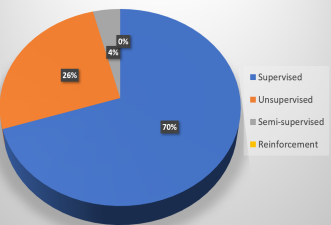
Figure 4 shows machine learning techniques' distribution. The majority is supervised (70%), followed by unsupervised (26%). Semi-supervised learning is 4%, and reinforcement learning is 0%, suggesting its insignificance in the context.
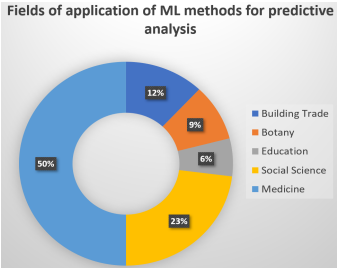
Figure 5 highlights the various fields where machine learning (ML) methods are applied for predictive analysis. Medicine is the most significant area, accounting for 50% of the applications. Education follows with 23%, indicating its growing importance in predictive analytics. Social sciences account for 12%, while botany represents 9% of the applications. The building trade is the least represented field, contributing 6%. This distribution shows a strong emphasis on healthcare and education sectors in utilising ML for predictive purposes [30].
4.1. Supervised Learning
This method involves using the provided input-output pair examples to develop an algorithm for translating the input data to an output [31, 32]. It is accomplished by means of the labelled dataset. Supervised learning techniques are useful for foretelling the future acquisition of fresh, unseen data. Used for Image Classification, Spam Filtering, Fraud Detection, and Risk Assessment [33].
4.2. Unsupervised Learning
Learning approach that does not require human supervision of the model and does not use pre-assigned labels. It is solely concerned with unlabelled data. Finding the data set's basic structure and organising it into groups based on similarities while preserving its compressed format are its primary goals [34].
4.3. Ensemble Methods
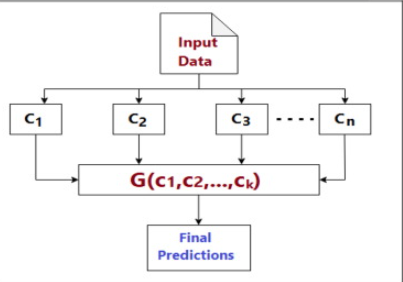
To predict a single output, ensemble learning systems typically utilise an aggregation function G to integrate a number of baseline classifiers, c1; c2;... ; ch. Equation 1 to Equation 3 provide the outcome prediction based on this ensemble approach, given an n-dimensional dataset and features of dimension.
Figure 6 shows the abstract framework of ensemble learning. Each ensemble consists of baseline classifiers trained on input data, resulting in an aggregate prediction [35]. Different ensemble strategies select and train different baseline classifiers. Based on their characteristics, two approaches generate different types of base classifiers, which might lead to either homogeneous or heterogeneous ensembles [36]. In a homogeneous ensemble [37], baseline classifiers are of the same kind and use different data. This strategy employs a consistent feature selection mechanism across training data. The key challenge in homogeneous form is generating variability from the same learning method. Different numbers of baseline classifiers are used in heterogeneous ensemble, as they all use the same data. Diverse feature selection approaches are employed by heterogeneous classifiers on identical training data. The broad, abstract architecture of ensemble learning is illustrated in Figure 6.
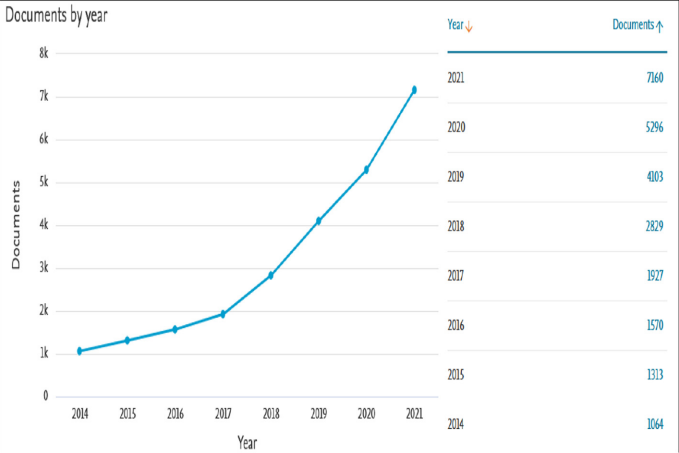
Homogeneous ensemble techniques are used by researchers because they are simple to comprehend and use. Construction costs for homogeneous ensembles are lower than those for heterogeneous ones [38]. An ensemble framework is often described by three features that impact its performance. The first consideration is the reliance on sequential or parallel training baseline models [39]. The second feature is fusion techniques, which use weight voting or meta-learning algorithms to integrate the outputs of baseline classifiers. The third feature is the homogeneity or heterogeneity of the baseline classifiers. Figure 7 displays the evolution of the "Ensemble Learning" search phrase in "Scopus" from 2014 to 2021.
4.4. Neural Networks And Deep Learning
Neural networks, which draw inspiration from the human brain, are composed of interconnected layers of nodes (neurons) that analyse data by acquiring knowledge about common patterns and connections [40]. Deep learning [41], a branch of machine learning, utilises neural networks characterised by multiple layers to autonomously extract data and execute intricate tasks such as image identification, natural language processing, and predictive analysis.
5. Role of Machine Learning in M&A
ML techniques play an important role in predictive analysis for mergers and acquisitions (M&A). They help in looking for potential acquisition candidates with the use of raw market data and applying machine learning like Cluster Analysis and Natural Language Processing to match businesses.
5.1. Deal Sourcing and Target Identification
This way, a process of using ML algorithms to search for acquisition targets that will help the business achieve its long-term goals amid the existing and accumulated data is enabled. Techniques such as:
- Natural Language Processing (NLP): Used for mining data from news articles, filings, and industry reports to identify companies that could be potential targets.
- Clustering algorithms: Help in grouping companies with similar characteristics and performance metrics to find suitable matches for mergers or acquisitions.
5.2. Valuation Analysis
Valuation may also be enhanced by using ML approach to predictive analytics, since it is capable of identifying two-way and other higher-order interaction effects between factors that influence the value of a company. Techniques such as:
- Regression models (e.g., decision trees, random forests): These can help predict future revenue streams and estimate the potential value of a target company by analysing factors like industry trends, past financial performance, and economic indicators.
- Ensemble methods: Combine multiple models to increase prediction accuracy, which can be especially useful when valuing companies with diverse assets and liabilities.
5.3. Risk Assessment
ML can be used to assess and predict risks associated with M&A transactions. This includes:
- Anomaly detection algorithms: Such patterns include the detection of specific red flags, which are changes in financial figures, the existence of bad accounts or else unusual transactional patterns that mask these risks.
- Sentiment analysis: Assess the potential of marketing reaction to a potential deal, which, in turn, can help dictate risks to integrations or regulations.
5.4. Due Diligence and Compliance
In due diligence, the possibility of using ML is to simplify the search for compliance risks, costs, and other significant disclosures in documents and data. Techniques include:
- Document classification and NLP: Upload documents and have them neatly sorted into categories, filter out the key data worth focusing on, and find important clauses and obligations within contracts.
- Data mining algorithms: Identify relationships and trends of a target company using financial reports and other legal documents to determine the solidity of the firm.
5.5. Integration Planning
ML helps in creating predictive models to forecast how well an acquired company will integrate with the acquiring organisation. These models consider factors such as:
- Employee sentiment analysis: Determine their employees’ reception to being merged on how they would probably react to integration from the productivity and morale perspectives of the specific company.
- Operational synergy analysis: Estimate possible cost efficiencies and revenue improvements by comparing past M&As with current case
5.6. Post-Merger Performance Monitoring
Once the acquisition has occurred, the existing ML can be utilised to monitor and predict the efficiency of such an entity [42]. Techniques like:
- Predictive modeling: Predict the future sales of the consolidated revenue and operating effectiveness considering previous records and recent business processes.
- Survival analysis: Evaluate the likelihood of achieving the M&A transaction goals in the long run or experiencing a failure and analyse factors that have strong impact
5.7. Benefits and Challenges
There are benefits of ML in enhancing decision-making, productivity and reduction of errors in M&A, but threats include quality of data, complexity of the models and compliance issues. Nonetheless, integration of ML helps to make more rational and efficient M&A decisions improving the generally strategy.
- Improved Decision-Making: ML helps deal teams make informed decisions by providing data-driven insights.
- Efficiency: Automates labour-intensive tasks, saving time and resources during due diligence and integration.
- Enhanced Accuracy: Reduces human error and biases in valuation and risk assessment.
- Predictive Power: Helps anticipate future challenges and opportunities, enabling proactive management.
6. Applications of Machine Learning in M&A
Machine learning increases the effectiveness of M&A by predicting synergies, risk evaluation, and realising increased efficiency in due diligence through the use of anomaly detection and natural language processing. It improves target firm value estimates employing self-evolving equations and determines appropriate acquisition candidates through classification & clustering; it is a strategic move that suggests a high probability of successful M&A. The following application of the ML in mergers and acquisitions (M&A):
6.1. Predicting Synergies and Financial Outcomes
One can use machine learning to predict synergies to estimate the number of cost or revenue streams that would result from merger. Sometimes, mathematical and statistical tools such as a statistical tool called the regression model are used in relation to past statistical and numerical data to establish the level of productivity and profits a firm is likely to gain from an acquisition.
6.2. Risk Assessment and Due Diligence
Data Science models make Risk Management more effective by uncovering additional risks and risky patterns within financial and business data. The legal documents and market reports that have initially posed challenges in the due diligence process can now be analysed with the help of such tools as clustering and NLP and this will only identify potential red flags.
6.3. Valuation Models for Target Companies
When applied, the machine learning process delivers real-time and market-accurate valuation models based on financial data, industry standards, and market conditions. Decision trees and neural networks are progressive approaches that are more dynamic than traditional methods to give an accurate assessment of a company’s equity and optimisation of the outcomes.
6.4. Identification of Optimal Acquisition Targets
The use of ML algorithms in the process of searching for suitable acquisition candidates reduces the effort needed to evaluate strategic fit, financial viability and future performance. A classification and clustering approach allows excluding companies which are not in sync with the acquirer’s goals and thus improves the probability of successful transactions.
7. Literature Review
M&A analysis is often the starting point for studies that examine technological innovation in businesses.
According to Yan, Nie, and Fan (2020), the M&A activity in China's A-share market between 2012 and 2016, this study employs a multivariate regression model to examine the effect of due diligence on M&A performance using data collected from 2011 to 2018. In other words, they discovered that due diligence diligence level affected M&A performance positively; that is, businesses' M&A performance levels increased as due diligence levels increased. With the incentive of performance-based remuneration, the target company may be more forthcoming about its actual operational circumstances, and the initial shareholders or management may be more motivated to take the lead in doing integration duties. The association among due diligence and M&A performance is therefore diminished as a result of performance commitment, which impacts the relationship between the two [43].
Shi and Wang (2020), made progress on an M&A matching algorithm that takes irrational behaviour into account from the standpoint of DEA-based performance. DEA models with prospect value optimisation as secondary goals are constructed in this technique. To optimise the two-sided M&A matching, the value and decision weights are combined to form a prospect value. This value is then used to determine the degree of satisfactory matching. After that, they showed how two-sided M&A matching works by giving an example. Participating M&A businesses can use this technology to offer matching suggestion services on third-party platforms [44].
Li et al. (2021), investigates the application of graph neural networks (GNN) in forecasting Mergers and Acquisitions (M&A) by quantifying the statistical association among firms, founders, and investors. The methodology incorporates text analysis, sophisticated feature creation, and other techniques to enhance prediction outcomes. The findings indicate a relatively high Area-Under-Curve score (AUC) of 0.952 and an 83% true positive rate [45].
Lang (2021) proposes an "eight-step" approach to assessing potential efficiency and defines it. Using data collected from 2011 to 2019 and the Three-stage DEA and Bootstrap DEA methods, this paper examines 21 listed commercial banks in China as a whole, assessing their technical efficiency and the prospective efficiency of virtual M&A from a prediction standpoint. The majority of virtual mergers and acquisitions are good for business, but even among technically efficient banks, there is no assurance that the combined institution will continue to be technically efficient or that the merger's subsequent actions would be potentially efficient [46].
In this study, Wang (2021) analyses the data of a large number of M&A cases in the United States during 1978–2007 to explore the characteristics of enterprises and industries adopting M&A strategies, as well as the future development trend after M&A. This paper tries to find out whether M&A strategic activities can help enterprises achieve different dimensions of growth in terms of scale, capital and output value [47].
Venuti (2021) aims to forecast enterprise-level M&A using the widely-used graph ML framework, Graph SAGE. The model's 81.79% accuracy rate on a validation dataset was encouraging, suggesting potential prospects. With so many data sources and algorithms making decisions in financial data science, graph-based ML provides a non-traditional way to generate alpha that is both performant and novel. As a relatively new area of data science, graph-based ML builds on the foundational graph data structure from mathematics. Table I provide the Literature review summary for the M&A analysis. The Table 1 summarises key studies on M&A performance and prediction, focusing on methodologies and findings [48].
8. Conclusion and Future Work
This paper aims to evaluate how M&A contributes to corporate objectives of expanding markets, optimising costs, and implementing innovations. All in all, the M&A implies quite a great amount of benefits; however it also has its drawbacks such as cultural issues, issues with legislation, and issues with valuation. Thus, understanding different M&A phases and types will allow organisations to approach these processes with better focus and ensure that synergies are maximised. In the same respect, the integration of predictive analytics and ML has given a realistic figure and deeper insight into M&A decisions. Applying and integrating methods such as regression analysis, NN, and ensemble techniques improve risk evaluation, better valuation, and enhanced strategic planning. These tools assist organisations to make forecasts, enhance their operations and function effectively in a volatile business environment. Therefore, integration of the best M&A techniques that apply various factors with the modern tools of predictive analytics creates the perfect approach to ensure sustainable success. Managing potential problems and applying the opportunities brought by technology innovation can make full use of M&A strategies, so that enterprises will have a more sustainable development and competitive advantage.
On the same note, M&A strategies have drawbacks, such as the inability to assess the depth of cultural differences, overestimation of synergy effects as well as biases in the big data used for predictive modelling. Moreover, such factors as volatility or a powerful influence, external and internal conditions which are unpredictable may not be reflected sufficiently if based only on the data collected. Future development in this realm can relate to developing on existing predictive models and using live data alongside major AI procedures such as DL and reinforcement erudition. Further, refining the M&A deals could be driven by a deeper analysis of ESG factors in M&A and enhancement of the tools used for cross-cultural M&As. Furthering future examination of emerging markets and issues specific to certain sectors will also increase understanding of effective M&A.
References
- M. Pazarskis, D. Charalampidou, P. Pantelidis, and D. Paschaloudis, “Examining bank mergers and acquisitions in greece before the outbreak of the sovereign debt crisis,” Corp. Ownersh. Control, 2014, doi: 10.22495/cocv11i4c1p2.[CrossRef]
- D. Wang, Y. Wang, J. Yang, Z. Huang, and R. Cui, “Managerial Cognitive Bias, Business Transformation, and Firm Performance: Evidence From China,” SAGE Open, 2021, doi: 10.1177/2158244021999156.[CrossRef]
- H. G. Manne, “Mergers and the Market for Corporate Control MERGERS AND THE MARKET FOR CORPORATE CONTROL’,” Source J. Polit. Econ., 1965.[CrossRef]
- Y. R. Li, “The technological roadmap of Cisco’s business ecosystem,” Technovation, 2009, doi: 10.1016/j.technovation.2009.01.007.[CrossRef]
- A. P. A. Singh, “Streamlining Purchase Requisitions and Orders : A Guide to Effective Goods Receipt Management,” J. Emerg. Technol. Innov. Res., vol. 8, no. 5, pp. g179–g184, 2021.
- R. Goyal, “THE ROLE OF BUSINESS ANALYSTS IN INFORMATION MANAGEMENT PROJECTS,” Int. J. Core Eng. Manag., vol. 6, no. 9, pp. 76–86, 2020.
- M. S. Hossain, “Merger & Acquisitions (M&As) as an important strategic vehicle in business: Thematic areas, research avenues & possible suggestions,” J. Econ. Bus., 2021, doi: 10.1016/j.jeconbus.2021.106004.[CrossRef]
- S. Zagelmeyer, R. R. Sinkovics, N. Sinkovics, and V. Kusstatscher, “Exploring the link between management communication and emotions in mergers and acquisitions,” Can. J. Adm. Sci., 2018, doi: 10.1002/cjas.1382.[CrossRef]
- D. Kumar and K. Sengupta, “Abandonment of mergers and acquisitions: a review and research agenda,” International Journal of Emerging Markets. 2020. doi: 10.1108/IJOEM-12-2019-1056.[CrossRef]
- B. Boddu, “Challenges and Best Practices for Database Administration in Data Science and Machine Learning,” IJIRMPS, vol. 9, no. 2, p. 7, 2021, doi: https://www.ijirmps.org/research-paper.php?id=231461.
- C. K. Arulanandu, S. V. D. Murthy, and G. Nagraj, “Cloud based RDF security: A secured data model for cloud computing,” Int. J. Intell. Eng. Syst., 2018, doi: 10.22266/ijies2018.0228.09.[CrossRef]
- M. Gopalsamy, “Artificial Intelligence (AI) Based Internet-ofThings (IoT)-Botnet Attacks Identification Techniques to Enhance Cyber security,” Int. J. Res. Anal. Rev., vol. 7, no. 4, pp. 414–420, 2020.
- O. D. Awolusi, “The effects of mergers and acquisitions on business performance in Nigerian banking industry: An empirical analysis,” Int. J. Bus. Perform. Manag., 2012, doi: 10.1504/IJBPM.2012.047301.[CrossRef]
- Y. Alhenawi and M. Stilwell, “Value creation and the probability of success in merger and acquisition transactions,” Rev. Quant. Financ. Account., 2017, doi: 10.1007/s11156-017-0616-2.[CrossRef]
- M. F. Malik, M. A. Anuar, S. Khan, and F. Khan, “Mergers and Acquisitions: A Conceptual Review,” Int. J. Account. Financ. Report., 2014, doi: 10.5296/ijafr.v4i2.6623.[CrossRef]
- G. Lageranna and C. Crawford, “Merger and Acquisition: Conceptual Review,” SSRN Electron. J., 2018, doi: 10.2139/ssrn.3208534.[CrossRef]
- D. B. Jemison and S. B. Sitkin, “Corporate Acquisitions: A Process Perspective,” Acad. Manag. Rev., 1986, doi: 10.5465/amr.1986.4282648.[CrossRef]
- F. Zhang, Q. Xiao, R. Law, and S. Lee, “Mergers and acquisitions in the hotel industry: A comprehensive review,” Int. J. Hosp. Manag., 2020, doi: 10.1016/j.ijhm.2019.102418.[CrossRef]
- R. Arora, “Mitigating Security Risks on Privacy of Sensitive Data used in Cloud-based Mitigating Security Risks on Privacy of Sensitive Data used in Cloud-based ERP Applications,” 8th Int. Conf. “Computing Sustain. Glob. Dev., no. March, pp. 458–463, 2021.
- M. Z. Hasan, R. Fink, M. R. Suyambu, M. K. Baskaran, D. James, and J. Gamboa, “Performance evaluation of energy efficient intelligent elevator controllers,” in IEEE International Conference on Electro Information Technology, 2015. doi: 10.1109/EIT.2015.7293320.[CrossRef] [PubMed]
- K. Patel, “Quality Assurance In The Age Of Data Analytics: Innovations And Challenges,” Int. J. Creat. Res. Thoughts, vol. 9, no. 12, pp. f573–f578, 2021.
- V. S. Thokala, “Integrating Machine Learning into Web Applications for Personalized Content Delivery using Python,” Int. J. Curr. Eng. Technol., vol. 11, no. 06, 2021, doi: https://doi.org/10.14741/ijcet/v.11.6.9.
- M. Gopalsamy, “Advanced Cybersecurity in Cloud Via Employing AI Techniques for Effective Intrusion Detection,” Int. J. Res. Anal. Rev., vol. 8, no. 01, pp. 187–193, 2021.
- J. Thomas and V. Vedi, “Enhancing Supply Chain Resilience Through Cloud-Based SCM and Advanced Machine Learning: A Case Study of Logistics,” J. Emerg. Technol. Innov. Res., vol. 8, no. 9, 2021.
- V. K. Y. Nicholas Richardson, Rajani Pydipalli, Sai Sirisha Maddula, Sunil Kumar Reddy Anumandla, “Role-Based Access Control in SAS Programming: Enhancing Security and Authorization,” Int. J. Reciprocal Symmetry Theor. Phys., vol. 6, no. 1, pp. 31–42, 2019.
- V. Ilango, R. Subramanian, and V. Vasudevan, “Statistical data mining approach with asymmetric conditionally volatility model in financial time series data,” Int. J. Soft Comput., 2013, doi: 10.3923/ijscomp.2013.252.260.
- N. Kumar, Y. S. Sneha, J. Mungara, and S. G. Raghavendra Prasad, “A Survey on Data Mining Methods Available for Recommendation System,” in 2nd International Conference on Computational Systems and Information Technology for Sustainable Solutions, CSITSS 2017, 2018. doi: 10.1109/CSITSS.2017.8447672.[CrossRef]
- R. Bishukarma, “The Role of AI in Automated Testing and Monitoring in SaaS Environments,” IJRAR, vol. 8, no. 2, 2021, [Online]. Available: https://www.ijrar.org/papers/IJRAR21B2597.pdf
- T. Karthikayini and N. K. Srinath, “Comparative Polarity Analysis on Amazon Product Reviews Using Existing Machine Learning Algorithms,” in 2nd International Conference on Computational Systems and Information Technology for Sustainable Solutions, CSITSS 2017, 2018. doi: 10.1109/CSITSS.2017.8447660.[CrossRef]
- V. S. Thokala, “A Comparative Study of Data Integrity and Redundancy in Distributed Databases for Web Applications,” IJRAR, vol. 8, no. 4, pp. 383–389, 2021.
- V. K. Yarlagadda, S. S. Maddula, D. K. Sachani, K. Mullangi, S. K. R. Anumandla, and B. Patel, “Unlocking Business Insights with XBRL: Leveraging Digital Tools for Financial Transparency and Efficiency,” Asian Account. Audit. Adv., vol. 11, no. 1, pp. 101–116, 2020.
- V. V. Kumar, A. Sahoo, and F. W. Liou, “Cyber-enabled product lifecycle management: A multi-agent framework,” in Procedia Manufacturing, 2019. doi: 10.1016/j.promfg.2020.01.247.[CrossRef]
- Mani Gopalsamy, “Enhanced Cybersecurity for Network Intrusion Detection System Based Artificial Intelligence (AI) Techniques,” Int. J. Adv. Res. Sci. Commun. Technol., vol. 12, no. 01, pp. 671–681, Dec. 2021, doi: 10.48175/IJARSCT-2269M.[CrossRef]
- V. Kavitha, A. V. Senthil Kumar, N. Revathy, C. Daniel Nesa Kumar, and P. Hemashree, “Pre-processed hierarchical clustering for time series data streams,” Int. J. Recent Technol. Eng., 2019, doi: 10.35940/ijrte.C3961.098319.[CrossRef]
- B. Lakshminarayanan, A. Pritzel, and C. Blundell, “Simple and scalable predictive uncertainty estimation using deep ensembles,” in Advances in Neural Information Processing Systems, 2017.
- B. Seijo-Pardo, I. Porto-Díaz, V. Bolón-Canedo, and A. Alonso-Betanzos, “Ensemble feature selection: Homogeneous and heterogeneous approaches,” Knowledge-Based Syst., 2017, doi: 10.1016/j.knosys.2016.11.017.[CrossRef]
- L. R. V. Da Conceição, C. E. F. Da Costa, G. N. Da Rocha Filho, E. R. Pereira-Filhob, and J. R. Zamian, “Ethanolysis optimisation of jupati (Raphia taedigera Mart.) oil to biodiesel using response surface methodology,” J. Braz. Chem. Soc., 2015, doi: 10.5935/0103-5053.20150097.[CrossRef]
- M. Hosni, I. Abnane, A. Idri, J. M. Carrillo de Gea, and J. L. Fernández Alemán, “Reviewing ensemble classification methods in breast cancer,” Computer Methods and Programs in Biomedicine. 2019. doi: 10.1016/j.cmpb.2019.05.019.[CrossRef] [PubMed]
- R. Arora, S. Gera, and M. Saxena, “Impact of Cloud Computing Services and Application in Healthcare Sector and to provide improved quality patient care,” IEEE Int. Conf. Cloud Comput. Emerg. Mark. (CCEM), NJ, USA, 2021, pp. 45–47, 2021.
- S. B. and S. C. and S. Clarita, “AN ANALYSIS: EARLY DIAGNOSIS AND CLASSIFICATION OF PARKINSON’S DISEASE USING MACHINE LEARNING TECHNIQUES,” Int. J. Comput. Eng. Technol., vol. 12, no. 01, pp. 54-66., 2021, doi: http://www.iaeme.com/IJCET/issues.asp?JType=IJCET&VType=12&IType=1.
- S. R. Bauskar and S. Clarita, “Evaluation of Deep Learning for the Diagnosis of Leukemia Blood Cancer,” Int. J. Adv. Res. Eng. Technol., vol. 11, no. 3, pp. 661–672, 2020, doi: https://iaeme.com/Home/issue/IJARET?Volume=11&Issue=3.
- R. Goyal, “THE ROLE OF REQUIREMENT GATHERING IN AGILE SOFTWARE DEVELOPMENT: STRATEGIES FOR SUCCESS AND CHALLENGES,” Int. J. Core Eng. Manag., vol. 6, no. 12, pp. 142–152, 2021.
- J. Yan, M. Nie, and Y. Fan, “Diligent Due Diligence, Performance Commitment and MA Performance Based on Multivariate Regression Model,” in Proceedings - 2020 2nd International Conference on Economic Management and Model Engineering, ICEMME 2020, 2020. doi: 10.1109/ICEMME51517.2020.00053.[CrossRef]
- H. L. Shi and Y. M. Wang, “A Merger and Acquisition Matching Method That Considers Irrational Behavior from a Performance Perspective,” IEEE Access, 2020, doi: 10.1109/ACCESS.2020.2976608.[CrossRef]
- Y. Li, J. Shou, P. Treleaven, and J. Wang, “Graph neural network for merger and acquisition prediction,” in ICAIF 2021 - 2nd ACM International Conference on AI in Finance, 2021. doi: 10.1145/3490354.3494368.[CrossRef]
- X. Lang, “Evaluating the Potential Efficiency from Virtual Mergers and Acquisitions of Chinese Banks,” in Proceedings - 2nd International Conference on E-Commerce and Internet Technology, ECIT 2021, 2021. doi: 10.1109/ECIT52743.2021.00045.[CrossRef]
- Y. Wang, “Research on the Impact of Mergers and Acquisitions on Enterprise Innovation and Growth Based on the Stata Statistical Analysis Software,” in Proceedings - 2021 International Conference on Education, Information Management and Service Science, EIMSS 2021, 2021. doi: 10.1109/EIMSS53851.2021.00089.[CrossRef]
- K. Venuti, “Predicting Mergers and Acquisitions using Graph-based Deep Learning,” arXiv Comput. Sci., 2021.
- Patra, G. K., Rajaram, S. K., Boddapati, V. N., Kuraku, C., & Gollangi, H. K. (2022). Advancing Digital Payment Systems: Combining AI, Big Data, and Biometric Authentication for Enhanced Security. International Journal of Engineering and Computer Science, 11(08), 25618–25631. https://doi.org/10.18535/ijecs/v11i08.4698.[CrossRef]
- Shravan Kumar Rajaram, Eswar Prasad Galla, Gagan Kumar Patra, Chandrakanth Rao Madhavaram, & Janardhana Rao. (2022). AI-Driven Threat Detection: Leveraging Big Data For Advanced Cybersecurity Compliance. Educational Administration: Theory and Practice, 28(4), 285–296. https://doi.org/10.53555/kuey.v28i4.7529[CrossRef]
- Gagan Kumar Patra, Shravan Kumar Rajaram, & Venkata Nagesh Boddapati. (2019). Ai And Big Data In Digital Payments: A Comprehensive Model For Secure Biometric Authentication. Educational Administration: Theory and Practice, 25(4), 773–781. https://doi.org/10.53555/kuey.v25i4.7591[CrossRef]
- Chandrababu Kuraku, Hemanth Kumar Gollangi, & Janardhana Rao Sunkara. (2020). Biometric Authentication In Digital Payments: Utilizing AI And Big Data For Real-Time Security And Efficiency. Educational Administration: Theory and Practice, 26(4), 954–964. https://doi.org/10.53555/kuey.v26i4.7590[CrossRef]
- Eswar Prasad Galla.et.al. (2021). Big Data And AI Innovations In Biometric Authentication For Secure Digital Transactions Educational Administration: Theory and Practice, 27(4), 1228 –1236Doi: 10.53555/kuey.v27i4.7592[CrossRef]
- Janardhana Rao Sunkara, Sanjay Ramdas Bauskar, Chandrakanth Rao Madhavaram, Eswar Prasad Galla, Hemanth Kumar Gollangi, Data-Driven Management: The Impact of Visualization Tools on Business Performance, International Journal of Management (IJM), 12(3), 2021, pp. 1290-1298. https://iaeme.com/Home/issue/IJM?Volume=12&Issue=3.
- V. N. Boddapati et al., “Data migration in the cloud database: A review of vendor solutions and challenges,” Int. J. Comput. Artif. Intell., vol. 3, no. 2, pp. 96–101, Jul. 2022, doi: 10.33545/27076571.2022.v3.i2a.110.[CrossRef]
- Mohit Surender Reddy, Manikanth Sarisa, Siddharth Konkimalla, Sanjay Ramdas Bauskar, Hemanth Kumar Gollangi, Eswar Prasad Galla, Shravan Kumar Rajaram, 2021. "Predicting tomorrow’s Ailments: How AI/ML Is Transforming Disease Forecasting", ESP Journal of Engineering & Technology Advancements, 1(2): 188-200.
- K. Gollangi, S. R. Bauskar, C. R. Madhavaram, P. Galla, J. R. Sunkara, and M. S. Reddy, “ECHOES IN PIXELS : THE INTERSECTION OF IMAGE PROCESSING AND SOUND OPEN ACCESS ECHOES IN PIXELS : THE INTERSECTION OF IMAGE PROCESSING AND SOUND DETECTION,” Int. J. Dev. Res., vol. 10, no. 08, pp. 39735–39743, 2020, doi: 10.37118/ijdr.28839.28.2020.
- Gollangi, H. K., Bauskar, S. R., Madhavaram, C. R., Galla, E. P., Sunkara, J. R., & Reddy, M. S. (2020).Unveiling the Hidden Patterns: AI-Driven Innovations in Image Processing and Acoustic Signal Detection. (2020). JOURNAL OF RECENT TRENDS IN COMPUTER SCIENCE AND ENGINEERING ( JRTCSE), 8(1), 25- 45. https://doi.org/10.70589/JRTCSE.2020.1.3.[CrossRef]
- Gollangi, H. K., Bauskar, S. R., Madhavaram, C. R., Galla, E. P., Sunkara, J. R., & Reddy, M. S. (2020). Exploring AI Algorithms for Cancer Classification and Prediction Using Electronic Health Records. Journal of Artificial Intelligence and Big Data, 1(1), 65–74. Retrieved from https://www.scipublications.com/journal/index.php/jaibd/article/view/1109[CrossRef]
- Bauskar, Sanjay and Boddapati, Venkata Nagesh and Sarisa, Manikanth and Reddy, Mohit Surender and Sunkara, Janardhana Rao and Rajaram, Shravan Kumar and Polimetla, Kiran, Data Migration in the Cloud Database: A Review of Vendor Solutions and Challenges (July 22, 2022). Available at SSRN: https://ssrn.com/abstract=4988789 or http://dx.doi.org/10.2139/ssrn.4988789[CrossRef]
- Chandrakanth R. M., Eswar P. G., Mohit S. R., Manikanth S., Venkata N. B., & Siddharth K. (2021). Predicting Diabetes Mellitus in Healthcare: A Comparative Analysis of Machine Learning Algorithms on Big Dataset. In Global Journal of Research in Engineering & Computer Sciences (Vol. 1, Number 1, pp. 1–11). https://doi.org/10.5281/zenodo.14010835
- Krutthika, H. K. (2019). Modelling of data delivery modes of next-generation SOC-NOC router. 2019 IEEE Global Conference for Advancement in Technology (GCAT). Bangalore, India. https://doi.org/10.1109/GCAT47503.2019.8978290.[CrossRef]
- Pavitha US, Nikhila S, Krutthika HK. design and implementation of image dithering engine on a spartan 3AN FPGA. Intern J Future Compt Comm. 2012;1(4):361.[CrossRef]
- S Nikhila, U. S. Pavitha and H. K. Krutthika, "Face recognition using wavelet transforms", International Journal of Advanced Research in Electrical Electronics and Instrumentation Engineering, vol. 3, no. 1, pp. 6740-6746, 2014.
- H. K. Krutthika and Rajashekhara, "Modeling of Data Delivery Modes of Next Generation SOC-NOC Router," 2019 Global Conference for Advancement in Technology (GCAT), Bangalore, India, 2019, pp. 1-6, doi: 10.1109/GCAT47503.2019.8978290.[CrossRef]