
Abstract
With unclaimed property assets reaching record levels, businesses have become, in some cases, overwhelmed and hamstrung by stagnant, unoptimized processes. That sentiment is compounded by ever-evolving regulatory changes, resulting in organizations struggling to hit compliance deadlines while delivering an optimal claimant experience. Often, early systems had periods of short-term success but are on the verge of obsolescence, resulting in stressed workflows and cumbersome integrations. Deploying an integrated IT infrastructure, supported by cloud-enabled AI, represents the quickest path to modernizing unclaimed property management. A fully integrated IT infrastructure is crucial to optimize the management of unclaimed property [1]. When lone solutions exist across an organization, companies miss out on automation opportunities generated through the interconnectedness of systems and data. AI presents organizations with the opportunity to traverse these gaps, enabling a vast library of applications to improve the perturbed workflows of unclaimed property teams. Automated data extraction, document comparison, fraudulent claim detection, and workflow completion analysis are just a few popular applications well suited for the unclaimed property space. In addition to the lagging technology currently deployed by many organizations, the unclaimed property landscape itself is evolving. Compliance issuance, asset availability, rates, the ability to collect fraudulently posted claims, and the claimant experience have all become hot-button items that are now front of mind for regulation agencies and businesses alike. Issuing duplication letters in a compliant manner, accommodating claimant inquiries regarding held assets, and managing, processing, and understanding the operational impact of rate changes are vexing problems many organizations now find themselves playing catch-up to address. The opportunity posed by cloud-enabled AI is furthered by economic, regulatory, and report cycle pressures on unclaimed property teams to do more with the same size or fewer resources. It’s now no longer simply a case of hitting the audit date deadline and checking off a box but an emerging priority for businesses at all sides of the market, from Fortune 500 to mid-market firms. In-house shared service teams are comfortable in areas of monitoring and curating business data; however, unclaimed property is an unknown territory with a learning curve, compliance gaps, and operational holes that, if ignored, stand to scale up exponentially. The combined fallout from regulatory changes and the recent pandemic have only made the situation riskier, with increased volatility in balancing time-sensitive tasks against stringent regulatory deadlines and growing claimant outreach.
1. Introduction
The management of unclaimed property, commonly referred to as abandoned or escheated property, represents a unique challenge for both corporations and government agencies. This property, which consists of financial or tangible assets that have become ownerless, is typically transferred to a state or government agency after a waiting period known as dormancy. In the U.S., more than 20 types of abandoned or unclaimed property exist, ranging from savings accounts and uncashed checks to stocks, bonds, and contents of safe deposit boxes. Companies and organizations of every size are at risk for a myriad of unclaimed property types, which can add to costs, thwart retention efforts, expose organizations to regulatory scrutiny, and damage goodwill. A lack of transparency pertaining to unclaimed property can also trap organizations in outdated processes and platforms that fail to deliver adequate oversight or yield potential benefit.
To combat these risks, unclaimed property compliance is growing in importance as a means of protecting brand value and customer trust. To achieve this, organizations must take stock of unclaimed property risk, attune to regional regulations, evaluate approaches, consolidate operations, and adopt technology into a more unified approach. The process begins with a detailed risk assessment, followed by a review of regional laws and compliance deadlines. Organizations that have achieved compliance will want to confirm that compliance resource-allocation decisions are based on the appropriate departmental and regional factors. From there, it is critical to ascertain compliance blends or platforms across broader multi-entity conglomerates; compliance for different parts of the business is often spread out over disparate teams, technology stacks, and consulting firms, all of which carry unique corporate mindshare and could create inefficiencies.
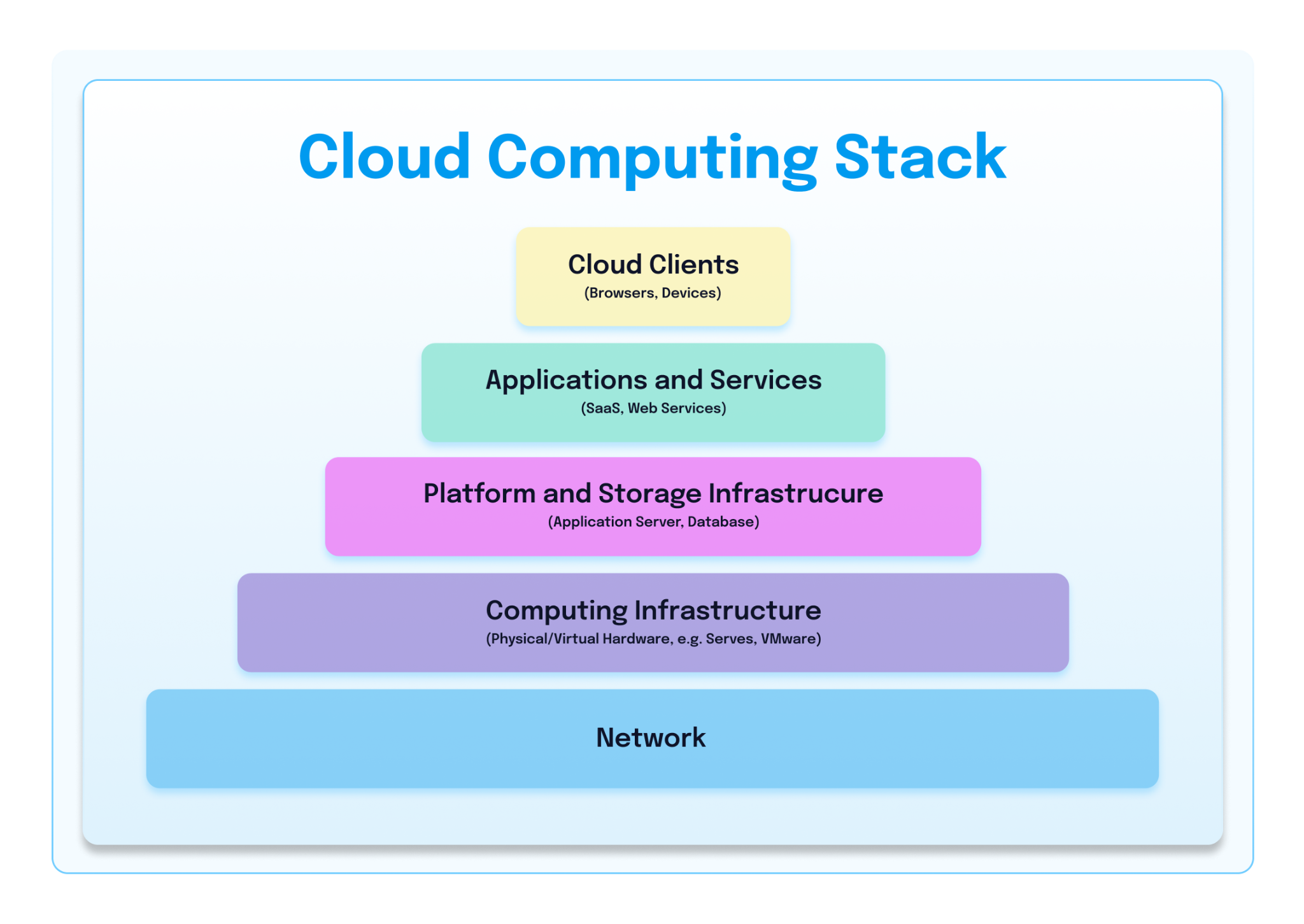
This paper explores cloud-enabled artificial intelligence to optimize unclaimed property management, while also integrating IT capabilities into a robust system that can help guarantee follow up with both companies and reporting states. By crucially operationalizing a full party history—which involves company archival records and documents relating to the disposition process of old customers/accounts—and the disposition process, cloud-enabled artificial intelligence can generate explore outcomes. Such technology can be trained to reason similarly to a human user to comprehend both the operational and regulatory rules governing the UCP risk layer. Knowledge would be best kept in a cream-of-the-crop IT infrastructure that consists of a well-configured cloud stack complete with a database both on-premise and in the cloud, business intelligence tools for data visualization, and an unclaimed property management solution.
2. Understanding Unclaimed Property
Unclaimed property (UP) legislation mandates that many types of business-held assets, after a specified dormancy period without owner activity, revert to the care of state governments, which strive for reunification with owners. States are required to adopt these laws in a manner consistent with the depiction in the statues. Property is protected for a specified period of inactivity, at which point it escheats to the care of a government entity, which then undertakes a robust due-diligence campaign aimed at reuniting the property with its owner. The museum may reclaim the forfeited property, but upon doing so payments often accrue costs [2]. In a small number of cases, UP legislation applies to property which reverts directly to state ownership and does not mandate a reunification effort, but these prominent cases are rarely studied outside of legal discourse.
Banks, insurance companies, utilities, investments, legal services, service-oriented businesses, and others are compelled by law to file Unclaimed Property reports, typically on an annual basis. Industry standards require that, due to the traditional use of physical paper documents, the states bring in reports in formats and layouts prescribed by the states. The states, which increasingly digitize their infrastructure, adapted their own claims systems to the state-managed software package which uses an extensive backend database package. The improved processing systems enable the states to run agency reports quicker, which may contain estimates of claims backlog and properties to deal with each month.
2.1. Definition and Types of Unclaimed Property
The term “unclaimed property” generally refers to money, audit adjusters, or other intangible property that has not been claimed or desired for some specific purpose. A V-shaped property flow is illustrated from both perspectives. The property flow begins with escalated property when an entity (i.e., the holder of the property) such as a financial institution, insurance company, or utility company receives the property [2]. Unclaimed property refers to property that has not been claimed or touched or not needed by its owner for a specified period of time, known as a dormancy period. After the dormancy period, the property is held with the state government and known as the state property balance. The state is eventually required to reunite the property with the rightful owner when they come forward. The property flow does not stop due to the chance of reclaims or due owner initiations. Property flows in an upside down V-shape. Therefore, the property management systems must include an integrated IT infrastructure for holders to track the history of the paths their unclaimed property take.
General requirements for property management systems of the holder, which will report property to the state, include registering as a holder with the state agency, uploading a report, and paying the state property amount. There should also be clearance from voluntary reporting if a holder disputes re-claim amounts. Unclaimed property refers to intangible money that is unclaimed or untouched by the owner, such as stale or unexplained transactions, named accounts with no cash movement, payouts/errors, lost credit balances, or in-demand transactions. Intangible unclaimed property includes items such as payroll checks not cashed and dormant money market accounts. These transactions lose track when a bank changes or closes, a utility company merges, or owners die. All banks, utilities, and companies in possession of unclaimed property are called holders. They must track and report unclaimed properties above a certain dollar value to the concerned state treasury every year. Otherwise, property cannot be claimed or demanded due to legal issues even if the owner comes forward because the state must have the property for a certain period. All transactions during which properties are unclaimed lose track or cannot be demanded because the holder does not maintain updated property information with the state.
2.2. Legal Framework and Regulations
The legal framework governing the unclaimed property process in Canada is set forth by each individual province and territory. These laws establish the process and timeline under which property becomes reportable to the government as lost, abandoned, or unclaimed property. Legislation typically covers categories of property that are reportable, such as uncashed cheques, unclaimed bank accounts, oil and gas royalties, etc. Regulations detail specific record-keeping requirements and rules regarding the reporting and remitting of property to the government. A legal framework thus exists at both the statute and the regulatory levels. The companies that administer the unclaimed property process and manage compliance also assess the relevant legislation and regulations, provide advice to clients about the process, and assist them with compliance.
Compliance requires the analysis of vast amounts of data, most of which are stored in large enterprise resource planning systems (ERPs). Specific data must be extracted from these systems and then transformed to comply with the business rules set forth in relevant legislation and regulation. The operational process of compliance can therefore be described in terms of the phases of data extraction, data analysis and cleansing, and data transformation and reporting. This operational process is self-contained in the sense that it interfaces with data systems but does not interact with consumer or customer-facing systems.
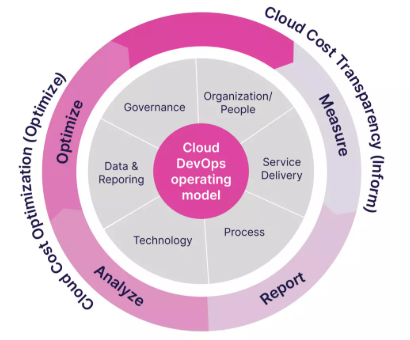
Technology is also used to monitor compliance with an organization’s legal obligations and to analyze legal risk and its potential impact on decision-making. In the case of these compliance regimes, however, analytics is almost always focused on monitoring compliance and detecting failure only, which can mean substantial liability, fines, and reputational damage. Alternatively, unclaimed property compliance is often seen as a risk management process in which legal liability is assessed on a transaction-by-transaction basis [3]. Unclaimed property compliance can thus be described both as a whole and in terms of its operational process and its interface with organizations' IT structures as a major component of compliance. An organization’s IT infrastructure may consist of data systems, business applications, consumer-facing systems, middle-ware web-enabled data interfaces, and enterprise software solutions. Compliance technology can be physically and logically integrated with the relevant systems in a seamless manner or exist as disjointed systems that necessitate the manual transfer of data. A framework is proposed to explain this technology landscape, focusing on how technology is configured with organizational indicate service networks (ISNs) and IT infrastructures to enable the successful execution and completion of compliance processes.
3. Challenges in Current Unclaimed Property Management
The increase in financial assets accumulation, a growing number of rounds of raising funds for start-ups and businesses, and many customers relying on the e-commerce ecosystem have caused an overall increase in the number of customers and customers’ accounts and concern about unclaimed property management. The overall growth in the financial assets ecosystem has also become a challenge for financial asset providers, which are hampered with the unclaimed property management process [2]. Post COVID 19, the growth in the number of businesses has incurred heavy unclaimed property for providers; managing the unclaimed property accurately and timely is currently a challenge for companies holding unclaimed financial instruments because their internal IT systems are not integrated. Either the enterprise resource planning, customer relationship management, or legacy databases are decentralized and not cloud-enabled, making it difficult for the IT team of each company to accurately identify the financial instruments’ various asset owners and properties and generate asset reports. Many financial asset providers are racing against time to manage the unclaimed property for their customers and investors. Before the unclaimed property report is generated, the asset managers—especially the unclaimed property associates or teams—have to spend days and weeks checking the changes that occur to their customers’ accounts and raising queries to each department or segment of the firm. All the firms holding unclaimed property have the same challenges; hence, this is an overall global problem that financial asset providers suffer from.
The routine operational services provided will be disrupted for the unclaimed property query, which is always produced randomly. Hence, it is difficult to make arrangements at both the customers’ and end-users’ sides. So far, there are no professional unclaimed property service providers that have the entire system integrated. A few players have their databases; however, the queries are always heavy in size, and their documentation does not cover all the enquirable customers. Moreover, it is also expected that there is some sealed asset database for queries that have not been disclosed before. This increases the challenge for the firms to handle the query smartly.
3.1. Inefficiencies in Traditional Processes
For unclaimed property holders—states, institutions of higher education and nonprofits, among others—laws in every state require the periodic reporting and remittance of unclaimed property when certain dormancy periods expire. Dormancy periods can vary by property type, and they can change based on the maximum period allowed in state law. Complying with differing laws and diminishing guides is a huge undertaking and requires critical planning and organization. Compounding the problem is the lack of a standardized process for determining when unclaimed property is to be reported.
Organizations with unclaimed property require a system to keep track of when property is considered unclaimed. This is a massive task because research regarding the owner must be done to determine the undeliverability of the property. Current solutions to keep track of this are ineffective, hindering the organizations’ ability to comply with the varying laws, as there is too much information to track. The system proposed is not another compliance tracking system. Rather, it would function as a program that archives period dates and requirements by property type so the organizations do not have to track this information individually or in a clunky manner.
The proposed solution would provide organizations with the means to retain a working group that monitors current unclaimed property law. This group would also provide a report outlining the beg date, allowable continuing notice, address ret, and address ret type for all property types. This report would then be put into an application that would serve as a compliance guide. Organizations would archive property by stored procedure into the application, and legislation changes could be tracked via alerts.
The system allows for a varying amount of completeness based on how in-depth tracking is desired. Searches could also use metadata and run automatically as often as desired. All records and search activity would be archived and available for compliance. The goal is a system that better fits the organizations’ needs considering their size, resources, and processes.
Equation 1: Unclaimed Property Matching Rate Model
Where:
- : matching efficiency function
- : AI system capability at time
- : IT integration index (cloud infrastructure, data interoperability)
3.2. Data Management Issues
Due to the complexity of the processes of reporting a claim while the resources available are limited, most holders do not have any unclaimed property management module in their IT systems. The usual ad-hoc approach is based on dynamic spreadsheets updated periodically with the latest available data. However, they usually rely on obtaining structured databases from IT departments and internal communication of the new entries. When this is the case, data are likely to be inaccurate or even untrustworthy. When using current databases, a large amount of manually transcribed data is likely to generate errors, as with all spreadsheet approaches. Consequently, when a certain level of complexity is reached, holders’ files appear poorly documented, resulting in lack of hopeful assessment for meaning further down this road.
Such problems are further augmented with the volume of data to analyze. Entries unclaimed for 10 years are eligible for reporting, and this means checking entries created during the previous 10 years, which can sum million entries. In almost all current situations this is far from being possible, but future expansion of the scope of unclaimed property management and unclaimed property taxation is likely to augment this number dramatically. Even if a large corporation has a dozen chairs or if a financial institution handles a country full of different kinds of accounts, the overall amount of data to analyze remains surprisingly small, even refreshing, for any recent information system.
The situation for stocks and other investments is totally different. Any large corporation can hold at least 100,000 stated managed investments with only a few plants and a dozen recorder records. Any institution in charge of interest bonds can hold staggering amounts of tickers with prices and rumors changing every millisecond. Any stock exchanging office must now handle enormous streams of registrations, purchases, sales, coupons, or maturities many of which are liable to reporting. Even when intelligence is not needed, the analysis of gigabytes of data for finding tracks eligible for reporting is certainly a computational challenge. The property’s need for analysis and forecasting is not met with suitable techniques. Even when downgrades are computed and daily reports on shipping cost are available, duties are still manual and untrustworthy.
3.3. Stakeholder Engagement Challenges
Stakeholder engagement is a critical aspect of effective unclaimed property management. However, traditional approaches to stakeholder engagement can be ineffective, impacting the ability to maximize recoveries and escheat in a timely manner. Estate holder entities often lack proper outreach strategies or tools, resulting in missed opportunities to connect with stakeholders on their unclaimed property. Additionally, when attempts are made to contact them, outdated methods may cause communications to be ignored or discarded, exacerbating the lack of prospect tracking or monitoring on stakeholder responses. Non-compliance with prescribed regulations regarding stakeholder outreach may also lead to penalties from regulatory agencies. When conducted properly, proactive outreach can restore connections with estate holder parties, foster relationships, and ensure timely compliance with state laws.
The issue of tracking stakeholder engagement as it pertains to unclaimed property is complex and nuanced. Most often, stakeholders can be classified as estate holder entities, but within the larger context of these entities, there are multiple entities, related estates, and individuals that may have an unclaimed property claim. Each estate-holder entity may have a third-party administrator, but the key contact at that administrator may change or the administrator may be removed altogether, complicating the recovery efforts of claimants. Against this backdrop, collecting all appropriate data across different jurisdictions and keeping it current is important yet far from optimal within the industry and plagued with challenges.
Moreover, a single unclaimed property claim often corresponds with dozens of different records in varied unclaimed property systems. Records may appear with or without a matching account of certificates in the system. Anomalies may also exist within records such as an incorrect property type due to a payment error on the administrator's part. For example, an heir may submit an estate claim to the bank where a deceased person's account still sits. However, without proper tracking of the estate’s unclaimed property, the bank may interpret the claim as being on a different person and therefore reject it. Inheritance and other relevant documents would need to be submitted once again. In summary, ensuring all stakeholder engagement efforts are well-targeted yet allowing for the proper documentation and tracking of these engagements is seldom realized with traditional compliance operations.
4. The Role of Cloud Computing in Unclaimed Property Management
A data lifecycle management policy is an important tactic for cost optimization, but having this policy operationalized in a cloud service can be challenging. This is because cloud infrastructures do not expose data and computation alike, enabling the transparent enforcement of such policy. On the contrary, to reap the cost benefits of cloud infrastructures, data and computation need to be placed on the cloud without disclosing the raw data content(s). In the assumption of at least a partially trusted and potentially hostile service provider, this leads to challenges in verifying whether the SLRM is properly followed by the cloud service provider. Properly following the SLRM would imply lower storage costs for the service provider [1]. Thus, loss of control over data is a barrier for potential users of cloud services. One approach to mitigating such loss is incorporating third-party auditing mechanisms which, once a common framework is assumed, though lead to other problems [4]. Alternatively, cloud data outsourcing can employ cryptographic mechanisms that make cloud stored data unmanageable and unidentifiable, thus leading to cost penalties on all but the most privacy-sensitive datasets. This study addresses cost optimization for over-retained cloud-hosted datasets through the design of a cloud-interpretable, fully homomorphic encryption scheme that preserves public-key functionality. Cloud-hosted datasets are encrypted in a multi-key homomorphic manner, meaning that each dataset is never decrypted by a single cloud, as well as maliciously interpreted even when parties collude. Based on the multi-key encryption scheme, a remote homomorphic comparison mechanism on encrypted data is employed for public-key date retention monitoring. Combined with the proposed encryption scheme, the detection of over-retained datasets is enabled without revealing their identity. The privacy guarantees of the proposed mechanism are formally analyzed and supported by an implementation. The design is one of the first solutions to address the increasing cost of long-term public cloud storage, while satisfying privacy concerns. Future research may explore the use of the heavy-hitter problem in the design of low-cost prevention mechanisms for the over-retention of machine learning models.
4.1. Benefits of Cloud Solutions
With increasingly complex data environments, cloud services have emerged as critical solutions for organizations to improve efficiency, accessibility, and affordability. There are many advantages when moving to the cloud, not just the benefits of removing existing infrastructure and costs. Organizations may be challenged with effectively leveraging the cloud to its full capacity, especially with multiple cloud vendors, applications, and services [1]. Increased data privacy risks with security breaches may necessitate more careful treatment of entering sensitive data into third-party systems.
Cloud computing is a model for enabling ubiquitous, convenient, on-demand network access to a shared pool of configurable computing resources that can be rapidly provisioned and released with minimal management effort or service provider interaction [5]. It is a disruptive innovation that has transformed the way organizations use and manage technology. Successful implementation of cloud computing requires profound changes in the IT landscape of technologies, processes, and expertise. Cloud computing is increasingly adopted by organizations. Large cloud suppliers provide various tools and services for organizations, IT developers, and data scientists to leverage technology for business. Cloud computing significantly lowers the total cost of ownership compared to standard on-premises IT infrastructure and is an attractive investment opportunity. Customers can choose service-based delivery models often referred to as Software as a Service, Platform as a Service, and Infrastructure as a Service [5].
Investments in data warehouses, data lakes, and enterprise data warehouses often require explicit hardware, storage, and software to be deployed and used. Clients can purchase computing power and storage capacity without realizing they are running out of capacity. Cloud-based data lakes and data warehouses have emerged to complement BI tools and to handle the ODS scale. Organizations are rapidly adopting cloud computing technologies and shifting their workloads and data to the cloud. Public clouds are attractive largely due to the convenience, investments, and low operating costs. Cloud technologies often have customer unlock mechanisms to allow organizations to appreciate their investment.
4.2. Scalability and Flexibility
In times of rapid change, fluctuations in unclaimed property inventories are passed down to custodians as they receive larger estates, such as corporate mergers and acquisitions, more frequent franchise tax compliance audits, and bankruptcies. Similarly, custodians who outsource the filing process to service providers may receive a deluge of unclaimed property records when the contract shifts. In all of these scenarios, cloud deployments can scale elastically to accommodate spikes in inventory without incurring detrimental costs during less active periods. For example, since cloud deployments allow data to be transferred to the provider’s data warehouses for processing, the organization does not need to ensure that all its records are maintained on the same infrastructure. As processing and filing software can now be offered on a platform-as-a-service basis, the organization does not need to procure and maintain the same server specifications across its numerous offices.
However, in order to leverage cloud-based data management solutions effectively, organizations must develop governing policies to ensure that these unclaimed property obligations are managed both reliably and cost-efficiently. For those with significant volumes of unclaimed property assets, cloud deployment should be part of a broader multi-source architecture that utilizes inexpensive and dedicated systems for remote data warehousing. As cheap cloud storage is now widely available, organizations can implement a data outsourcing strategy to capitalize on this significant cost discount. For active engagements reporting significant filings, organizations can seek to offload those positions onto a deferred revenue model; this is now feasible with cloud-based systems that can pool data from disparate sources. For organizations with on-premise systems, though staff resources can be a real cost, these systems typically do not incur a direct operational cost. As unclaimed property reporting becomes more common, many new unclaimed property custodians are choosing to invest these compute resources in cloud-based systems over their existing on-premise systems, as substantial upfront hardware costs can be avoided.
4.3. Cost-Effectiveness
The increasing number and complexity of regulations related to unclaimed property (UC) recording and reporting are making compliance, tracking, and audits increasingly expensive. Multi-year audits are more frequent and sometimes approach even larger entities than in years past. Any potential improvement to the current lack of a single source for up-to-date state laws could significantly help reduce compliance costs across multiple affected departments and outsourced service providers. The number of statesable properties (types of unclaimed property) has increased from a couple of dozen in 1990 to more than 200 today. Similarly, the requirements for integration between corporate accounting systems and states’ computers have gone from nonexistent to extensive, with property format and submission requirements for each of the 50 states now very different, although the number of uploaded, system-generating PDF files is still relatively small. Regulations specific to non-owner-initiated accounts are only increasing, with additional ecommerce and overall data privacy regulation coming from several governing bodies globally. These add to the stress that many companies in every industry are undergoing to determine if and how they comply, with the primary responsibility ultimately falling on the company and the board and audit committee [1]. Examples of specific unclaimed property-related requirements that can impact compliance expenses include enhanced requirements for escheatment due diligence mailings to owners of accounts with small, non-inactivity-triggered balances; required audits of unclaimed property compliance filed with each state in which unclaimed property is present; state-initiated audits of a company’s compliance, typically covering several previous years back to the company’s entry into that state; increased requirements for ownership proof when claiming an account; and scrutiny by the media, governments, and class-action lawyers towards those who find unclaimed costs but do not credit the owners [4].
5. Artificial Intelligence in Property Management
Traditional unclaimed property management processes are cumbersome and time-consuming. Most corporations currently use document-intensive approaches to manage unclaimed property (UP) risk. Various spreadsheets are exchanged by email amongst departments to consolidate data. Once analyzed, another set of spreadsheets is manually sent to different areas, with email conversations largely representing the institutional knowledge. Sharing and analysis involve excessive manual data entry and comparison across sources of information, resulting in errors or importance. There is significant overlap in the work performed by groups or individuals when analyzing UP risk for different jurisdictional addresses. Basic statistics are generated, as well as estimates for UP reporting and escheatment amounts, but every transaction examined must be reviewed again before a report is submitted to state governments. Financial models must touch nearly every transaction before they can be sent for technical review. Auditors usually bring people and paper hard drives, and hours may be required to explain the process under examination. Ultimately, the exploration of unclaimed property processes is not integrated into the finance function’s EPM infrastructure.
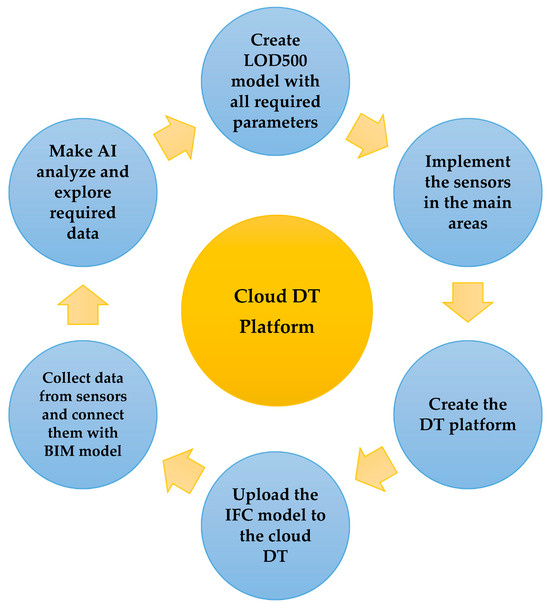
Based on research and the recognition of the importance of such systems, an AI-empowered cloud-based UP process is developed. The system streamlines UP management by proposing a secure and scalable data management solution integrated with cloud-enabled analytical capabilities. Specifically, a cloud-driven infrastructure is presented as a key enabler of the integrated data platform and data management system for UP processes. Extensive cloud-computing, big data analytics, and machine-learning frameworks are developed to enable advanced UP management and analysis systems to be built and continuously improved over time. This ongoing research provides foundational knowledge to address current limitations seen with UP processes and propose potential solutions to optimize them. It is hoped that this research will facilitate the task of exploring and extending the use of advanced technologies, especially for companies with large volumes of data to analyze.
5.1. Predictive Analytics for Claimant Identification
Historically, unclaimed properties have been defaulted for a long time before being reported. Any asset can go unaccounted for if the holder possesses little or no information about the asset, or if they are unable to communicate directly with the owner. Affected property owners may include individuals lacking a strong technological footprint, unrecorded heirs or beneficiaries, and deceased owners, among others. The identification of the rightful owners of unclaimed properties can be addressed with the help of predictive analytics. By adopting the methods outlined below, holders may achieve a deeper understanding of claimant statistics with minimal effort before analyzing their database of properties.
Equation 2: Cloud Processing and Search Time Optimization
Where:
- : base search complexity
- : cloud processing capacity
The claimants of unclaimed properties are most likely the owners or their current children. Hence, holders should first examine the question "What is the probability of a property being claimed if the parent's name is known?" In practical terms, holder organizations will only have "known" properties and claimants when unclaimed properties are address-matched for the predictive modeling task; this requires the segregating of the name field into first name and last name, the input for the forthcoming seven stage unclaimed certificate generation process. If the property code and type of the property are known, the probability distribution of the first name per property is independent of the last name’s knowledge. If the property type is known, the last name of an individual is sometimes predictive of which district the property can be unclaimed in and from where the unclaimed certificate should be obtained [3].
When estimating the probability of a claimant being on the list of known claimants conditioned on the property’s known details or on the first name of a parent, holder organizations must execute the task twice. The result from the first round is used to extract senior and junior in the second round. Predictive modeling of this sort can ascertain whether the first name of a property-holder is junior or not, given the property-holder’s last name and district, or given the property-holder’s age. The overall task involves distributions over claimed probabilities, as well as the use of the BTE’s distribution over its domain.
5.2. Automation of Processes
With the automation of processes, AI enhances the efficiency and accuracy of claim processes and related administrative work. The process of dealing with a claim often requires extensive documentation to be collected from the claimant, such as identity verification documents. In addition to this, an assessment of the submitted documentation must be made to decide next steps and the amount of potential compensation. Typically, the documentation required on a claim can be consulted through FAQs or similar documentation. However, it is difficult to display all the potential combinations of claims and the acceptable documents to assess those claims properly. With AI, knowledge management can keep together all procedural documents and assessments, with an integrated algorithm to interpret incoming documents. By uploading a document in a browser-based portal, a claimant can either receive a summary of the content of the document as an answer or be directed to the right FAQ.
Additionally, AI helps automate much of the process of claims assessment: low-risk, high-information claims can be processed automatically and the AI can assist human assessors with higher-risk claims. For example, a claim regarding an account balance dropping below a certain amount for one month for a bank could automatically be assessed as valid. In contrast, a claim for a still-ongoing investment account without any transactions must evaluate whether the claimant expects an exceptional amount, negatively marks an account on some criteria like fraudulent activity, and whether the accounts provided by the claimant correlate to the object being searched for validity. Such a complex claim may be processed with the assistance of AI, which can provide re-evaluated information about the accounts and ask additional clarity questions. So, even though completely automated claim processes will perhaps always stay out of reach due to the complex nature of these claims, it is expected that claims are increasingly automatically processed properly through AI. Additionally, the extensive process of managing proper documentation, separating ownership and/or documentation location, and posting documentation can benefit from AI-enhanced tools to raise efficiency.
5.3. Enhancing Customer Experience
Advent of machine learning, particularly the rapidly advancing fields of predictive text, natural language processing, and computer vision, presents an unprecedented opportunity to enhance the customer experience in the unclaimed property systems of states. Structured and unstructured information residing in opportunities for revealing property owners is vast but largely untapped. With continuous learning mechanisms, it is now possible to discover unclaimed property from geolocation data, social media accounts, or even out-of-date newspaper records. The threat for states to take enforcement and recovery action on this property will grow in the absence of appropriate controls and mechanisms. Automated systems for identifying and informing claimants of property made in their state of last benefit may need to be deployed rapidly.
Through features presented on state websites, innovative machine learning modeling can dynamically build a description of potential owners of unclaimed checks for the past several weeks from underlying databases and logs. Such machine learning models can also handle address matching with a very broad understanding of what an address looks like. States can then partner with third-party data vendors to find people that are sufficiently similar to the profile. Collaborating with major real-estate databases, social media platforms, or other information brokers, states can then find ways of classifying this new information as being most relevant or not at a given moment.
The world is also observing verifiable commitment to gutters. Computer distortions or image degradations of meaningful value in databases procured for telephone or email networks are no longer necessary. Novels allow strong, simple verifications to be designed for judging whether the quality of text is sufficient for correct extraction. Pooling widely disbursed data about a person’s property makes it harder for the state. Many states will need to change the law, possibly mandating some sorts of verifications. Still, the pooling of pre-existing datasets could occur relatively freely, often before the law is changed. No state is safe once the information is known about a claim that could possibly exist somewhere in a non-believer state. Equipment used to freeze claims to databases will also be able to purge them from their systems. The rapid approach of all of this requires vigilance and anticipation of the types of information and mechanisms to operate queries that will need to be verified.
6. Integrated IT Infrastructures
Organizations operate on congenital advantages—agility, capital structure, effective value chains, lobbying power and leadership team—thus creating uneven levels of success. Players who find these advantages ever-thinning turn to a suite of tactics including business model transformation, targeting market adjacencies, process re-engineering and digital transformation []. Despite a flurry of activity and excitement, accounting and finance functions are largely on the sidelines of these efforts. The finance function’s role is primarily to report backward-looking information rather than shape future decisions and outcomes. Many tools exist but the focus is typically on recordkeeping rather than the models that drive the business. This has consequences for both the viability of the finance function and the viability of the organizations they support. Finance functions face the task of examining, reinventing and branding themselves as the invigorated value-added business partner to both reduce their cost of operations along with best positioning and supporting their organizations to address complex decisions and choices that shape future performance. Item-level data transparency means there is far more data than currency. Prevented from holding ideas in parallel, organizations focus on snapshots—seeking best costs, price points, vendor performance, etc.—shaping sequential models though configurations that require heavy lifting to update on variable sifting. Advanced computational engines lend to timely heuristic opportunities as wildfire-spreading fads but also concern: not being driven by safely-distributed globally-known models, while learning that trusting a model’s conclusions is as dangerous as trusting a neighbor. Without access to accounting reports and information, parties slice-shared to rebuild the incognito unit batches that went through the procedure while safeguard against potential news leakage. Each party has to ensure global consistency between hard constraints and a dynamically rescindable regime of soft constraints—bid-ask narrowing or incentivized item reports, for those with time-sensitivity concerns.
Two transformative technologies—cloud-enabled artificial intelligence (AI) and integrated IT infrastructures—are described, which organizations can leverage to optimize unclaimed property management solutions and practices that capitalize on those types of organizations’ key advantages to achieve best-computed and timely handling of unclaimed property items. A synthetic case is detailed—relics auctioned of long-unclaimed in-bag bases at department stores including both fix-priced, bids and bids—with shady value-affairs. Culture encodes behind-the-closed-door practices which perspective-correct demand assessments and pre/post-invoicing support transaction systems take advantage of, where sale interactions can directly span mappings from Fiji to Beijing. Ledge reporting also necessitates transaction-oblivious and view-pero-dedupage strategies, given ID28 diamond-wielding buyers and Superman-like filtered searching capabilities [2].
6.1. Importance of System Integration
Unclaimed property is property that has been abandoned for a certain period of time. It belongs to the state, to which the assertive owner is to turn its care over. Up to now, there are many unclaimed premiums in insurance policies waiting for rights owner to come and claim, but many persons did not aware this. This paper designs a cloud-based intelligent unclaimed property service platform that mainly aimed to help government administrations in monitoring, handling unclaimed property, and providing inquiry and retrieval service for right-holders. The proposed platform has a component-based architecture based on hybrid cloud service model, in which cloud-enabled AI modules and integrated IT infrastructure are also discussed in detail. The teamwork modules for government administrators and the personal modules for right-holders are developed based on Spring Cloud Framework. The integration of data acquisition and migration module for insurance company side, which has many heterogeneous sources, as well as data scraping module for high-speed acquisition of public unclaimed property announcement records, are implemented based on machine learning tools. Based on cloud computing technology, a cloud-based intelligent unclaimed property service platform is designed for monitoring and handling unclaimed property after analyzing and integrating existing techniques [5].
6.2. Data Sharing and Interoperability
The emergence of Cloud-enabled AI (C-AI) technologies brings new opportunities for improving public services in terms of cost-efficiency, eco-friendliness, citizen-centricity, and globalization. To this end, this work proposes an architecture for a decentralized, C-AI-based system for sharing unclaimed property across municipalities. Such a system can enable citizens to recover their defaulted goods through a one-stop public service instead of communicating with different municipalities. This architecture comprises two main components: a robust storage and processing component, based on a blockchain federation with an evergreen cloud service for housing public data offerings, and a citizen-facing component for utilizing this information. The citizen-facing component includes the possibility of embedding C-AI resources and approaches that have been created externally, e.g., e-Services provision APIs. This architecture can act as a database that contains valuable public, machine-readable data and a programmable environment that can be utilized for extracting information in a controlled, trustworthy manner.
Diverse data sources may contain relevant information on unclaimed properties (i.e. to whom the property belongs, when and why the property was acquired publicly, etc.) this information (or parts of it) may be held by municipalities or any other public service actors and may or may not be machine-readable and public. This information must be collected, checked, enriched, and integrated with the existing databases. Observing the current heterogeneous governance approach, it is impossible to have a single entity for all the matters concerning unclaimed properties at the national or international level. Therefore, to cover the core functional capabilities as this system is deployed for handling unclaimed properties, multiple public actors must be involved. Moreover, an integration framework for convincing data protection regulators, lawyers, and ethical boards must be in place. Following the adoption of C-AI resources, relevant actors should exploit the self-training capabilities of large language models to explain and understand the process, comprehend current approaches, and receive assistance with the newly introduced integration process.
There should also be seamless monitoring and auditing over the data moving between services. Current public data is constantly in flux; thus, the maintenance of a data pipeline for both the public services and the external resources on the federation must be there. Such systems must also be harnessed to incorporate the data produced in-house through utilizing the tools offered by the regimen. Nevertheless, human errors can cause significant damage to the system’s functionality. There should be auditing mechanisms to precisely observe, record, and monitor every action performed in the system’s databases, storage spaces, and resources. Cloud-enabled AI refers to the convergence of cloud computing and artificial intelligence that is designed to manage systems and analyze massive amounts of content. It is a combination of two powerful computing technologies of distributed computing which is responsible for pooling together huge datasets.
6.3. Real-Time Reporting and Analytics
The unclaimed property sector is radically changing due to pressures from strong law and societal expectations. The unfinished picture for the unclaimed property office's management may be harmful. On-premise IT infrastructure is generally unable to keep up with expanding regulations and dynamic changes in firms, leading to increased challenges for unclaimed property offices. It is assumed that board frameworks are a means to anticipate and control these regulatory changes.
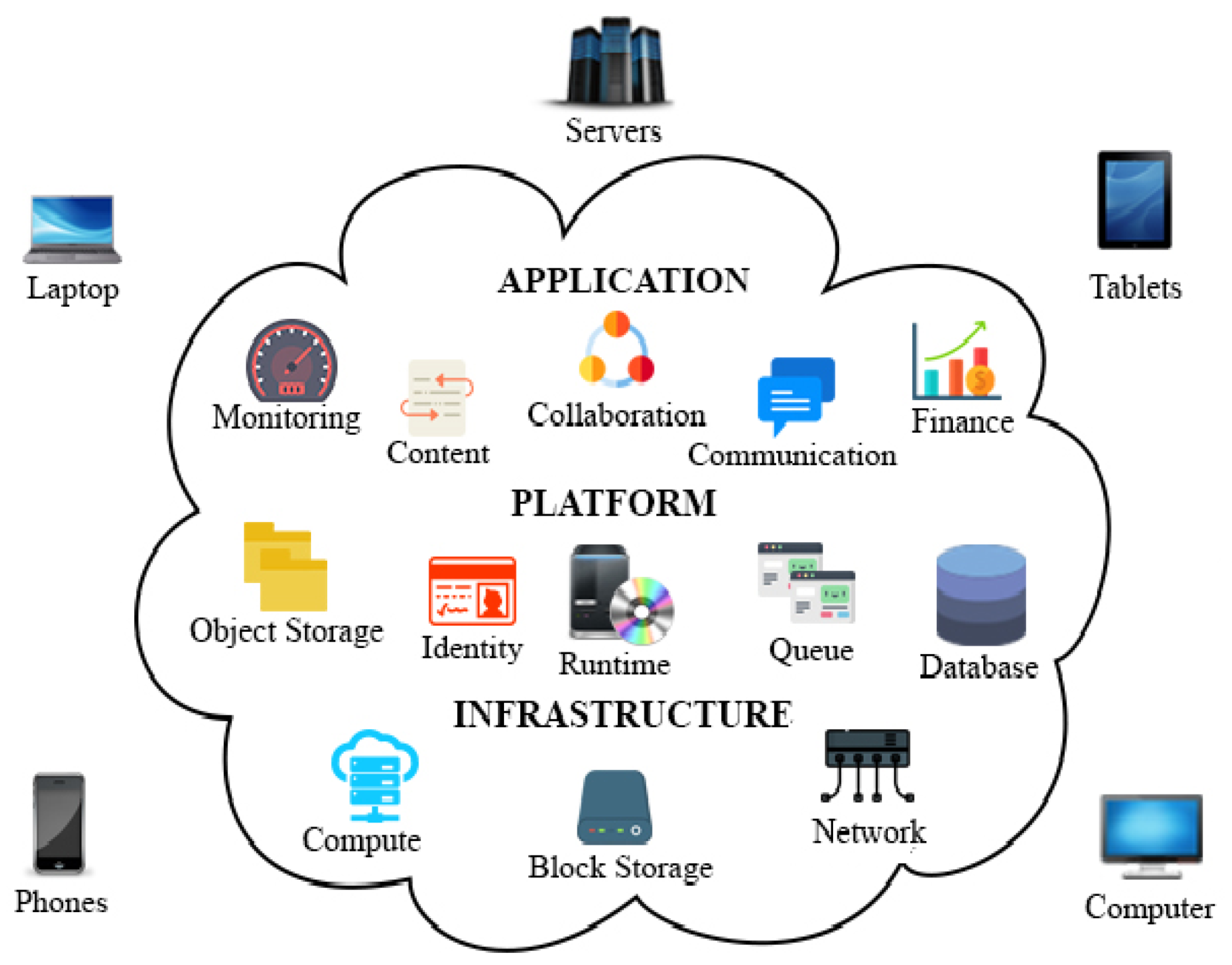
A solution loop is proposed for the real-estate industry sector clients. The dominant part of the application components in an integrated infrastructure model should be based in the cloud. These items achieve a progressed level of advanced support throughout the property lifecycle phase. Local server-based items are not anticipated to progress tally. The relinquished property applications in the platform and available at the cloud are presented sorted on the basis of their functional categories. Each component in a category is matched up to a collection of building blocks that code is happen, more subcategories are crammed with the cloud-enabled AI and integrated IT structures.
Infrastructure management has become one of the key concerns for organizations today, primarily because of its growing importance in carrying out the core business processes of organizations and ensuring business continuity. There are complex interdependencies between network bandwidth, server capacity, web-based applications, application performance, and user task performance. Research performance is needed for efficient and effective management of the cloud-enabled AI-based IT infrastructure. A properly managed IT infrastructure can lead to effective utilization of resources and service levels that fulfill or exceed the expectations of organizations.
7. Case Studies of Successful Implementations
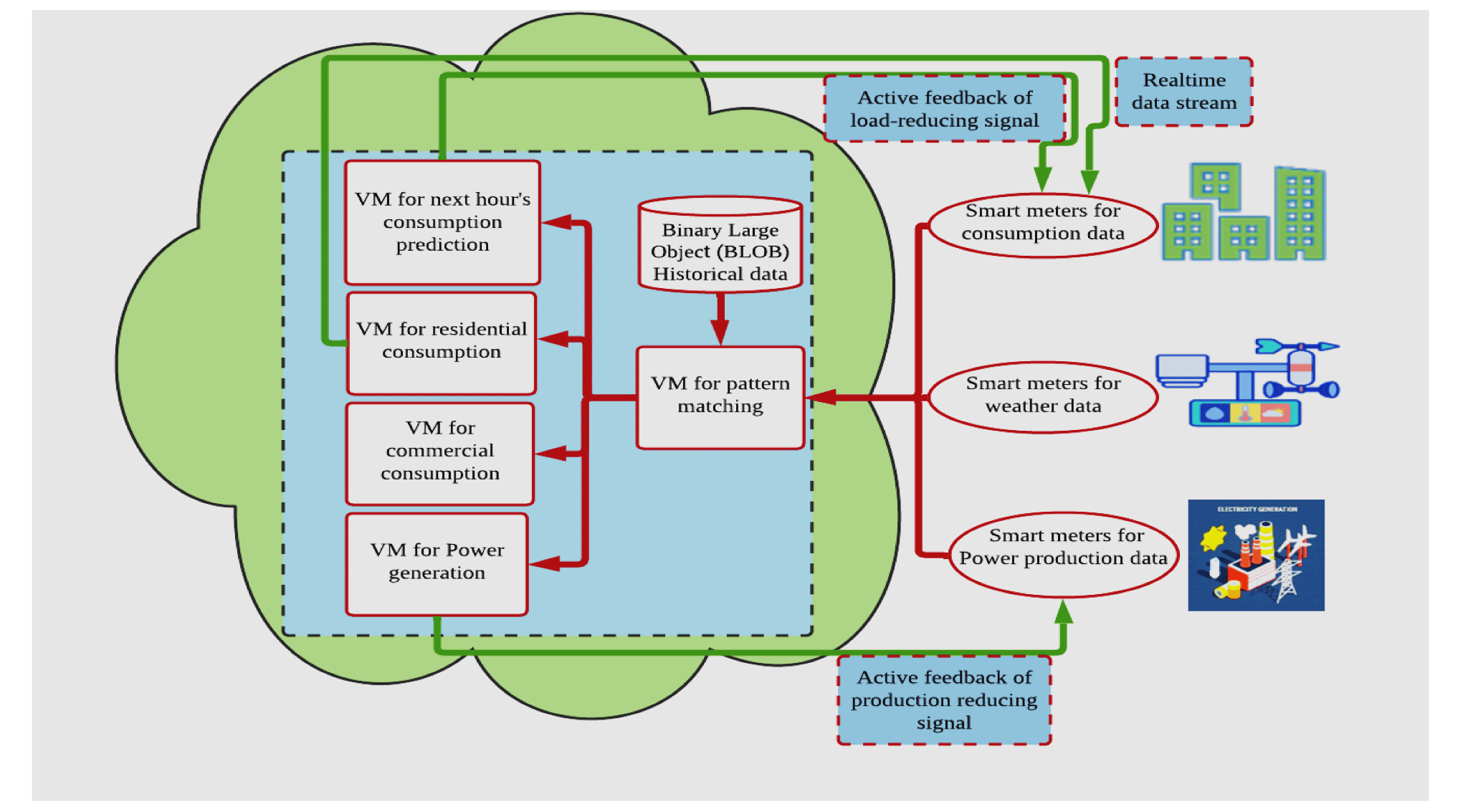
This case study investigates the optimization of unclaimed property management processes using a combination of an AI service for regulations and processes on the cloud and a system architecture connecting an organization’s IT infrastructure with the AI service. The results show that the proposed integrated system allows for satisfactory automation of the key processes requested by the organization and enables handling of specific regulations and artifacts by integrating the AI service as a small part of the overall system. The case study is based on knowledge obtained from the organization regarding the domain unclaimed properties as well as the technical disciplines cloud computing, data engineering and AI. A new domain in cooperation with a new organization provided challenges regarding understanding and knowledge acquisition. Regarding the technical disciplines, their combination into an integrated system raised further challenges regarding architecture, security and scaling. The resulting integrated system enabled the organization to gain a more mature utility of their IT investment, through cloud-based and generative AI-based automation of unclaimed property processes, while providing both compliance with law and high responsiveness to their clients [5]. This compliance requires an initial custom configuration of the new system to ensure adherence to a wide range of continuously evolving regulations and address disparate processes and artifacts across the several jurisdictions involved.
The integrated system provides a SaaS offering of a generative AI service that provides the properties, translations of benefits and exemptions, regulations, regulations to document mappings, and templates on the cloud. Legislative changes are tracked to update the regulations and mappings. The organization implements processes on this service that are to be complemented by automation regarding the effective handling of artifacts relevant for this input. Among the more generic processes implemented, most noteworthy are a search across the regulations to identify applicable ones regarding a given artifact. The results of this search in terms of facts, required documents, and mappings to templates are provided as feedback for the owner’s utilization. The owners’ requests are monitored for frequently changing parameter values, and input is assembled with references to documents included by OCR processing if necessary. The input is communicated across the cloud and a data store using queueing communication and retrieval on identifiers [1].
7.1. Public Sector Examples
With more than 750,000 holders across the country, coupled with the administrative burden of managing unclaimed property at the city, county, and state levels, the Public Sector in the United States has begun to transition towards cloud-enabled solutions capable of providing constituents with seamless customer service experiences. The solution portfolio addresses the Public Sector in general, focusing specifically on finding new solutions optimized for stakeholder engagement and constituent service delivery while enhancing incumbent technology, leveraging the cloud estate effectively, eliminating departmental silos leveraging integrated information technologies, and future-proofing and scaling.
To illustrate how a comprehensive, cloud-enabled digital transformation can achieve this vision at all levels of government with a unified tax platform deployed on cloud-enabled technology, three detailed case studies are highlighted from the projects run to help government agencies meet their mandates, budgets, and timelines. The first case study looks closely at the City of Chicago as an example of leveraging a cloud-enabled digital tax strategy to facilitate stakeholder engagement, improve customer service, and provide the capability for continuous innovation and rapid scaling in an omni-channel environment. Turning to the State of Nevada, the second case study explores how a statewide solution around unclaimed property was implemented in under six months, providing a model for other states looking to move quickly while also improving the experience for both constituents and agency staff. The third case study examines the early implementation of California’s statewide self-service camera registration process as a unique cloud solution that intelligently routes malefactors without agency intervention. By widening the lens beyond successful implementations, the essay also captures grounding insights on common implementation challenges learned through years of experience creating solutions for the public sector. These informative examples illustrate a new generation of solutions that can better engage with stakeholders and constituents alike while meeting the demands of a new normal in government service delivery [1].
7.2. Private Sector Innovations
Aside from the public sector, several private-sector firms have developed software and systems that would collect unclaimed property data, evaluate the quality of that data, and provide feedback to holders as needed. These systems also contain user interfaces to allow property holders to search for and submit records to a system compatible with state reporting systems.
Some private-sector companies offer unclaimed property compliance services to holders of unclaimed property. They arrange for current property holders to collect any incompletely reported property that might have been improperly claimed by former owners. As holders review data sets prepared by their users, these firms could benefit from acquiring or linking to systems described above. It also seems likely that some accounts/concept products of a publicly traded company could serve to calculate and document likely claims and missing processors for the less manipulative firms on this list.
Companies with financial, social, or capital database services could easily expand their legitimacy to developing similar analytics. One approach particularly attractive to large holders would be to contact stakeholders or their industry organizations regarding model data interpretations of their interests.
There are other avenues through which software or systems to analyze claims can be developed although most of the ideas can be iteratively generated on a smaller scale. For example, a well-known firm that reviews property database reports that often catch less savvy customers’ holdings might be able to use teams of data analysts to estimate general similarities or experiences of reports not inspected.
Large legal or consulting firms with access to attorneys knowledgeable in auditing databases on a grand scale are tailoring products that would be compatible with states’ methods. For now, it appears that state systems are winning the race of developing a partnership of holding unclaimed property analytics; proprietary private company developing a proffered suitable systems is a more distant second runner up.
8. Future Trends in Unclaimed Property Management
Despite interest in unclaimed property management showing signs of diminishing, the landscape for abandoned property is ever-changing, so practitioners and stakeholders should be aware of the following trends that will likely affect the industry. It has always been critical to engage in meaningful stakeholder dialogues. Social media is a place where stakeholders congregate to voice opinions and share information, and there are always opportunities to connect with stakeholders through blogs and the media. There are also opportunities to connect with unclaimed property interest groups and attend their session at various conferences. Between these channels and the required reports to be filed, organizations have avenues for informing all interested parties about the most prominent programs affecting the unclaimed property process.
Emerging technologies such as Blockchain, artificial intelligence, and big data will begin affecting unclaimed property management sooner rather than later. These tools will enable organizations to create an environment and culture of discovery, which will help find unclaimed property faster and with greater accuracy. For organizations that hold property for others, this environment will improve compliance while leading to increased revenues for custodians. They will be able to audit in real-time, considering the number of servers and data stored.
Artificial intelligence will respond to and initiate calls. Chatbots will respond to requests and inquiries outside of business hours, broadening participation. Blockchain and Smart Contracts will store data of transactions that will automatically execute and are immovable, thus decreasing time and labor and increasing accuracy and completeness. Many companies deploying these technologies will partner to integrate IT infrastructures into their associative processes. This will allow management to decrease labor and time while improving compliance, accuracy, and revenues.
Regulatory change is always on the horizon. New management in states and in organizations leads to varied interest levels. Affected organizations keep a check on the process while still hoping that property will go unclaimed forever. However, there are also organizations looking to broaden the process. Cultural and technological changes can lead to property being claimed much quicker without participant surprise. There are always avenues in which best practices are shared, with states willing to aid each other. Then there are states looking to share tools among themselves to make processes smoother. There can also be differences among states in how aggressively they pursue unclaimed property investigations.
8.1. Emerging Technologies
Unclaimed properties that remain unclaimed on or after abandonment by the owner/claimant may pass into the custody of an appropriate state agency, presumably the State Treasury Department. State laws require financial institutions, insurers, and businesses to search for claimants for a minimum of five years. Failure to identify a claimant will result in required records being turned over to the relevant state agency. This requirement amounts to an inability to touch trust assets for five years and potential loss of touch forever if payment is made to the appropriate state. The state is unlikely to want trust assets, resulting in difficulties for any organization with such accounts. A cloud-enabled AI service, capable of addressing state-specific requirements automatically, could save many organizations significant amounts [5].
Some simple unclaimed property accounts could be handled manually, looking up records periodically, but correcting many records will likely be arduous (and mistakes could cost unclaimed property amounts and related costs). Having a simple software wrangler capable of scanning for appropriate data, formatting it, and pushing directly to an appropriate database would likely save huge amounts. This option’s complexity is less value because state thresholds are usually quite low and the number of unclaimed property accounts tend to increase on new/late records. It is thus hard to know if systems would be best handled hourly or if a cloud service could handle large amounts better and more effectively than in-house systems, by performing required data parsing and aggregation at the click of a button. The implications of missing unclaimed property filing are severe enough that both options should be pursued.
8.2. Regulatory Changes
As escheatment laws are becoming stricter nationwide and government agencies are ramping up efforts to uncover fraudulent practices, unclaimed property compliance is in the midst of a rebirth. As recently as five years ago, unclaimed property compliance was seen more as a nuisance than a business-critical function. That perception has changed, with increased rulemaking and enforcement activity at the state and federal levels driving immense scrutiny and risk in this area. Institutional investors and their service providers that have historically been lax in their approach to these issues or regarded them as only tangentially related to their core business are now facing considerable pressure from both regulators and the public.
As regulatory burdens and complexity have grown, investment management firms have increasingly turned to internal resources as well as independent technology and service solution providers. This has resulted in the emergence of a multi-billion dollar unclaimed property compliance industry that is moving quickly to develop tools, services, and solutions to optimize institutional investors’ unclaimed property management processes. The evolution of technology-driven solutions for various operational processes in the financial services and asset management sectors over the past couple of decades has generally lagged behind other industries, such as retail and consumer goods. In unclaimed property compliance, however, advancements are being made.
For instance, the emergence of technologies such as Artificial Intelligence (AI) is changing the competitive landscape for critical-market-process orchestration and enhancement in the financial services industry. Applications of AI, including machine learning, natural language processing, and automated decision making across the asset management operating model spectrum, have the potential to drive transformational improvement in cost, quality, scalability, and risk reduction, while radically changing the operating model. The risk landscape facing institutional investors in the regulatory realm is changing rapidly, as well, due to increased oversight and scrutiny from lawmakers, regulators, and the investing public. In particular, escheatment laws – and the scrutiny on compliance with them – are becoming stricter nationwide. In both scenarios, an unprecedented convergence of pressures is occurring. Technological and operational innovations are emerging quickly, while regulatory developments and amplified scrutiny are making unhitching from traditional processes difficult, if not impossible; a balancing act is needed [3].
Equation 3: Cost Reduction via Integration
Where:
- : baseline operational cost without integration
- : cost efficiency gain from integration ()
8.3. Best Practices for Adaptation
To best adapt to these changes in the management of unclaimed property, organizations should adopt certain best practices in their stakeholder engagement, data collection, and due diligence. This approach is evident in an analysis of best-practice guidelines, which identify factors that contribute to compliance with unclaimed property law and minimize the risk of litigation or other noncompliance complications through five basic categories of best practices.
In terms of stakeholder engagement, organizations should adopt the appropriate organizational compliance structure, ensure board oversight of compliance, maintain effective relationships with state agencies, ensure continuity of finance and treasury department operations, and maintain continuity in organization operations in the event that the chief compliance officer departs. In relation to data collection, organizations should adopt screening and verification procedures, specifically designate a single person for oversight of data sources, establish clear procedures for resolving data discrepancies, assess the volume of non-historical data, and incorporate state unclaimed property law requirements into global reporting requirements and any third-party software compliance solutions.
Due diligence best practices primarily include using a qualified vendor for write-off provisions within one-hundred-twenty days after acquisition of the property, keeping records for one which-hundred-twenty-day period, and ensuring that any documents requested are maintained on-site as opposed to in storage. One of the general compliance best practices identifies automated compliance software as a tool to export fast, analyzable, reportable data. Five additional compliance best practices apply broadly to any organization: educate all stakeholders on compliance requirements; inform all stakeholders on compliance maintenance focused on process; limit reliance on third-parties; assign responsibility to key stakeholders; automate compliance reporting.
9. Conclusion
Unclaimed property (UCP) management has become an urgent issue for corporations across the globe as the number of states claiming and enacting regulations increases. An increasing amount of resources need to be diverted just to address compliance risk as corporations scramble to gather parasitic financial data as infrastructure external to their accountancy tech stacks is dug out, converted, cleansed, and then transformed into an unfamiliar format just to feed the data into UCP systems that were never intended for the task. This is inefficient, expensive, risky, and more akin to an operation than a business practice.
Corporations are hungry for actionable spend visibility, an evergreen enterprise data model that can leverage conditions unique to corporations, such as dispersed ownership of entities, legacy data formats, etc., enabling value recognition, and a service originally designed for tax optimization that is agnostic of geography or industry but may be adapted with modest time and effort. Cloud-enabled AI analytics offers the power and flexibility needed to tackle a problem of this magnitude. For success is not simply a matter of running a bunch of outdated agents in the cloud or orchestrating on-prem-ed data scrapers. The volume and velocity of data generated on the internet today by financial institutions, switching to out-of-band overnight batch operations, along with ever-evolving data formats, means organizations require the latest and greatest AI and tech stacks. Such analytics can detect anomalous data conditions, patterns, and trends, as well as reveal the network paths of currency transfers and conversions across banks, services, and time zones, before contextualizing the findings into a format digestible by laymen and recommend actionable remedial and corrective steps.
Such intelligence, published directly to an exec or preliminary infrastructure external to a corporation's IT stacks, opens up an entirely new and advantageous workflow that has not only measurable and reportable value, but is also actionable, consistent, and repeatable. Smart detections of values, values transgressing thresholds, trends, outlier values, and so forth, leads to contextualized intel. Findings on networks are contextualized, formatted, and contextualized. As an example, anomalies Values of currency or service usage detected, their suspected nature, custodian, and screen captures are sent directly to the CFO via email with just a few clicks of a button. Such corporations need to transform the extracted data of rejected reports, not from scratch but as part of multi-step pipelines running completely end-to-end in singular coprocessing steps.
References
- Karthik Chava, "Machine Learning in Modern Healthcare: Leveraging Big Data for Early Disease Detection and Patient Monitoring", International Journal of Science and Research (IJSR), Volume 9 Issue 12, December 2020, pp. 1899-1910, https://www.ijsr.net/getabstract.php?paperid=SR201212164722, DOI: https://www.doi.org/10.21275/SR201212164722[CrossRef]
- Data Engineering Architectures for Real-Time Quality Monitoring in Paint Production Lines. (2020). International Journal of Engineering and Computer Science, 9(12), 25289-25303. https://doi.org/10.18535/ijecs.v9i12.4587[CrossRef]
- Vamsee Pamisetty. (2020). Optimizing Tax Compliance and Fraud Prevention through Intelligent Systems: The Role of Technology in Public Finance Innovation. International Journal on Recent and Innovation Trends in Computing and Communication, 8(12), 111–127. Retrieved from https://ijritcc.org/index.php/ijritcc/article/view/11582
- Xie, Z., Li, H., Xu, X., Hu, J., & Chen, Y. (2020). Fast IR drop estimation with machine learning. Proceedings of the 39th International Conference on Computer-Aided Design, 1–8. https://doi.org/10.1145/3400302.3415763[CrossRef]
- Ghahramani, M., Qiao, Y., Zhou, M., O’Hagan, A., & Sweeney, J. (2020). AI-based modeling and data-driven evaluation for smart manufacturing processes. IEEE/CAA Journal of Automatica Sinica, 7(4), 1026–1037. https://doi.org/10.1109/JAS.2020.1003114[CrossRef]