
Abstract
Background: Gallibacterium anatis is an opportunistic pathogen, mainly associated with infections in poultry. Infections in humans have only been described four times (in France and China). Case presentation: We report the case of a 62-year-old non-immunocompromised male patient with a gastric bypass in his medical history, presenting with cholecystitis in whom Gallibacterium anatis was isolated from the blood, besides an Escherichia coli. Identification of the G. anatis was achieved using MALDI-TOF MS and confirmatory 16s RNA sequencing. The patient was successfully treated with piperacillin-tazobactam, resulting in clinical improvement. In the context of impaired host defenses due to acute cholecystitis with an E. coli bacteremia, it is conceivable that G. anatis entered the bloodstream through bacterial translocation from the gastrointestinal tract. Conclusion: This case highlights the importance of advanced identification techniques and awareness of rare pathogens in clinical practice. Gallibacterium anatis, particularly drug-resistant strains, may represent a potential infectious agent and should therefore be considered in diagnostic work-up.
1. Introduction
Rare bacterial pathogens are increasingly encountered in clinical microbiology laboratories due to the widespread implementation of advanced automated identification systems, and at the same time the global increase in immunocompromised patients. Nevertheless, the increasing identification of atypical pathogens poses a growing clinical challenge, as their true clinical relevance is not always clear and optimal therapeutic strategies remain uncertain.
Gallibacterium anatis, formerly known as Pasteurella anatis, is a Gram-negative, non-motile coccobacillus belonging to the family Pasteurellaceae. The genus was described by Christensen et al. in 2003 [6]. It includes six species: Gallibacterium anatis, G. melopsittaci, G. trehalosifermentans and G. salpingitidis, G. genospecies I-III and G. group V [3].
Phenotypically, G. anatis can be divided into two distinct biovars based on the presence of hemolytic activity. Gallibacterium toxin A (GtxA) is considered the principal virulence factor of this organism. It mediates both hemolytic and leukotoxic activity. Later, Flf-A was identified as a fimbrial protein precursor in G. anatis that is crucial for colonization and invasion of mucosal barriers [2, 12]. This FlF-A showed sequence similarity to the F17-like fimbrial protein precursor identified in extraintestinal pathogenic Escherichia coli (ExPEC) strain [9]. There is genetic diversity among Gallibacterium isolates in flocks, and studies proposed that G. anatis isolates vary in their virulence potential [4, 11].
G. anatis is considered part of the normal microbiota of poultry, colonizing the gastrointestinal, genital and upper respiratory tract, where it may act as an opportunistic pathogen. In contrast, G. anatis is not regarded as a component of the human microbiota. Infections caused by this organism have been described in various animal species, including cattle, horses, pigs, sheep, and rabbits, but is primarily associated with poultry infections. G. anatis causes salpingitis and peritonitis in egg-laying chickens. Several studies showed the role of G. anatis in chickens as an important bacterial pathogen associated with septicemia [2, 15]. G. anatis has been linked to a broad spectrum of pathological conditions, including septicemia, pericarditis, hepatitis, oophoritis, follicular degeneration, enteritis, and lesions of the upper respiratory tract [7].
Avian Escherichia coli is considered the most common pathogen that can cause reproductive disorders in chickens, but also inhabits the normal avian microbiota. This bacterium can cause the same lesions and gives a similar clinical picture with salpingitis and peritonitis. The lesions cannot clinically be distinguished from G. anatis. In addition, G. anatis is often isolated together with E. coli. They can cause mono-infections or can occur as co-infections. Some investigations suggest that the importance of Gallibacterium spp. is likely underestimated due to overgrowth by other bacterial species and the difficulties of identification [7, 13, 17].
G. anatis has only rarely been reported as a human pathogen, with only a limited number of clinical cases described to date, mostly related to pulmonary or gastrointestinal infections. A case from China reported diarrhea following the consumption of self-slaughtered chicken purchased at a local farm [18]. In France, an immunocompromised patient with cytomegalovirus-associated diarrhea developed bacteremia with G. anatis, presumably due to bacterial translocation facilitated by gastrointestinal mucosal damage [1]. Additionally, two respiratory cases were described in France: one involving identification of G. anatis in sputum from a patient with chronic bronchitis, and another in a patient with a pulmonary abscess, where blood cultures yielded Escherichia coli and bronchoalveolar lavage fluid grew both E. coli and G. anatis [8, 10].
Several studies have reported the emergence of multidrug resistance in G. anatis, with resistance documented against tetracyclines, sulfamethoxazole–trimethoprim, and fluoroquinolones. Biofilm formation is believed to contribute, at least in part, to the development of antimicrobial resistance. A phylogenetic correlation appears to exist between strong and weak biofilm-forming strains [5, 11]. Tetracycline resistance is typically caused by tetB, tetC and tetR genes. Whereas fluoroquinolone resistance could be due to veterinary use of the product and mutations of quinolone targets [14, 16]. Horizontal gene transfer likely plays a role in the acquisition of resistance, besides the resistance traits encoded whitin their core chromosomes [11].
Recent years have seen an emergence of G. anatis isolates and resistance, highlighting the potential clinical relevance of this organism. Here, we report a case of cholecystitis at least partly caused by Gallibacterium anatis, identified in our laboratory using MALDI-TOF MS, and discuss the clinical significance of this finding.
2. Case presentation
We describe the case of a 62-year-old man with a medical history of gastric banding, followed five years later by conversion to a Roux-en-Y gastric bypass. He was not taking any chronic medication. The patient presented to the emergency department with severe postprandial abdominal pain, initially localized to the right flank with radiation to the back. Clinical examination revealed a distended abdomen with diffuse tenderness and guarding, most pronounced in the right hypochondrium and epigastric region. Murphy’s sign was strongly positive. Initial hypotension and tachycardia were stabilized with intravenous fluid resuscitation (heart rate 128 bpm, blood pressure 115/55 mmHg). A fever up to 39.7 °C was recorded.
Biochemical analysis demonstrated abnormal liver function tests and an inflammatory profile, with AST 161 U/L (10-50 U/L), ALT 92 U/L (10-50 U/L), γ-GT 383 U/L (8-61 U/L), total bilirubin 1.9 mg/dL (<1.2 mg/dL), CRP 1.2 mg/dL (<5.0 mg/L), and leukocytosis of 21.8 × 10³/µL with neutrophilia (3.9-10.9 × 10³/µL). On the following day, CRP increased to 144 mg/dL. Abdominal ultrasonography revealed a distended gallbladder with cholecystolithiasis, and a subsequent abdominal CT scan confirmed marked dilation of the biliary ducts. Chest radiography showed patchy parenchymal consolidation in the right lower lung field with adjacent pleural effusion.
A diagnosis of acute calculous cholecystitis with suspected obstructive choledocholithiasis was established. The patient was admitted to the gastroenterology ward and empirically treated with amoxicillin–clavulanate (1 g four times daily). Notably, three days prior to admission, the patient had consulted his general practitioner for erysipelas of the left lower leg, for which oral flucloxacillin had been prescribed. This was stopped at the admission to the hospital.
Several days after presentation, the patient developed recurrent fever, and blood cultures yielded multiple organisms. Two hemoculture bottles showed gram negative bacilli in the Gram stain. When the growth was identified, the aerobic bottle showed growth of a G. anatis whilst the anaerobic bottle an Escherichia coli. Both hemoculture bottles were taken at the same time. The other four hemoculture bottles that were taken remained negative after 5 days of incubation. Due to clinical deterioration with signs of cholangiosepsis, a single dose of amikacin (1.5 g) was given, and a semi-urgent laparoscopic cholecystectomy combined with laparoscopic-assisted ERCP was performed for biliary drainage.
During ERCP, purulent drainage from the papilla of Vater was observed without additional abnormalities. A complete sphincterotomy was performed, followed by balloon extraction of two biliary stones and sludge. Extensive intraoperative irrigation with physiological saline was carried out. Subsequently, laparoscopic cholecystectomy was completed. The gallbladder appeared acutely inflamed and hydropic; puncture of the gallbladder yielded thickened bile. Histopathological examination showed no evidence of malignancy. The culture yielded only E. coli, without growth of G. anatis.
Postoperatively, the patient was transferred to the abdominal surgery ward for further management. The G. anatis strain was susceptible to amoxicillin-clavulanate, but the concomitantly isolated E. coli strain was resistant to amoxicillin–clavulanate, which prompted escalation of antimicrobial therapy to intravenous piperacillin–tazobactam (4 g four times daily) for a total duration of five days. Under this treatment regimen, the patient demonstrated marked clinical improvement with an uncomplicated recovery and was discharged without further antibiotic therapy.
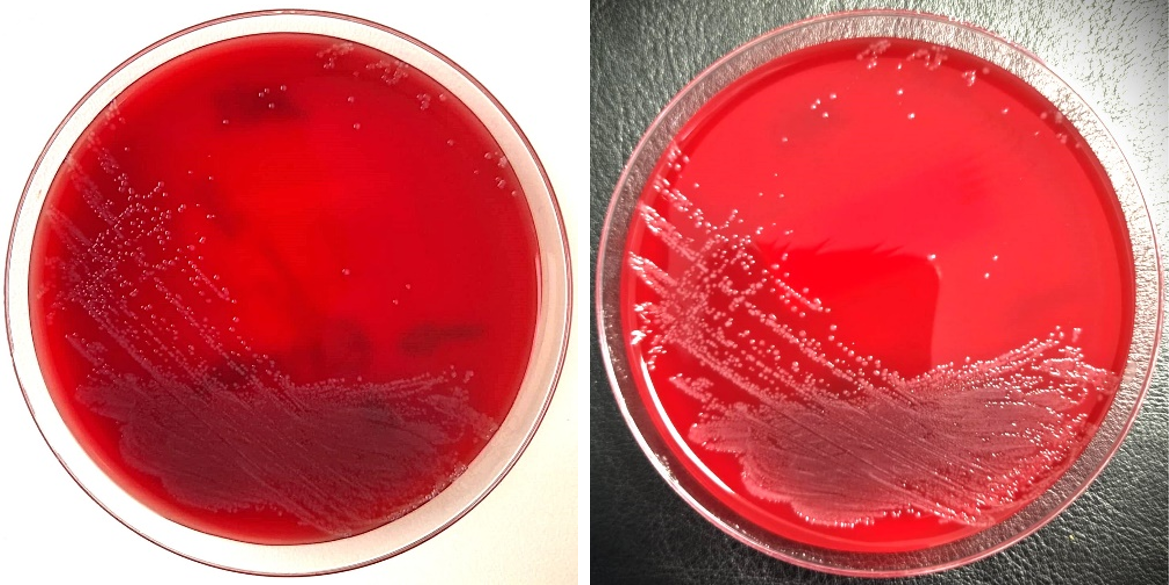
The G. anatis isolate grew in an aerobic blood culture bottle (BD® BACTECTM Plus Anaerobic/F Culture Vials). Subculture yielded growth exclusively on 5% sheep blood agar, while no growth was observed on MacConkey agar. The organism was identified by MALDI-TOF MS and subsequently confirmed by 16S rRNA gene sequencing. Antimicrobial susceptibility testing was performed on Mueller–Hinton agar using a 0.5 McFarland inoculum. Susceptibility was assessed by the disk diffusion method, and results were interpreted according to EUCAST clinical breakpoints (version 15.0, 2025) for Pasteurella spp. The G. anatis isolate demonstrated resistance to penicillin (inhibition zone diameter 7 mm), levofloxacin (7 mm), tetracyclines (8 mm), and sulfamethoxazole–trimethoprim (7 mm). Susceptibility to amoxicillin–clavulanate was observed, with an inhibition zone diameter of 22 mm. These results are in agreement with the upcoming resistance of G. anatis strains.
The patient reported no direct contact with birds or poultry and owned only a dog as a household pet. He denied exposure to farms or environments with significant poultry presence. His diet included frozen chicken fillets, which may represent a potential source of exposure. In the context of impaired host defenses due to acute cholecystitis with E. coli bacteremia, it is conceivable that G. anatis entered the bloodstream through bacterial translocation from the gastrointestinal tract.
This is to our knowledge the fifth case report published worldwide about a clinical infection with this veterinary pathogen. The origin of this G. anatis infection remains unclear, but the infection likely occurred due to a weakened gastrointestinal barrier, caused by a cholecystitis and bacteremia. This possibly allowed the bacteria to translocate to the blood system. This germ likely entered the intestines through ingestion of contaminated food.
3. Conclusion
Several studies indicate that Escherichia coli and Gallibacterium anatis are the two principal pathogens associated with lesions of the reproductive tract in chickens. G. anatis is primarily an avian pathogen and is not considered part of the human microbiome, although it has been reported as a cause of human infection in a limited number of case reports. While E. coli is a known colonizer of the human and avian microbiome.
In our patient, we identified a combined bacteremia with E. coli and G. anatis following a cholecystitis. It is conceivable that both organisms originated from a common source. We were unable to identify G. anatis from the bile fluid, so we are not certain whether this bacterium was also a contributing factor to the cholecystitis. One hypothesis is that ingestion of contaminated (frozen) chicken may have occurred around the time the patient developed cholecystitis, with a compromised intestinal barrier facilitating translocation of both pathogens into the bloodstream. Another hypothesis is that the cholecystitis was originally caused by E. coli with a bacteremia. After the ingestion of chicken contaminated with G. anatis, there could have been a translocation after the weakened intestinal barrier. Is one a consequence of infection with the other pathogen and the patient’s weakened condition, or did both simultaneously contribute as causative agents of the infection? These bacteria are frequently detected together, yet the underlying reason for this association remains unclear. This could reflect the relatively high prevalence of both pathogens in poultry, increasing the likelihood of co-exposure, or it may suggest a potential synergistic interaction between them. Further research is required to better understand this relationship. Notably, in a case reported by Johnson et al. (2013) involving a pulmonary abscess, both organisms were also identified concurrently [11].
This case represents a valuable addition to the limited body of literature describing human infections caused by Gallibacterium anatis. Human infections with G. anatis are exceedingly rare, and consequently, the clinical characteristics, pathogenic potential, optimal diagnostic approach, and appropriate management strategies remain insufficiently defined. Each newly documented case contributes important information to the current understanding of this emerging zoonotic pathogen. Therefore, the present case provides meaningful clinical and microbiological insights and further supports the need for continued reporting and investigation of human G. anatis infections. It also underscores the importance of advanced diagnostic techniques for detecting uncommon pathogens in human infections and highlights the need for antimicrobial susceptibility testing in the context of rising resistance, as well as increased clinical awareness of these rare but potentially significant pathogens.
References
- Aubin GG, Haloun A, Treilhaud M, Reynaud A, Corvec S. Gallibacterium anatis bacteremia in a human. J Clin Microbiol. 2013;51(11):3897–3899. https://doi.org/10.1128/JCM.01638-13[CrossRef] [PubMed]
- Bager RJ, Nesta B, Pors SE, Soriani M, Serino L, Boyce JD, et al. The fimbrial protein FlfA from Gallibacterium anatis is a virulence factor and vaccine candidate. Infect Immun. 2013;81(6):1964–1973. https://doi.org/10.1128/IAI.00059-13[CrossRef] [PubMed]
- Bisgaard M, Korczak BM, Busse HJ, Kuhnert P, Bojesen AM, Christensen H. Classification of the taxon 2 and taxon 3 complex of Bisgaard within Gallibacterium and description of Gallibacterium melopsittaci sp. nov., Gallibacterium trehalosifermentans sp. nov. and Gallibacterium salpingitidis sp. nov. Int J Syst Evol Microbiol. 2009;59(4):735–744. https://doi.org/10.1099/ijs.0.005694-0[CrossRef] [PubMed]
- Bojesen AM, Shivaprasad HL. Genetic diversity of Gallibacterium isolates from California turkeys. Avian Pathol. 2007;36(3):227–230. https://doi.org/10.1080/03079450701332352[CrossRef] [PubMed]
- Bojesen AM, Vazquez ME, Bager RJ, Ifrah D, Gonzalez C, Aarestrup FM. Antimicrobial susceptibility and tetracycline resistance determinant genotyping of Gallibacterium anatis. Vet Microbiol. 2010;148(1):105–110. https://doi.org/10.1016/j.vetmic.2010.08.011[CrossRef] [PubMed]
- Christensen H, Bisgaard M, Bojesen AM, Mutters R, Olsen JE. Genetic relationships among avian isolates classified as Pasteurella haemolytica, “Actinobacillus salpingitidis” or Pasteurella anatis with proposal of Gallibacterium anatis gen. nov., comb. nov. and description of additional genomospecies within Gallibacterium gen. nov. Int J Syst Evol Microbiol. 2003;53(Pt 1):275–287. https://doi.org/10.1099/ijs.0.02330-0[CrossRef] [PubMed]
- Christensen H, Bisgaard M, Bojesen AM. Bacterial determinants of importance in the virulence of Gallibacterium anatis in poultry. Vet Res. 2015;46:62. doi:10.1186/s13567-015-0209-5.[CrossRef] [PubMed]
- De Moreuil C, Héry-Arnaud G, Fangous MS, Le Berre R. Abcès pulmonaire à Gallibacterium anatis. Med Mal Infect. 2017;47(1):74–76. https://doi.org/10.1016/j.medmal.2016.10.007[CrossRef] [PubMed]
- Dobrindt U, BlumOehler G, Nagy G, Schneider G, Johann A, Gottschalk G, Hacker J. Genetic structure and distribution of four pathogenicity islands (PAI I(536) to PAI IV(536)) of uropathogenic Escherichia coli strain 536. Infect Immun. 2002 Nov;70(11):6365–6372. https://doi.org/10.1128/IAI.70.11.63656372.2002[CrossRef] [PubMed]
- Gautier AL, Dubois D, Escande F, Avril JL, Trieu-Cuot P, Gaillot O. Rapid and accurate identification of human isolates of Pasteurella and related species by sequencing the sodA gene. J Clin Microbiol. 2005;43(5):2307–2314. https://doi.org/10.1128/JCM.43.5.2307-2314.2005[CrossRef] [PubMed]
- Johnson TJ, Danzeisen JL, Trampel D, Nolan LK, Seemann T, Bager RJ, et al. Genome analysis and phylogenetic relatedness of Gallibacterium anatis strains from poultry. PLoS One. 2013;8(1):e54844. https://doi.org/10.1371/journal.pone.0054844[CrossRef] [PubMed]
- Kristensen BM, Frees D, Bojesen AM. Expression and secretion of the RTX-toxin GtxA among members of the genus Gallibacterium. Vet Microbiol. 2011;153(1–2):116–123. https://doi.org/10.1016/j.vetmic.2011.05.019[CrossRef] [PubMed]
- Neubauer C, De Souza-Pilz M, Bojesen AM, Bisgaard M, Hess M. Tissue distribution of haemolytic Gallibacterium anatis isolates in laying birds with reproductive disorders. Avian Pathol. 2009 Feb;38(1):1-7. doi:10.1080/03079450802577848.[CrossRef] [PubMed]
- Schink A, Hanke D, Semmler T, Roschanski N, Schwarz S. Genetic organization of acquired antimicrobial resistance genes and detection of resistance-mediating mutations in a Gallibacterium anatis isolate from a calf suffering from a respiratory tract infection. Antibiotics (Basel). 2023;12(2):294. https://doi.org/10.3390/antibiotics12020294[CrossRef] [PubMed]
- Vaca S, Monroy E, Rojas L, Vazquez C, Sanchez P, Soriano-Vargas E, et al. Adherence of Gallibacterium anatis to inert surfaces. J Anim Vet Adv. 2011;10:1688–1693.[CrossRef]
- Villumsen KR, Allahghadry T, Karwańska M, Frey J, Bojesen AM. Quinolone resistance in Gallibacterium anatis determined by mutations in the quinolone resistance-determining region. Antibiotics (Basel). 2023;12(5):903. https://doi.org/10.3390/antibiotics12050903[CrossRef] [PubMed]
- Wang C, Pors SE, Olsen RH, Bojesen AM. Transmission and pathogenicity of Gallibacterium anatis and Escherichia coli in embryonated eggs. Vet Microbiol. 2018 Apr;217:76-81. doi:10.1016/j.vetmic.2018.03.005.[CrossRef] [PubMed]
- Wang H, Wu F, Han H, Zhao J, Mao L. A case of human diarrhea caused by Gallibacterium anatis: a case report. BMC Infect Dis. 2024;24(1). https://doi.org/10.1186/s12879-024-09991-w[CrossRef] [PubMed]