
Abstract
Global colocation services provision mission-critical infrastructure in secure and reliable facilities, typically within a zero-tolerance SLA environment. Strength of colocation services is the volume of incidents and service requests, and the case management workflow is a critical determinant of the improvement of the end-to-end response capacity and quality. An objective, evidence-based exploration of the principles of colocation operations case management covering design, metrics, and pathways for continuous enhancement has been conducted. A structured inquiry engaged diverse sources: primary and secondary research, case study analysis following global delivery and service operation models, information provided by subject matter experts, and management performance benchmarks proposing KPIs. The investigation results in the articulation of fundamental principles and frameworks that govern the management of incidents and requests in colocation operations. Evidence of the natural path to optimization supports their formulation. Continuous awareness, evaluation, and reinforcement of the principles and frameworks contribute significantly to performance enhancement.
1. Introduction
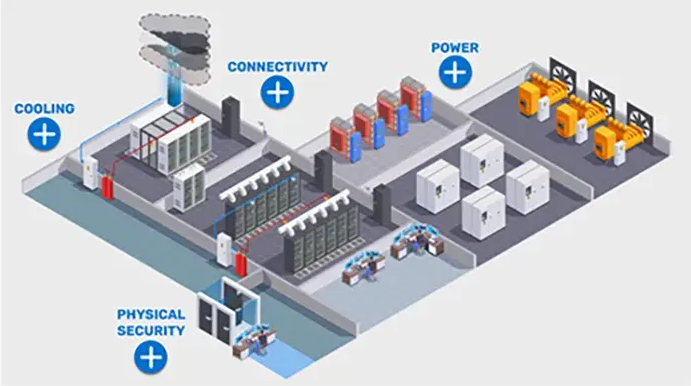
The primary objective of global data center colocation services is to provide physically secure environments with resilient power and cooling systems. The operations teams typically monitor customers’ IT equipment and systems 24/7, assisting with faults, failures, or environmental alarms. Depending on the service level agreement (SLA) and nature of the incident or request, the response may be execution-only or include diagnostic and repair activities. For many cases, the colocation service provider acts as a link to third-party service vendors, such as hardware maintenance services, circuit carriers, or managed service providers, and implements the necessary steps or acts as a project manager to orchestrate the execution [1]. Even when such links are not needed, customers may initiate requests for reboot or power-cycle assistance, media retrievals, or tours, among various other things.
Efficient workflow processing is thus vital for operational excellence, as it indirectly supports service quality for customers, maximizes security, and minimizes operational costs. Colocation service providers often measure collaboration and share information across disparate technologies to facilitate citizen-onboarding fusion and aggregate citizen-of-the-world experiences [2]. Effective operations teams consider internal SLAs not only for sequential dependencies but also for lead-time requirements. Waste analysis can identify steps that can be eliminated without negative impacts, and there may also be opportunities to automate key interactions via robotic process automation, orchestration tools, or simple workflow routing configurations.
1.1. Background and Significance
Colocation services for data centers allow customers to install their computing and networking equipment in third-party data center facilities. These services are typically offered at various levels of granularity, based on Service Level Agreements (SLAs) that define the manner in which incidents raised by customers, staff, or automated system alerts are investigated and resolved [3]. In practice, these SLAs span multiple service tiers, along with an escalation matrix for incidents that are not resolved within the defined SLAs. The landscape of case management for colocation services is disaggregated across multiple functions and locations, relying on adequately defined inputs, interfaces, and handoff points to ensure seamless information flows among the involved parties. In parallel, it is supported by a range of technology enablers, particularly case-management software that can optimize the routing and handling of requests and incidents in line with the defined SLAs.
Both incident and request throughputs represent significant volumes in global colocation operations. Even if incident management is the primary driver for case flows, requests for information, change, and access represent a non-negligible share of the overall case volume [4]. Efficient management of the associated processes can thus generate significant time savings, both in terms of customer experience and case workload. Indeed, an internal benchmarking analysis has demonstrated that better efficiency in responding to non-incident requests can excuse a larger flow than at competitors with lower throughput. Decision points further up the case management hierarchy are often driven by the interaction with the data center itself—request-orchestrated actions for physical access to the facility or in-situ building actions with a clear physical dimension are typically the focus—and more direct requests may deliver a higher first-contact resolution rate.
Equation 1: Little’s Law / Cycle Time Equation
This appears in the KPI discussion as the flow-process relation.
Step-by-step derivation
Start with the standard flow identity:
- Work in Progress (WIP) = number of cases currently inside the process
- Throughput (TH) = number of cases completed per unit time
- Cycle Time (CT) = average time one case spends in the process
If cases leave the system at average rate , then in one unit of time the system completes cases.
If each case stays in the system on average time units, then the average number of cases simultaneously present is:
Now isolate cycle time:
So the derived equation is:
This appears in the KPI discussion as the flow-process relation.
Step-by-step derivation
Start with the standard flow identity:
- Work in Progress (WIP) = number of cases currently inside the process
- Throughput (TH) = number of cases completed per unit time
- Cycle Time (CT) = average time one case spends in the process
If cases leave the system at average rate , then in one unit of time the system completes cases.
If each case stays in the system on average time units, then the average number of cases simultaneously present is:
Now isolate cycle time:
So the derived equation is:
1.2. Research design
Research objectives: to characterize case management in global colocation services, establish metrics for effective performance, identify improvement areas, and provide a framework for continuous enhancement.
- Methodology: design science, with product uncertainty addressed by empirical case study.
- Data sources: fifteen months of operational data from a leading colocation provider.
- Validity: pattern matching of proposed objectives against case study data.
- Limitations: specific to data center colocation services yet broadly applicable to other operational centers.
Service delivery in global data center colocation services involves multiple interdependent processes within diverse technology domains [5]. These processes must work in concert to ensure stakeholders receive value in accordance with service level agreements (SLAs). Services within placed SLAs are mostly driven from either plans (provisioning) or through incident and request case management. The quality, accuracy, and focus of this case management effort ultimately determines whether service delivery occurs within SLA. Global colocation services are delivered from multiple continents in multiple local time zones and operated through a collaboration between multiple entities using simple workflow modeling to identify touchpoints and dependencies. Engagement is also supported by sufficient process and technology structuring that enables appropriate performance metrics to be established to ultimately drive resource and business planning. Finally, performance data from colocation service case management have also been examined and assessed against the identified metrics.
The majority of incidents and requests raised on colocation services are unique in nature. From a case management perspective, this makes traditional measurement of service levels such as lead time, resolution time, first contact resolution, and SLA compliance more difficult [6]. Maturity models in these areas are also less common. Despite this variability, it is possible to still derive value from the cases and to examine areas for improvement. Through understanding the nature of the requests and incidents, it is possible to develop a set of primary operational metrics that address whether the case management process is operating sufficiently well [7]. With these metrics in mind, a maturity model can be constructed to drive continuously improving case management capability over time.
2. The Landscape of Global Data Center Colocation Services
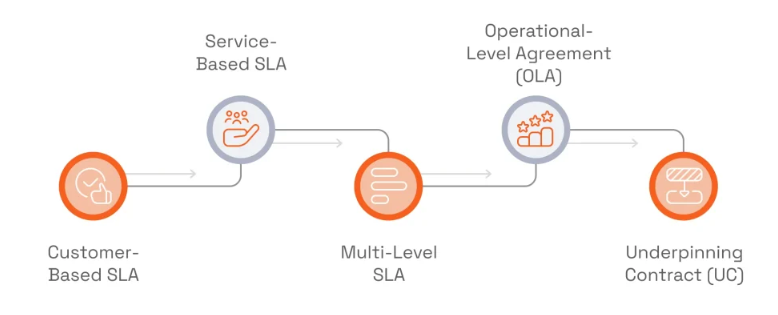
The service processes for data center colocation services are governed by Service Level Agreements (SLAs) at different levels of importance: Silver, Gold, and Platinum. Within each SLA, different matrixes govern the escalation path for incidents and requests, determining time resolutions [8]. Within the incident categories established in the Escalations Paths, the SLA should define the expected owner and time for resolution.
Another important point in the landscape of data center colocation services is knowledge management: where knowledge is going to be stored and how it is going to be managed [9]. An important repository of knowledge is standard operating procedures (SOPs). SOPs are procedures that have to be followed in a standardized way during the operation. These operating procedures can also be linked to the Assets repositories, which are another important point in the Knowledge Management area [10]. The documentation should also have version control, so it is possible to track who modified which document and when. Important guidance should also exist to determine who has access to which documents.
2.1. Service Level Agreements and Escalation Paths
Notable global providers of colocation services establish multiple tiers of service level agreements (SLAs) for their products. For the colocation service, an SLA is typically defined for the normal level of service from the colocation service provider, and there are differing escalation paths for greater levels of urgency [11]. In the case of aIMPLE017N and for products within the colocation portfolio, “severity 1” issues must be acknowledged within 15 minutes and require a response team on site within 1 hour; for “severity 2” issues, the response team must be on site within 4 hours; for “severity 3” issues, no acknowledgement time is specified; and for “severity 4” issues, no time line is specified. An escalation matrix defines responsibility for acknowledgement, escalation, and closure.
Regardless of the urgency level, it is imperative that the transition of the operation out of the colocation service provider’s control is agreed to by both parties in compliance with the colocation and SLAs in place. These transitions are in the form of an “incident” or “request,” and the volume of incidents and requests to the colocation service provider can, in times of increased workload, create consternation. A clear focus through task management is therefore mandated to reduce the volume of complaints in the lower tiers of the escalation framework.
2.2. Knowledge Management and Documentation
Knowledge bases and knowledge management platforms (primarily wikis) provide agents with relevant background information. Standard Operating Procedures (SOPs) govern the resolution of frequent incidents and service requests. A failure database supports root-cause analysis. A document repository houses product and process documents. Version control ensures document integrity [12]. Security policies mandate access rights. For knowledge management initiatives to be effective, the information must be complete, up to date, and easily accessible.
Knowledge bases for case management are used in multiple ways: to review similar resolved incidents and requests, to read background information on the affected service, and to guide the execution of operational tasks. Due to the large range of services supported in colocation operations, specific-technology knowledge repositories do not generally cover all services but gather together relevant information for specific providers by service type [13]. Such cross-technology repositories often include important escalation contacts. External technology management companies may maintain their own global product wikis, but due to lack of structure they can become less reliable over time.
Equation 2: Throughput Equation
Step-by-step derivation
Let:
- = number of completed cases in a period
- = length of that period
Then throughput is simply the completion rate:
So the equation is:
3. Case Management Fundamentals in Colocation Operations
A helpful classification of work is into incidents and service requests . When a customer reports a service problem, the service interaction addresses fault detection and restoration. These incidents are the most critical, as they affect service quality and customer experience; response speed is usually governed by the service level agreement (SLA). Incidents reported by customers are very important and have a dedicated routing path into the operations workflow to ensure that these requests are prioritized. Nevertheless, non-customer-reported incidents such as monitoring alerts on a customer’s space also exist [14]. These should have a routing path distinguished from a non-critical customer-requested service.
In addition, colocation services also involve a range of requests that are independent of service quality – customers requesting new actions on their physical spaces, from simple access requests to complex Installations, Moves, Additions, and Changes (IMACs). While these requests are typically not critical or tied to an SLA, fast, timely resolution is still valuable, as these services are usually chargeable to the customer.
3.1. Incident and Request Intake
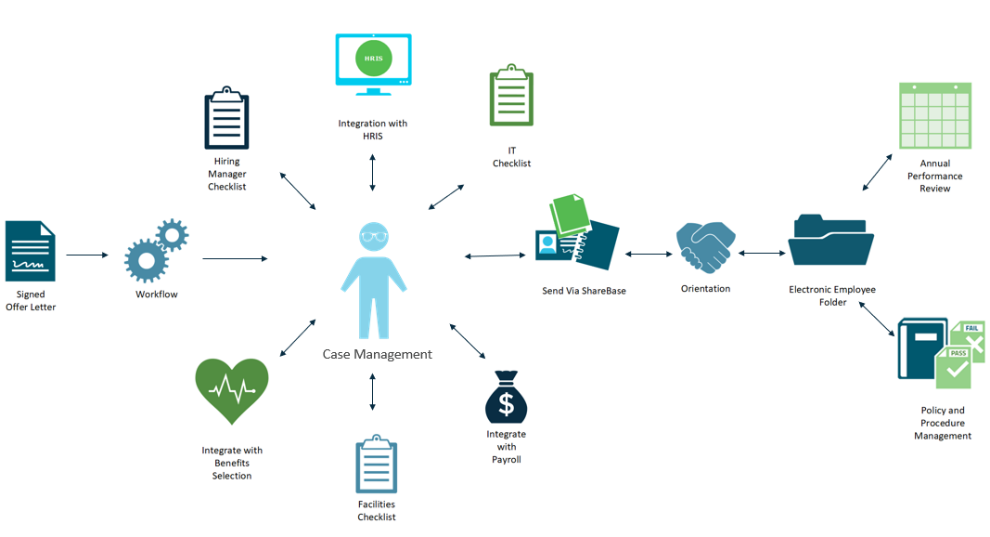
The intake of incidents and service requests involves multiple channels, entry criteria, data requirements, and classification. Incoming incidents and requests can originate from Service Level Agreement (SLA)–bound customers, directly from the colocation provider’s internal personnel, or from automated alerts in the monitoring tools [15]. The matrices that document these SLAs specify the categories of incidents and requests that must be processed and their respective service-level targets. Each type of case must contain specific, structured information, such as the impacting customer and locations, the initiator, the urgency and impact associated with it, and any other details required for adequate triage and assignment. While most cases must be prioritized (urgent and high) and classified (incident vs. service request), additional attributes can facilitate triage, such as location tags, service category labels, holiday indicators, and vendor involved in the delivery.
The majority of incoming incidents and requests have been categorized into either a top-level classification structure (often known as a “tree”) or a taxonomy of incidents and requests modeled after the IT Infrastructure Library (ITIL) Framework [16]. These schemes are used both for filtering and routing triaged cases and also for aggregating related cases together, especially for problem management purposes. Their coverage and structure must be constantly updated based on environmental factors (e.g., changing environment maps, monitoring coverage in certain locations, product bankruptcies) and must be extracted on a regular basis from the underlying case management tool.
Equation 3: First-Contact Resolution Ratio Equation
Step-by-step derivation
Let:
- = number of cases resolved on the first contact
- = total number of cases received or handled in the same period
A ratio means “successful first-contact resolutions divided by all cases.”
So:
If expressed as a percentage:
So the final equation is:
or
3.2. Triage and Assignment
The triage phase is crucial for ensuring that service requests and incidents are assigned to the appropriate teams for resolution. A clearly defined allocation protocol, combined with a broad operational oversight of all ongoing requests, facilitates timely assignment. Several factors should be taken into consideration when allocating incidents and requests:
Kill—Load balancing: In addition to assigning cases to the most appropriate group, the dispatcher should also support workload balancing among different teams with similar skills [17]. This can be achieved through information from the case management platform, such as case count and age, as well as through communication with the teams themselves.
Skill and capacity matching: Each assignment should not only be based on the location of the incident or request and the area of expertise but should also take into account the availability of resources to work on the case. A well-defined capacity plan can support timely assignments according to expected availability in each group.
Control of aging requests: The aging of cases must be monitored to ensure that unresolved cases remain on the radar of the operational teams, in order to trigger follow-ups, escalation, or reassignment wherever necessary.
4. Process Modeling and Workflow Design
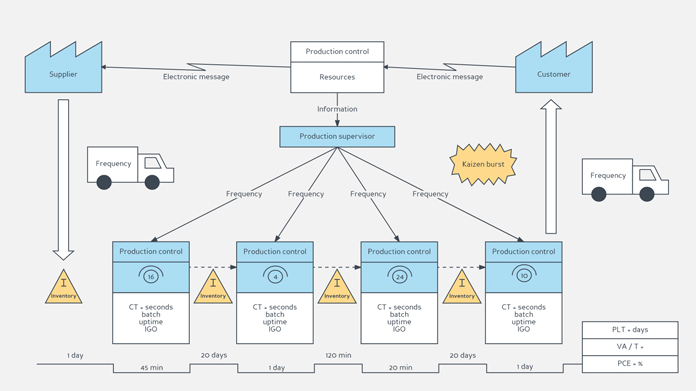
Designing a workflow is often best accomplished through the combination of process mapping and value-stream analysis. Current-state process maps document how the process is currently functioning [18]. Value-stream maps analyze the current-state map for waste along the four types of waste identified by Lean: time delay; inventory and work in progress; redundant or non–value-adding processing; and defects. In the colocation context, the stream being mapped is the flow of cases, from opening to closure, regardless of whether the tickets are incidents or requests. An analysis of the value stream uncovers lead times for case progression and highlights the stages or steps in the process where bottlenecks exist. These bottlenecks then form the basis for deeper investigation and prioritization of improvement efforts. The current mapping of the case-flow process should also include supporting and cross-functional processes, as these interactions can have a significant effect, either positive or negative, on overall performance.
As the flow is crossing functional boundaries, stakeholder interviews should be organized with all the teams involved in the case management from the Global Network Operations Center (NOC), facilities, procurement, and security operations. These interviews should focus on the touchpoints where cases interface with other teams, and the assessment should include whether any service contracts currently exist that define these touchpoints. Unlike escalations that can be managed reactively, these cross-functional interactions can be defined proactively in the same spirit as a service-level agreement (SLA). Once the flows and touchpoints are clearly delineated, the analysis can then focus on probing for any flow paths that may lend themselves to automation, orchestration, or active monitoring [19]. Robotics process automation more suited for simple, rules-based tasks can be identified, as well as process elements that are sophisticated enough to require human decision making but can yet be orchestrated for redundancy or higher service levels using knowledge-based processing.
Equation 4: Escalation Rate Equation
Step-by-step derivation
Let:
- = number of cases escalated to a higher support level
- = total number of cases in the same period
Escalation rate is the fraction of total cases that were escalated:
As a percentage:
So:
or
4.1. Process Mapping and Value Stream Analysis
Extensive mapping of existing process flows using Business Process Model (BPMN) notation, discoverable by cross-functional teams via an internal collaborative suite, supports collaborative identification of improvement opportunities. Value stream mapping and lead-time analysis expose specific delays and bottlenecks, facilitating cross-organizational process redesign.
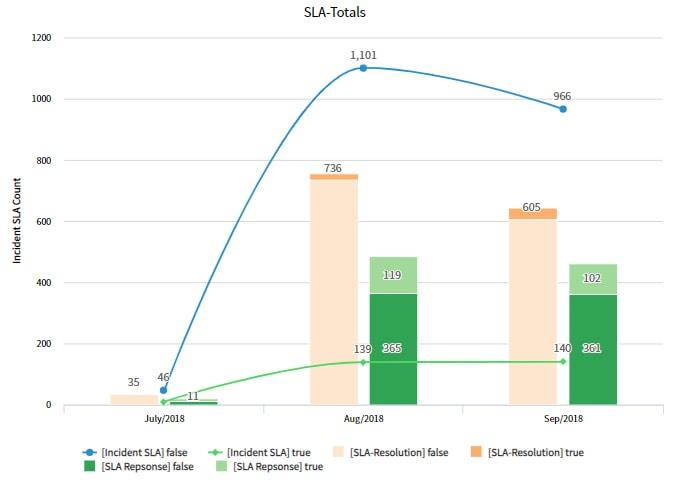
Mapping the full lifecycle of a case—including activity durations and involved groups—exposed waste in incident, service request, and problem management. Service request and change request workflows typically involve multiple touchpoints and excessive handoffs with the Network Operations Center (NOC), engendering longer-than-necessary lead times [20]. Moreover, although an escalating manager supports the service request and change request processes, the corresponding formal management escalation failure rate exceeds 46%. Attention to reducing these two concerns can greatly enhance operational efficiency.
Processing times deviated significantly from the communicated Service Level Agreements (SLAs) for many case types. Repetitive or structured incidents—detectable through issue pattern plays—spanned multiple time zones and warranted automation. Repetitive incident categorization offered potential paybacks commensurate with investment using existing automation platforms; strong internal asset correlatives further supported robot process automation (RPA) case candidates [21]. Process design brain storming sessions with the NOC partners highlighted opening hours and availability as prime redesign considerations.
4.2. Cross-Functional Interfaces and Dependencies
Cross-functional interface contracts define the touchpoints, responsibilities, and quality expectations vis-à-vis data center operations teams and third-party partners involved in servicing incidents and requests. Management of network and customer-facing services rests with the network operations center (NOC). Data center colocation incident and request management functions cannot by themselves resolve all requests without assistance from facilities, information technology, procurement, security, and legal resources.
The NOC has its own service level agreements commencing with a declared mean time to restore service commitment. Accordingly, service interruptions at colocation sites have more than a real-time impact on customers; they result in a backlog burden that the NOC must clear in the shortest possible time [22]. Although some network destinations are monitored continually, a number of outages are noticed and reported by external observers and customers. The service-impacting incidents identified by the NOC should be filtered and routed to data center operations for case initiation and progress reporting. For expediency, cases created on the basis of surrogates should contain a reference to the original notification. The NOC should be empowered to assign these cases to data center operations and mark them as urgent for telemetry-related escalations.
Prior to case conclusion, a technical validation should be requested from the NOC for all operations-facilitated service restores, and a post-incident review should be initiated for high-impact incidents. Requests for information or queries relating to premises-based colocation backups should also be routed to data center operations for notification to requestors, generation of update responses, and closure.
Colocation customers and prospects often expect assistance from data center operations on service queries and requests for information [23]. In the absence of a formal role in the service- or capacity-management functions, data center operations engage on these requests as capacity permits. Nevertheless, the team should be empowered to source and hand off all responses without additional internal review. The cases generated should feed a trend-reporting capability prompting automatic updates to customer portals and other destinations.
Timely engagement of facilities resources is critical for any case involving physical accessibility to the colocation footprint, whether for construction work, on-site audits, or security incident investigations [24]. Facilities are the only group able to enable visual verification of the colocation premises and network paths, and they retain the keys to the tourist-directory-style cupboard containing the colocation floor layout. Cases require close collaboration with the different facilities functions for planned construction work, ongoing construction-related queries, and construction-related service-impacting incidents.
Network and security audits that involve the use of a robots.txt file, as well as premises-based colocation backups, should prompt automatic notification to facilities to ensure that appropriate actions are taken. Cases involving construction work, motion-triggered visual inspections, surges, or fires should also have their progress actively monitored by data center operations and escalated when required [25]. All access requests that do not concern scheduled construction work should be managed in the dashboard and cable-response manner. All other access requests should be prompted automatically from case records.
Information technology resources are engaged primarily for permission requests associated with access to customer infrastructure. However, major incidents affecting virtual machines and other services routed through the colocation sites must be periodically validated with information technology. Technology and procurement resources are engaged only whenever colocation requests need to be fulfilled by third-party suppliers.
4.3. Automation and Orchestration Opportunities
Automation, driven by robotic process automation (RPA) and workflow orchestration, holds significant promise for enhancing global case management operations in global data center colocation services. Although data center service processes possess unique attributes that may limit the potential for automation, certain aspects remain amenable to automation technologies [26]. By identifying these opportunities, planning can commence for the implementation of automation and orchestration solutions.
Applications of RPA within case management include the automation of repetitive tasks and data handling. Examples include extracting information from emails and populating back-end systems. Misuse of RPA can lead to an increase in step usage without creating significant business impact; such cases should be dissuaded [27]. Care must be taken to assess trade-offs and determine whether the value is evident and justifies the assistance of a bot or sequence. Rule-based routing, where incidents are automatically routed through pre-defined categories, liable service groups, and geographical steering, can further reduce overall workload by eliminating steps where the appropriate assignment path is always clear. For certain services, automated triggers based on SLA definitions can add value. These can include workflows to notify the customer and create internal sync meetings when the incident is approaching the SLA, initiate preventive actions such as facility checks on detected anomalies, or generate a proactive interaction to validate an incident's closure. Complex cases with known resolution actions, but high effort, can also be posited to the customer for closure [28]. These and similar automations provide value by reducing awareness and planning effort. Finally, decision-making—where the automation routes cases to predefined resources or follows established decision trees—can also provide value by removing these actions from the resource's main activities and reserving them for higher-complexity decisions.
5. Technology Enablers for Global Workflows
Various factors must be considered when using technology to enable the appropriate level of globalization in case management workflows [29]. Different case management software platforms exhibit diverse capabilities, and selecting the most suitable for a particular operation requires a detailed evaluation of essential characteristics. Integrating case management with asset, monitoring, and ticketing systems also adds value and completeness to operations, enhancing data fidelity and synchronicity.
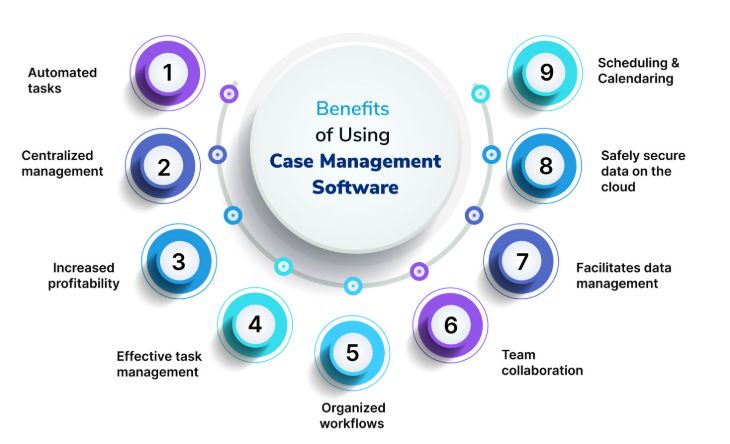
Functionality typically provided by feature-rich case management platforms includes consolidated case management across multiple sources, mapping of responsibility owners, orchestration of first-response tasks, detection of overdue case targets, reporting of key performance indicators, [30]. incremental-list creation for backlog prioritization, and online, context-sensitive knowledge management. Using the best-fit platform ensures that the technical solution adds maximum value to operations. The focus here is on configurable external platforms that have limited support for automation orchestration and impact minimization, require significant administration resourcing, and need careful management of upgrade cycles across all tenant instances.
5.1. Case Management Software Platforms
Selecting the right case management software platform is a critical decision for enterprises operating multinational, always-on environments. Collaborative workflows involving multiple regions, operations centers, and disciplines require technology that supports global use, especially during off-hours [31]. Employing a globally distributed operations model can yield significant cost advantages, but only if delays from handovers are minimized without sacrificing quality. It is vital to verify these criteria, and support for true asynchronous workflows is a must-have. While regional resources working in core hours can be highly productive, handovers between time zones naturally slow down the pace of incident resolution. A global service painter can never deliver time zone alignment; vendors should be able to support continuous service through spares and 24 by 7 support structures.
Global follow-the-sun patterns require process and technology support wherever an incident, service request, or change is initiated [32]. Everyday technology enables seamless collaboration; case management platforms must also enable the right level of infrastructure monitoring and self-healing. Empirical evidence suggests that most incidents do not require centralized initiation; the vast majority are instead detected directly by local teams. For a global player, the identification of early signs, detection of deeper issues, and orchestration of incident management, problem management, and forensic reporting are the key operational areas of focus. These platforms must be able to incorporate supportive knowledge articles, [33]. interrogate asset information such as inventory status, actively interact with vendors, and engage with affected third parties.
5.2. Integrations with Monitoring, Ticketing, and Asset Systems
API-based connections with monitoring tools, ticketing applications, and asset management databases can greatly enhance case management workflows [34]. These integrations must ensure data quality, timeliness, persistency, and significance for demand-and-supply synchronization, incident correlation, and escalation support.
Maintenance and support require tight integration between monitoring and case management systems. To contain release management AI model errors, orchestration and adjustment through case management teams—especially on higher-risk customer environments—should be flagged wherever possible [35]. A strong pattern of incidents mapping into other customer-facing technologies warrants a symptom visibility feed-in, ensuring correct parties own actions on either side. A correlation-engine-driven SLA violation, where the cause has already been resolved, should generate case closure.
Integrating case management with asset systems plays an important role in both high-impact incident and request workflows. Global flow path visibility aids case management engineers' situational awareness during major incidents [36]. Asset assignment for on-site accesses can automate and drive case management-trigger SLA times. These same technologies then support ticket routing, ensuring case teams have the right facilities-led expertise to close customer demands and questions.
Equation 5: Mean Time to Resolution (MTTR) Equation
Step-by-step derivation
For each case :
- = time the case was registered/opened
- = time the case was closed
Then the resolution time for one case is:
If there are resolved cases, the mean time to resolution is the average of all individual resolution times:
Substitute :
So the final equation is:
6. Operational Excellence: Metrics and Continuous Improvement
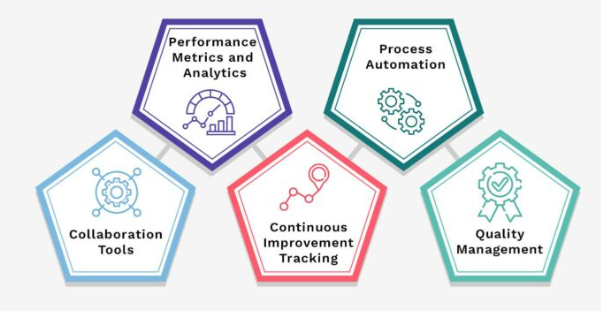
Metrics offer direct insight into case management efficiency and effectiveness [37]. Throughput, first-contact resolution, escalation rate, mean time to resolution, and backlog enable stakeholders to detect process weaknesses and uncover improvement opportunities. Benchmarking within peer environments and against maturity models also aids the pursuit of operational excellence. Greater Case Management process maturity contributes positively to overall process maturity, indirectly enhancing performance metrics [38]. Continuous improvement approaches such as Plan-Do-Check-Act cycles, Root-Cause Analysis, and feedback loops help operational teams focus on the right changes.
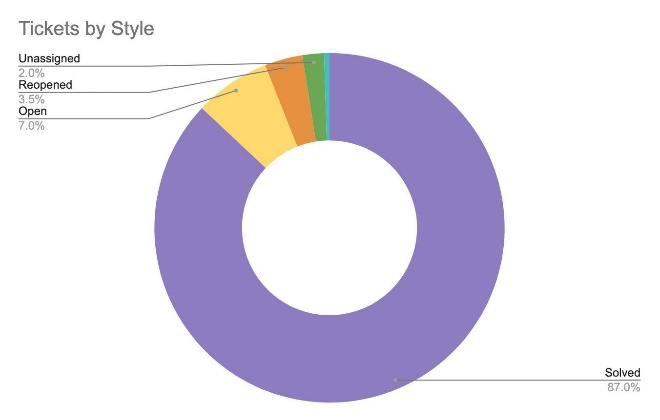
Throughput measures the volume of incidents or service requests flowing through the process during a specified time frame [39]. The rate of requests resolved at the first point of contact provides a view of Case Management effectiveness; a high rate indicates that adequate training and knowledge management are in place, and that simple requests are given the appropriate classification. A high level of escalated requests likely signals elevated levels of resolution complexity that could be addressed through process design or knowledge and training improvements [40]. Mean Time to Resolution is a measure of efficiency; a low average indicates that incidents and service requests are being resolved quickly without compromising quality. Measurement of backlog provides insight into resource capacity and allocation.
6.1. Key Performance Indicators for Case Management
Throughput, first-contact resolution ratio, escalation rate, mean time to resolution, and backlog comprise the core of case management performance.
Throughput denotes the count of completed case requests within a set timeframe, which can be tracked across any given slice of the value stream in current state mapping. Given that a flow process is subject to Little’s law (i.e., cycle time = work in progress / throughput), increasing throughput decreases cycle time [41]. Reducing the number of cases that require escalation improves case-handling efficiency, as higher-level resources tend to have deeper expertise but less available time. By serving more basic needs, first-level support can successfully resolve a greater number of requests at the first point of contact [42]. This increases analysis accuracy, reduces waste when people guess, and lowers service costs. A larger proportion of cases being resolved within the originally established SLA or other time frames increases customer satisfaction.
Mean time to resolution (MTTR) calculates the average time between the registration and closure of cases covering incidents or requests [43]. As Raymond and Pugh note, this is a vital measure, as swiftness is a common SLA requirement and essential for business continuity. Tracking backlog figures (i.e., the number of open cases beyond agreed level) enables timely identification of inevitable bottlenecks [44]. Wherever possible, all KPIs should be linked to visible and understandable business targets to maintain and reinforce fluent support operations. Fast case handling with minimal recovery effort has long been conceived as essential for cost control and customer satisfaction, yet it is only recently that initial contact resolution and reliable escalation avoidance have begun to receive similar focus.
6.2. Benchmarking and Maturity Models
Benchmarking and maturity assessment establish target improvement stages [45]. Comparative metrics indicate peak performance levels, while gap analyses unveil potential advancement paths.
Conducting metrics benchmarking is advantageous by comparing key performance indicators with other similar organizations' results, ideally those reported internationally but in any case filtered by relevant criteria. For example, a North [46]. American organization aspiring to be among the best worldwide should compare against the results of North American service providers collectively and within their own market.
Maturity levels associated with these KPIs are one way of supporting target setting for additional performance indicators or KPI optimization scenarios. Depending on the maturity model employed, [47]. maturity grades refer to four or five stages. The requirements of organizations at a specific stage are confirmed through an inspection-based examination or through a survey. The magnitude of the importance of each requirement, provision, or capability is established per stage, resulting in an intuitive scoring table. Moving from one maturity grade to the next should require satisfying the eight most significant features.
6.3. Continuous Improvement Frameworks
Case management metrics are foundational elements of continuous improvement [48]. A Plan–Do–Check–Act cycle can be anchored on periodical reviews of these indicators. For cases not assigned to a specific officer, Root-Cause Analysis provides a framework for detecting the reasons why throughput has fallen short. Corrective actions address the detected reasons, whereas Preventive Actions cover innovation opportunities [49]. Root-Cause Analysis supports the design and deployment of logical pathways for Automating and Orchestrating call flow, mandating automatic response or fulfilment steps to routine cases that fall within SLAs and for which no exceptional condition has been defined.
Formal feedback loops enable Front Office and Control Room personnel to point out cases or incident patterns that distort internal or external client satisfaction but remain undetected by other criteria [50]. These inputs inform updates in the Case Management Knowledge Base related to past cases or in the SLA Matrix when it is common to have long resolution times.
7. Organizational and Cultural Factors
Global-scale colocation services typically comprise multiple sites distributed across various continents. Coordinating work across geographies and time zones is crucial for achieving timely service delivery and incident resolution. The need to ensure a seamless experience for end-users interacting with distinct site functions—often daily—further emphasizes the importance of efficient case management, particularly in the context of routine service requests. Convenience and ease of connection must be provided, regardless of where cases are initiated, drawn to the respective locations and departments, [51]. worked on, and ultimately resolved. Effective case management flow optimizes progress within and across site operating centers and reduces overheads incurred when coordinating service requests that stretch across locations.
Communicating the progress of case work consumes time and effort, especially for coordination-level escalations triggered by complex workloads that evolve over several time zones. Well-defined coordination protocols reduce the effort required to close the circle [52]. Understanding the current situation and ensuring a steady flow of work while coordinating on exceptions are generally advisable approaches for collaborating with an external party. Handoffs, especially those between locations in different time zones, present opportunities for information leakage, miscommunication, and oversight. Establishing explicit rituals around handoffs helps mitigate these challenges. Finally, [53]. since success is measured equally by ease of incident initiation and resolution, the absence of a digital interaction layer will continue to invite friction for end-users requiring support.
7.1. Global Collaboration and Time Zone Management
Synchronizing 24/7 operations across multiple regions requires careful coordination. Clearly defined protocols for collaboration ensure smooth execution, [54]. while rituals for handoffs and progress reviews minimize risk and maintain oversight. Managing time zone differences through the strategic allocation of responsive and reactive resources fosters efficient case management.
To guarantee effective cross-time-zone collaboration, case management stakeholders must establish protocols that promote clear communication of impending handoffs, timely response to urgent issues, and ongoing visibility [55]. These protocols are especially vital in a case management model that relies on reactive engagement by specialists in various time zones. The collaboration mechanisms typically fall into three categories: structured key handoffs and status updates; unstructured escalation and query management; and unstructured update-sharing on high-priority items.
Time zone proximity and overlap simplify the handoff and status-update requirements for normal operational modes. Conversely, the rotation of on-call duty shifts the burden of case initiation, coordination, and RA management onto the supporting technology team and related NOC resources in an adjacent region [56]. The response window for high-priority incidents should ideally include the same teams and key leaders that would be engaged during business-hours operations, regardless of the business-hours support region. Less expedited incident and need resolutions should prioritize the allocation of incoming workload to the nearest support resource, balancing specialist availability and escalating time zones based on the volume of incoming issues and specialist workloads.
7.2. Roles, Responsibilities, and Training
A defined division of labor, together with the appropriate skills, empowers employees to operate effectively within their zone of responsibility [57]. RACI matrices clarify role ownership for key case management activities and touchpoints with supporting functions or service partners. Competency models articulate knowledge and skill requirements for key case management roles. These models underpin onboarding, mentoring, and continuing education programs.
The RACI framework differentiates four roles for each case management activity: Responsible—owner of the activity; Accountable—final owner or approver; Consulted—subject matter expert or advisor (input sought); and Informed—receives status updates (input not sought) [58]. RACI matrices clarify the responsibilities of case management analysts for the majority of activities, as well as for the select number of activities that proceed beyond tier-1 analysis and resolution. RACI charts also delineate responsibilities for process touchpoints with adjacent functions (NOC, facilities, procurement, security, etc.) and supporting services (change coordination, security, problem management, etc.).
Competency models outline the knowledge and skill prerequisites for successful performance in key case management roles. These include senior analyst (responsible for end-to-end service coordination, typically in North American or Central European time zones), lead analyst (point of escalation and supervision for operational issues, typically aligned with Asia-Pacific time zones), automation analyst (developer and support for orchestration and automation technologies), and case manager (involved only in select, high-impact, cross-functional cases) [59]. Training, mentoring, and ongoing education are critical for developing the required competencies, coupled with ongoing support from voice-of-the-customer or voice-of-the-process practices.
7.3. Change Management and Stakeholder Engagement
Change Management and Stakeholder Engagement Process changes invariably trigger reactions among the affected parties. Well-designed communication plans address such reactions, paving the way for support and successful adoption. A dedicated stakeholder engagement strategy can further clarify the rationale for change, bolster sponsorship, mitigate change resistance, and gauge the effectiveness of training, communication, and execution steps. Stakeholders beyond the sponsor and localized impacts must receive timely status updates that display the project’s overall value while highlighting specific aspects relevant to them. Resistance and grievances should be anticipated and addressed upfront [60]. A complete set of measures will not eliminate resistance altogether, but will increase the odds of winning over naysayers.
Clear roles and responsibilities further increase the likelihood of success. A RACI matrix defines who is responsible, accountable, consulted, and informed for each step, element, or aspect of the initiative. As with communication plans, the scope of stakeholder involvement should widen as the project grows: first, refine the prototype and provide input and buy-in on the wider means of adoption; next, prepare the organization for the impending change; finally, assess the effectiveness of execution and readiness for feedback-inspired improvement [61]. Assessment criteria should focus on stakeholder-specific areas of interest.
Training, knowledge transfer, and capability-building initiatives further enhance the chance of success. A competency model for the affected functions, specifying required capabilities at different levels of seniority, provides guidance on onboarding and ongoing training. Senior team members—flawless specialists, [62]. deeply experienced individuals, and aspiring leaders—are best suited to create and deliver training classes spanning their areas of expertise. Retaining such individuals until they can pass on their knowledge greatly mitigates the risk of outages stemming from single points of failure.
8. Conclusion
The colocation business continues to expand globally, despite economic uncertainties, largely driven by artificial intelligence and machine learning. Service Level Agreements evolve in scope and complexity, encompassing data sovereignty, protective circuit certifications, and artificial intelligent monitoring orchestration. High-profile incidents generate media coverage and affect the reputation of providers [63]. Tools increase in sophistication, combine different functions, and migrate to the cloud. Customers expect organizations to comply with regulations outside their home countries, such as the EU General Data Protection Regulation and the California Consumer Privacy Act. Environments span multiple countries and continents. Collocators offer non-office facilities that require careful behavior around surveillance installations.
Fluent case management absorbs changes without major reputation-impacting incidents [64]. Orchestration alternatives maximize productivity, while appropriate IT investments automate low-value activities. Speedy service around minor incidents and requests meets customers’ needs, as proven by benchmarking efforts [65]. Maturity models supply validated target designs and stimulus to accelerate improvements. Learning from past mistakes creates a virtuous cycle, while involving the right stakeholders minimizes resistance.
8.1. Future Trends
Exploiting new technologies will shape the future of global data center colocation services. Cloud computing is becoming mainstream, and providers are enabling advanced autonomous capabilities in their offerings [66]. The automation of end-to-end IT systems will continue to lighten workloads through orchestration, enabling customers to provision, change, and scale their workloads without direct provider engagement [67]. The setup of service-level agreements with artificial intelligence-augmented multiservice providers might be additionally driven by market penetration, costs, and skills.
The demand for Security as a Service, Network as a Service, Disaster Recovery as a Service and other multi-tenant services offered by hyperscale providers is expected to remain considerable [68]. The ever-increasing volume of sensors in IT assets creates a tsunami of information for customers. Hyperscale cloud providers use large data lakes and analytics to enable business and operational performance optimization [69]. Therefore, security, networking, and storage vendors offering and producing monitoring and management of their products with ability to drive through service and support are expected to rise.
Geographic political changes or crises also create pressure, necessitating case workloads that merge capabilities with customer requests [70]. New ecosystem partners imagine new levels of SLA, SC, and technology solutions that add resell and revenue opportunities for colocation service providers. Multi-tenant service development, investment, training, process change, and back-office business management are expected to keep the service level and profitability of colocation systems during the next 3–5 years.
References
- Gottimukkala, V. R. R. (2021). Digital Signal Processing Challenges in Financial Messaging Systems: Case Studies in High-Volume SWIFT Flows.[CrossRef]
- Inala, R. Designing Scalable Technology Architectures for Customer Data in Group Insurance and Investment Platforms.
- Pandiri, L., Singireddy, S., & Adusupalli, B. (2020). Digital Transformation of Underwriting Processes through Automation and Data Integration. Global Research Development (GRD) ISSN, 2455-5703.[CrossRef]
- Weske, M. (2019). Business process management concepts.[CrossRef]
- Kummari, D. N. (2021). Smart Infrastructure Auditing: Integrating AI to Streamline Manufacturing Compliance Processes. Journal of Interna-tional Crisis and Risk Communication Research, 168-193.
- Ashrafi, N., et al. (2014). Health care information systems integration. International Journal of Healthcare Information Systems, 9(2), 1–15.
- Botlagunta Preethish Nandan. (2021). Enhancing Chip Performance Through Predictive Analytics and Automated Design Verification. Journal of International Crisis and Risk Communication Research, 265–285. https://doi.org/10.63278/jicrcr.vi.3040.
- Barrows, R. C., & Clayton, P. D. (1996). Privacy, confidentiality, and electronic medical records. Journal of the American Medical Informatics Association, 3(2), 139–148.[CrossRef]
- ADUSUPALLI, B., PALETI, S., & SINGIREDDY, S. Deep Ledger Guardians: Credit Monitoring, Insurance Risk, and AI-Driven Financial Advice on a Secure Data Backbone. JEC PUBLICATION.
- O'Mahony, N., Murphy, T., Panduru, K., Riordan, D., & Walsh, J. (2016, December). Machine learning algorithms for process analytical technology. In 2016 World Congress on Industrial Control Systems Security (WCICSS) (pp. 1-7). IEEE.[CrossRef]
- Benson, T., & Grieve, G. (2016). Principles of health interoperability: SNOMED CT, HL7 and FHIR. Springer.[CrossRef]
- Meda, R. (2021). Digital Infrastructure for Predictive Inventory Management in Retail Using Machine Learning. International Journal of Advanced Research in Computer and Communication Engineering (IJARCCE), DOI, 10.[CrossRef]
- Paleti, S., Singireddy, J., Dodda, A., Burugulla, J. K. R., & Challa, K. (2021). Innovative financial technologies: Strengthening compliance, secure transactions, and intelligent advisory systems through ai-driven automation and scalable data architectures. Secure Transactions, and Intelligent Advisory Systems Through AI-Driven Automation and Scalable Data Architectures (December 27, 2021).[CrossRef]
- Inala, R. (2021). A New Paradigm in Retirement Solution Platforms: Leveraging Data Governance to Build AI-Ready Data Products. Journal of International Crisis and Risk Communication Research, 286-310.
- Mahesh Recharla, (2020), "Targeted Gene Therapy for Spinal Muscular Atrophy: Advances in Delivery Mechanisms and Clinical Outcomes", International Journal of Science and Research (IJSR), 9(12), 1921-1934. https://dx.doi.org/10.21275/SR20126161624, https://www.ijsr.net/getabstract.php?paperid=SR20126161624.[CrossRef]
- Brailer, D. J. (2005). Interoperability: The key to health IT. Health Affairs, 24(5), W5-19–W5-21.[CrossRef]
- Botlagunta, P. N., & Sheelam, G. K. (2020). Data-Driven Design and Validation Techniques in Advanced Chip Engineering. Global Research Development (GRD) ISSN, 2455-5703.
- Campos-Castillo, C., & Anthony, D. L. (2015). Trust and data sharing. Social Science & Medicine, 124, 162–170.[CrossRef]
- Cascini, F., et al. (2021). Digital health interoperability. International Journal of Environmental Research and Public Health, 18(10), 5238.
- Pamisetty, V. (2021). Integrating Predictive Analytics and IT Infrastructure for Advanced Government Financial Management and Fraud Detection. Available at SSRN 5275676.
- Valiki, D., & Kummari, D. N. (2021). Rule-Based Decision Systems for the Automation of Audit Sampling. International Journal of Emerging Trends in Computer Science and Information Technology, 2(4), 105-114.[CrossRef]
- Singireddy, S., & Adusupalli, B. (2019). Cloud Security Challenges in Modernizing Insurance Operations with Multi-Tenant Architectures. International Journal of Engineering and Computer Science, 8, 12.[CrossRef]
- Botlagunta Preethish Nandan, "Data Analytics-Driven Approaches to Yield Prediction in Semiconductor Manufacturing," International Journal of Innovative Research in Electrical, Electronics, Instrumentation and Control Engineering (IJIREEICE), DOI 10.17148/IJIREEICE.2021.91217.
- Engelke, M., et al. FHIR-based standardization. Journal of the American Medical Informatics Association.
- Pamisetty, V. (2021). Enhancing Government Fiscal Impact Analysis with Integrated Big Data and Cloud-Based Analytics Platforms. Journal of Artificial Intelligence and Big Data, 1(1), 1-24. https://doi.org/10.31586/jaibd.2020.1339.[CrossRef]
- Feldman, S. S., et al. (2018). Health information exchange challenges. Journal of Innovation in Health Informatics, 25(2), 119–125.
- Meda, R. (2021). Machine Learning-Based Color Recommendation Engines for Enhanced Customer Personalization. Machine Learning, 4(S4).
- Dumas, M., et al. (2018). Fundamentals of business process management.[CrossRef]
- Meda, R. (2020). Designing Self-Learning Agentic Systems for Dynamic Retail Supply Networks. Online Journal of Materials Science, 1(1), 1-20.[CrossRef]
- Grieve, G., & Lloyd, D. (2014). FHIR standard. HL7 International.
- Sheelam, G. K., & Nandan, B. P. (2021). Machine Learning Integration in Semiconductor Research and Manufacturing Pipelines. International Journal of Advanced Research in Computer and Communication Engineering (IJARCCE), DOI, 10.[CrossRef]
- Hersh, W. (2009). Health informatics overview. Journal of Biomedical Informatics, 42(2), 169–170.
- Pamisetty, V. (2020). Optimizing Unclaimed Property Management through Cloud-Enabled AI and Integrated IT Infrastructures. Universal Journal of Finance and Economics, 1(1), 1-20.[CrossRef]
- Inala, R. (2020). Building Foundational Data Products for Financial Services: A MDM-Based Approach to Customer, and Product Data Integration. Universal Journal of Finance and Economics, 1(1), 1-18.[CrossRef]
- Jha, A. K., et al. (2009). Use of EHR systems. New England Journal of Medicine, 360(16), 1628–1638.[CrossRef]
- Kahn, M. G., et al. (2016). Data quality framework. Journal of the American Medical Informatics Association, 23(4), 704–711.
- Gadi, A. L., Gadi, A. L. Kannan, S., Kannan, S. Nandan, B. P, Nandan, B. P. Komaragiri, V. B., & Komaragiri, V. B. (2021). Advanced Computational Technologies in Vehicle Production, Digital Connectivity, and Sustainable Transportation: Innovations in Intelligent Systems, Eco-Friendly Manufacturing, and Financial Optimization. Universal Journal of Finance and Economics, 1(1), 87-100. https://doi.org/10.31586/ujfe.2021.1296.[CrossRef]
- Gottimukkala, V. R. R. (2020). Energy-Efficient Design Patterns for Large-Scale Banking Applications Deployed on AWS Cloud. power, 9(12).
- Mandel, J. C., et al. (2016). SMART on FHIR. Journal of the American Medical Informatics Association, 23(5), 899–908.[CrossRef]
- Mangala, N. (2021). CI/CD Pipeline Automation for Enterprise Data Artifacts Using Azure DevOps. Universal Journal of Business and Management, 1(1), 1-18. https://doi.org/10.31586/ujbm.2021.1363.[CrossRef]
- Mandl, K. D., & Kohane, I. S. (2012). Escaping silos. New England Journal of Medicine, 366(24), 2240–2242.[CrossRef]
- Kolla, S. K. (2021). Designing Scalable Healthcare Data Pipelines for Multi-Hospital Networks. World Journal of Clinical Medicine Research, 1(1), 1-14.[CrossRef]
- Menachemi, N., & Collum, T. H. (2011). Benefits of EHRs. Risk Management and Healthcare Policy, 4, 47–55.[CrossRef]
- Mukesh, A., & Aitha, A. R. (2021). Insurance Risk Assessment Using Predictive Modeling Techniques. International Journal of Emerging Research in Engineering and Technology, 2(4), 68-79.[CrossRef]
- Miller, R. H., & Sim, I. (2004). Physicians’ use of EHRs. Health Affairs, 23(2), 116–126.[CrossRef]
- Mangalampalli, B. M. (2021). Scalable Data Warehouse Architecture for Population Health Management and Predictive Analytics. World Journal of Clinical Medicine Research, 1(1), 1-18. https://doi.org/10.31586/wjcmr.2021.1378.[CrossRef]
- Nelson, R., & Staggers, N. (2016). Health informatics. Elsevier.
- Segireddy, A. R. (2020). Cloud Migration Strategies for High-Volume Financial Messaging Systems.[CrossRef]
- Davuluri, P. N. (2020). Event-Driven Architectures for Real-Time Regulatory Monitoring in Global Banking.[CrossRef]
- Office of the National Coordinator. (2020). Interoperability roadmap.
- Kolla, S. K. (2021). Architectural Frameworks for Large-Scale Electronic Health Record Data Platforms. Current Research in Public Health, 1(1), 1-19.[CrossRef]
- Payne, T. H., et al. (2015). EHR usability. JAMIA, 22(6), 1207–1215.
- Mangala, N. (2021). Optimizing Large-Scale ETL Pipelines Using Medallion Architecture on Azure Data Lake. Journal of Artificial Intelligence and Big Data, 1(1), 1-20. https://doi.org/10.31586/jaibd.2021.136.[CrossRef]
- Raghupathi, W., & Raghupathi, V. (2014). Big data analytics. Health Information Science and Systems, 2(1), 1–10.[CrossRef]
- Liu, H., et al. (2021). Intelligent workload scheduling.
- Rosenbloom, S. T., et al. (2011). Data quality issues. JAMIA, 18(3), 293–299.
- Safran, C., et al. (2007). Toward a national infrastructure. Journal of Biomedical Informatics, 40(6), S2–S10.
- Amistapuram, K. (2021). Digital Transformation in Insurance: Migrating Enterprise Policy Systems to .NET Core. Universal Journal of Computer Sciences and Communications, 1(1), 1-17.[CrossRef]
- van der Aalst, W. (2016). Process mining: Data science in action.[CrossRef]
- Kolla, S. H. (2021). Rule-Based Automation for IT Service Management Workflows. Online Journal of Engineering Sciences, 1(1), 1-14.[CrossRef]
- Aitha, A. R. (2021). Optimizing Data Warehousing for Large Scale Policy Management Using Advanced ETL Frameworks.[CrossRef]
- Pamisetty, A. (2019). Big Data Engineering for Real-Time Inventory Optimization in Wholesale Distribution Networks. Available at SSRN 5267328.[CrossRef]
- Davuluri, P. N. (2020). Improving Data Quality and Lineage in Regulated Financial Data Platforms. Finance and Economics, 1(1), 1-14.[CrossRef]
- Davuluri, P. N. Event-Driven Compliance Systems: Modernizing Financial Crime Detection Without Machine Intelligence.
- Pamisetty, A. (2021). A comparative study of cloud platforms for scalable infrastructure in food distribution supply chains.
- Kolla, S. (2019). Serverless Computing: Transforming Application Development with Serverless Databases: Benefits, Challenges, and Future Trends. Turkish Journal of Computer and Mathematics Education (TURCOMAT), 10(1), 810-819.[CrossRef]
- Amistapuram, K. Energy-Efficient System Design for High-Volume Insurance Applications in Cloud-Native Environments. International Journal of Innovative Research in Electrical, Electronics, Instrumentation and Control Engineering (IJIREEICE), DOI, 10.
- Yandamuri, U. S. (2021). A Comparative Study of Traditional Reporting Systems versus Real-Time Analytics Dashboards in Enterprise Operations. Universal Journal of Business and Management.[CrossRef]
- Chava, K., Chakilam, C., Suura, S. R., & Recharla, M. (2021). Advancing Healthcare Innovation in 2021: Integrating AI, Digital Health Technologies, and Precision Medicine for Improved Patient Outcomes. Global Journal of Medical Case Reports, 1(1), 29-41.[CrossRef]
- Aitha, A. R. (2021). Dev Ops Driven Digital Transformation: Accelerating Innovation In The Insurance Industry. Available at SSRN 5622190.