
Abstract
We have reported novel solid-cancer treatment modality of nano-thermal ablation therapy using two medical devices of 100kHz electromagnetic field radiator and heat-generating nanoparticles of MCL particle [1]. External 100kHz electromagnetic field radiation induced heat generation of MCL particle in tumor tissue and caused tumor specific cytotoxicity and blood vessel disruption [1]. MCL particle was designed to be about 100nm diameter and to move within tumor tissue by composing heat-generating magnetite (Fe3O4) with neutral and cationic lipids [1]. However, concerning 100kHz radiator, rational concept of its performance and specification was not fully discussed. Purpose of this seminar is to describe significance of 100kHz magnetic flux density for rational designing, specification and usage of the radiator, referring to our unpublished data during 2004~2025. At first, our calibration method of 100kHz magnetic flux density was shown, and then its application to density distribution analysis of our radiators HTS-5010H and Hi-Heater 5010 was described. And, based on density distribution profile of Hi-Heater 5010 radiator, effective density at tumor locus in the standard treatment condition of the therapy was confirmed 15mT. Based on the recorded data of clinical research using HTS-5010H radiator, safety radiation condition toward groin, breast, thigh, neck, chest and arm were shown with density distribution in patient bodies. With all respect, quoting MFH®300F (100kHz) radiator [2], availability of three types radiators for various target cancers was discussed on the basis of effective tumor density and mitigation of normal tissue heating. According to Design Control Guidance of medical device [3], design process of the radiator was exemplified by drafted documents of design input and output.
1. Historical background of 100kHz radiators for cancer therapy
Basic deliberation of electromagnetic field radiator used for cancer therapy using heat generating materials had been described by Gilchrist R. et.al in 1957 [4]. The first proposer of this treatment modality had indicated two formulas of heat generation on efficacy and safety-concerns. One on efficacy was heating from materials located in tumor tissue, based on hysteresis loss theory [4] p.600, and the other on safety-concerns was heating from normal biological tissue, based on Eddy current loss theory [4] p599. These two formulas were conceptually identical to currently used following formulas, which were the theoretical background of this seminar.
Formula 1 on efficacy; heating from material
: hysteresis loss (watt = joule (J)/sec)
: hysteresis coefficient
: frequency of magnetic cycles (Hz)
: magnetic flux density at maximum (T)
(the exponent 1.6 is typical for silicon steel)
: volume of the material (m³)
Formula 2 on safety-concerns; heating from normal biological tissue
P : power absorbed per unit volume (W/m3 = joule (J)/sec, m3)
σ : electrical conductivity of tissue (S/m)
f : magnetic field frequency (Hz)
B : magnetic flux density (T)
r : radius of the induced current loop (body region) (m)
Two formulas indicated the first subject to optimize electromagnetic field frequency (Hz), since material heating increased proportionally with frequency, whereas normal biological tissue heating increased with frequency squared. In accordance with this behavior, relatively low frequency between 55~450kHz has been applied to animal tumor models by several groups [5, 6, 7, 8] including Japanese one [8]. And, due to tumor regression efficacy and radiation safety in whole animal body, a frequency of human-unfamiliar 100kHz was selected for clinical study by Johanssen M. et al. [9], Maier-Hauff K. et al. [10] and Japanese group [11, 12] p.1721.
Two formulas indicated the second subject to control magnetic flux density (T), since both heating on efficacy and safety-concerns were commonly determined by the density. However, cancer therapy using heat generating material had sought tumor temperature rise (℃), heating value (J) from material and its determinant of magnetic flux density (T) were concerned little or overlooked.
In 2020 we have discussed irrationality of tumor-temperature index in our therapy using MCL particle and showed alternative heat-dose index represented with heating value of joule (J) [13, 14]. Thus, in our therapy, measurement of magnetic flux density has become critical and urgent subject to control the material heating (Formula 1). And fortunately, this motivation reminded us methodology to mitigate normal tissue heating on the basis of the density distribution in human body (Formula 2).
This seminar summarized unpublished data of the density-related study during 2004~ 2025 and showed rational concept of 100kHz electromagnetic field radiator used in nano-thermal ablation therapy [1]. The seminar tended to discuss developmental subjects rather than to peruse scientific interests. Data were shown in comprehensive order, not always in chronological order of our research.
2. Concept of radiator construction for clinical use
In 2004, a group to develop the therapy using MCL particle [8] was organized in Japan. In the same year, Gneveckow U. et al. reported an epoch-making MFH®300F radiator at 100kHz, which had gap zone between two 20cm Φ coils for laid human body in order to treat wide range cancers including deep-seated one [2]. Then, we decided to focus on another type of 100kHz radiator, which have one 7cm Φ coil to radiate limited skin surface area in order to treat skin-closed cancers. For proof of concept, we considered skin-closed cancer was practical target, because of certainty of external MCL particle injection.
According to Design Control Guidance [3], we have drafted “design input” as; “the radiator shall irradiate target tumor with MCL particles under limited irradiation condition in order to mitigate exposure of normal tissue and temperature rise at irradiated healthy skin”.
2.1. Designing of HTS-5010H and Hi-Heater 5010 radiators
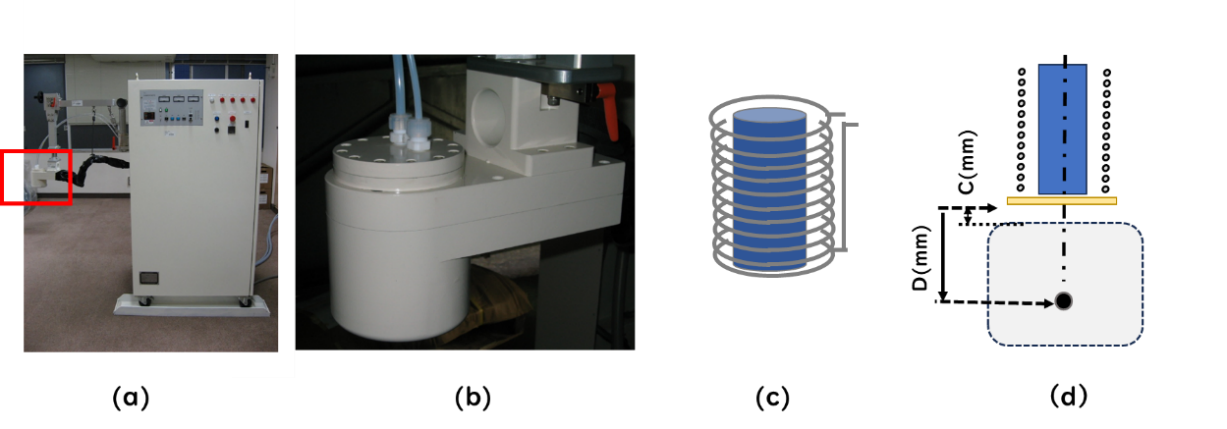
HTS-5010H radiator (Figure 1a) was designed to have movable radiation part (Figure 1b), which built in radiation unit composed of one coil (7cm inner Φ, 11 turns) and cyrindorical ferrite-core (relative trans-magentic value of 3000~4000, near-lossless Monzon FC, TDK, Tokyo) (Figure 1c).
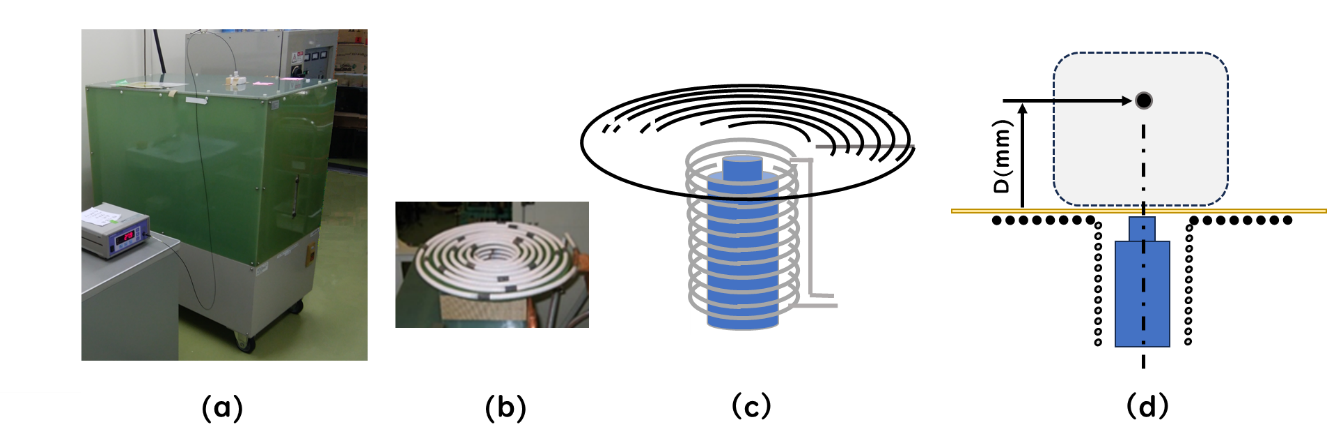
On the other hand, Hi-Heater 5010 radiator (Figure 2a) was designed to treat rather distal cancers from skin surface. Radiation unit of hat-shaped coil and protrusive ferrite-core (Figure 2b, 2c) was built in main body to radiate upper direction (Figure 2a).
Both radiatiors were composed of power supply unit, impedance matching unit, radiation coil unit and coolant circulation unit. Output power was changeable under maximum 10kW and 11kW respectively. Cooling jacket was located between coil and ferrite core, and radiation unit was sealed with insulator cover board. Redundant space from coil edge to outside surface of cover board (hereafter, radiation surface) were about 10mm.
2.2. Clinical operation of HTS-5010H and Hi-Heater 5010 radiators
Before radiation, coil-center axis of coil unit was adjusted toward tumor center (Figure 1d, 2d). Distance from radiation surface to tumor center was defined D (mm) and clearance from radiation surface to patient skin surface was defined C (mm) (Figure 1d, 2d). Magnetic flux density at tumor locus was specified with output power (kW), distance D (mm) and clearance C (mm) as described later.
3. Ability to form 100kHz magnetic flux density
In 2005, we have fixed composition of radiation unit of HTS-5010H radiator and planned to test its ability of magnetic flux density formation. However, at that time, gauss meter of 100kHz frequency was not commercially available, and we applied gauss-meter of 50~60Hz frequency, which was used for environment assessment of electric transmission line (ELT-400, Narda safety test solution GmbH, 3cmΦ sensor). After this trial use, we decided to develop calibration method of 100kHz magnetic flux density by ourselves. This study has been started in 2005 and refined after reporting of heat-dose index in 2020 [13, 14].
3.1. Public and professional exposure limit of HTS-5010H radiator
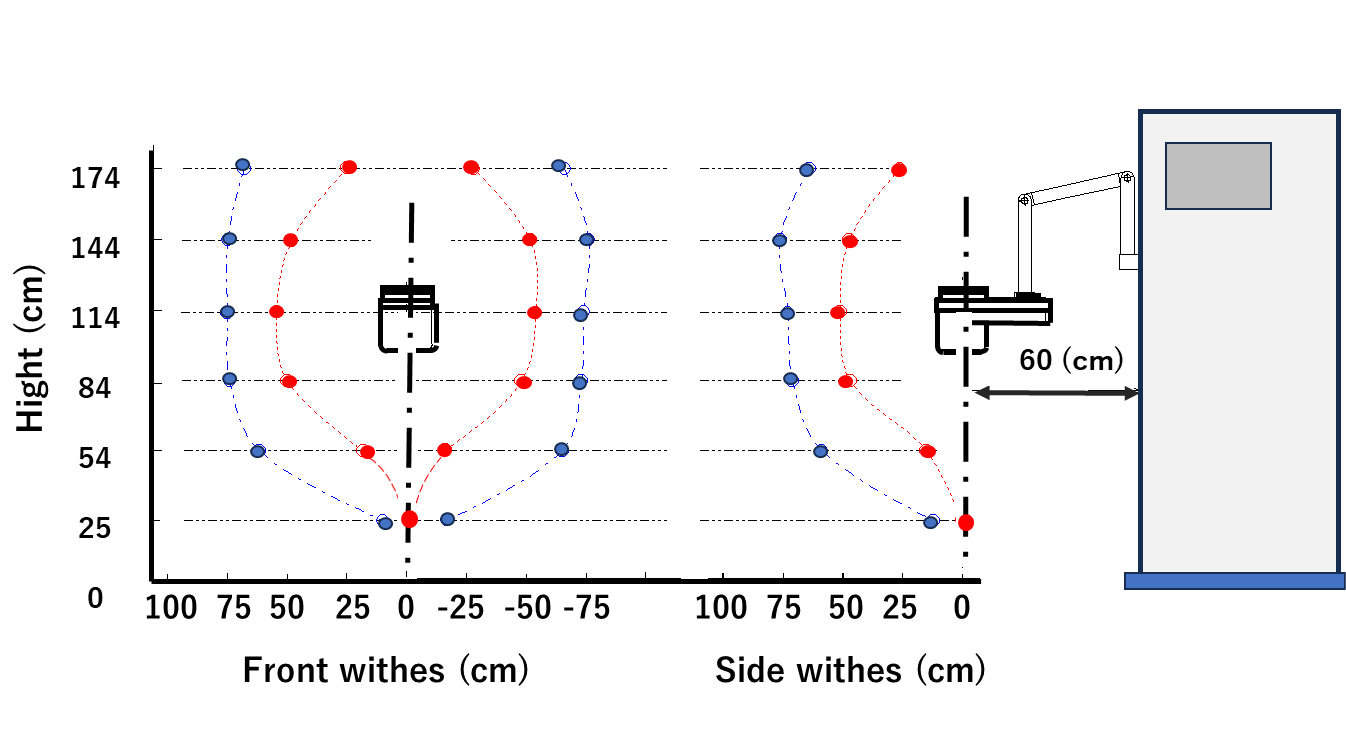
Magnetic flux density at 100kHz formed at maximum output power 10kW was measured by the gauss meter of 50~60Hz in stepwise from distal position toward radiation part. Exposure limits for public (6.25μT) and professional (18μT) were shown, and density enrichment in radiation direction was observed (Figure 3). However, getting closer to radiation part, the gauss meter began to heat and was finally destroyed around 1mT. Since other providers’ meters had similar usage and specification, we decided to develop calibration method for high density range by ourselves.
3.2. Calibration of 100kHz magnetic flux density over 1mT
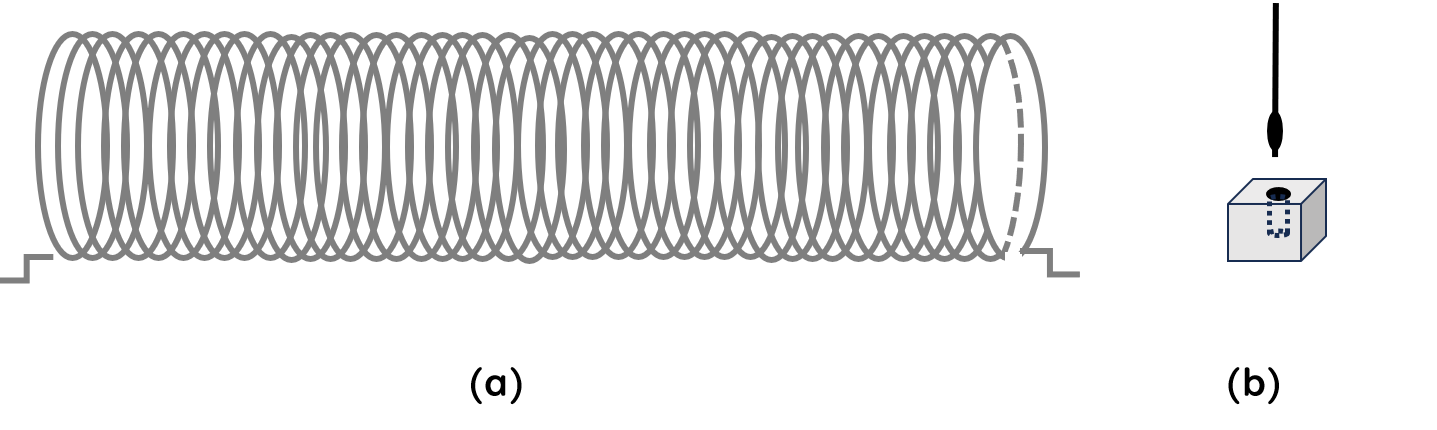
It was well known that magnetic flux density in vacant solenoid coil (Figure 4a) could be tuned by electric current as shown following formula; Magnetic flux density (T) = absolute permeability in vacuum X relative magnetic permeability in air X electric current (A) X coil turn number / coil length. On the other hand, we have showed correlation of magnetite heating to magnetic field strength [15] p.8. Then, we tried to calibrate the density by means of temperature rise of magnetite-containing phantom block.
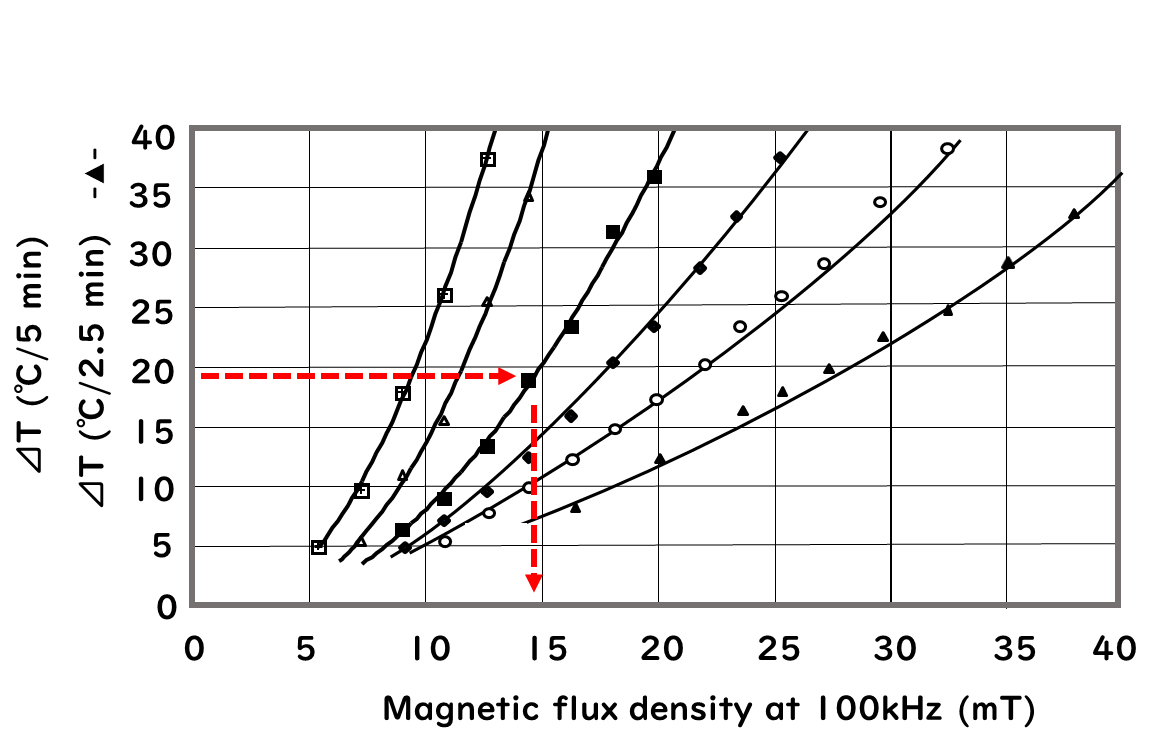
Phantom block was made from refined magnetite granule and liquified polyethylene resin with variation of magnetite contents. The mixture of 2ml was solidified in 13mm cubic block, and 1mmΦ hole was drilled for temperature probe insertion (Figure 4b). Phantoms with temperature probe (Thermometer FX-9020, Anritsu Meter Co. Tokyo) was set in solenoid coil center and temperature rise during 5min was tested under density-tuned condition. As a result, correlation of the density to temperature rise was shown (Figure 5). In density less than 30mT, appropriate phantom block was selected due to calibration range. In density over 30mT, duration of temperature rise was shortened to 2.5 min (Figure 5).
3.3. Analysis of the density distribution of HTS-5010H and Hi-Heater 5010 radiators
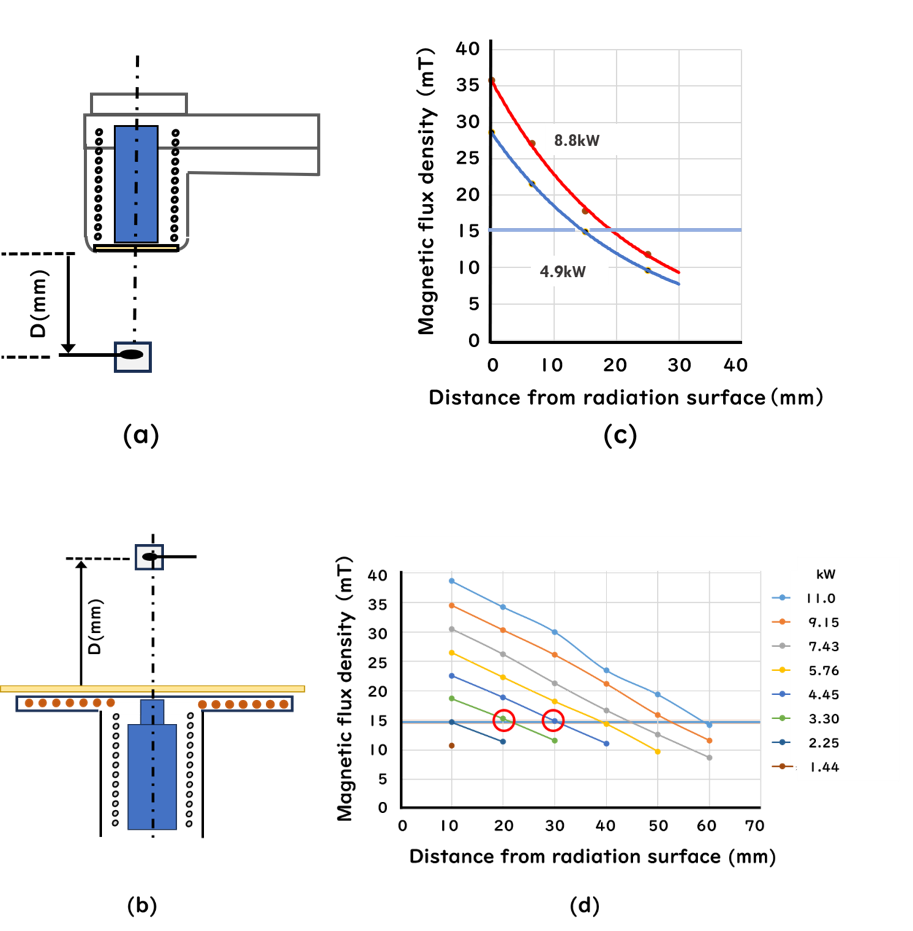
In order to show ability of magnetic flux density formation, temperature rise of phantom block was tested at distance D (mm) on coil center axis (Figure 6a, 6b). For example, in HTS-5010H radiator, phantom block with 20mg magnetite, located at D=15mm and radiated at output power 4.9kW showed temperature rise of 19.2℃. The density of this radiation condition was calibrated 14.6mT as shown in Figure 5.
In similar fashion, densities on coil center axis of two radiators were tested under annotated output power (Figure 6c, 6d). Density distribution profile of HTS-5010H radiator was represented with exponential function of density (y axis) and distance from radiation surface (x axis) as; y = 28.6 e - 0.044x at 4.9kW and y = 35.8 e - 0.045x at 8.8kW. On the other hand, Hi-Heater 5010 radiator showed almost-linear density declining and achieved high density at distal position from radiation surface.
4. Effective 100kHz magnetic-flux-density at tumor locus in the standard treatment
In 2020, we have reported utility of heat-dose index and showed complete tumor regression in two rat tumor models using Hi-Heater 5010 radiator [13, 14]. However, at that time, calibration of 100kHz magnetic flux density was not fully refined, and radiation intensity at tumor locus was specified with heat generation activity of MCL particle, namely around 750 J/g-MCL min [13, 14].
As reported, MAT-LyLu rat tumor was treated at D=20mm and 3.30kW [13] and DMBA induced rat mammary tumor was treated at D=30mm and 4.45kW [14]. Here, retrospectively, effective density at tumor locus in the standard treatment condition was shown around 15mT (Figure 6d, red circle).
5. Clinical safety of 100kHz magnetic flux density in human body
During 2007~2011, clinical research had been conducted using HTS-5010H radiator [11, 12] p.1721. Treatment condition was controlled with tumor temperature index, but data were recorded in details. We tried to pick up safety-related data independent on heat-generating nanoparticles and analyze density distribution in patient bodies and discuss its causal relationship to adverse events.
5.1. Radiation condition and medical outcomes on safety
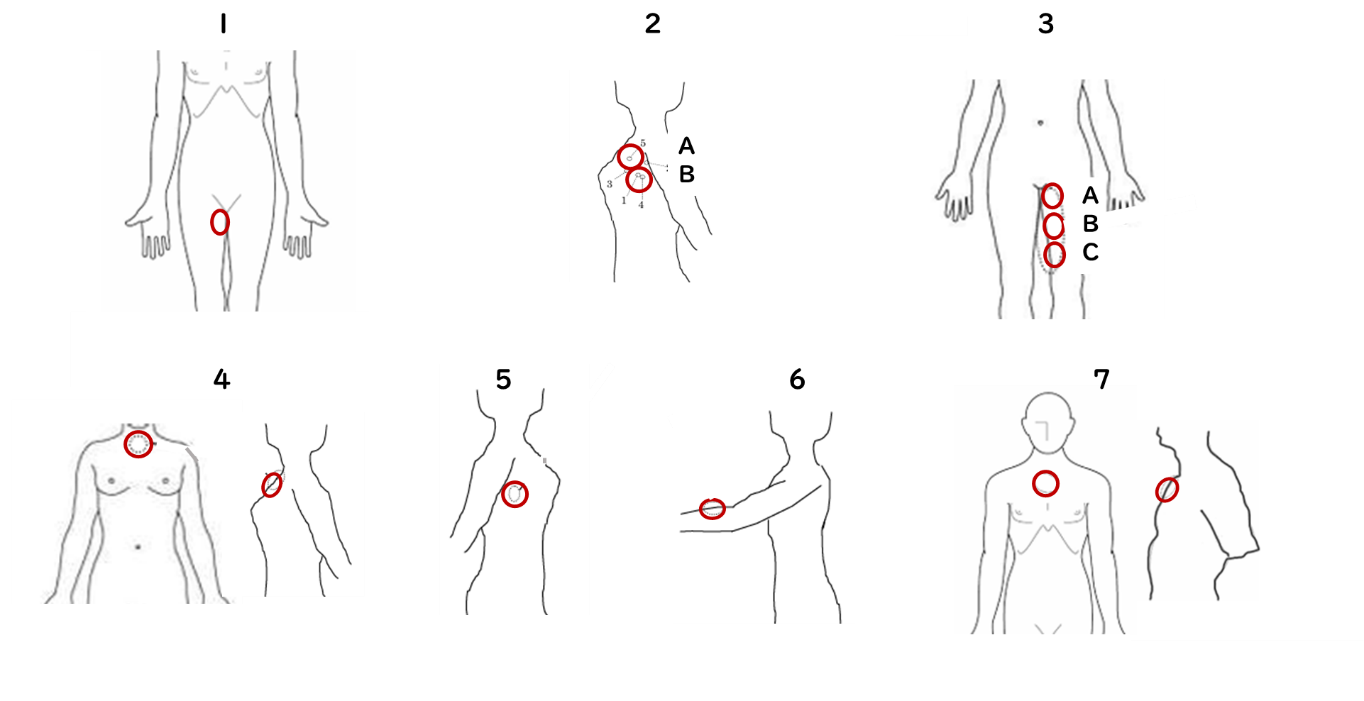
Cancer types of 7 patients and total 10 radiation sites were shown (Table 1, Figure 7). Radiation time has been fixed to standard 30min as animal models [13, 14]. Cooling sheet and other devices was not applied to all patients, and local anesthesia was applied to a few patients. Radiation condition of output power (kW) and clearance C (mm) was picked up and shown with data of temperature monitoring on radiated skin surface (Table 1).
Medical findings on safety were summarized in Table 1. Adverse events on skin surface such as skin burn were not observed in all patients. Significant temperature rise on skin surface was not observed. All patients did not tell heat feeling, pain and discomfort during radiation even under no anesthesia condition. After radiation completion, slight tingling sensation was told by a patient #3, but was far from radiation suspension. Change of vital signs was not observed in tested patient, and the last 3 patients were not hospitalized and permitted to bathe at home.
5.2. Magnetic flux density distribution in each patient body
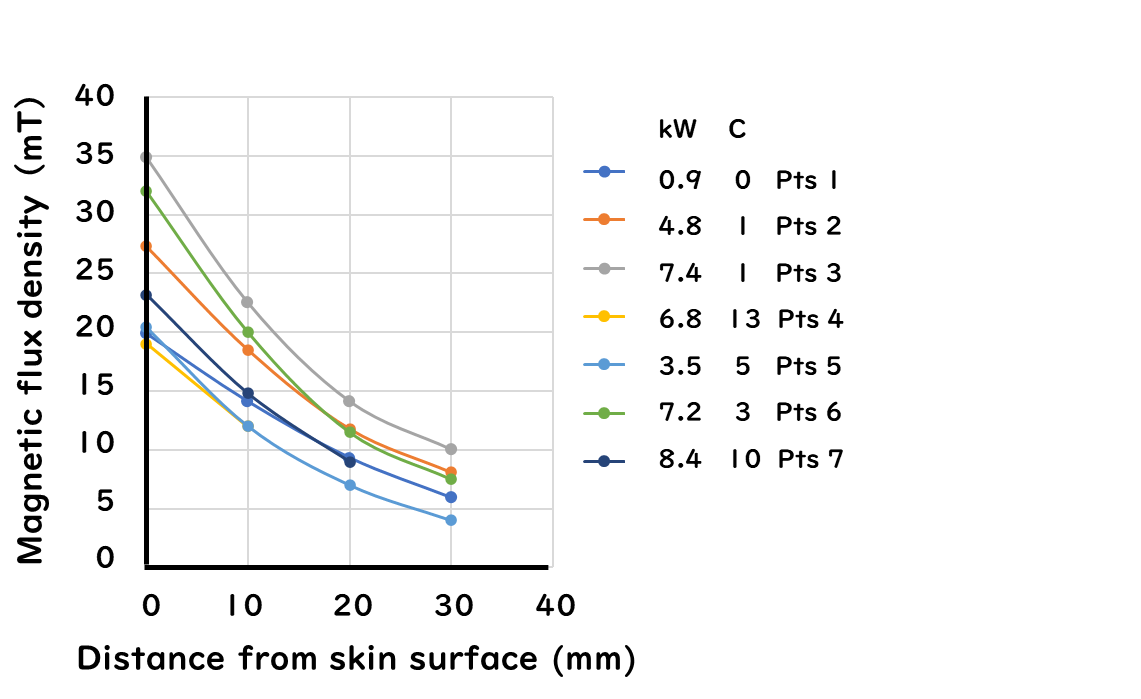
Since relative magnetic permeability in human body was regarded as that in air, density distribution in patient body was deduced from density profile of HTS-5010H (Figure 6c) and radiation condition of each patient (Table 1). The formula of density distribution was converted with clearance C to; y = 28.6 e - 0.044 (x+C) at 4.9kW and y = 35.8 e - 0.045 (x+C) at 8.8k. And, terms of x and c were substituted with values of 10, 20 or 30 (mm) and each patient C value (mm) respectively, and densities at 10, 20 or 30mm locus from skin surface was shown at output power 4.9kW and 8.8kW respectively. Then, each-patient densities at 10, 20 or 30mm locus at each patient output power (kW) were shown by interpolation between the densities at 4.9kW and 8.8kW. Resulted density in patient body (y axis) was shown versus distance from skin surface (x axis) (Figure 8).
Magnetic flux density at skin surfaces were shown to range 19.0~34.9mT (Figure 8). Slight variation of skin temperature monitoring was shown not correlate to skin surface density. Then, density observed at skin surface was considered not causative to skin temperature rise and skin burn. Additionally, density distribution in human body shown at groin, breast, chin, chest and arm (Figure 7, 8) were considered not causative to vital change and quality of life declining. These data will be utilized as benchmark to test further tolerability under intensified radiation condition.
Patient #2 and #3 were radiated multiple sites separately (Figure 7). Clearance was defined from radiation surface to skin surface (Figure 1d). Magnetic flux density on skin surface was derived from density analysis in human body (Figure 8). Temperature of radiated skin surface was monitored with optical temperature probe attached on. Abbreviations: const; constant, avg; average, NT; not tested.
6. Clinical availability of the radiators and target cancers
HTS-5010H radiator was shown to achieve effective tumor density 15mT at D=20mm and 8.8kW (Figure 6c). Density distribution profile of this radiation condition was comparable to that of patient #3 (Figure 8), and HTS-5010H radiator could be safely applied to skin closed tumor located less than D=20mm. According to imaging data of laid human body [16], cancers such as melanoma, other skin cancers, breast, thyroid, rectal, head and neck cancers and subcutaneous metastasized cancers etc. would be involved in candidates for application.
Hi-Heater 5010 radiator was shown to achieve effective tumor density 15mT at D=52mm at 9.15kW (Figure 6d). Density distribution profile showed potential to treat distal tumor located around D=50~60mm at high output power 9.0~11kW. Skin surface density was interpolated almost-comparable to that of patient #3 (Figure 8), but safety of density distribution in human body remained unclear. According to imaging data of laid human body [16], cancers such as brain, pancreas, kidney, prostate, colon, stomach cancers etc. would be involved in potential candidates for application.
On the other hand, MFH®300F radiator at 100kH which formed cylindrical flat density zone between two 20cm Φ coils had been applied to brain cancer treatment, and tolerability for continuous 60min radiation was reported with magnetic field strength 10~14kA/m (corresponding to magnetic flux density 12.6~17.6mT) [10]. With all respect, we considered this epochal radiator would be available for nano-thermal ablation therapy in which tumors were treated at 15mT for continuous 30 min without temperature-probe canulation [1, 13, 14]. If possible, deep-seated tumors such as liver and lung cancers etc. would be involved in potential candidate of the therapy.
7. Eddy current mitigation and cancer-oriented radiator designing
Johanssen M. et al. reported tolerability of MFH®300F radiator was decreased in a use of prostate cancer treatment [9, 17]. Tolerability of 10~14kA/m (12.6~17.6mT) was lowered to 4~5kA/m (corresponding to 5.0~6.3mT) due to pain and discomfort at perineum. Since this problem was only observed during radiation to high cross section, like pelvis, so-called boundary effect of Eddy current was pointed out. Namely, Eddy current generated from normal tissue (Formula 2) was disordered at boundary between low-conductive bone tissue and caused irregular current increase at skin hot spots [17] p.794. Theory of this boundary effect has been established and utilized in modern biomedical electromagnetics [18, 19] for MRI (magnetic resonance imaging) technology and TMS (transcranial magnetic stimulation) therapy.
On the other hand, we showed clinical tolerability for much higher density at most using HTS 5010H radiator (Figure 8). This discrepancy would be explained by difference of density distribution profile of the radiator. Primarily, a small 7cm Φ coil (Figure 1c) would reduce total Eddy current generation from normal tissue due to less radius of induced current loop (Formula 2). Secondary, steep density declining (Figure 6c) would reduce risk of boundary effect due to less bone structure in subcutaneous tissue radiated.
This consideration indicated the subject of radiator matching to target cancer. Density distribution profile of HTS-5010H radiator (Figure 6c) would match to treatment of very skin-closed cancers better than others. Regardless answer, it would be worth noting that prostate cancers located at distance D=50~60mm from perinium or hypogastrium could be treated at 15mT by Hi-Heater 5010 radiator with less Eddy current from normal tissue and avoidance of pelvic bone radiation. These considerations indicated the subject of cancer-oriented radiator designing based on magnetic flux density.
8. Closing remarks on 100kHz radiator development
Development of clinical radiator for nano-thermal ablation therapy was started in 2004. According to “design input” in section 3, two types radiators were constructed and characterized. To our experience, calibration of 100kHz magnetic flux density was laborious but definitely important. As exemplified trial products (Figure 2b), actual density measurement was only reliable in development phase. Frankly, outsourcing FEM density simulation of hat-shaped coil with protrusive ferrite core (Figure 2c) did mislead our development.
Sections from 3 to 6 were regarded as “design process” in Design Control Guidance [3] p.3. Here, we could draft “design output” as; “1) electromagnetic field frequency was set up at 100kHz to mitigate induction heating of normal tissue. 2) Output power of radiator was made variable to control density of tumor locus and normal tissues. 3) To mitigate unnecessary exposure to normal tissue, radiation coil was set up at small size of 7cm Φ coil, and ferrite core was inserted to make sharp density distribution toward target tumor”.
This seminar described significance of 100kHz magnetic flux density in clinical application of the nano-thermal ablation therapy. Universal measure of magnetic flux density is expected to clarify the concept of therapy and enable to discuss radiator designing, treatment control and target cancer matching etc. globally. Medical device development needed long-term efforts, that was represented with symbolic word of “design history file” in the Guidance [3] p.43. Author wishes this seminar will be helpful to describe the 1st page of design history file of 100kHz radiator used for novel solid cancer treatment modality [1, 4] and accelerate its clinical application.
Acknowledgement
The authors would like to express sincere thanks Daivd West for consultation of administrative application, and Kohtaro Hirayama, Syuichiro Miyata for radiator construction.
Conflicts of Interests
The author declared no potential conflict of interest.
Appendix A
Commercial gauss-meter specific for 100kHz was noticed during manuscript preparation, although its availability was not tested (2D HF Magnetic field probe, AMF life systems MI USA).
Standard radiation condition of nano-thermal ablation therapy could take patients-friendly intervals during 30min radiation if needed, since treatment was controlled with total heat dose accumulated, independently on tumor temperature rise.
References
- Morino, T., Kawai, N., Ito, A., Kobayashi, T., & Yasui, T.: Novel nano-thermal ablation therapy using functionalized heat generating nanoparticles for solid cancer treatment. World J Cancer & Oncology Research 2023, 2(1), 29-46. DOI: 10.31586/wjcor.2023.592[CrossRef]
- Gneveckow U., Jordan A., Scholz R., Bruss V., Waldofner N., Ricke J., Feussner A., Hildebrandt B., Rau B., Wust P. Description and characterization of the novel hyperthermia-and thermoablation-system MFH300F for clinical magnetic fluid hyperthermia. Med Phys 2004, 31: 1444-1451. DOI: 10.1118/1.1748629[CrossRef] [PubMed]
- Design Control Guidance for Medical Device Manufacturer. 1997,
- Gilchrist R., Medal R., Shorey W., Hanselman R., Parrott J., Taylor B. Selective inductive heating of lymph nodes. Ann Surg 1957, 141: 596-606. DOI: 10.1097/00000658-195710000-00007[CrossRef] [PubMed]
- Gilchrist R., Shorey W., Hanselman R., DePeyster F., Yang J., Medal R. Effects of electromagnetic heating on in viscera: A preliminary to the treatment of human tumors. Ann Surg 1965, 161: 890-896. DOI: 10.1097/00000658-196506000-00008[CrossRef] [PubMed]
- Gordon R. T., Hines J., Gordon D. Intracellular hyperthermia, A biophysical approach to cancer treatment via intracellular temperature and biophysical alteration. Med Hypothesis 1979, 5: 83-102. DOI: 10.1016/0306-9877(79)90063-x[CrossRef] [PubMed]
- Jordan A., Wust P., Fahling H., John W., Hinz A., Felix R. Inductive heating of ferromagnetic particles and magnetic fluids: physical evaluation and their potential for hyperthermia. Int J Hyperthermia 1993, 9: 51-68. DOI: 10.3109/02656739309061478[CrossRef] [PubMed]
- Yanase M., Shinkai M., Honda H., Wakabayashi T., Yoshida J., Kobayashi T. Intracellular hyperthermia for cancer using magnetite cationic liposomes: An in vivo study. Jpn J of Cancer Res 1998, 89: 463-469. DOI: 10.1111/j.1349-7006.1998.tb00586.x[CrossRef] [PubMed]
- Johannsen M., Gneveckow U., Eckelt L., Feussner A., WaldÖFner N., Scholz R., Deger S., Wust P., Loening S., Jordan A. Clinical hyperthermia of prostate cancer using magnetic nanoparticles: Presentation of a new interstitial technique. Int J Hyperthermia 2005, 21: 637-647. DOI: 10.1080/02656730500158360[CrossRef] [PubMed]
- Maier-Hauff K., Rothe R., Scholz R., Gneveckow U., Wust P., Thiesen B., Feussner A., Von Deimling A., Waldo¨fner N., Felix R., Jordan A. Intracranial thermotherapy using magnetic nanoparticles combined with external beam radiotherapy: Results of a feasibility study on patients with glioblastoma multiforme. J Neurooncol 2007, 81: 53–60. DOI.org/10.1007/s11060-006-9195-0[CrossRef] [PubMed]
- Matsumoto K., Kobayashi T., Saida T.. Magnetic Hyperthermia. Nippon Rinsyo, 2013, 71. Suppl 4.
- Kobayashi T., Kakimi K., Nakayama E., Jombow K. Antitumor immunity by magnetic nanoparticle-mediated hyperthermia. Nanomedicine 2014, 9: 1715-1726. DOI: 10.2217/nnm.14.106[CrossRef] [PubMed]
- Morino T., Tanoue S., Miyata S., Hirayama K., Ito A., Etani T., Naiki T., Kawai N., Yasui T. Heat dose index in vivo for cancer herapy using heat-generating nanoparticles named magnetite cationic liposomes and alternating magnetic field radiator. Thermal Med 2020, 36: 47-58. DOI: 10.3191/thermalmed.36.47[CrossRef]
- Morino T., Ito A., Etani T., Naiki T., Kawai N., Yasui T. Heat dose based large tumor treatment with multiple site injections of heat-generating nanoparticles dispersible within tumor tissue. Thermal Med 2020, 36: 91-98. DOI: 10.3191/thermalmed.36.101[CrossRef]
- Motoyama J., Hakata T., Kato R., Yamashita N., Morino T., Kobayashi T., Honda H. Size dependent heat generation of magnetite nanoparticles under AC magnetic field for cancer therapy. BioMag Res Tech 2008, 6: e4. DOI: 10.1186/1477-044X-6-4[CrossRef] [PubMed]
- Moran C.M., Thomson A.J.W., Preclinical ultrasound imaging - A review of techniques and imaging applications. Front. Phys 2020, 8: 124. DOI: 10.3389/fphy.2020.00124[CrossRef]
- Johannsen M, Thiesen B, Wust P, et al. Magnetic nanoparticle hyperthermia for prostate cancer. Int J Hyperthermia 2010, 26(8): 790-795. DOI: 10.3109/02656731003745740[CrossRef] [PubMed]
- Thomas W. B., Soma V., Peter B., Andreas S., Philippe B. Characterization of the electrical conductivity of bone and its correlation to osseous structure. Scientific report 2018, 8: 8601. DOI:10.1038/s41598-018-26836-0[CrossRef] [PubMed]
- Syrek, P.; Skowron, M.; Kapustka, P. Eddy current distribution in magnetotherapy of bones: A qualitative and quantitative study. Appl Sci 2025, 15; 9892. https://DOI.org/10.3390/ app15189892.[CrossRef]