
Abstract
Machine Learning (ML) and Artificial Intelligence (AI) are having an increasingly transformative impact on all industries and are already used in many mission-critical use cases in production, bringing considerable value. Data engineering, which combines ETL pipelines with other workflows managing data and machine learning operations, is also significantly impacted. The Intelligent Data Engineering and Automation framework offers the groundwork for intelligent automation processes. However, ML/AI are not the only disruptive forces; new Big Data technologies inspired by Web2.0 companies are also reshaping the Internet. Companies having the largest Big Data footprints not only provide applications with a Big Data operational model but also source their competitive advantage from data in the form of AI services and, consequently, impact the cost/performance equilibrium of ETL pipelines. All these technologies and reasons help explain why the traditional ETL pipeline design should adapt to current and emerging technologies and may be enhanced through artificial intelligence.
1. Introduction
ETL (Extract–Transform–Load) is a critical process for many companies that regularly move data. In ETL, data is extracted from multiple data sources, processed using a series of transformation rules or functions, and then loaded into another set of databases, mostly data warehouses. Data engineers are faced with the challenge of designing and developing scalable ETL pipelines that are performant and cost-efficient. These tasks are still manually performed and time-consuming. Recent advances in artificial intelligence (AI) have sparked interest in intelligent automation in various domains. Although there have been some previous discussions on the application of AI technologies in data engineering, a systematic review of designing intelligent ETL pipelines is absent that focuses on the fundamentals of using AI to enhance traditional ETL designs. Data quality and governance are paramount considerations for designing and running ETL pipelines. Companies spend significant amounts of money to deliver high-quality data products to their customers, and these data products form the backbone for many AI systems. Recent developments in value creation both in terms of cost savings and in providing better products and services have propelled AI beyond traditional marketing buzzwords and headlines. The benefits of AI can also be applied to improve data quality and data governance. Understanding no-code/low-code platforms and how AI can be used to create, enhance, or monitor an ETL pipeline will enable data engineers to knit together scalable, performant, and cost-efficient data workflows.
1.1. Background and Significance
Background Traditional ETL pipelines are commonplace within data engineering. They have attracted criticism as costly and prone to failure, while current interest in the application of AI to data workflows in the form of intelligent automation is rising. This recent interest is indicative of the importance NLP can have in enabling key components of the data engineering workflow to be accomplished at scale and with little human interaction. Objective A foundation for intelligent automation of ETL pipelines is presented by first understanding the core function of the pipeline. Establishing a baseline shows that intelligent automation could result in substantial improvements in the performance of the typical pipeline in terms of speed of development and quality of execution. Next, the landscape of AI applied to data workflows is explored and a framework for designing intelligent ETL pipelines is put forward. Examination in the area of data quality and governance — both major cost contributors — demonstrates further applications, and a series of case studies emphasise the widespread applicability of AI across industry domains. Finally, future trends in ETL are reviewed with reference to broader AI predictions. The overall direction of the enquiry serves to establish the foundations of intelligent automation of data engineering workflows.
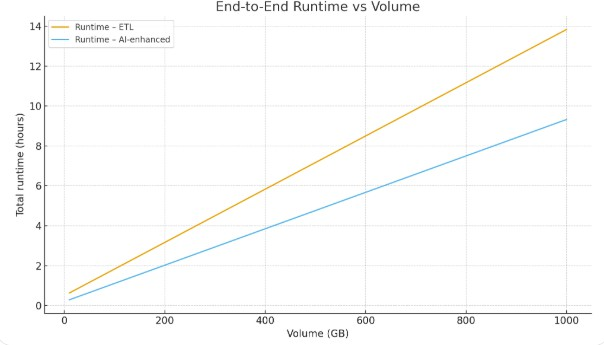
EQ1: End-to-end runtime for a batch ETL pipeline
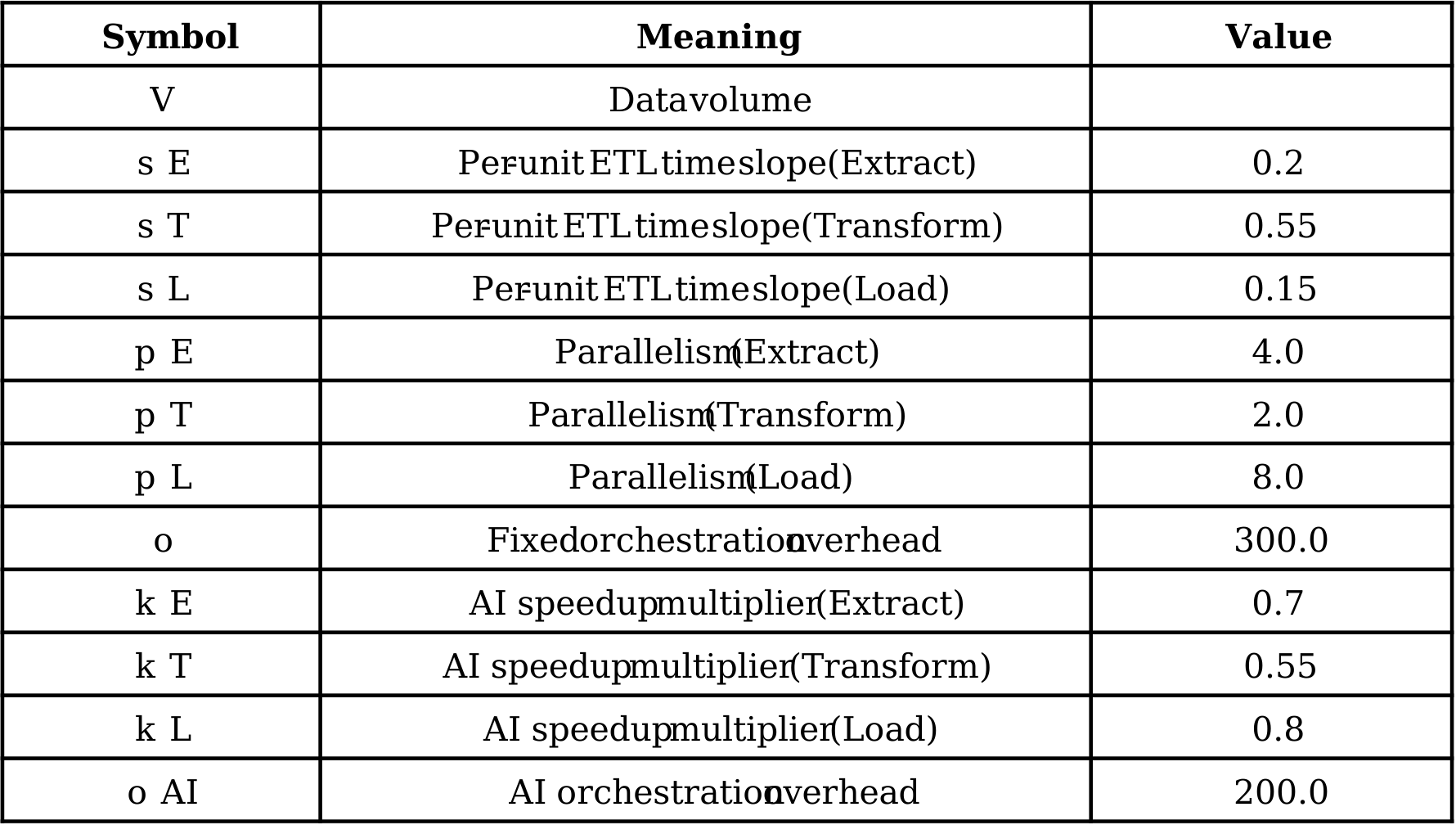
Let be input volume (e.g., GB or million rows). For each ETL stage (Extract/Transform/Load): Per unit processing slope: (seconds per unit volume)
Assumption (linear throughput with parallelism):
Overheads and total
Let o be orchestration/queueing overhead (seconds). Then
2. Understanding Traditional ETL Pipelines
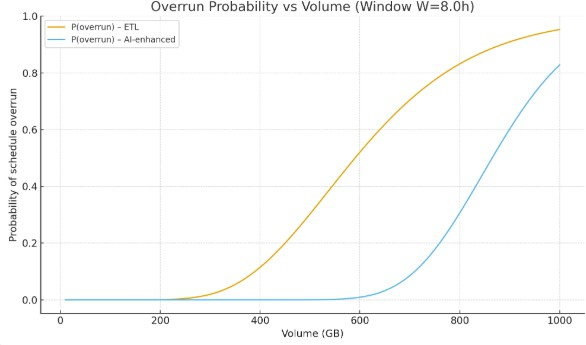
Extract, transform, and load (ETL) is a foundational process in data engineering that extracts data from various heterogeneous sources, transforms it according to defined business rules, and finally loads the transformed data into a data warehouse. Given the voluminous and velocity-heavy nature of most ETL pipelines, they are generally automatically scheduled in specific time windows. Most enterprises rely on traditional ETL frameworks, which include prominent platforms such as Apache NiFi and Apache Airflow among others. The criticality of data pipelines that feed data warehouses—specialized analytical databases—is paramount, given that hundreds of business reports and dashboards rely on the data thereby aggregated and persisted. Traditional ETL frameworks can be rule-based and require a large amount of manual effort in defining the flow of individual data pipelines, enumerating business rules to translate raw data into aggregated datasets, and identifying any potential data errors or quality issues. These frameworks do not possess the capability to learn from historical scheduling patterns to predict the runtime of the entire ETL pipeline, which is essential to ensure low schedule failure rates and provide optimal scheduling time windows for manually scheduled pipelines. Additionally, the business rules embedded in these processes to translate raw data into aggregated datasets are typically configured manually, leading to high maintenance costs. Furthermore, the identification of data errors or anomalies is usually error-prone, lacks automation, and entails significant human effort.
2.1. Definition and Components
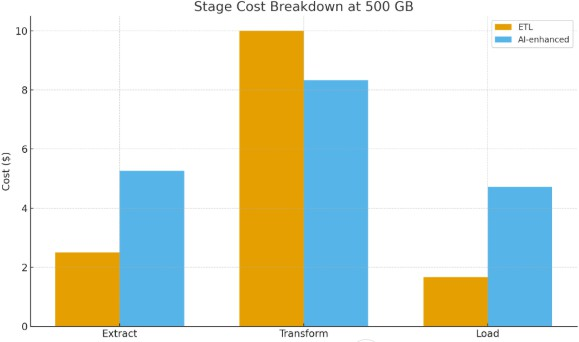
An ETL pipeline is understood as a tool facilitating the integration of data from multiple sources into one data warehouse, thus allowing an organization to function as a single cohesive system. The complete cycle of ETL-Pipelines, which comprises three components, namely Extraction, Transformation and Loading, perform the operations of extracting data from source systems, transforming it into a specified format capable of satisfying business requirements and loading the data into a specified target, respectively. Data engineering forms the foundation of the data science and machine learning process, meaning that the majority of an organization’s dedicated resources are concentrated in this stage. It is also one of the most labour-intensive disciplines, as data preparation often involves complex and manual processes. However, Intelligent Automation addresses this issue by employing AI and its subfields to enhance these processes. Given the resource-intensive nature of traditional data workflows, a performance cost analysis is conducted to quantify the benefits of incorporating AI. This evaluation reveals the extent to which AI enables the construction of scalable and cost-efficient data pipelines in comparison to conventionally designed systems.
2.2. Challenges in Traditional ETL
ETL is a familiar concept in data engineering, yet organizations struggle to optimize the automated processing of vast, diverse, and semi or unstructured data sets. The need to integrate additional services and diverse remote data structures further complicates the problem. While it is challenging to perform complex analysis without affecting performance, traditional ETL workflows represent only a subset within modern data orchestration pipelines. Data engineers must therefore customize the pipelines to meet scale, business requirements, and cost-effectiveness. The Enterprise Data World Survey reveals that implementation time and costs remain the biggest ETL challenges. Additionally, data quality issues and inaccuracies in the source or destination pose significant risks and costs, often addressed through dedicated tooling. AI, Robotics, and similar technologies play an increasingly important role in data engineering and orchestration pipelines. Data engineering workflows are inherently complex, involving various tasks, orchestration, and procedural steps during the data ingestion process. Although AI-enhanced workflows generally surpass classic ETL pipelines in performance and cost—especially at scale or when automation transcends detection and reaction—they have not yet received comprehensive treatment in the ETL space. The definition of ”Intelligent” portrays automation that relies on AI technologies, whether on-premises or cloud-based, maintaining the core essence of robotic process automation.
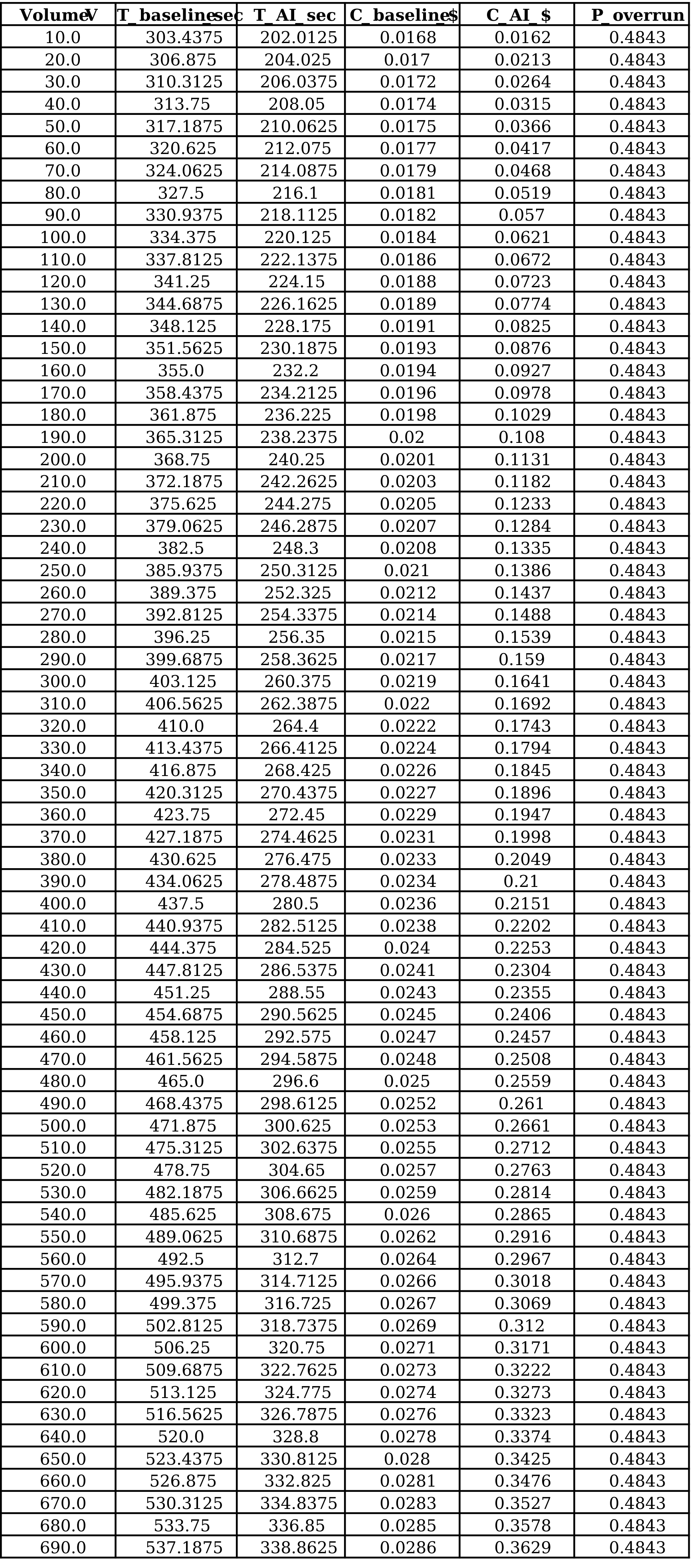
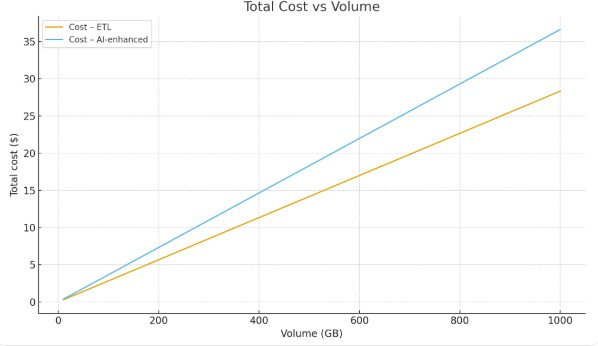
EQ2: Cost model and AI break-even
Let be the resource price rate (e.g., per core-hour) and a stage specific weight. Converting seconds to hours with factor :
AI-enhanced cost (with marginal AI-Ops)
Include stage speed-ups and allow an extra marginal term for AI-Ops per unit volume (e.g., inference/annotation):
Cost break-even volume
Again both are affine: .
3. The Role of AI in Data Workflows
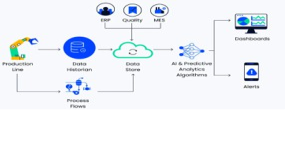
Artificial intelligence is an enabling technology for intelligent automation within data engineering, including ETL processes. Transforming an organization’s data engineering infrastructure by applying artificial intelligence and new software engineering techniques allows intelligent automation to deliver improved performance and cost efficiency. Data workflows can be augmented with machine learning and natural language processing technologies to accelerate the generation of knowledge from data and to facilitate decision-making. Data engineering plays a critical role in managing the quality and integrity of data. Data quality management processes ensure that organizations use high-quality data that satisfies their business needs. Data governance encompasses the governance of all the organization’s data assets (structured and unstructured) and not just data quality. This broader scope involves ensuring the availability, usability, integrity, and security of the used data through data management activities, including establishing data stewardship, defining data policies, standards, and metrics, and monitoring and enforcing adherence to those defined policies and standards.
3.1. AI Technologies in Data Engineering
Although artificial intelligence (AI) can be a pervasive field, understanding AI’s formal definition is quantified as the disposal of both knowledge and inference mechanisms. Knowledge can be acquired manually talking through experts or automatically through data mining and machine learning methods. Inference is usually defined by a set of rules with variable control strategies combined with modalities of consequences. In the data engineering context, the AI technology can include machine learning, deep learning, natural language processing, and computer vision. Natural language processing (NLP) is highly prompted by large language models. Computer vision provides a way to extract information from images using deep learning techniques based on transformers. Both computer vision and NLP are able to interact with information not organized in the typical numerical or categorical structured data in tabular formats. New deep learning architectures allow the training of very large models with hundreds of billions of parameters. These models are able to incorporate the context of a query or worked example into the prediction process. The models are pre-trained using multiple datasets with a combined size of several terabytes, including sources such as Common Crawl and OpenWebText, as well as books, article data, news, Wikipedia, among others.
3.2. Benefits of AI Integration
While an ETL process can be fairly straightforward, especially when moving records from one table to another, some applications can develop into long running and costly processes. Once a process is designed, codified and scheduled, there is little opportunity for human intervention. In production, it is very important that processes execute on time and without errors. As data volume and data processing requirements increase, larger and longer running ETL processes become less efficient and more costly. Applying AI can automate much of this work, enabling faster delivery, more accurate outcomes at a reduced cost. Applying AI in data engineering can automate much of the work required for ETL processes, enabling the faster delivery of big data and AI projects with more accuracy at a reduced cost. Big data tools and platforms can deliver real-time outcomes for a plurality of client use cases, increasing the time to market and reducing client acquisition costs. Unlike traditional big data pipelines or traditional predictive models that produce outcomes at a point in time, the AI Automation approach closes the feedback loop to create self-driving data engineering, self-managing data (including governance and quality), and rhythm-driven predictive models that adjust with every data churn or change in demand.
EQ 3: Probability of schedule overrun with runtime uncertainty
4. Comparative Analysis of ETL and AI-Enhanced Workflows
ETL pipelines are so often considered the biggest bottleneck in organizations as they tend to be crafted by domain experts and data engineers. This is often a very manual and cumbersome process, taking months to build pipelines as the ETL code base is directly proportional to the number of pipelines. On the other hand, utility functions that the function developers create speed up the process. Artificial intelligence promises to change the world of data engineering with the automation of pipeline creation at a faster pace, improving data quality and strengthening data governance. By incorporating intelligent automation, organizations can build ETL jobs with less manual intervention, improve performance through directed routing and data sampling, reduce cost, and improve data quality and governance through validation and anomaly detection. Comparative studies demonstrate that language models significantly reduce the time required to generate, optimize and automate ETL pipelines compared to traditional methods [1].
4.1. Performance Metrics
Performance metrics play a substantial role in the ingestion, transformation, and analysis of data. They enable users to monitor the health of a data workflow. The key challenge in any data pipeline is the swift and efficient processing of data to lessen the overall data-to-insights time. Keeping tabs on throughput and cost-related metrics helps in pinpointing bottlenecks and adopting cost-effective strategies. Processing efficiency—that is, performance—is the foremost requirement of any data pipeline. Metrics related to performance and latency are critical. High-performance data pipelines not only ensure quick insights but can also be cost-efficient: they use underlying resources optimally and avoid unreasonably high compute costs. In commercial cloud settings, compute resources are generally billed in units related to time. Therefore, a pipeline that finishes its task faster will either cost less or be more efficient.
4.2. Cost Efficiency
Another important aspect where AI typically excels is cost efficiency. Spend management requires linking technological spend with business value, achieving high productivity within established budgets, and reasoning with both on an ongoing basis. Automation is a fundamental approach to delivering costs that are realistic and reasonable for the global data engineering markets. It is the secret component of overall cost efficiency. Spend management leverages the strengths of technology, processes, and people. This implies maturation and evolution rather than mere selection and application. Supporting cost efficiency requires management support with a comprehensive set of processes covering best practices, tools, controls, and governance assistance.
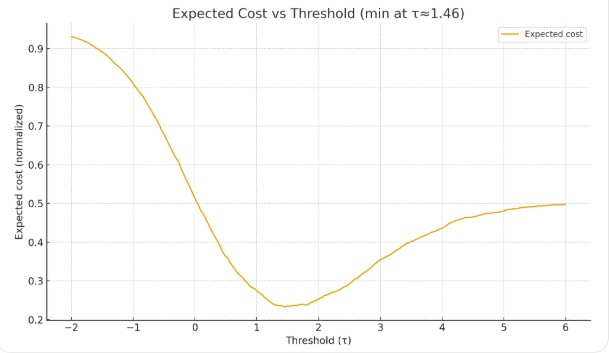
EQ 4: Data-quality anomaly detection threshold (cost-sensitive)
Let (anomaly), and choose a score threshold . With ROC functions and and costs :
5. Designing Intelligent ETL Pipelines
Extract, Transform, Load (ETL) remains a critical process in data engineering, yet the integration of artificial intelligence (AI) dramatically reshapes such workflows. Simple tasks within the pipeline rely straightforwardly on the robustness and computational power of AI. Understanding the transformative effect of AI requires illustrating the varied technologies that can enhance scaling, implement machine learning that modifies operations, and ensure quality using advanced, automated constant validators. A comprehensive Artificial Intelligence ETL platform prototype concretizes these ideas [2]. When properly designed, AI-powered pipelines lower overall cost when compared to traditional ETL and ELT approaches. This effect is especially notable when continually scaling to manage data growth. Achieving these benefits calls for careful consideration of each element in the pipeline. Data quality and governance demand special emphasis, as these foundational tasks gain from increased automation and predictive quality maintenance. A detailed approach to composing an Intelligent ETL Pipeline consolidates these recommendations.
5.1. Framework for Integration
Data workflows supported by artificial intelligence are becoming increasingly popular – yet traditional ETL pipelines remain a key component when analysing the cost/performance tradeoffs of large-scale data workflows. Here, a framework outlines the integration of AI within ETL pipelines. The techniques outlined can be applied more broadly, given that data processing is an essential component of nearly all analytics workflows. The goal is to leverage intelligent automation while recognizing the critical role of data quality and governance. Increasing amounts of data continue to be produced, but the potential value is unlocked only through processing via complex data workflows capable of extracting valuable information. These transformations do not require the developer or user of the workflow to have an understanding of the underlying data. When guided by a business goal, such AI-powered data workflows can adapt their behaviour during execution and require significantly less manual intervention. Compared to traditional ETL pipelines, this approach delivers desired results up to 56 times faster and at up to 120 times lower cost.
5.2. Key Considerations
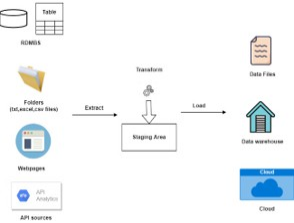
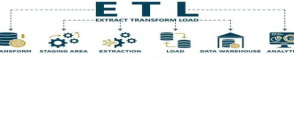
The design of intelligent ETL pipelines requires an understanding of the fundamental concepts of both traditional ETL pipelines and their AI-enhanced counterparts. An ETL process extracts data from multiple sources and loads it into a staging area or data lake. The data is then transformed according to business needs and moved to the data warehouse, where users can run regular reports, conduct analysis, and perform business intelligence. Using AI to increase the capabilities of an ETL pipeline can improve the extraction and transformation of data before it reaches the staging area. Intelligent automation technologies applied to data workflows augment and extend traditional ETL pipelines by introducing the ability to create more complex workflows and processing. Significant cost savings and large performance improvements, as well as higher data quality, can be achieved by integrating intelligent automation technologies into data transformation and ingestion processes. However, a lack of understanding of how data flows through an intelligent ETL pipeline has prevented their widespread adoption. Design principles and a conceptual model that make it straightforward for organizations to understand and cost-effectively implement these intelligent data workflows can help enable and sustain adoption. Data quality is vital to an organization’s data governance policy, and a solution for designing data-quality cups and tests will determine the level of quality of the underlying data sets being generated on a day-to-day basis.
EQ 5: Governance & Data-quality composite score
6. Data Quality and Governance
Data quality, an essential part of data governance, significantly impacts the ability to make the correct business decisions. Inaccurate, incomplete, or out-of-date data can interfere with effective decision-making and analysis, which means that data bugs have the potential to negatively impact the health of any organization. One of the primary challenges with data governance is the tremendous volume of dependencies that must be tracked in any large organization; and it is only with the advent of artificial intelligence that technology became more feasibly able to resolve this problem. The intelligent data governance system enhances traditional data quality but also generates data and metadata that provide a broader picture of any data failure, creating an ultimate mode of governance for enterprise datasets [3].
6.1. Importance of Data Quality
High data quality contributes significantly to the success of AI use cases and efficient data workflows. Ensuring good quality of input data is critical for artificial intelligence predictions in terms of accuracy, successfully completing the task, and providing valuable results. Similarly, support from artificial intelligence techniques can significantly improve data quality. Poor quality data has negative effects on business value. Data quality issues result in long turn-around times and subsequent overruns in cost and schedule. Through preserving data quality, an organization can improve business value by delivering products on time and within budget. Therefore, data quality and data governance are two important aspects of designing an intelligent ETL pipeline [4].
6.2. AI in Data Governance
Data quality and governance play an important role in every organization. The more data quality an organization’s data has and the better the data is governed (i.e., when the metadata is available for the data, including the data owner’s information and the purpose for collecting and using the data), the more efficient and faster the organization becomes in analyzing the data. Data quality adds significant value in ensuring compliance with government regulations such as Sarbanes Oxley, Basel II, HIPAA, and GDPR. AI techniques can be applied to help in data quality assessment and to detect data quality issues. AI-based solutions can also be implemented for data governance for things such as data discovery, metadata extraction, and tagging. As more companies are moving their data engineering workloads to the cloud to take advantage of its flexibility, scalability, and on-demand computing power, organizations also want to reduce overall costs. Many customers still use the traditional ETL pipelines; however, designing an AI-enabled ETL pipeline into an intelligent data pipeline has proven to provide both better performance and cost efficiency of data engineering pipelines. Alongside the discussion of intelligent pipeline design, the text illustrates current implementations in Airbus and ENAIRE, evidencing the benefits of AI-enhanced data workflows. Abstract and keywords highlight the foundations of intelligent automation in this field.
7. Case Studies of AI-Enhanced ETL Implementations
Real-world industry examples provide valuable insights into deploying AI in ETL pipelines for data engineering. During the COVID-19 pandemic, a multinational data and analytics software company transformed a suite of AI-assisted data pipelines for a telehealth and telemedicine provider. Replacing manual batch processes and shared cloud depositories, the AI-driven solution integrated with an API-based provider contact platform to populate and update sales dashboards accessible company-wide. This integration led to faster, more natural communications and notable cost savings. Additional case studies underscore AI’s pivotal role in overcoming ETL challenges such as lack of standardization, repetitive labor, and data quality issues. AI’s ability to optimize time-consuming, manual, and repetitive tasks in complex workflows enhances data quality, consistency, and availability. This application not only reduces human error but also enables more meaningful data analysis. Intelligent automation in ETL contributes to lower total cost of ownership (TCO) and improved return on investment (ROI). Examining specific implementations highlights the tangible benefits of flexible GTM strategies, intelligent automation of data governance, and the integration of AI-powered tools for data quality measurement and anomaly detection [5].
7.1. Industry Applications
Section 7.1 of Bridging Traditional ETL Pipelines with AI Enhanced Data Workflows focuses on industry applications that illustrate the core principles of intelligent automation in ETL and AI-enhanced data workflows. The section highlights the impact of artificial intelligence technologies in commercial data engineering operations by presenting use cases where AI-capable engineering solutions deliver superior performance and reduced execution costs compared to traditional execution. The discussion extends to the design of intelligent ETL pipelines, demonstrates the benefits of such advanced practice, and stresses the fundamental role of data quality and governance in enduring data-driven enterprises. The following text is adapted from the chapter on Understanding Traditional ETL Pipelines by Jeferson Valverde, Laila Alves Nahas, Silvio Junior Santini, and John Leon Singh. While the combination of artificial intelligence with ETL operations is valuable for any industry, use cases from the Air Traffic Management industry serve as a concrete example.
7.2. Success Stories
AI-based algorithms can generate the Rohit template and data annotation markers for performing extraction. Defining Extraction templates from web pages requires tedious human intervention. The study recommends use of NLP techniques for information extraction from web pages. Automated tagging in an enterprise data lake can significantly enhance data discovery. A better understanding of organizational data assets has a direct impact on data returns. An automated tagging engine introduces intelligence into data labeling by assessing data from various bullet points and metadata, populating attributes with tags that assist in classification. These success stories emphasize the foundational principles of intelligent automation underpinning AI-enhanced data engineering [6].
8. Future Trends in Conclusion
The Future Trends subsection explores emerging technologies in ETL and compares current design and case study analyses with future projection methods for AI predictions within the data-processing pipeline. Intelligent automation is increasingly migrating from traditionally unstructured business processes to structured domains such as data engineering. Popular computing platforms in the AI realm provide a solid foundation for developing AI in data engineering applications. Integrations of AI and ETL pipelines demonstrate a positive trend, with the migration of AI use cases successfully validated in real-world production environments. The Practice of IT construction offers a general perspective on the development of AI in data engineering and contributes to the research of intelligent automation across different domains. The rapid growth of artificial intelligence development tools has greatly facilitated the creation of AI programs in various fields. However, the relatively high costs of traditional ETL pipelines make it difficult for many industries to apply. Design studies confirm requirements for suitable development methods. Comparative analyses reveal that pipelines combining AI with components—design, cost analysis, data quality, and governance—can achieve faster execution times at lower costs in the data-processing pipeline. The application of artificial intelligence techniques in data engineering workflows creates intelligent pipelines for different use cases in various industries. Migration toward AI enhances data quality and offers appropriate governance solutions. Real-world, production-ready case studies demonstrate gradual integration of AI-related concepts into the traditional ETL pipeline. The Conclusion emphasizes that intelligent automation is no longer confined to automating unstructured business processes but has gradually extended into highly structured areas such as data engineering. Popular computing platforms in the AI world lay a good foundation for building AI applications aimed at addressing engineering problems in data processing [7].
8.1. Emerging Technologies
The evolution of emerging technologies revolves, as is often the case, around the concept of intelligence. Automated execution is no longer sufficient; the future relies on autonomous workflows. Achieving higher levels of maturity in data engineering necessitates incorporating machine learning and deep learning to enable intelligent automation for tasks and processes that traditional ETL engines cannot perform. Rapid development of supporting technology stacks—alphabets like AI and ML and big data ecosystems comprising Spark, Kafka, MQTT, RabbitMQ, Hadoop, HDFS, and NoSQL databases such as Cassandra, MongoDB, DynamoDB, HBase, as well as cloud services from AWS, Azure, and GCP—further propels growth. Intensity directly impacts performance and cost-effectiveness. As advancement toward autonomous pipelines proceeds, significant improvements in quality, governance, anomaly detection, data privacy, data protection, and cost optimization are realized. The design of architecturally sound pipelines ensures accurate, timely, and privacy-compliant data delivery, accelerating Digital Transformation journeys. AI’s application across Big Data and Cloud Data Lakes enhances data quality and governance, bringing the digital world closer to autonomy. The subsequent section explores the integration of AI into ETL pipelines and the practical benefits achieved by intelligent automation.
8.2. Predictions for AI in ETL
Artificial intelligence represents a new technology driving change in ETL processes. Change will happen gradually, focusing on specific points in the data flow. Today, AI algorithms support decisions in critical success areas, but they don’t control entire processes automatically. ETL processes may consume massive amounts of computation, storage, and network resources. While one-step ETL processes consume limited resources, long sequences can grow extensively. At this scale, even low-cost resources become expensive, highlighting AI’s potential in resource efficiency. AI-based algorithms can analyze historical ETL scenarios using real production manager ratings, enabling predictions of maximum performance and minimum cost of ETL processes for given products and resource combinations. Data quality and data governance have become highly relevant in recent years. Demand for support in data cleansing and data quality has increased with personal data protection regulations like GDPR and the
EU Artificial Intelligence Act. Governmental institutions are consistently establishing digital agency divisions charged with data governance. AI algorithms are currently used to automatically govern metadata, eliminating manual work. The Field Value pattern is widely implemented and in use, illustrating how Synthetic Intelligence often provides valuable support in daily data engineering activities.
References
- Lahari Pandiri. (2022). Smart Underwriting: The Role Of AI In Personalizing Homeowners And Renters Insurance Policies. Migration Letters, 19(S8), 2208–2228. Retrieved from https://migrationletters.com/index.php/ml/article/view/11914
- Chakilam, C., Suura, S. R., Koppolu, H. K. R., & Recharla, M. (2022). From Data to Cure: Leveraging Artificial Intelligence and Big Data Analytics in Accelerating Disease Research and Treatment Development. Journal of Survey in Fisheries Sciences. https://doi.org/10.53555/sfs.v9i3.3619[CrossRef]
- Goutham Kumar Sheelam, Botlagunta Preethish Nandan. (2022). Integrating AI And Data Engineering For Intelligent Semiconductor Chip Design And Optimization. Migration Letters, 19(S8), 2178–2207. Retrieved from https://migrationletters.com/index.php/ml/article/view/11913
- Dwaraka Nath Kummari. (2022). AI-Driven Audit Frameworks For Enhancing Compliance In Modern Manufacturing Systems. Migration Letters, 19(S8), 2150–2177. Retrieved from https://migrationletters.com/index.php/ml/article/view/11912
- Lahari Pandiri, ”The Future of Commercial Insurance: Integrating AI Technologies for Small Business Risk Profiling,” International Journal of Advanced Research in Computer and Communication Engineering (IJARCCE), DOI: 10.17148/IJARCCE.2022.111255[CrossRef]
- Meda, R. Enabling Sustainable Manufacturing Through AI-Optimized Supply Chains.
- Inala, R. (2022). Engineering Data Products for Investment Analytics: The Role of Product Master Data and Scalable Big Data Solutions. International Journal of Scientific Research and Modern Technology, 155–171. https://doi.org/10.38124/ijsrmt.v1i12.636[CrossRef]