
Abstract
As colleges of education in Ghana incorporate flipped instruction into the classroom, it is important to investigate effect of Flipped Classroom (FC) on pre-service teachers’ learning and pre-service teachers’ perception on flipped classroom with traditional kente weaving, which finally can be considered as a new innovation in teaching the topic at the colleges of education. The purpose of this experimental study was to find out pre-service teachers’ perception on Flipped Classroom method with the traditional kente weaving. 42 level 300 pre-service teachers in St. Ambrose College of Education in the 2020/2021 academic year were selected as samples. During an 8-week application process, the students learned Traditional Kente Weaving with the Flipped Classroom (FC) method and their product (kente stole) was assessed using scoring rubrics designed with a criterion for assessing art products. An adopted questionnaire of a 30-item questionnaire with Pearson correlation coefficient of (.87), was used to measure pre-service teachers’ perception on Flipped Classroom. The analyses through descriptive statistics techniques showed that the flipped classroom influenced pre-service teachers positively and that pre-service teachers’ perceptions of flipped classroom in the colleges of education is high. This study recommended the necessity of using flipped learning technique at colleges of education in Art education, due to its efficiency in developing students’ skills and understanding in traditional kente weaving and in motivating them to become active rather than passive participants in the classroom.
1. Introduction
Teachers have generally taught using the lecture style learning. However, as technology has evolved so have the students. Teachers are now shifting “from a teaching-centered paradigm toward a learner-centered paradigm” (Roehl, Reddy & Shannon, 2013) [1]. Within a student-centered learning environment, teachers are the facilitators of learning while students are exploring the content on their own to develop understanding.
The Flipped Classroom (FC), which is a new pedagogical approach, is a blended learning type where traditional face-to-face teaching is inverted. The flipped classroom model incorporates both out-of-class and in-class activities. Out-of-class activities such as reading material, chats and forums provide a foundation for in-class activities, creating priming effects that enhance learning outcomes (Brame, 2013; Hamdan et al., 2013) [2, 3].
Theoretical knowledge is taught to students by means of videos out-of-class study time and various activities and implementations are conducted in class study time in this model (Bergmann and Sams, 2012; Strayer, 2012) [4, 5]. That is, in the flipped classrooms, students are instructed at home and exposed to the assignment model at school (Demiralay, 2014) [6].
Flipped learning provides the student with either videos, vodcasts, and/or podcasts which cover the content before the student enters class the next day. (Bishop & Verleger, 2013) [7]. That is, in flipped classrooms, instructors post their lectures as videos for students to watch prior to class, then use class time for hands-on practice.
For the purpose of this study, flipped instruction is defined as a combination of interactive group learning activities inside the classroom, and direct computer-based individual instruction outside the classroom (Bishop & Verlege, 2013) [7]. Direct instruction is any instruction in which students learn new content led by a person in the form of but not limited to, lecture, presentation, and discussion. The interactive group learning activities inside the classroom include classroom discussions, investigation/inquiry problems, group work, and real world problems.
Flipped learning appears to have educators interested. Early adopters of flipped learning cite numerous benefits. Various literature reviews and recent studies about flipped learning are consistent in showing the kind of benefits that flipped learning provides students (Caleb & Anthony, 2018; Halasa et al., 2020; Hamdan et al., 2013; Sargent & Casey, 2020; Wang & Zhu, 2019; Zainuddin & Halili, 2016; Zuber, 2016; Cao & Swada, 2021; Biju et al., 2020) [3, 8, 9, 10, 11, 12, 13, 14, 15], such as improved student engagement, ability of students to study at their own pace, more positive classroom interaction, and active learning. Hamdan et al. (2013) also finds research claiming that teachers had improved job satisfaction and more interaction with their students.
According to Cheng et al., (2020) [16], while a lot of flipped learning research has been undertaken in language and science courses, flipped learning research in other disciplines has been lacking. Further research across disciplines is still needed to strengthen the case for flipped learning to become a mainstream pedagogy (Meyliana et al. 2021) [17].
In another development, third year pre-service teachers of St. Ambrose college of education in Ghana under Cape Coast University who are studying basic design are supposed to be taken through traditional kente weaving. The Flipped Classroom (FC) employed in teaching of traditional kente weaving at the St. Ambrose College of Education and pre-service teachers’ perception on FC for teaching traditional Kente weaving remained unknown. A study by Boateng et. al, (2022) [18] on flipped classroom for teaching weaving at the Senior High School did not engage and test students with hands-on activities in weaving as seen in skill acquisition of visual arts subjects. Therefore, the study intends to fill the gap created by the earlier studies on the flipped classroom in the context of traditional kente weaving at the St. Ambrose College of Education. This will also add to the limited but growing body of quantitative data that will allow educators and administrators to decide if this is an approach they want to consider for their institutions.
1.1. Research questions
The following questions are answered in the study: (1) To find out the effect of FC on pre-service teachers’ learning with traditional kente weaving at St. Ambrose College of Education. (2) To investigate pre-service teachers’ perceptions of flipped classroom as a teaching strategy for teaching traditional kente weaving.
2. Literature Review
Aljaraideh (2019) [19], examined in his quantitative study, students’ perception of flipped classroom for private universities in Jordan. It was descriptive approach consisting of 495 students, randomly chosen from all private universities in the Northern province in Jordan. A questionnaire with (30) items based on related literature designed by the researcher with Pearson correlation coefficient of (.87), was employed for data collection. Mean, Standard Deviation, T-Test, and One-Way-ANOVA were used to analyze data. The study revealed that the students’ perceptions of flipped classroom in the Jordanian private universities were high. This study recommended the necessity of using flipped learning technique at universities in Jordan due to its efficiency in developing students’ understanding of the curriculum and in motivating them to become active rather than passive participants in the classroom.
In addition, Talan and Gulsecen (2019) [20], carried out a study on the effect of a flipped classroom on students’ achievements, academic engagement and satisfaction levels at a state university in the Southeastern Region of Anatolia. 119 participants (79 experiment group and 40 control group) were engaged for the study. An achievement test with KR-20 (Kuder-Richardson) coefficient value of 0.805 and “Academic Engagement” scale, were used for data collection. Parametric tests (One-way ANOVA, A Paired Samples T-test, One-factor ANCOVA) were used to analyze the data derived from the research. It was found that the scores for the students in the experimental groups with regard to academic achievement and engagement were higher than the scores for those in the control group and the differences between the groups were statistically significant. It was revealed that the students were also generally satisfied with the flipped classroom.
Likewise, Meyliana et al. (2021) [17], conducted a quantitative study on Flipped learning effect on classroom engagement and outcomes in university information systems class form from a private university in Indonesia. The survey was taken from two groups, a control group which was not taught using flipped learning (60 respondents), and an experimental group which was taught using flipped learning (60 respondents). Data collected from the respondents were analyzed using Minitab 17.2.1 to make comparisons between the two groups. We compared data using a 2-sample t test. Results showed that flipped learning increased student motivation and improved educational outcomes compared to a group that was not exposed to flipped learning.
Moreover, Hava (2020) [21], researched into the effects of the flipped classroom on deep learning strategies and engagement at the undergraduate level. The research involved 97 freshmen students in Turkey, in which the experimental group students learned the course content with the flipped classroom method, whereas the control group students learned the course content through the traditional method. A study-process questionnaire, a student engagement questionnaire, and a semi-structured interview form were used in data collection for the study. The IBM SPSS 24.0 was employed to analyze the data. The findings of the study revealed that the flipped classroom was more effective than the traditional method in terms of using deep learning strategies and increasing the levels of cognitive and emotional engagement. However, there was no difference in behavioral engagement levels between the experimental and control groups. The findings also showed that viewing pre-recorded videos before coming to class enabled students to comprehend course content better and easier. Flipped learning enabled students to develop their research and application skills. Technical facilities were the biggest difficulty for students in flipped learning.
In Özüdoğru and Aksu (2020) [22], a research was conducted on pre-service teachers’ achievement and perceptions of the classroom environment in flipped learning and traditional instruction classes in Turkey. This experimental study was conducted in the fall semester of 2017–2018 for 11 weeks at a state university in Turkey and included a total of 56 pre-service teachers. An achievement test and a scale were implemented to collect the data. The analyses through descriptive and inferential statistical analysis techniques showed that flipped learning group obtained significantly higher achievement test scores and final grades than the traditional instruction group. On the other hand, being in the flipped learning group or in the traditional group had no significant effect on the pre-service teachers’ perceptions of the classroom environment.
Odewumi and Yusuf (2018) [23], conducted a research on Flipped Classroom in the Context of Junior Secondary School Creative Tie and Dye (Textiles) in Abeokuta Metropolis, Nigeria. The purpose of this study was to find out flipped classroom in the context of Creative Tie and Dye in Junior Secondary Creative Arts in Abeokuta, Nigeria. The study also investigated the influence of gender on the performance of students’ taught with flipped classroom. The quasi-experimental design, of post-test was employed. The study sampled five randomly selected junior public secondary schools two. Students from the sampled class were further stratified along gender. The instruments were Creative Tie and Dye Performance Test (CTDPT) and the flip were the test and treatment. Creative Tie and Dye Performance Test (CTDPT) was pilot tested for reliability using the test-retest method of two weeks’ interval and Pearson Product Correlation analysis revealed a reliability coefficient value of 0.71. Two hypotheses were tested using ANOVA and t-test analysis. Findings indicated that, students taught with flip classroom performed significantly. It was revealed that the gender of students did not influence the performance of students when they were taught using flipped Classroom. Based on the findings, the study recommended flipped in the teaching of Creative Tie and Dye in Junior Secondary Creative Arts.
In Boateng et al (2022) [18], a research was carried out on “Flipping the Classroom in Senior High School Textile Education to Enhance Students’ Learning Achievement and Self-Efficacy”. The study analyzed the impact of the flipped classroom (FC) approach on weaving experience, self-efficacy and students’ learning achievement. To achieve this purpose, a quasi-experimental (pre-test/post-test) design, with a control group and an experimental group, was implemented. A mixed method approach was used to evaluate the outcomes of the intervention. Forty- four first year senior high school students of an elective textile education subject participated in the study. Videos on the practical session of weaving topics were recorded with a camcorder and integrated into the interactive multimedia application. Other practical sessions of the topic which could not be recorded were animated with Adobe Edge Animate. The interactive multimedia application had four phases: the navigation menu, the demonstration (video lesson taught), training (interactive walk‐through practice) and the assessment and automated feedback (text and audio). An academic achievement test and a semi-structured group interview were employed as data-gathering instruments. Descriptive and inferential statistics (parametric and nonparametric tests), as well as thematic analysis were used to analyze the data collected. Findings of the study indicated that, regarding the acquisition of skill set and the maintenance of academic achievement, the students in the treatment group taught using the FC approach obtained higher levels of achievement juxtaposed with the students in the control group tutored with a traditional teacher-centred approach. The study further established that a flipped-classroom approach was engaging, interactive and exciting for students. The students in the experimental group, via the qualitative inquiry, expressed satisfaction with the practice in weaving and felt elevated in their knowledge, attitudes, self-learning, problem-solving and critical thinking skills acquisition. Therefore, the study recommended that the school adopt the FC approach as a method of teaching studio-based Visual Art subjects to support instructional hours.
3. Methodology
The study adopted quantitative experiment research design in which the principles of FC was implemented and perception of pre-service teachers on FC was measured. 2 tutors and 42 level 300 students at the St. Ambrose College of Education in the 2020/2021 academic year were selected as samples using purposive sampling technique. Data were collected on the woven kente stole through self-designed rubrics with criteria for scoring. These were done to ascertain the effect of FC on pre-service teachers’ learning. Also an adopted questionnaire of a 30-item questionnaire with Pearson correlation coefficient of (.87) designed and validated by Aljaraideh (2019) [19], was used to measure pre-service teachers’ perception on FC. The questionnaire consists of two parts: the first part includes demographic information, gender and study year, while the second part includes the students’ perception of FC. Five-level Likert item (Strongly disagree, Disagree, Neither agree nor disagree, Agree, Strongly agree) was adopted in the questionnaire.
3.1. Data collection procedures and materials
Before conducting the study, the approval of the academic board of St. Ambrose College of education was obtained. At the beginning of the semester, before conducting the study, the aim of the study and procedures that would be conducted during the semester were explained to the pre-service teachers and their permissions were sought.
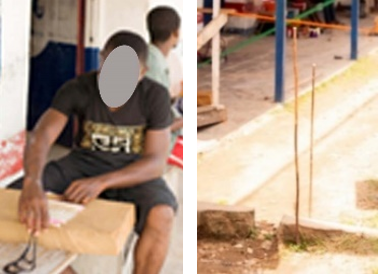
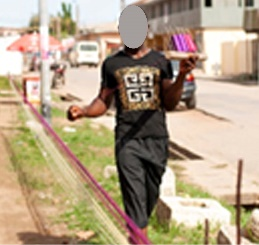
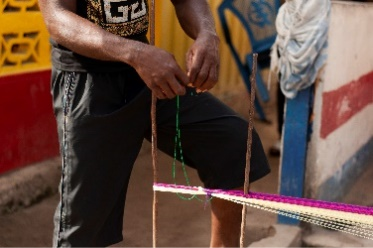
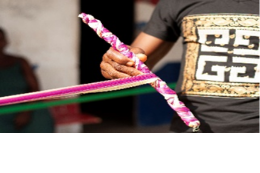
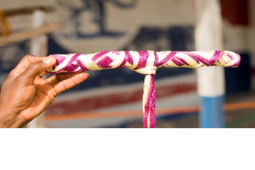
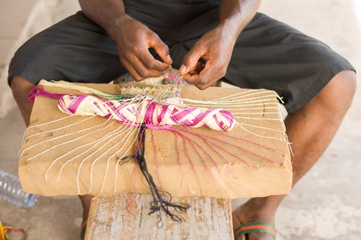
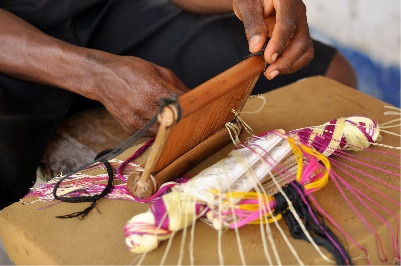
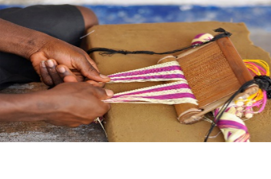
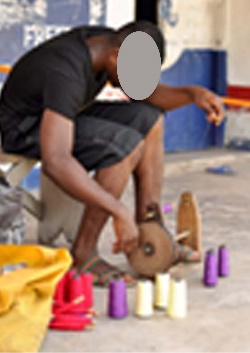
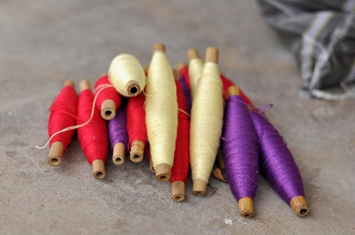
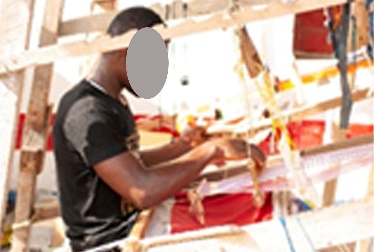
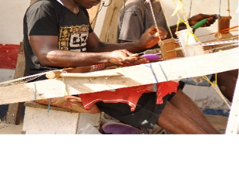
The procedures which were conducted for the experiment are explained in Table 1. The pre-service teachers were taught by using flipped learning principles, that is, pre-recorded videos on the various stages concerning how traditional kente cloth is woven, developed by the tutors to suit the topic were sent to students through created WhatsApp platform for viewing on their smart phones before coming to class. Pictures from the recorded video are shown in figure 1. Videos of the traditional kente weaving activities were first shot with Nikon Video camera and later fixed with the audio content. It was sent to pre-service teachers via a created WhatsApp by the tutors based on the stage or stages to be taught in the week. This was done to last the 8-week period. The below procedures (Table 1) were applied for each week involving 4 hours with product assessment conducted on the final day. Traditional loom and its accessories and polyester yarns were provided for the interactive section. Data were then collected on the woven Kente stole by various groups of students through self-designed rubrics with criteria for assessing art products.
Pictures from pre-recorded video on traditional kente weaving (Figure 1-14)

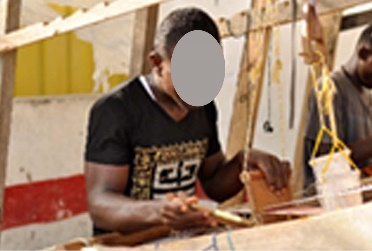
The week after assessing pre-service teachers on traditional kente weaving, they were distributed with a validated 30-item questionnaire to measure their perception on FC as an instructional strategy at the college of education.
3.2. Data Analysis
Data collected on the effect of Flipped Classroom (FC) on pre-service teachers’ learning was analyzed using grading system, where produced kente stole was scored out of 20 marks. Gathered data on pre-service teachers’ perception on flipped classroom was analyzed through descriptive statistics.
4. Results and Discussion
4.1. Results related to the question: What are the effects of FC on pre-service teachers’ learning with traditional kente weaving in St. Ambrose College of education?
Table 2 shows rubrics with criteria used in scoring the traditional kente stole, produced by the four groups of pre-service teachers in level 300 at St. Ambrose College of Education. Group one scored 17 marks out of the 20 marks, group two scored 19 marks out of 20 marks, group three scored 17 marks out of the 20 marks and group four scored 18 marks out of 20 marks. This demonstrates that pre-service teachers’ response to the activities in flipped classroom model is generally positive and as such they learn much by doing, discovering, exploring, and trying out new ideas (Constructivist learning Theory-Clarke, 2008). The results confirmed that the pre-service teachers were actively engaged within in-class activities, comprehend course content better and easier and were able to apply skills. The results also show that FC had improved educational outcomes of the pre-service teacher. These were in line with studies conducted by Talan and Gulsecen (2019), Meyliana et al. (2021), Hava, (2020), and, Boateng et al. (2022) [17, 18, 20, 21].
4.2. Results related to the question: What Are the Pre-service Teachers’ Perceptions of flipped Classroom in St. Ambrose College of education?
Table 3 shows that Items 19 “Flipped classroom, along with delivery of content outside class and problem solving in class, is an instructional method appropriate for my specialization” receive the highest mean (M=4.90) in regard to the degree of agreement, while item 3 “Flipped courses did not limit my interaction with instructors” was ranked last with a mean (M =3.74). This table also shows that the perceptions of flipped classroom mean as a whole is (M = 4.03). The results of the second question revealed that the pre-service teachers’ perceptions of flipped classroom in the St. Ambrose College of Education were high. This means that flipped classroom is considered as a meaningful learning experience which attracts the attention of pre-service teachers; the flipped classroom also could meet students’ needs and preferences. The result of the current study matches previous studies (Aljaraideh, 2019; Özüdoğru and Aksu, 2020; Odewumi and Yusuf, 2018; Herreid and Schiller, 2013; Musib, 2014; Roach, 2014; Afrilyasanti et al., 2017) [19, 22, 23, 24, 25, 26]. The findings indicated that pre-service teachers prefer to learn through multimedia such as pictures and videos.
5. Conclusion
FC impacted positively in pre-services teachers at St. Ambrose College of Education learning as learners were actively engaged and were able to apply skills learnt which resulted in improved educational outcome (the woven Kente stole). It was obvious from the study that pre-service teachers prefer learning content prior to class and using class time for applied learning.
The findings indicate that pre-service teachers’ perceptions of flipped classroom in the St. Ambrose College of Education were high and positive. Pre-service teachers perceived the flipped classroom as giving them greater opportunities to communicate with other students; engaging than the traditional classroom; not limiting interaction with instructors; has the ability to self-pace learning; giving the opportunity to ask more questions inside the classroom; improving course understanding; improving academic achievement; reducing dependency on the instructor; enhancing understanding of material; motivating to learn the concepts of course; giving less class time to practice concepts; suitable teaching strategy; improving interest in class; improving interest in exploring topics; appropriate for specialization; doing more work out of the classroom; matching their learning style; attracting attention to learning and teaching process; reducing the effort to understand the basic knowledge of the subject matter; and encouraging them to practice critical and creative thinking.
6. Recommendations
It is recommended for lecturers at the Colleges of Education in Ghana to use flipped classroom instruction with the elements of multimedia such as picture, video and animation to influence students’ learning positively. This will see to increase the involvement of pre-service teachers in the course, support pre-class studies and relieve the burden of learning.
References
- Roehl, A., Reddy, S. L., & Shannon, G. J. (2013). The Flipped Classroom: An Opportunity to Engage Millennial Students through Active Learning. Journal of Family and Consumer Sciences, 105, 44. https://doi.org/10.14307/JFCS105.2.12[CrossRef]
- Brame, C. (2013). Flipping the classroom. Vanderbilt University Center for Teaching. Retrieved from http://cft.vanderbilt.edu/guides-sub-pages/flipping-the-classroom
- Hamdan, N., McKnight, P., McKnight, K. and Arfstrom, K.M. (2013). A review of flipped learning. Pearson Education Limited.
- Bergmann, J. & Sams, A. (2012). Flip Your Classroom: Reach Every Student in Every Class Every Day (pp. 120-190). Washington DC: International Society for Technology in Education.
- Strayer, J. F. (2012). How Learning in an Inverted Classroom Influences Cooperation, Innovation and Task Orientation. Learning Environments Research, 15, 171-193. http://dx.doi.org/10.1007/s10984-012-9108-4[CrossRef] [PubMed]
- Demiralay, R. (2014). Examining the process of flipped classroom model acceptance in the context of diffusion of innovations theory [Unpublished doctoral dissertation]. Gazi University.
- Bishop, J. L. & Verleger, M. A. (2013). The flipped classroom: A survey of the research. In ASEE National Conference Proceedings, Atlanta, GA, 30(9), 1-18.[CrossRef]
- Caleb, A. & Anthony, D. (2018). Calculus Students Flipped Out: The Impact of Flipped Learning on Calculus Students' Achievement and Perceptions of Learning, PRIMUS, 28:6, 600-615, DOI: 10.1080/10511970.2017.133270[CrossRef]
- Halasa, S., Abusalim, N., Rayyan, M., Constantino, R. E., Nassar, O., Amre, H., Sharab, M. & Qadri, I. (2020). Comparing student achievement in traditional learning with a combination of blended and flipped learning. Nursing Open, 7, 1129–1138. https://doi.org/10.1002/nop2.492[CrossRef] [PubMed]
- Sargent, J. and Casey, A. (2019). Flipped learning, pedagogy and digital technology: Establishing consistent practice to optimise lesson time. European Physical Education Review. DOI: 10.1177/1356336X19826603[CrossRef]
- Wang, K. and Zhu, C. (2019). MOOC-based flipped learning in higher education: students’ participation, experience and learning performance. Int J Educ Technol High Educ 16, 33 (2019). https://doi.org/10.1186/s41239-019-0163-0[CrossRef]
- Zainuddin, Z., & Halili, S. H. (2016). Flipped Classroom Research and Trends from Different Fields of Study. The International Review of Research in Open and Distributed Learning, 17(3). https://doi.org/10.19173/irrodl.v17i3.2274[CrossRef]
- Zuber, W.J. (2016). "The flipped classroom, a review of the literature", Industrial and Commercial Training, Vol. 48 No. 2, pp. 97-103. https://doi.org/10.1108/ICT-05-2015-0039[CrossRef]
- Cao, L. T. T. & Swada, J. G. (2021). Effects of implementing flipped classroom elements and dynamic in-class discussion on student performance. Journal of Food Science Education, 20(1), 48–56. https://doi.org/10.1111/1541-4329.12211[CrossRef]
- Biju, S. M., Salau, A. O., Eneh, J. N., Sochima, V. E. & Ozue, I. T. G. (2020). 'A novel pre-class learning content approach for the implementation of flipped classrooms', International Journal of Advanced Computer Science and Applications, vol. 11, no. 7, pp. 131-136[CrossRef]
- Cheng, S.C., Hwang, G.J. & Lai, C.L. (2020). Critical research advancements of flipped learning: A review of the top 100 highly cited papers. Interactive learning environments, 1–17. https://doi.org/10.1080/10494820.2020.1765395.[CrossRef]
- Meyliana, S., Surjandy, B. and Achmad N. H. (2021). Flipped learning effect on classroom engagement and outcomes in university information systems class. Educ Inf Technol 27, 3341–3359 (2021). https://doi.org/10.1007/s10639-021-10723-9[CrossRef]
- Boateng, A. A., Essel, H. B., Vlachopoulos, D., Johnson, E. E. & Okpattah, V. (2022). Flipping the classroom in senior high school textile education to enhance students’ learning achievement and self-efficacy. Education Sciences, 12(2), 131.[CrossRef]
- Aljaraideh, Y. (2019). Students' perception of flipped classroom: A case study for private universities in Jordan. Journal of Technology and Science Education 9(3):368DOI: 10.3926/jotse.648[CrossRef]
- Talan, T., and Gulsecen, S. (2019). The effect of a flipped classroom on students’ achievements, academic engagement and satisfaction levels,” Turkish Online Journal of Distance Education, vol. 20, no. 4, pp. 31–60. https://doi.org/10.17718/tojde.640503[CrossRef]
- Hava, K. (2021). The effects of the flipped classroom on deep learning strategies and engagement at the undergraduate level. Participatory Educational Research, 8(1), 379-394. Erişim adresihttps://eric.ed.gov/?id=EJ1277142.[CrossRef]
- Ozudogru, M. & Aksu, M. (2020). Pre-service teachers’ achievement and perceptions of the classroom environment in flipped learning and traditional instruction classes. Australasian Journal of Educational Technology, 36(4), 27–43. https://doi.org/10.14742/ajet.5115[CrossRef]
- Odewumi, M.O. & Yusuf, M.O. (2018). Flipped classroom in the context of junior secondary school creative tie and dye in Abeokuta metropolis, Nigeria. Bulgarian Journal of Science and Education Policy, 12(1), 1-15.
- Herreid, C. F. & Schiller, N. A. (2013). Case studies and the flipped classroom. Journal of College Science Teaching, 42(5), 62–66.
- Musib, M. K. (2014). Student perceptions of the impact of using the flipped classroom approach for an introductory-level multidisciplinary module. CDTL Brief 17.2, 15-20.
- Afrilyasanti, R., Cahyono, B. & Astuti, U. P. (2016). Effect of flipped classroom model on Indonesian EFL students’ writing ability across and individual differences in learning. International Journal of English Language and Linguistics Research 4.5, 65-81