

The ultimate goal of this study was to determine the influence of religious literacy and multicultural teaching competence of RME teachers on their teaching self-efficacy in the Accra Metropolis. Grounded in culturally responsive teaching and self-efficacy theory, this study employed a cross-sectional survey design. All 441 RME teachers in the eight (8) circuits in the Metropolis which has seventy-two (72) basic schools were involved in the study through the census method. Data were collected using a questionnaire and analyzed using descriptive statistics and partial least squares structural equation modeling (PLS-SEM). Findings revealed that RME teachers reported high levels of RL, MTC, and TSE. Religious literacy and multicultural teaching competence jointly explained 44.2% of the variance in TSE, with a statistically significant positive effect (p < 0.05). It was recommended that, the curriculum for training RME teachers should include in them topics on RL and MTC.
Teaching in a Diverse Society: Influence of Religious Literacy and Multicultural Teaching Competence on the Self-Efficacy of Religious and Moral Education Teachers in the Accra Metropolis, Ghana
September 22, 2025
October 30, 2025
November 08, 2025
November 10, 2025
This is an Open Access article, distributed under the terms of the Creative Commons Attribution 4.0 International License (http://creativecommons.org/licenses/by/4.0/), which permits unrestricted use, distribution and reproduction in any medium or format, provided the original work is properly cited.
Abstract
1. Introduction
It is worth mentioning that while all managers have something in common, specific management requires specific knowledge. Owing to that, teachers as managers need a special body of knowledge and special skills too. The nature of the various subject areas as formal academic disciplines, the objectives for teaching them, the competencies they demand for their teaching and learning and the varied methods and materials required for teaching and learning them, makes it imperative for every teacher to possess a repertoire of knowledge, qualities, attitudes and values. According to Shulman (1987) [1], there are certain characteristics every professionally-trained teacher should possess and one of them is the knowledge of educational contexts. This knowledge of educational contexts according to the scholar ranges from the workings of the group or classroom, the governance and financing of the school districts and the character, and cultures of the community the teacher finds him or herself. Ababio (2013) [2], explained that teachers should know the culture and organization of their schools, the community and the cultural patterns of the community in which the school is located. In the context of this study, the Religious and Moral Education (RME) teacher should be able to possess full knowledge of the religious nature of the community in which he or she is teaching. In practice, a teacher who has been posted to a basic school in the Accra Metropolis is expected to gather reliable information about the religious and cultural nature of the community he or she finds him or herself.
The concept of ‘religious literacy’ is commonly understood as relevant knowledge about world religions, the capacity to recognize the life practices of people with different beliefs, the ability to understand the diversity of each religion, and the ability to benefit during interactions with believers of different religions (Hannam, Biesta, Whittle & Aldridge, 2020) [3]. Prothero (2017) [4], defines religious literacy as the ability to understand and use the religious terms, symbols, images, beliefs, practices, scriptures, heroes, themes, and stories that are employed in the various religions. Religious literacy is a widely discussed and well-researched topic in Western Europe and the United States (Jackson, 2017; Wright 2013; Moore 2019; Dinham & Francis 2016) [5, 6, 7, 8]. Religious literacy entails the ability to discern and analyse the fundamental intersections of religion and social/political/cultural life through multiple lenses. Specifically, a religiously literate person will possess 1) a basic understanding of the history, central texts (where applicable), beliefs, practices and contemporary manifestations of several of the world’s religious traditions as they arose out of and continue to be shaped by particular social, historical and cultural contexts; and 2) the ability to discern and explore the religious dimensions of political, social and cultural expressions across time and place. This definition emphasises an understanding of the social, historical, and cultural contexts in which religious traditions develop.
It is important to recognize that each one of the three major religions in Ghana has cultural undertones and so any teacher teaching RME which is based on these three religions that has cultural undertones must be able to possess complete understanding of these cultural issues. To possess knowledge and understanding of these cultural issues as an RME teacher means that there is the need to possess multicultural teaching competence. According to Yang, Cho and Cox (2013) [9], multicultural teaching competence (MTC) refers to how teachers think about, feel, and behave toward students from culturally, linguistically, and ethnically diverse backgrounds. Teachers with high levels of MTC are able to combine their positive feelings about diversity with teaching practices that support culturally diverse learners in ways that result in effective classroom instruction for all students. These teachers are: 1) aware of their own cultural views and biases; 2) knowledgeable of ways to integrate diversity into multiple aspects of classroom content; and 3) understand how to use their instructional skills in ways that empower students and facilitate the learning process.
Differences between teachers’ and students’ cultural backgrounds can present communication challenges that may lead to serious misunderstandings in the classroom (Garcia & Guerra, 2014) [10]. Teachers may punish students for exhibiting behaviours they deem inappropriate within the school context, even though these same behaviours are considered appropriate, and sometimes optimal, for children to exhibit at home. For instance, socially demonstrative behaviour, while regarded as a cultural tendency within the African American male community may not be recognized as such by public-school classroom teachers (Moeller & Ishii-Jordan, 2017) [11]. As a result, African American male students may be punished with culturally biased disciplinary practices, such as detention or suspension. These so-called inappropriate behaviours may also lead teachers to erroneously refer African American males for special education testing (Cartledge & Kourea, 2018) [12]. In fact, research suggests that the over-identification of African American males as emotionally disturbed may be more indicative of cultural misunderstandings between students and teachers than of the actual presence of a disability (Hosp & Reschly, 2014) [13].
It is worth mentioning here that teachers teaching the subject should feel that they are efficacious in teaching even though there are indicators that will make them feel efficacious. Teacher self-efficacy, refers to teachers’ confidence in their ability to promote students learning (Martin & Mulvihill, 2021) [14]. The success of these teaching activities and practices depends to a great extent on teachers’ self-efficacy and confidence in their professional capacity to face up to the changes involved in teaching and learning. Tschannen-Moran and Hoy (2009) [15] defined teacher self-efficacy as a “teacher’s judgment of his or her capabilities to bring about desired outcomes of student engagement and learning, even among those students who may be difficult or unmotivated” (p. 783). Isiksal (2015) [16], regarded it as a teacher’s view about the capability to exact positive student outcomes. Hunter (2016) [17], considers teachers’ self-efficacy as teachers’ ability to meet learners’ needs. It is clear that a teacher’s self-efficacy focuses on two issues namely; inner belief in capability and meeting the learning needs of learners. A teachers’ belief in inner ability affects their view and identity (Wilson, 2013) [18]. Therefore, a positive belief in inner ability is likely to positively affect view and enhance identity as a professional to enforce teaching that would help in meeting the needs of learners. It is important to mention that if a teacher is self-efficacious, he or she is able to help learners in the achievement of the lesson objectives (Scott, 2016; Lazarides & Warner, 2020) [19, 20]. There is surfeit of research on the fact that teacher-self efficacy influences students’ performance (Shahzad & Naureen, 2017; Kim, Dar-Nimrod & MacCann, 2018; Wang, 2022; Affuso, Zannone, Esposito, Pannone, Miranda, De Angelis & Bacchini, 2023) [21, 22, 23, 24].
On religious literacy, Brömssen, Ivkovits and Nixon (2020) [25], analysed the curricular in religious education of compulsory education for public schools in Austria, Scotland and Sweden. The analysis showed that although the curricula focused on the same topic, they relied on different conceptions of curriculum, as well as on various forms of religious literacy. Soules and Jafraile (2021) [26], reviewed literature on religious literacy in teacher education. A careful reading of this review brought to the fore that the current absence of attention to religious literacy in pre-service education for both generalist and specialist teachers in United States and Canada, particularly Quebec, has implications for educators’ abilities to prepare young people for citizenship in religiously diverse societies. Soules and Jafraile stipulated that a unique form of religious literacy for educators is described in the pedagogical content knowledge about religion education framework. To end, they mentioned that equipping religiously literate educators is a first step in fostering a religiously literate public. Ashraf (2019) [27] explored qualitatively, the possibility of engaging with religious literacy and religious education to explain the purpose, contents, and practical application of religious education and to mitigate existing challenges linked to religion in Pakistan. Through interviews with twenty-five (25) teachers from different levels of education which was made up of six primary school teachers, five high school teachers, five college teachers, five university teachers and four religious school teachers, it was discovered that teachers of religious education in schools are neither following a common faith in teaching religious education nor are they in full agreement on providing equal rights to all students of different religious beliefs. Rather, most believe in their personal ideology centered on their own particular religious sect that largely rejects the concept of religious literacy.
Literature from the Unites States of America concentrated on multicultural teaching competence among lecturers who lecture undergraduate courses in the disciplines of Humanities (English, Philosophy, Business, Education, Arts, History, Law), Hard Sciences (Math, Biology, Chemistry, Physics, Information Science, Engineering), Social Sciences (Psychology, Public Health, Politics, Economics, Sociology, Global Studies) and Health (Health Sciences, Nutrition Sciences and Nursing). This was a convergent mixed method study by Puhy, Prakash, Lacson and Bradt (2021) [28]. White (2021) [29], examined the extent to which teaching self-efficacy predicted multicultural teaching competency in Nevada, located in the Western Region of the United States. Findings from this study revealed that the results of the multiple and linear regression found that culturally responsive teaching self-efficacy and collective teacher efficacy statistically predicted multicultural teaching competency. Munsell (2015) [30], examined the relationship between multicultural teaching competence and K-12 teachers’ attitudes toward inclusion in Oklahoma state and the results indicated that multicultural teaching competence was significantly related to teachers’ attitudes toward inclusion. Vella (2015) [31] explored the perceived multicultural competence of teachers in state primary and secondary schools in Malta and Gozo and findings from this study indicated that teachers perceived themselves as having a multicultural competence that is neither too high but neither too low. In other words, the multicultural competence teachers in state primary and secondary schools in Malta and Gozo was moderate.
Following the studies conducted in Africa, the work of Mentz and Van der Walt (2017) [32], determined how educators of well-performing secondary schools in the Western Cape Province of South Africa deal with the demands of multicultural education in their classrooms. Results from this empirical research found that educators were not been adequately prepared to meet the challenges confronting them in the increasingly multicultural schools in which they are teaching. In Ethiopia, Alemu (2017) [33], examined multicultural competence of primary school in-service teachers at one of the local teachers’ training colleges. The result revealed that the majority of the participants were sure about knowledge dimension of the competence scale but not sure about their skill competence. In the Ghanaian society, researches have not paid attention to influence of religious literacy and multicultural teaching competence of RME teachers on their teaching self-efficacy. The work of Mensah (2019) [34], assessed multicultural competence of counsellors in selected public universities in the country namely; Kwame Nkrumah University of Science and Technology, University of Cape Coast, University of Education, Winneba and University of Ghana. Findings from his work discovered that generally, counsellors perceived their multicultural competence to be low on all the three sections (awareness, skills and knowledge) they were measured on.
It can be argued that religious literacy allows a teacher who is teaching RME to have knowledge of the three major religions as well as the other religions practiced in Ghana and creates the opportunities to balance his or her teaching. According to Munsell (2015) [30], teachers with high levels of multicultural teaching competence are able to combine their positive feelings about diversity with teaching practices that support culturally diverse learners in ways that result in effective classroom instruction for all students. The fact remains true that a teacher who has religious literacy will be able to teach across the various religions and therefore promote religious tolerance. Multicultural teaching competence of teachers is about they having the knowledge of multi-cultural teaching and having the skills to teach. A teacher who possesses multicultural teaching competence will be able to teach well and promote religious diversity in the classroom. In this direction, all the students from different cultural backgrounds will feels belonged or will feel that their cultural backgrounds have not been marginalized. With reference to empirical literature, multicultural teaching competence has an influence on teacher self-efficacy (Choi & Lee, 2020; Hamilton, 2016) [35, 36]. As a result, if the RME teachers possess religious literacy and multicultural teaching competence they feel very confident in translating the curriculum to the learners of the subject (Maxwell & Hirsch, 2020) [37].
It was realized after an extensive review of literature that no research has been done on the influence of religious literacy and multicultural teaching competence of RME teachers on their self-efficacy in the Accra Metropolis. Contextually, the RME as a subject is taught in all the basic schools in Ghana of which the Accra Metropolis located in the Greater Accra Region of Ghana is part. According to National Council for Curriculum and Assessment (2019) [38], the aims of teaching and learning Religious and Moral Education are to encourage and enable learners to: 1. develop an awareness of their Creator and the purpose of their very existence; 2. develop an understanding and tolerance of other people’s faiths and cultures; 3. draw the difference between acceptable and unacceptable behaviours so that they can make the right decisions in any situation and thus become responsible citizens; acquire the socio-cultural values inherent in the three major religions in Ghana (i.e. Christianity, Islam and African Traditional religion) which will help them cope with the variety of moral choices they have to make in today’s rapidly changing world; 4. develop the spirit of team work, collaboration and togetherness in nation-building and 5. increasingly develop the ability to respond to religious beliefs and practices in an informed, rational and responsible way.
It can be observed from the above-mentioned aims of the subject that most of them pay attention to the religious and cultural undertones which the basic school pupils or students should be able to develop. And since the Accra Metropolis is a cosmopolitan area where people from different religious and cultural backgrounds meet, there is no doubt that a teacher teaching RME in such a metropolis is likely to have students from various religious and cultural backgrounds. For a teacher to teach the subject professionally in such a metropolis, there is the need for him or her to be religiously literate, multiculturally competent and efficacious. It is on the basis of this backdrop that this study sought to determine the influence of religious literacy and multicultural teaching competence of RME teachers on their teaching self-efficacy in the Accra Metropolis.
1.1. Problem Statement
Every RME teacher is supposed to have been trained in the three major religions based on the curriculum used in training them (Iita, 2014) [39]. This presupposes that RME teachers are supposed to have knowledge in all three religions. And if they possess knowledge of all the major and minor religions, then it means they are religiously literate. Scholars have agreed that religious literacy is knowledge about world religions, the capacity to recognize the life practices of people with different beliefs, the ability to understand the diversity of each religion, and the ability to benefit during interactions with believers of different religions (Hannam, Biesta, Whittle & Aldridge, 2020; Jackson, 2017; Wright, 2013; Moore, 2019; Dinham & Francis 2016) [3, 5, 6, 7, 8].
Magazzini, Triandafyllidou and Yakova (2022) [40] stated categorically that every religion also has some cultural undertones in terms of where you teach them. So, Greater Accra for instance, is a cosmopolitan area with varied cultures. This follows logically that all the cultures one can find in Ghana can be found in Greater Accra. This implies that, for a teacher who is teaching RME in the Greater Accra Region, specifically in basic schools in the Accra Metropolis, the likelihood that in his or her classroom there is a representation of students with almost all the cultural backgrounds in Ghana in the class is very high. If that is the case then it means that at the end of the day, the RME teachers should have knowledge of the various religions and have knowledge of these cultural issues. The point is that there are some teachers teaching RME who did not major religious education (Owusu & Mensah, 2022; Mensah & Ampem, 2023) [41, 42]. Even in the basic schools, there are some teachers teaching the subject who did not specialize in the subject. A close observation in most of the basic schools in Ghana reveals that some teachers teaching RME at the basic level have specializations in different subject areas. So, the likelihood that these teachers do not have religious literacy and multicultural teaching competence is high. And we know that teacher-self efficacy is one of the factors that determines the success in the classroom. Consequently, seeing that there are teachers teaching RME who did not major religious education raises the question about their religious literacy level and their multi-cultural teaching competency level.
Researches conducted reveal that there has been no research to determine the influence of religious literacy and multicultural teaching competence of RME teachers on their teaching self-efficacy. In Australia, Street (2020) [43], assessed teacher self-efficacy from three Christian Education National schools in Sydney and the study discovered that there were moderate levels of teacher self-efficacy. Sela-Shayovitz and Finkelstein (2020) [44], examined self-efficacy of faculty members in teaching multicultural students at the Ono Academic College, Israel. The findings revealed a significant correlation between teachers’ self-efficacy beliefs and professional teaching efficacy in multicultural student groups. Kumbong and Piang (2020) [45], sought to identify the status of multicultural competency among the Moral Education and History Education pre-service teachers in an educational institution in Malaysia. The results of this study showed that pre-service teachers possess higher levels of multicultural awareness and knowledge. Grant (2020) [46], investigated religious studies teachers’ perceptions of the role of religious literacy in students’ civic preparation in selected basic schools in Memphis, United States of America. After the data collection and analysis, Grant found that teachers supported the notion that religious literacy is a vital aspect of basic school students’ civic preparation. The work of Taylor (2020) [47], examined the relationship between multicultural efficacy and culturally responsive classroom management self-efficacy among K-12 teachers in Virginia. Results from this study revealed that multicultural efficacy significantly predicted culturally responsive classroom management self-efficacy among K-12 teachers.
Karadag, Kesten and Ozden (2021) [48], conducted qualitative research to analyse the level of multicultural competencies of Social Studies teachers in Turkey. In this study, researchers used a basic qualitative research design. Using a semi-structured interview technique, one-on-one interviews were conducted with sixteen (16) teachers from eight (8) schools with different socio-economic backgrounds and foreign student numbers. The data was analyzed with a thematic analysis approach. The findings of the study showed that teachers’ multicultural competencies were weak in individual, institutional/school levels and in the integration of cultural characteristics into teaching at the classroom level. Mahmud (2018) [49], explored teachers’ perception on the teaching of multicultural-based religious education in junior high schools in East Kutai, Indonesia. The result of the study shows that teachers at East Kutai, agreed that multicultural-based religious education is very important to be applied in education, especially to the lower level such junior high school.
Tezera and Bekele (2021) [50], determined the effect of teachers’ self-efficacy on their attitude towards the implementation of multicultural education literacy in Harari Region secondary schools, Ethiopia. The finding showed that the practice of multicultural education literacy in school was medium and teachers’ self-efficacy toward implementations of multicultural education literacy in the schools was found statistically significant. Self-efficacy in the implementation of multicultural education literacy was a statistically significant predictor of teacher’s attitude and practices toward the implementation of multicultural education literacy in the schools respectively. Self-efficacy contributed 17% on attitude and 26 % to practices in the implementation of multicultural education literacy had a positive impact. Self-efficacy of teachers toward multicultural education literacy had a statistically significant moderate positive relationship with teachers’ practices of multicultural education literacy. Self-efficacy had a positive impact on the attitude of teachers and practices of teachers in the implementation of multicultural education literacy. Govender (2020) [51], investigated qualitatively, the place of religion education in multicultural schools in Ilembe District, South Africa. It was discovered from this study that religion education brings about moral values and contributes to create an integrated community that affirms in diversity in multicultural schools.
Garnering from the above, it is deduced that there is no study to determine the influence of religious literacy and multicultural teaching competence of RME teachers on their teaching self-efficacy. It is this gap in knowledge which has given the me the impetus to conduct this study to determine the influence of religious literacy and multicultural teaching competence of RME teachers on their teaching self-efficacy in the Accra Metropolis.
1.2. Research Questions
The following research questions guided the study:
- What is the level of RME teachers’ religious literacy in the Accra Metropolis?
- What is the level of RME teachers’ multicultural teaching competence in the Accra Metropolis?
- What is the level of RME teachers’ teaching self-efficacy in the Accra Metropolis?
1.3. Hypothesis
H0: There is no statistically significant effect of religious literacy and multicultural teaching competence of RME teachers on their teaching self-efficacy.
2. Theoretical Review
2.1. Culturally Responsive Teaching Theory
Culturally responsive teaching theory provides a framework for examining multicultural practices that lead to increased engagement, motivation and academic success among children. Culturally responsive teaching theory is a theory that purposes to assist culturally and linguistically diverse children make strong connections between themselves and school curriculum (Gay, 2015) [52].
As a teaching practice, culturally responsive teaching theory has received increased attention in teacher education programmes since the 1990’s when the theory became popularized by Gloria Ladson-Billings, Geneva Gay and others. Villegas and Lucas (2007) [53] illustrated that in practice, culturally responsive teaching allows students to make connections between their home and school environment which allows for an enhanced ability for students to learn new information.
According to Rychly and Graves (2012) [54], teachers who use culturally responsive teaching theory exhibit characteristics such as caring and empathy, the ability to reflect on their own beliefs about culture, the ability to reflect on their own culture and knowledge about other cultures. Engaging in culturally responsive teaching theory within a classroom environment necessitates that RME teachers validate their students’ cultures, use their cultural knowledge to develop curriculum, help students become agents of change in their communities and see cultural diversity as an asset (Ladson-Billings, 1995; Gay, 2015) [52, 55]. Rose and Potts (2011) [56] conclude that teachers cannot be culturally responsive if they do not acknowledge cultural differences among students. They also warn that many future teachers may use human sameness to resist the need to be culturally responsive (Rose & Potts, 2011) [56]. Russell and Russell (2014) [57] also noted that the lack of acknowledgment of student culture, background, gender, etc., can inadvertently promote teachers’ negative stereotypes for certain children.
2.2. Self-Efficacy Theory
Self-efficacy theory is one of the social cognitive theories developed by Bandura (1977) [58]. To Bandura, self-efficacy serves as the foundational motivational force behind one’s actions and the level to which an action is undertaken depends on one’s level of self-efficacy. Bandura stated that people develop specific beliefs concerning their coping ability to execute a task, what he called “self-efficacy” and defined self-efficacy as “beliefs in one’s capabilities to organize and execute the courses of action required to produce given attainments” (Bandura, 1997, p. 3) [59].
Self-efficacy, therefore, is a type of cognitive evaluation which every individual conducts over his/her own competence (Sebastian, 2013) [60]. It is neither an ability, a trait nor self-esteem (Maddux & Kleiman, 2019) [61]. Maddux and Kleiman explained that self-efficacy is not ability; rather it is the belief in one’s ability that a task can be successfully performed. It is not a trait, in that certain people have not been categorized as having high self-efficacy and others low self-efficacy (Stajkovic & Luthans, 1998; Maddux & Kleiman, 2019) [61, 62]. However, people have beliefs about specific goals and life domains. The beliefs held are motivational forces that drive people to achieve success, hence self-efficacy seen as the foundational motivational force. Also, self-efficacy differs from self-esteem in that the latter is the extent to which one believes to be good and worthwhile, but the former is the self-confidence to achieve and perform well in a specific aspect of life. The relationship between self-efficacy and self-esteem is that self-efficacy influences self-esteem such that how well one feels about self is determined by the confidence in one’s ability to perform specific aspects of life activities to achieve desired goals.
As an illustration of self-efficacy, if a person believes in performing well in school, then the person is perceived to have high academic self-efficacy. If a teacher believes he/she can teach very well then high teacher self-efficacy is being demonstrated. Highly self-efficacious individuals may prompt achieving tasks that surpass their capacities, while lowly self-efficacious individuals may bring about the underestimation of capacities, in this manner, prompting underachievement (Bandura, 1982) [63]. Accordingly, the probability that a specific task will be completed successfully is intensified by an individual’s perception of the capabilities to effectively perform the task (Sue, 2009) [64]. Schwarzer and Hallum (2008) [65] identified three key features differentiating self-efficacy from other constructs (e.g. self-concept, locus of control, self-esteem).
- Self-efficacy implies an internal attribution
- It is prospective, referring to future behaviour, and
- It is an operative construct, which means that this cognition is quite proximal to the critical behaviour, thus being a good predictor of actual behaviour (p. 154).
Bandura’ self-efficacy theory has been utilized as a predictive power in determining human behaviour even in the midst of difficulties. Graham, Harris, Fink and MacArthur (2001) [66] confirmed that self-efficacy is a good predictor of teacher behaviour. Henson (2001) [67] was of the view that self-efficacy has been noted to be a strong predictor of both current behaviour and the effect of treatments on behaviour change. Extant studies (Tschannen-Moran & Hoy, 2001; Knoblauch & Hoy, 2008) [68, 69] have found that people with a high sense of self-efficacy set high goals and demonstrate high commitment towards the achievement of the goals. Pajares (2016) [70] noted that human behaviours are often directed by perceptions of self-efficacy rather than true capabilities.
According to Bandura (1986) [71], self-referent thought intervenes among knowledge and action and through self-reflection people assess their own experiences and thought processes. Knowledge, skill, and earlier achievements are often poor indicators of ensuring accomplishments on the grounds that beliefs that people hold about their capacities and about the result of their efforts strongly impact the ways by which they will behave (Pajares, 2016) [70]. Therefore, belief is a stronger predictor than knowledge in determining one’s approach to a problem or task. The strong effect of a person’s confidence to perform a specific task or behaviour has made self-efficacy of particular interest to educational researchers (Albion, 1999) [72]. In the social-cognitive theory, self-efficacy is appreciated as a resource with regard to personality study and stress vulnerability (Sebastian, 2013) [60]. The theory is focused on the relevance of the cognitive process on the emotional level as well as on the behavioural level. Bandura (1997) [58], therefore, stated that a resilient sense of self-efficacy can help to reduce anxieties associated with performing tasks.
3. Research Methods
3.1. Research design and participants
The cross-sectional survey design was employed in carrying out this study. Descriptive survey research means the collection and analysis of responses of large sample of people to polls and questionnaires designed to elicit their opinions, attitudes and sentiments about a particular issue (Sileyew, 2019; Siedlecki, 2020; Queirós, Faria, & Almeida, 2017) [73, 74, 75]. The design, premised on the positivist paradigm, allows researchers to use a quantitative approach (measures) to describe views, opinions, and characteristics of a sample and generalise these to a population. All public basic (primary and junior high) school RME teachers in the Accra Metropolis constituted the population for this study. The teachers were the target of the study because they are better placed to respond to items in the instrument the study sought to measure. According to Education Management Information System (2025), there are 441 RME teachers in the eight (8) circuits in the Metropolis which has seventy-two (72) basic schools. A census strategy was employed to involve all the 441 RME teachers in the study (MacDonald, 2020) [76]. The census method allowed me to involve all elements within a population in a study. This strengthens generalization claims and eradicates sampling errors (Babbie, Wagner & Zaino, 2022) [77]. Table 1 details the demographic characteristics of the RME teachers.
3.2. Instrument
Data on level of religious literacy (RL), multicultural teaching competence (MTC) and teaching self-efficacy (TSE) of participants were collected with a questionnaire. The questionnaire was divided into four (4) sections. Section “A” elicited data on participants’ demographics as presented in Table 1. Section “B” measured RME teachers’ level of RL with a nine (9) item Religious Literacy Scale (RLS) adopted from Mensah, Tabiri and Asare-Danso (2024) [78]. In relation to the items, level of religious literacy was measured on a scale of 1–5 (1=Undecided; 2=Strongly Disagree; 3=Disagree; 4=Agree and 5=Strongly Agree). Section “C” measured RME teachers’ level of MTC with a sixteen (16) item Multicultural Teaching Competency Scale (MTCS) adapted from Spanierman, Oh, Heppner, Neville, Mobley, Wright, Dillon and Navarro (2011) [79]. In relation to the items, MTC was measured on a 6-point Likert-type scale ranging from 6 = ‘Strongly Agree’, 5 = ‘Moderately Agree’, 4 = ‘Slightly Agree’, 3 = ‘Slightly Disagree’, 2 = ‘Moderately Disagree’ and 1 = ‘Strongly Disagree’. The MTCS is made up of two sub-scales namely; Multicultural Teaching Skills (MTS) and Multicultural Teaching Knowledge (MTK). Section “D” measured RME teachers’ TSE level with 24 item Teachers’ Sense of Efficacy Scale (TSES) adapted from Tschannen-Moran and Hoy (2001) [80]. The TSES is made up of three principal sub-scales namely: instructional strategies efficacy (ISE), classroom management efficacy (CME) and student engagement efficacy (SEE) with each of the sub-scaled having eight items respectively, measured on a 9-point Likert-type scale ranging from ‘nothing’ to ‘a great deal’. In this study, TSES was measured on a scale of 1-6 (6=Strongly Agree, 5=Moderately Agree, 4=Slightly Agree, 3=Slightly Disagree, 2=Moderately Disagree and 1=Strongly Disagree). It is important to state here that such modification has been a normal practice. Secondly, the items on the TSES were in the form of questions instead of statements which were not likely to be familiar to the study’s respondents. Hence, the items were changed from questions to statements to make it familiar to them. Thirdly, some of the words were relatively complex and were therefore changed to facilitate respondents’ understanding of the import of the statements in order to prevent high levels of ambiguity.
3.3. Validity and Reliability
Before the main data collection, face and content validity was sought with the help my supervisors of some faculty members who are experts in quantitative instrument construction. The instrument was subjected to scrutiny to ensure that it can measure and relate to the variables of interest for the study. There was also the need to establish internal consistency on the instrument. A pilot test was conducted using 105 RME teachers from public basic schools in Effutu Municipality. The Cronbach alpha reliability co-efficient were determined as; RL = 0.78, MTS = 0.92, MTK = 0.86, ISE = 0.96, CME = 0.95 and SEE = 0.95. The overall reliability coefficient for the instrument before the main data collection was determined as 0.98.
3.3.1 Test of the measurement model (outer model)
Measurement biases were assessed through the test of construct reliability, convergent validity and discriminant validity of the reflective measures of the latent variables (Hair et al., 2017) [81]. Table 2 and Figure 1 present the results.
Table 2 shows the construct reliability and convergent validity for religious literacy, multicultural teaching competence and teaching self-efficacy. From Table 2, the factor loadings for RL items ranged from 0.588 to 0.851. It can also be seen from the table that the factor loadings for MTC items ranged from 0.563 to 0.778 Additionally, the loadings for TSE ranged from 0.507 to 0.876. These values were above 0.50 indicating the evidence for convergent validity. In that regard, all the items represent the underlying constructs. Further, the internal consistencies of the latent variables were good because their Cronbach’s alpha values ranged from 0.891 to 0.958 and composite reliabilities (rho_a and rho_c) values ranged from 0.888 to 0.900 for religious literacy, the composite reliabilities (rho_a and rho_c) values for multicultural teaching competence ranged from 0.884 to 0.906 and composite reliabilities (rho_a and rho_c) values for teaching self-efficacy ranged from 0.956 to 0.960. These reliabilities were above the threshold of 0.7. However, the average variance extracted (AVE) values ranged from 0.370 to 0.533 which is below the threshold. If AVE is less than 0.5, but the composite reliabilities (rho_a and rho_c) are higher than 0.6, the convergent validity of the construct can be adequate (Fornell & Larcker, 1981; Hair et al., 2017) [81, 82]. Figure 1 presents structure model after consistent PLS-SEM Algorithm and Table 3 provides the results for discriminant validity using Fornell-Larcker criterion and Heterotrait-Monotrait Ratio (HTMT).
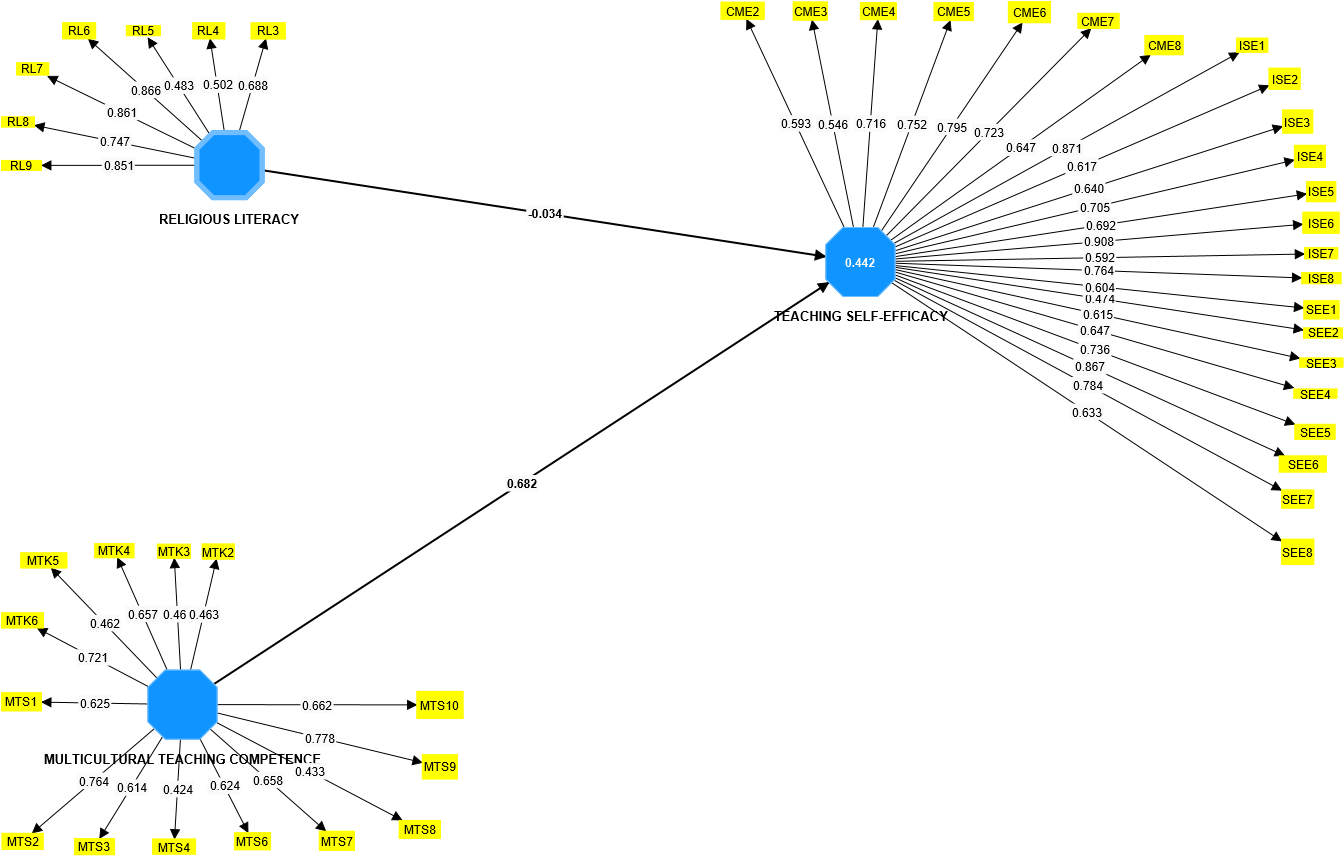
Table 3 shows the discriminant validity between religious literacy, multicultural teaching competence and teaching self-efficacy. From Table 3, discriminant validity of the model was established. This is because the square roots of the AVE values (i.e., diagonal values in bold) for all the main constructs in the model are greater than the corresponding inter-construct correlations (i.e., all values below the bold values). The values of square roots of the AVE were 0.664 to 0.730. Further, using Heterotrait-Monotrait (HTMT) ratio, it is confirmed discriminant validity because the HTMT ratio values were below the threshold of .850 or .90. This gives the implication that the constructs in the model are sufficiently distinct from one another.
3.4. Data collection procedures and ethical considerations
The Institutional Review Board of the University of Cape Coast (UCC), Ghana, gave the ethical clearance to conduct this study. The board gave the ethical clearance with the reference number “UCCIRB/CES/2023/241”. Furthermore, an introductory letter was obtained from the Department of Business and Social Sciences Education, UCC, for data collection. Ethical clearance and introductory letters were used to seek approval from the heads of seventy-two (72) public basic schools in the Accra Metropolis. To ensure a high return rate, the instrument was administered by the researcher and with the help of seven trained field research assistants who were master’s students at the University of Education, Winneba. Three days training was organised by the me for the research assistants. The training of the research assistants focused on the purpose of the study, understanding the items and how to administer the questionnaire. After the training, each research assistant was placed at one circuit. In order to collect the data within a period of three weeks research assistants who were able to finish retrieving their questionnaires from their respective schools were encouraged and requested to help their colleagues who had more schools. During the data collection, participants were briefed about the details of the study, particularly on the purpose of the research and the need to participate in the investigation. Informed consent was obtained from all respondents before administering the questionnaire. Participants were informed that their participation was voluntary and that they could withdraw from the study at any time. Efforts were made to maintain the confidentiality of the responses. Participants were assured that their responses would be kept confidential, and that no one known to them would have access to the information provided. During data collection, I constantly liaised with the field research assistants about the progress of the data. Four hundred and forty-one (441) questionnaires were distributed and retrieved. The questionnaires were packed in an envelope and kept in a cabinet to prevent loss after data collection.
3.5. Data processing and analysis
Data on the RL, MTC and TSE of participants collected with a questionnaire was cleaned, coded, and entered into Statistical Package for Services Solutions (version 27) to help organise and make meaning out of the data. Data on the demographics of participants were analysed with frequency counts and percentages. Data related to RL, MTC and TSE of participants were analysed with frequency counts, percentages, means, and standard deviations. This facilitated the determination of the RME teachers’ levels of RL, MTC and TSE, which were the research questions formulated to guide the study. Afterwards, I imported the SPSS data to SMART PLS (version 4.1.1.4). PLS-SEM statistics were used to analyse the effect of RL and MTC of participants on their MTC.
4. Presentation of results
4.1. Level of RME teachers’ RL.
The first research question sought to find out the level of RME teachers’ religious literacy in the Accra Metropolis. The rationale for this research question was to find out if RME teachers in public basic schools in the Accra Metropolis have the ability to understand and use the religious terms, symbols, images, beliefs, practices, scriptures, heroes, themes, and stories that are employed in the various religions. To do this, teachers were asked to indicate their agreement or disagreement to nine statements on the scale; 5= Strongly Agree, 4= Agree, 3=Uncertain, 2= Disagree and 1= Strongly Disagree. Their responses to the statements were used to measure their level of religious literacy. It should be noted that in Table 4, the frequency of responses as well as the percentages for Strongly Agree and Agree were added, and same was done for the frequency of responses for Strongly Disagree and Disagree. The mean scores and the overall mean were interpreted as; 1.0–1.9 (Low), 2.0–3.4 (Moderate) and 3.5–5.0 (High). The results are presented in Table 4.
Table 4 displays the results of the data collected on the level of RME teachers’ religious literacy in the Accra Metropolis. For their responses on their ability to distinguish bad religious practices from good ones, the results indicated almost all of the RME teachers strongly agreed or agreed with no variations in their responses (F=370, 83.9%; M=4.30, SD=0.93). This follows logically that most of the RME teachers find it very easy to differentiate between bad practices in the name of religion from good ones. In effect, they have high or in-depth knowledge on the rules and regulations that provide guidelines for good moral life among the adherents of the different religions in the world. It was not surprising when majority (F=367, 83.2%; M=4.16, SD=0.87) of the RME teachers strongly agreed or agreed that they are able to evaluate bad religious practices and their responses clustered around the mean. It can be argued to some degree that the RME teachers have a repertoire of knowledge and skills to evaluate inadmissible religious practices.
A closer look at the results brought to bear that more than eighty percent (F=397, 90.0%; M=4.14, SD=0.73) of the RME teachers strongly agreed or agreed that they see religion as constituting personal, communal, societal, institutional, cultural, local and global phenomenon. This is true because religion is made up of the various dimensions in life.
The lowest results (F=209, 47.4%; M=3.26, SD=1.12) portray that some of the RME teachers have knowledge of the religiously grounded moral claims which indicate what should be the code of behaviour of members belonging to a particular religion. In practice, they have some level of knowledge in the norms of all the religions in the world.
The overall mean and standard deviation values for the level of RME teachers’ religious literacy rated as M=3.84 and SD=0.59. This implies that majority of the RME teachers strongly agreed or agreed with the statement soliciting their responses on level of RME teachers’ religious literacy and their responses did not vary from each other concerning the statements. This suggests that Religious and Moral Education teachers in public basic schools in the Accra Metropolis have high level religious literacy. This direction of the responses advocates that RME teachers possess high levels of knowledge to ensure the avoidance of delusions, misapprehensions, and partialities, which result in violence, discrimination and war in the world today.
4.2. Level of RME teachers’ MTC.
The second research question was to find out the level of multicultural teaching competence of RME teachers in public basic schools in the Accra Metropolis. In order to achieve this, teachers were requested to indicate their agreement or disagreement with sixteen statements on the scale; 6 = ‘Strongly Agree’, 5 = ‘Moderately Agree’, 4 = ‘Slightly Agree’, 3 = ‘Slightly Disagree’, 2 = ‘Moderately Disagree’ and 1 = ‘Strongly Disagree’. It is worth noting here that the sixteen items of the adapted Multicultural Teaching Competency Scale were made up of two principal factors namely: multicultural teaching skills (10 items) and multicultural teaching knowledge (6 items). The responses of the teachers to the statements were used to measure their level of multicultural teaching competence. It should be noted here that in Table 6, the frequency of responses as well as the percentages for Strongly Agree, Moderately Agree and Slightly Agree were added, and same was done for the frequency of responses for Strongly Disagree, Moderately Disagree and Slightly Disagree. The mean scores and the overall means were interpreted as; 1.0-2.6 (Low), 2.7-4.4 (Moderate) and 4.5-6.0 (High). This was done because the research question sought to measure the level of RME teachers’ multicultural teaching competence. The results are presented in Table 5.
Table 5 presents the results on the level of RME teachers’ multicultural teaching competence. It is worth-noting that due to the nature of the table, attention was first paid to reporting the results on the items for the first sub-scale which is multicultural teaching skills before the report on the second sub-scale which is multicultural teaching knowledge was done. It was observed that most of the RME teachers agreed that they mostly examine the materials they use in the classroom in order to prevent ethnic bias and their responses were homogeneous (F= 433, 98.0%; M=5.52, SD=0.75). In effect, the teachers affirmed that even though they are able to examine the instructional material they use in teaching the subject, there are still some traces of no ethnic biases. The results portrayed that most of the teachers agreed that they integrate the cultural values and lifestyles of ethnic minority groups into their teaching with no variations in their responses concerning the statement (F= 415, 94.0%; M=5.25, SD=0.99). This presupposes that during the teaching of RME, some of the educators find it quite difficult to amalgamate cultural values and lifestyles of ethnic minority groups into their lesson delivery. The cause of this may be as a result of the fact that some of the basic school teachers who teach the subject did not receive their training specifically in the RME subject. If that is the case, then it means most of the teachers teaching RME in the public basic schools are teaching it as class teachers and not teachers who have specialized training in the subject area.
Additionally, it can be observed from the results that the teachers agreed that they make changes in the general school environment so that students from ethnic minority groups will have equal opportunities for success and their responses did not cluster around the mean (F=413, 94.0%; M=5.22, SD=1.03). The direction of this result relates to the fact that most the RME teachers can in their power make changes in the general school environment with aim of ensuring that basic school students from ethnic minority groups will have equal opportunities for success.
The last item to solicit their responses on multicultural teaching skills showed that most of the teachers agreed that their curricula topics integrate events from ethnic minority groups and their responses were different from each other concerning the statement (F=370, 84.0%; M=4.66, SD=1.25). It can be deduced from the results that the RME curricular contains topics that integrate events from ethnic minority groups.
The overall mean of means and standard deviation values for the multicultural teaching skills of the RME teachers in the Accra Metropolis rated 5.07 and 0.67 respectively. This imply that majority of the RME teachers strongly agreed on the statements which sought their responses on their multicultural teaching skills. This therefore, suggest that the RME teachers have high levels of multicultural teaching skills. Practically, the findings portray that majority of the RME teachers in public basic schools in the Accra Metropolis possess much skills in teaching their pupils multiculturally.
Paying attention to the responses of the basic school RME teachers on the items for multicultural teaching knowledge, it was observed that the teachers agreed that they are knowledgeable about the various community resources within the city that they teach with differences in their responses (F=406, 92.0%; M=4.93, SD=0.92). In other words, they have much knowledge about instructional resources that aid the teaching of the subject in the classrooms found in the various circuit of the Accra Metropolis. It was not surprising when the RME teachers agreed that they are knowledgeable of how historical experiences of ethnic groups may affect students’ learning and their responses were homogeneous (F=406, 92.0%; M=4.88, SD=0.98). In effect, the teachers affirmed that even though they are knowledgeable about how historical experiences of ethnic groups may affect students’ learning, their level of knowledge were adequately built.
It was also discovered from the responses of the teachers that most the teachers agreed that they have a clear understanding of culturally responsive pedagogy and their responses there were no differences (F=388, 88.0%; M=4.71, SD=0.99). This suggests clearly that most of the teachers possess in depth understanding of the pedagogy that uses students’ customs, characteristics, experiences, and perspectives as tools for better classroom instruction.
Furthermore, the results portrayed that most of the teachers agreed that they are knowledgeable about the particular teaching strategies that affirm the ethnic identities of each student with variations in their responses concerning the statement (F= 311, 71.0%; M=4.42, SD=1.22). This presupposes that during the teaching of the RME subject, the educators do not find it quite difficult to select the teaching approach that affirm the ethnic identities of each student in the classroom.
The overall mean of means and standard deviation values for the multicultural teaching knowledge of the RME teachers in the Accra Metropolis rated 4.67 and 0.78 respectively. This imply that majority of the RME teachers agreed to the statements which sought their responses on their multicultural teaching knowledge. This therefore, suggest that the level of multicultural teaching knowledge of the teachers was high. Practically, the finding portrays that majority of the RME teachers in public basic schools in the Accra Metropolis possess much knowledge in teaching their pupils in culturally-diverse ways.
4.3. Level of RME teachers’ TSE
The study sought to find out the extent to which the RME teachers in public basic schools in the Accra Metropolis possess self-efficacy. In order to achieve this, teachers were asked to indicate their agreement or disagreement with twenty-four statements on the scale; 6 = ‘Strongly Agree’, 5 = ‘Moderately Agree’, 4 = ‘Slightly Agree’, 3 = ‘Slightly Disagree’, 2 = ‘Moderately Disagree’ and 1 = ‘Strongly Disagree’. It is worth noting here that the twenty-four items of the adapted Teachers’ Sense of Efficacy Scale were made up of three principal factors namely: instructional strategies efficacy (8 items), classroom management efficacy (8 items) and student engagement efficacy (8 items). The responses of the teachers to the statements were used to measure their level of teaching self-efficacy. The mean scores and the overall means were interpreted as; 1.0-2.6 (Low), 2.7-4.4 (Moderate) and 4.5-6.0 (High). This was done because the research question sought to measure the level of RME teachers’ teaching self-efficacy. The results are presented in Table 6.
Table 6 presents the results on the level of RME teachers’ teaching self-efficacy. It is worth-noting that due to the nature of the table, attention was paid to reporting the results on the items for the as they appear on the sub-scales namely; instructional strategies efficacy, classroom management efficacy and students’ engagement efficacy. On their responses on the statement that, ‘I can craft good questions for my students’, it was revealed from the results that most of the RME teachers agreed with no differences in their responses (F=433, 98.0%; M=5.50, SD=0.72). This finding makes it clear that the RME teachers specify how the students should respond to the questions by making each one of the questions clear and allocating marks to each one of them. It was observed that most of the RME teachers agreed that they can use a variety of assessment strategies and their responses were homogeneous (F= 433, 98.0%; M=5.45, SD=0.79). This means that most of the RME teachers possess averagely adequate knowledge and skills of the methods to use to evaluate their students’ progress and plan the content in their lessons.
Regarding the responses of the RME teachers on the statement that, ‘I can implement alternative strategies in my classroom’, the results showed that most of them agreed with no variations in their responses (F=434, 98.0%; M=5.44, SD=0.77). This portrays that the RME teachers can implement different methods, techniques, procedures and processes during their instructions. Following the results, it was found out that most of the teachers agreed that they can respond to difficult questions from my students and their responses were different from each other concerning the statement (F=430, 98.0%; M=5.31, SD=0.80). It can be deduced from the results that the RME teachers have the ability to respond to tough questions from their students during the RME lessons.
The overall mean of means and standard deviation values for the instructional strategies efficacy of the RME teachers in the Accra Metropolis rated 5.40 and 0.61 respectively. This implies that majority of the RME teachers strongly agreed with the statement which sought their responses on their instructional strategies efficacy. This therefore, suggest that the RME have high levels of instructional strategies efficacy. Practically, the findings portray that majority of the RME teachers in public basic schools in the Accra Metropolis possess high levels of knowledge on how to help students learn or gain a deeper understanding of the contents in RME.
Paying attention to the items under classroom management efficacy, it was observed that most of the teachers agreed that they can establish routines to keep activities running smoothly, with differences in their responses (F=435, 99.0%; M=5.52; SD=0.73). It was also discovered from the responses of the teachers that most of the teachers agreed that they can do much to get their students to follow classroom rules and their responses there were no differences in their responses (F=431, 98.0%; M=5.51, SD=0.79). In other words, they have put in measures to ensure that their students obey the rules in the classroom.
It was observed that most of the RME teachers agreed that they can control disruptive behaviour in the classroom and their responses were homogeneous (F= 426, 96.0%; M=5.47, SD=0.83). This means that most of the RME teachers can manage behaviours from students that distract other students in a manner that interferes with instructional activities.
On that last item under the subscale classroom management efficacy, it was observed from the results that the teachers agreed that they can respond to disobedient students and their responses did cluster around the mean (F=428, 97.0%; M=5.30, SD=0.91). The direction of this result points to the fact that the RME teachers have the professional know-how to respond to disobedient students.
The overall mean of means and standard deviation values for the classroom management efficacy of the RME teachers in the Accra Metropolis rated 5.43 and 0.62 respectively. This implies that majority of the RME teachers strongly agreed on the statement which sought their responses on their classroom management efficacy. This therefore, suggest that the level of classroom management efficacy of the teachers was high. Practically, the results portray that most of the RME teachers in public basic schools in the Accra Metropolis possess high levels of skills in the effective management of the classroom.
Reporting on the students’ engagement efficacy of the RME teachers, it was observed that majority of the them agreed that they can get their students to believe that they can do well in schoolwork and their responses were homogeneous (F= 436, 99.0%; M=5.62, SD=0.71). This means that most of the RME teachers can have the competencies to motivate their students to have confidence in themselves that they, the students can perform well in their schoolwork. It was also discovered from the responses of the teachers that most of the teachers agreed that they can help their students to value learning and their responses there were no differences in their responses (F=433, 98.0%; M=5.52, SD=0.76). In other words, they can help each one of the students to hold learning in high esteem.
In addition, the results portrayed that most of the teachers agreed that they can help their students think critically with no variations in their responses concerning the statement (F= 427, 97.0% M=5.45; SD=0.81). This means that the teachers are able to go through the intellectually disciplined process of actively and skilfully conceptualizing, applying, analysing, synthesizing, and/or evaluating information gathered from, or generated by, observation, experience, reflection, reasoning, or communication, as a guide to belief and action.
On the last item, it was found out that most of the teachers agreed that they can assist families in helping their children do well in school and their responses were not different from each other concerning the statement (F=427, 97.0%; M=5.23, SD=0.85). It can be deduced from the results that the RME teachers have the knowledge and skills in relating with the families of each of the students in aim of ensuring that they, the teachers help each pupil to perform well in school work.
The overall mean of means and standard deviation values for the students’ engagement efficacy of the RME teachers in the Accra Metropolis rated 5.48 and 0.64 respectively. This means that majority of the RME teachers strongly agreed on the statement which sought their responses on their classroom engagement efficacy. This therefore, suggest that the level of classroom engagement efficacy of the teachers was high. Practically, the finding portrays that majority of the RME teachers in public basic schools in the Accra Metropolis possess high levels of skills in the effective engagement of students.
4.4. RL and MTC of RME teachers have no statistically significant effect on their TSE.
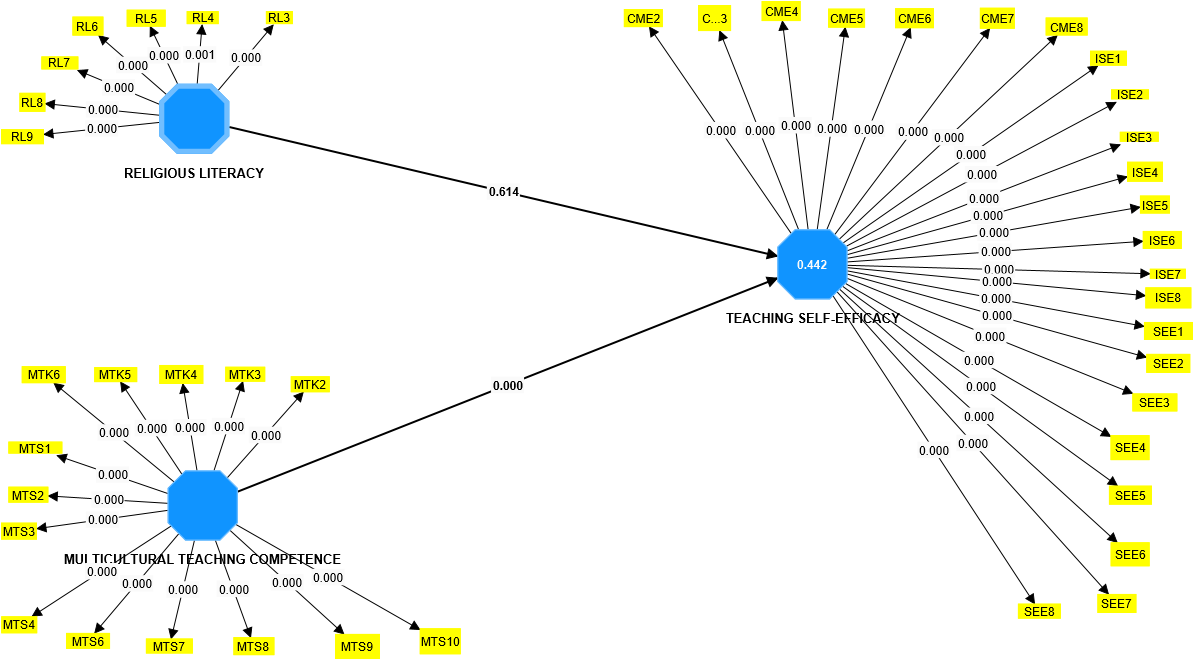
The hypothesis was formulated to determine the effect of religious literacy and multicultural teaching competence of RME teachers on their teaching self-efficacy. SEM (Smart-PLS path modelling algorithm and after 5000 bootstrap samples) was employed to analyse the effect. Table 7 and figure 2 show the results of the measurement and structural models.
Table 7 shows the path coefficient results for effect of RL and MTC of RME teachers on their TSE. Result from the table showed that RL and MTC contributed 44.2% (R2=0.442) to the TSE of the RME teachers. From the table, it can be observed that RL and MTC of RME teachers have statistically significant effect on their TSE (df = 438, F = 0.97.725, p < 0.05; p = 0.001). Therefore, the researcher rejects the null hypothesis. Hence, the result is statistically significant. This implies that when RL and MTC were brought together, they had a statistically positive effect on the TSE of the RME teachers. In the nutshell, it can be mentioned unanimously that religious literacy and multicultural teaching competence of RME teachers have significant positive influence on their teaching self-efficacy.
6. Discussions
The ultimate goal of the study was to find out the level of RME teachers’ religious literacy, level of RME teachers’ multicultural teaching competence and the level of RME teachers’ teaching self-efficacy in the Accra Metropolis, Ghana. It also aimed to determine the influence of religious literacy and multicultural teaching competence of RME teachers on their teaching self-efficacy in the Accra Metropolis. The results of the study revealed that RME teachers in public basic schools in the Accra Metropolis have high level of RL. In agreement, the findings of Mudrow (2023) [83] discovered that teachers who teach in the inclusive schools in Southeastern university possessed high levels of religious literacy. Vats, Dhanda and Wadhawan (2021) [84] found that basic school teachers have high levels of religious literacy. Street (2020) [43] found that teachers from six Christian Education National (CEN) schools in greater Sydney area possessed higher levels of religious literacy. Bigdeloo and Bozorgi (2016) [85] discovered from their study in Mahshahr City, Iran that high school teachers possessed high levels of religious literacy. Prothero (2017) [4] specified that religious literacy as the ability to understand and use the religious terms, symbols, images, beliefs, practices, scriptures, heroes, themes, and stories that are employed in American public life. In line with this viewpoint, the term religious literacy is considered as the ability to understand, read and interpret cultural phenomena and human religious activities (Enstedt, 2022) [86]. Additionally, Brömssen, Ivkovits and Nixon (2020) [25] have noted that religious literacy is the competence (knowledge, skills, and attitudes) for critical reading (i.e., identifying, recognising, understanding, analysing, distinguishing, evaluating, and contesting) of religious texts in different contexts. According to them, a religious literate person should be able to apply this competence not only in the critical reading of religion, but also in applying this set of knowledge, skills and attitudes appropriately to different topics and practices. Moore (2014) [87], sees religious literacy to be a broad content, which relates to religion as a personal, communal, societal, institutional, cultural, local and global phenomenon. It can be deduced that religious literacy concerns the ability to discern and analyse the fundamental connections between religion and social, political and cultural life through varied lenses. Moore (2019) [7] mentioned that religious literacy as that which entails the ability to discern and analyse the fundamental intersections of religion and social/political/cultural life through multiple lenses. Thus, a religious literate teacher will have the ability to discern and explore the religious dimensions of political, social and cultural expressions across time and place (Prothero, 2017) [4]. Wright (2013) [6] agreed that it the ability to reflect, communicate and act in an informed, intelligent and sensitive manner towards the phenomenon of religion.
The findings from the second research question pointed to the fact that RME teachers possess high levels of MTC. In consonance, Kilicoglu, Kilicoglu and Cho (2023) [88] who conducted a comparative study in Turkey, South Korea and the United States found that MTC of teachers was high. White (2021) [29] found that teachers in a school district in Nevada have high levels of MTC. John-Bull (2021) [89], found that teachers have high levels of multicultural teaching competence. The study by Evans (2016) [90] in Hawaii confirmed that teachers possessed high levels of multicultural teaching competence of teachers. Notably, the above results on the level of MTC of RME teachers is in agreement with that of scholars such as; Spanierman, et al., (2011) [91] who maintained that multicultural teaching competency is an iterative process in which teachers continuously (a) explore their attitudes and beliefs about multicultural issues, (b) increase their understanding of specific populations, and (c) examine the impact this awareness and knowledge has on what and how they teach as well as how they interact with students and their families. This dynamic process involves complex interaction among micro-level systems or proximal factors, for example, teachers and other educational personnel, students and their families, and so forth and macro-level systems or more distal factors for example, political economy, race relations, public policy, and so forth). Grounded in the tripartite model described above, Spanierman et al., (2011) [91] delineated the following three dimensions of multicultural teaching competency: (a) awareness, (b) knowledge, and (c) skills. They defined multicultural teaching awareness as consisting of three dynamic and continuous processes reflecting teachers’ awareness of (a) self and others as cultural beings, (b) their attitudes and biases, and (c) the need to create culturally sensitive learning environments for all students. For Sue and Sue (2013) [64], MTC can be viewed as the grouping of a teachers’ skills, attitudes-beliefs and knowledge concerning the understandings of smaller ethnic and tribal groups differences in culture. Sodowsky, Taffe, Gutkin and Wise (2018) [91] hinted that, the first measurement deals with the teacher attitudes-beliefs about cultural and ethnic groups, the requirement to check prejudices and labels and improve an optimistic coordination towards multicultural competency.
On the basis of the third research question, it was revealed that RME teachers have a high level of TSE. The above findings resonate with that of researchers who have conducted researches on teacher self-efficacy. For instance, Zuya, et al., (2016) [92] reported that the in-service teachers had a high level of confidence in mathematics and in mathematics contents. They also rated their level of confidence high in the teaching of mathematics. El-Deghaidy (2016) [93] found that the participants felt confident that they would be able to teach science effectively to make a difference in students’ academic achievements. The study noted that the teachers’ high level of self-efficacy was because of the nature of the methods class they had undergone; the class adopted the constructivist teaching and learning approach. Adjei (2018) [94], discovered that Junior High School teachers had a high level of self-efficacy. The implication here is that the higher the teachers perceive their efficacy levels, the more successful they become in practicing classroom management. Kumi (2023) [95] found that the overall mean of (M=4.57; SD=0.57) which means teachers’ self-efficacy beliefs for teaching SHS Mathematics is high.
Finally, the results portrayed that RL and MTC of RME teachers have significant positive influence on their TSE. In alignment with the above finding is that of Mudrow (2023) [83] who found that religious literacy of the teachers has a significant influence on their self-efficacy. Kilicoglu, Kilicoglu and Cho (2023) [88] who conducted comparative research investigating whether multicultural teaching competence of teachers is related to their self-efficacy beliefs in Turkey, South Korea and the United States and revealed that that multicultural competence of pre-service teachers has positive effect on their self-efficacy beliefs in all three samples. Street (2020) [43] found that religious literacy influenced the self-efficacy of teachers. King (2022) [96] found that there was statistically significant relationship between multicultural teaching competence of teachers and their self-efficacy of K-6 certified teachers in Northwest Arkansas. Floyd (2022) [97] revealed that religious literacy of teachers influenced their self-efficacy. The result of Wright (2017) [98] explained that religious literacy of teachers influenced their efficacy. White (2021) [29] found that multicultural teaching competency predicted teacher self-efficacy (R2 =.340; p = 0.001). Bigdeloo and Bozorgi (2016) [85] found that that there was a positive and significant relationship between the religious literacy and self-efficacy of high school teachers of Mahshahr City (β = 0.155, t = 2.754, P < 0.01). Evans (2016) [90] discovered that multicultural teaching competence had a significant effect on self-efficacy of teachers in Hawaii.
7. Conclusions and Recommendations
RME teachers in the Metropolis have adequate knowledge on the use of; religious terms, symbols, images, themes, and stories that are employed in the various religions. Also, the conclusion can be made that RME teachers possess sufficient knowledge and skills to teach their pupils in culturally diverse ways. Additionally, the study indicated that they have high levels of confidence in their ability to teach pupils/students from diverse backgrounds and manage diverse classrooms. Finally, the study concluded that RL and MTC of RME teachers had statistically significant positive influence on their teaching self-efficacy. This is an indication that RME teachers’ ability to understand the diversity of each religion and to accept students from different cultural backgrounds influence their ability to promote learning effectively.
It is recommended that Ghana Education Service (GES) should ensure that teachers who are assigned to teach RME in basic schools are those who majored in the subject. This will create the enabling platforms that will increase their levels of religious literacy. Secondly, since the study found that RME teachers in public basic schools in the Accra Metropolis have high levels of MTC, it is recommended that RME teachers should not relent in developing their multicultural teaching competencies. Thirdly, it is recommended that Ghana Education Service should continue to provide training and support services such as professional learning communities (PLC) to sustain their high levels of teaching self-efficacy. Finally, since the study discovered that RL and MTC of RME teachers had statistically significant positive influence on their teaching self-efficacy, it is recommended that, the curriculum for training RME teachers should include in them topics on RL and MTC.
Acknowledgements
I extend my sincerest appreciation to the RME teachers in public basic schools in the Accra Metropolis for their assistance and support during data collection.
Funding
The author did not receive any funding.
Data Availability
The datasets used for this study are available. The author is willing to provide the data on a reasonable request.
References
- Shulman, L. S. (1987). Knowledge and teaching: Foundations of the new reform. Harvard Educational Review, 1-22.[CrossRef]
- Ababio, B. T. (2013). Nature of teaching: What teachers need to know and do. International Journal for Innovation Education and Research, 1(3), 37-48.[CrossRef]
- Hannam, P., Biesta, G., Whittle, S., & Aldridge, D. (2020). Religious literacy: A way forward for religious education? Journal of Beliefs and Values, 41(2), 214-226.[CrossRef]
- Prothero, S. (2017). Religious literacy: What every American needs to know and doesn’t. New Jersey: Harper Collins.
- Jackson, R. (2017). A retrospective introduction to religious education: An interpretive approach. Discourse and Communication for Sustainable Education, (), 149–160.[CrossRef]
- Wright, P. J. (2013). A three-wave longitudinal analysis of preexisting beliefs, exposure to pornography, and attitude change. Communication Reports, 26(1), 13-25.[CrossRef]
- Moore, D. L. (2019). Overcoming religious illiteracy: Expanding the boundaries of religious education. Religious Education, 109(4), 379–389.[CrossRef]
- Dinham, A., & Francis, M. (2016). Religious literacy in policy and practice. Bristol: Policy Press.[CrossRef]
- Yang, Y., Cho, Y., & Cox, C. (2013). A 3-D Model of multicultural teaching competence. Poster presented at the annual meeting of the American Educational Research Association, San Francisco, CA.
- Garcia, S. B., & Guerra, P. L. (2014). Deconstructing deficit thinking: Working with educators to create more equitable learning environments. Education and Urban Society, 36(2), 150-168.[CrossRef]
- Moeller, A. J., & Ishii-Jordan, S. (2017). Teacher efficacy: A model for teacher development and inclusion. Journal of Behavioural Education, 6(3), 293–310.[CrossRef]
- Cartledge, G., & Kourea, L. (2018). Culturally responsive classrooms for culturally diverse students with and at risk for disabilities. Exceptional Children, 74(3), 351-371.[CrossRef]
- Hosp, J. L., & Reschly, D. J. (2014). Referral rates for intervention or assessment: A meta-analysis of racial differences. Journal of Special Education, 37(2), 67-80.[CrossRef]
- Martin, L. E., & Mulvihill, T. M. (2021). Voices in education: Teacher self-efficacy in education. The Teacher Educator, 54, 195-205.[CrossRef]
- Tschannen-Moran, M., & McMaster, P. (2009). Sources of self-efficacy: Four professional development formats and their relationship to self-efficacy and implementation of a new teaching strategy. The Elementary School Journal, 110(2), 228-245.[CrossRef]
- Isiksal, M. (2015). A comparative study on undergraduate students’ academic motivation and academic self-concept. The Spanish Journal of Psychology, 13(2), 572-585.[CrossRef] [PubMed]
- Hunter, F. E. (2016). Investigating preservice teachers’ self-efficacy and practicum experiences. Unpublished doctoral dissertation, The University of Western Ontario, Canada.
- Wilson, E. (2013). Building social capital in teacher education through university-school partnerships. Teacher Education and Pedagogy. Theory, Policy and Practice, 41-59.
- Scott, J. E. (2016). Self-efficacy: A key to literacy learning. Reading Horizons: A Journal of Literacy and Language Arts, 36(3), 1-21.
- Lazarides, R., & Warner, L. M. (2020). Teacher self-efficacy. Ohio State University: University Press.[CrossRef]
- Shahzad, K., & Naureen, S. (2017). Impact of teacher self-efficacy on secondary school students’ academic achievement. Journal of Education and Educational Development, 4(1), 48-72.[CrossRef]
- Kim, L. E., Dar-Nimrod, I., & MacCann, C. (2018). Teacher personality and teacher effectiveness in secondary school: Personality predicts teacher support and student self-efficacy but not academic achievement. Journal of Educational Psychology, 110(3), 309-320.[CrossRef]
- Wang, L. (2022). Exploring the relationship among teacher emotional intelligence, work engagement, teacher self-efficacy, and student academic achievement: A moderated mediation model. Frontiers in Psychology, 12, 810-829.[CrossRef] [PubMed]
- Affuso, G., Zannone, A., Esposito, C., Pannone, M., Miranda, M. C., De Angelis, G., & Bacchini, D. (2023). The effects of teacher support, parental monitoring, motivation and self-efficacy on academic performance over time. European Journal of Psychology of Education, 125-132.[CrossRef]
- Brömssen, K., Ivkovits, H., & Nixon, G. (2020). Religious literacy in the curriculum in compulsory education in Austria, Scotland and Sweden: A three-country policy comparison. Journal of Beliefs and Values, 41(2), 132-149.[CrossRef]
- Soules, K. E., & Jafralie, S. (2021). Religious literacy in teacher education. Religion and Education, 48(1), 37-56.[CrossRef]
- Ashraf, M. A. (2019). Exploring the potential of religious literacy in Pakistani education. Religions, 10(7), 1-15.[CrossRef]
- Puhy, C., Prakash, N., Lacson, C., & Bradt, J. (2021). Multicultural teaching competence among undergraduate faculty: A convergent mixed methods study. Journal for Multicultural Education, 15(4), 459-473.[CrossRef]
- White, L. P. (2021). Examining the extent to which efficacy predicts multicultural teaching competency. Unpublished doctoral dissertation, Grand Canyon University.
- Munsell, S. E. (2015). Multicultural teaching competence and teachers’ attitudes toward inclusion. Unpublished doctoral thesis, Oklahoma State University.
- Vella, M. (2015). An investigation of the perceived multicultural competence among teachers in the Maltese education system. Unpublished master’s dissertation, University of Malta.
- Mentz, K, & Van der Walt, J. L. (2017). Multicultural concerns of educators in the Western Cape Province of South Africa. Education and Urban Society, 39(3), 423-449.[CrossRef]
- Alemu, Y. (2017). Exploring primary school teachers’ multicultural competence and its correlates. African Educational Research Journal, 5(3), 194-199.
- Mensah, E. K. (2019). Assessing multicultural competence of counsellors in public Universities in Ghana. Unpublished master’s thesis, University of Cape Coast, Cape Coast.[CrossRef]
- Choi, S., & Lee, S. W. (2020). Enhancing teacher self-efficacy in multicultural classrooms and school climate: The role of professional development in multicultural education in the United States and South Korea. Aera Open, 6(4), 1-17.[CrossRef]
- Hamilton, M. J. (2016). Examining teacher multicultural competence in the classroom: Further validation of the multicultural teaching competency scale. Retrieved from
- Maxwell, B., & Hirsch, S. (2020). Dealing with illiberal and discriminatory aspects of faith in religious education: A case study of Quebec’s ethics and religious culture curriculum. Journal of Beliefs and Values, 41(2), 162-178.[CrossRef]
- National Council for Curriculum and Assessment (2019). Religious and Moral Education Curriculum. Accra: Ministry of Education.
- Iita, A. (2014). An assessment of the curriculum and implementation of the subject religious and moral education in Namibia: A case study of perceptions of religious and moral education teachers in the Ompundja Circuit of Oshana Region. Unpublished doctoral dissertation, University of the Western Cape, South Africa.
- Magazzini, T., Triandafyllidou, A., & Yakova, L. (2022). State-religion relations in Southern and South-eastern Europe: Moderate secularism with majoritarian undertones. Religion, State and Society, 50(4), 396-414.[CrossRef]
- Owusu, M., & Mensah, E. (2022). Teachers’ curriculum knowledge in teaching Christian religious studies among senior high schools of the Greater Accra region of Ghana. East African Journal of Education and Social Sciences, 3(4), 126-133.[CrossRef]
- Mensah, E., & Ampem, I. O. (2023). The actualisation of the aims of the Christian religious studies curriculum by senior high school students in Cape Coast: The affective domain inquiry. African Journal of Empirical Research, 4(1), 1-10.[CrossRef]
- Street, M. (2020) Relationship between religious literacy and teacher self-efficacy of teachers from six Christian Education National (CEN) schools in greater Sydney area, Australia. Unpublished master’s dissertation, Macquarie University, Sydney, Australia.
- Sela-Shayovitz, R., & Finkelstein, I. (2020). Self-efficacy in teaching multicultural students in academia. International Journal of Higher Education, 9(1), 159-167.[CrossRef]
- Kumbong, G. A., & Piang, T. B. (2020). Self-reported multicultural competency among moral education and history education pre-service teachers in an educational institution in Malaysia. European Journal of Molecular and Clinical Medicine, 7(2), 5983-5996.
- Grant, J. K. (2020). Religious studies teachers’ perceptions of the role of religious literacy in students' civic preparation. Unpublished doctoral dissertation, The University of Memphis, United States of America.[CrossRef]
- Taylor, S. M. (2020). Examining the relationship between multicultural efficacy and culturally responsive classroom management self-efficacy among k-12 teachers. Unpublished doctoral dissertation, Liberty University, Virginia.
- Karadag, Y., Kesten, A., & Ozden, D. Ö. (2021). Multicultural competencies of social studies teachers: A qualitative study. Journal of Social Science Education, 20(1), 91-117.
- Mahmud, M. E. (2018). Exploring teachers’ perception on the teaching of multicultural-based religious education. Dinamika Ilmu, 18(2), 259-270.[CrossRef]
- Tezera, D., & Bekele, G. (2021). Effect of teachers’ self-efficacy on their attitude towards the implementation of multicultural education literacy in Harari government secondary schools. International Journal of Education and Literacy Studies, 9(1), 172-182.[CrossRef]
- Govender, S. (2020). A place of religion education in multicultural school in Ilembe District. Unpublished doctoral dissertation, University of KwaZulu-Natal, Glenwood, Durban, South Africa.
- Gay, G. (2015). The what, why, and how of culturally responsive teaching: International mandates, challenges, and opportunities. Multicultural Education Review, 7(3), 123-139.[CrossRef]
- Villegas, A. M., & Lucas, T. (2007). A framework for preparing teachers for classrooms that are inclusive of all students. Teacher Education for the Changing Demographics of Schooling: Issues for Research and Practice, 133-148.[CrossRef]
- Rychly, L., & Graves, E. (2012). Teacher characteristics for culturally responsive pedagogy. Multicultural Perspectives, 14(1), 44-49.[CrossRef]
- Ladson-Billings, G. (1995). Toward a theory of culturally relevant pedagogy. American Educational Research Journal, 32(3), 465-491.[CrossRef]
- Rose, D. G., & Potts, A. D. (2011). Examining teacher candidate resistance to diversity: What can teacher educators learn? International Journal of Multicultural Education, 13(2), 90-98.[CrossRef]
- Russell, M. L., & Russell, J. A. (2014). Preservice science teachers and cultural diversity awareness. Electronic Journal for Research in Science and Mathematics Education, 18(3), 1-20.
- Bandura, A. (1977). Self-efficacy: Toward a unifying theory of behavioural change. Psychological Review, 84(2), 191-215.[CrossRef] [PubMed]
- Bandura, A. (1997). Self-efficacy: The exercise of control. New York: W. H. Freeman.
- Sebastian, V. (2013). A theoretical approach to stress and self-efficacy. Procedia-Social and Behavioural Sciences, 78, 556-561.[CrossRef]
- Maddux, J. E., & Kleiman, E. (2019). Self-efficacy. In R. Biswas-Diener & E. Diener (Eds), Noba textbook series: Psychology. Champaign, IL: DEF Publishers.
- Stajkovic, A. D., & Luthans, F. (1998). Social cognitive theory and self-efficacy: Going beyond traditional motivational and behavioural approaches. Organizational Dynamics, 26(4), 62-74.[CrossRef]
- Bandura, A. (1982). The assessment and predictive generality of self-perception of efficacy. Journal of Behaviour Therapy and Experimental Psychiatry, 13(3), 195-199.[CrossRef] [PubMed]
- Sue, D. W., & Sue, D. (2013). Counselling the culturally diverse: Theory and practice (4th ed.). New York, NY: John Wiley and Sons.
- Schwarzer, R., & Hallum, S. (2008). Perceived teacher self‐efficacy as a predictor of job stress and burnout: Mediation analyses. Applied Psychology, 57, 152-171.[CrossRef]
- Graham, S., Harris, K. R., Fink, B., & MacArthur, C. A. (2001). Teacher efficacy in writing: A construct validation with primary grade teachers. Scientific Studies of Reading, 5(2), 177-202.[CrossRef]
- Henson, R. K. (2001). From adolescent angst to adulthood: Substantive implications and measurement dilemmas in the development of teacher efficacy research. Educational Psychologist, 37(3), 137-150.[CrossRef]
- Tschannen-Moran, M., & Hoy, A. W. (2001). Teacher efficacy: Capturing an elusive construct. Teaching and Teacher Education, 17(7), 783-805.[CrossRef]
- Knoblauch, D., & Hoy, A. W. (2008). “Maybe I can teach those kids.” The influence of contextual factors on student teachers’ efficacy beliefs. Teaching and Teacher Education, 24(1), 166-179.[CrossRef]
- Pajares, F. (2016). Overview of social cognitive theory and of self-efficacy. Retrieved from
- Bandura, A. (1986). The explanatory and predictive scope of self-efficacy theory. Journal of Social and Clinical Psychology, 4(3), 359-373.[CrossRef]
- Albion, P. R. (1999). Self-efficacy beliefs as an indicator of teachers’ preparedness for teaching with technology. In Society for Information Technology & Teacher Education International Conference (pp. 1602- 1608). Association for the Advancement of Computing in Education (AACE).
- Sileyew, K. J. (2019). Research design and methodology. Cyberspace, 1-12.
- Siedlecki, S. L. (2020). Understanding descriptive research designs and methods. Clinical Nurse Specialist, 34(1), 8-12.[CrossRef] [PubMed]
- Queirós, A., Faria, D., & Almeida, F. (2017). Strengths and limitations of qualitative and quantitative research methods. European Journal of Education Studies, 3(7), 369-387.
- MacDonald, A. L. (2020). Of science and statistics: The scientific basis of the census. Statistical Journal of the IAOS, 36(1), 17-34.[CrossRef]
- Babbie, E., Wagner-Huang, W. E., & Zaino, J. (2022). Adventures in social research: Data analysis using IBM SPSS statistics. Sage Publications.
- Mensah, E., Tabiri, F., & Asare-Danso, S. (2024). University students’ religious literacy and religiosity. What is the place of academic discipline and religious affiliation? Cogent Education, 11(1), 1-16.[CrossRef]
- Spanierman, L. B., Oh, E., Heppner, P. P., Neville, H. A., Mobley, M., Wright, C. V., & Navarro, R. (2011). The multicultural teaching competency scale: Development and initial validation. Urban Education, 46(3), 440-464.[CrossRef]
- Tschannen-Moran, M., & Hoy, A. W. (2001). Teacher efficacy: Capturing and elusive construct. Teaching and Teacher Education, 17(7), 783-805.[CrossRef]
- Hair, J. F., Hult, G. T. M., Ringle, C. M., & Sarstedt, M. (2017). A primer on Partial Least Squares Structural Equation Modeling (PLS-SEM) (2nd ed.). Sage Publications Inc.
- Fornell, C., & Larcker, D. F. (1981). Structural equation models with unobservable variables and measurement error: Algebra and statistics. Journal of Marketing Research, 18(3), 382–388.[CrossRef]
- Mudrow, R. J. (2023). Influence of religious literacy on the self-efficacy of teachers who teach in the inclusive schools in Southeastern University. Unpublished doctoral dissertation, Southeastern University.
- Vats, P., Dhanda, N., & Wadhawan, P. (2021). Effect of religious literacy of teachers on their self-efficacy. Indian Journal of Positive Psychology, 12(1), 85-90.
- Bigdeloo, M., & Bozorgi, Z. D. (2016) Relationship between religious literacy and self-efficacy of high school teachers in in Mahshahr City, India. International Education Studies, 9(9), 58-66.[CrossRef]
- Enstedt, D. (2022). Religious literacy in non-confessional religious education and religious studies in Sweden. Journal of Humanities and Social Science Education, 1, 27–48.
- Moore, D. L. (2014). Overcoming religious illiteracy: A cultural Studies approach to the study of religion in secondary Education. New Jersey: Palgrave Macmillan.
- Kilicoglu, G., Kilicoglu, D., & Cho, Y. H. (2023). Multicultural teaching competence and self-efficacy beliefs in Turkey, South Korea and the United States. Teachers and Teaching, 1-29.[CrossRef]
- John-Bull, H. (2021). Nature of relationship between multicultural teaching competence and teacher efficacy. Unpublished doctoral dissertation, Grand Canyon University, Phoenix, Arizona.
- Evans, K. (2016). Effects of multicultural teaching competence on self-efficacy of teachers in Hawaii. Unpublished doctoral dissertation, Walden University.
- Sodowsky, G. R., & Taffe, W. T. (2018). Training culturally competent psychologists: A systematic review of the training outcome literature. Training and Education in Professional Psychology, 12(3), 125-134.[CrossRef]
- Zuya, H. E., Kwalat, S. K., & Attah, B. G. (2016). In-service teachers’ mathematics self-efficacy and mathematics teaching self-efficacy. Journal of Education and Practice, 7(14), 93-98.
- El-Deghaidy, H. (2016). An investigation of pre-service teacher’s self-efficacy and self-image as a science teacher in Egypt. Asia-Pacific Journal on Science Learning and Teaching, 7(2), 1-22.
- Adjei, E. (2018). Relationship between teachers’ self-efficacy and classroom management practices in the Kwahu West junior high schools. Unpublished master’s thesis, University of Cape Coast, Cape Coast.
- Kumi, E. M. (2023). Senior high school teachers’ self-efficacy beliefs in teaching mathematics. International Multidisciplinary Journal of Research and Education, 1(1), 104-119.[CrossRef]
- King, B. C. (2022). Relationship between Northwest Arkansas K-6 teachers’ multicultural teaching competence and self-efficacy. Unpublished master’s dissertation, University of Arkansas, Fayetteville.
- Floyd, J. (2022). Influence of religious literacy on the teacher self-efficacy of elementary school teachers who teach in Christian private schools and public schools. Unpublished doctoral dissertation, Liberty University.
- Wright, K. K. (2017). Relationship between religious literacy and teacher-efficacy in North Texas. Unpublished doctoral dissertation, University of North Texas.