
Abstract
Background: Cystatin C (CysC) predicts adverse outcomes in heart failure (HF), yet its prognostic value relative to underlying renal function remains undefined. We aimed to determine the association between serum CysC and 1-year readmission risk in HF patients stratified by chronic kidney disease (CKD) status. Methods: This retrospective cohort study analyzed 2,008 hospitalized HF patients. Based on CKD status, patients were categorized into non-CKD and CKD groups. Serum CysC levels were analyzed as both continuous variable and in tertiles. The association with 1-year readmission was assessed using multivariable Cox proportional hazards models. Results: Overall, each 1 mg/L increase in CysC was independently associated with an 11% higher risk of re-admission (adjusted HR: 1.11, 95% CI: 1.01-1.23, p=0.003). A significant interaction with CKD status was found (p=0.003). In the non-CKD group, elevated CysC (>1.98 mg/L) was associated with a 51% increased risk (adjusted HR: 1.51, 95% CI: 1.18-1.92, p=0.001), with a non-linear threshold effect identified at 0.998 mg/L. Conversely, no significant association was observed in CKD patients (adjusted HR: 0.96, 95% CI: 0.82-1.12, p=0.576). Conclusions: Elevated serum CysC is a potent predictor of 1-year readmission in HF patients without CKD, but not in those with established CKD. Its prognostic utility is therefore highly dependent on renal context, highlighting its greatest value in patients without advanced renal dysfunction.
1. Introduction
Cystatin C (CysC) is a low-molecular-weight endogenous cysteine protease inhibitor. It is produced at a constant rate by all nucleated cells, freely filtered by the glomeruli, and subsequently reabsorbed and completely catabolized by the renal tubular cells [1]. Due to these characteristics, plasma CysC serves as a reliable marker for estimating the glomerular filtration rate (GFR), showing strong agreement with the GFR measured by inulin clearance, the gold standard [2]. Compared to creatinine (Cr), CysC offers several advantages: it is independent of muscle mass and demonstrates less variability with age, sex, and race [3]. Consequently, a growing body of evidence suggests that CysC is a more sensitive and accurate biomarker than Cr for detecting renal dysfunction [4, 5].
Beyond its role in renal function assessment, emerging evidence indicates that CysC is involved in the pathogenesis of heart failure (HF). Elevated Cysc levels may promote myocardial fibrosis via the accumulation of Oste pontin and TIMP-1, con-tributing to atrial dilation, ventricular hypertrophy, and ultimately, diastolic dysfunction [6, 7]. Given this pathophysiological link, serum CysC has been shown to predict the risk of incident HF in patients with chronic kidney disease (CKD) and even in those without a prior history of cardiovascular disease [8, 9, 10]. For CKD patients already diagnosed with HF, CysC provides incremental prognostic value beyond traditional markers like Cr and proteinuria, more accurately identifying individuals at high risk of all-cause mortality and HF recurrence.
The association between CysC and the risk of 1-year readmission in HF patients has gathered significant research interest. A prospective multicenter study of 1,013 acute heart failure patients demonstrated that elevated cystatin C levels were independently associated with increased 60-day and 1-year mortality and heart failure readmission rates, providing robust evidence for its prognostic value in risk stratification [11]. A meta-analysis of 10 trials (n = 3,155) further solidified this association, demonstrating that elevated CysC nearly doubles the risk of rehospitalization (pooled RR 1.93, 95 % CI 1.61-2.32) and adds prognostic value to conventional risk scores [12, 13]. The prognostic utility of CysC in HF is partly attributed to its sensitivity to subtle changes in renal hemodynamics. In the context of forward failure, reduced renal per-fusion and GFR, compounded by neurohormonal activation (e.g., SNS, RAAS, AVP), lead to renal vasoconstriction and hypoxia. As CysC is freely filtered but not secreted, any decrease in GFR causes its immediate and linear accumulation in the blood [14]. Supporting this, a large community-based cohort study of elderly adults found that individuals with elevated CysC (≥ 1.0 mg/L) had a substantially higher risk of devel-oping incident CKD and experienced significantly greater HF rehospitalization rates over a 4-years follow-up [15, 16].
While CysC is established as a potent prognostic biomarker in broad HF populations, its specific value for predicting readmission risk in HF patients without established CKD remains unclear. Therefore, this study aimed to investigate the association between CysC levels and the risk of 1-year readmission in HF patients, with a specific focus on comparing this association between patients with and without comorbid CKD.
2. Materials and Methods
2.1. Data Resource
The data for this analysis were derived from a publicly available database on PhysioNet (10.13026/8a93-w734). This database was constructed using electronic health records from Zigong Fourth People’s Hospital and comprises a retrospective cohort of 2,008 patients hospitalized with HF between December 2016 and June 2019 [17]. It includes 166 variables encompassing demographics, baseline clinical characteristics, comorbidities, laboratory findings, medications, and clinical outcomes (including HF readmissions and all-cause death).
2.2. Study Population
From the original cohort of 2,008 adult patients with HF (diagnosed according to the European Society of Cardiology (ESC) criteria [18], we excluded 1,107 patients due to missing 1-year readmission data and an additional 12 patients due to missing base-line serum CysC data. Consequently, 889 patients were included in the final analysis. These patients were further stratified into two groups based on the presence or absence of CKD: non-CKD (n = 639) and CKD (n = 250). CKD was defined solely by an estimated glomerular filtration rate (eGFR) of <60 ml/min/1.73m², as detailed in Section 2.4. Additionally, for analysis, patients were categorized into tertiles based on serum CysC levels: Group 1: CysC < 1.36 mg/L (n = 292), Group 2: CysC 1.36–1.98 mg/L (n = 298), Group 3: CysC > 1.98 mg/L (n = 299).
The construction of the original database was approved by the Hospital Ethics Committee of Zigong Fourth People’s Hospital (Approval Number: 2020-010) [17]. The requirement for informed consent was waived for this retrospective analysis, and all patient data were de-identified.
2.3. Variables
2.3.1. Outcome Variable
The primary outcome was 1-year all-cause hospital readmission following the index HF hospitalization.
2.3.2. Exposure Variable
The primary exposure variable was the serum CysC level measured at baseline (hospital admission), analyzed both as a continuous variable and in tertiles.
2.4. Identification of Chronic Kidney Disease
CKD was defined according to the KDIGO Guidelines (19) as an eGFR of <60 ml/min/1.73m².
2.5. Other Covariates
Demographic and clinical characteristics collected at admission included age, sex, body mass index (BMI), mean arterial pressure (MAP), New York Heart Association (NYHA) functional classification, and Charlson Comorbidity Index (CCI). Comorbidities such as diabetes mellitus and chronic obstructive pulmonary disease (COPD) were also recorded. Laboratory parameters included white blood cell (WBC) count, hemoglobin (Hb), platelet count (PLT), albumin (ALB), low-density lipoprotein (LDL), high-density lipoprotein (HDL), serum potassium, CysC, D-dimer, high-sensitivity troponin I (hsTnI), and B-type natriuretic peptide (BNP).
2.6. Statistical Analysis
Continuous variables are presented as mean ± standard deviation (SD) or median with interquartile range (IQR), and categorical variables as counts (percentages). Between group comparisons were conducted using the Student’s t-test, Mann–Whitney U test, chi-square test, or Fisher’s exact test, as appropriate. The association between CysC levels and 1-year readmission risk was evaluated using multivariable Cox proportional hazards models, with sequential adjustment as follows:
- Model 1: Adjusted for age, sex, and BMI.
- Model 2: Model 1 + MAP, NYHA classification, CCI, COPD, diabetes, and CKD.
- Model 3: Model 2 + hsTnI and BNP.
- Model 4: Model 3 + D-dimer, WBC, Hb, PLT, ALB, LDL, HDL, and potassium.
Hazard ratios (HRs) with 95% confidence intervals (CIs) were reported. Trend tests were performed across CysC tertiles. Subgroup analyses by CKD status were performed, and interaction terms were tested. Restricted cubic spline regression was used to assess non-linear associations, and segmented regression was employed for threshold analysis. The cumulative incidence of readmission was compared among groups. All statistical analyses were performed using R software (version4.3.1; The R Foundation) and Free Statistics software version 2.0. A two-sided p-value < 0.05 was considered statistically significant.
3. Results
3.1. Baseline Characteristics of the Study Population
A total of 889 hospitalized patients with HF were included in the final analysis, comprising 639 in the non-CKD group and 250 in the CKD group. The baseline characteristics are summarized in Table 1. Compared to the non-CKD group, patients with CKD had a higher proportion of males (49.6% vs. 40.7%, p = 0.016), a greater comorbidity burden as indicated by a higher CCI score (3.0 【2.0, 3.0】 vs. 1.0 【1.0, 2.0】, p < 0.001), and a higher prevalence of diabetes (40.0% vs. 23.2%, p < 0.001.
Laboratory findings further distinguished the two groups. The CKD group exhibited lower hemoglobin levels (108.8 ± 23.4 g/L vs, 115.7 ± 24.7 g/L, p < 0.001) and significantly higher levels of potassium (4.2±0.8 mmol/L vs. 3.9 ± 0.6 mmol/L, p < 0.001), CysC (2.3 【1.7, 3.1】 mg/L vs. 1.4 【1.2, 1.9】 mg/L, p < 0.001), D-dimer (1.4 【0.9, 2.0】 mg/L vs. 1.2 【0.8, 2.0】 mg/L, p = 0.01), hs-TnI (p < 0.001), and BNP (970.3 【380.3, 2021.1】 pg/ml vs. 782.6 【288.1, 1642.8】 pg/ml, p = 0.045). In contrast, age (including the proportion aged ≥80 years), NYHA functional class distribution, and the prevalence of COPD were comparable between the groups (all P > 0.05).
3.2. Association Between CysC and 1-Year Readmission Risk
As shown in Table 2, in univariable analysis, higher CysC levels (per 1mg/L increase) were significantly associated with an increased risk of 1-year readmission (HR 1.12, 95% CI: 1.05-1.21, p < 0.001). This association remained robust across all sequentially adjusted multivariable Cox regression models, with a consistent HR of 1.11 in the fully adjusted model (Model 4; 95% CI: 1.01-1.23, p = 0.003).
When analyzed by tertiles, patients in the highest tertile (CysC > 1.98 mg/L) had a significantly higher risk of readmission across all models (fully adjusted HR 1.39, 95% CI: 1.13-1.73, p = 0.003). In contrast, the middle tertile (CysC 1.36-1.98mg/L) was not associated with a significantly increased risk. A significant trend for increasing readmission risk across ascending CysC tertiles was observed (p for trend = 0.003 in Model 4).
Subgroup analysis by CKD status revealed a significant interaction (P for interaction = 0.003, Table 3). In the non-CKD group, each 1 mg/L increase in CysC was associated with a 25% higher risk of readmission (adjusted HR 1.25, 95% CI: 1.10-1.43, p = 0.001). Conversely, in the CKD group, CysC levels were not associated with readmission risk, either as a continuous variable (HR 0.96, 95% CI: 0.82-1.12, p = 0.576) or across tertiles.
3.3. Nonlinear curve fitting analysis and threshold analysis
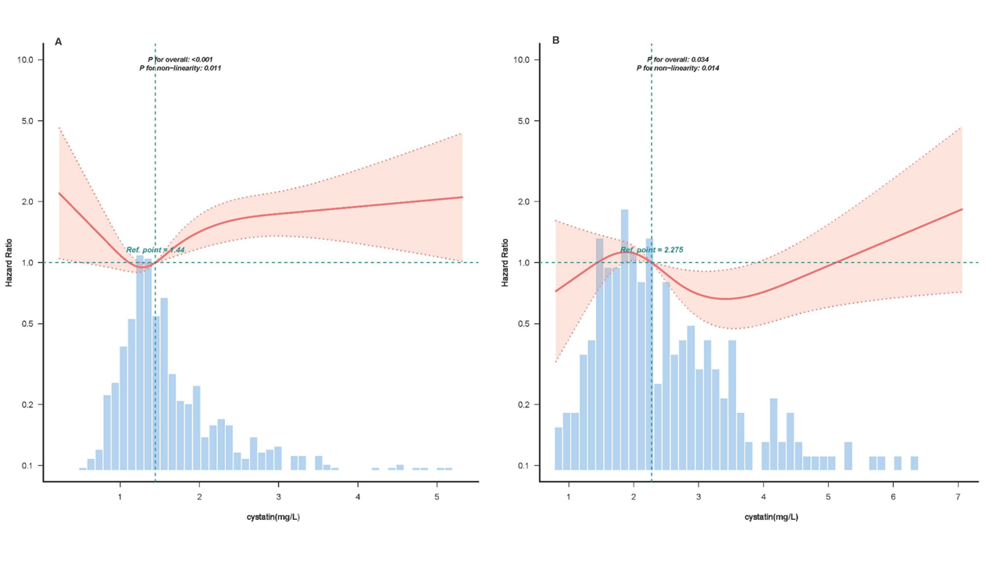
Restricted cubic spline analysis confirmed a non-linear relationship between CysC and readmission risk in non-CKD patients (p for overall < 0.001, p for non-linearity = 0.011; Figure 1A). Threshold analysis identified a breakpoint at 0.998 mg/L. Below this level, the association was non-significant, whereas above it, the risk increased sharply (HR 1.328, 95% CI: 1.14-1.546, p < 0.001; Supplementary Materials: Table 1).
In CKD patients, a different non-linear relationship was observed (p for overall = 0.034, p for non-linearity = 0.014; Figure 1B). The risk remained stable until a much higher CysC threshold of 3.633 mg/L, beyond which it increased dramatically (HR 7.885, 95% CI: 1.291-48.159, p = 0.025; Supplementary Materials: Table 2).
3.4. Cumulative Incidence of Readmission by CysC Tertiles
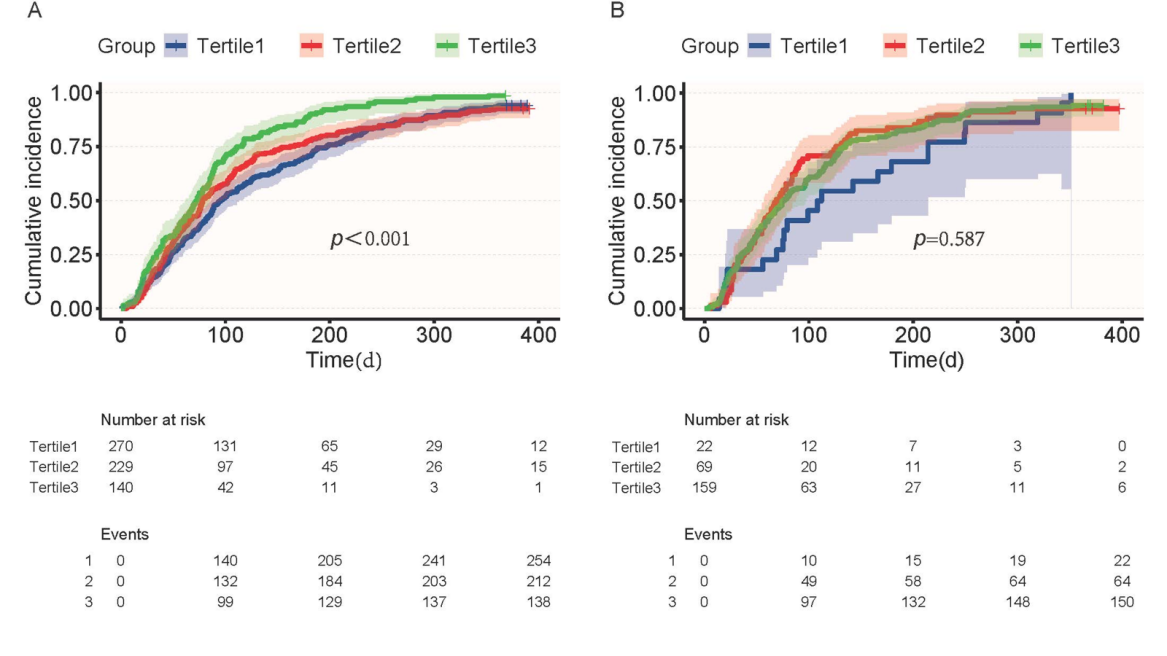
Kaplan-Meier curves illustrated the cumulative incidence of 1-year readmission (Figure 2). In non-CKD patients, there was a significant, dose-dependent increase in readmission rates across ascending CysC tertiles (Log-rank p < 0.001, Figure 2A). The highest tertile showed the steepest decline in event-free survival.
In contrast, among CKD patients, no significant differences in readmission rates were observed across CysC tertiles (Log-rank p = 0.587, Figure 2B), reflecting the lack of prognostic stratification by CysC in this subgroup.
4. Discussion
The principal finding of our study is that elevated CysC is a robust predictor of 1-year readmission in patients with HF but only in those without established CKD. In contrast, this association was absent in patients with concomitant CKD. This critical effect modification by renal status provides a clarifying lens through which previously conflicting literature on CysC’s prognostic value can be re-examined.
Our findings align with and extend previous research. As demonstrated by Dupont et al., the prognostic significance of CysC in stable chronic heart failure is notably dependent on renal function, being most pronounced in patients with preserved GFR [20]. This concept is further supported by large-scale evidence; a meta-analysis by Bastos et al. confirmed that elevated CysC nearly doubles the risk of rehospitalization in broad HF populations, underscoring its overall strength as a biomarker [21]. Our study builds upon this foundation by demonstrating that this predictive power is effectively contingent upon the absence of CKD, likely because in established CKD, CysC levels are chronically and stably elevated, thus losing discriminatory power for acute decompensation events like readmission [22]. The loss of predictive capacity once CKD is established has been observed in other contexts, reinforcing the notion of a ceiling effect in advanced renal disease [23].
The disparate prognostic value of CysC can be explained by its reflection of dis-tinct pathophysiological processes in these two patient subgroups. In patients without CKD, an elevated CysC level is a sensitive integrator of several deleterious pathways. It serves as a marker of subclinical renal impairment, often preceding a detectable decline in eGFR by creatinine-based formulae, as shown in studies where CysC predicted renal recovery earlier than creatinine [24]. Furthermore, CysC is intricately linked to systemic inflammation and endothelial dysfunction—key drivers of HF progression [25]. This is substantiated by data from large cohorts; for instance, Svensson-Färbom et al. Demonstrated that CysC identifies cardiovascular risk better than creatinine-based eGFR, correlating with underlying inflammatory and vascular pathology [26]. The as-sociation between CysC, left atrial volume, and galectin-3 in HF patients further underscores its connection to cardiac remodeling and fibrosis, pathways distinct from pure renal filtration [27]. In this setting, CysC acts as an “early warning” signal, capturing a confluence of renal, vascular, and inflammatory stress that predisposes to clinical deterioration.
In patients with established CKD, this discriminatory value is lost. The uremic milieu of advanced CKD is characterized by chronic, non-specific elevations of CysC and a multitude of other competing risk factors e.g., chronic inflammation, accelerated vascular calcification]. In this “noisy” background, the dynamic, HF-specific signal conveyed by CysC is likely overwhelmed [28]. Our observation that CysC only regained prognostic utility at extreme levels (>3.63 mg/L) in CKD patients suggests it may only signal terminal phases of the cardiorenal syndrome, a point where risk is already universally high and management options may be limited. This aligns with the understanding that in advanced CKD, the cumulative burden of comorbidities itself be-comes the dominant prognostic factor [29].
Beyond its role as a passive biomarker, emerging evidence suggests CysC may have direct pathophysiological effects. It has been implicated in promoting myocardial fibrosis and oxidative stress [30]. The association of CysC with HF with preserved ejection fraction in hypertensive patients points to its potential role in diastolic dysfunction and altered collagen metabolism, independent of traditional renal measures [7]. One proposed mechanism is its interaction with the renin-angiotensin-aldosterone system (RAAS)—a key regulator in HF pathophysiology. Activation of RAAS can induce renal vasoconstriction and sodium retention, creating a vicious cycle that worsens both cardiac and renal function [31]. However, these intriguing direct mechanisms require validation in dedicated prospective and experimental studies.
The strengths of our study include a sizable, well-phenotyped HF cohort, rigorous statistical adjustment across multiple models—including key biomarkers like BNP and hsTnI [4]—and the application of non-linear analyses. However, several limitations must be acknowledged. The confounding from unmeasured variables, such as medication adherence, may persist. Finally, the definition of readmission relied on hospital records, which might have missed events occurring at other institutions.
5. Conclusion and Future Directions
In conclusion, our data firmly established that the prognostic utility of CysC for predicting readmission in HF is critically dependent on the absence of baseline CKD. This advocates for the context-dependent interpretation of this biomarker in clinical practice. Future research should focus on multicenter, prospective studies to validate these findings and to explore whether CysC-guided management strategies—particularly in the high-risk, non CKD HF population—can effectively reduce the burden of hospital readmissions.
Institutional Review Board Statement: Not applicable.
Informed Consent Statement: Not applicable.
Data Availability Statement: The original data presented in the study are openly available in PhysioNet at 10.13026/8a9e-w734.
Acknowledgments: Not applicable.
Conflicts of Interest: The authors declare no conflicts of interest.
References
- Cruz DN, Goh CY, Haase-Fielitz A, Ronco C, Haase M. Early biomarkers of renal injury. Congestive heart failure (Greenwich, Conn). 2010;16 Suppl 1:S25-31.[CrossRef]
- Kimura K, Morita H, Daimon M, Horio M, Kawata T, Nakao T, et al. Utility of Cystatin C for Estimating Glomerular Filtration Rate in Patients With Muscular Dystrophy. International heart journal. 2016;57(3):386-8.[CrossRef] [PubMed]
- Costanzo MR, Barasch J. Creatinine and Cystatin C: Not the Troponin of the Kidney. Circulation. 2018;137(19):2029-31.[CrossRef] [PubMed]
- Kervella D, Lemoine S, Sens F, Dubourg L, Sebbag L, Guebre-Egziabher F, et al. Cystatin C Versus Creatinine for GFR Estimation in CKD Due to Heart Failure. American journal of kidney diseases: the official journal of the National Kidney Foundation. 2017;69(2):321-3.[CrossRef] [PubMed]
- Gharaibeh KA, Hamadah AM, El-Zoghby ZM, Lieske JC, Larson TS, Leung N. Cystatin C Predicts Renal Recovery Earlier Than Creatinine Among Patients With Acute Kidney Injury. Kidney international reports. 2018;3(2):337-42.[CrossRef] [PubMed]
- Zivlas C, Triposkiadis F, Psarras S, Giamouzis G, Skoularigis I, Chryssanthopoulos S, et al. Left atrial volume index in patients with heart failure and severely impaired left ventricular systolic function: the role of established echocardiographic parameters, circulating cystatin C and galectin-3. Therapeutic advances in cardiovascular disease. 2017;11(11):283-95.[CrossRef] [PubMed]
- Huerta A, López B, Ravassa S, San José G, Querejeta R, Beloqui Ó, et al. Association of cystatin C with heart failure with preserved ejection fraction in elderly hypertensive patients: potential role of altered collagen metabolism. Journal of hypertension. 2016;34(1):130-8.[CrossRef] [PubMed]
- Svensson-Färbom P, Ohlson Andersson M, Almgren P, Hedblad B, Engström G, Persson M, et al. Cystatin C identifies cardiovascular risk better than creatinine-based estimates of glomerular filtration in middle-aged individuals without a history of cardiovascular disease. Journal of internal medicine. 2014;275(5):506-21.[CrossRef] [PubMed]
- He J, Shlipak M, Anderson A, Roy JA, Feldman HI, Kallem RR, et al. Risk Factors for Heart Failure in Patients With Chronic Kidney Disease: The CRIC (Chronic Renal Insufficiency Cohort) Study. Journal of the American Heart Association. 2017;6(5).[CrossRef] [PubMed]
- Peralta CA, Katz R, Sarnak MJ, Ix J, Fried LF, De Boer I, et al. Cystatin C identifies chronic kidney disease patients at higher risk for complications. Journal of the American Society of Nephrology: JASN. 2011;22(1):147-55.[CrossRef] [PubMed]
- Lassus J, Harjola VP, Sund R, Siirilä-Waris K, Melin J, Peuhkurinen K, et al. Prognostic value of cystatin C in acute heart failure in relation to other markers of renal function and NT-proBNP. European heart journal. 2007;28(15):1841-7.[CrossRef] [PubMed]
- Chen S, Tang Y, Zhou X. Cystatin C for predicting all-cause mortality and rehospitalization in patients with heart failure: a meta-analysis. Bioscience reports. 2019;39(2).[CrossRef] [PubMed]
- Fürst P. Intracellular muscle free amino acids--their measurement and function. The Proceedings of the Nutrition Society. 1983;42(3):451-62.[CrossRef] [PubMed]
- Stevens LA, Coresh J, Schmid CH, Feldman HI, Froissart M, Kusek J, et al. Estimating GFR using serum cystatin C alone and in combination with serum creatinine: a pooled analysis of 3,418 individuals with CKD. American journal of kidney diseases: the official journal of the National Kidney Foundation. 2008;51(3):395-406.[CrossRef] [PubMed]
- Shlipak MG, Katz R, Sarnak MJ, Fried LF, Newman AB, Stehman-Breen C, et al. Cystatin C and prognosis for cardiovascular and kidney outcomes in elderly persons without chronic kidney disease. Annals of internal medicine. 2006;145(4):237-46.[CrossRef] [PubMed]
- Sarnak MJ, Katz R, Stehman-Breen CO, Fried LF, Jenny NS, Psaty BM, et al. Cystatin C concentration as a risk factor for heart failure in older adults. Annals of internal medicine. 2005;142(7):497-505.[CrossRef] [PubMed]
- Zhang Z, Cao L, Chen R, Zhao Y, Lv L, Xu Z, et al. Electronic healthcare records and external outcome data for hospitalized patients with heart failure. Scientific data. 2021;8(1):46.[CrossRef] [PubMed]
- Ponikowski P, Voors AA, Anker SD, Bueno H, Cleland JG, Coats AJ, et al. 2016 ESC Guidelines for the diagnosis and treatment of acute and chronic heart failure: The Task Force for the diagnosis and treatment of acute and chronic heart failure of the European Society of Cardiology (ESC). Developed with the special contribution of the Heart Failure Association (HFA) of the ESC. European journal of heart failure. 2016;18(8):891-975.[CrossRef] [PubMed]
- Stevens PE, Levin A. Evaluation and management of chronic kidney disease: synopsis of the kidney disease: improving global outcomes 2012 clinical practice guideline. Annals of internal medicine. 2013;158(11):825-30.[CrossRef] [PubMed]
- Dupont M, Wu Y, Hazen SL, Tang WH. Cystatin C identifies patients with stable chronic heart failure at increased risk for adverse cardiovascular events. Circulation Heart failure. 2012;5(5):602-9.[CrossRef] [PubMed]
- Bastos JM, Scala N, Perpétuo L, Mele BH, Vitorino R. Integrative bioinformatic analysis of prognostic biomarkers in heart failure: Insights from clinical trials. European Journal of Clinical Investigation. 2025;55(4):e70010.[CrossRef] [PubMed]
- Girish V, Maiwall R. Tracking the trajectory of kidney dysfunction in cirrhosis: the acute kidney injury: chronic kidney dis-ease spectrum. Clinical and Molecular Hepatology. 2025;31(3):730.[CrossRef] [PubMed]
- Berger I, Wu S, Masson P, Kelly PJ, Duthie FA, Whiteley W, et al. Cognition in chronic kidney disease: a systematic review and meta-analysis. BMC medicine. 2016;14(1):206.[CrossRef] [PubMed]
- Pottel H, Delanaye P, Cavalier E. Exploring renal function assessment: creatinine, cystatin C, and estimated glomerular filtration rate focused on the European Kidney Function Consortium Equation. Annals of Laboratory Medicine. 2024;44(2):135-43.[CrossRef] [PubMed]
- Carreira M, Araújo JP, Bettencourt P, Lourenço P. Elevated Cystatin C Predicts Higher Mortality in Chronic Heart Failure Independently of Renal Function. Critical pathways in cardiology. 2024;23(3):119-23.[CrossRef] [PubMed]
- Svensson-Färbom P, Almgren P, Hedblad B, Engström G, Persson M, Christensson A, et al. Cystatin C is not causally relat-ed to coronary artery disease. PloS one. 2015;10(6):e0129269.[CrossRef] [PubMed]
- Hao W-R, Cheng C-H, Liu J-C, Chen H-Y, Chen J-J, Cheng T-H. Understanding galectin-3’s role in diastolic dysfunction: A contemporary perspective. Life. 2024;14(7):906.[CrossRef] [PubMed]
- Yuan JL, Hu LA, Wang XY, Shi ZY, Chen T, Huang XZ, et al. Non-Invasive Diagnosis and Monitoring of Diabetic Nephropathy: Assessment of Renal Function and Fibrosis by Diffusion Kurtosis Imaging. Int J Gen Med. 2025;18:4011-26.[CrossRef] [PubMed]
- Tonelli M, Wiebe N, Guthrie B, James MT, Quan H, Fortin M, et al. Comorbidity as a driver of adverse outcomes in people with chronic kidney disease. Kidney international. 2015;88(4):859-66.[CrossRef] [PubMed]
- Theodorakakou F, Fotiou D, Apostolakou F, Papassotiriou I, Spiliopoulou V, Ntanasis-Stathopoulos I, et al. Cystatin C as Biomarker for the Evaluation of Renal Outcome in AL Amyloidosis. American journal of hematology. 2025;100(8):1305-13.[CrossRef] [PubMed]
- Patel S, Rauf A, Khan H, AbuIzneid T. Renin-angiotensin-aldosterone (RAAS): The ubiquitous system for homeostasis and pathologies. Biomedicine & pharmacotherapy. 2017;94:317-25.[CrossRef] [PubMed]