
Abstract
This Practice-based research explores the innovative application of textiles in the creation of decorative flower vases, positioning them at the intersection of functional design and contemporary art. The study investigates the potential of techniques such as weaving, embroidery, and applique to transcend the conventional boundaries of the medium. Through a methodological framework combining material experimentation interviews with textile artisans and pottery producers in Accra, and critical reflection, the research examines the interplay of materiality, form and aesthetics. It integrates traditional Ghanaian motifs with modern design principles to create culturally resonant, sustainable artworks. The findings demonstrate textiles' significant versatility and creative capacity for producing unique decorative objects. This study contributes to discourses on material innovation and sustainable design by highlighting textiles as a dynamic medium for artistic expression. It offers practical insights for artisans and designers, underscoring the role of textiles in evolving traditional crafts for contemporary contexts.
1. Introduction
Textile arts, traditionally anchored in functional and ceremonial domains, are increasingly being re-contextualised within contemporary fine art and design practice. This evolution sees the medium transcend its conventional applications, engaging with concepts of materiality, form, and interdisciplinary innovation (Hemmings, 2012) [1]. A notable trend within this movement is the integration of textile techniques with non-fabric substrates to create hybrid functional objects, challenging disciplinary boundaries and notions of material hierarchy (Harrius, 2022) [2].
In Ghana, textile heritage—embodied in techniques such as Adinkra and Kente, represents a profound repository of cultural knowledge, symbolism, and craftsmanship. However, its application within contemporary artistic practice often remains within traditional formats. This presents a significant opportunity for material innovation: the application of these indigenous textile sensibilities to novel, three-dimensional forms.
Despite growing interdisciplinary exploration, there is a discernible gap in scholarly and practical investigation into the specific use of textiles as the primary structural and aesthetic medium for functional decorative objects, such as flower vases. Existing research often positions textiles as a surface embellishment on ceramic or glass forms, rather than exploring their inherent potential to constitute the vessel itself. Consequently, the unique aesthetic, tactile, and sustainable possibilities of textile-based vessels remain underexplored, particularly within a non-Western cultural context like that of Ghana.
Therefore, this study employs a practice-based research methodology to address this gap. It investigates the potential of specific textile techniques including tie-dye, weaving, and embroidery, in the design and fabrication of a standalone decorative flower vase. The research asks: How can textile methods be adapted to create a structurally sound and aesthetically coherent vessel? Furthermore, how can this process integrate Ghanaian textile heritage to generate culturally resonant contemporary design?
In this regard, this study aims to contribute new knowledge to the fields of textile art and sustainable design. It demonstrates the viability of textiles as a primary medium for functional art, offers a framework for integrating traditional craft knowledge into contemporary practice, and posits the textile vase as a site for cultural and material dialogue.
2. Review of Related Literature
Textile art has been a cornerstone of human creativity, with various techniques and methods being employed to produce unique pieces that reflect cultural heritage and artistic expression. The incorporation of textiles into decorative arts, such as flower vases, has gained popularity in recent years, leading to innovative and captivating works.
2.1. Historical Significance of Flowers in Art
Flowers have long held a place in culture, influencing fashion, design, and literature through their beauty and symbolic weight. Artists have turned to flora for inspiration, resulting in iconic works like Vincent van Gogh's sunflowers and Georgia O'Keeffe's dynamic blooms. The exhibition "Flowers - Flora in Contemporary Art & Culture" at the Saatchi Gallery showcases the various ways flowers have been explored and incorporated into art, featuring works by renowned artists like Mucha and Morris (2023) [3].
2.2. Contemporary Artists and Textile Art
Several contemporary artists have made significant contributions to the field of textile art, pushing the boundaries of traditional techniques and materials.
- Cecilia Paredes: Known for her Chameleonic photo performances where she disappears into backdrops often featuring exuberant floral patterns.
- Shishi San: A multidisciplinary textile artist who creates "fluffy" hand-tufted vases, tapestries, and rugs that stand out for their vivid colours and floral motifs.
- Caroline Harrius: A ceramicist who combines clay and thread to create unique textile-infused ceramics, exploring the intersection of traditional crafts and contemporary art.
2.3. Techniques and Materials
Textile artists employ various techniques and materials to create their pieces, including:
- Embroidery: A needlework technique used to create intricate designs and patterns on fabric.
- Tufting: A technique used to create textured, dimensional pieces using yarn or thread.
- Appliqué: A method used to create designs or patterns on fabric by attaching pieces of fabric or other materials to a base fabric.
- Ceramic and textile fusion: A technique used by artists like Caroline Harrius, who combines clay and thread to create unique textile-infused.
3. Methodology
3.1. Design
This study is a mixed –media which involves both studio based and experimental research. The research approach will be exploratory, involving experimentation with different textile techniques and materials to develop a functional and aesthetically pleasing flower vase, with reflective practice used to refine the design and technique throughout the creative process.
It will employ a practice-based methodology, where textile arts techniques such as embroidery, appliqué, and dyeing will be used to design and create a unique flower vase.
3.2. Materials and Tools Used for the Project
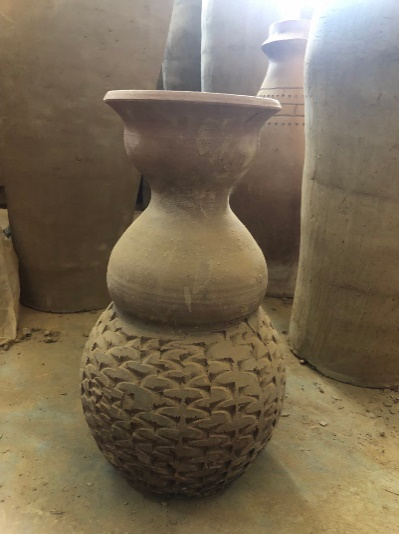
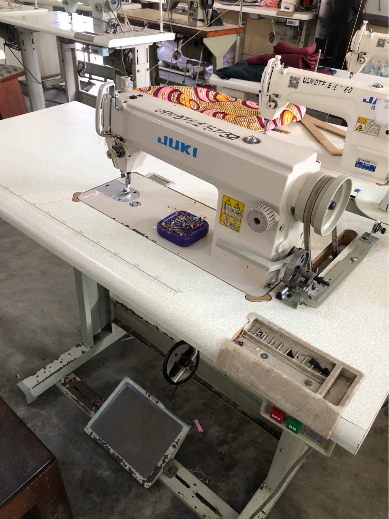
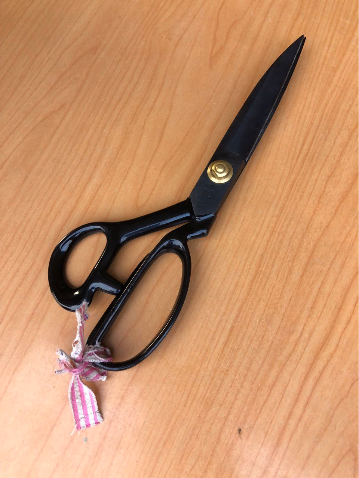
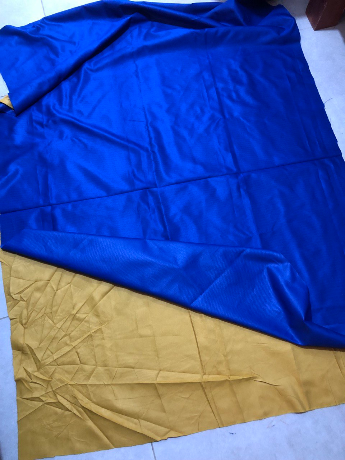
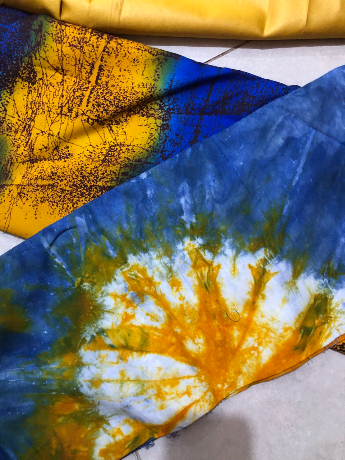
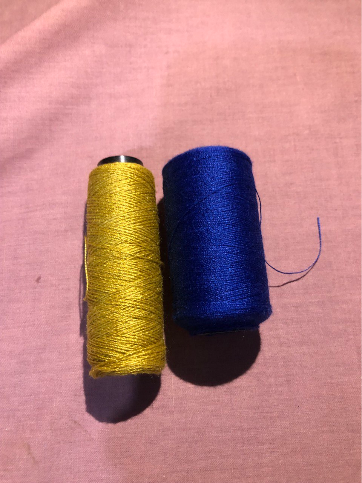
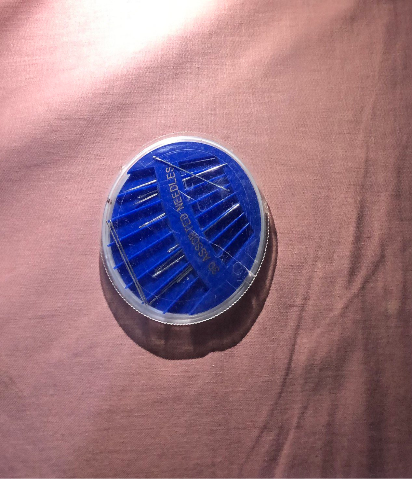
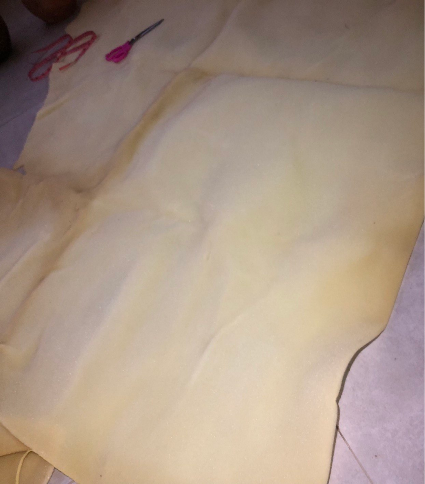
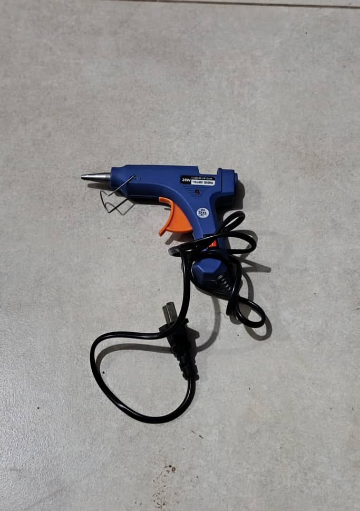
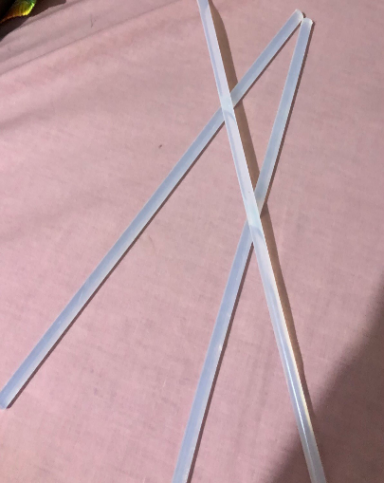
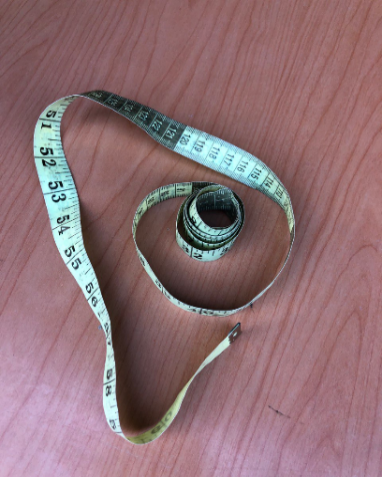
3.3. Measuring, Drafting and Cutting
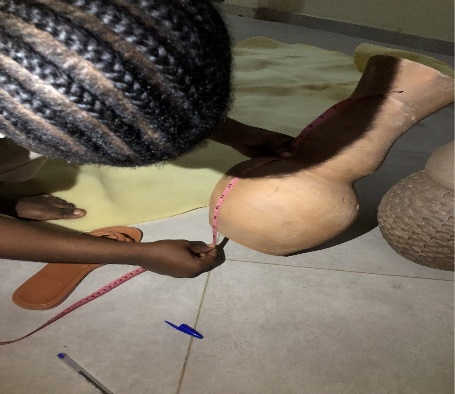
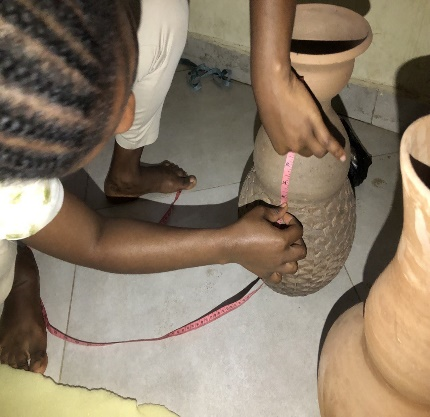
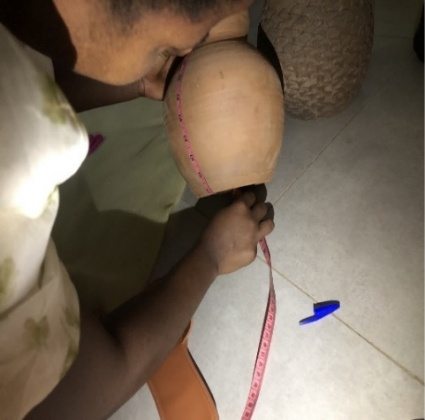
3.3.1. Measuring
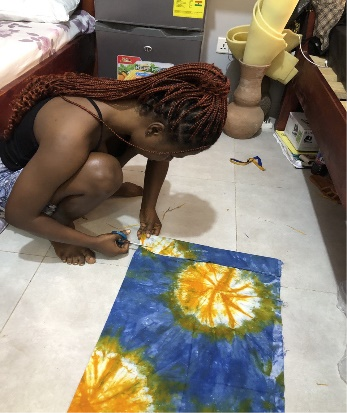
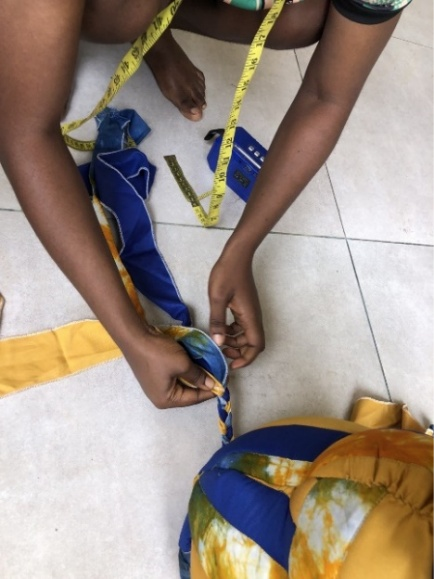
Taking measurements was a crucial step in preparing the flower vase project to determine the exact size of the flower vase to figure out how much fabric will be needed for the flower vase. The researcher took accurate measurements of the vase's height (vase 1=17inches and vase 2 =16 inches) circumference (vase 1= 32 inches and vase 2=30inches) and other important dimensions like the shape of the vase's body or any curves it might have. This helps to ensure that the fabric fits properly around the vase without being too tight or too loose. After the measurement was taken, the next step was drafting.
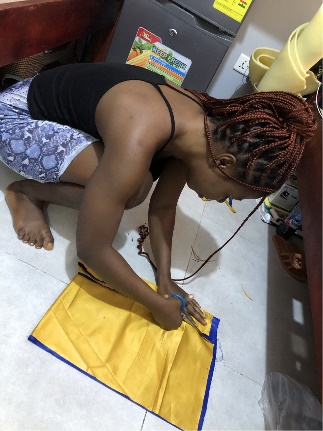
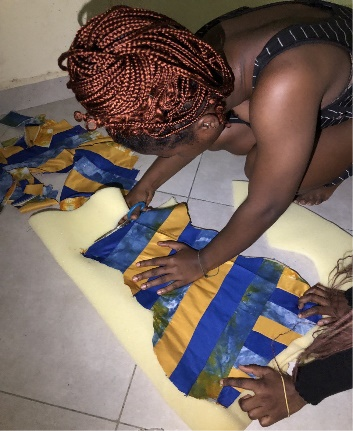
Drafting is the process of creating a detailed plan or pattern on how to cut and place the tie and dye fabrics on the vase. Sketches were made out the design on paper. A template was created to help cut and arrange the fabric on the flower vase - considering the pattern placement and seam placement. Drafting helps to visualize the final product and make adjustments cutting and sewing.
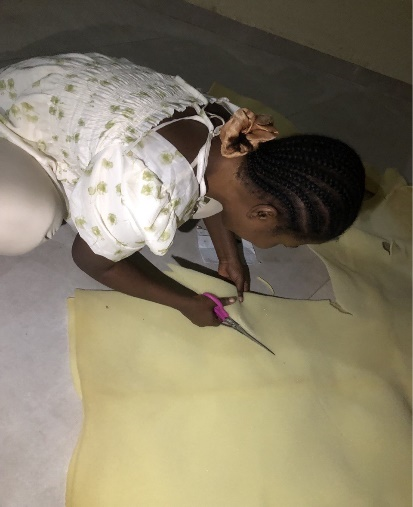
3.3.2. Cutting
Cutting is the step where the researcher uses scissors to carefully cut out the fabric based on the measurements and drafted plan. Cutting requires attention to detail in cutting along the lines drafted.
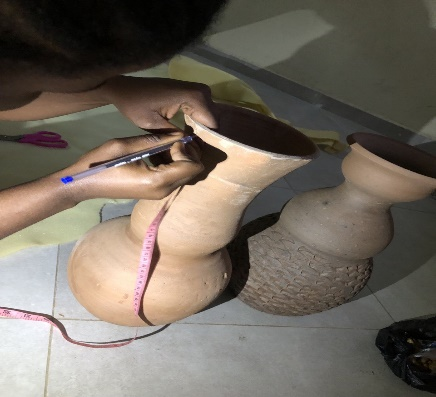
3.4. Neatening, Sewing and Ironing
3.4.1. Neatening
Neatening involves trimming loose threads, folding under raw edges to prevent fraying, or making and makes the tie and dye fabric are securely in place on the vase. Neatening, gives the fabric more polished and finished look, neat and aesthetically appealing.
3.4.2. Sewing
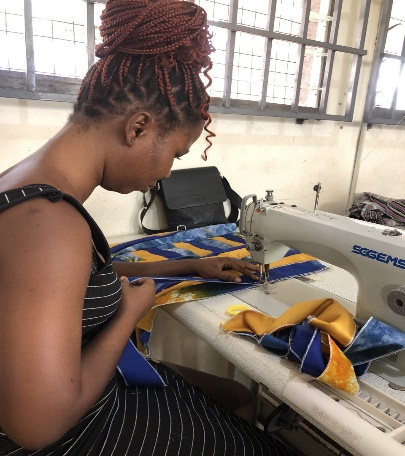
Sewing is the process of stitching parts of the fabric together or to attach the fabric securely to the flower vase. Sewing helps to join different parts of the fabric together to create designs and patterns on the vase. Industrial sewing machine was used to sew the foam and the fabric together to produce and create a fluffy effect on the fabric. Sewing is important to make the fabric stay in place on the vase and for decorative.
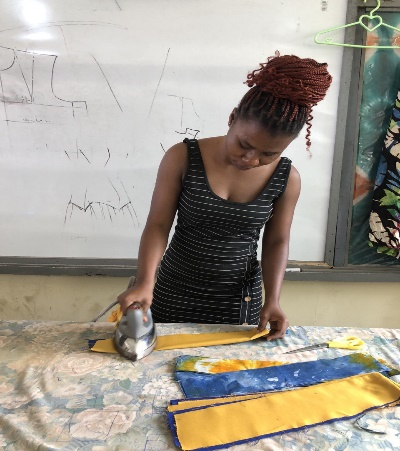
3.4.3. Ironing
Ironing is using a hot iron to smooth out wrinkles or creases in the fabric. Ironing helps to get a crisp, smooth look on the fabric.
3.5. Covering and Hand Stitching
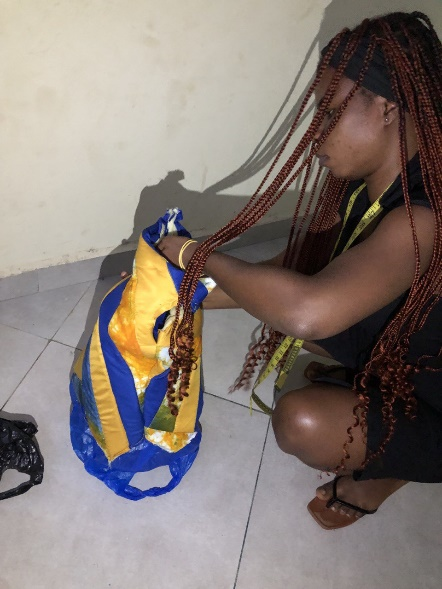
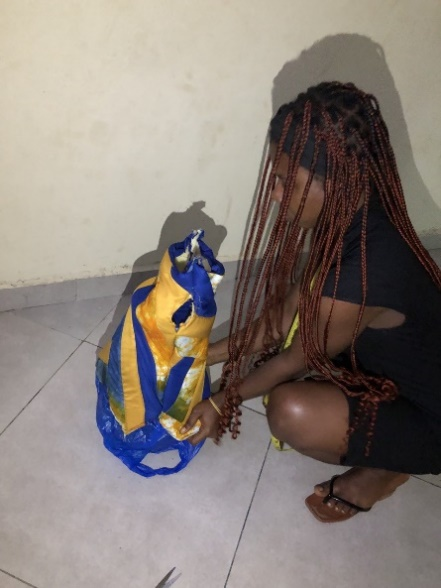
3.5.1. Covering
Covering is the process of wrapping the prepared fabric around the flower vase to give it a textile finish. Covering involves placing the fabric carefully around the flower vase's shape. The tie and dye fabric should fit well on the vase by smoothening out any wrinkles or air pockets which will be transforming its appearance into a decorative and artistic touch. The fabric is positioned in it before securing it in place.
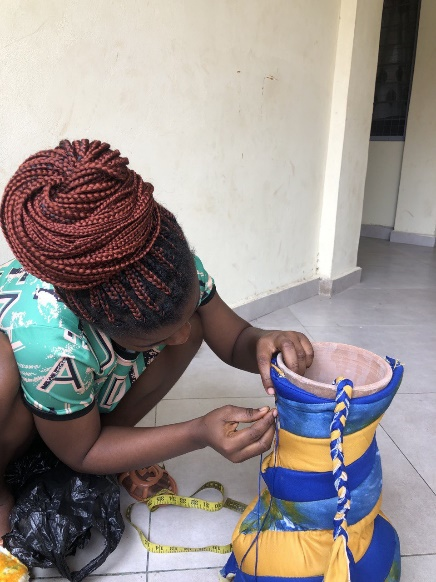
3.5.2. Hand Stitching
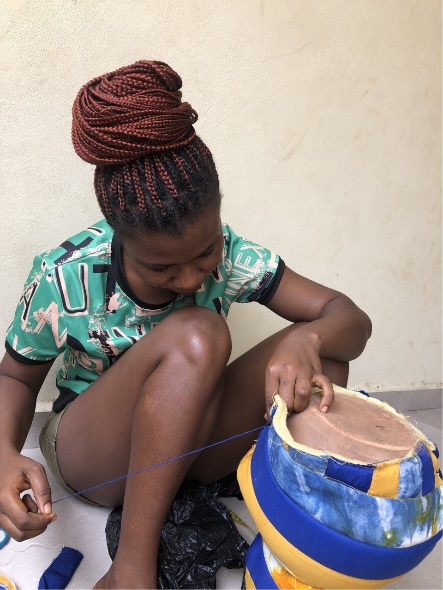
Hand stitching is using a needle and thread to sew parts of a fabric together or to secure the fabric to the flower vase by hand. Hand stitching allows the researcher to add precise details, secure edges, or attach embellishments in a controlled way. The use of hand stitching for the base of the flower vase and the sides which allows the researcher to secure the sides firmly with personal touch. Hand stitching gives me flexibility to make adjustments or add decorative stitches as needed.
3.6. Gluing and Braiding
3.6.1. Gluing
Gluing is using an adhesive to attach parts of the fabric, decorations, or other elements to the flower vase or to secure the fabric in place. Gluing bond fabric to the flower vase or attach embellishments like buttons, beads, or other decorative elements to enhance the design.
3.6.2. Braiding
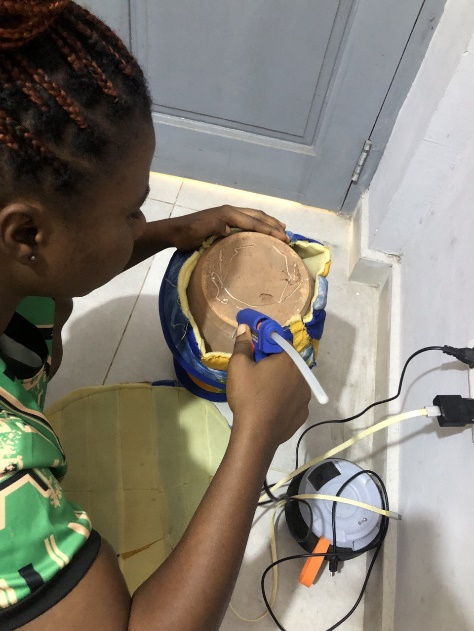
Braiding is a technique where of interweaving strands of fabric, thread, or other materials to create a decorative element or pattern for the flower vase. Braiding add texture, aesthetics and handmade touch to the fabric-wrapped vase. Braid threads or strips of fabric can be used to create a trim or decoration to the vase.
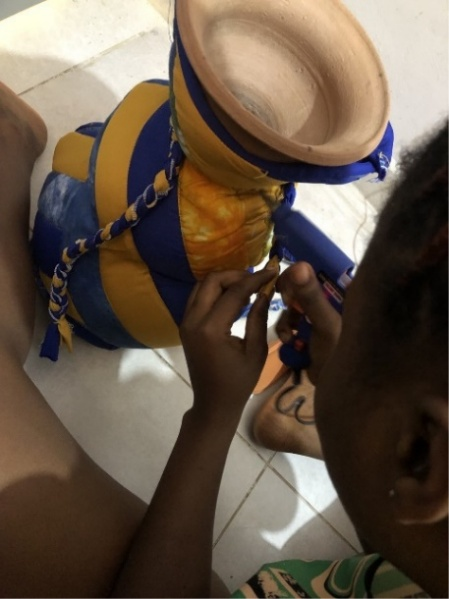
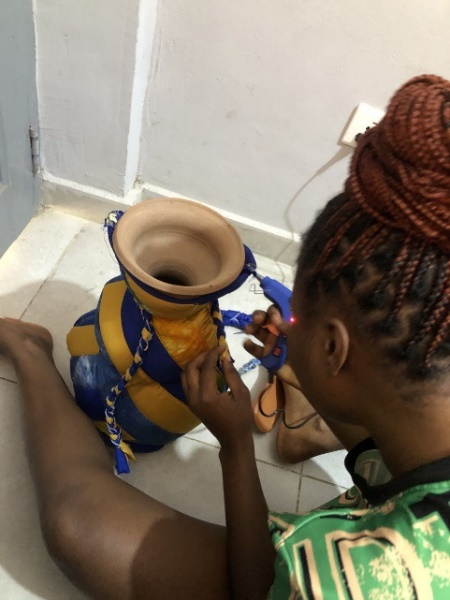
With the help of glue gun and glue sticks, the braided fabric was placed at the edges of the flower vase to give it a neat and appealing touch to the overall look of the flower vase.
3.7. Finishing
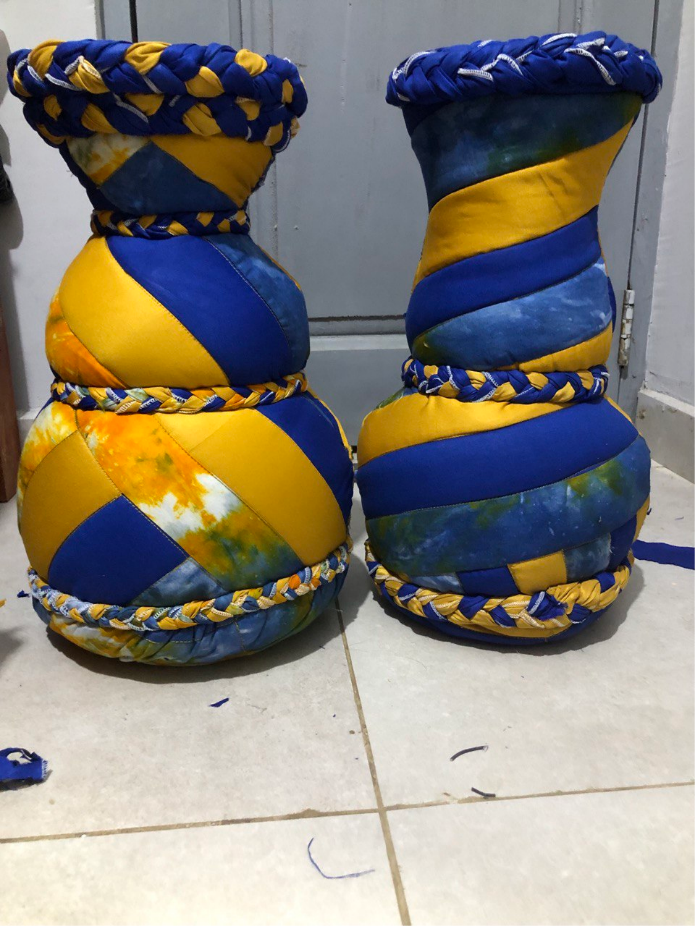
Finishing is the final step of the production of the fabric-wrapped (textile) flower vase. Finishing involves checking that the fabric is securely attached to all parts of the flower vase. Thus, the exploration of textiles art using Textiles as a medium for the production of flower vase as a decorative piece in the production of flower vase was achieved.
4. Discussion of Findings
This study explored the concept of material convergence: an exploration of textiles techniques in the creation of decorative flower vases. By integrating soft textile processes with traditionally rigid or functional vessel forms, the research sought to challenge conventional boundaries between craft disciplines and redefine the vase as both a utilitarian and sculptural object. The findings demonstrate that textile techniques not only alter the aesthetic qualities of flower vases but also expand their conceptual, tactile, and functional possibilities.
One of the key findings of this research is that material convergence enables the emergence of hybrid forms that resist singular categorization. The combination of textile methods—such as weaving, stitching, wrapping, felting, or embroidery—with non-textile substrates (e.g., glass, ceramic, metal, or structural frameworks) produced objects that occupy an ambiguous space between textile art and decorative object design. Akinwumi. (2016) [4]. This hybridity contributed to a visual tension between softness and rigidity, fragility and strength.
According to Cyril-Egware and Peters (2016) [5] in their book ‘Design and its application in ceramics and Textiles: Similarities and Divergences’ that the basic raw materials for ceramic wares is clay while that of textile fabrics is fibre, either natural or man-made or a combination of both. Textiles cover natural and manmade fibres, from the raw state to the finished functional fabrics either as clothing, furniture or decorative objects. Ceramics on the other hand is the art or science of making objects from clay produced as pottery fired for decorative and utilitarian purposes. Ceramics wares could also be referred to as pottery, made from clay and/ or glazed. Ceramics and Textiles are products from nature; but from different sources. The basic raw material for ceramic is clay while that of textiles is fibres, either natural or man-made or a combination of both.
Gillow & Sentence (2009) [6], states that the first textile fabricated by mankind were made by manipulating fibres with the fingers. It has been suggested that the craft of basketry was invented by primitive man and the techniques developed were applied to constructing fabrics. A number of techniques were developed that involved looping, knotting, interlacing or twining strands together. The major difference between early baskets and textiles are not so much in techniques but in the choice of materials. The more resilient and flexible a fibre used, the suppler the fabric constructed from it. Some of the methods that evolved are so effective that in parts of the world, such as central and eastern north America, the loom was never devised and even with the introduction of the loom by colonists the techniques of working only with the fingers were not replaced. Raffia fibres are twisted together to make a yarn long enough to weave on a loom, while in Nigeria, lengths are sometimes knotted together.
Gillow and Sentence (2009) [6], states that the first textile fabricated by mankind were made by manipulating fibres with the fingers. It has been suggested that the craft of basketry was invented by primitive man and the techniques developed were applied to constructing fabrics. A number of techniques were developed that involved looping, knotting, interlacing or twining strands together. The major difference between early baskets and textiles are not so much in techniques but in the choice of materials. The more resilient and flexible a fibre used, the suppler the fabric constructed from it.
More significantly, when textile techniques were employed structurally—such as through tightly woven forms or reinforced stitched frameworks—they began to influence the overall silhouette and spatial presence of the vase. This finding challenges the traditional perception of textiles as secondary or decorative and supports their role as a primary construction material within three-dimensional design.
A notable outcome of the study is the heightened sensory experience produced through textile integration. The tactile qualities of fibre materials encouraged interaction and altered how viewers perceived the object. Softness, texture, and layered surfaces contrasted with the expectation of smooth, hard vase materials, creating a sense of surprise and curiosity.
Visually, textile techniques allowed for organic forms and floral references that aligned conceptually with the function of holding flowers. This alignment strengthened the thematic coherence of the designs, reinforcing the vase as an extension of natural and botanical inspiration rather than a neutral contained.
Cyril-Egware (2013) [7], is of the opinion that fabric design means adding embellishment to textiles, to beautify or add value to it. This could be by hand using local methods, by manual and industrial weaving looms, by manual and industrial printing techniques, by hand and machine embroidery and by hand and machine applique techniques. These are sometimes embellished with stones, buttons, sequence and zip.
Peters (2013) [8] defined ceramics as “wares made partly or wholly from clay. It is shaped in ordinary temperature and unless forcibly deformed, it keeps this shape and after heating (firing) to a sufficient maturity temperature, the shape is permanently retained” (p. 5).
Products from ceramics are dinner wares, electrical insulators, bricks, soap dish, water closet, flower vases, floor tiles, roofing tiles, wall tiles, drainage tiles and pipes. These products require two-dimensional decorative design on the surfaces to enhance their aesthetics to improve marketability and production. Ceramics and textiles have played vital roles in the economy of Nigeria even before the advent of colonial rule.
Textile surfaces introduced flexibility, texture, and warmth, while the underlying vase structure maintained form and stability. The resulting convergence repositions the vase as an expressive medium rather than a purely functional container.
The research revealed that textile techniques functioned in two distinct yet interconnected ways: as surface embellishment and as structural components. Surface-based applications enhanced visual depth and ornamentation, allowing pattern, colour, and tactile variation to become central design elements. These treatments transformed the vase into a decorative artefact that invites close visual and tactile engagement.
Peters (2013) [8] considers the synchronism of design and states, “industrial design is a vehicle which brought about industrialization as a result of the few needs to improve the people’s way of life as well as methods of manufacturing”. Design in the area of decorating ceramics and textiles wares has some similarities. The uniqueness of decorative design itself for the ceramics and textiles Industrial design is a communication of applied science whereby the aesthetics, ergonomic, and usability of products may be improved for marketability and production. It is interesting to realize the uniqueness of two-dimensional design for both ceramics and textiles surfaces and this indeed gives value to both products. It is important to note designer’s experiences in creating designs surfaces deserves commendation.
Parmar and Singh (2020) [9] explained in their book; manufacture of blended yarns from waste biomass of corns that, Tiles are being used for the floor, wall, and roof. These are often made from ceramic. Ceramic tile production comprehends many different processes according to each different finished product. There are six steps involved in the manufacturing process of ceramic tiles. These are (i) clay preparation, either by dry grinding or by wet milling and atomization; (ii) forming or molding of the tile by either dry pressing or extrusion; (iii) glaze preparation; (iv) drying, glazing, and decoration of the tile; (v) kiln firing; and (vi) classification and packing. However, other materials such as clay, glass, and concrete are also being used. Synthetic tiles are also being made using plastic waste material along with resins. Disposing of textile waste is a very big problem. Textile waste covers wide varieties of fibers including natural and synthetic. It is estimated that around 92 million tons of clothing waste are thrown out every year globally. Most of the portion goes in landfills. Textiles are also produced using unconventional fibers such as cornhusk, rice and wheat straw, and sugarcane. Reconverting waste clothing material by mixing it with resins, natural and synthetic can be explored for developing high-quality products like wall and floor tiles. Various types of textile wastes like denim, cornhusk, and rice straw was used to develop wall and floor tiles material having water and flame retardant properties. According to Partha (2024) [10] ‘Turning Textile Waste into Ceramic tiles for Buildings and Furniture’ turned textile waste into ceramic tiles, which were used in construction and furniture. This eco- friendly alternative not only helps reduce waste but also presents new business opportunities for companies in the building and furniture industries. The textile industry generates millions of tons of waste each year. Much of this waste is made up of synthetic fibres like polyester and nylon, which don’t easily decompose. This leads to long-term pollution. Finding new ways to recycle these materials is crucial for both the environment and future business sustainability. He further states that, Turning textile waste into ceramic tiles is not only an eco-friendly solution but also a profitable one. Business can reduce costs, attract new customers, and stand out in the market by adopting this innovative approach. As sustainability becomes more important, this method offers a smart way to combine environmental responsibility with business success.
5. Conclusion
The study concluded that, Textile art provides limitless opportunities for innovation and expression in both functional and decorative items. The exploration of textile techniques in the creation of decorative flower vases reveals that material convergence enriches both form and meaning. Textiles are versatile materials that can be adapted for non-traditional uses. The findings affirm that textiles can operate as both decorative and structural elements, transforming everyday objects into expressive, multi-sensory artefacts. This convergence not only expands the vocabulary of textile practice but also redefines the decorative vase as a dynamic intersection of material, technique, and concept. Incorporating indigenous Ghanaian fabrics and patterns enhances cultural identity, making the product locally relevant and globally appealing. Skills such as sewing, applique and embroidery, and fabric manipulation are essential in expanding the scope of textile applications.
References
- Hemmings, J. (2012). The rise of digital media: Transforming communication, culture, and commerce. Global Media Journal. https://www.globalmediajournal.com
- Harrius, S. (2022). Threads of identity: How indigenous textile techniques are stitching together global heritage and sustainable futures. Textile School. https://www.textileschool.com/27846/threads-of-identity-how-indigenous-textile-are-stitching-together-global-heritage-and-sustainable-future/
- Mucha, T., & Morris, J. (2023). A competency-based perspective on entrepreneurship education: Conceptual and empirical insights. Journal of Small Business Management, 51, 352–369. https://doi.org/10.1111/jsbm.12023[CrossRef]
- Akinwumi, T. (2016). African indigenous textiles: Their use in art and design. Textile Research Journal, 86(5), 555–567.
- Peters, E., & Cyril-Egware, P. (2016). Design and its application in ceramics and textiles: Similarities and divergences. International Journal of Innovative Research and Development, 5(8), 142–149.
- Gillow, J., & Sentence, B. (2009). World textiles: A visual guide to traditional techniques. Thames & Hudson.
- Cyril-Egware, P. (2013). African textiles as inspiration to other art forms for national development. Course Hero. https://www.coursehero.com
- Peters, S. M. (2013). Plant design and economics for chemical engineers (5th ed.). McGraw-Hill.
- Parmar, M. S., & Sisodia, N. (2020). Manufacture of blended yarns from waste biomass of corn. Colourage, 62, 34–38.
- Paul, P. (2024, September 16). Turning textile waste into ceramic tiles for buildings and furniture. LinkedIn. https://www.linkedin.com/pulse/turning-textile-waste-ceramic-tiles-buildings-furniture-partha-paul-8wnjc